USA Celebrates 100 Years Of National Parks

Sahale-Arm-Trail-Hikers_1.jpg

Hikers enjoy the Sahale Arm Trail in North Cascades National Park; repair and revegetation of the trail will be completed in partnership with Washington’s National Park Fund. NPS/Liang

On August 25, 1916 the National Parks Service was created. Please support it:

In 2015 and 2016, the National Park Service selected more than 150 projects to leverage $25 million in congressional appropriations with more than $45 million matching funds from partner organizations across the country.

These projects will improve visitor services, support outreach to new audiences, and strengthen partnerships to reinvigorate national parks and forge connections to new communities.

A list of the 2016 projects is here.

A list of the 2015 projects is here.
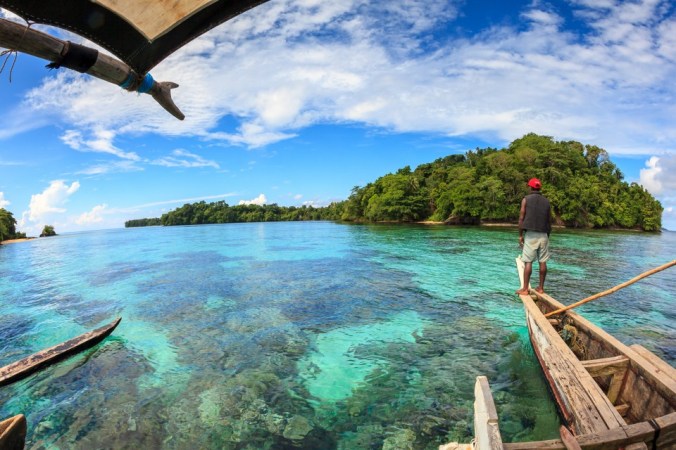
Coral Reef Bright Spots

lead_960 (3).jpg

Tane Sinclair-Taylor

Thanks, as always, to Mr. Yong and his team at Atlantic Monthly:

Why Some Coral Reefs Are Thriving

Not all of the world’s reefs are in bad shape—and a few of the healthiest are managed by humans.

by Ed Yong

In 1990, Jerry Sternin from the global charity Save the Children traveled to Vietnam to fight malnutrition. His strategy was simple. He looked for ‘bright spots’—mothers whose children were bigger and healthier than average, even though they were just as poor and disadvantaged as their neighbors. And he asked: what were they doing differently? Continue reading

An Important Question From E.O. Wilson

4202

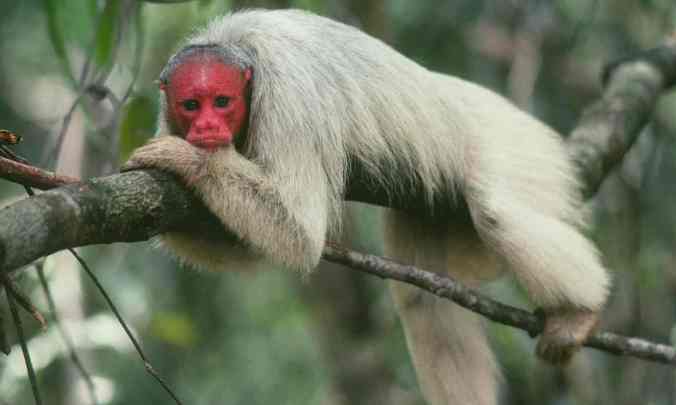
A bald uakari monkey (Cacajao calvus) in the flooded forest of the Amazon in Brazil. The IUCN Red List categorizes this species as vulnerable. Photograph: Alamy

Thanks to the Guardian for continuing to give a platform where it is most needed with respect to the natural environment:

Could we set aside half the Earth for nature?

Renowned biologist E.O. Wilson wants to set aside half of the planet as protected areas for nature. But is this possible? And, if so, how would it work?

by Jeremy Hance

As of today, the only place in the universe where we are certain life exists is on our little home, the third planet from the sun. But also as of today, species on Earth are winking out at rates likely not seen since the demise of the dinosaurs. If we don’t change our ways, we will witness a mass extinction event that will not only leave our world a far more boring and lonely place, but will undercut the very survival of our species.

So, what do we do?

E.O. Wilson, one of the world’s most respected biologists, has proposed a radical, wild and challenging idea to our species: set aside half of the planet as nature preserves.

Continue reading

Our Goal Here

We will continue sharing news stories and sharing anecdotes from our daily work lives that reflect Raxa Collective’s orientation to Community, Conservation & Collaboration. Those “3C’s” have been essential ingredients of La Paz Group’s work since the beginning, which is how they became the focal points of Raxa Collective. We have also had Sense & Sensibility as watchwords in our company for the last 16 years or so, and that will not change. Continue reading

Heroic Decisions, John Racanelli Edition

15dolphins-web-master768

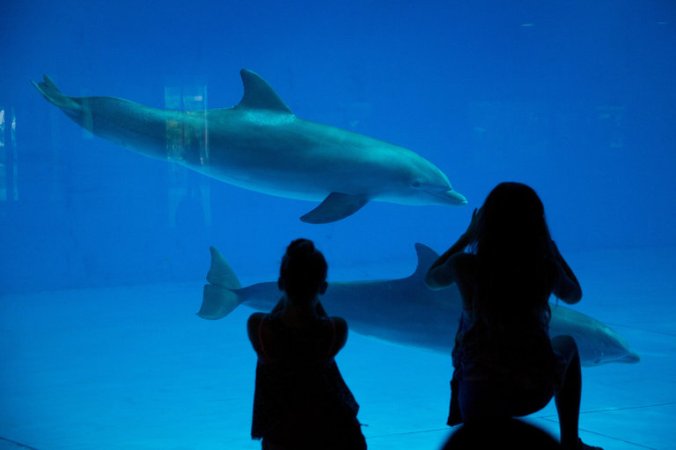
The dolphin exhibit at the National Aquarium in Baltimore last summer. Credit Andrew Harrer/Bloomberg

Four members of La Paz Group remember the day in May, 2014 when they had the good fortune to share a breakfast table with John Racanelli. The conversation was about conservation, what we call entrepreneurial conservation and what he seemed to be practicing in the world of mega-aquaria. We knew from that moment that this was someone to watch, and news from this week’s Science section of the New York Times is just one of many examples why:

Community Conservation in the Arnavon Islands

ACMCA ranger Dickson Motui clears a path for the hatchlings. Photo © The Nature Conservancy (Justine E. Hausheer)

We value sea turtles as an important part of the ocean ecosystem, and are always happy to hear about new conservation stories regarding them. In many coastal areas, the sea-faring reptiles are hunted for their meat and their eggs are harvested from sandy nests, quite often illegally. We report on poaching frequently here, but have good news from the Solomon Islands, where The Nature Conservancy is helping with community conservation in the Arnavons:

After a 40-year history punctuated by arson, conflict, and poaching, conservation efforts in the Arnavon Islands are yielding a glimmer of hope for hawksbill sea turtles. Now, Conservancy scientists are working with local communities to make these critical islands the first site to be registered under the Solomon Islands’ 2010 Protected Areas Act.

Continue reading

Community, Collaboration & Conservation 2011-2016

As pop-ups go, this has been long-lived. We listened to the communities we came to Kerala to serve; we collaborated with them every day of the week, each month, year after year since arrival; and the conservation work will continue. We will be watching and commenting from our new site at lapazgroup.net, which will retain all our material from the past five years.

My personal thanks to all the individuals who are listed in the Contributors section above. It would be unfair to highlight any one or even just a few of them. By definition each one broke through the inertia sometimes described as the collective action problem–leaving it to someone else to do–and did the writing and illustration needed to make our work resonate with a broad audience. And if you look at the number of views, visitors and comments they left behind, our readers seemed to appreciate all that. We had employees, as well as interns, plus friends and family— even our main man on more than one occasion contributing–individually, collectively, collaboratively.

Thanks said, we hope you will continue to follow us after the name change in a couple days.

The Collective Of Raxa

As we wind down this pop-up endeavor, a comment on our collaborators. First and foremost on the George M George of 2010, whose vision was what got this collective going. George had come to my attention ten years earlier in a classroom in France, where I was offering a course called Organizational Behavior in the Masters program Cornell Hotel School had established there. My first, and lasting impression of George was that he valued laughter over all else. Continue reading

Raxa Collective, A Purposeful Pop-Up

When the first post appeared on this site we did not have a specific end date in mind. But now we do. Nearly 7,000 posts, half a million views and 1,825 days later on June 14, 2016 five years of blogging about community, collaboration and conservation around the world under the banner of Raxa Collective will be complete. We will continue these endeavors, and more, under the banner of La Paz Group. We will incorporate enhancement and expansion ideas that our readers, friends, colleagues and contributors have all shared with us.

Raxa Collective has had a very specific objective: the creation of a meaningful brand with community, conservation and collaboration as the core values. Xandari is that brand; it is the legacy of a collaboration between MLHS and La Paz Group. We expect that Xandari’s remarkable sense of community will continue to flourish under MLHS’s own guidance, as La Paz Group moves on to new challenges in the realm of entrepreneurial conservation.

A Downside to Lights in the Dark

Photo by homeanddecor.com

Although the titles are similar, this post and the previous one from today are not about related subjects other than light and darkness. The lights referred to in this post’s title are artificial ones on land, not bioluminescence under the sea. Lights from houses and street lamps that distract moths from pollinating plants that need their pollen transported, and often result in moth deaths (by predation or getting trapped indoors). Sarah DeWeerdt reports for Conservation Magazine on a recent UK study on the disruption of pollination by light:

Everyone knows moths are attracted to light, but scientists are just now learning that this attraction may have negative consequences for other parts of the ecosystem. Moths drawn to artificial sources of light may do less work pollinating plants, according to research published last week in the journal Global Change Biology.

Researchers sampled moths at 40 sites along hedgerows bordering agricultural fields in Oxfordshire, England. Half of the study sites were lit with streetlights and half were not. Surprisingly, no one had previously investigated how this very common source of artificial lighting affects the behavior and ecological function of moths.

Continue reading

Farming, Students, Sustainability

053116_organic_students_edited_custom-3ae21e3010769f3366279eb8587118e174a358ab-s1400-c85

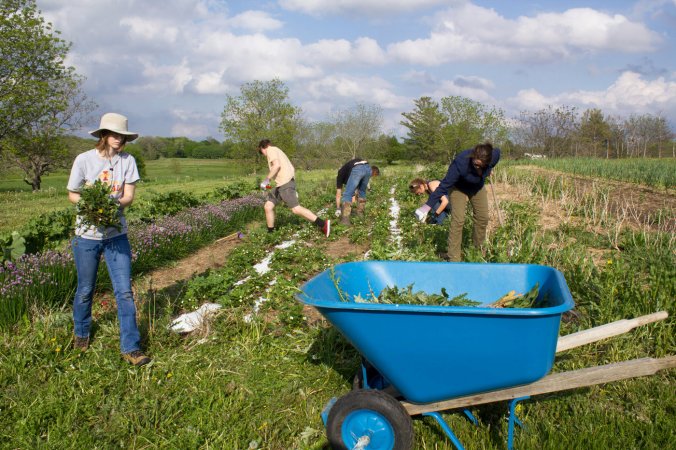
A weekday work session on the Student Organic Farm at Iowa State University has members weeding a perennial bed. Amy Mayer/Harvest Public Media

Thanks to National Public Radio (USA) for this story:

A Student-Run Farm Cultivates Passion For Sustainable Agriculture

A weathered wooden shed that holds wheelbarrows, hoes and other basic tools is the beacon of the Student Organic Farm, a two-acre swath within the larger horticultural research farm at Iowa State University.

On a warm spring evening, a half-dozen students gather here, put on work gloves and begin pulling up weeds from the perennial beds where chives, strawberries, rhubarb and sage are in various stages of growth.

“I didn’t know how passionate I [would] become for physical work,” says culinary science major Heidi Engelhardt. Continue reading

Pristine Nature

Chan Chich

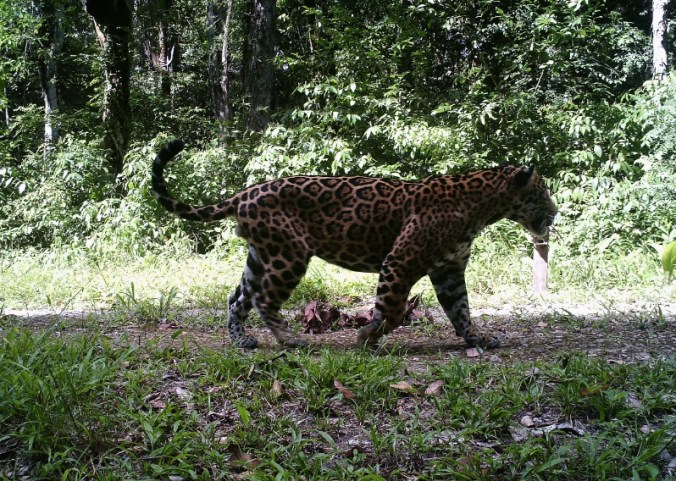
In writing about Belize recently, I had mentioned time spent with a tapir, favored in the diet of jaguar throughout Central America. The photo above was taken on property at the lodge my posts were referring to. Rule of thumb, it seems to me, is that a jaguar population requires relatively pristine nature to be sustainable, and that seems to be the case where this photo was taken. But what do I know, really? I am dedicated to entrepreneurial conservation but I am not a biologist so I depend on experts to inform my thinking, and to discipline it with a heavy dose of realism. In reading this post from earlier today I am better prepared to think about the mission of Chan Chich Lodge (more on which in a subsequent post), and the history of the 30,000 acre wilderness conservation area that it sits on:

Gallon Jug

At one time, the venerable 150 year old Belize Estates Company owned roughly one fifth of the entire country, about one million acres including much of the northwest corner of the country. From the turn of the century until the 1960’s, timber, mainly mahogany, cedar and santa maria, were selectively logged from this area. Gallon Jug, originally a logging camp located where the current GJ offices are, was named after a B.E.C. foreman, Austin Felix, discovered many discarded items from a Spanish camp, including a number of ceramic gallon jugs. Continue reading

A Sperm Bank for Coral Reefs

An example of a coral spawning, in this case, the species Orbicella faveolata, or mountainous star coral. Credit: Schmahl/FGBNMS

Ocean health matters to us, and the state of our corals is one of the most at-risk elements of marine ecosystems. So many species depend on coastal communities of these strange lifeforms, and with acidification and pollution of sea waters, the reefs are in danger of slowly but surely dying out. Thankfully, there are efforts underway to conserve coral in an unusual way – freezing and storing their sperm. Julie Liebach reports for Science Friday:

You’ve heard of seed banks—precious vaults that keep plant genetic material frozen for posterity’s sake. But what about coral banks?

For more than a decade, marine biologist Mary Hagedorn has been cultivating the art of carefully freezing coral sperm through a process known as cryopreservation. Her goal is to bank as many species as possible for use in future research and restoration, and to train other scientists to follow her lead.

Continue reading

Lionfish Removal and Awareness Day Festival


Photo credit: Erin Spencer

Photo credit: Erin Spencer

I’ve posted previously about the lionfish invasion that is threatening coral reef and other marine ecosystems throughout the Caribbean, Gulf of Mexico, and Southern Atlantic Seaboard of the United States. As I’ve noted in earlier posts, it is the general consensus of the scientific and conservation community that eradication of lionfish from the Atlantic is impossible. However, there is growing evidence that systematic removal efforts can be effective in controlling lionfish populations and in reversing their negative impact on reef health. The challenge faced by marine protection agencies and marine resource managers is how to undertake these removals on a regular and financially sustainable basis. I’m convinced that this challenge can best be met by an integrated approach involving coordinated action by public and private actors complemented by the creation of markets for lionfish products.

All of these elements were in evidence at the Lionfish Removal and Awareness Day festival in Pensacola, Florida which I attended last month. Organized by the Florida Fish and Wildlife Conservation Commission (FWC), the two-day event included a lionfish derby (with more than 8,000 lionfish removed by volunteer divers), lectures about the invasion and the threat that it poses, lionfish cooking and tasting, and sale of lionfish products.

Notable among the sponsors of the event was Whole Foods, which had announced a few weeks earlier that it was going to begin selling lionfish at its stores in California and Florida. The move by whole foods was sparked by the decision late last year of Monterey Aquarium’s Seafood Watch program to list lionfish as a best choice under its sustainable seafood recommendations, citing the invasive nature of the species. As I had noted in a previous post, Seafood Watch had previously declined to list lionfish due to the absence of an established commercial fishery, but to their credit, the group responded to what they described as a “grassroots campaign” and revisited the issue. Moreover, since taking the decision to list lionfish, Seafood Watch has been active in raising awareness about the invasion and in promoting lionfish consumption. Continue reading

Dare To Be Deep

feature_daretobedeep.jpg

CPAWS has been around for decades, but we seem to have missed it in these pages in the five years we have been linking out to notable conservation initiatives:

The Canadian Parks and Wilderness Society (CPAWS) is Canada’s only nationwide charity dedicated solely to the protection of our public land and water, and ensuring our parks are managed to protect the nature within them. In the past 50+ years, we’ve played a lead role in protecting over half a million square kilometres – an area bigger than the entire Yukon Territory! Our vision is to protect at least half of our public land and water so that future generations can experience Canada’s irreplaceable wilderness.

The Dare to be Deep initiative just came to our attention:

Every second breath we take comes from the ocean that covers 70% of our planet. The ocean also regulates the temperature of our planet, and provides us with an important source of protein and food. Continue reading

New Marine Park in Malaysia

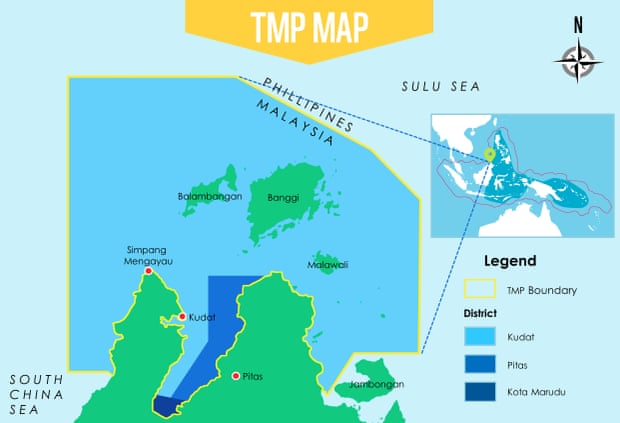
A map of the new Tun Mustapha marine protected area, which occupies just under one million hectares of seascape, including more than 50 islands. Illustration: WWF Malaysia

The more protected areas for wildlife in the world the better, in our book. So we’re happy to hear that Malaysia has created a new marine park, the largest of its kind in the country, that covers a million hectares, or around two million football fields. With so many coral and fish species in the region, it’s a great step forward for conservation in an area at risk for over-fishing or poor practices like blast or cyanide fishing. Johnny Langenheim reports:

Malaysia has just established the biggest marine protected area (MPA) in the country. The Tun Mustapha park (TMP) occupies 1m hectares (2.47m acres) of seascape off the northern tip of Sabah province in Borneo, a region containing the second largest concentration of coral reefs in Malaysia as well as other important habitats like mangroves, sea grass beds and productive fishing grounds.

It is also home to scores of thousands of people who depend on its resources – from artisanal fishing communities to the commercial fisheries sector – making it in many ways a microcosm of the entire Coral Triangle bioregion, where environmental protection must be balanced with the needs of growing coastal populations.

Continue reading

To Hunt a Newt

Dr. Grant holds a red-spotted newt from Beebe Pond in Sunderland, Vt., this month. Credit Jim Cole/Associated Press

Salamanders and newts have shown up on the blog before as an important environmental health indicator, an animal family that is fun to look at and look for, and a group of species at risk due to imported/exported diseases made possible by the pet trade. From the New York Times Science section this week, we’re learning even more about these slippery amphibians:

Warren Pond in southern Connecticut, bordered by shady oaks and maples, is a lovely place to fish for bass or sunfish. Or, if the mood strikes you, to hunt the Eastern red-spotted newt.

Why one would want to hunt newts is a valid question. But for Evan Grant, who was stalking the banks of Warren Pond this month, scanning the water through polarized sunglasses, the answer is that many species of salamander in the United States, including the newts he was seeking, may be on the brink of a deadly fungal assault, much like one that has devastated some frog and toad populations worldwide.

Continue reading

Support Edible Utensils, Reduce Plastic

Screen Shot 2016-05-31 at 8.52.42 AM

Click the image above to go to the video on this new company’s page at Kickstarter, and then scroll down if you want to pre-order items to support the mission:

Eat your utensil and prevent waste at its source! 

Bakeys is launching the world’s first edible cutlery line made of three flours: rice, wheat, and sorghum. Help us change the way we eat and think about waste!

And we understand how important it is to be able to provide delicious cutlery that can be eaten by anyone. We are already fully vegan, preservative free, trans fat free, dairy free and operate on principals of fair trade. We have put a focus on bringing up the following certifications within the following year: Continue reading

Musical Ecology

MJ15_image_Page_066_Image_0001

Hopkinson Smith playing the German theorbo built for him by Joel van Lennep. Photograph by Philippe Gontier/Courtesy of Hopkinson Smith

When a musician of this talent dedicates his life to mastery of instruments that keep an old tradition alive, we take notice. When he describes  J.S. Bach as a recycler, we understand in a fresh context the value of this concept that we tend on these pages to relegate to the reduction of waste. Recycling is also about adaptation, evolution, improvement (thanks to Harvard Magazine):

HOPKINSON SMITH ’70 describes J.S. Bach as a musical ecologist. “He recycled so many of his own works,” Smith explains. “He never stopped trying to adapt what he’d written.” It was an accepted musical practice at the time, but one imagines the composer was driven at least in part by pragmatism: his posts in a number of German cities required him to produce new compositions at a fierce pace. Refashioning musical materials helped him keep up with those demands. “Even so,” Smith adds, “writing a cantata a week would not have been a manageable task for the rest of us mortals.” Continue reading

Forward To The Past

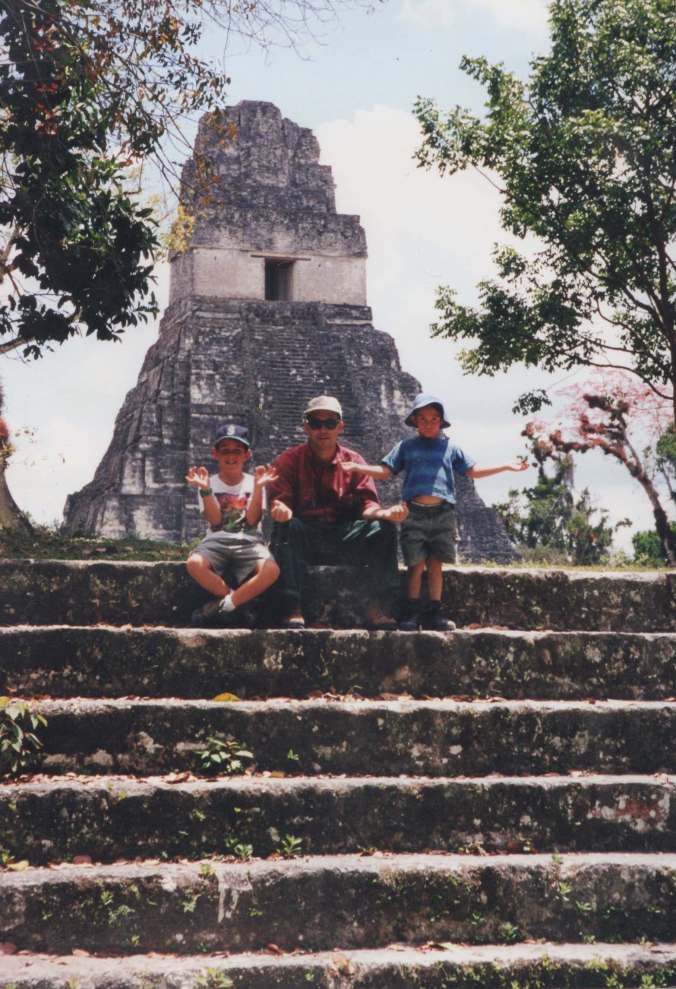
crist and boys tikal.jpg

A few days ago I mentioned, in reference to my recent visit to Belize, an earlier visit to Tikal in Guatemala. In the photo above, taken in 1999, three future La Paz Group contributors (Seth Inman, me, and Milo Inman from left to right) were getting our “om” on in preparation to climb the stairs in the background.

Amie Inman, who took that photo, reminds me that she and I had been to Tikal earlier, without our two sons. On both occasions we had the kind of mystical experiences for which this location is known. We had climbed the temple in advance of sunrise, as recommended (no photos from that with us currently, so credit for the photo below goes to a fellow wordpress blogger; click the photo for attribution).

sunrise-in-tikal

What we all remember about our visits to Tikal, and on a separate journey to Copan in Honduras we had the same sense, was how the archeologists and the relevant authorities in these particular national parks had done just the right amount of excavation. Some things were left to the imagination. Seth and Milo, in a conversation we overheard, said that Tikal was much better than Disney World, because it was real – it was like being Indian Jones. Our understanding of “real” was “unspoiled” in the sense that one could see plenty of uncovered evidence of Mayan culture, and also see that these artifacts of that culture eventually were swallowed by the jungle. Continue reading