Treetops Teeming

19REDWOODS-master1050-v2

Climbers, including a master instructor, made their way up Grandfather, an 800-year-old, 200-foot-tall redwood near Los Gatos, Calif., last month. Credit Steve Lillegren

A topic we have been coming back to on a regular basis for years–the value of biodiversity in general (we are not averse to stating the obvious in these funny times we live in) and in particular the as-yet still to be explored forest treetops–appears in the Science section of this week’s New York Times. Apart from reminding us of a tree-inclined scientific friend (Meg, of treetop science fame, we have just recently learned you are now out in the vicinity of these redwoods, and so we shout this one out to you!), and reminding us of one of the great long-form pieces of journalism on the same topic, it is worth a read:

Creative Conservation

White rhinos in South Africa. Photo © Michael Jansen / Flickr via Cool Green Science

From our counterparts at TNC’s blog Cool Green Science comes a second post on the wacky strategies sometimes implemented to save endangered wildlife species. Poisoning rhino horns so people can’t use them for so-called medicine, treating bats for fungus with banana bacteria, killing invasive snakes with acetominophen-filled dead mice thrown from helicopters, the list goes on. Justine Hausheer writes:

Consumers of illegal rhino horn products might be in for a bit of a nasty gastrointestinal shock. In an effort to protect their population of rhinos from poachers, the South Africa’s Sabi Sand Game Reserve is injecting parasiticides and pink dye into their rhinos’ horns. The chemical cocktail isn’t lethal (to humans or the rhinos) but it will send anyone that ingests powdered horn racing for the nearest restroom. Reserve staff have already treated more than 100 rhinos and put up sign warning poachers of the treatment.

Continue reading

Food Supply Change

5184

Accor plans to plant 1,000 vegetable gardens at its hotels by 2020. Photograph: Alamy

Only by scaling up the farm-to-table concept will we see a change to the industrial food production processes that lead to waste and related problems. We cheer our colleagues at Accor for this initiative:

Major hotel chain to grow vegetables at 1000 properties to cut food waste

Accorhotels, which includes Sofitel, Novotel, Mercure and Ibis, will reduce number of main courses on offer and record all food thrown away

One of the world’s biggest hotel chains has announced it will plant vegetable gardens at many of its hotels as part of a plan to cut food waste by a third. Continue reading

Processed Views

Although a previous post that embraced the sculptural qualities of food had a far more lighthearted intent, the juxtaposition of Carleton Watkins’ classic photographs and Barbara Ciurej and Lindsay Lochman’s irreverent dioramas has to be viewed with a certain level of irony. The iconic photos of America’s great national parks brought a sense of the country’s vastness home.

The pioneering nineteenth-century landscape photographer Carleton Watkins visited Yosemite during a time of rapid industrialization in the American West, but you’d never know it from the majestic tranquility of the rivers, mountains, forests, and rock faces he depicted. In her book “River of Shadows,” Rebecca Solnit, chronicling the life of another influential photographer of the time, Eadweard Muybridge, whose studies of high-speed movement helped to pioneer motion-picture technology, wrote that Watkins’s landscapes “looked like the true world everyone sought but no one else could locate among the mining booms, railroad building, land grabs, mobs, and murders” of the period. And yet Watkins’s images—which provided many people back East their first views of Yosemite’s idyllic splendor—were, in some sense, an advertisement for the possibilities of the West, and the vast untapped resources that American corporations of the eighteen-sixties and seventies were rushing to exploit. Continue reading

The Endangered Yellow-eyed Penguin

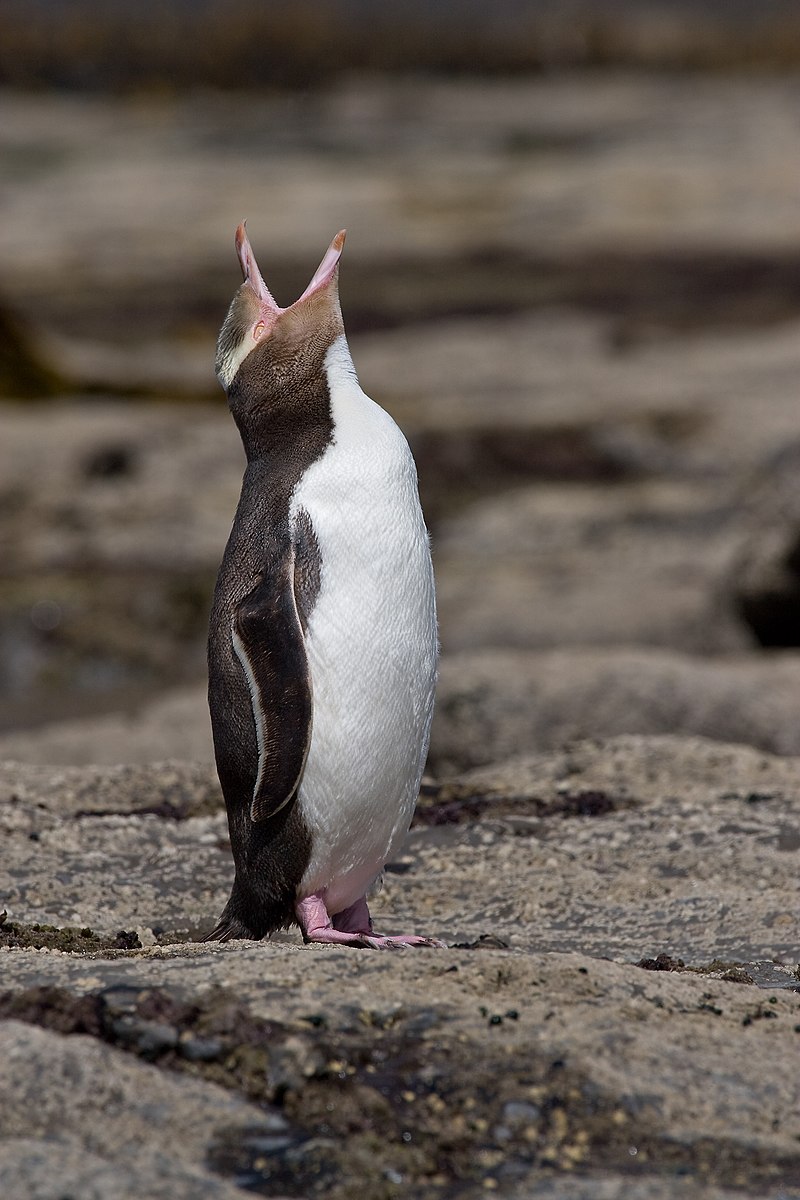
A Yellow-eyed Penguin (Megadyptes antipodes) in the Curio Bay, New Zealand. Photo by Christian Mehlführer via WikiMedia Commons.

We all like penguins, probably since they’re such unique birds with an aptitude for cuteness. We’ve written about their protection before, even in the same country this post is concerned with, New Zealand. A species that numbers only in the few thousands, the Yellow-eyed Penguin, is clearly at risk of extinction due to habitat and food source loss. Marcel Haenen reports for the New York Times:

DUNEDIN, New Zealand — Only a keen-eyed observer can spot the rare yellow-eyed penguin in the impenetrable forest hills that hug New Zealand’s South Island beaches.

Native to this region, the birds mostly lurk under a canopy of thick shrubs, trees and branches, dashing for hiding places as soon as a human approaches.

Incredibly shy, the yellow-eyed penguin is truly odd. Measuring about 65 centimeters, or just over two feet tall, with striking yellow eyes and a yellow band across its head, it is the rarest species of penguin, nesting in the forest and returning to it. It is also severely endangered.

Continue reading

WWF Reports Half of World Heritage Sites Put at Risk by Development

Ambatotsondrona cliffs, in the Marojejy National Park of Madagascar. This park is one of several included in the UNESCO World Heritage Site named Rainforests of the Atsinanana, which has been declared In Danger. Photo by Jeff Gibbs via WikiMedia Commons

We deeply care about UNESCO World Heritage Sites anywhere on the globe, and believe they can be a great conservation tool, so reading that the World Wildlife Fund thinks almost three times more of the Sites are threatened than UNESCO lists as “In Danger” is worrisome, to say the least. Fiona Harvey reports for the Guardian:

Close to half of the sites around the world designated for special protection as areas of outstanding importance for nature are now being threatened by industrial development, a new survey has shown.

The sites, which include Australia’s Great Barrier Reef, the Grand Canyon in the US, and China’s giant panda sanctuaries in Szechuan, are all supposed to be protected under the United Nations’ designated world heritage status. But encroachments from industries, including fossil fuel exploration and illegal logging, are threatening to destroy the valuable habitats, the conservation charity WWF said on Wednesday.

Continue reading

Support Conservation In India!

12xp-tigers-master675

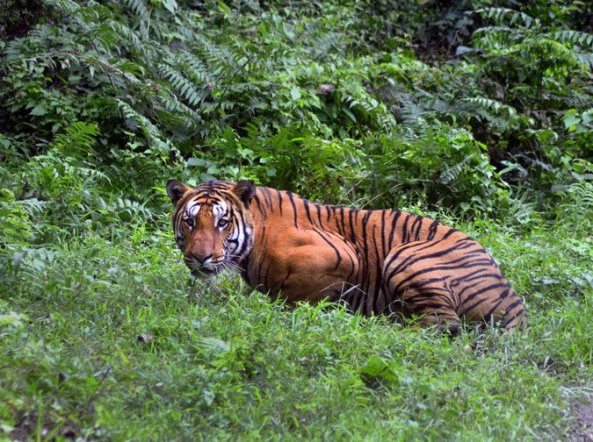
A Royal Bengal Tiger at Kaziranga National Park in India in 2014. CreditAgence France-Presse — Getty Images

Some moderately good news from the home front here in India gets us back in the mood to shout out in the interest of conservation-focused tourism:

Number of Tigers in the Wild Is Rising, Wildlife Groups Say

There are now an estimated 3,890 wild tigers, mostly in Asia, up from a worldwide tiger population of 3,200 estimated in 2010, the World Wildlife Fund and Global Tiger Forum announced on Monday. Wild tigers are considered endangered and had seen shrinking numbers because of hunting, poaching and loss of habitat, such as deforestation, particularly in Sumatra, for palm oil, and paper and pulp industries, the groups said. The official count had declined every year since 1900, when tigers numbered an estimated 100,000. Continue reading

Audubon Focuses on Corvids in Latest Issue

Corvid Behaviors poster by the Cornell Lab of Ornithology

“Meet the Bird Braniacs,” reads the header for three stories in the March-April issue of Audubon Magazine, highlighting the American Crow, Eurasian Jay, and Common Raven as especially smart species of bird (the three of them are Corvids, or members of the Corvidae family). In the different research projects covered in the Audubon pieces, the idea of empathy in birds is explored by Nicky Clayton at Cambridge University with Eurasian Jays; the problem of deterring Common Ravens from predating upon desert tortoises is a challenge for Tim Shields in the Mojave desert; and the general intelligence of the American Crow is studied by John Marzluff at the University of Washington. All the articles are quite interesting and worth a read online if you have the time. Below, a brief excerpt from the three essays, by Michael Balter, Alisa Opar, and Kat McGowan, respectively:

“I love you!” says Nicky. “I love you!”
“I love you!” says Lisbon
.

Nicky Clayton has shoulder-length blonde hair and a posture that reflects her background in dancing.  She is a scientist. She is very smart. Lisbon is a bird, a Eurasian Jay. He’s pretty smart, too. Like most Eurasian Jays, especially the males, Lisbon is also a good mimic. So it’s not clear whether he really loves Nicky, although he certainly likes it when she gives him a worm.

If he loves anyone, it’s probably Rome, his longtime mate. Lisbon and Rome, both eight years old, have been together since they were just two. They share a wired enclosure out here at the edge of Madingley, a peaceful, manicured English village a few miles west of Cambridge.

Clayton, 53, moved to Cambridge University about 16 years ago, around the time when she was becoming an international science superstar for her investigations into avian intelligence. As part of the deal, the university agreed to construct several aviaries at its Madingley annex according to Clayton’s specifications. They’re not fancy, but the birdcages include plenty of space for the captives to fly around, play, and mate, as well as special compartments where they collaborate with Clayton in state-of-the-art bird cognition experiments. Today the aviaries house about 70 birds, including Eurasian Jays, Western Scrub-Jays, and Rooks, all members of the corvid family. At night, the caws and kuks can be heard over much of the village.

Continue reading

Threats to Monarch Butterflies and How We Can Help

A Monarch butterfly caterpillar feeding on the leaves of a milkweed plant. Photographed at the Grapevine Botanical Gardens. Photo © TexasEagle/Flickr through a Creative Commons license, via TNC

We’ve covered monarch butterflies plenty of times in the past, whether it was reporting survey results showing that many households in the US would pay to help create habitat for the species, showcasing a citizen science project by the Xerces Society to count the winged invertebrates during their migration, or simply highlighting the needs of the orange butterfly in general and how to become involved. Now, given increased media coverage of the Monarch, the Cool Green Science blog for The Nature Conservancy is summarizing hazards and helpers of the species:

Twenty years ago, monarch butterflies occupied so much area in Mexico during the winter you could see it from space. It totaled about 20 hectares, or almost 50 acres, with millions if not billions of butterflies clinging to trunks and branches of trees.

Today, that area is around 4 hectares. The previous year had 1.1 hectares, says Brice Semmens, Assistant Professor at the Scripps Institution of Oceanography at the University of California San Diego.

Semmens was the lead author on “Quasi-extinction risk and population targets for the Eastern, migratory population of monarch butterflies” published recently in the journal Scientific Reports. It is one paper in a long line of sobering butterfly news.

Continue reading

Biodiversity May Protect Against Wildfires

Photo of a Southern brown bandicoot by John O’Neill via Wikimedia Commons.

New research in Australia’s forests and bushlands indicates that terrestrial biodiversity–or more precisely, a higher number of different mammal species–can help prevent wildfires given the way the critters alter their ecosystem. We’ve heard about different creative management options for fires before, and we care deeply for biodiversity preservation efforts, so this seems like one of those win-win scenarios if it can be implemented. Jason Goldman reports for UW’s Conservation Magazine on research published in Animal Conservation:

One factor leading to increased wildfire susceptibility might be surprising: biodiversity loss. In particular, the extinction of small, ground-dwelling mammals may prime Australia’s bush to burn.

Wildfires certainly threaten biodiversity in some cases. According to the IUCN, 179 mammal, 262 bird, 146 reptile, 300 amphibian, and 974 plant species can count wildfire (and fire suppression) among their existential threats. More wildfires means less wildlife, even accounting for the many ecosystems that are already fire-adapted. But according to a new study published in the journal Animal Conservation, it works the other way around too.

Matt Hayward, a conservation ecologist at Australia’s Bangor University and the Australian Wildlife Conservancy, argues that restoring biodiversity could reduce the likelihood of a wildfire starting—or of spreading rapidly once it’s begun.

Continue reading

Sumatran Rhino Siting In Borneo

2rhino_750-copy.jpg

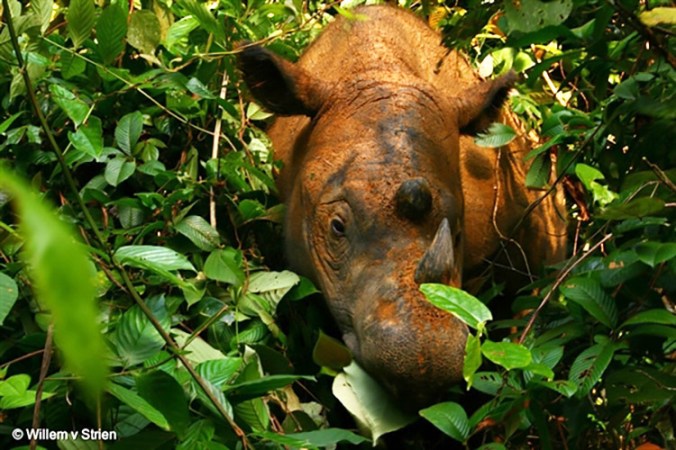
A rhino in the Sumatran Rhino Sanctuary in Way Kambas National Park, Indonesia (2008). Photo credit: Willem v Strien / Greenpeace

Thanks to EcoWatch for this remarkable news:

An excited World Wildlife Fund (WWF) team released details of how the female rhino was safely captured in East Kalimantan (part of Indonesian Borneo) last month and has now been transported to a more protected region. Over the last few years, evidence from camera traps and footprints has indicated that these rhinos still survived in Borneo’s forests, but this is the first known encounter with a live animal since the early 1970s. Continue reading

Not A Cute Cat Video

Screen Shot 2016-04-02 at 5.57.51 PM

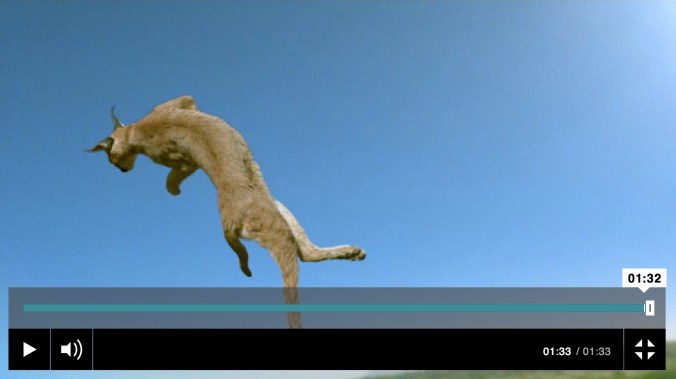
It is science, folks. Thanks to BBC Earth, here we ask for a minute and a half of your time in the interest of understanding exactly how cats do what they do. As we see it, this may translate into your future action in the interest of conservation of their natural habitat (the wild cats, of course, not the backyard bird-eating domestic variety):

How do cats always land on their feet?

This cat not only defies gravity but lands again safely and it all happens in less than a second

Caracals are expert bird hunters, capable of catching them in mid-flight with incredible leaps. Continue reading

Waste Not, Want Not Tiger Habitat

4047

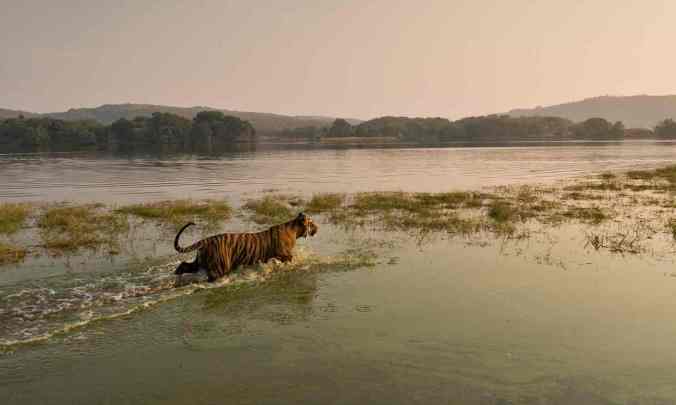
A tiger wades into the waters of Raj Bagh lake in Ranthambhore tiger in Rajasthan, India. Conservationists warn ‘tiger corridors’ connecting habitats across Asia are crucial for the survival of the species. Photograph: Aditya Singh/Alamy

From today’s Guardian in the Environment section, some welcome news on one of our most posted-on topics:

Forests still large enough to double the world’s tiger population, study finds

Satellite maps show tiger habitat is being lost but still adequate for meeting international goal of doubling tiger numbers by 2022

Forests that harbour tigers are being lost but are still large enough to take double the world’s tiger population in the next six years, according to a study using new satellite mapping technology. Continue reading

Float

The ocean stirs the imagination and inspires the heart. In its frolicking waves and every grain of sand is a story of the earth. And the beautifully timed crash of the waves whisper about nature’s simple treasures. For the sea and its tales along the land are a continual miracle. – Rosanna Abrachan

The tale we hear is thrilling – of knowledge passed down for generations, of artisanal fishing practices that grace us with sustenance from the Arabian Sea without depleting her waters.

Come sea!

Good Spirited

Although we don’t particularly endorse consumption of alcohol or hold loyalty to any single brand or type of liquor, we’re always on the lookout for positive environmental news in any corporate setting, and we’ve recently learned that Bacardi Limited, perhaps the best-known makers of rum in the world (and owners of other alcohol brands Martini, Grey Goose, Bombay Sapphire, and Dewar’s Scotch), has been attempting to do better for the environment.

Called “Good Spirited,” (who doesn’t like a nice pun), Bacardi’s campaign involves recycling, waste reduction, energy efficiency, and other mechanisms to reduce the company’s environmental impact in the world and become more sustainable. For example, they’ve removed plastic straws and stirrers from their North American headquarter events in Florida and their Bombay Sapphire distillery in the UK, which they estimate will save more than 12,000 of the small plastic tubes from landfills annually.

In their original distillery in Puerto Rico, the company reuses water from rinsing Continue reading

Map the Herps You Spot

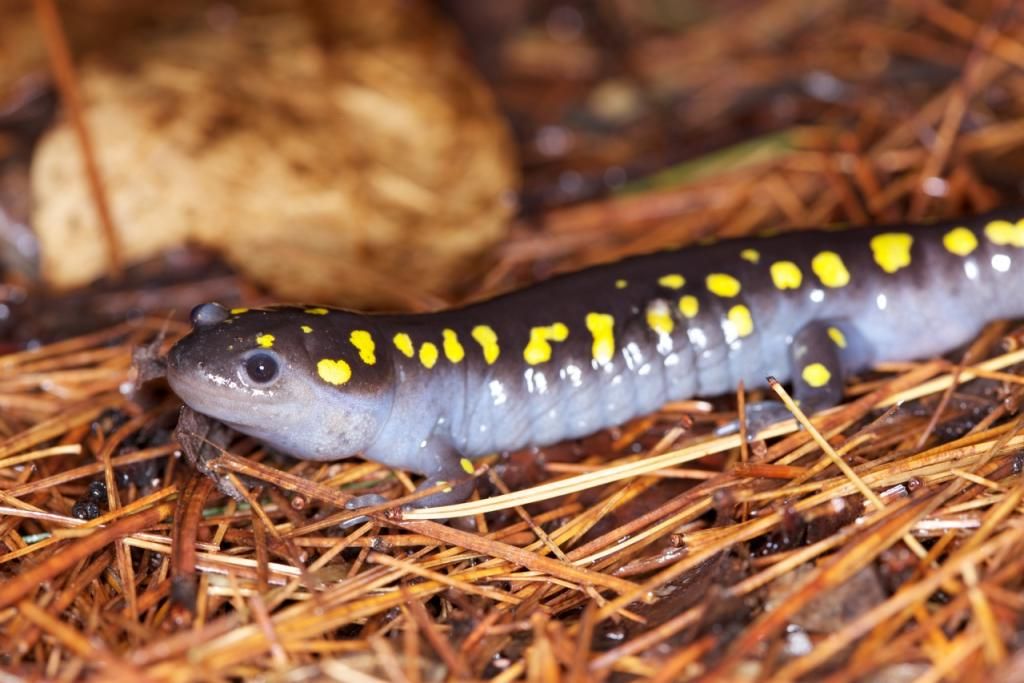
Spotted Salamander by Brian Magnier

In the spring of my penultimate year at Cornell, I took a Herpetology class that introduced me to the world of reptiles and amphibians, or “herps,” as they’re affectionately known. Thanks to that exposure, I was able to enjoy the spring migration of certain salamander species and learn the basics of the main families of frogs, lizards, snakes, and other herps like alligators, crocodiles, and all the other slimy or scaly animals in the classes Amphibia and Reptilia. If I had known of the existence of the citizen science project HerpMapper at the time (it wasn’t released until September of the same year as that salamander migration) I’d have certainly submitted some observations and photos to the organization! From their About page:

HerpMapper is a cooperative project, designed to gather and share information about reptile and amphibian observations across the planet. Using HerpMapper, you can create records of your herp observations and keep them all in one place. In turn, your data is made available to HerpMapper Partners – groups who use your recorded observations for research, conservation, and preservation purposes. Your observations can make valuable contributions on the behalf of amphibians and reptiles.

Continue reading

An Unusual Library With A Conservation Mission

3058058-slide-3-the-rarest-colors-in-the-harvard-pigment-library.jpg

A short note here to link out to a story of interest because of its intersection of conservation, commerce and education. Thanks to this new (to us) source of interesting (to us) news:

The Harvard Library That Protects The World’s Rarest Colors

The most unusual colors from Harvard’s storied pigment library include beetle extracts, poisonous metals, and human mummies.

Today, every color imaginable is at your fingertips. You can peruse paint swatches at hardware stores, flip through Pantone books, and fuss with the color finder that comes with most computer programs, until achieving the hue of your heart’s desire. But rewind to a few centuries ago and finding that one specific color might have meant trekking to a single mineral deposit in remote Afghanistan—as was the case with lapis lazuli, a rock prized for its brilliant blue hue, which made it more valuable than gold in medieval times. Continue reading

Is It This Simple?

ghost-fishing

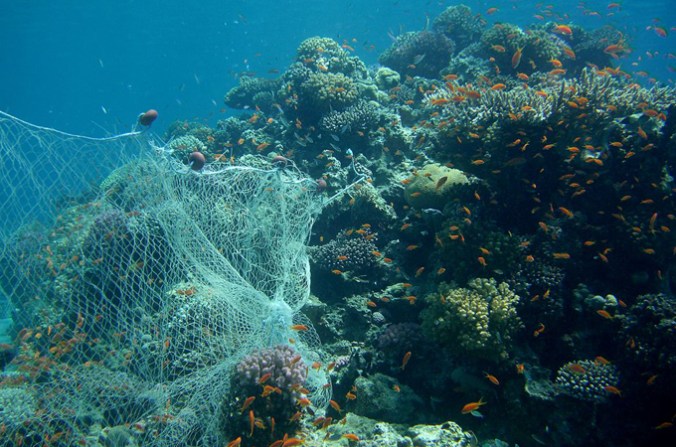
A serious problem with a relatively simple solution (thanks to Conservation magazine’s website):

BIODEGRADABLE GILLNETS COULD HELP RID THE OCEAN OF GHOST FISHING

Researchers have found that biodegradable gillnets catch fish as well as conventional nylon nets—and more quickly lose their ability to entangle animals when discarded at sea. Even more, the degradable nets tend to trap fewer young fish and bycatch. Continue reading

The Nechisar Nightjar

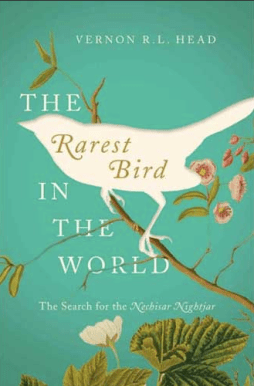
Cover Art © Pegasus Books

Although I haven’t read this book yet, I do know what it’s like to be on an expedition to find a bird that hasn’t been seen in several decades, which is the subject of Vernon Head’s book, freshly published in the US this month. “The Rarest Bird in the World” tells the story of the search for a bird related to potoos called the Nechisar Nightjar, which had been identified as a new species in the 1990s by Cambridge scientists who found a single wing of the bird in a remote area of Ethiopia.

The publisher blurb makes it sound pretty engaging:

Part detective story, part love affair, and pure adventure storytelling at its best, a celebration of the thrill of exploration and the lure of wild places during the search for the elusive Nechisar Nightjar. In 1990 an expedition of Cambridge scientists arrived at the Plains of Nechisar, tucked between the hills of the Great Rift Valley in the Gamo Gofa province in the country of Ethiopia. On that expedition they found three hundred and fifteen species of birds; sixty one species of mammal and sixty nine species of butterfly were identified; twenty species of dragonflies and damselflies; seventeen reptile species were recorded; three frog species were filed; plants were listed. And the wing of a road-killed bird was packed into a brown paper bag. It was to become the most famous wing in the world.

Continue reading

How to Prevent Extinction

Illustration by Jon Han for the New York Times

In last Sunday’s edition of the New York Times, the eminent ecologist E. O. Wilson–who we’ve posted about several times in the past for his inspiring and erudite thoughts on nature and biophilia–wrote an opinion editorial on “The Global Solution to Extinction,” in which he partly reminisced about his studies in biology, and also offered his suggestion on how to prevent further extinctions: increase the area of nature refuges, or in other words, boost habitat conservation. Here’s an excerpt of the first half of his piece:

DURING the summer of 1940, I was an 11-year-old living with my family in a low-income apartment in Washington, D.C. We were within easy walking distance of the National Zoo and an adjacent strip of woodland in Rock Creek Park. I lived most of my days there, visiting exotic animals and collecting butterflies and other insects with a net that I had fashioned from a broom handle, coat hanger and cheesecloth. I read nature books, field guides and past volumes of National Geographic. I had already conceived then of a world of life awaiting me, bottomless in variety.

Seventy-six years later, I have kept that dream. As a teacher and scientist I have tried to share it. The metaphor I offer for biological diversity is the magic well: The more you draw, the more there is to draw.

Continue reading