Warming Climate & Shrinking Bison

12938647293_8441c5bf5f_k-1260x708

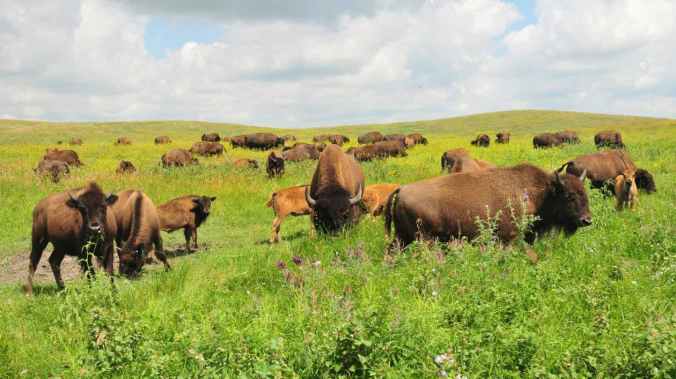
Bison graze on Ordway Prairie, owned and managed by the Nature Conservancy. The site has a USFWS grassland easement protecting it in perpetuity. Photo © USFWS Mountain-Prairie/Flickr

Thanks to science writer Matt Miller, and the Cool Green Science website, we get these stories daily that increase our understanding of the lesser known details of our environment. Are they important? It is a matter of perspective:

Here’s a climate change impact you probably never considered: bison diets.

As the climate warms, bison in North America are likely to shrink, as documented in research published by Joseph Craine and colleagues.

The reason they shrink is because as grasslands warm, grasses and other plants accumulate less protein. Bison are then forced to eat plants that are less nutritious.

This raises a related question: what plants do bison actually eat?

The answer to this question could help conservationists manage for plant species that are higher in protein and preferred by bison – ensuring healthy herds on warming grasslands. Continue reading

Conservation, Technology & Ethics

13duaneWEB-jumbo

Adam Ferriss

We have had the good fortune, and could not agree more with the questions raised and the puzzles presented in this opinion editorial published two days ago in the New York Times:

The Unnatural Kingdom

If technology helps us save the wilderness,
will the wilderness still be wild?

By

IF you ever have the good fortune to see a Sierra Nevada bighorn sheep, the experience might go like this: On a sunny morning in Yosemite National Park, you walk through alpine meadows and then up a ridge to the summit of Mount Gibbs at 12,764 feet above sea level. You unwrap a chocolate bar amid breathtaking views of mountain and desert and then you notice movement below. Continue reading

Urban Forest


Urban forests play an important role. Not only continuing to act as the Earth’s lungs, but they perform other valuable services – least of all providing the sense of peace and refuge for both humans and wildlife.

Our urban trees in the James River Park System and City of Richmond perform valuable services for us. They anchor the soil on hills and along river and stream edges, which reduces runoff into the river. They provide habitat and food for animals, and moderate the temperatures and rainfall with their canopies. Continue reading

Volcán Barva

IMG_8066_zpsuftku7jl

The lagoon in the crater of Barva Volcano

This weekend, I visited Braulio Carrillo National Park for the second time, but at a different sector: Barva Volcano. I’d been to the Quebrada González area further east in July of last year, where the ecosystem is more tropical rainforest than the high-altitude cloud forest of a volcano. The Quebrada González eBird hotspot has 382 species reported in 288 checklists at the time of writing this post; in stark contrast, the Volcán Barva hotspot on eBird has 82 species in only 8 checklists, including my own contribution despite arriving at the national park at around 11am, nowhere near ideal circumstances for birdwatching.

This discrepancy is likely explained both by the fact that Barva is at a higher elevation and therefore less diverse in terms of species count, but also a pretty small chunk of this massive national park. The lower diversity, however, is compensated by a higher rate of endemism, which is what occurs along high mountain gradients where habitat needs are specialized. For example, I spotted a Spangle-cheeked Tanager that’s endemic to the highlands of Costa Rica and western Panama, and there were lots of special bromeliads and mossy, licheny trees to admire. Continue reading

California Condors, Better Births, Incredible Intervention

California Condor chick being fed by a puppet as part of the captive breeding program. Photo by Ron Garrison at the San Diego Zoo for the US Fish and Wildlife Service, via WikiMedia Commons.

Back in 1973 when the Endangered Species Act put the California Condor under protection, the species’ numbers were still dwindling at an alarming rate. In the following decade the remaining population was captured and bred in captivity, so as to protect chicks and release them into the wild. And last year, more condors were born and raised in the wild (14) than the number of adult wild condors that died (12), which represents success in the breeding program. There are now over 250 California Condors in the wild, a vast improvement over the 22 surviving birds that were captured for the start of the breeding program.

Officials also counted 27 wild condor nests last year. Nineteen were in California, three in the Arizona-Utah border area and five in Mexico’s Baja Peninsula. Grand Canyon National Park in Arizona has a condor nest, officials said, as do Zion National Park in Utah and Pinnacles National Park in central California.

The captive breeding program continues with the Peregrine Fund‘s World Center for Birds of Prey near Boise being the top egg producer, with six eggs laid this spring and nine more expected.

“So far it’s going fantastic,” said Marti Jenkins, condor propagation manager at the facility.

She said two eggs laid at the facility last year were placed in wild nests in California where eggs were either infertile or damaged. The replacement eggs produced fledglings that officials count in the wild population.

Continue reading

Palau Power!

21mag-21palau-t_CA4-jumbo

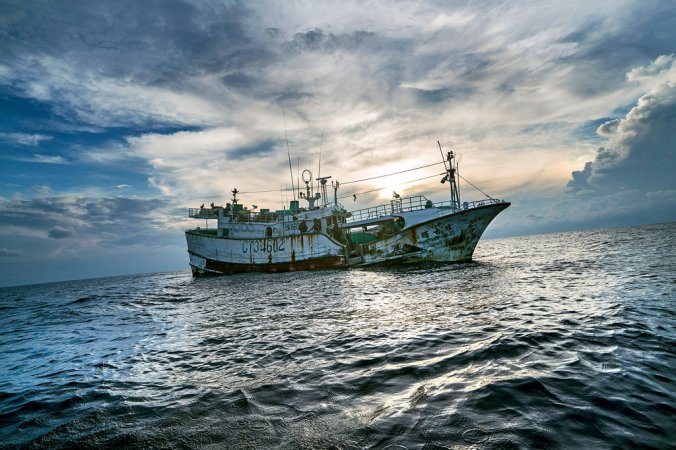
The Sheng Chi Huei 12, a Taiwanese fishing vessel. BENJAMIN LOWY/REPORTAGE, FOR THE NEW YORK TIMES

Where are the heroes on the high waters? Sea Shepherd, one of our favorites, is out there and Paul Watson continues to lead the charge; but not only them. Little places also do big things. Thanks to Palau for the inspiration, and the reporter/publication for the investigation:

Palau vs. the Poachers

The island nation has mounted an aggressive response to illegal fishing in their waters. How they protect themselves may help the rest of the world save all of the oceans.

Late on a January 2015 evening in Shepherdstown, W.Va., a data analyst named Bjorn Bergman, surrounded by whiteboards scribbled with computer code, was orchestrating a high-stakes marine police chase halfway around the world. Staring at his laptop in a cramped ground-floor office, he drank from his sixth cup of coffee and typed another in a long series of emails: ‘‘Try and cut them off rather than making for the last known position.’’ Nearly 9,000 miles away, the Remeliik, a police patrol ship from the tiny island nation Palau, was pursuing a 10-man Taiwanese pirate ship, the Shin Jyi Chyuu 33, through Palauan waters. Bergman, working for a nonprofit research organization called SkyTruth, had mastered the use of satellite data to chart a ship’s most likely course. Instead of pointing the police to where the pirate ship was, he would tell them where it was about to be. He took another sip of coffee, studied his screen, then typed again: ‘‘It may be advisable for the Remeliik to turn southeast.’’ Continue reading

Unintentional Conservation

Twilley-Ancient-Flower-Amber3-690

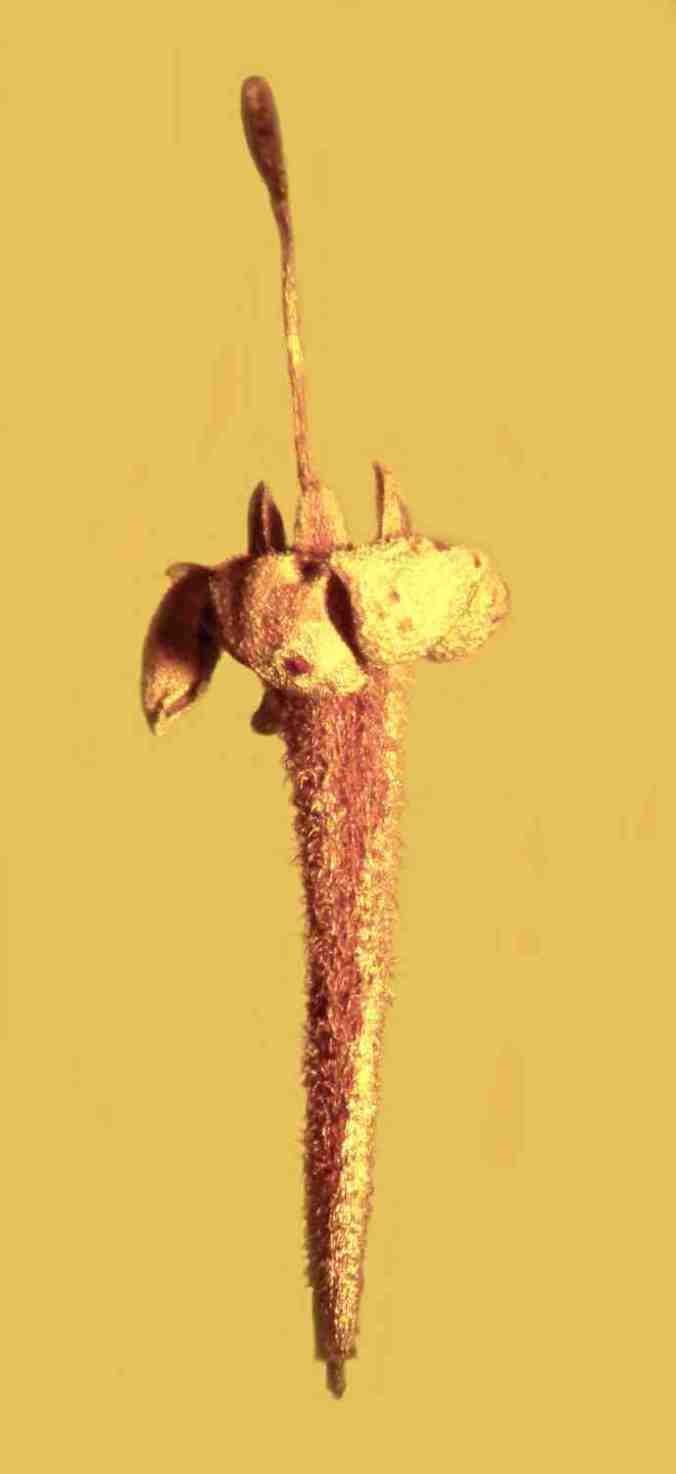
S. electri. COURTESY GEORGE POINAR / OREGON STATE UNIVERSITY

Amber is awesome. In so many ways, it is the definition of a natural wonder. One of those definitions might be its role as unintentional conservator of ancient natural history. This collection of images, from an amber-trapped flower to an prehistoric stingless bee, make the case for this definition:

The flowers of Strychnos electri are slim and small and trumpet-shaped. Their petals flare out at the tip to form a star, out of which a single spindly pollen tube protrudes. They look as if they might have fallen from the stalk yesterday, but they are ancient. At least fifteen million years ago, and possibly as many as forty-five million, they landed in the sticky sap of a tree that is now extinct, in a kind of forest that no longer exists on Earth. The sap hardened into amber, the tree died, and eventually geology took over. The fossilized flowers were submerged in water, buried under layers of gravel and limestone, and finally thrust upward into the foggy hills of the modern-day Dominican Republic. There, in 1986, an American entomologist named George Poinar, Jr., unearthed them. Continue reading

A Great Race

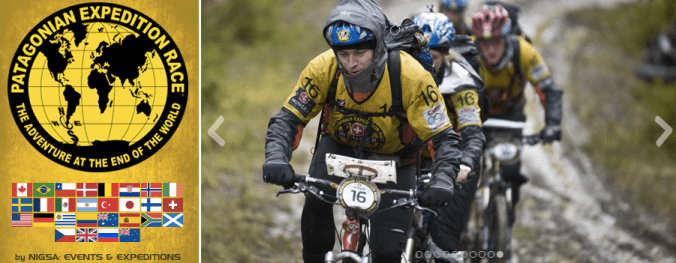
As I type this post the 20 4 person co-ed teams participating in the 2016 Patagonia Expedition Race are hopefully getting a good night’s sleep before tomorrow’s Kayak and Rope evaluations. From our collaboration with the organizers, both behind the scenes and in the field, we know the teams are going to need it!

Statistically, fewer than half the teams that start the grueling combination of trekking, mountain biking, kayaking and rope traverses complete the race. The teams receive minimal assistance – basic maps that require extreme orienteering and problem solving – to make the best time from checkpoint to checkpoint in often inhospitable environments.

Imitating the journeys of our Indian forefathers, competitors advance over plains, mountains, glaciers, native forests, swampland, rivers, lakes and channels; guided only by mind and spirit but driven on by physical stamina and experience.

Every edition features a unique route. Past racers have found themselves in the Southern Continental Ice Field, the Strait of Magellan, Torres del Paine, Tierra del Fuego, the Beagle Channel and Cape Horn. The land is diverse, the challenge real, the adventure untamed. Continue reading

To Dam or Not to Dam

In southern Laos, near where the Don Sahong dam will soon rise, a fisherman’s son snoozes above his father’s weir, waiting for fish migrating upstream to tire and wash back into the trap. PHOTO: David Guttenfelder

In southern Laos, near where the Don Sahong dam will soon rise, a fisherman’s son snoozes above his father’s weir, waiting for fish migrating upstream to tire and wash back into the trap. PHOTO: David Guttenfelder

Dams are barriers built across rivers and streams to confine and regulate water flow for irrigation and hydroelectricity. However, in recent years, the social, economic, and environmental impacts of these constructions have become a pressing concern. While dams are integral to agricultural irrigation, and can help control floods, the construction causes mass displacement, increases risks of earthquakes and landslides. Along the Mekong in China, the people need clean electricity but also the fish and rice that and undammed river provides.

Ban Pak Ing may be a vision of the future for many Mekong villages. Five more dams are under construction in China. Downstream, in Laos and Cambodia, 11 major dams—the first on the main stem of the lower Mekong—are either proposed or already being built. By disrupting fish migration and spawning, the new dams are expected to threaten the food supply of an estimated 60 million people—most of whom live in villages much like Ban Pak Ing. The electric power generated by the lower Mekong dams is destined largely for booming urban centers in Thailand and Vietnam. Kraisak Choonhavan, a Thai activist and former senator, calls the lower Mekong dams “a disaster of epic proportions.”

Continue reading

The Grey Parrots Go Missing


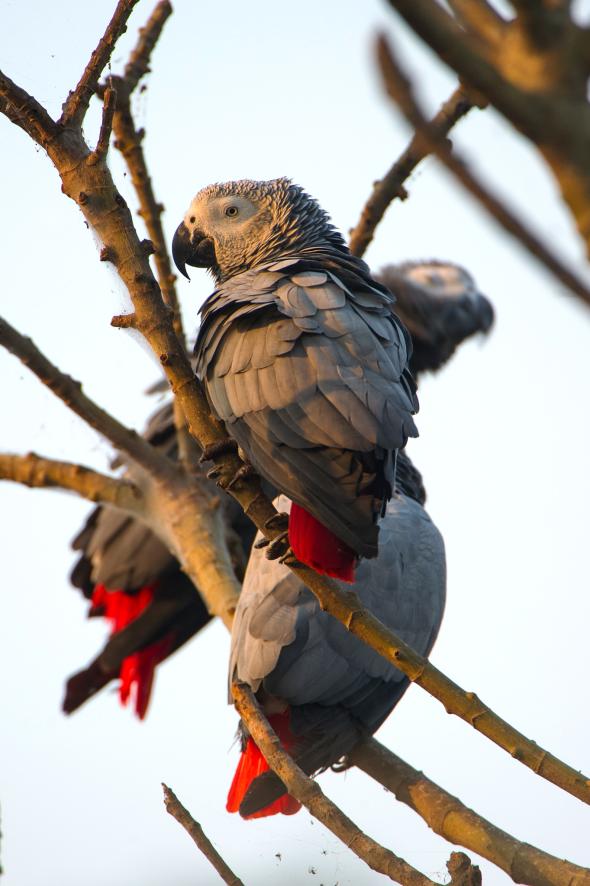
These African Grey parrots were rescued from smugglers and released on Ngamba Island in Lake Victoria. The African Grey parrot is the single most heavily traded wild bird. PHOTO: CHARLES BERGMAN

These African Grey parrots were rescued from smugglers and released on Ngamba Island in Lake Victoria. The African Grey parrot is the single most heavily traded wild bird. PHOTO: CHARLES BERGMAN

In all that we write about conservation, a related tag – unfortunately – happens to be extinction. Brought about by forest loss, miscalculated development plans, social and political apathy towards ecosystems, lack of awareness – the reasons we’ve all heard of. Now, National Geographic reports on the disappearance of the ‘talking bird’:

Flocks of chattering African Grey parrots, more than a thousand flashes of red and white on grey at a time, were a common site in the deep forests of Ghana in the 1990s. But a 2016 study published in the journal Ibis reveals that these birds, in high demand around the world as pets, and once abundant in forests all over West and central Africa, have almost disappeared from Ghana. Uncannily good at mimicking human speech, the African Grey (and the similar but lesser-known Timneh parrot) is a prized companion in homes around the world. Research has shown that greys are as smart as a two-five year-old human childcapable of developing a limited vocabulary and even forming simple sentences.

Continue reading

A Lone Couple, a Desert Island, and Turtles

Despite living in utter isolation on a desert island for 40 years, one inspirational couple has overcome disability and blindness to make a difference. PHOTO: BBC

Despite living in utter isolation on an island for 40 years, one couple has overcome disability and blindness to make a difference. PHOTO: BBC

Isn’t there a line about finding heroes in the most unlikely places? This is the setting of Daeng Abu’s and his wife Daeng Maida’s inspirational story: a desert island off the coast of Sulawesi in Indonesia, disabilities in Abu being blind and facing leprosy, their days spent raising sea turtles and speaking against the cyanide and dynamite fishing that is devastating Indonesia’s reef.

Neither knows how old they were when they entered their arranged marriage on nearby Pulau Pala (Nutmeg Island) – they currently believe they’re in their 80s – but Abu thinks he was older than 20 and Maida remembers it was the dry season. Her uncle fired three shots in the air; she walked over to his family’s home; Abu built a shack from bamboo and palm leaf; and married life began. Little did they know at the time – the couple was bound to become a rather unlikely pair of environmental activists.

Continue reading

To Our Sisters In Bali, Thank You

Ted Bali Sisters

A few months ago, with 11 minutes on stage in London at a regional TED event, these two poised and articulate, compelling Balinese sisters made a bold challenge. We commend their decisiveness and commitment, and will do our best to support them both in Bali and on our various home turfs:

Melati and Isabel Wijsen:

Our campaign to ban plastic bags in Bali

Plastic bags are essentially indestructible, yet they’re used and thrown away with reckless abandon.  Continue reading

Spotted Owls, Intangible Heritage, Future Fortunes

Screen Shot 2016-02-07 at 8.53.56 AM

About one minute in to Mr. Ziermann’s story, he explains how his intent to pursue a life of timber logging in Oregon was waylaid by the “rules and regulations” (he did not sound happy about these) to protect the spotted owl in the American northwest. I recommend taking five minutes with the video here, and a moment more below if you want my two cents on it.

A Fraught Search for Succession in Craftsmanship

Video by Andrew Plotsky
George Ziermann has been making handmade boots for over 40 years.

Continue reading

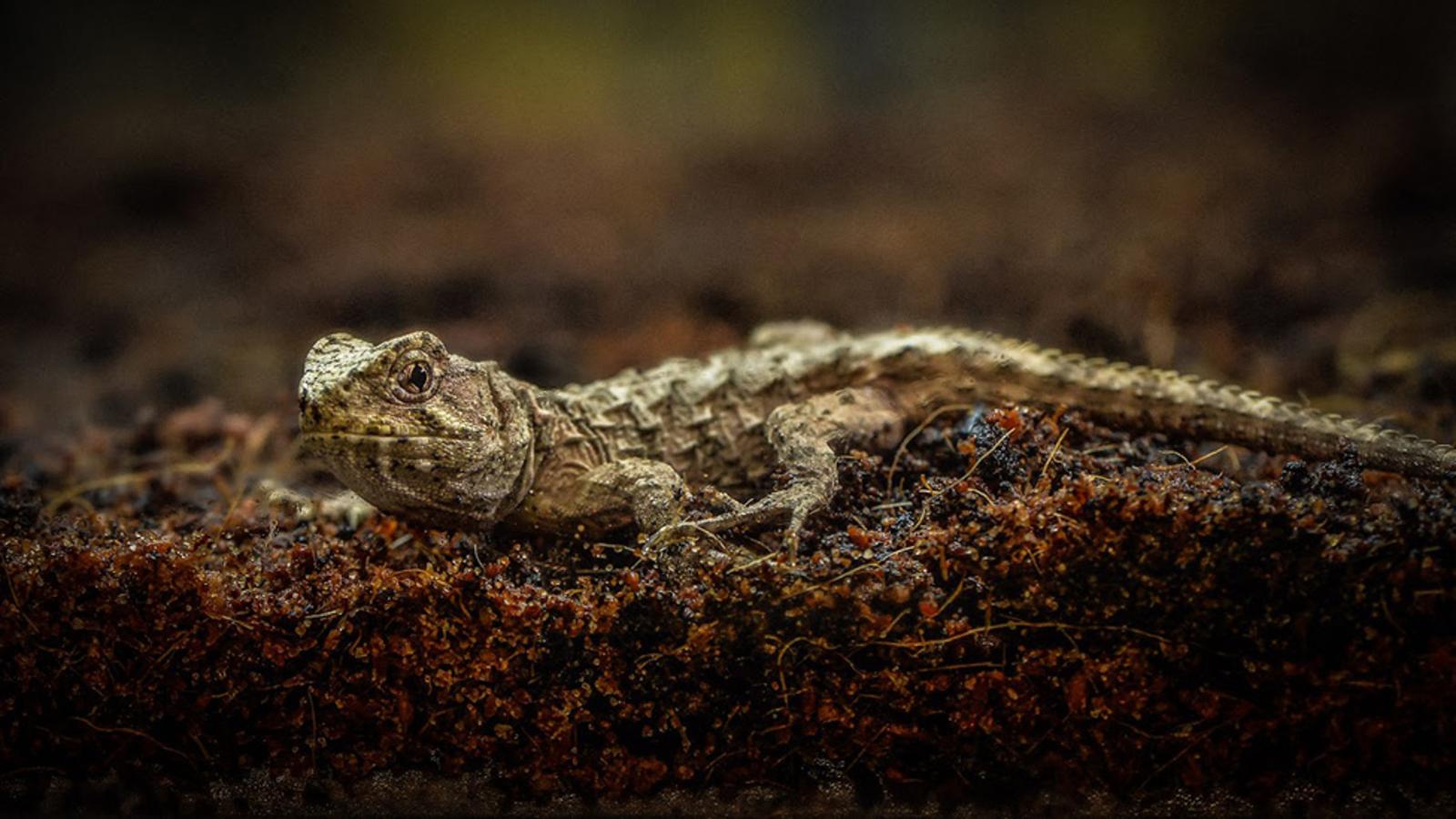
Hatching the ‘Third Eye’

The first tuatara hatchling has been born outside of its native New Zealand. photo: Chester Zoo

The first tuatara hatchling has been born outside of its native New Zealand. PHOTO: Chester Zoo

Discoveries excite us, an event that defies all odds even more so. Like the hatching of this tuatara outside its native of New Zealand.

After decades of work by a dedicated team at Chester Zoo in England, the first tuatara hatchling has been born outside of its native New Zealand.

“Breeding tuatara is an incredible achievement,” says Isolde McGeorge, the zoo’s tuatara keeper since 1977. “They are notoriously difficult to breed and it’s probably fair to say that I know that better than most as it has taken me 38 years to get here.”

Continue reading

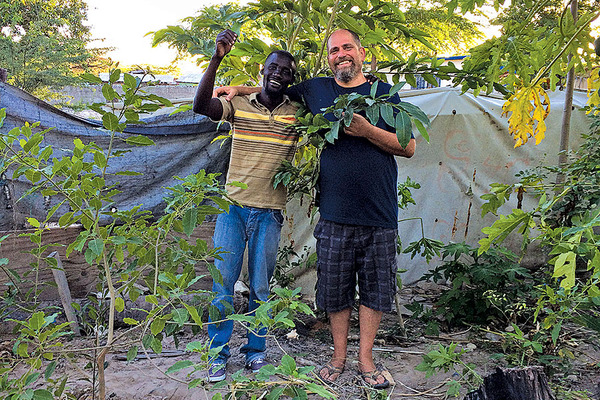
Israel to India, To Build Forests

Sadhana Forest shows local people in India, Haiti, and Kenya how to plant trees in dry regions – and improve their lives. PHOTO: Sadhana

Sadhana Forest shows local people in India, Haiti, and Kenya how to plant trees in dry regions – and improve their lives. PHOTO: Sadhana

Do you believe in a literary cosmos? I do. In the seemingly innocuous collision of two pieces of writing SO removed from each other that they are all that similar. Two articles – one found last evening for work, one chanced upon during the routine Instagram surf on the way to work. One standing out in the mayhem of a news feed; the incredible story of an Israeli man and his wife moving to India in 2003 and buying 70 acres of barren land. To build, sustain a forest. Reafforestation, to be clear. The other titled The Builder’s High. Yes, I’m ‘building’ this up.

Continue reading

El Jefe, Sole Wild USA Jaguar

lead_large (1)

One may be the loneliest number, but it is not a hopeless number, we hope. Thanks to the Atlantic for this story:

There are about 15,000 jaguars living in the wild today. They are solitary creatures, preferring to live and hunt alone. But the one living and hunting in the United States takes the word “loner” to another level: The jaguar, nicknamed “El Jefe,” is the only known wild jaguar in the country.

El Jefe, which means “the boss” in Spanish, made his public debut Wednesday in video footage released by the Seattle-based Conservation CATalyst and the Tucson, Arizona-based Center for Biological Diversity. The brief clip shows the big cat roaming the grassy forest floor of the Santa Rita Mountains, outside Tucson, navigating rocky creeks, and just doing jaguar-y things: Continue reading

Rising Anxiety

bangladesh

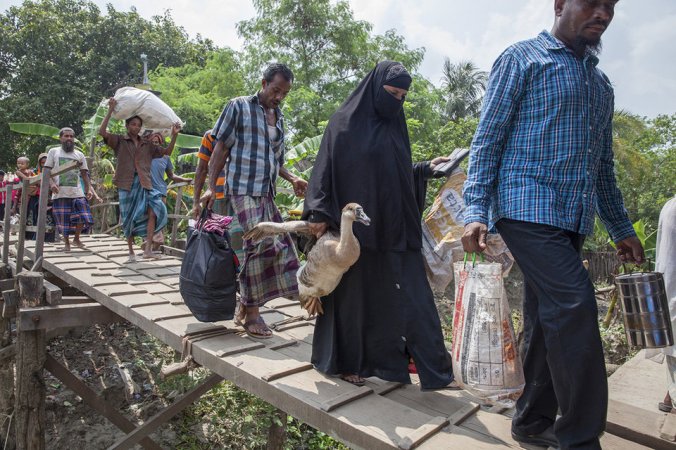
Bangladesh is one of the countries most vulnerable to the effects of climate change with millions expected to be displaced in the next 40 years. PHOTO: Probal Rashid

Developing countries are the most hit by climate change. Its effects—higher temperatures, changes in precipitation patterns, rising sea levels, and more frequent weather-related disasters—pose risks for agriculture, food, and water supplies. At stake are recent gains in the fight against poverty, hunger and disease, and the lives and livelihoods of billions of people in these countries. Bangladesh is one of them, with a rapidly increasing number of ‘climate refugees’.

Continue reading

Fish Fraud Falling

fish-marketThanks to Conservation Magazine for pointing us to this bit of scientific evidence that, while fisheries are on the whole in a dismal state, steps are being taken in Europe to address one of the symptoms:

Over the past few years, dozens of studies have documented a global fish fraud epidemic, in which fish are mislabeled as species they are not. It’s a problem with detrimental environmental, economic, and even potential health effects. Continue reading

The Power of Parks

yosemite

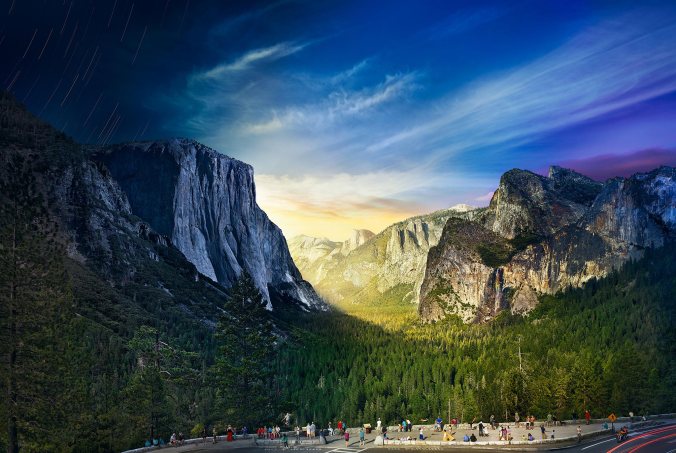
Photographs of Yosemite National Parks composed by Stephen Wilkes. Courtesy: National Geographic

Which side are you on – the one that believes national parks are the past or to the side that sees the future in these stretches? As long as national parks figure on your maps and feature in your scheme of things, you must know that the National Park Service is celebrating its centennial this year.  In commemoration, National Geographic looks at how to preserve these wild spaces:

“In March 1868 a 29-year-old John Muir stopped a passerby in San Francisco to ask for directions out of town. “Where do you wish to go?” the startled man inquired. “Anywhere that is wild,” said Muir. His journey took him to the Yosemite Valley in California’s Sierra Nevada, which became the spiritual home of Muir’s conservation movement and, under his guidance, the country’s third national park. “John the Baptist,” he wrote, “was not more eager to get all his fellow sinners into the Jordan than I to baptize all of mine in the beauty of God’s mountains.” Today around four million people a year follow their own thirst for the wild to Yosemite.”

Continue reading

An American Soldier, World War, and India

photo

28 years ago, a Chicago-based couple found a shoebox of photographs of the Indian countryside and they traveled halfway across the world to find their origin. PHOTO: Scroll

Here’s the plot: In 1988, a couple visited an estate sale of a deceased friend and stumbled upon a shoebox of old photographs tucked under a couch. It contained more than a hundred envelopes filled with negatives and contact sheets for photographs depicting India in 1945. The identity of the photographer: unknown.

But only until they set out to discover the man behind the lens. The answer (and the photographs) hang at Delhi’s Indira Gandhi National Centre for the Arts till January 31.

Continue reading