A Case for the Wildebeest

According to the UNEP, wildebeest populations have declined in areas of southern and eastern Africa. PHOTO: Natural Habitat Adventures

The Great Migration of Serengeti National Park, designated a World Heritage Site, is legendary. The stars of this 1,200-mile odyssey are the wildebeest – 1.5 million of them – accompanied by 200,000 zebras. Every year is an endless journey for them, chasing the rains across 150,000 square miles of woodlands, hills and open plains. With them having firmly established their caliber as a species built literally for the long run, the migration spectacle should probably be the only space where the wildebeest find a mention. But conservation debates are hovering over these beasts – categorized as non-threatened by the IUCN – and looking at them as a keystone species.

Continue reading

Playing by the Sun

A general view of the inside of M. Chinnaswamy Stadium cricket stadium. PHOTO: DIBYANGSHU SARKAR/AFP/Getty Images)

A general view of the inside of M. Chinnaswamy Stadium. PHOTO: DIBYANGSHU SARKAR/AFP/Getty Images)

Well, nothing unites all of India like a good game of cricket. And when the legendary game takes a green turn for the better at one of the country’s premier cricketing grounds, it makes news. The heart of the matter: The M Chinnaswamy Stadium at Bengaluru is the only solar-powered cricketing ground in the entire world.  Continue reading

Planting the Oak Back in Oakland

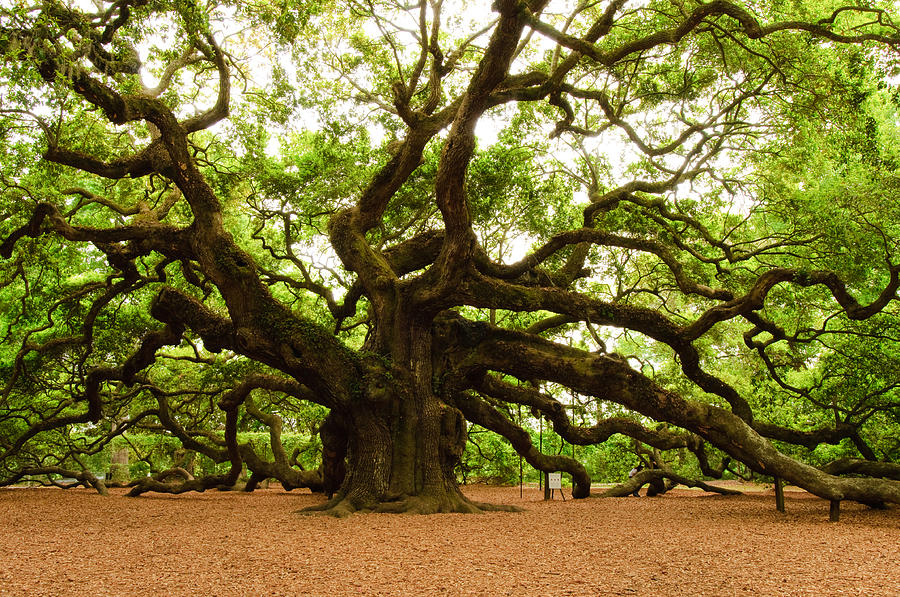
Felled to make way for developments, oaks are now being nurtured to better urban health. PHOTO: Louis Dallara

What’s in a name… Shakespeare’s 400-year-old line is timeless and oft repeated. For it goes beyond a few syllables and rests on the very soul of the matter. And going by a few volunteers setting up an inaugural stand of 72 coast live oaks in a West Oakland park, it seems like someone felt it, too. Say Oakland and you’d invariably conjure up images of woodlands and acorns. That and given that the oak is America’s national tree, you’d expect vast woodlands and tributaries of branches. Instead, sentiment is attached to the few oaks that still stand their ground in the face of development and there’s a “re-oak” campaign underway. In good time, we hope.

“Names are a powerful way to think about a place,” said Walter J. Hood, a landscape architect and professor at the University of California, Berkeley, who lives and works in Oakland and came up with the idea of resurrecting the city’s forgotten groves. “If a landscape changes, your way of life changes,” he said, “whether it’s a freeway cut into a neighborhood or a new dense canopy of trees.”

Read the New York Times report here.

Mother’s Day Redux: Bluebird and her Babies

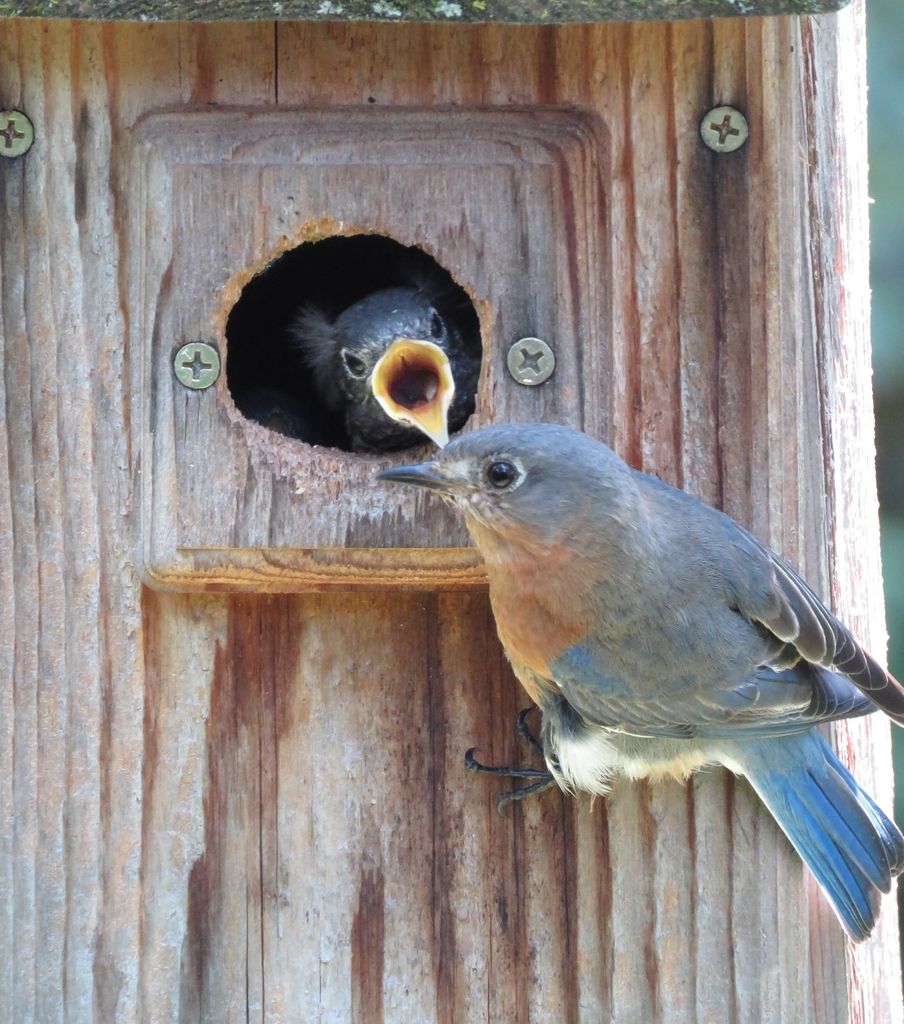
Mother bluebird feeding babies on Mother’s Day

A little less than a month before mother’s day (May 10th), a pair of bluebirds made their nest in one of the bluebird houses in our backyard in Atlanta. I was away studying at the university at the time, but my parents described to me in phone conversations the process familiar to anyone who has seen birds build a nest in their yard: first the birds made tentative visits to the site, then they began to carry in straw, twigs, and grass, finally the mother Continue reading

One for the Bird

Poaching and destruction of grasslands has brought down the bustard's population to 150 in the world. PHOTO: Kiran Poonacha

Poaching and destruction of grasslands has brought down the bustard’s population to 150 in the world. PHOTO: Kiran Poonacha

If there’s one certain takeaway from this blog, it’s the enduring and growing love for the feathered friends. In India, the conservation debate often touches on the Great Indian Bustard (GIB), which has an ostrich-like appearance and is labelled as “critically endangered.” In fact, the world population of the GIB is pegged at 150, with India, particularly Rajasthan, being home to 70 per cent of this number. Loss of the Bustard’s dry grasslands and scrub habitat, increased hunting and changes in land use have been blamed but Dr Pramod Patil refused to let things settle at that. Precisely why his pioneering work in protecting the Bustard population in Thar desert of Rajasthan won him the Whitley Award this year. Popularly known as the ‘Green Oscar’ and also won by compatriot Dr Ananda Kumar for his system to reduce man-elephant conflicts in India, the award carries a grant of £35,000. More importantly, it puts the focus back on the Great bird.

Continue reading

#PeopleVsShell

Photo credits: Greenpeace.org

Environmental Activism has never taken a back seat in Seattle and we continue to root for the individuals, organizations and public officials who are working to draw global attention to a possible environmental disaster. Certainly not the moment to “Keep Calm & Carry On”…

Hundreds of kayakers in Seattle were preparing to go and “shake their paddles” in protest at a newly arrived 400ft long, 355ft tall Royal Dutch Shell oil rig on Saturday, with hundreds – perhaps thousands – more scheduled to attend on dry land.

“We here in Seattle do not want Shell in our port. We want them to get out and change their business before they change our planet and destroy the life of future generations,” said Annette Klapstein, a 62-year-old retired attorney and member of activist group the Raging Grannies.

On Monday, the Obama administration effectively gave Shell the green light to restart its Arctic drilling and exploration operations with an approval issued by the Bureau of Ocean Energy Management, a governmental regulatory agency.

Shell was forced to halt its Arctic exploration in 2012 amid a series of severe security mishaps.

Environmental groups and scientists reacted to Monday’s news badly, warning that letting Shell back into the Arctic for exploration and drilling was very likely to cause an ecological disaster and contribute to climate change. Continue reading

“The Great Empty,” more Full than its Sobriquet Implies

Photo © Gerrit Vyn

What will you be doing this Wednesday 5/20 at 8pm EDT? If you’re in the United States and have a television, you should consider watching a PBS Nature documentary on the Greater Sage-Grouse (male in mating display pictured left) and other wildlife members of the vast community that lives in the sagebrush plains that span eleven western states and hundreds of thousands of miles. Titled “The Sagebrush Sea,” the film is the first of its type shot and produced by the Cornell Lab of Ornithology, and it promises to be quite entertaining and educational about this vast and daunting landscape. A friend who was in one of my freshman-year classes at Cornell has been helping out in the editing room as an employee at the Lab this spring, and he tells me that its been a really rewarding experience. Just from watching the trailer below you can see why!

You can check out the PBS Nature schedule webpage to see when the broadcast Continue reading

Leopards And Humans Peacefully Cohabitating In India

An elderly priest descending to Perwa village from a temple devoted to Lord Shiva on Perwa Hill where he lives, one of the many holy slopes in the region that is also home to leopards. Credit Richard Mosse

An elderly priest descending to Perwa village from a temple devoted to Lord Shiva on Perwa Hill where he lives, one of the many holy slopes in the region that is also home to leopards. Credit Richard Mosse

If you are coming to visit one of Raxa Collective’s properties in south India, and want a recommendation for a visit to another part of India, this may be on our to do list (we need to go check it out first, and will let you know):

Life Among the Leopards

Continue reading

Nell Zink, Come To Kerala!

Bricklaying “was more valuable for my intellectual life than my entire college career.” PHOTOGRAPH BY GARETH MCCONNELL

Bricklaying “was more valuable for my intellectual life than my entire college career.” PHOTOGRAPH BY GARETH MCCONNELL

No doubt, Nell will be a good fit among La Paz Group’s global community of artistically and/or conservation-oriented invitees, many of whom you have not likely heard of, some of whom are more famous, but all with unusual talents and interests. Thanks to Kathryn Schulz for another invitation-worthy story: Nell Zink turned her back on the publishing world. It found her anyway.

The kookaburra in the Berlin Zoo is ten thousand miles from home, squat, top-heavy, large of beak, attractive of plumage, and making what is, ounce for ounce, the loudest, strangest sound I have ever heard emerge from a living creature. It begins with a classic evil laugh, bwaaahahahaha, à la Vincent Price in “Thriller,” then the bird throws back its head and lets out a series of hoots, like a plump British woman with an unbecoming but infectious laugh or a parrot that grew up in a frat house, dissolves into giggles, transitions to a chortle, appears to become an entire dinner party going to pieces, then starts to pull it together, O.K., O.K., the guests wiping their eyes and settling down, until out comes a little chuckle and hahahahoik!ha, the bird is cracking up again. Continue reading

Big Picture Rewilding

George Mobiot doesn’t just think about otters and eagles – he thinks BIG, back to the megafauna that once inhabited the temperate climates of the globe.

Rewilding offers us this fantastic opportunity to start restoring systems, or allowing them to restore themselves. I see it as reintroducing missing plants and animals, then stepping back and letting nature get on with it.

Extreme Recycling

Filtering membranes in an Orange County, Calif., water purification facility. The plant opened in 2008 during the state's last drought. Credit Stuart Palley for The New York Times

Filtering membranes in an Orange County, Calif., water purification facility. The plant opened in 2008 during the state’s last drought. Credit Stuart Palley for The New York Times

As the California drought continues public and private sector organizations look to solutions to comply with the State’s mandatory water reduction measures. In addition to desalination plants coming back on line and rainwater harvesting, communities are looking at ways to overcome the “yuck factor” of water recycling.

Less “extreme” versions have been in place for some time, as household wastewater goes through layers of treatment processes that break it down to its prime components of “H, 2 and O”. The results have been used for irrigation for years, but it’s possible to purify the water to sparklingly clear levels.

Used already in craft beer brewing, extreme purified water is one of the array of ideas being implemented to manage California’s ever-growing problems. Dealing with consumers is essentially a marketing problem, more so in this case than the norm.

Water recycling is common for uses like irrigation; purple pipes in many California towns deliver water to golf courses, zoos and farms. The West Basin Municipal Water District, which serves 17 cities in southwestern Los Angeles County, produces five types of “designer” water for such uses as irrigation and in cooling towers and boilers. At a more grass-roots level, activists encourage Californians to save “gray water” from bathroom sinks, showers, tubs and washing machines to water their plants and gardens. Continue reading

Rewilding’s Great Rewards

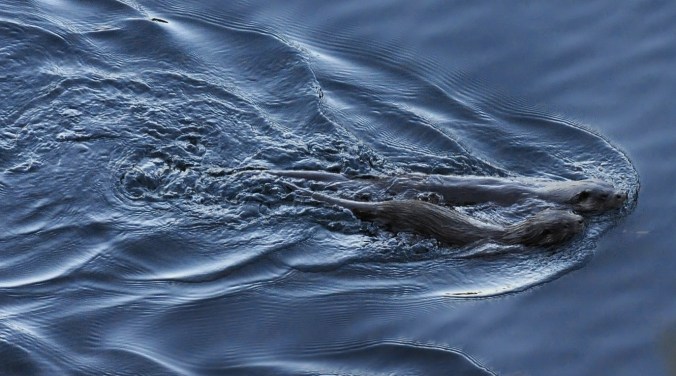
Otters near Shieldaig Island, Loch Shieldaig, Scotland. Photograph: Steve Carter

Otters near Shieldaig Island, Loch Shieldaig, Scotland. Photograph: Steve Carter

Although he may not use the term, George Monbiot believes in biophilia. His devotion to the concept of rewilding is evident in both his actions and his words, and his expressive writing about nature’s resilience and the richness of “ecological interactions” prove the point. His description of a recent trip to the Scottish highlands exemplifies both the draw of nature and his response to it:

As I came over a low ridge, I noticed a disturbance in the water below me, a few metres from the shore. I dropped into the heather and watched. A moment later, two small heads broke from the sea, then the creatures arced over and disappeared again.

After another moment, the larger one – the dog otter – scrambled out of the water with something thrashing in its mouth. He dropped it on to the rocks, gripped it again, then chewed it up. Then the bitch emerged from the sea beside him, also carrying something, that she dispatched just as quickly. They plunged in again, and I watched the trails of bubbles they made as they rummaged round the roots of the kelp that filled the shallow bay. Continue reading

Water Play

What a privilege to watch the extremely playful cubs of the Sukhi Patiah Tigress enjoying in the Patiah water body at Bandhavgarh National Park!

We spent around 1 1/2 hrs with these cubs playing in the water. We learn so much about these tigers when we do the sunrise to sunset photo safari in the parks. For example, our understanding has been that tigers are active in the morning and late evenings. But these cats are smart, they become far more active after the regular safari timings. 
Continue reading

National Governments, Entrepreneurial Conservation, And Increased Awareness Of Nature’s Value

grandcanyon

A view from the north rim of Grand Canyon National Park via Flickr/NPS

This is our favorite kind of report:

NATIONAL PARK VISITORS INJECT BILLIONS INTO THE US ECONOMY

In 2014, more than the National Park Service hosted more than 292 million visitors. The system, which covers more than 84 million acres divided among 401 sites, includes some of the United States’ most iconic tourist destinations: the Grand Canyon, Mount Rushmore, Yellowstone, Yosemite, the Everglades. And when people visit those sites, they spend money. For the past 25 years, the National Park Service has been measuring and reporting the economic effects of park tourism. (The first data collection effort on visitor attendance itself was conducted in 1904, when six national parks reported 120,690 visitors.)

The latest report, covering the year 2014, has just been released by NPS and US Geological Survey researchers, along with a companion website that includes a variety of data visualizations. Continue reading

Green Oscar For Improving Elephant-Human Relations

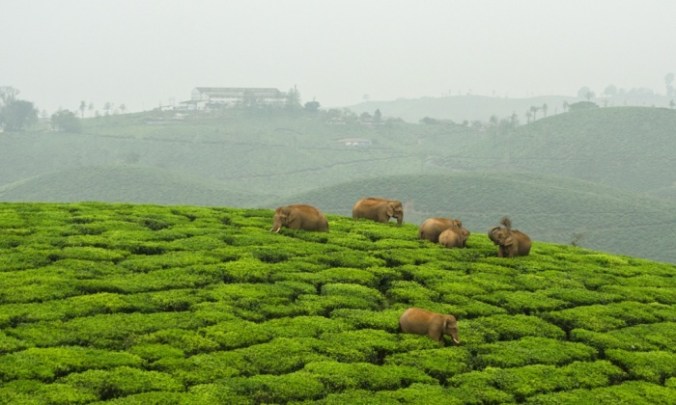
Elephants have to negotiate a vast expanse of tea estates to reach distant rainforest fragments in the Western Ghats of India. Photograph: Ganesh Raghunathan/Whitley award

Elephants have to negotiate a vast expanse of tea estates to reach distant rainforest fragments in the Western Ghats of India. Photograph: Ganesh Raghunathan/Whitley award

Whatever can be done, should be done, to improve the safety of humans living in the area where elephants consider home, by reducing the likelihood of encounters. This will in turn ensure the safety of elephants as well as the humans. Thanks to the Guardian for this news:

Dr Ananda Kumar wins one of seven ‘Green Oscars’ for his system of reducing human-elephant conflict by tracking and texting elephants’ locations to people

Karl Mathiesen

On the Valparai plateau in southern India people live in fear of unexpected encounters with giants in the dark.

As dusk settles, tea and coffee pickers collect rations from the townships run by the corporations that own the plantations and drift back towards their colonies. Buses drop workers on the roads and they make the precarious walk through the dark to their homes.

“They are scared. If I am there I am really scared,” said conservationist Dr Ananda Kumar, who created an SMS warning system to help workers live safely among elephants. On Wednesday at a ceremony in London, his work won a £35,000 Whitley Award, dubbed a ‘Green Oscar’. Continue reading

Planet Of The Apes, If We Act

An endangered Sumatran orangutan in the forest of Bukit Lawang, in Indonesia’s Sumatra island, one of the key sites identified as at risk. Photograph: Romeo Gacad/AFP/Getty Images

An endangered Sumatran orangutan in the forest of Bukit Lawang, in Indonesia’s Sumatra island, one of the key sites identified as at risk. Photograph: Romeo Gacad/AFP/Getty Images

© WWF

© WWF

The photograph above illustrates a story in today’s Guardian in the Environment section, and addresses the readership of that publication in a manner that expects action. We had provided the executive summary of the study here that is the maritime version of a major call to action, and that was still quite a read; here, thanks to the Guardian, is a briefer read on the topic of a terrestrial call to action by WWF, one we hope that apes of all varieties can appreciate:

Hundreds of millions of acres of forest could be lost in the next two decades in less than a dozen global hotspots for deforestation, conservationists have warned.

Research by wildlife charity WWF has identified 11 “deforestation fronts” where 80% of projected global forest losses by 2030 could occur.

Up to 170m hectares (420m acres) could be lost between 2010 and 2030 in these areas if current trends continued – equivalent to the disappearance of a forest stretching across Germany, France, Spain and Portugal.

The areas are the Amazon, the Atlantic Forest and Gran Chaco, and the Cerrado in South America, the Choco-Darien in Central America, the Congo Basin, East Africa, eastern Australia, the Greater Mekong in South East Asia, Borneo, New Guinea and Sumatra. Continue reading

Water, Water Everywhere, Once Upon A Time

150504_r26451-320

The Salton Sea is a vital, threatened link between the Colorado River and coastal cities. PHOTOGRAPH BY CLAIRE MARTIN / INSTITUTE

Sometimes reading, like taking vitamins or swallowing that medicine, must be done without a spoonful of sugar. Sometimes we would rather read fairy tales and happily ever after while other times we must read the news, with the detailed pictures and some thoughtful analysis, to know what our future might look like, to get us thinking about what we might do about it if we do not like what we see. This is a must read that fits into the latter category:

…The air smelled sweet and vaguely spoiled, like a dog that has got into something on a hot day. When the wind blew, it veiled the mountains in dust and sent puckered waves to meet the frothy white flow from the pipe. The sea, which is called the Salton Sea, is fifteen times bigger than the island of Manhattan and no deeper in most places than a swimming pool. Since 1924, it has been designated as an agricultural sump. In spite of being hyper-saline, and growing saltier all the time, the sea provides habitat to some four hundred and thirty species of birds, some of them endangered, and is one of the last significant wetlands remaining on the migratory path between Alaska and Central America. Continue reading

National Trust Needs You In So Many Ways, And At This Moment & Location Particularly If You Are A Shepherd

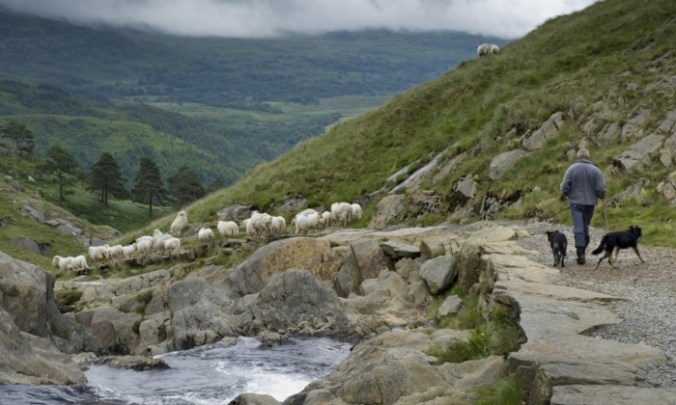
The National Trust is looking for a second shepherd to look after 1,600 mountain sheep in the hills and valleys around Hafod-y-Llan farm. Photograph: Joe Cornish

The National Trust is looking for a second shepherd to look after 1,600 mountain sheep in the hills and valleys around Hafod-y-Llan farm. Photograph: Joe Cornish

Thanks to Steven Morris and the Guardian for the public service of pointing out this job posting, on behalf of the UK’s excellent National Trust, which we have posted about on more than one occasion:

Wanted: patient, rain-loving shepherd for Snowdon conservation project

National Trust advertises for second shepherd to walk north Wales foothills to keep sheep away from vegetation such as bog asphodel and fruiting bilberries

Steven Morris

The successful candidate will need to love walking, fresh air, have appropriately trained dogs – and an awful lot of patience.

Applications are open for a man or woman prepared to work evenings and weekends in all elements as a shepherd on an innovative conservation project in the foothills of Snowdon in north Wales.

The idea of the project is to help restore sensitive mountain habitats such as upland heaths and flushes – damp areas – by gently coaxing and nudging sheep away from such areas.

Continue reading

Stand with Máxima

Acuña de Chaupe has become the target of harassment and violence because she refuses to cede her land to Newmont. Photo credit: Latin American Mining Monitoring Programme

Acuña de Chaupe has become the target of harassment and violence because she refuses to cede her land to Newmont. Photo credit: Latin American Mining Monitoring Programme

Thanks to EcoWatch for this story, which we had not previously posted about but which highlights a cause worthy of supporting in Peru:

…Newmont is majority owner of the massive Peruvian gold mine Yanacocha, the second largest gold mine in the world, and its planned Conga gold and copper mine nearby would be even larger, requiring a farming community to move and the four lakes they rely on for irrigation to be drained.

But the community has so far refused to relinquish its treasured land and lakes, and in response activists say the company has reacted with intimidation and harassment.

One person particularly in the company’s cross-hairs is Máxima Acuña de Chaupe, says activist Mirtha Vásquez, a Peruvian lawyer at Wednesday’s meeting. Continue reading

Skyfall

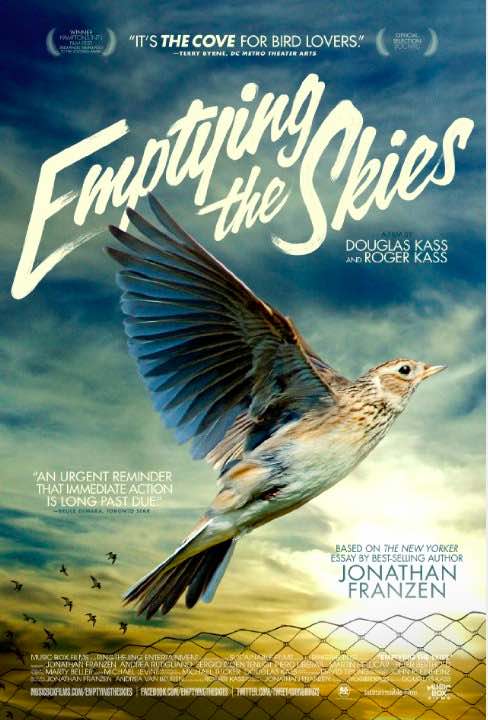
Screen Shot 2015-04-26 at 7.22.04 AMOur literary bird-loving activist took it to another level, as the film (click above) testifies well.  Really, this must stop. Thanks to the Cornell Lab of Ornithology for bringing this to our attention with this interview:

Cornell Lab: Where are you from, how did you find out about this issue—and what made you want to make this film?

Roger Kass: Born and raised in Bedford, New York, I have a background in law and movie production.  I first learned of the issues presented in Emptying the Skies by reading Jonathan Franzen’s story in the New Yorker magazine and wanted to make a film about it to bring these terrible truths to a larger audience.

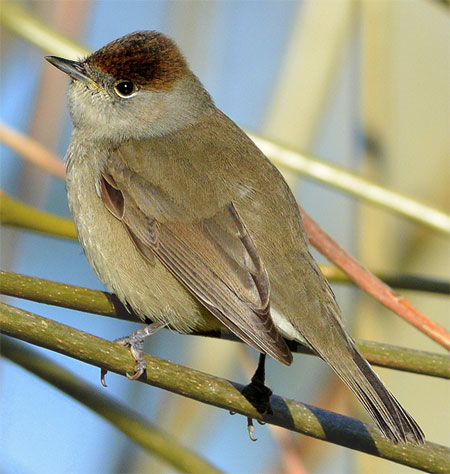
The Blackcap (Sylvia atricapilla) is a commonly hunted species in the Mediterranean. This female safely returned to her northern breeding grounds in England. Photo by jefflack Wildlife & Nature via Birdshare.

The Blackcap (Sylvia atricapilla) is a commonly hunted species in the Mediterranean. This female safely returned to her northern breeding grounds in England. Photo by jefflack Wildlife & Nature via Birdshare.

The main characters in the movie are environmentalists and people who love animals, but they don’t seem like bird watchers exactly. What motivates them to take this interest in tiny songbirds? Follow-up question: they are all men. Why do you think there were no women?

Doug Kass: As is often the case, there were a lot of things we weren’t able to put into the final film. Most CABS members we met were very passionate bird watchers and had extensive lists of sightings, as well as favorite locations, and bucket lists. You could describe them as “extreme bird-watchers,” because unlike most birders, they come into physical contact with the birds.

If you are podcast-oriented, give Leonard Lopate a listen on this topic: Continue reading