Thanks Ed, This One Is For Our Go-To Marine Ecosystem Colleague

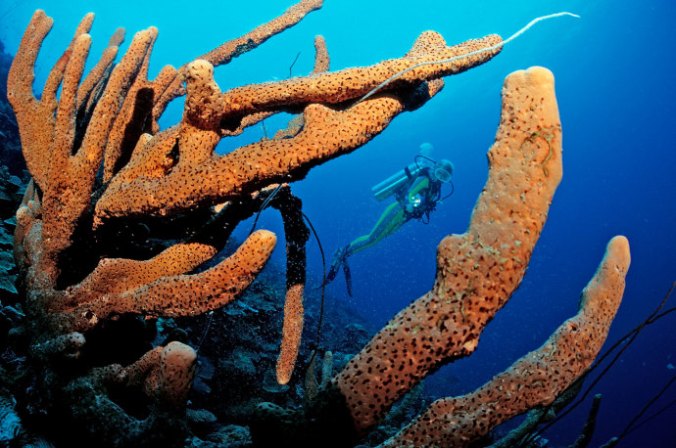
By ignoring sponges, we blind ourselves to a wondrous hidden biology and get a misleading view of evolution. CREDIT PHOTOGRAPH BY REINHARD DIRSCHERL/ULLSTEIN BILD VIA GETTY

By ignoring sponges, we blind ourselves to a wondrous hidden biology and get a misleading view of evolution. CREDIT PHOTOGRAPH BY REINHARD DIRSCHERL/ULLSTEIN BILD VIA GETTY

In the words of the FM disc jockeys of our youth, we send this one out to Phil:

In the final exams for our undergraduate zoology degrees, my fellow-majors and I were given an assortment of petri dishes, each of them containing an animal. Our task was to classify the creatures to the phylum level. Now, more than a decade later, I can conjure up only two of the test dishes. The first contained a dead cockroach (phylum: Arthropoda). The other contained a rock in a thin layer of water, with a green, slimy film on one of its faces. Midway through the allotted time, the invigilator observed aloud that many of us seemed to be trying to classify the rock. It was, he assured us, a rock. The unspoken corollary: we should perhaps focus instead on the slime. Continue reading

Prosek, Eels, Conservation

Screen Shot 2015-04-24 at 4.54.32 AM

When we invited James Prosek to Kerala it was in part due to his artistic sensibility with eels, and a year after that invitation we gave that peculiar but enchanting sensibility more attention.  But by then we had already noticed his bird work at the Cornell Lab of Ornithology, which Seth had watched as it went up, and his family went to inspect at the time of his graduation from Cornell. And so while Prosek has a long history with aquatic conservation Raxa Collective had a new view of Prosek that gravitated to his work with birds.

We are now glad to be reminded of his aquatic passions, in a blog post about conservation by Silvia Killingsworth, the managing editor of The New Yorker, where Prosek features as one of several consulted experts on the fate of the “lowly” eel, which turns out to be much more fascinating than expected (do read the post from start to finish for both conservation and foodie reasons):

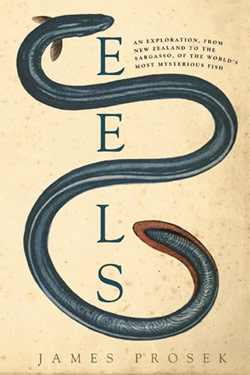
book_eels-lg…Both the Japanese and European species have been listed as endangered by the International Union for the Conservation of Nature.

And yet, according to James Prosek, an artist, naturalist, and the author of the book “Eels,” the American eel will never be listed under the Endangered Species Act. The E.S.A, Prosek told me last week, “works well for creatures that could go down to a population of six hundred, and eels will never get down to that. Maybe a million, and that won’t be enough to sustain collective consciousness”—it won’t sound bad enough to make the public care. Continue reading

Action, Louder Than Words, Easier Said Than Done

Screen Shot 2015-04-23 at 5.15.09 AM

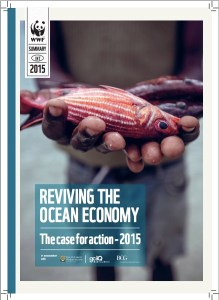
WWF today released a report at once alarming (the photo on the report cover to the right, put in context, is a visual gateway to reporting on par with writings of the gloom maven, which we cannot get enough of) and at the same time inspiring (the photo below of a young girl participating in mangrove restoration hints at the hope for the future), which is motivation enough to read it. The key word is action. Action we must take. And for our part we are committed to sharing as broadly and deeply and as often as possible on actions considered, actions taken, and the result of actions. Click the image to the right to download a low resolution pdf copy, or at least read the summary below from the WWF website:

The value of the ocean’s riches rivals the size of the world’s leading economies, but its resources are rapidly eroding, according to a report released by WWF today. The report, Reviving the Ocean Economy: The case for action – 2015, analyses the ocean’s role as an economic powerhouse and outlines the threats that are moving it toward collapse.

The value of key ocean assets is conservatively estimated in the report to be at least US$24 trillion. If compared to the world’s top 10 economies, the ocean would rank seventh with an annual value of goods and services of US$2.5 trillion.

Mangrove restoration. Mangroves store carbon and provide over 100 million people with a variety of goods and services, such as fisheries and forest products, clean water, and protection against erosion and extreme weather events. The rate of deforestation of the planet's mangroves is three to five times greater than even the average global forest loss.

© Jürgen Freund / WWF. Mangrove restoration. Mangroves store carbon and provide over 100 million people with a variety of goods and services, such as fisheries and forest products, clean water, and protection against erosion and extreme weather events. The rate of deforestation of the planet’s mangroves is three to five times greater than even the average global forest loss.

Continue reading

In The Name Of Chocolate

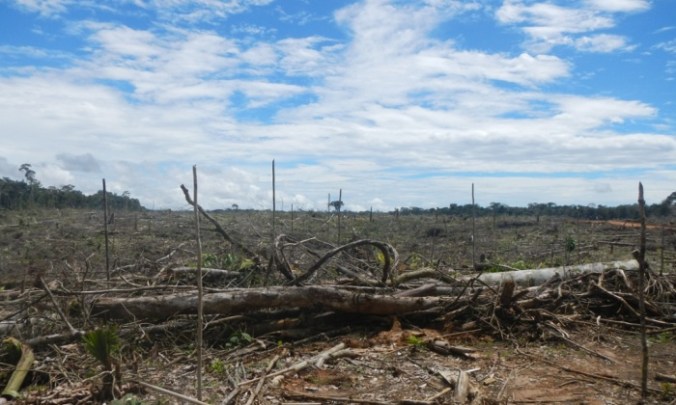
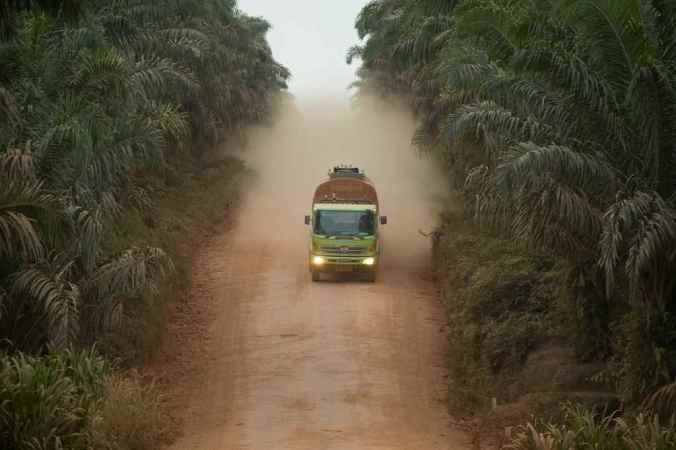
The Tamshiyacu plantation in northern Peru where it is alleged a United Cacao subsidiary illegally cleared primary rainforest. Photograph: Environmental Investigation Agency

The Tamshiyacu plantation in northern Peru where it is alleged a United Cacao subsidiary illegally cleared primary rainforest. Photograph: Environmental Investigation Agency

Thanks to the Guardian‘s renewed environmental reporting efforts for this investigative delicacy:

Can Peru stop ‘ethical chocolate’ from destroying the Amazon?

NGOs allege illegal deforestation of primary rainforest to plant cacao and oil palm

David Hill

Cattle-ranching, logging, mining, highways, hydroelectric dam projects, oil and gas, soy, oil palm. . . These are what first come to mind to many people when thinking about how the Amazon is being destroyed, but what about chocolate too?

NGO Environmental Investigation Agency (EIA) released a report on 7 April mainly about monoculture oil palm plantations, which it describes as a “major new threat to Peruvian forests.” The report, Deforestation by Definition, focuses on the Romero Group, Peru’s “largest economic actor”, and what it calls the “Melka Group”, a network of 25 companies recently established in Peru and controlled by businessman Dennis Melka, a major player in the destructive oil palm industry in Malaysia.

According to EIA, two “Melka Group” companies have illegally deforested an estimated “nearly 7,000 hectares” of mainly primary rainforest in Peru over the last three years, and others have acquired at least 456 “rural properties” and requested the government set aside another 96,192 hectares.

Continue reading

48 Hours Of Rainforest Fate

Nikki Burch

Nikki Burch

We have read this in both its original home, and here on vox, and commend it as much as we recommend it:

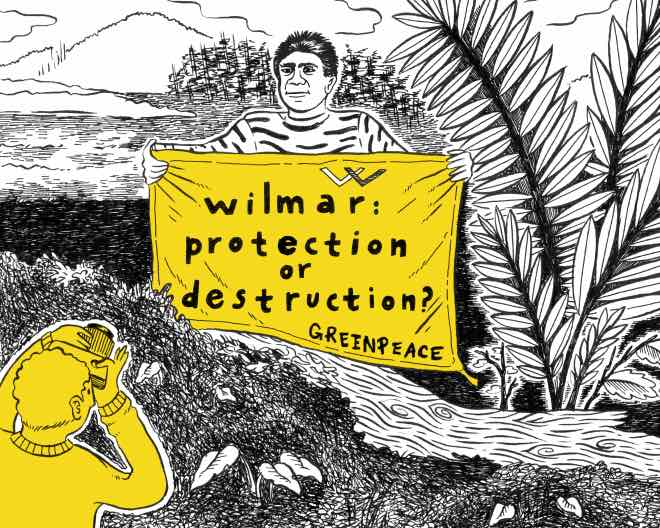
Glenn Hurowitz sat down for his Thanksgiving meal discouraged. He’d spent 2013 flying halfway around the world to cultivate a fragile relationship with Kuok Khoon Hong, CEO of the world’s largest palm oil corporation, Wilmar. Kuok was the linchpin, Hurowitz believed — a single person who might turn the entire palm oil industry around. Wilmar buys palm oil from 80 percent of the world’s suppliers. If Kuok committed to buying only from farmers who promised not to cut down the rainforest, it would set off a chain reaction that might save hundreds of species from extinction and squelch one of the world’s biggest sources of carbon emissions. But after months of progress, the signals he’d been getting from Kuok were not encouraging. Continue reading

Dear Citizens Of Malta, Please Embrace The Ban

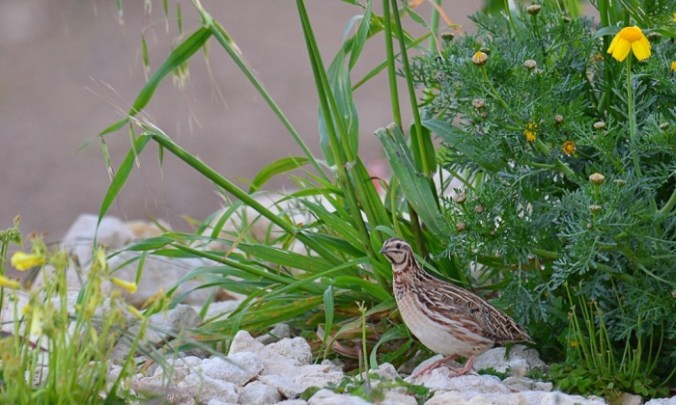
Activists say hunters use the currently legitimate spring season for hunting quails (above) to illegally hunt other birds. Photograph: Natalino Fenech

Activists say hunters use the currently legitimate spring season for hunting quails (above) to illegally hunt other birds. Photograph: Natalino Fenech

We have noted previously the odd (to us) behaviors that can be easily interpreted (not only by us) as abominable treatment of birds. It is not only a regional thing in the Mediterranean, this incomprehensible desire to decimate bird populations. From the Guardian, this news on the efforts of a dedicated group of activists:

Vote could see the spring hunting of birds such as quail and turtle doves, which is outlawed in the rest of the EU, banned in Malta

in Malta

Fiona Burrows is the kind of activist that hunters in Malta love to hate.

The Nottingham 30-year-old has been threatened, cursed at, and pushed around while doing the job she says she lives for: stealthily filming the illegal hunting of protected migratory birds and reporting perpetrators to the police.

Burrows takes precautions – she always parks her car facing an exit route and has even bought wigs to avoid detection by hunters – but she thinks these are probably not enough.

“Something bad is going to happen to me sooner or later,” she says. “It’s inevitable.” Continue reading

Understanding The Lost Decade Of Young Turtles

Turtles in the study were less than two years old; they can take 10-20 years to reach sexual maturity

Turtles in the study were less than two years old; they can take 10-20 years to reach sexual maturity

Thanks to the BBC for this story:

‘Lost’ sea turtles don’t go with the flow

A tracking study has shown that young sea turtles make a concerted effort to swim in particular directions, instead of drifting with ocean currents.

Baby turtles disappear at sea for up to a decade and it was once assumed that they spent these “lost years” drifting.

US researchers used satellite tags to track 44 wild, yearling turtles in the Gulf of Mexico and compared their movement with that of floating buoys. Continue reading

Kathryn Schulz, Come To Kerala

Screen Shot 2015-04-10 at 6.14.56 AM

Past invitations have been sent to environmentally-oriented illustrators, to entrepreneurial conservation artists, to sandplay free spirits, to wildlife management scientists, and to food prodigies; but not enough attention has been paid, in our invitations, to word specialists. So, moving right along, Kathryn please be our guest. We would love to host you here and/or here and/or here.

We have not read the book in the link above, nor even a review of the book, but we are linking to its homepage because there you will find not only information about her book but also links to the two TED talks given by the author, whose profession is listed as Wrongologist. Catchy titles are not what catch us. Scintillating writing on the meaning of words does. For that, you could not do much better than starting here, which will also justify our invitation, as wordplay appreciators, to one of the best:

What Part of “No, Totally” Don’t You Understand?

BY KATHRYN SCHULZ

Not long ago, I walked into a friend’s kitchen and found her opening one of those evil, impossible-to-breach plastic blister packages with a can opener. This worked, and struck me as brilliant, but I mention it only to illustrate a characteristic that I admire in our species: given almost any entity, we will find a way to use it for something other than its intended purpose. We commandeer cafeteria trays to go sledding, “The Power Broker” to prop open the door, the Internet to look at kittens. We do this with words as well—time was, spam was just Spam—but, lately, we have gone in for a particularly dramatic appropriation. In certain situations, it seems, we have started using “no” to mean “yes.”

Here’s Lena Dunham demonstrating this development, during a conversation with the comedian Marc Maron on his podcast “WTF.” The two are talking about people who reflexively disparage modern art: Continue reading

Danish Can-Do Greenery

Screen Shot 2015-04-10 at 5.53.12 AM

Read a bit about their work, mission and invitation, and contagion takes on a new meaning:

Sustainia is a think tank and consultancy headquartered in Copenhagen, Denmark. We identify readily available sustainability solutions across the world and demonstrate their potential impacts and benefits in our work with cities, companies, and communities.

By focusing on innovative breakthroughs, inspiring alternatives and new opportunities, Sustainia is shaping a new narrative of optimism and hope for a sustainable future that seeks to motivate instead of scaring people with gloom and doomsday scenarios. Continue reading

From The Department Of Save It For Later

Screen Shot 2015-04-09 at 4.58.56 AM

Anyone, anywhere, who believes that something is worth saving (preserving, conserving, protecting, etc.) enough to dedicate time and effort, among other resources, we are likely to support it however we can. Our Bird of the Day feature is an example that goes back to one man’s collection of photographs he took personally containing all the birds, endemic and otherwise, that inhabit and/or migrate through south India. This collection is part of his passionate commitment to wilderness conservation in Kerala and other neighboring states.

We asked, in 2011, if Vijaykumar would allow us to publish his photographs in the interest of promoting conservation. He said yes. By now we have probably published all of the collection as it was in 2011, but he is still photographing and contributing. And four years later we have talented birders, many of whom are also exceptional wildlife photographers, contributing their photographs from all over the world. Seth became an employee of the Cornell Lab of Ornithology that same year, and that has led to a whole bunch of other interesting bird-related posts that we host.

Meanwhile New York City has rarely been a subject we cover from a conservation perspective, though its Public Library is of special interest to us. We have not linked to Jeremiah’s blog previously, but it is the type we favor, as you might have noticed, so here goes. Maybe there is more NYC in store for us.

Continue reading

Ecological Intelligence, Desperately Needed, Requires Social Intelligence, The Foundation Of Which Is Individual Emotional Intelligence

Screen Shot 2015-04-08 at 11.41.53 AM

To do what we do, at Raxa Collective, and to do it well, and to succeed, requires alchemy. We are neither sure we are doing it, nor how to do it, nor whether it can be explained; thus, alchemy. No formula. For those of us with management education, of a certain age, there was a certain author who brought alchemy closer to theory, and so closer to the grasp. A conceptual grasp more often than an actual grasp. Mastery? Not even close. But try? Yes. In the beginning it was all about emotional intelligence, but expanded in interesting directions to now include even ecological. Important ideas. Powerful tools. In the current Education section of the New York Times, a small dose that helps understand why:

How to Be Emotionally Intelligent

What makes a leader? Knowledge, smarts and vision, but also the ability to identify and monitor emotions and manage relationships.

The Rare Bird That Makes The News

CHESTNUT-BREASTED__2365682r

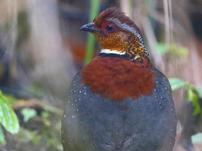
RARE FIND: Chestnut-breasted Partridge. Photo: Gururaj Moorching.

We most love the online edition of the national Indian newspaper, The Hindu, for its occasional willingness to put news like this on the same footing with the “noise” of the more typical “real” news:

Bengaluru shutterbug captures rare Partridge

Mohit M. Rao

Immense patience and a stroke of luck granted wildlife photographer Gururaj Moorching a two-minute encounter with the rare bird.

Continue reading

Wild, Walk, Wonder

12onnature1-mediumThreeByTwo210-v2Keeping it wild is a wonder of its own. Thanks to Britain for that; and to the New York Times for bringing it to our attention:

The Living Beauty of Wicken Fen

In one of Britain’s oldest nature reserves, Darwin collected beetles and Saxon warlords hid from invaders. But walking there now is more than a visit to the past.

Water And Its Discontents

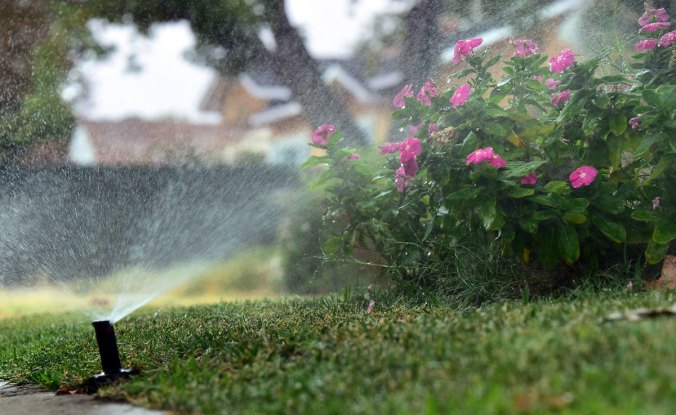
The California drought has prompted Governor Jerry Brown to mandate a twenty-five-per-cent reduction in the state’s water usage. CREDIT PHOTOGRAPH BY FREDERIC J. BROWN / AFP / GETTY

The California drought has prompted Governor Jerry Brown to mandate a twenty-five-per-cent reduction in the state’s water usage. CREDIT PHOTOGRAPH BY FREDERIC J. BROWN / AFP / GETTY

Thanks to this post we learn that writers from one of our most valued sources of cultural and environmental long-form journalism and rapid-fire website posts sometimes travel to Costa Rica, and we can only hope they will consider Xandari a home away from home on such travels. But more importantly, in this post, we are reminded that the environmental footprint of the foods we eat is a relatively new topic for most of us. Did you consider the almond, the way you consider beef, to be one of the greedier foods, in terms of the water-intensity of its life cycle? Until reading this post we were clueless on that topic:

Drought City

BY DANA GOODYEAR

“Los Angeles Residents Walk Up to 4 Hours Per Day to Look for Potable Water”: I read this headline in a small monthly that covers the coastal province in northwestern Costa Rica where I was travelling, but it took me a moment to realize that this was not about the city of nearly four million where I pay my water bill, and not a joke, though it was April 1st. Los Angeles, in this case, referred to a fifteen-family town in the Central American highlands. But my Los Angeles is in for it, too, and it is a measure of how imminent and ominous these changes feel that my mistake seemed, for a moment, plausible—a new extreme in a year’s worth of shocking news about the effects of the California drought. Continue reading

Finding Solutions In The Wild, And Out Of The Wild

_81599510_b709fc07-2c46-44c7-8996-3e28da839ced

We normally do not link out to stories of man and wild animal bonding. But occasionally the story has more than aw shucks or just aw value; this is one of those. So is this one. Thanks to the BBC’s magazine for this story:

The lion hugger

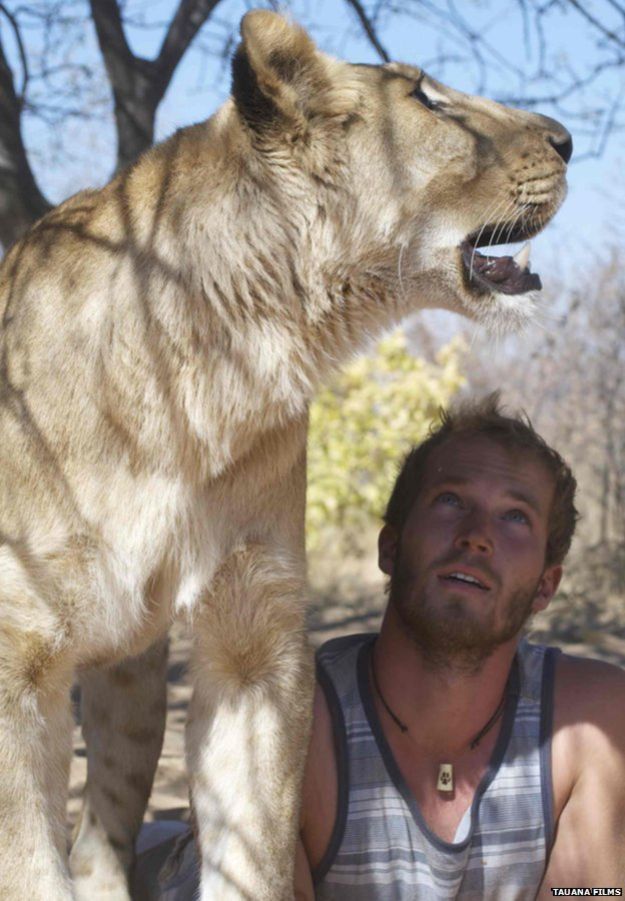
In 2012 Valentin Gruener rescued a young lion cub and raised it himself at a wildlife park in Botswana. It was the start of an extraordinary relationship. Now an astonishing scene is repeated each time they meet – the young lion leaps on Gruener and holds him in an affectionate embrace.

“Since the lion arrived, which is three years now, I haven’t really left the camp,” says Gruener.

“Sometimes for one night I go into the town here to organise something for the business, but other than that I’ve been here with the lion.”

The lion he has devoted himself to is Sirga – a female cub he rescued from a holding pen established by a farmer who was fed up with shooting animals that preyed on his cattle.

Continue reading

Inspired By Libraries Without Borders

jacob-lawrence-library-1

from a series on libraries by Jacob Lawrence.

What a wonderful surprise, to come across this talk by Kenan Malik, on a topic that has been of interest to us for some time:

I gave a talk at the launch at London’s Institut Français of Libraries without Borders, the charity inspired by Patrick Weil that aims to increase global access to books and libraries. Also speaking were Ian McEwan, Lisa Appignanesi, Barbara Band and Patrick Weil himself. Here is a transcript of my talk.


Let me begin with a story not of a library or a book but of a grand piano. The one grand piano in Gaza, that was discovered still intact in a theatre destroyed by an Israeli missile during last year’s war. A piano that has been restored string by string, hammer by hammer, by Claire Bertrand, a young French music technician who travelled to Gaza specially to bring the piano back to life, in a project financed by Daniel Barenboim. Continue reading

Eye-Popping Understanding Of Palm Oil

A Cargill-run palm plantation in Borneo in 2009. Image: ​David Gilbert/RAN

A Cargill-run palm plantation in Borneo in 2009. Image: ​David Gilbert/RAN

Every now and then we of non-technical education read an article written by and for a technical audience, and kind of get it, and feel the stretch is worth the effort. Raxa Collective works in locations where palm oil is grown, and recently has scouted locations in Borneo that make this article both eye-opening and eye-popping:

THE BUILDING BLOCKS OF EVERYTHING

The Race for Sustainable Palm Oil

WRITTEN BY ALEX SCOTT FOR CHEMICAL & ENGINEERING NEWS

Palm oil is a wonderfully versatile and cheap raw material. On its own or via chemical derivatives, the oil makes its way into many packaged foods and into household products ranging from fine cosmetics to heavy-duty detergents.

Some 63 million metric tons of palm oil is harvested annually from tropical plantations, 87 percent of it coming from Malaysia and Indonesia. Palm oil is derived from the flesh and kernel of the fruit of oil palms. Demand for the oil is set to exceed 70 million metric tons by the middle of the next decade.

But palm oil’s large-scale use has environmental costs. In Southeast Asia, it is the leading driver of deforestation. Indonesia has the third-largest area of contiguous tropical forest in the world, but according to a 2007 United Nations Environme​nt Programme report, 98 percent of the country’s natural rainforest will be destroyed by 2022 unless strict conservation measures are implemented. Continue reading

Embracing Student Activism


Students have been rallying for change since the time of Plato with varying degrees of effectiveness. In fact, the act of questioning authority through dialogue is part and parcel to the educational process. It’s heartening when the voices of resistance from multiple communities join forces to activate change.

Congratulations to the students of Syracuse University for rallying SU to remove endowments to direct investments in coal, gas and oil companies.

Syracuse is the biggest university in the world to have committed to remove its endowment from direct investments in coal, oil and gas companies. It aims to make additional investments in clean energy technologies such as solar, biofuels and advanced recycling.

In a statement, the university said it will “not directly invest in publicly traded companies whose primary business is extraction of fossil fuels and will direct its external investment managers to take every step possible to prohibit investments in these public companies as well”. Continue reading

Necessary Measures Implemented By A Good Man, In A Great State, In A Moment Of Ecological Crisis

California Governor Jerry Brown, left, discusses snowpack at Phillips Station, which this year is bare in April for the first time ever. PHOTOGRAPH BY MAX WHITTAKER/GETTY

California Governor Jerry Brown, left, discusses snowpack at Phillips Station, which this year is bare in April for the first time ever. PHOTOGRAPH BY MAX WHITTAKER/GETTY

We cannot say it is good news, but it is heartening to read news of a man we have always admired taking action in the great state of California, the land of endless possibilities (except where water is concerned). Deniers, back off. Get with the program:

Phillips Station sits about sixty-eight hundred feet up in the Sierra Nevada mountain range, not far from the ski resorts near the southern shore of Lake Tahoe. Each year around this time, a surveyor from the California Department of Water Resources thrusts a hollow, aluminum tube into the snow at Phillips Station—one of a number of such stations across the state—to collect a cylindrical sample. The aim is to measure the depth of the snow, which, as it melts and trickles down the mountain and into rivers and reservoirs, becomes one of California’s most crucial sources of water. Continue reading

If You Happen To Be In London

Peter Kelleher/Victoria and Albert Museum, London, 2015. Spike studs, used to keep people from sleeping near buildings, are part of the exhibition.

Peter Kelleher/Victoria and Albert Museum, London, 2015. Spike studs, used to keep people from sleeping near buildings, are part of the exhibition.

When we hear of civic-minded initiatives, museum shows are not the first thing that comes to mind. Schools, and libraries, and conservation initiatives come to mind.

Museums are civic institutions, of course, and we have posted more on this site about museums than almost any other topic.

But civic? We like the theme. This is a show we know will be worth seeing:

V&A Museum Returns to Its Civic-Minded Roots

“All of This Belongs to You,” an exhibition running through July 19 at the Victoria and Albert in London, seeks to stimulate debate about citizenship and the role of museums as public spaces.