Welcome To Raxa Collective’s Learning Laboratory, Cardamom County

Cardamom County, by Maxine Relton

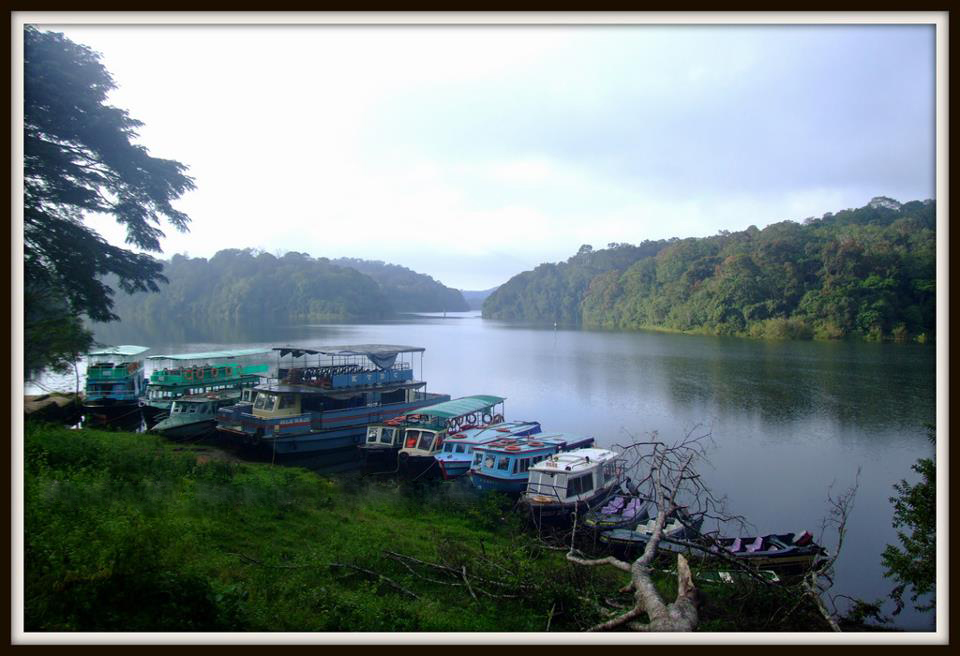
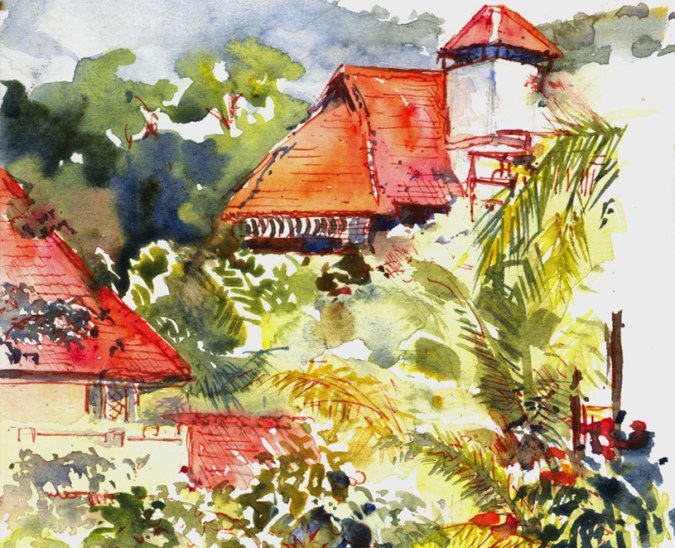
Every year right about now, a group of painters arrives to Kerala from England. They are led by a professional artist who also teaches, and during their several days’ stay at Cardamom County we enjoy watching their sketch books fill up. The watercolor above is an example of what we have seen in the past, and we are looking forward to this year’s new collection.

It is not only the colors and impressionistic views of our property we enjoy seeing, but the learning process itself.  Each of the last few years, as Raxa Collective has expanded the number of properties in its portfolio, Cardamom County’s unique value as a learning laboratory has become more and more clear. Interns, trainees, and most of all guests–many of whom, while still at Cardamom County or after returning home, choose to share news about their experience with us, or on the themes of community and/or collaboration and/or conservation from around the world) are all essential components of the learning laboratory’s chemistry.

Today, we welcome a group of nearly one dozen new employees to Raxa Collective. Continue reading

Adding Some Interesting Facts To The Conversation

  If we do have more conversation in 2014 and beyond, it will definitely be improved with the science writers we have been following the last few years, and the successors who follow in their footsteps. For example, we appreciate Virginia Hughes and the kind of writing that she publishes all over the place, and which National Geographic‘s Phenomena website collects under the name Only Human, with this most recent example here:

An Old and Optimistic Take On Old Age

I’ve been reading and thinking a lot lately about the process of aging. Many scientists who study it argue — quite convincingly — that it’s the most important scientific topic of our time. In his 1997 bestseller Time of Our Lives, biological gerontologist Tom Kirkwood writes that the science of human aging is “one of the last great mysteries  Continue reading

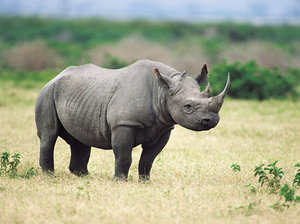
Can Hunting Help An Endangered Species?

Tom Brakefield/Getty Images

Tom Brakefield/Getty Images

To Save The Black Rhino, Hunting Club Bids On Killing One

by NPR STAFF

December 29, 2013

Hunters of wild ducks have been extremely important contributors to, and activists for, wetlands preservation in the USA. Does that mean hunting is good for conservation? National Public Radio in the USA covered a story a few days ago that, as a headline cast hunting in a grotesque light, but listening to the participants there was a whole new perspective. Raxa Collective has no plans to add hunting to the list of activities it offers travelers, but we are obliged to participate in the conversation:

Fewer than 5,000 black rhinos are thought to exist in the wild, and in an effort to preserve the species, the Dallas Safari Club is offering a chance to kill one.

The Texas-based hunting organization is auctioning off a permit to hunt a rhinoceros in Nambia. It’s a fundraiser intended to help save the larger population. Continue reading

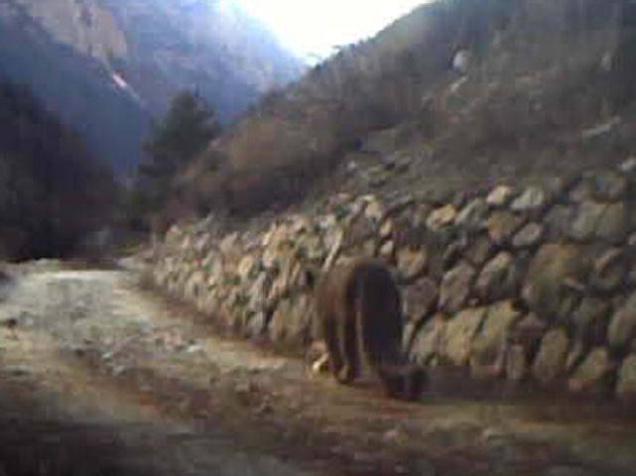
Snow Leopard Caught In Camera Trap

The shot of a snow leopard captured by one of the six cameras installed at Gangotri National Park, Uttarakhand, on Monday. Photo: Virender Singh Negi

The shot of a snow leopard captured by one of the six cameras installed at Gangotri National Park, Uttarakhand, on Monday. Photo: Virender Singh Negi

We have one last 2013 story about cats caught in camera traps, and intend to continue in 2014 highlighting camera traps as scientific tools in the interest of conservation, not only cats, but all types of creatures great and greater as well as small and smaller. Thanks to the Hindu‘s reporting on this good news out of one of India’s protected natural areas in the north:

Officials of the Gangotri National Park have a reason to rejoice — the camera trap set up at the Gangotri-Gaumukh road has captured video and still images of a male and female snow leopard, confirming for the first time the existence of these cats there. Continue reading

Support Your News Sources

Our blog is a mix of first person accounts and references to stories from major news sources around the world, mostly about communities (unique forms of heritage, unique approaches to getting important things done for community members, etc.), about conservation (especially examples of entrepreneurial approaches to the conservation of unique cultural and natural heritage), and about collaboration (especially in relation to communities and conservation). We scan far and wide for stories. We depend on newspapers to which we do not subscribe, in return feeding traffic back to their websites. We think this is a fair exchange, but what do we know? It is definitely worth further investigation.

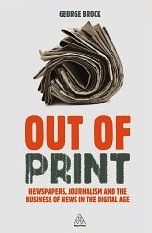
Whatever news sources you regularly depend on, you should read this review by Nicholas Lemann in the Times Literary Supplement about this book that documents, in the context of the USA, the economic challenges facing the newspaper business:

People tend to have little sympathy with accounts of crisis in a trade or profession. It comes across as evidence of excessive self-preoccupation, or as a prelude to special pleading before government.Journalism’s difficulties seem to be drawing this kind of reaction from many people who aren’t journalists. Isn’t the press still a swaggering, even power-abusing actor in politics and society? Doesn’t it command vast attention and resources? Isn’t more news being read by more people than ever before? Continue reading

Conservation’s Answer To A Butterfly’s Lost Food Supply

Setting the Table for a Regal Butterfly Comeback, With Milkweed

From this week’s Science News section of the New York Times, an article by Michael Vines about how:

Conservationists have planted milkweed, a favored food of the butterfly, along migratory routes where natural habitat has been plowed under for crops.

Fact-Checking Walter Isaacson

Walter Isaacson has done some remarkable things (according to his present byline he is “CEO of the Aspen Institute. Author of biographies of Steve Jobs, Albert Einstein, Benjamin Franklin, and Henry Kissinger. Former editor of Time, CEO of CNN”).  Little reason for him to doubt his own authority, on anything.  But he invites you to fact check the book he is currently working on, starting with a draft of a chapter published in Medium.  I appreciate the creative spirit of collaboration, and his faith in the wider community to get his facts both straight and full of color:

The Culture That Gave Birth to the Personal Computer

I am sketching a draft of my next book on the innovators of the digital age. Here’s a rough draft of a section that sets the scene in Silicon Valley in the 1970s. I would appreciate notes, comments, corrections

In that draft he makes reference to the starting point of the Whole Earth Catalog, and the meme that came with it of using an image of the earth from space to communicate its fragility and limitations as much as its wondrousness; which, along with the rest of the draft (as if you needed convincing) makes the book sound worth the wait: Continue reading

One More Way To Reduce Your Carbon Footprint (And Handprint)

People typically wash their hands seven times a day in the United States, but they do it at a far higher temperature than is necessary to kill germs, a new study says. The energy waste is equivalent to the fuel use of a small country. PHOTOGRAPH BY GAETAN BALLY/KEYSTONE/CORBIS

People typically wash their hands seven times a day in the United States, but they do it at a far higher temperature than is necessary to kill germs, a new study says. The energy waste is equivalent to the fuel use of a small country. PHOTOGRAPH BY GAETAN BALLY/KEYSTONE/CORBIS

Which small country are they referring to?  Does it matter? No. Just read on to be awed by the news that something you may have thought to be important to your health is actually not; and worse, it is costly to the earth’s health:

It’s cold and flu season, when many people are concerned about avoiding germs. But forget what you think you know about hand washing, say researchers at Vanderbilt University. Chances are good that how you clean up is not helping you stay healthy; it is helping to make the planet sick. Continue reading

Tiger Census In Kerala Is Well Under Way

2,088 field staff taking part in the eight-day exercise in five landscapes

2,088 field staff taking part in the eight-day exercise in five landscapes

Today’s Hindu newspaper reports that:

The eight-day phase-one of the all India tiger estimation 2013-2014 by 2,088 field staff began in the forests of the State on Monday.

The estimation, at the initiative of the National Tiger Conservation Authority (NTCA), is a countrywide exercise conducted every four years to assess the status of wild tigers, co-predators, prey species, and their habitat. Continue reading

The Ocean Never Sleeps

Image Courtesy The Huffington Post

It’s no secret that icecaps are losing mass due to increased global warming; and one of the world’s safeguards against carbon emissions, the ocean, is working overtime trying to sequester anthropogenic gases.  The ocean as a carbon sink has been well known for quite some time, although recently it seems as though it has been on the back-burner for many governments, organizations, corporations, businesses, etc.

Continue reading

Massachusetts, A Relevant Kerala Benchmark

David Foster, director of the Harvard Forest, speaking at a news conference to announce the launch of a new Harvard Forest Study on future scenarios for the Massachusetts Landscape, looking as forests as infrastructure.   Rose Lincoln/Harvard Staff Photographer

David Foster, director of the Harvard Forest, speaking at a news conference to announce the launch of a new Harvard Forest Study on future scenarios for the Massachusetts Landscape, looking as forests as infrastructure. Rose Lincoln/Harvard Staff Photographer

An article in the Harvard Gazette illustrates one kind of collaboration we hope to see more of in our home state of Kerala, India.  The state of Massachusetts, USA is fortunate to be home to Harvard University and a wealth of resources–financial, yes, but more importantly ideational–that Harvard generates. Kerala has its own wealth of resources, and we hope to see here more collaboration between the public and private sectors, as well as academic institutions, such as we see in this article:

For the last two years, researchers, nonprofit representatives, and state officials have put their heads together to figure out how to maintain Massachusetts’ status as one of the nation’s most densely populated yet most heavily forested states.

Massachusetts’ forests expanded for 150 years as people abandoned farms for urban life and reached a high-water mark in the 1970s, when they covered nearly 70 percent of the state. In the face of expanding development, however, forest cover has since declined, down to 60 percent, with further declines likely.

The result of the collaboration is a report by the Harvard Forest and the Smithsonian Institution. It lays out four possible futures for the state’s forests and highlights one, called “forests as infrastructure,” that would dramatically increase both logging and land conservation, while also encouraging clustered development to minimize forest loss. Continue reading

National Geographic Delivers

Image Courtesy: national geographic

Once again, National Geographic delivers mesmerizing high definition captures of nature in its new film documentary “One Life;” always looking out for ways to demonstrate the awe-inspiring power present in the natural world, “One Life” is bursting with unbelievable slow motion shots and incredibly detailed images.

Continue reading

Masking Cultural History

(A man looks at an antique tribal mask, Tumas Crow Mother, circa 1860-1870, revered as a sacred ritual artifact by the Native American Hopi tribe in Arizona, displayed at the Drouot auction house ahead of its sale in Paris December 9, 2013. REUTERS/Christian Hartmann)

(A man looks at an antique tribal mask, Tumas Crow Mother, circa 1860-1870, revered as a sacred ritual artifact by the Native American Hopi tribe in Arizona, displayed at the Drouot auction house ahead of its sale in Paris December 9, 2013. REUTERS/Christian Hartmann)

Reuters reports today on a remarkable act by a foundation to restore cultural artifacts, at long last, to their rightful place (click the image above to go to the source):

An American foundation bought nearly two dozen Native American artefacts and will return them to the Hopi tribe in Arizona, which had mounted legal challenges to their planned sale by a French auction house. Continue reading

Demolition, Conservation, Fascination

Image ©Maria Kazanova/123rf

They just keep coming, these good reads from Conservation Magazine; this one, thanks to Megan Molteni about how the business of demolition is getting greener (click the image above to go to the source):

The modern age is built upon concrete. Concrete is cheap to make, easy to transport, and highly formable—making it a ubiquitous and universal feature of the developed landscape. But unlike building materials that defined past eras, concrete doesn’t exactly stand up to the test of time. Concrete structures have an expiration date—they can last up to 100 years in some situations, but often much less—after which they need to be demolished and rebuilt. And that process creates a lot of waste. Approximately 200 million tons of waste concrete are generated annually in the U.S. alone. About half of that is recycled, and the rest of it winds up in landfills. But what if that concrete could be given a new life as a filter for runoff? Or what if we could eliminate that waste altogether with a new and smarter way to demolish buildings? Two recent innovations explore these possibilities for a greener concrete afterlife. Continue reading

Thekkady and Kumily – Kerala

Photo credits:Ramesh Kidangoor

Photo credits: Ramesh Kidangoor

Kumily is a plantation town, closely associated with Thekkady, the home of Kerala’s first promotion of environmental tourism. Both Thekkady  and Kumily are situated in the Periyar Valley, making them a convenient base to explore the beauty of Periyar Tiger Reserve. Continue reading
Controlling The Appetite To Feed

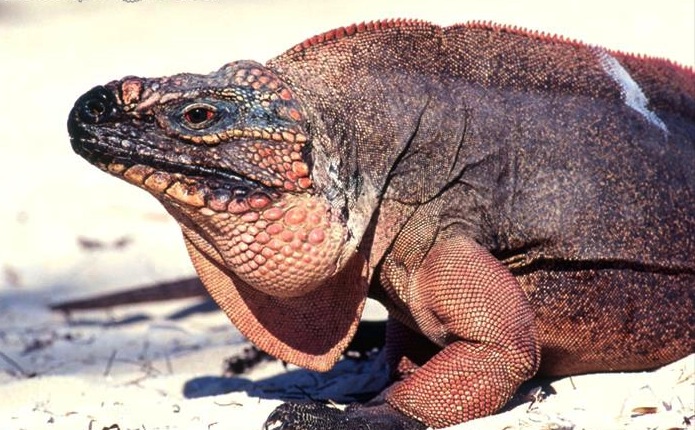
Bahamian Rock Iguana (click image to go to source)

Bahamian Rock Iguana (click image to go to photo’s source)

In its Conservation This Week feature, Conservation Magazine (last week) carried the following, which we hope gets plenty of circulation (we wish it was not even necessary to say so, but wishful thinking is not sufficient):

TOURISTS: STOP FEEDING JUNK FOOD TO IGUANAS

December 6, 2013

On islands in the Bahamas, tourists routinely feed iguanas grapes, cereal, ground beef, and even potato chips. This unnatural diet could be affecting the health of these endangered reptiles, researchers warn in Conservation Physiology. Continue reading

Snowy Owl Migrations

Image Courtesy: http://imageveux.com

Climate change has had a significant impact on a multitude of global issues ranging from the environment to even politics; the Snowy Owl, Bubo scandiacus, is another organism that is feeling the effects of warming temperatures impede on its natural habitat in the northern circumpolar region. Varying degrees of climate change have significant impacts on the apex predator’s prey, which subsequently relocate, thus forcing Snowy Owls to migrate as well.

Continue reading

Kerala Named Among Top 10 Holiday Destinations

Photo credits: Manoj Vasudevan

Fort Cochin; Photo credits: Manoj Vasudevan

Known as “God’s Own Country”, Kerala is one of the most beautiful states in India. Lonely Planet apparently agrees by citing it among the World’s 10 best destinations for a family holiday in 2014. The Lonely Planet award for Best Family Destination was bestowed at the World Travel Mart in London, the leading trade event attended by industry representatives from around the world. Continue reading

Restoration, Recollections & Rewards

All photos courtesy of the AKTC

We’d been living in Kerala for 6 months before we traveled back to the U.S. via Delhi in order to update our visas. Having only experienced the sights in my “southern home” up until that point, we scheduled our flight to allow for a Delhi city tour, and Humayun’s Tomb was the first item on the agenda.Unluckily for us the “Travel Gods” were not favoring us, and between flight delays and Delhi traffic we reached the gates of the tomb compound at 5:58pm, just in time for us to see the guard saunter over to lock them for the night. I was seriously disappointed, but I’ve since learned that perhaps those aforementioned gods were looking after our best interest after all. Continue reading

The World Needs Another Golf Course Like It Needs Another Hole In The Ozone

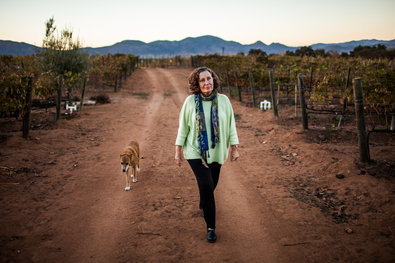
Max Whittaker for The New York Times Natalia Badán, a winery owner and longtime resident of the Guadalupe Valley, called a zoning change “an aggression.”

Max Whittaker for The New York Times
Natalia Badán, a winery owner and longtime resident of the Guadalupe Valley, called a zoning change “an aggression.”

If you have ever swung a golf club, in earnest, on a challenging hole somewhere on a beautifully crafted course, you might agree: the game is good for the soul. But there is such thing as too much of a good thing:

A Rustic Paradise, Open for Development

By DAMIEN CAVE Continue reading