Re-Use That Amazing Phone

21techfix1-master675

Vincent Lai with the Treo he rescued. “A phone can last for a very, very long time,” he said. CreditNicole Bengiveno/The New York Times

No one on our team is exempt from the temptation to have the latest, greatest whatever. But we have gotten into the habit of reminding each other it is not always necessary. Frequently not. Almost never, actually. We never tire of sharing, and hope you never tire of reading, new stories about re-use, recycle and up-cycle options in our every day lives:

Choosing to Skip the Upgrade and Care for the Gadget You’ve Got

By

Vincent Lai was working at a recycling facility in New York and sorting through a bin of used cellphones a few years ago when he dug up a Palm Treo, a smartphone that was discontinued last decade.

Mr. Lai, 49, tested the Treo and found it still worked. So he took the device home and made it his everyday mobile companion, much as one would adopt an abandoned animal on its way to being euthanized. Continue reading
Coffee Capsules Are Terrible For The Environment, Still

17REVALUED1-master675

An engineer measuring a K-Cup prototype at a Keurig Green Mountain lab in Burlington, Mass. Tony Luong for The New York Times

Way back when, early last year, I thought for sure this company was going to respond seriously to the challenge posed by the fun-yet-serious viral campaign highlighting its environmental atrocities. Many people I know and love use these machines or machines like them. These friends are generally serious devotees of the capsule machines due to their convenience.

Every person every time, once they learn about how environmentally irresponsible the capsule machines are (more specifically, the capsules themselves are the problem), seems genuinely horrified (or expresses some emotion akin to the one generated by the viral video). But, how many have given up the K-convenience? Hmmm. The notable quote in the following story implies that because demand for this convenience is growing, there is not much likelihood of abandoning the technology–expect continued tinkering for the time being (sounds like fiddling while Rome burned):

Food Supply Change

5184

Accor plans to plant 1,000 vegetable gardens at its hotels by 2020. Photograph: Alamy

Only by scaling up the farm-to-table concept will we see a change to the industrial food production processes that lead to waste and related problems. We cheer our colleagues at Accor for this initiative:

Major hotel chain to grow vegetables at 1000 properties to cut food waste

Accorhotels, which includes Sofitel, Novotel, Mercure and Ibis, will reduce number of main courses on offer and record all food thrown away

One of the world’s biggest hotel chains has announced it will plant vegetable gardens at many of its hotels as part of a plan to cut food waste by a third. Continue reading

Processed Views

Although a previous post that embraced the sculptural qualities of food had a far more lighthearted intent, the juxtaposition of Carleton Watkins’ classic photographs and Barbara Ciurej and Lindsay Lochman’s irreverent dioramas has to be viewed with a certain level of irony. The iconic photos of America’s great national parks brought a sense of the country’s vastness home.

The pioneering nineteenth-century landscape photographer Carleton Watkins visited Yosemite during a time of rapid industrialization in the American West, but you’d never know it from the majestic tranquility of the rivers, mountains, forests, and rock faces he depicted. In her book “River of Shadows,” Rebecca Solnit, chronicling the life of another influential photographer of the time, Eadweard Muybridge, whose studies of high-speed movement helped to pioneer motion-picture technology, wrote that Watkins’s landscapes “looked like the true world everyone sought but no one else could locate among the mining booms, railroad building, land grabs, mobs, and murders” of the period. And yet Watkins’s images—which provided many people back East their first views of Yosemite’s idyllic splendor—were, in some sense, an advertisement for the possibilities of the West, and the vast untapped resources that American corporations of the eighteen-sixties and seventies were rushing to exploit. Continue reading

Food For Thought

PollanLecture_audienceByTonyRinaldosm

Author Michael Pollan speaks to a packed house at Radcliffe. Photograph by Tony Rinaldo

And to round out our links outward today on food-related themes, this one from Harvard Magazine seems a fitting complement to today’s two other news-feature items:

Michael Pollan’s Crooked Writing Path

WHETHER HE IS WRITING a book on big farming and the way Americans think about food, or interviewing terminal cancer patients who have had life-altering experiences through hallucinogenic drugs, author Michael Pollan’s career as a writer has been anything but traditional. Continue reading

Get Ready For New Foods

4167

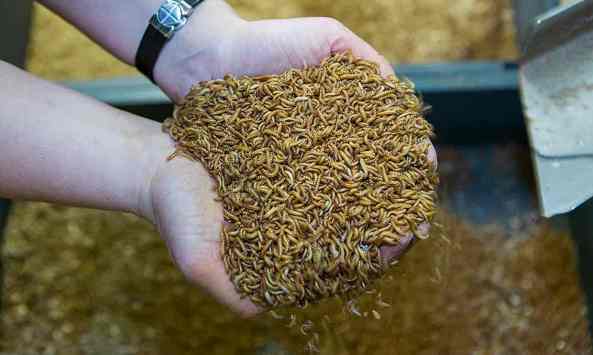
Edible insects are currently expensive, but bug farmers believe economies of scale will bring lower prices. Photograph: Proti-Farm

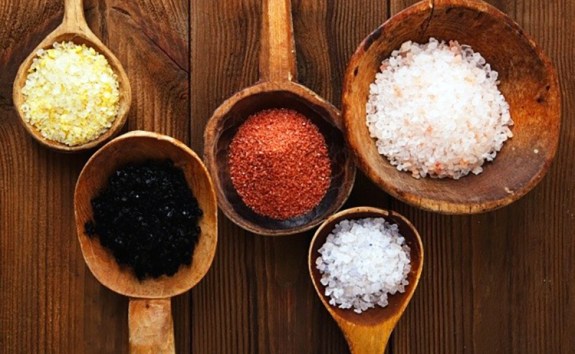
We cannot help but wonder which type of salt may be considered most appropriate for the new menu items coming soon to a table near you; but seriously, get ready:

The worm has turned: how British insect farms could spawn a food revolution

With meat prices expected to soar, agricultural entrepreneurs believe invertebrate livestock can provide the protein we need. But will the mainstream ever be ready to eat mealworms?

It could be the tumbledown, moss-covered drystone walls marking the boundaries of land that has been farmed since the arrival of the Norse settlers. Or the gentle meanderings of the river Eden through the shadows of the Cumbrian fells. Or the proximity of the Settle-Carlisle railway line. All in all, Thringill Farm seems an unlikely setting for a 21st-century food revolution. Continue reading

Know Your Salt

salts_750

What once was a simple decision between iodized table salt or sea salt has become a sensory overload. Walk into Whole Foods to restock on salt and you’ll be confronted with a dazzling array of colors, textures and price points.

Thanks to EcoWatch for this primer on the various salt choices we face:

Salts have exploded with popularity. What once was a simple decision between iodized table salt or sea salt has become a sensory overload. Walk into Whole Foods to restock on salt and you’ll be confronted with a dazzling array of colors, textures and price points. But, what really differentiates specialty salts? Are expensive salts actually worth the money?

Here is a guide to nine different culinary salts that will help you decide what salt is best for your needs.

1. Table

Table salt is created by superheating natural salt to 1,200 degrees Fahrenheit, which destroys most beneficial compounds. Fortified with essential iodine, table salt is also bleached and devoid of trace elements, so it’s certainly not the healthiest salt you can shake. This type of salt can often contains additives to slow moisture absorption so it is easy to sprinkle in your salt shaker. Continue reading

Fighting Food Fraud

foodfraud_custom-b67f54921c2a663e3c5857d50ecc0a5e732a7c5c-s1400-c85.jpg

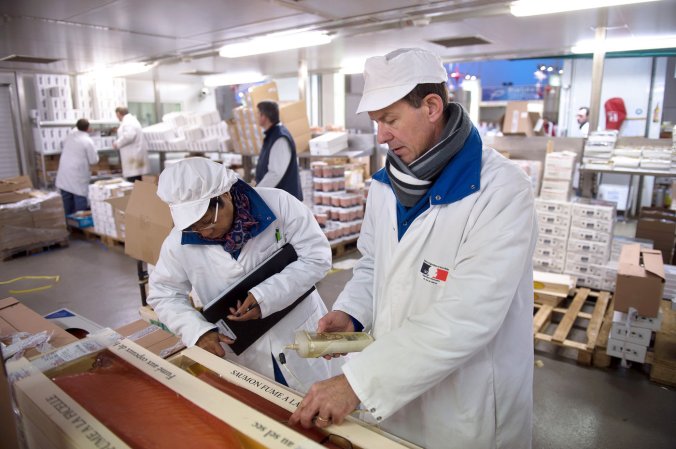
Food fraud is a common issue all over the world. Inspectors of veterinary services and fraud inspect seafood products at the Rungis international market, located near Paris. Martin Bureau/AFP/Getty Images

In just under four minutes, this story (National Public Radio, USA) gives a cogent briefing on one dimension of food transparency, a topic commonly addressed in these pages:

If you’ve been following any of the big news stories on food fraud lately — you’ll know that it’s tough to know what exactly is in our food — and where it’s been before it makes onto our dinner plates.

Earlier this year, Wal-Mart was sued for stocking tubs of Parmesan cheese that contained wood pulp filler. Olive oil is often mixed with sunflower oil and sold as “extra virgin.” And you might recall the great European horse meat scandal of 2014: Traces of horse meat were found in Ikea meatballs and Burger King beef patties, in cottage pies sold at schools in Lancashire, England, and in frozen lasagna sold all over Europe.

And that’s “just the tip of the iceberg,” says Chris Elliott, the founder of the Institute for Global Food Security, a laboratory in Northern Ireland that tests food from all over the world in order to uncover fraud. Continue reading

With Quinoa, All’s Well Only If It Ends Well

peruvianquinoa_custom-eb612ca1281105ba9be2d6e069a3db7ab8627b5b-s1400-c85

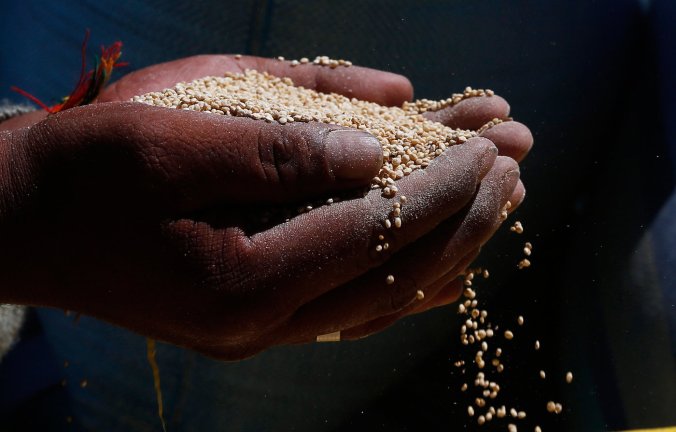
A man holds Peruvian quinoa. New studies of detailed data gathered by Peru’s government find that the global quinoa boom really was good both for Peruvians — both those who grow it and those who eat it. Juan Karita/AP

Thanks to National Public Radion (USA)’s Salt program for this important update:

Your Quinoa Habit Really Did Help Peru’s Poor. But There’s Trouble Ahead

The price of quinoa tripled from 2006 to 2013 as America and Europe discovered this new superfood. That led to scary media reports that the people who grew it in the high Andes mountains of Bolivia and Peru could no longer afford to eat it. And while, as we reported, groups working on the ground tried to spread the word that your love of quinoa was actually helping Andean farmers, that was still anecdote, rather than evidence.
Continue reading

UberPool’s Social and Environmental Impacts

http://www.nytimes.com/2016/03/31/technology/car-pooling-helps-uber-go-the-extra-mile.html?action=click&pgtype=Homepage&version=Moth-Visible&moduleDetail=inside-nyt-region-0&module=inside-nyt-region&region=inside-nyt-regio

For “baby boomers” the concept of car pooling is a standard one – and not just for over-scheduled kids being taken to after school soccer, dance and music classes. In the mid-20th century fewer people owned a car, and if they did it was one per family, so it was a common occurrence for friends or neighbors to coordinate their morning commutes. Augmented by public transportation, those trips were part of the community fabric.

As the now global Uber app continues to both expand and adapt to the market’s changing demands and needs, it’s possible that UberPool may have both social and environmental impacts.

Unlike a standard Uber ride, in which a single rider starts a one-time trip, UberPool works like a party line for cars. Travis Kalanick, Uber’s co-founder and chief executive, describes it as the future of his company — and thus the future of transportation in America.

Call up the app, specify your destination, and in exchange for a significant discount, UberPool matches you with other riders going the same way. The service might create a ride just for you, but just as often, it puts you in a ride that began long ago — one that has spanned several drop-offs and pickups, a kind of instant bus line created from collective urban demand…

…Mr. Kalanick said it was likely that soon, in big cities and even in many suburbs, most Uber rides will be pooled, meaning each Uber car will be serving more than one rider most of the time.

If that occurs, and if Uber continues growing at its breakneck pace, it would represent a momentous transformation in how Americans get around. Continue reading

Good Spirited

Although we don’t particularly endorse consumption of alcohol or hold loyalty to any single brand or type of liquor, we’re always on the lookout for positive environmental news in any corporate setting, and we’ve recently learned that Bacardi Limited, perhaps the best-known makers of rum in the world (and owners of other alcohol brands Martini, Grey Goose, Bombay Sapphire, and Dewar’s Scotch), has been attempting to do better for the environment.

Called “Good Spirited,” (who doesn’t like a nice pun), Bacardi’s campaign involves recycling, waste reduction, energy efficiency, and other mechanisms to reduce the company’s environmental impact in the world and become more sustainable. For example, they’ve removed plastic straws and stirrers from their North American headquarter events in Florida and their Bombay Sapphire distillery in the UK, which they estimate will save more than 12,000 of the small plastic tubes from landfills annually.

In their original distillery in Puerto Rico, the company reuses water from rinsing Continue reading

To Our Sisters In Bali, Thank You

Ted Bali Sisters

A few months ago, with 11 minutes on stage in London at a regional TED event, these two poised and articulate, compelling Balinese sisters made a bold challenge. We commend their decisiveness and commitment, and will do our best to support them both in Bali and on our various home turfs:

Melati and Isabel Wijsen:

Our campaign to ban plastic bags in Bali

Plastic bags are essentially indestructible, yet they’re used and thrown away with reckless abandon.  Continue reading

Wonky Produce!

2385

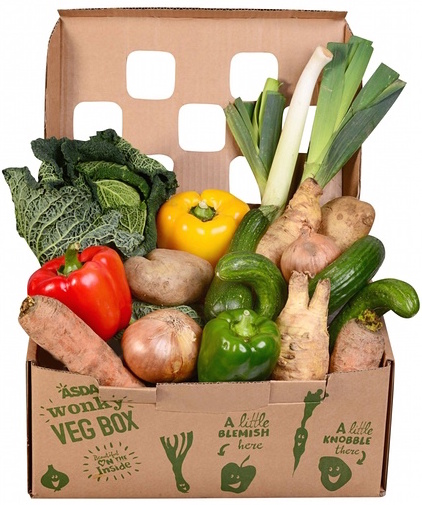
Asda’s wonky vegetable box contains items that are either oddly shaped, have growth cracks or are smaller or larger than average. Photo: Asda

In our vigilance on the waste reduction front, especially with regard to food, we are tracking efforts globally that we believe we, and our readers, will find interesting and useful.

We have long ago come to understand that the standard definition of beauty as it relates to fruits and vegetables–uniformity prized over flavor and nutrition–has done a huge disservice to the environment, not to mention to the consumers who suffer gastronomically as a result.

Thanks to the Guardian‘s Environment section for this news:

Asda puts UK’s first supermarket wonky veg box on sale

Box of imperfect in-season vegetables will feed a family of four for a week and costs £3.50 – 30% less than standard lines

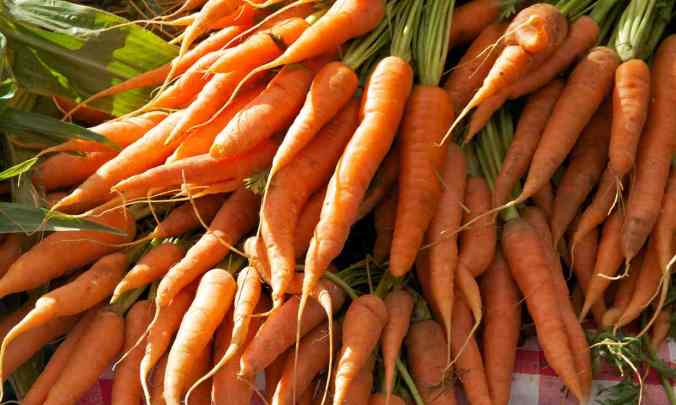
The UK’s first supermarket ‘wonky vegetable’ box goes on sale on Friday, containing enough ugly potatoes and knobbly carrots to feed a family of four for an entire week for just £3.50. Continue reading

Fish Fraud Falling

fish-marketThanks to Conservation Magazine for pointing us to this bit of scientific evidence that, while fisheries are on the whole in a dismal state, steps are being taken in Europe to address one of the symptoms:

Over the past few years, dozens of studies have documented a global fish fraud epidemic, in which fish are mislabeled as species they are not. It’s a problem with detrimental environmental, economic, and even potential health effects. Continue reading

On Food Waste

800px-caqui_chocolate_em_fundo_preto_03

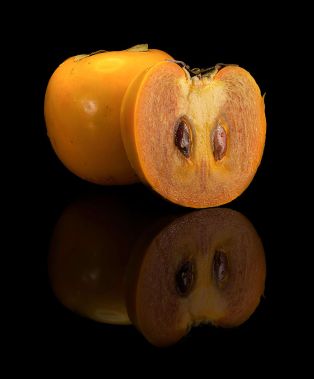
Oriental Persimmon by Rodrigo Argenton. Licensed under CC BY-SA 4.0 via Wikimedia Commons.

We’ve featured food waste here many times before, since it’s such a global and upsetting problem–an issue that one could call a “wicked problem” for its difficulty in solving, its myriad causes, and its changing nature. Several of our shared stories in just the last year, however, have offered some hope: a food truck chef in Denmark showed that expired or just-expiring products can still be consumed;  another foodtrucker in the US helped develop a software to create a more sustainable kitchen by modeling what products are being over- or under-ordered; and two startups worked on different ways of drying food that would otherwise spoil, one because the fruit would go bad but could be dried and powdered, and the other because developing countries don’t always have appropriate storage or energy to refrigerate food, so they came up with a solar food-drier.

The common theme in these posts is the reiterated phrase: approximately one-third of all food produced around the world is wasted, representing about $1 trillion in losses every year. This week, two of our favorite magazines, Conservation (by University of Washington) and GreenBiz repeated these statistics and shared pieces of their own.

Continue reading

Oceans Of Plastic

Feature-NPEC

You may have seen headlines in recent days with predictions about plastic overtaking fish as the primary mass of our planet’s oceans. Go straight to the source to get the facts (below is the press release from the foundation that funded the research; see the chart after the page break below to really get a punch of reality from the scale of this problem):

Applying circular economy principles to global plastic packaging flows could transform the plastics economy and drastically reduce negative externalities such as leakage into oceans, according to the latest report by the World Economic Forum and Ellen MacArthur Foundation, with analytical support from McKinsey & Company.

The New Plastics Economy: Rethinking the future of plastics provides for the first time a vision of a global economy in which plastics never become waste, and outlines concrete steps towards achieving the systemic shift needed. The report, financially supported by the MAVA Foundation, was produced as part of Project MainStream, a global, multi-industry initiative that aims to accelerate business-driven innovations to help scale the circular economy. Continue reading

More Reasons For A Plant-Dominated Diet

4368

Global fish catches rose from the 1950s to 1996 as fishing fleets expanded and discovered new fish stocks to exploit. Photograph: Eyal Warshavsky/Corbis

We serve fish. We love fish. We love fish too much, all of us. Every day we get more evidence of the logic for shifting more of our diet to be plant-based, and this article in today’s Guardian adds one more powerful data point:

Overfishing causing global catches to fall three times faster than estimated

Landmark new study that includes small-scale, subsistence and illegal fishing shows a strong decline in catches as more fisheries are exhausted

Global fish catches are falling three times faster than official UN figures suggest, according to a landmark new study, with overfishing to blame. Continue reading

Guardian Pressure, Gates Commitments, Turning The Dial

Screen Shot 2015-06-28 at 7.55.55 AM

In case you have missed the campaign that the Guardian has been waging, click the image above, which will take you to their partnership site, 350.org, which we have been admirers of too. Brilliant and bold, better than anything the New York Times or any other media outlet has done in activist mode on environmental issues. You may say you want your journalism pure and objective, but on this issue, with the planet in the balance, we say not so.

Is it just coincidence that after campaigning for months now to get Mr. Gates to do something more, this good news arrives today?

Gates to invest $2bn in breakthrough renewable energy projects

Bill Gates plans to double investment in green energy technology and research to combat climate change, but rejects calls to divest from fossil fuels

Bill Gates has announced he will invest $2bn (£1.3bn) in renewable technologies initiatives, but rejected calls to divest from the fossil fuel companies that are burning carbon at a rate that ignores international agreements to limit global warming.

Speaking to the Financial Times, Gates said that he would double his current investments in renewables over the next five years in a bid to “bend the curve” on tackling climate change.

The Bill and Melinda Gates Foundation, lead by Gates and his wife, is the world’s largest charitable foundation. According to the charity’s most recent tax filings in 2013, it currently has $1.4bn invested in fossil fuel companies, including BP, responsible for the Deepwater Horizon oil spill in the Gulf of Mexico.

In March, the Guardian launched a campaign calling on the Gates’ Foundation and the Wellcome Trust to divest from coal, oil and gas companies. More than 223,000 people have since signed up to the campaign.

Continue reading

We Love Salamanders, But Their Invasion Must Be Stopped

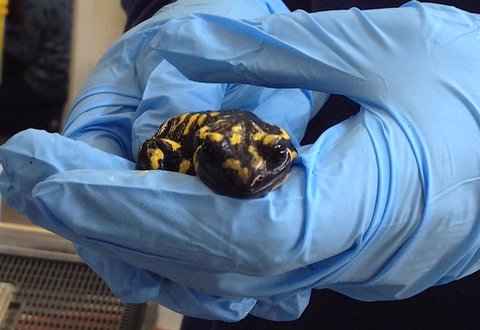
A healthy fire salamander from a captive-bred collection at a British zoo. Other specimens were infected with a fungus that has already devastated salamanders in continental Europe and could spread to North America.Credit Pria N. Ghosh

A healthy fire salamander from a captive-bred collection at a British zoo. Other specimens were infected with a fungus that has already devastated salamanders in continental Europe and could spread to North America.Credit Pria N. Ghosh

Our attention to stories reported in various media outlets about invasive species takes many forms, but invariably they are alarming, this one being no exception:

Pressure Builds for Swift U.S. Action Against Spreading Salamander Threat

There are signs of hope for American salamanders in the face of a potential biological catastrophe — a fungus that could be carried here through the global trade in exotic pets. Federal wildlife officials have signaled a crackdown may be coming on imports of amphibians.

Here’s the sequence of events.

Last year, biologists identified a virulent imported fungusBatrachochytrium salamandrivorans, as the cause of a steep drop in salamander populations in continental Europe. Herpetologists quickly began pressing United States agencies and officials (Dot Earth, Op-Ed article) to clamp down on the global exotic pet trade to cut the chances of the disease reaching the United States — which has the most diverse salamander population in the world.

In March, experts renewed their calls for action, frustrated with the lack of acknowledgement by federal wildlife agencies that this was an urgent issue. Continue reading

Extreme Recycling

Filtering membranes in an Orange County, Calif., water purification facility. The plant opened in 2008 during the state's last drought. Credit Stuart Palley for The New York Times

Filtering membranes in an Orange County, Calif., water purification facility. The plant opened in 2008 during the state’s last drought. Credit Stuart Palley for The New York Times

As the California drought continues public and private sector organizations look to solutions to comply with the State’s mandatory water reduction measures. In addition to desalination plants coming back on line and rainwater harvesting, communities are looking at ways to overcome the “yuck factor” of water recycling.

Less “extreme” versions have been in place for some time, as household wastewater goes through layers of treatment processes that break it down to its prime components of “H, 2 and O”. The results have been used for irrigation for years, but it’s possible to purify the water to sparklingly clear levels.

Used already in craft beer brewing, extreme purified water is one of the array of ideas being implemented to manage California’s ever-growing problems. Dealing with consumers is essentially a marketing problem, more so in this case than the norm.

Water recycling is common for uses like irrigation; purple pipes in many California towns deliver water to golf courses, zoos and farms. The West Basin Municipal Water District, which serves 17 cities in southwestern Los Angeles County, produces five types of “designer” water for such uses as irrigation and in cooling towers and boilers. At a more grass-roots level, activists encourage Californians to save “gray water” from bathroom sinks, showers, tubs and washing machines to water their plants and gardens. Continue reading