Salt of the Earth


Sisyphus-retouched-HD-pre-LA

Salt is a quiet seasoning, making its culinary point by bringing out the best in the dish it’s been added to. The crystaline mineral is so ubiquotus that we often don’t consider its vast history in the forging (and funding) of empires. Neither do we think about the labor it takes to bring it forth from the earth and water around the world.

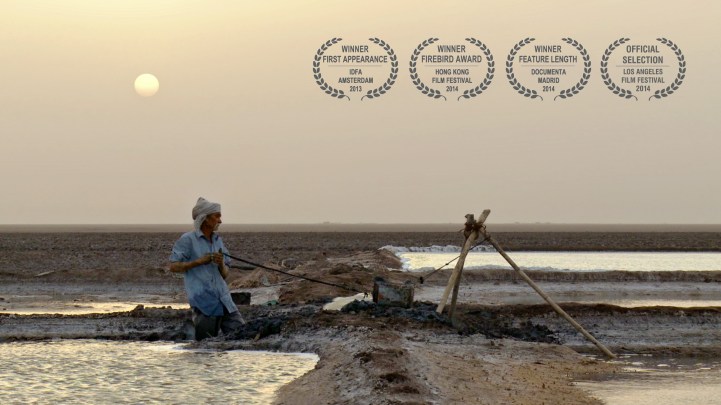
Indian film maker Farida Pacha has the perfectionist sensibility to share the story of the families who return to the saline desert of Gujarat’s Little Rann of Kutch to laboriously extract the salt from the desolate landscape. This seasonal migration has been going on for generations and the work is a matter of pride more than economy.

Director’s Notes: This is not a social issue film, even though the story of the salt people and their exploitation is a shocking one. What attracts me is the more fundamentally tragic question at the heart of their existence: what compels them to return to the desert to labor tediously year after year, generation after generation? What meaning do they find in this existence? Continue reading

Better Brewed Beer

foamy-beer

A time-honored artisanal endeavor is quietly articulating a 21st century version of industrial production

When we have links to articles reviewing the literature of vegetarian cooking and/or first-person stories, told in multiple parts about the ecological benefits of eating invasive fish species, it is only fitting that we offer information about ecologically sensitive beverages. The community of craft beer producers in the USA in particular has undergone nothing less than a renaissance. Thanks to the magazine website of Conservation for this story:

From the outside, the New Belgium Brewery, located on 50 acres near downtown Fort Collins, Colorado, appears to be an environmentalist’s dreamscape. Company-issued bicycles surround the facility. A parking lot next to the brew house has an electric car charging station. Solar panels layer the roof of the bottling plant. A well-worn biking path snakes across the property. Continue reading

A Science Writer’s Public Service

41EWvquSk3L_SL500_AA300_.5095659_std

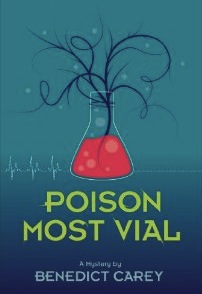
The famous forensic scientist Dr. Rama is dead – murdered – and suspicion has fallen on Ruby Rose’s father, the only family she has. Ruby is new to her school and is having enough trouble just making a friend; now she has far bigger problems. To save her father, she will have to solve the murder herself, relying for help on an elderly neighbor who used to be a toxicologist. But is this woman reliable? And is there enough time?

Benedict Carey is better known as a science reporter for the New York Times, but that is just his day job.  It certainly qualifies as public service, but in addition he moonlights on further public service. He explains his purpose:

Both books are adventures in which kids use science to save themselves and solve a mystery. It’s real science, accessible but not obvious, and builds understanding of some fairly advanced principles – transcendental numbers (among other things) in “Island of the Unknowns,” and mass chromatography in “Poison Most Vial.”

In a trailer park called Adjacent, next to the Folsom Energy Plant, people have started to vanish, and no one seems to care. At first Lady Di and her best friend, Tom Jones, barely notice the disappearances—until their beloved math tutor, Mrs. Clarke, is abducted, too. Mrs. Clarke has left them clues in the form of math equations that lead them and other kids all over the trailer park, through hidden tunnels under “Mount Trashmore,” and into the Folsom Energy Plant itself, where Lady Di and Tom Jones and a gang of other misfits uncover the sordid truth about what’s really happening there. That's Di on the left and Tom on the right.

In a trailer park called Adjacent, next to the Folsom Energy Plant, people have started to vanish, and no one seems to care. At first Lady Di and her best friend, Tom Jones, barely notice the disappearances—until their beloved math tutor, Mrs. Clarke, is abducted, too. Mrs. Clarke has left them clues in the form of math equations that lead them and other kids all over the trailer park, through hidden tunnels under “Mount Trashmore,” and into the Folsom Energy Plant itself, where Lady Di and Tom Jones and a gang of other misfits uncover the sordid truth about what’s really happening there. That’s Di on the left and Tom on the right.

Perfectly principled reality: if you had been restricted to Benedict Carey’s better known science reporting for the New York Times, that would be not such a bad thing. He also serves on the board of Edge, a non-profit which seeks to “arrive at the edge of the world’s knowledge, seek out the most complex and sophisticated minds, put them in a room together, and have them ask each other the questions they are asking themselves.” Again, not bad.

But we like in particular the effort to branch out further, reaching the next generation and aiding the mathematical and scientific efforts of educators who otherwise compete with entertainment of all sorts for the hearts and minds of youth.

That said, do not miss his reporting. He is a master at this trade, and improves the quality of conversation we are determined to engage in more often. His most recent article for the Times reviews the research into cognitive performance and aging and with humor and gravitas all at once he acknowledges why as we get older we tend not to be too interested in these findings: Continue reading

Kathakali – An Introduction

Tiraseela

Tiraseela – the cloth that is used both as curtain and dramatic effect

Kathakali is one of the oldest theatre forms in the world. Originating in the area of southwestern India now known as the state of Kerala, it is a group presentation in which dancers take various roles in performances traditionally based on themes from Hindu mythology, especially the two epics, the Ramayana and the Mahabharata.

One of the most interesting aspects of the art form is its elaborate make-up. Characters are categorized according to their nature, which determines the colors used in the make-up. Continue reading

Getting The Story

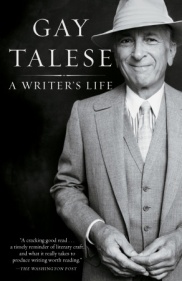
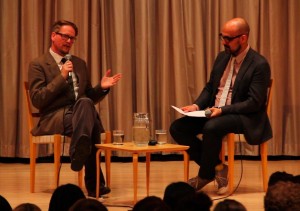
His autobiography has been in print since 2007, but Longform helped bring that book back to our attention by bringing Gay Talese on stage at New York University recently, to talk about his life writing for Esquire in the 1960s and for The New Yorker today.  He tells his story during the onstage interview as only a master story-teller can. It is about listening; crafting; working: building a community of sources and fellow-writers:

“I want to know how people did what they did. And I want to know how that compares with how I did what I did. That’s my whole life. It’s not really a life. It’s a life of inquiry. It’s a life of … knocking on a door, walking a few steps or a great distance to pursue a story. That’s all it is: a life of boundless curiosity in which you indulge yourself and never miss an opportunity to talk to someone at length.” Continue reading

Learning To Dance Yakshagana

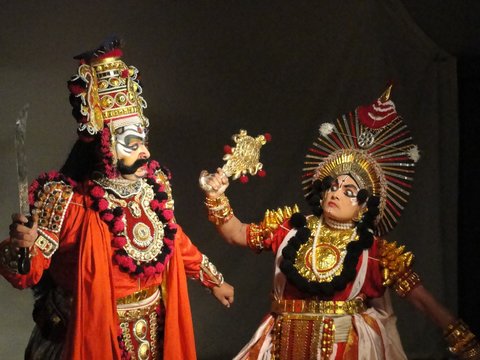
Courtesy of Karnataka Mahila Yakshagana A scene from Yakshagana performed by female artists in Bangalore, Karnataka, in January.

Courtesy of Karnataka Mahila Yakshagana. A scene from Yakshagana performed by female artists in Bangalore, Karnataka, in January.

Thanks to India Ink for bringing to our attention this article by Kavitha Rao:

BANGALORE — In a quiet Bangalore home, a group of middle-aged women are learning to walk, talk and dance like men. Continue reading

Al Fresco Ayurveda

Uruli

Brass Uruli

At Cardamom County we make every effort to ensure the uniqueness of our guests’ experience. One way is to invite them to watch our Ayura staff along with Dr. Pameela, our in-house Ayurvedic doctor, prepare the traditional herbal oils used in Ayurvedic massage. They first harvested the special herbs in our gardens. The herbs are then soaked in water overnight to extract a concentrate that by morning turns into a rich concoction called kashaya. This mixture is then brought to a boil in a large brass vessel called an uruli. Continue reading

Fine Arts at Cardamom County

Art Stall

Artisan at Work

At Cardamom County we’ve been supporting the fine arts in our community and beyond for many years. For the past few seasons we’ve invited a young man from Odisha to showcase his workmanship at the entrance to our restaurant All Spice. His handicrafts are amazingly detailed drawings carved onto palm leaves and then painted.  Continue reading

Anachamayam – Elephant Decorations

Photo credits : Dileep

Photo credits: Dileep

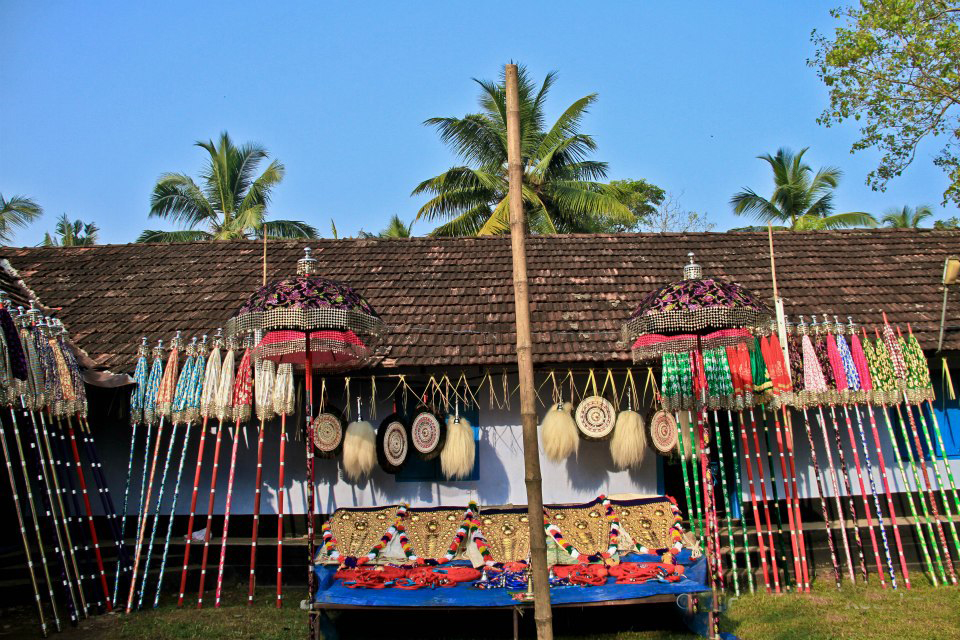
In Kerala during temple festivals, elephants are decorated with gold caparisons (Nettippattom), bells and necklaces. People mounted on the elephants hold ornamental umbrellas (Muttukuda) up high, swaying white tufts (Venchamaram) and peacock feathers fans (Alavattam). Continue reading

Accordion’s Life Line, Alex

This slideshow requires JavaScript.

This is another in the series, on the New Yorker‘s website, providing short glimpses into the craft work of New York City. Click here to go to the video and source of this text:

For forty-five years, Alex Carozza has run a small accordion shop near Times Square. It’s one of the last fixtures of the old Music Row on Forty-eighth Street, and Carozza, after a lifetime of repairing musical instruments, still works six days a week while teaching some younger apprentices the skills of the trade. Continue reading

Kitchen Collaboration

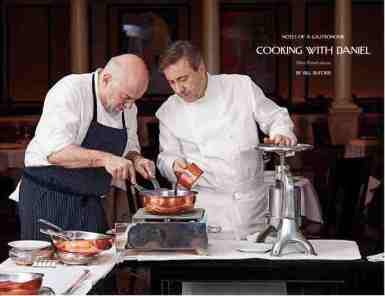
Kitchen Confidential juggled with foodies’ fascinations in new and unusual ways, and since then reality television seems to be the appropriate new home for that side show.  Oddly, it began in 1999 with an article in the New Yorker. So it is only fitting that the magazine has been balancing those dynamics with the work of less celebrity-oriented writers ever since.  None better than Bill Buford, who gets out there, and in there, like a citizen scientist for the story (though he is not shy of carny, either). Here what catches my attention is the collaboration, but plenty on the ethos of an artisan, the farm as the garden of eden, and last but not least the role of food in heritage and heritage in food (click the image above to go to the article):

Two years ago, during the summer of 2011, Daniel Boulud, the New York-based French chef, told me he had been thinking about a project that we might do together. We were both in France at the time. I was living in Lyons—I had moved there in order to learn French cooking—and Boulud was visiting his family in Saint-Pierre-de-Chandieu, a nearby village on a wooded ridge in the open countryside. Continue reading

It’s About The Collaboration

All six minutes are a pleasure, but the last few seconds resonate across time and space:

This past fall, Yolanda Cuomo, a New York-based artist and graphic designer, learned that she had to vacate her Chelsea studio of twenty-five years. Continue reading

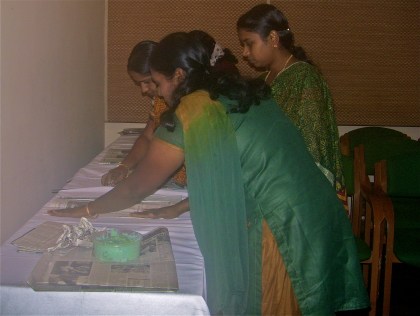
Training session at the newspaper bag unit

Our newspaper bag unit is a permanent, exciting work-in-progress. Using upcycled newspapers provides us with an alternative  to plastic bags in our two shops at Cardamom County– the Raxa Collective store and the via kerala shop. It is also a way to work with more people in our community. We have been working at making this unit a sustainable entreprise with many collaborators since the beginnings of Raxa Collective in 2011.

Newspaper bag training unit - Raxa Collective Continue reading

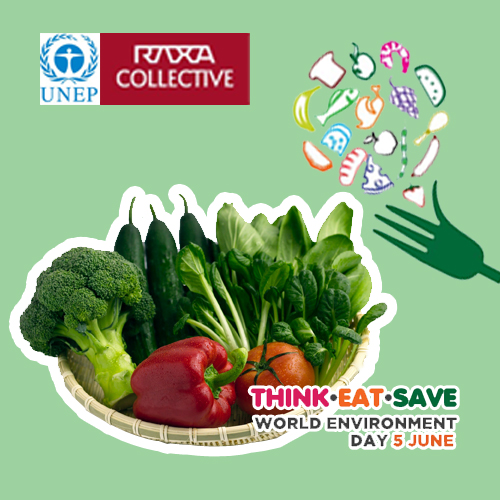
WED 2013 : Avoiding waste. Outsider art. Donation meals… World Environment Day is on its way!

WED 2013 - Raxa Collective

On June 5, we’ll celebrate World Environment Day. This year UNEP focuses on the theme Food waste/Food Loss. At Raxa Collective we’ll be carrying out actions and sharing experience and ideas. Come and join us with your ideas and tips to preserve foods, preserve resources and preserve our planet.

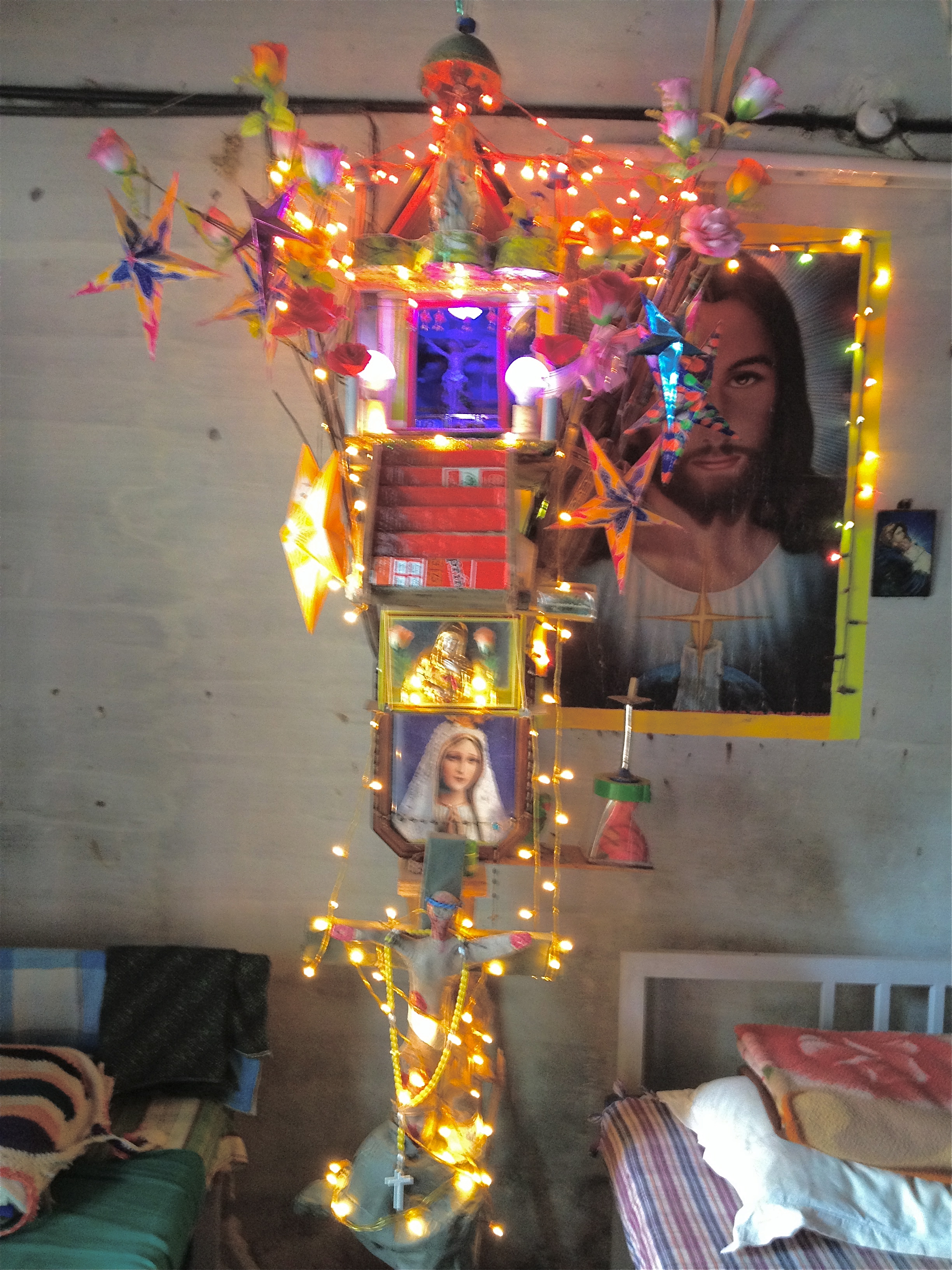
Installation by Chandran at the Kumily Akasha Parava credit Ea Marzarte - Raxa Collective

Tomorrow we’ll be celebrating World Environment Day at the Kumily Sneshashram, a long-term shelter for homeless, disabled and elderly people. Locals call this place run by Franciscan sisters, “Akasha parava”: birds in the sky. We’ll be bringing a special meal and one of the people we will be working with is Chandran, the artist behind this brilliant installation made of coffee tins, religious artefacts, procession lights and flowers. Meet Chandran… Continue reading

Nature, Culture And The Challenges Of History

Tupilaq figures, Tuktoyaktuk, Northwest Territories, Canada. Photo by Lowell Georgia/Corbis

Tupilaq figures, Tuktoyaktuk, Northwest Territories, Canada. Photo by Lowell Georgia/Corbis

We have found another keeper in this magazine which we have linked to several times in the past, this time with a conservation theme at the intersection of natural and cultural heritage (click the image above to go to the source):

I’ve been nursing a gentle obsession with a quartet of bone-white, thumb-sized figurines. I first saw them, lined up in a row, on the cover of Miguel Tamen’s book Friends of Interpretable Objects (2001). They rested in a pair of open hands, looking toothy, and vital, exuding a cool glimmer, while evoking the long Arctic night and the estranging cold. And yet they’re also tiny and personable, these figurines. Their smooth features beckon you to enfold them in the palm of your hand. Their heads are cocked at mad angles, and their leering eyes and rabid smiles bespeak a secret, conspiratorial sociability. Continue reading

Iceland In The Air

Lopez Williams, courtesy of FSG.

Lopez Williams, FSG

Our daily scanning of magazines, blogs, news websites, etc. for inspiration led us to the conclusion recently that Iceland has captivated a lot of minds.  We do not know why, but it is popping up everywhere.  For example, this portion of a wonderful post on Paris Review‘s website about a recent event at Scandinavia House:

…It’s a young crowd, trendy, expectant, giddy even, though I’m surprised to see so many empty seats. It turns out Scandinavia House closed their RSVP list weeks earlier, almost immediately after announcing the event, grossly botching the numbers and no doubt needlessly turning away scores of would-be attendees. But it’s no matter to those of us here—in fact it makes the evening feel all the more intimate. Continue reading

The logistics dilemma: double passenger scooter or double-decker lorry ?

Transporting products around the Ghats credit Ea Marzarte My friends and I had been looking for one around town for an aftenoon, and finally I found it a week later driving away towards another town: a coir mat, the ideal support to make my salutations to the sun on. The small motorbike was actually part of a ‘caravan’ carrying people and mats from the neighboring state of Tamil Nadu.  So loaded it was uncanny, this one had either the most efficient engine or the best pilot because it made it to the top of the hill first and stopped there to wait for the others. Continue reading

Basil Twist’s Puppetry Illuminated

Screen Shot 2013-04-27 at 9.25.19 AM

The New Yorker’s Joan Acocella profiled Basil Twist in a recent issue, and the magazine’s online team visited Twist at his studio, which you can see in the video above (click on the image), and the profile itself is worth a read:

“The crucial point about puppets,” Twist told me, “is that they are real and unreal at the same time.” At the beginning of the twentieth century, many writers and visual artists (Alfred Jarry, Paul Klee, Oskar Schlemmer, Sophie Taeuber-Arp), looking for something that was a little bit human, but much more art, made puppets, or works for puppets. The trend continues. Continue reading

Kindi – Traditional Kerala Water Vessel

Kandi

Kindi

The Kindi is integral to all rituals and ceremonies in Kerala. The spouted vessel is made out of  bronze (odu), and is mainly used for Hindu’s Poojas. In Kerala each and every household keeps a kindi for special occasions. Continue reading