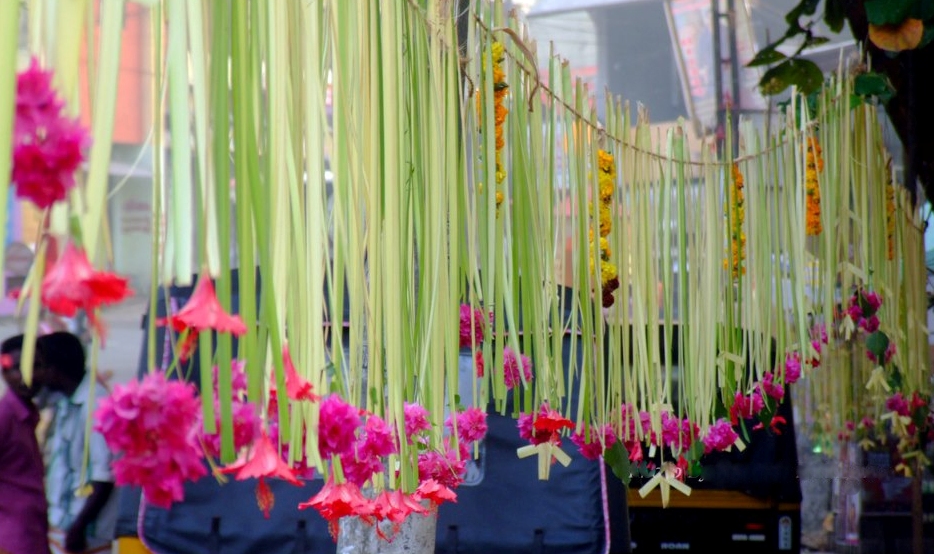
The coconut tree plays an integral part of the lifestyle and the economy of the Kerala. (In fact, the name of the state itself has coconut in its etymological roots.) There are numerous products and byproducts derived from the tree. In addition to its use for food, beverage and coir, its tender leaves are used for decorating houses, Temples and churches. Continue reading
Craft
In The Category Of Must See
Inimitable. Some of us love superlatives, and some of us find them tedious; but all of us will agree that this fellow is inimitable (click the image above to go to his work directly):
Recently, I created an app called Petting Zoo. It is an interactive app for iPhones and iPads, and creating it was a difficult but interesting process. Continue reading
5 Reasons I See India’s Potential to Produce A Stararchitect
“Stararchitect” conjures up a cloud of thoughts (Star architecture. Star power. Architecture as a symbol. The North Star for architectural design. Brand. Design. Fame. Architecture prowess. Household name.), but above all, I think of The Pritzker Prize. I feel like the weather channel for announcing the next “big thing” in architecture is The Pritzker Prize. The weather channel is telling you “you better keep this in mind ’cause you’ll need that umbrella!” The Pritzker Prize is telling you “you better keep this name in mind ’cause you’ll need that knowledge to understand the state of the world you live in.”
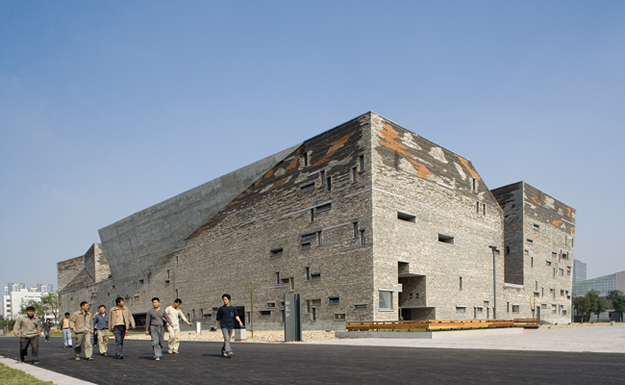
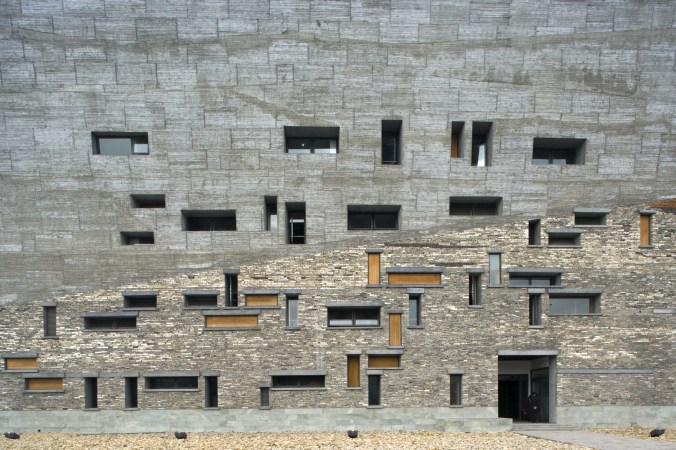
2012’s Pritzker Prize Laureate was Wang Shu, a Chinese architect famed for his re-use of building rubble in his designs. Expansive facades feature roof tiles and bricks from the demolished village that previously existed on that very site. The Pritzker Prize choice of Wang Shu tells us:
1.) Sustainability is important. The reappropriated construction refuse reminds us of the Three Four Rs: Refuse, Reduce, Reuse, and Recycle. It also reminds us that sustaining heritage and history is important.
2.) China is a powerful country with a powerful new identity. This is the first time a Chinese architect has been named. The closest the Pritzker has ever gone to a Chinese architect before was when I.M. Pei was recognized as a Chinese-American architect.
It’s rare to see a non-western architect. So I thought, has there been an Indian Pritzker Prize winner before?
The answer is no. (But I wouldn’t be surprised if Indian architecte Charles Correa is a nominee soon!)
While it may still be a long time before we see an Indian Pritzker Prize winner, I feel that India has the potential will definitely produce a stararchitect in the future. Here are 5 reasons why I see India’s potential to produce a starachitect.
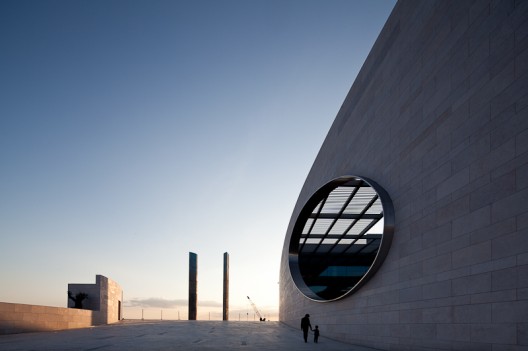
Champalimaud Centre for the Unknown in Lisbon, Portugal by Charles Correa Architects, photographed by José Campos of arqf architectural photography
5 Reasons I See India’s Potential to Produce A Stararchitect
Continue reading
Come To India, Alan Moore!

The wedding of Alan Moore and Melinda Gebbie. Photograph: Neil Gaiman/Writer Pictures
Please bring your bride, too. We extend this type of invitation to the too few happy few who clearly work for the pleasure of their craft (or so it seems, observing them), rather than the money. In our own small way, 180+ full time members of Raxa Collective in Kerala–not to mention contributing photographers, interns and other friends to our purpose–are all attempting the same. For whomever might have missed it, this profile is worth the read:
…Moore has a complicated relationship with money. “Pure voodoo,” he says now. “Only there as long as we believe in it.” Challenged, during a television interview this year, about why he would sign away the movie rights to a comic such as Watchmen if he didn’t ever want it to become a movie, Moore said he gave up the rights because he never expected any adaptations to happen; he called it making money for old rope. Continue reading
We Do Not Accept Advertising
Recycle, Bicycle
5 Lenses For Every Vacation
Hey guys,
All of us photobugs and travel-junkies have struggled with the age-old question: which lens should I bring on my River Escapes backwaters adventure or my Roman holiday or my trip to the moon?
As a casual photographer, I’m not crazy about specs. I don’t get the numbers and technical terms! JUST TELL IT TO ME STRAIGHT! I know there are people out there who are like me, so Ben, Milo, and I will make it as easy as possible to understand which lens YOU need to bring on your next vacation! We’d also love to know what YOU brought on your last vacation!
See which of description fits you best:
- I’m out to shoot wildlife. Tell me what I need to know.
- I love architecture and the built world. What should I bring with me?
- I’m a tourist who’s going to stick out like a sore thumb, but I really want to capture candid portraits of interesting people– help!
- I’m going to a naturey place filled with dust/humidity/dirt/whatever and I don’t want to constantly change my lens. What’s the best daily walk-around lens?
- I’m going on a service trip and I’ll be working on a construction site. How do I make it look epic?
- Canon EF 70-200mm f/2.8 L IS USM with 2x extender
- Canon EF 70-300mm f/4-5.6 IS USM
- Canon EF 50mm f/1.8
- Canon EF-S 10-22mm f/3.5-4.5 USM
- Canon EF-S 18-55mm f/3.5-5.6 IS
ALRIGHT, I’M READY!! NOW SHOW ME THE 5 LENSES I SHOULD BRING ON MY NEXT VACATION!!!
Aranmula Kannadi – An Ancient Indian Metal Mirror
Aranmula, an ancient village in the district of Pathanamthitta on the banks of the famous Pamba River, has a special history of Kerala’s traditional arts. For centuries Indians have been experts in Metallurgy; Delhi’s ancient Mayuran Iron Pillar, and forged Damascus steel are part of an artisanal culture in South India that stretches back more than 2000 years. The Aranmula Kannadi (metal mirror) technology is part of this history.
Cottage Industry
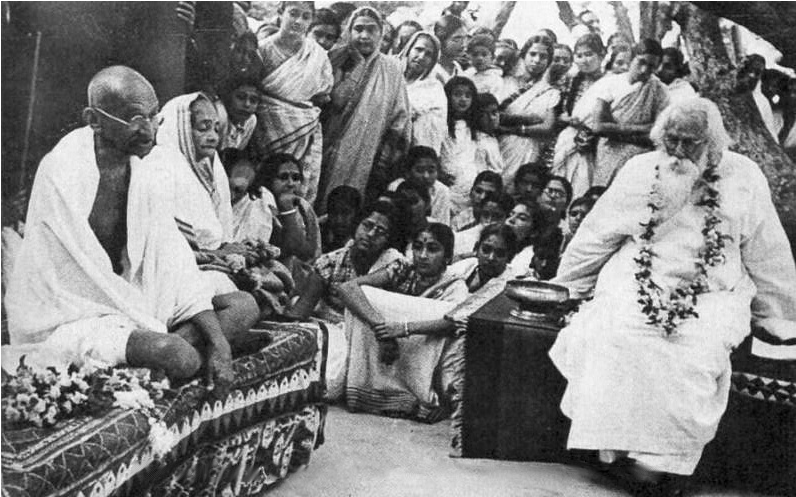
Nobel Laureate Rabindranath Tagore founded Shanti Niketan (meaning an Abode of Peace) laying the foundation for what is today known as Vishva-Bharati University, home of one of the best art colleges in the world. In 1922 Mohandas Karamchand Gandhi visited Santiniketan and met Sushen Mukherjee, a young man inspired by the movement for Indian Independence. The meeting influenced Mukherjee to set up Amar Kutir “my cottage” in 1927, establishing a rudimentary cottage industry for sari printing, handloom, and leather craft production 15 miles away from Santineketan on the banks of the Kopai River near West Bengal. Continue reading
Connecting The Madeleines
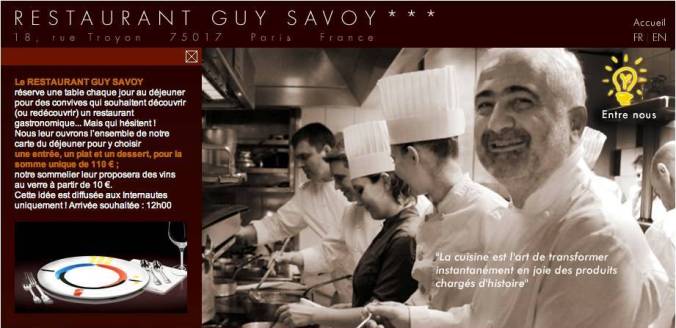
The young man working his way through the kitchen brought to mind a young man of about the same age, three decades earlier. I had the good fortune, in my early adulthood, to work in a restaurant owned and operated by a man who is one of the great chefs of his generation. I did not work in the kitchen, but in the dining room, from 1983-1985. It provided the most important education of my life, which is saying a lot because I eventually earned a Ph.D. and even that did not top the learning earned in Guy Savoy’s restaurant.
Not Your Average Madeleine
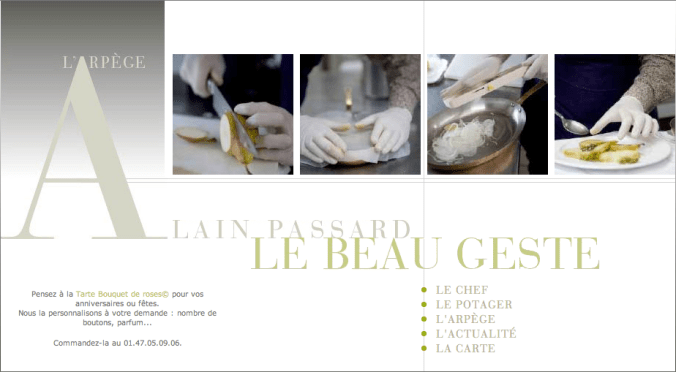
One of the most effortless pastimes is visually-cued memory. Out of nowhere you see something that reminds you of something and you are off to the races. Or you hear something. Whether the trigger is visual, auditory, tactile, gustatory, or olfactory–or any combination of those–if you have the fortune of a stock of pleasant memories then something may take you to the kind of place linked in the image above.
Paper Guardian
Click the image above for a profile of an amazing entrepreneurial conservationist. The New York Times continues to demonstrate its subscription-worthiness. The key line in the profile, which we can relate to both in principal and practice:
Barrett, who is 61, has dedicated his life to unlocking the mysteries of paper, which he regards as both the elemental stuff of civilization and an endangered species in digital culture. For his range of paper-related activities, he received a $500,000 fellowship from the MacArthur Foundation in 2009. “Sometimes I worry about what a weird thing it is to be preoccupied with paper when there’s so much trouble in the world,” Barrett told me, “but then I think of how our whole culture is knitted together by paper, and it makes a kind of sense.”