“The Upcycle”, the sequel to “Cradle to cradle”

If you’ve read “Cradle to Cradle” and you come here regularly, chances are you’ll be as excited as I am to learn about the sequel : ‘The Upcycle”.

10 years ago William McDonough and Michael Braungart published one of the most important environmental manifestos of our time.

Based on biomimetics, Cradle to Cradle design is an approach to the design of products and systems. It models human industry on nature’s processes viewing materials as nutrients circulating in healthy, safe metabolisms. The book states that:

“All products can be designed for continuous recovery and reutilization”.

Every product can and should be conceived with the reuse of its materials in mind and every material can and should be conceived to be used again. Just like in nature, nothing goes to waste.

If you have not read it, McDonough’s TED talk Cradle to Cradle design will probably make you want to give it a go.

In their newest book  The Upcycle: Beyond Sustainability – Designing for Abundance,  McDonough and Braungart go further than ‘Cradle to cradle’ saying that we should be ambitious about our role on this planet.

“Industry can do better than “do no harm”: it can actively improve everything with which it comes into contact.” Continue reading
Photogenic Food

foodlens7

We mentioned recently that we are crowd-sourcing a new way of looking at decor for Cardamom County. National Public Radio (one of the great investments made by the tax-payers of the USA, in collaboration with loyal listeners who donate funds to their local stations) has a food-focused blog that has introduced us to a photographer of Indian heritage who grew up in the USA and has traveled around the world doing what photographers do: seeing the world through the lens, differently than we might otherwise see it. Here he is concerned, curious and creative in his exploration of what is in the food we eat:

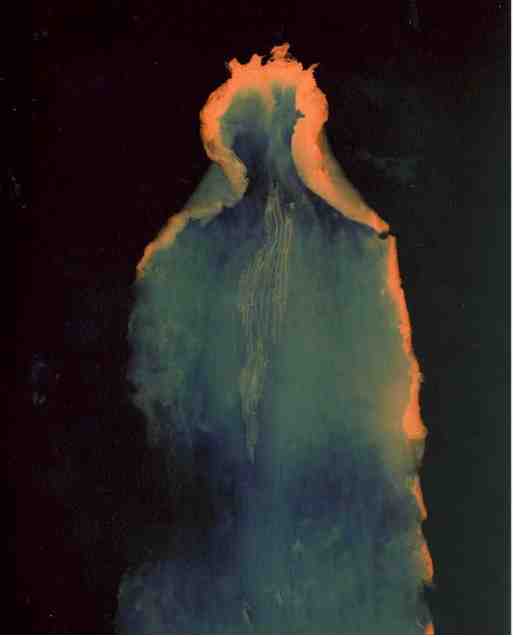
These intriguingly abstract images are part of a photo series called Naturally Modified — the brainchild of photographer Ajay Malghan. To create them, he shines colored lights through thin slices of fruits and vegetables onto light-sensitive paper. So what you end up seeing isn’t a picture of the food itself, but an ethereal image of its shadow. Continue reading

Artisanal Toys

Anker index1.jpg

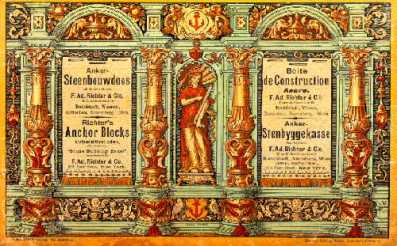
Box Set of Anchor Stone Blocks

In The New Yorker‘s book review last week, Alexandra Lange discussed Amy F. Ogata’s new book “Designing the Creative Child: Playthings and Places in Midcentury America,” focusing on the diverse materials and malleability of toy design over the past several decades.

With increasingly commercialized handmade, all-natural toys on the market, Lange asks, “Do toys need to be as artisanal as our food?”

Nearly two years ago now, Meg wrote about Tegu, wooden magnetic building blocks that support conservation and Hondurans in poverty. Tegu blocks seem to be a perfect blend of the artisanal qualities that wood bring to a toy, while the magnets inside add the opportunity for creativity that simple wooden rectangles and squares might not (unless they have the Lego-like studs that Mokulock does).

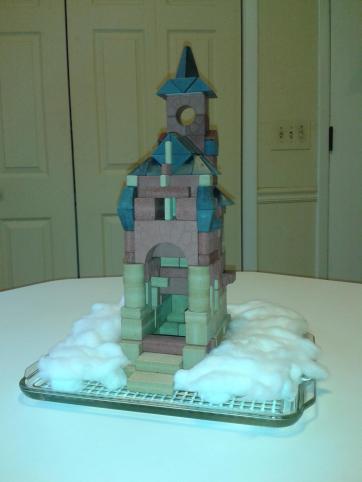
anker-1.jpgWhat about stone toys?
You don’t hear much about those, it seems to me. Heavy to carry around, more dangerous as projectiles, and requiring more machinery to produce, playthings built from stone might seem even more cumbersome and antiquated than wooden toys to a child brought up on shiny plastics and polymers. But the stone Anker/Anchor blocks (a box cover of which is pictured at the top of this post, and one of my own creations from these blocks is here to the right) made from quartz sand, chalk, linseed oil, and color pigment, are still able to merit $200+ asking prices on eBay, although part of their appeal comes from their relative–or perceived–antiqueness. Continue reading

WED 2013 : Avoiding waste. Outsider art. Donation meals… World Environment Day is on its way!

WED 2013 - Raxa Collective

On June 5, we’ll celebrate World Environment Day. This year UNEP focuses on the theme Food waste/Food Loss. At Raxa Collective we’ll be carrying out actions and sharing experience and ideas. Come and join us with your ideas and tips to preserve foods, preserve resources and preserve our planet.

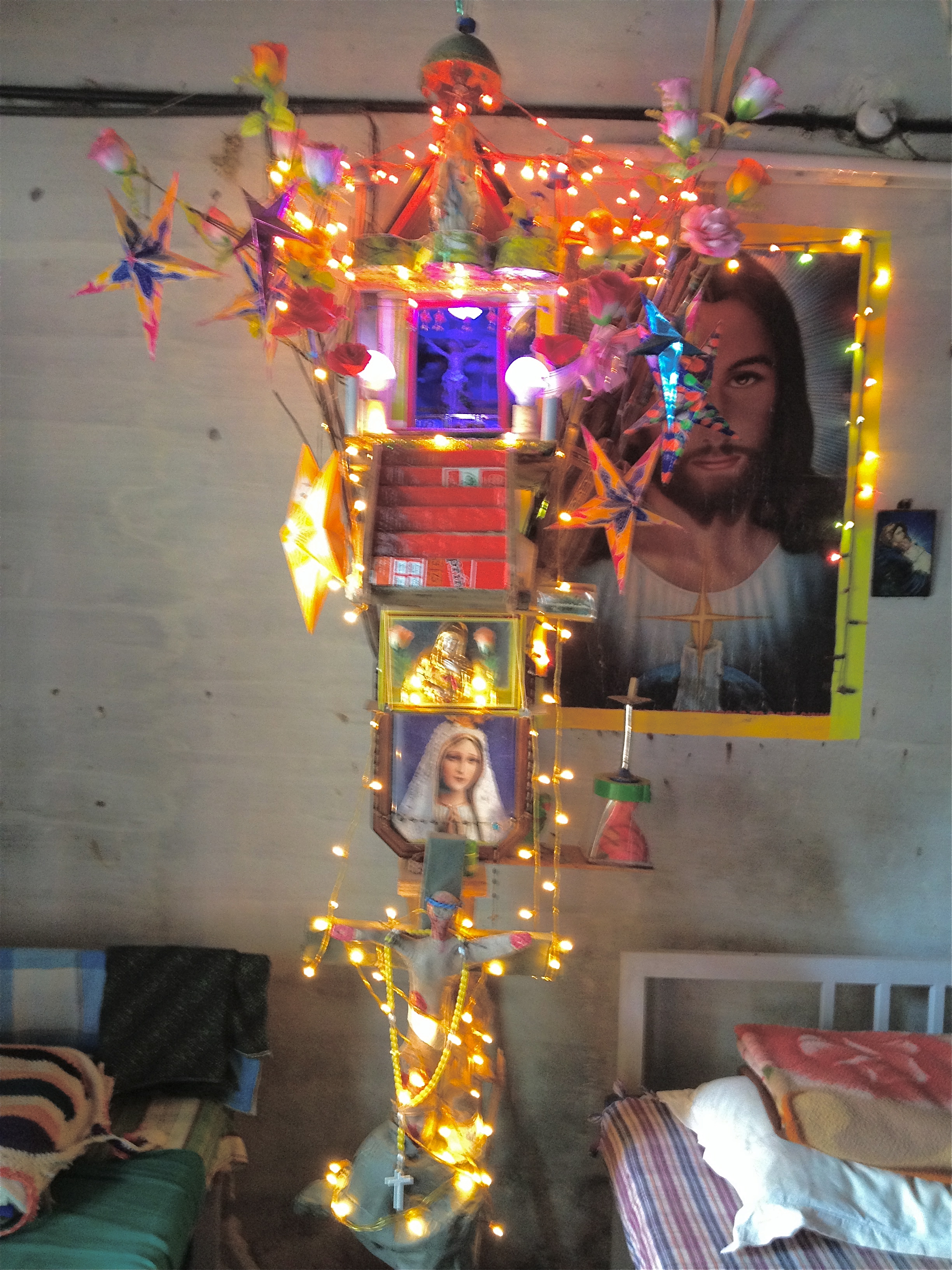
Installation by Chandran at the Kumily Akasha Parava credit Ea Marzarte - Raxa Collective

Tomorrow we’ll be celebrating World Environment Day at the Kumily Sneshashram, a long-term shelter for homeless, disabled and elderly people. Locals call this place run by Franciscan sisters, “Akasha parava”: birds in the sky. We’ll be bringing a special meal and one of the people we will be working with is Chandran, the artist behind this brilliant installation made of coffee tins, religious artefacts, procession lights and flowers. Meet Chandran… Continue reading

Worlds And Distant Times Apart, Bridged By Ideas (Or Ideology)

Future Shlock

The New Republic is not a magazine we scan often, because its focus rarely intersects with our focus; even its Must Reads are to us, not-often-must; but occasionally we stumble on something of interest.  Perhaps because the first link of today had a technology component, we got on a roll thinking about the relationship between technology, ideas, culture. This particular article is worth reading simply for the quality of both content and style:

The sewing machine was the smartphone of the nineteenth century. Just skim through the promotional materials of the leading sewing-machine manufacturers of that distant era and you will notice the many similarities with our own lofty, dizzy discourse. The catalog from Willcox & Gibbs, the Apple of its day, in 1864, includes glowing testimonials from a number of reverends thrilled by the civilizing powers of the new machine. Continue reading

Creative Collaboration For Laughs And More

Carl Reiner and Brooks teamed up as a comedy duo in 1960, creating such now-legendary skits as "The 2,000-Year-Old Man." "Carl's still my best friend in the world," says Brooks.

Carl Reiner and Brooks teamed up as a comedy duo in 1960, creating such now-legendary skits as “The 2,000-Year-Old Man.” “Carl’s still my best friend in the world,” says Brooks.

You do not have to be a fan of his many genres of creativity to appreciate the fact that this man knows how to thank the people who have helped him be funny and successful.  The most famous of those collaborations is with his best friend of 60+ years, but in this Fresh Air interview he demonstrates the grace of gratitude for this and many other collaborations:

On Hitchcock and ‘High Anxiety’

“I wrote a letter saying, basically, ‘Dear Mr. Hitchcock, I do genre parodies and in my estimation you are a genre. I don’t mean that you’re overweight. I mean that you’ve done every style and type of movie, and that you’re just amazing, and I would like to do a movie dedicated to you based on your style and your work.’ And … he called me and he said, ‘I loved Blazing Saddles. I think you’re a very talented guy, and come to my office.’ Continue reading

If You Happen To Be In Sydney


This slideshow requires JavaScript.

Down under, where there is no aurora borealis, the do-it-yourself creatives have taken matters into their own hands, using vivid colors to attract your attention–and thrown a big party to boot (May 24 – June 10 according to this press release):

…“Vivid Sydney is where technology, commerce and art intersect—delivering real business outcomes. With 37 per cent of Australia’s creative industries located in NSW, supporting creative industries through events like Vivid Sydney is key to the NSW Government’s strategy to grow the NSW economy,” Mr Stoner said. Continue reading

Iceland In The Air

Lopez Williams, courtesy of FSG.

Lopez Williams, FSG

Our daily scanning of magazines, blogs, news websites, etc. for inspiration led us to the conclusion recently that Iceland has captivated a lot of minds.  We do not know why, but it is popping up everywhere.  For example, this portion of a wonderful post on Paris Review‘s website about a recent event at Scandinavia House:

…It’s a young crowd, trendy, expectant, giddy even, though I’m surprised to see so many empty seats. It turns out Scandinavia House closed their RSVP list weeks earlier, almost immediately after announcing the event, grossly botching the numbers and no doubt needlessly turning away scores of would-be attendees. But it’s no matter to those of us here—in fact it makes the evening feel all the more intimate. Continue reading

Community, Collaboration, Career

If you spend five minutes listening to Gerald Chertavian in the video above, and it resonates in any manner, then you should learn more about the organization he formed.  It came to our attention, as many other great stories have recently, thanks to From Scratch, Jessica Harris’s radio show and podcast repository. Continue reading

Crowdsourcing A Design Solution

After our renovation of the reception area at Cardamom County last year, we decided to leave the largest wall–a spectacular, privileged space for art–completely white until we found exactly the right piece.  Given the property’s location in the hills where the best cardamom in the world grows, we formed a vision for a piece of art that would abstract cardamom in some beautiful way.  We spoke to the director of the government’s cardamom research laboratory, thinking they might have some molecular images of cardamom (more on which after the jump) but they did not.  And so we dropped that idea, but we are still looking.  And that is how we happened upon the image above, and the description of this and others by the same artist on a Japanese design website:

Using his background in computer graphics and illustration, media artist Makoto Murayama creates technical, scientific blueprints of flowers that look like they belong in a manual for semiconductors. In fact, his work has just been selected as part of thesolaé art gallery project, an initiative to bring art into the offices of Tokyo Electron, one of Japan’s largest semiconductor companies. Continue reading

World Building Through Media

Every day for the past three years or so we have posted a few personal accounts, links to news stories, sometimes told through video, etc. all in the interest of highlighting collaborative, community-based contributions to conservation.  We reach far and wide for inspiration, and some daily features are there not as a direct statement about conservation but about the world we see around us. So when we see a story about world building though media, and a name like 5D Institute, it catches our attention. According to their website, the future of narrative media is a form of world building, and an important contribution to it can be found here:

5D Institute is a cutting edge USC non-profit Organized Research Unit dedicated to the dissemination, education, and appreciation of the future of narrative media through World Building. World Building is the interdisciplinary process of building worlds that evolve into containers for the new narrative resolutions. World Building is the intersection of creativity and technology for students in academia and industry who need to understand now how to thrive in the media jungle of the future. World Building works beyond the edges of known media to express the full arc of our creative role in making new narrative worlds. Continue reading

Astronaut Coffee Taste Test

Thanks to Megan Garber, one of the Atlantic‘s other intrepid investigative writers for this story of collaboration by members of the food and astronaut communities:

So we finally have an answer to that age-old culinary question: What do professional foodies think about … space coffee?

Two celebrity chefs — David Chang of Momofuku and Traci Des Jardins of Jardiniere — made a trip to the Johnson Space Center in Houston. Their particular mission? To do some testing of the culinary offerings developed in the Space Food Systems Laboratory. Continue reading

Malayalam font: research and reinvention at Thought Factory Design

One of the things you notice first when you arrive Kerala is the beautifully curvy and mysterious script. The Malayalam alphabet consists of 56 letters. Its rounded form comes from the fact it was primarily handwritten with a sharp point on dried palm leaves. Continue reading

Getting It Done, With Attitude

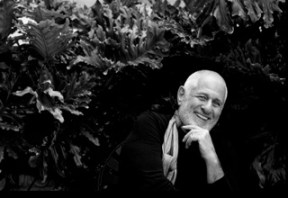
Richard_Saul_Wurman2

Harvard Magazine writes about a man we have appreciated since hearing him interviewed on a show whose podcasts with some of our heroes we have mentioned in previous posts.  It is easy to perceive Wurman as a world class pain in the neck. Listen to the end of that podcast and you learn that he is self-aware of this. For those who know ourselves to come across as unreasonable, contentious, etc. Wurman is an inspiration worthy of the pantheon:

Described by Fortune magazine as an “intellectual hedonist with a hummingbird mind,” Wurman created and chaired the TED conference from 1984 through 2002, bringing together many of the world’s pathbreaking thinkers to share their ideas and spark discussion.  Continue reading

University-Based Groups Worth Noting

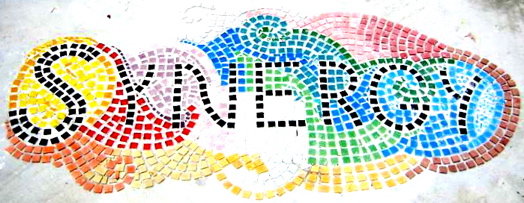
syn-mosaic

An occasional feature, beginning here, will point to university-based groups–informal organizations, living arrangements, secret societies, etc.– we can relate to:

Co-operative societies bring forth the best capacities, the best influences of the individual for the benefit of the whole, while the good influences of the many aid the individual.

Leland Stanford
October 1, 1891
Stanford University Opening Ceremonies

Community, Theater & Transformation

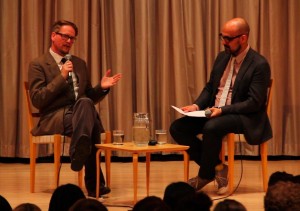
We have mentioned this fellow more than once, and we have an ongoing thing for libraries (thank you Toronto Public Library for making this possible, and may you do the right things in order to live forever!).  Now we must mention the journalist who conducts this “interview” by asking few questions, brilliantly, and then brilliantly getting out of the way and letting his interviewee speak.  And speak he does.  If you have a better definition of art, operatic or otherwise, please let us know.  This is worth every minute, so wait until you have time to watch it from beginning to end.

Metal, Craftily Crafted

This slideshow requires JavaScript.

Brazilian artist Vik Muniz has been on our radar for quite some time.  Partially because his work redefines the concepts of waste and the proper “mediums” in art, but mostly because his work is just plain fun. While some previous series have used medium as bizarre as dust, granulated sugar or  melted chocolate, the prints exhibited at the 2013 New York Armory Show were created with the metal waste of the modern world.

Muniz is not only a master at recycling but at keeping his viewer completely off balance with his sense of scale. His 3 dimensional collages, whether made of scrap metal like the ones in the slideshow above, or with more “generalized garbage” as in the pieces depicted in the documentary The Waste Land, are orchestrated piece by piece from a 20 meter vantage point. For example, at first glance the hummingbird image looks as shimmeringly delicate as a Hupert Duprat/caddisworm collaboration, but wait! Are those paint cans, bed springs and automobile tire hubs I see? Continue reading

Tidy Up

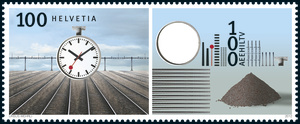
© Die Post  Swiss Post has asked Ursus Wehrli to create a tidied up stamp – the stamp is NOW available at every Swiss post office.

© Die Post Swiss Post has asked Ursus Wehrli to create a tidied up stamp – the stamp is NOW available at every Swiss post office

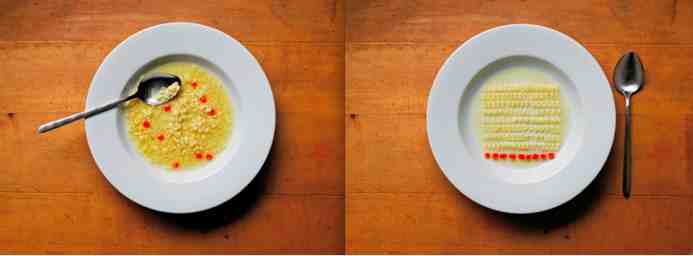
There is an entertaining video from five years ago of this comic artist presenting his “work” and a book review from 18 months ago on Trendland that is worth a look because it presents an excellent sampling of Ursus Weherli’s images, and you can decide relatively quickly whether you want more or not (one purpose of a book review, well fulfilled in this case:

Organizational skills aren’t usually something you look for in an artist, but in Ursus Wehrli‘s case, they’re definitely something of value…

His most famous image is likely this one below, but the stamp above commissioned by Swiss Post shows an evolution of sorts, which you can see after reviewing the images in that book review.  It also shows an idea, a concept, on a roll.  Where did it come from?  Where is it going?

theartofcleanup2

Continue reading

Musical Crossovers

This slideshow requires JavaScript.

For some of us New Yorkers, it was a superb experience attending the India debut of Norah Jones in Mumbai recently.  The most recent installment of the India Ink series that mashes up images, themes and ideas related to the commonalities and differences between New York and Mumbai is a perfect complement to that recent musical outing: Continue reading

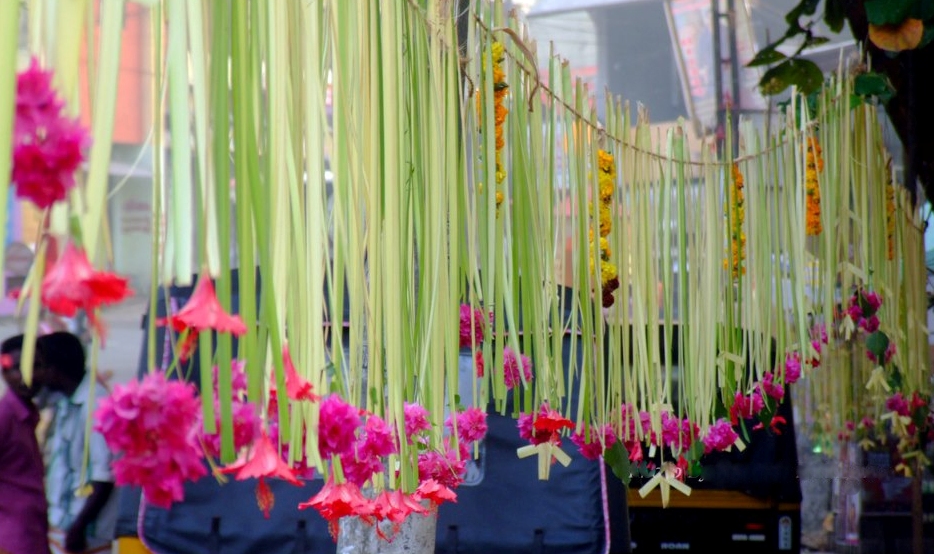
Palm Leaf Decorations

Photo credits:Ramesh Kidangoor

The coconut tree plays an integral part of the lifestyle and the economy of the Kerala. (In fact, the name of the state itself has coconut in its etymological roots.) There are numerous products and byproducts derived from the tree. In addition to its use for food, beverage and coir, its tender leaves are used for decorating houses, Temples and churches. Continue reading