In The Category Of Must See

Inimitable.  Some of us love superlatives, and some of us find them tedious; but all of us will agree that this fellow is inimitable (click the image above to go to his work directly):

Recently, I created an app called Petting Zoo. It is an interactive app for iPhones and iPads, and creating it was a difficult but interesting process. Continue reading

Sharks As Charismatic Megafauna

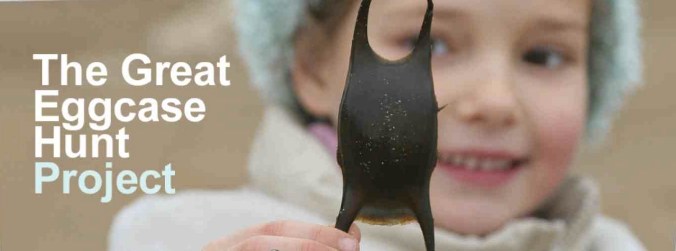
If you are like most people, the words shark and trust do not normally work well together in the same sentence. Sharks are predators, and predators predate. So unless you are a professional you should not take anything for granted when in their waters. But the two words work together well in a sentence about this organization, and the project they have launched to help sharks is intriguing. Entrepreneurial, even.  Click the image above to read more about this initiative:

With over 600 species of skate and ray worldwide, at least 16 species have been regularly recorded in UK coastal waters; most of these species reproduce by laying tough leathery eggcases on the seabed. Of more than 30 species of British sharks, only two species lay eggcases that are commonly found on our beaches; the Smallspotted Catshark and the Nursehound. Continue reading

Pi With Pies

Krulwich is our go-to guy on a certain kind of day. A day when important scientific ideas might otherwise put us to sleep, and just need a fresh approach to get our attention. Today is one of those days, and the pied piper of fun science delivers a short and sweet one:
Continue reading

Happy Birthday, Douglas Adams

One year ago today I posted this to make sure that anyone who loves this author would be aware that there are still opportunities to celebrate his life in tangible, meaningful ways that he would have appreciated.  I encourage anyone and everyone to continue to do so because the conservation needs have grown rather than diminished.  You might also enjoy his final public appearance above, which will give you 90 minutes of intense amusement and learning.   Continue reading

For Wales?

The Oxapampa-Ashaninka-Yanesha UNESCO biosphere reserve in central Peru. The Welsh funds will help the Ashaninka preserve their forests. Photograph: Nicholas Gill/Alamy

“For Wales? Why Richard, it profit a man nothing to give his soul for the whole world. . . but for Wales!” ― Robert Bolt, A Man for All Seasons

When Richard Rich betrayed, he did so for rewards related to Wales. Thomas More, in top shelf literary insult, takes him to task for it by emphasizing the pathos of having betrayed for profits as meager as Wales.

If you have been to Wales, you know it has nothing to be ashamed of in terms of physical beauty.  And as for cultural beauty, Dylan Thomas or Richard Burton could tell Robert Bolt or Thomas More for that matter a thing or two about Wales.  But now, Wales shows a creative streak in this contribution to conservation, perhaps a deeper greatness than other classics in its history. Continue reading

Le Macchine E Gli Dei

Machines and Gods: Dionysus at MCCM

The Musei Capitolini Centrale Montemartini is an interesting place, to say the least: it combines Italian machinery of mammoth proportions from the Industrial Revolution with ancient Roman statuary. These statues include the monolithic “Fortuna Huiusce Diei” (“Fortune of This Very Day”), various Greek gods (Venus, Dionysus as pictured above, and others), Roman emperors, famous statesmen, and lesser known wealthy citizens; the machinery, on the other hand, consists in titanic pieces of metal that when whirring generated tens of thousands of horsepower. Continue reading

Shine A Light

chipata-blog480

Green Blog shares this news about a significant innovation at the intersection of crowdfunding, renewables and community welfare in Africa and Asia:

By visiting Web sites like Kickstarter and Indiegogo, you can give money to any number of causes. These Web sites collect small amounts from many individuals in what is known as crowdfunding to finance everything from business start-ups to charitable causes to art projects.

While online crowdfunding is still relatively new, it has already demonstrated that many small contributions can add up. Deloitte, the accounting and consulting firm, estimates that the largest 30 crowdfunding sites raised more than $1.5 billion over the last five years, and expects that in 2013 alone the number could be $3 billion.

Continue reading

Entrepreneurial Conservation In The Cabinet

idy0zePVhYWU

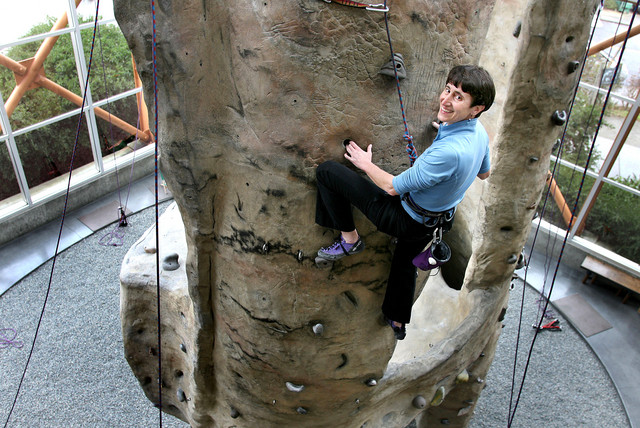
Recreational Equipment, Inc. (REI) CEO Sally Jewell climbs the 65-foot rock climbing pinnacle at REI’s Seattle flagship store. Photographer: Scott Cohen/AP Photo

We stay out of politics, for the most part, but point to interesting events when we notice them. This news qualifies, because it seems the leader of one big country has captured the spirit of entrepreneurial conservation in a rather visible way, choosing a business leader to run the largest conservation component of the federal government. Oddly, she appeals to both environmentalists and industrialists, but that is the point. This choice is outside the box, and seems to tap into some of our favorite “c” words. As the article below notes, this business person has led some important collective action initiatives, building a community to ensure that this political leader gives conservation the attention it deserves. We laud both of them for cooperating in such a creative manner:

President Barack Obama said he has selected Sally Jewell, chief executive officer of Recreational Equipment Inc., to be secretary of the U.S. Interior Department in his second-term Cabinet.

Jewell’s background as an engineer and experience in the banking, energy and retail industries give her the skills needed to run a department that oversees 500 million acres of public land, Obama said as he introduced her at the White House. Continue reading

Falling Stars

Starry Night is one of the world’s most iconic paintings and this isn’t the first time we’ve shared unorthodox reproductions of the work.

This rendering may be considered iconoclastic by some, but I challenge you to find a more kinetic one!

Gravity and Grace

Arsenale installation from the Venice Biennale

Arsenale installation from the 2007 Venice Biennale

During a recent visit to the Nelson-Atkins Museum of Art in Kansas City I was struck by a 3-dimensional piece that combines the opulence of a Gustav Klimt painting and the earthy elegance of Ghanian Kente cloth. The comparison isn’t as bizarre as it might appear when it’s understood that its creator is the Ghanian artist El Anatsui. Over a decade ago the sculptor found a bag of thousands of colorful aluminum screw tops discarded by a local distillery. The artist began by cutting and folding the bottle tops into flat pieces then used copper wire to stitch them together, creating patterns inspired by his country’s iconic cloth. Continue reading

Zen, Mathematics, and the Art of Rock Relationships

Robert Krulwich, always finding and sharing wonders we might otherwise miss, has a post on the process demonstrated in the video link below:

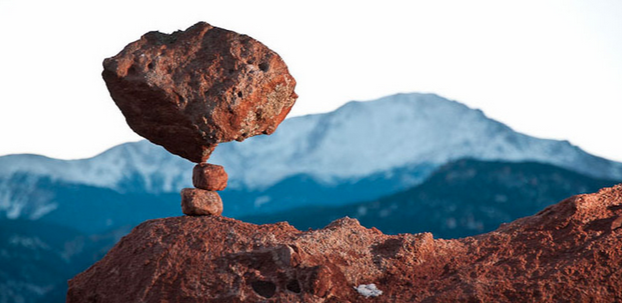
But how? How does he do it? First he says, you’ve got to “know the rocks.” I think this is a zen thing. Or maybe a sculptor’s thing. On his website, he says he is hyperaware of possible nooks on the rock’s surface: Continue reading

The Gift, A Gift

Recent guests of Raxa Collective, mentioned here, handed Amie and me this book prior to our parting ways. Upon reading this blurb, we expected to find it enriching if and when we could find the time to read the gift, The Gift, which:

“actually deserves the hyperbolic praise that in most blurbs is so empty. It is the sort of book that you remember where you were and even what you were wearing when you first picked it up. The sort that you hector friends about until they read it too. This is not just formulaic blurbspeak; it is the truth. No one who is invested in any kind of art, in questions of what real art does and doesn’t have to do with money, spirituality, ego, love, ugliness, sales, politics, morality, marketing, and whatever you call ‘value,’ can read The Gift and remain unchanged.”—David Foster Wallace

Continue reading

Bog

Photo credit: BU Dining Services

Earlier this week I wrote about an entirely different sort of swamp. This brief post is about a topic much more in tune with the holiday season: cranberries. Grown in bogs with layers of peat, sand, gravel, and clay, cranberries are native to North American wetlands (our readers across the pond will probably know the European variety of the fruit as lingonberries). In the United States they are primarily grown in Massachusetts, New Jersey, Oregon, Washington, and Wisconsin (ordered alphabetically, not by output). Something not many people may know is that these cranberry bogs are cyclically flooded with vast amounts of water every season; some might worry over the constant waste of this precious liquid in areas of major cranberry production, or the contamination of water tables with pesticides and fertilizers common to agricultural use.

But I am about to tell you about some of the advantages cranberry-growers have over other industrial agriculturalists in terms of their water utilization. Why will I share this with you? Well, cranberry sauce features prevalently in the traditions of recent holidays, namely Thanksgiving and Christmas (and was thus probably consumed in an overwhelming majority of American households at least once in the past 60 days), plus my grandparents swear by cranberry juice, but I also recently found out that cranberries–and the water they are flooded with for harvesting–make for excellent art, or sport. What I never would have guessed is that Red Bull would be the one to show me this; just watch the video below:

Continue reading

5 Reasons I See India’s Potential to Produce A Stararchitect

Stararchitect” conjures up a cloud of thoughts (Star architecture. Star power. Architecture as a symbol. The North Star for architectural design. Brand. Design. Fame. Architecture prowess. Household name.), but above all, I think of The Pritzker Prize. I feel like the weather channel for  announcing the next “big thing” in architecture is The Pritzker Prize. The weather channel is telling you “you better keep this in mind ’cause you’ll need that umbrella!” The Pritzker Prize is telling you “you better keep this name in mind ’cause you’ll need that knowledge to understand the state of the world you live in.”
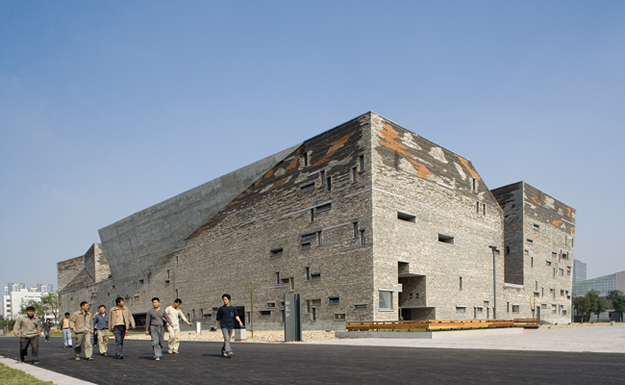
Ningbo History Museum by architect Wang Shu

Ningbo History Museum by architect Wang Shu

2012’s Pritzker Prize Laureate was Wang Shu, a Chinese architect famed for his re-use of building rubble in his designs. Expansive facades feature roof tiles and bricks from the demolished village that previously existed on that very site. The Pritzker Prize choice of Wang Shu tells us:

1.) Sustainability is important. The reappropriated construction refuse reminds us of the Three Four Rs: Refuse, Reduce, Reuse, and Recycle. It also reminds us that sustaining heritage and history is important.

2.) China is a powerful country with a powerful new identity. This is the first time a Chinese architect has been named. The closest the Pritzker has ever gone to a Chinese architect before was when I.M. Pei was recognized as a Chinese-American architect.
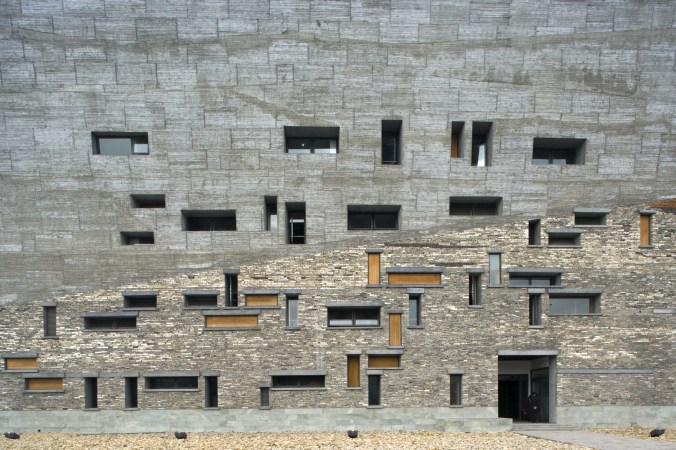
Detail of reused rubble in the facade of the Ningbo History Museum by architect Wang Shu

Detail of reused rubble in the facade of the Ningbo History Museum by architect Wang Shu

It’s rare to see a non-western architect. So I thought, has there been an Indian Pritzker Prize winner before?

The answer is no. (But I wouldn’t be surprised if Indian architecte Charles Correa is a nominee soon!)

While it may still be a long time before we see an Indian Pritzker Prize winner, I feel that India has the potential will definitely produce a stararchitect in the future. Here are 5 reasons why I see India’s potential to produce a starachitect.
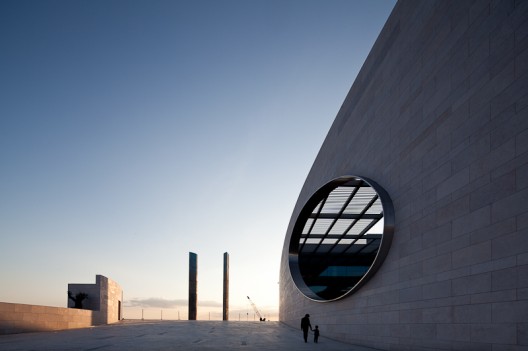
Champalimaud Centre for the Unknown in Lisbon, Portugal by Charles Correa Architects, photographed by José Campos of arqf architectural photography

Champalimaud Centre for the Unknown in Lisbon, Portugal by Charles Correa Architects, photographed by José Campos of arqf architectural photography

5 Reasons I See India’s Potential to Produce A Stararchitect
Continue reading

Bike, Paper, Scissors

Although not quite in the category of “Don’t Try This At Home”, it looks like this bicycle animation is much more than the sum of its laser cut parts. Artist Katy Beveridge writes that the action must be filmed to animate as it isn’t visible with the naked eye.

The final results certainly impress!

Land Fillharmonics

From the collaborative film Waste Land about the catadores (trash pickers) of Jardim Gramacho to the new documentary Trashed, there are film makers and organizations talking about the growing and overpowering problem of waste. Waste Land talks about the transformation of trash into art. The documentary film Landfill Harmonic is about “people transforming trash into music; about love, courage and creativity.”

With the ethos of reuse and recycle there are those who grab the creative spirit along with our attention with programs like the Paraguayan Sonidos de la Tierra (Saving Children Through Music) and Favio Chávez, director of the orchestra of recycled instruments on the Catuera Landfill on the banks of the Paraguay River. Continue reading

Come To India, Alan Moore!

The wedding of Alan Moore and Melinda Gebbie. Photograph: Neil Gaiman/Writer Pictures

The wedding of Alan Moore and Melinda Gebbie. Photograph: Neil Gaiman/Writer Pictures

Please bring your bride, too.  We extend this type of invitation to the too few happy few who clearly work for the pleasure of their craft (or so it seems, observing them), rather than the money.  In our own small way, 180+ full time members of Raxa Collective in Kerala–not to mention contributing photographers, interns and other friends to our purpose–are all attempting the same. For whomever might have missed it, this profile is worth the read:

…Moore has a complicated relationship with money. “Pure voodoo,” he says now. “Only there as long as we believe in it.” Challenged, during a television interview this year, about why he would sign away the movie rights to a comic such as Watchmen if he didn’t ever want it to become a movie, Moore said he gave up the rights because he never expected any adaptations to happen; he called it making money for old rope. Continue reading

Profile Of Smithsonian American Ingenuity Award-Winner

Click the image above to go to another note of tribute, this one in the current Atlantic, for a remarkable leader in academia, this one at the beginning of her career:

Eric Lander, director of the Broad Institute, a genomics research center affiliated with MIT and Harvard, has known Sabeti since the late 1990s, when she was an undergraduate advisee at MIT. Continue reading

Design Can Be Both Fun And Serious

A couple of recent posts by Crist, and the design process he mentioned, have led us to add some new design-oriented sites to our scanning process.  This one may not be the most visited, but it has some interesting material:

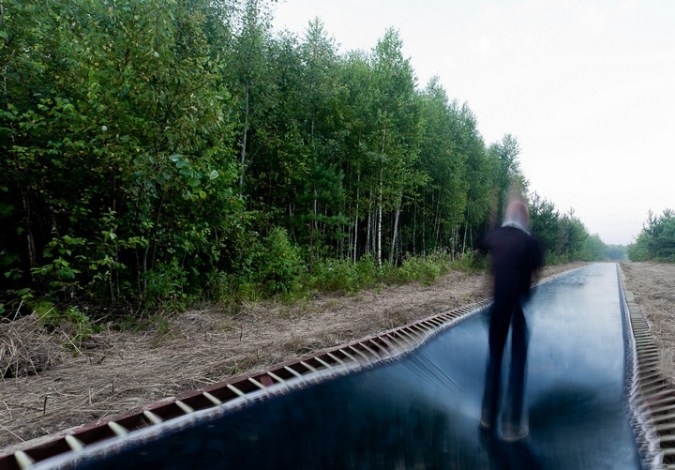
Archstoyanie is a creative festival that kicks off every year in the forest of Nikola-Lenivets, Russia. This year, the architects from Salto created a performance piece called ‘Fast Track’ – a 170 foot long track made of a trampoline! Designers Maarja KaskKarli Luik, and Ralf Lõoke built the Fast Track to challenge the concept of infrastructure that only focuses on technical and functional aspects and tends to be ignorant to its surroundings.

Click the banner above to read more about what you see below.

Archstoyanie-festival-2012-Fast-Track-Salto-Architects-4
Continue reading

A Fountain Of Ideas, Spouting In Many Directions

The screen shot to the right shows the simplicity of the site.  Which otherwise is an explosion of ideas, observations written with craft, and links. We wonder just about every day how she does it.  And why.  But that is on a need to know basis so we have just continued to visit her site and admired her prolific sharing. In a profile over the weekend, we learn a bit about how and why she has the stuff:

SHE is the mastermind of one of the faster growing literary empires on the Internet, yet she is virtually unknown. She is the champion of old-fashioned ideas, yet she is only 28 years old. She is a fierce defender of books, yet she insists she will never write one herself. Continue reading