Questions We Never Thought To Ask, But Should Have

celery_custom-f77a18ccad839316bdd9e4df3fd35f4d43fa662d-s1400-c85.jpg

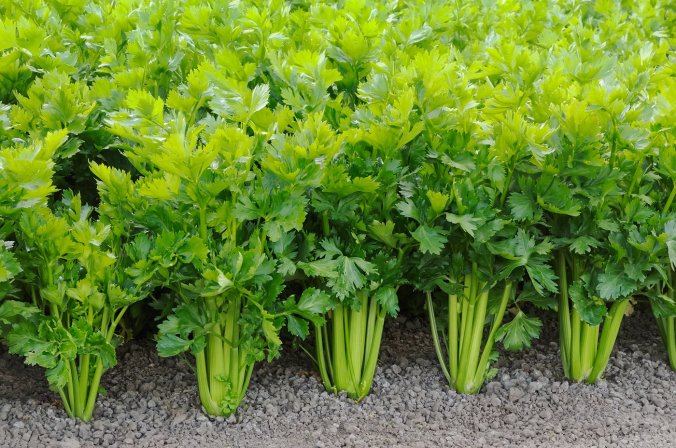
Why did humans start cultivating celery? It’s low-calorie and, one might argue, low flavor. We asked some experts at the intersection of botany and anthropology to share their best guesses. Cora Niele/Getty Images

Thanks to good old Salt, the special feature at National Public Radio (USA):

FOOD FOR THOUGHT

Celery: Why?

by NATALIE JACEWICZ

Celery, the mild-mannered straight man of the vegetable world, packs a puny six calories per stalk and — in my opinion — about as much flavor as a desk lamp. Yet despite its limitations, the fibrous plant has featured in Mediterranean and East Asian civilizations for thousands of years. Continue reading


Farm-Table Symbiosis

09caviarpeas-web2-master675

Preparing tear peas at Nerua, a restaurant at the Guggenheim Museum in Bilbao. The peas are known as “green caviar” among Spain’s top chefs. Credit Samuel Aranda for The New York Times

Mr. Minder’s reporting from the field, in this case the rarified field of Michelin-starred chefs, reminds us that the foodie phenomenon (sometimes now bordering on annoyingly precious, and risking the celebrity-worshipping tendencies that will ruin all good fun) is spreading good old fashioned common sense practices far and wide:

Top Chefs and Local Farmers in Spain Regenerate Their ‘Green Caviar’

ARRIETA, Spain — Making his way down a row of pea plants, Iker Villasana Hernaez, a Basque farmer, leans down to feel each pod individually before deciding whether it is ready to pick.

If the peas inside feel slightly hard, “best to leave it for one more day,” he said. “It’s really all about the perfect timing.” Continue reading

Food For Thought

PollanLecture_audienceByTonyRinaldosm

Author Michael Pollan speaks to a packed house at Radcliffe. Photograph by Tony Rinaldo

And to round out our links outward today on food-related themes, this one from Harvard Magazine seems a fitting complement to today’s two other news-feature items:

Michael Pollan’s Crooked Writing Path

WHETHER HE IS WRITING a book on big farming and the way Americans think about food, or interviewing terminal cancer patients who have had life-altering experiences through hallucinogenic drugs, author Michael Pollan’s career as a writer has been anything but traditional. Continue reading

Know Your Salt

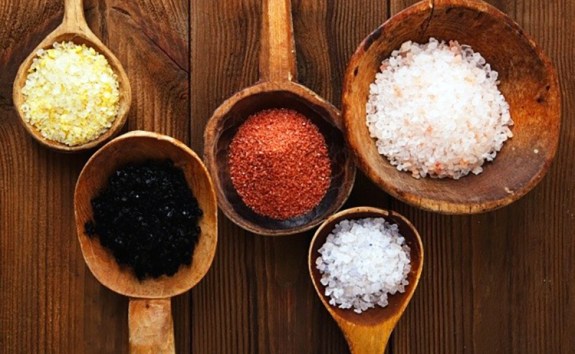
salts_750

What once was a simple decision between iodized table salt or sea salt has become a sensory overload. Walk into Whole Foods to restock on salt and you’ll be confronted with a dazzling array of colors, textures and price points.

Thanks to EcoWatch for this primer on the various salt choices we face:

Salts have exploded with popularity. What once was a simple decision between iodized table salt or sea salt has become a sensory overload. Walk into Whole Foods to restock on salt and you’ll be confronted with a dazzling array of colors, textures and price points. But, what really differentiates specialty salts? Are expensive salts actually worth the money?

Here is a guide to nine different culinary salts that will help you decide what salt is best for your needs.

1. Table

Table salt is created by superheating natural salt to 1,200 degrees Fahrenheit, which destroys most beneficial compounds. Fortified with essential iodine, table salt is also bleached and devoid of trace elements, so it’s certainly not the healthiest salt you can shake. This type of salt can often contains additives to slow moisture absorption so it is easy to sprinkle in your salt shaker. Continue reading

With Quinoa, All’s Well Only If It Ends Well

peruvianquinoa_custom-eb612ca1281105ba9be2d6e069a3db7ab8627b5b-s1400-c85

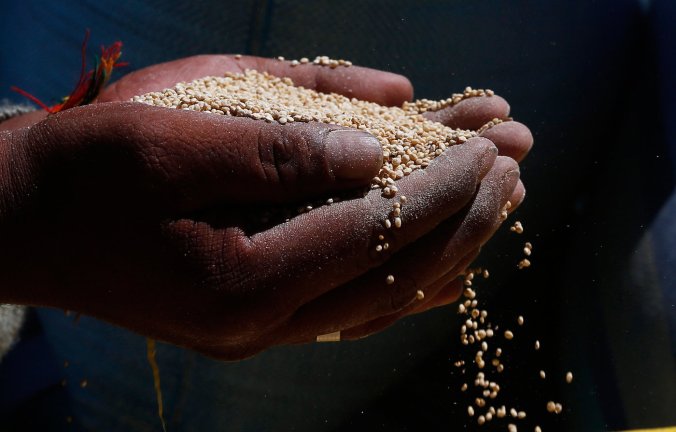
A man holds Peruvian quinoa. New studies of detailed data gathered by Peru’s government find that the global quinoa boom really was good both for Peruvians — both those who grow it and those who eat it. Juan Karita/AP

Thanks to National Public Radion (USA)’s Salt program for this important update:

Your Quinoa Habit Really Did Help Peru’s Poor. But There’s Trouble Ahead

The price of quinoa tripled from 2006 to 2013 as America and Europe discovered this new superfood. That led to scary media reports that the people who grew it in the high Andes mountains of Bolivia and Peru could no longer afford to eat it. And while, as we reported, groups working on the ground tried to spread the word that your love of quinoa was actually helping Andean farmers, that was still anecdote, rather than evidence.
Continue reading

Can You Top This?

160404_r27911-690

Kamilla Seidler, center, who has worked in some of Europe’s top restaurants, leads the kitchen at Gustu, which is both a restaurant and an experiment in social uplift. PHOTOGRAPH BY BENJAMIN LOWY / GETTY IMAGES REPORTAGE FOR THE NEW YORKER

What were we thinking? Yesterday we chose a favorite without considering all the evidence.  We stand corrected. Here we have a story of a restaurant at the top of the world, and at the pinnacle of how the game is played today, it sounds like. The content of this story is as superb as it is well written, and the theme is much closer to our hearts with regard to our organization’s core values and social enterprise roots:

Letter from La Paz APRIL 4, 2016 ISSUE

The Tasting-Menu Initiative

Can a restaurant for the rich benefit the poor?

BY CAROLYN KORMANN

Look out the windows of Gustu, the most ambitious restaurant in La Paz, Bolivia, and you’ll see the city climbing up toward the looming peaks of the Andes in a lumpy, shimmering mosaic. Continue reading

Fair’s Fare, More Than Fair

160404_r27910-690

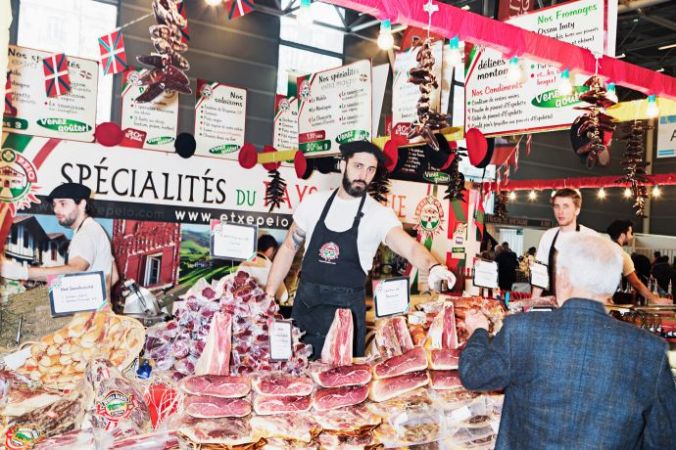
The Salon de l’Agriculture, held every year in Paris, is also a political crucible. PHOTOGRAPH BY IMMO KLINK FOR THE NEW YORKER

It is our favorite annual edition of our favorite source of longform journalism, and this looks like it could be our favorite article from this year’s edition:

Come to the Fair

The food-and-booze fest that is France’s national agricultural exhibition.

BY LAUREN COLLINS

It would be a mistake to think of microtourism, the latest invented word to capture the imagination of the travel sector, as mere staycationing. The practice, as defined by a pair of design students in Denmark who recently completed a project on the theme, is a prerogative of a future in which “gas prices are so high that we must develop a new form of adventure that does not require travelling great distances.” Microtourism is not glamping (no yurt) or bleisure (no work) or minimooning (no wedding). Nor is it Netflix and putter. If a staycation means pajamas and the garden shed, microtourism means sneakers and the subway. Continue reading

If You Happen To Be In New York City

160314_r27801-690

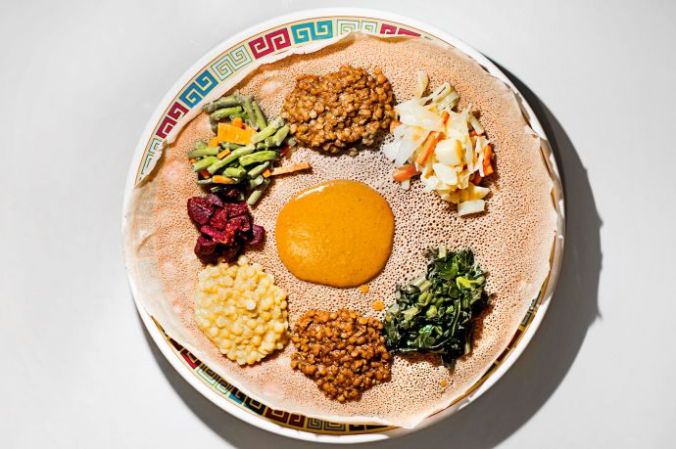
PHOTOGRAPH BY DINA LITOVSKY FOR THE NEW YORKER

We took a respite from thinking about Ethiopian food for some months, following our brief exploration of Ethiopia but this item in the current issue of the New Yorker reminds us of why that all held our attention so firmly. It gets us thinking about a return trip to Ethiopia. It has us wondering where have the last 363 days gone? Whet the appetite here:

Abyssinia

For lovers of Ethiopian food, recent years were marked by two seismic events in Harlem. First, Tsion Café and Bakery opened on Sugar Hill, serving steaming piles of stew atop injera.

Continue reading

New Vegetarian Cookbooks

olafurcook.jpg

From Studio Olafur Eliasson: The Kitchen

From Phaidon, a new series that has our attention:

…This spring sees Phaidon will publish its first vegetarian-only cookbook for 10 years. Indeed, we are bringing out three vegetarian titles: The Middle Eastern Vegetarian Cookbook by the Lebanese writer and cook Salma Hage; artist Olafur Eliasson’s Studio Olafur Eliasson: The Kitchen, a collection of recipes the artist and his co-workers enjoy sharing together for lunch; and Icelandic chef and restaurateur Solla Eiríksdóttir’s Raw: Recipes for a Modern Vegetarian Lifestyle. Continue reading

Malabar Soul Food


Malabar Soul Food – embodies the spices of the land blended with the memories of distant homelands, taking people back to the time when people who loved them cooked for them in a way that was meaningful and satisfying.

Food is about sense memories: it embodies our personal and social history, giving us a sense of place, of home…

Ocean Farms & Better Burgers

Shout outs here. First, as a Connecticut boy myself, I say with some homestate pride that this is the coolest thing to come out of the state in my lifetime. Mr. Smith, our hats are tipped to you. Click the image above to see what he is doing.  Great stuff.

Screen Shot 2016-01-29 at 10.17.53 AMNext, take a look at Mr. Headley’s creation by clicking the image to the right, a place which we first read about here; and then again more recently here. The reason both of these came to my attention today, and why I am compelled to share these links, is worthy of 20 minutes of your time if you care about food-related sustainability issues. For that, in the form of a podcast, click here. A summary of the podcast: Continue reading

Sifting Through Food Memories

Dabbawala,the lifeline of Mumbai.

The Indian city of Mumbai is home to the ‘dabbawala’ service wherein boxes of hot lunch make their way from homes to customers’ offices.   PHOTO: Satyaki Ghosh

Food memories. Absolutely universal, absolutely distinctive. Across cultures, across borders. United by the emotions they evoke – nostalgia, love, warmth, hope. While travel memories are notched up by the miles, they are bound to feature a food memory or two. Of cultures, smells, people, faces, history.  Jacques Pepin, noted French chef, writes of his in The New York Times:

There is something evanescent, temporary and fragile about food. You make it, it goes, and what remains are memories. But these memories of food are very powerful. My earliest memories of food go back to the time of the Second World War. My mother took me to a farm for the summer school vacation when I was 6 years old with the knowledge that I would be lodged and fed there. I cried after she left and felt sad, but the fermière took me to the barn to milk the cow. That warm, foamy glass of milk is my first true memory of food and shaped the rest of my life.

Continue reading

Nutmeg – from Table to Design

You must have heard the phrase in a nutshell. Well, this post is not exactly that. It’s going to border on being a story in a nutmeg. Yet another tale to add to Kerala’s legacy of having a heart of spices. The nutmeg, though not as glorious as its cousins pepper or cinnamon, is integral for its medicinal, herbal properties and its place in the kitchen.

For me, it’s the embrace that links spending holidays with a grandmother whose heart had nutmeg all over it and a design sensibility at Xandari Harbour. The wispy haired grand lady is long gone, but the wind rustles up her memories among the nutmeg trees. So does a certain corridor at work.

Continue reading

The Sea Inside

What is it about the sea? The fact that it changes, and the light changes, and the ships change. The feel of being entwined with the ocean? That when we go back to it – whether it is to sail or to watch it – we are going back from whence we came.

– Rosanna Abrachan

The teamwork involved in crafting the videos that help define the guest experience at Xandari Harbour was as satisfying as creating the property itself. Thank you Anoodha and the RAXA CollectiveXandari Harbour teams!

Stay tuned for more!

Forests Giving Deeply Appreciated Gifts

4928

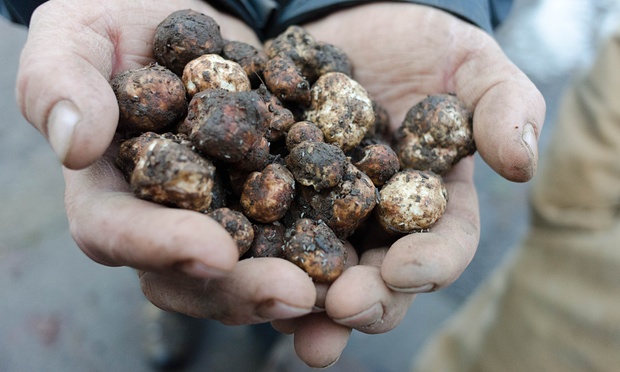
‘You could take an iron rake and rip outwards several feet from the trunk of a fir until you gathered up every truffle in the vicinity.’ Photograph: Jason Wilson for The Guardian

Two Raxa Collective representatives made their way in late autumn (northern hemisphere) to Istria, Croatia. Those same two, and their two sons, had lived in Croatia 2006-2007 but had stayed on their island at the very southern limit of Croatia; never had the chance to make it to Istria during truffle season. So, the two who finally went made the Istria visit a culinary weekend, which will need to be the subject of another post.

The exposure to truffles in their native habitat is an experience that is difficult to describe, because it is at once a deep immersion in a very comforting deciduous forest ecosystem during a time of delicious decay; and it is simultaneously a whetting of the appetite. We are now inclined to seek out more places where we can experience this. For now, the foodies among us, and particularly the mycologically oriented, will appreciate this article in today’s Guardian Environment section, which clues us in on one possible next location for next autumn:

Truffle trackers: how dogs and humans help ecology and gastronomy in Oregon

Hunting for the underground fungus delicacy with dogs ensures ripe truffles and minimum environmental impact – and it’s a great way to bond with a canine

Jason Swindle has already learned the best and hardest lesson that his dog can teach. “It’s about trust. River does the craziest things when we’re out here – she charges up cliffs or hillsides – and I have really just had to learn to trust her.”

This trust is perhaps even sweeter than the prize she helps him find beneath the forest floor: truffles. Continue reading
Because Coffee is ‘Human’

For those who believe life begins after coffee, the story of its origin will definitely sound familiar. Coffee grown worldwide can trace its heritage to the ancient coffee forests on the Ethiopian plateau, where legend says the goat herder Kaldi first discovered the potential of these beloved beans. It is said that Kaldi discovered coffee after noticing that his goats, upon eating berries from a certain tree, became so energetic that they did not want to sleep at night. Kaldi reported his findings to the abbot of the local monastery who made a drink with the berries and discovered that it kept him alert for the long hours of evening prayer. The abbot shared his discovery with the other monks at the monastery, and slowly knowledge of the energizing berries began to spread.

Now photographer Sebastiao Salgado takes readers deep into that grind with his latest collection, The Scent of a Dream: Travels in the World of Coffee that looks at the landscapes and labors behind the $100-billion-a-year business in ten countries around the globe.

Continue reading
Forging Understanding Through Food

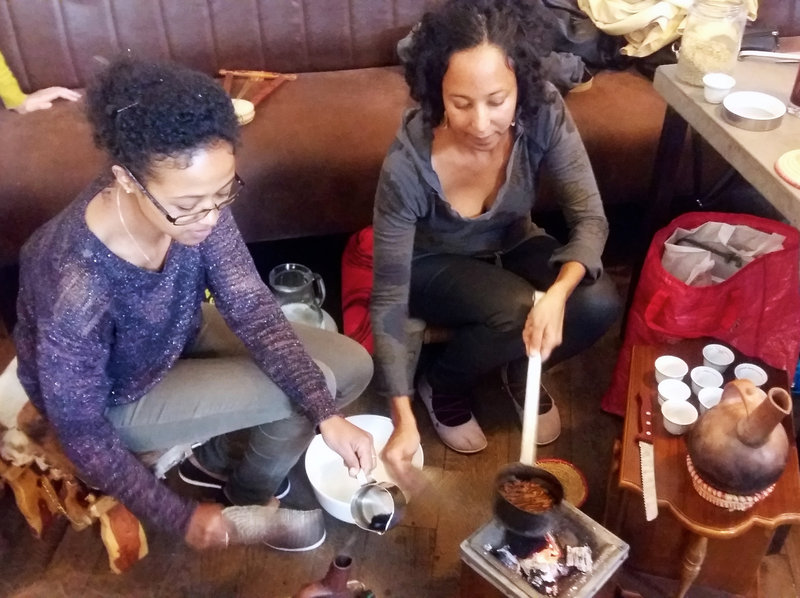
Luwam Melake (left), a recently arrived Eritrean refugee, and Saba Tesfay, who is half-Hungarian and half-Eritrean, wash, roast and grind coffee beans during a traditional Eritrean coffee ceremony. PHOTO: Lauren Frayer for NPR

Luwam Melake (left), a recently arrived Eritrean refugee, and Saba Tesfay, who is half-Hungarian and half-Eritrean, wash, roast and grind coffee beans during a traditional Eritrean coffee ceremony. PHOTO: Lauren Frayer for NPR

What are ways to combat xenophobia, an aversion to what is perceived as foreign? Especially when that involves fragile human spirits, miles away from their homelands and hoping on the faintest possibility of refuge in an alien land. Budapest is showing the way.

Customers crowd into a bustling Budapest restaurant for dinner. They open their menus, expecting to read about stuffed paprikas and Hungarian goulash.

But instead they find … Eritrean sourdough pancake bread. Afghan pie. Syrian sweets.

“It’s a little bit difficult, because not all the ingredients are available in Hungary. So a few of them are coming from Austria or other countries. But we can do it!” laughs Judit Peter, the bartender and director of special projects at Kisuzem, a trendy, bohemian bar in Budapest’s historic Jewish quarter. “People really like it. We’ve served 80 portions a day — and that’s quite a lot for a small kitchen like ours.”

Continue reading

When Food Unites

Vigorón served at El Gordito in Granada, Nicaragua. The combination of soft, starchy yucca; salty, rough pork cracklings; and tangy, cool slaw made with cabbage, onions, tomato, mimbre fruit (also known as mimbro), chile and vinegar offers a distinct interplay of textures and flavors. PHOTO: Julie Schwietert Collazo for NPR

Vigorón served at El Gordito in Granada, Nicaragua. The combination of soft, starchy yucca; salty, rough pork cracklings; and tangy, cool slaw made with cabbage, onions, tomato, mimbre fruit, chile and vinegar. PHOTO: Julie Schwietert Collazo for NPR

No matter how different our ethnic backgrounds, beliefs, views and values are, we can all sit around a dinner table and unite in sharing a meal that includes different tastes and types of food from all over the globe – the palate knows no boundaries and no limitations. In a divided country like Nicaragua, all differences melt when it comes to vigoron. The national dish that cuts across political ideologies, economic status, and strong preferences.

Continue reading

Going Back to the Melon

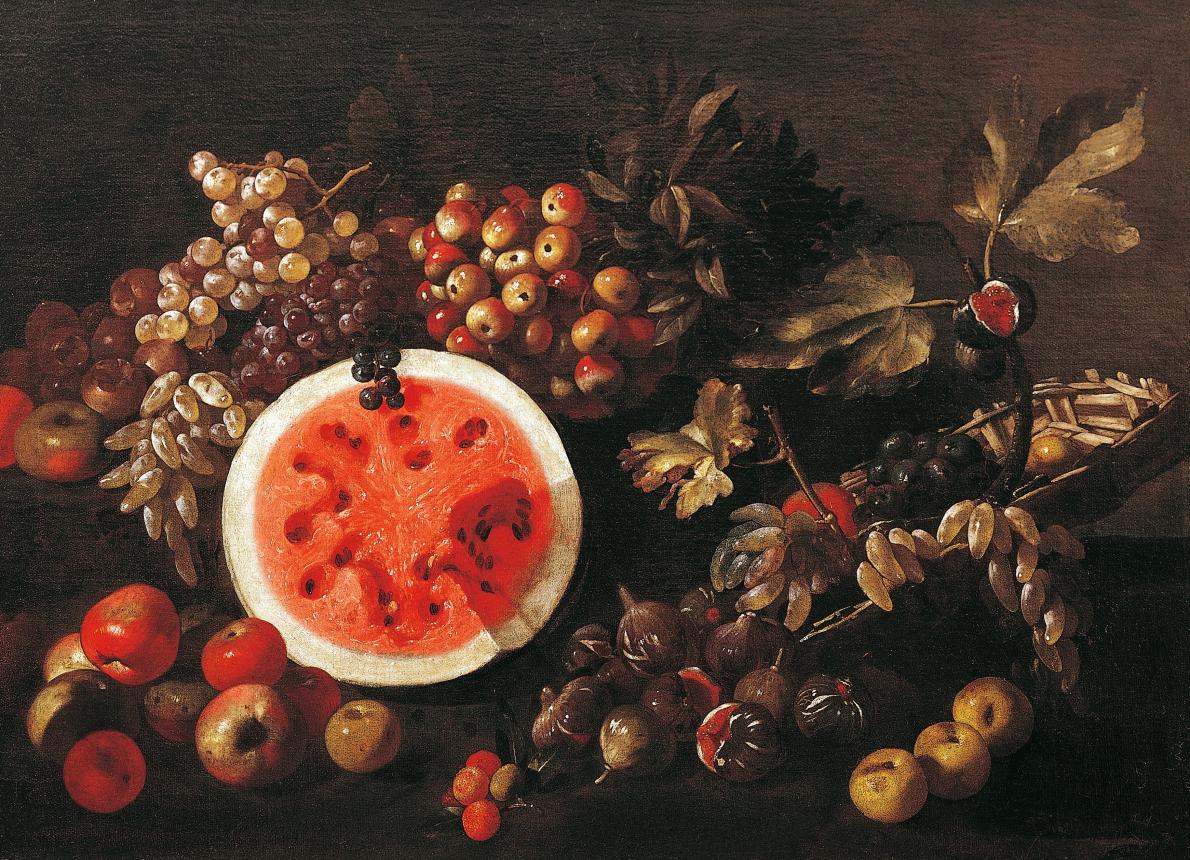
The watermelon has long inspired artists, such as Giuseppe Recco's Still Life With Fruit (1634-1695). The first color sketches of the red-fleshed, sweet watermelon in Europe can be found in a medieval medical manuscript, the Tacuinum Sanitatis.  PHOTO: Dea, A. Dagli Orti/Deagnostini/ GETTY

The watermelon has long inspired artists, such as Giuseppe Recco’s Still Life With Fruit (1634-1695). The first color sketches of the red-fleshed, sweet watermelon in Europe can be found in a medieval medical manuscript, the Tacuinum Sanitatis. PHOTO: Dea, A. Dagli Orti/Deagnostini/ GETTY

Watermelon may be the best picnic dessert nature ever created with its sweet juice cleverly bound inside that spongy red (sometimes yellow) matrix, and fully protected by psychedelic green rind. And no matter how you slice it, this green cannonball of nutrition is attracting scientific attention as an elixir that reduces muscle pain after workouts and a whole lot more. And the myriad ways it lends itself beautifully in the kitchen. But what about its history? Continue reading

Fancy Some Meat Done Inca-style?

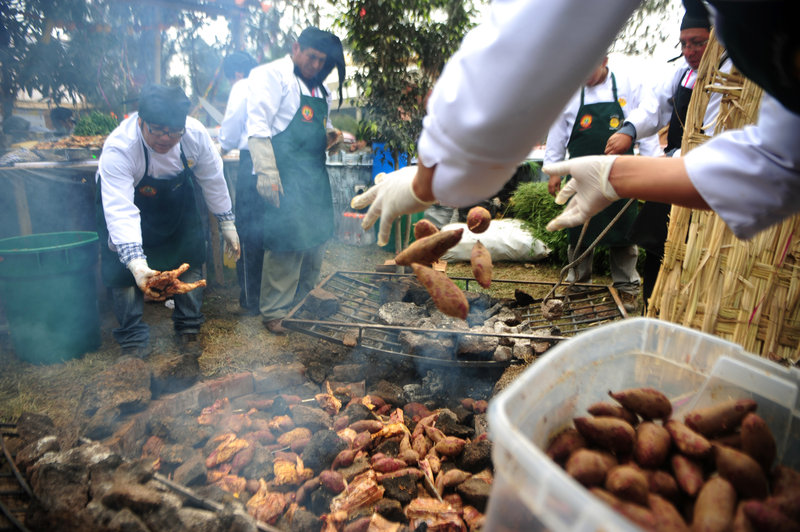
People throw potatoes into a pachamanca during a gastronomic fair Mistura in Lima. PHOTO: Ernesto Benavide

People throw potatoes into a pachamanca during a gastronomic fair Mistura in Lima. PHOTO: Ernesto Benavide

What’s the epitome of summer for a lot of Americans? It’s communing around a grill, with friends and family, waiting for a slab of meat to cook to juicy perfection. In Peru, people like to gather around heat and meat, too. Except the heat — and the meat — are buried in the ground. It’s called pachamanca, a traditional way of cooking that dates back to the Inca Empire. The pit cooking technique has evolved over time but remains an important part of the Peruvian cuisine and culture, especially in the central Peruvian Andes all year-round for family get-togethers and celebrations. Imagine a cornucopia of dozens of potatoes and corn ears and giant slabs of well-marinated meat, stacked carefully in layers. Pachamanca is that cornucopia turned upside-down and sealed for hours.

Continue reading