If You Happen To Be In Shoreditch

strutAfter reading this, we had to at least visit the website:

Our journey began with a PASSION FOR HEALTHY EATING instilled by our Eastern Mediterranean heritage. As the family grew, home cooking revolved around grilling and roasting ingredients that are full of goodness, avoiding deep frying or saturated fats.

strut3And on closer look at Strut & Cluck, we are determined to visit the place itself, when we next get the chance:

The mum and family chef, Limor, started experimenting with turkey as a healthy alternative to chicken and a great source of lean protein. She quickly discovered the VERSATILITY AND FLAVOUR OF THIS SUPERFOOD. To achieve its distinctive flavour and fall-off-the-bone tenderness, the meat is marinated for 24 hours, then slow-cooked with our herb & spice blend. Continue reading

Flavors Of The Place

1_wide-17f600e6a4d3c4284a5c8a3a063b37b0ccb81c12-s1100-c85

Japanese Chemist Dr. Kikunae Ikeda is credited with discovering MSG — one of the eight ingredients Lohman explores in her book. Peter Van Hyning

9781476753959_custom-6d2f889718b75f67b516ac79374219dc2dce2799-s400-c85

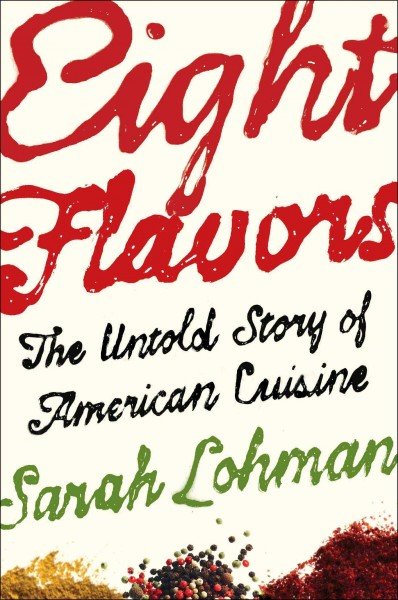
Thanks to the salt, at National Public Radio (USA) for this story, How Just 8 Flavors Have Defined American Cuisine, by Alan Yu, which also serves as a review for this book about the history of food in a country not thought to have its own cuisine:

Sarah Lohman has made everything from colonial-era cocktails to cakes with black pepper to stewed moose face. She is a historical gastronomist, which means she re-creates historical recipes to connect with the past.

That moose-face recipe dates back to the 19th century, and it wasn’t easy. She recalls spending hours trying to butcher the moose from Alaska in her kitchen in Queens, New York. She tried scalding the face in hot water to remove the fur, but it didn’t quite work and her apartment stunk of wet moose.

But “at the end of the day, people showed up and ate it, someone actually liked it, and then we ordered a pizza,” she says. Continue reading

New York City Food Heritage

04qa2-master768

In a photo from 1945, Broadway and 42nd Street in Manhattan in front of the Horn & Hardart Automat. Credit Andreas Feininger/The LIFE Picture Collection/Getty Images

This Travel section interview–Best Eating in New York? A Food Historian Has Some Advice By JOHN L. DORMAN–in the New York Times catches our attention:

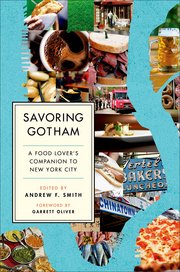
9780199397020 When the food writer Andrew F. Smith had an idea for a new book on New York City, he went for an intriguing angle. “We preserve the homes of people who were born here and later became famous, and we preserve all sorts of artwork,” he said, “but people don’t think about preserving a city’s food heritage, which was something that was missing in New York.”

His idea resulted in the book “Savoring Gotham: A Food Lover’s Companion to New York City,” which he edited. The topics range from the culinary history of the Lower East Side to the emergence of Automats, Continue reading

Urban Cycle Heaven

Copenhagen has recorded 13,100 more bikes than cars in the city centre over the past year. Photograph: Michal Krakowiak/Getty Images

Scandinavia in general (and Denmark in particular) is famous for forward thinking initiates, both socially and environmentally. Thanks to the Guardian for sharing this milestone.

Two-wheel takeover: bikes outnumber cars for the first time in Copenhagen

Denmark’s capital has reached a milestone in its journey to become a cycling city – there are now more bikes than cars on the streets. Can other cities follow? Continue reading

Liquid Cultural Heritage

gettyimages-469021312_custom-329fa9e1c141d0d8702acb69c33e17f3c7dc2133-s1100-c85.jpg

UNESCO cited Belgians’ affinity for a wide range of beer in its official recognition of the beer culture of Belgium as a treasure of human culture that should be protected. Emmanuel Dunand/AFP/Getty Images

We might have assumed that yoga had already been recognized as intangible patrimony worthy of UNESCO status. But, surprisingly, that is just happening now, according to the Guardian. Speaking of surprises, beer culture–specifically that of Belgium–makes the cut as well. We are impressed with variety within this brewing heritage and hope the classification helps preserve the knowledge for all of us to get to sample all those styles. Thanks to National Public Radio (USA) for this story:

UNESCO Deems Belgium’s Beer Culture A Treasure Of Humanity

BILL CHAPPELL

Citing Belgian beer’s integral role in social and culinary life, UNESCO is putting the country’s rich brewing scene (with nearly 1,500 styles) on its list representing the Intangible Cultural Heritage of Humanity. Belgium’s beer culture is one of 16 new additions that were announced Thursday. Continue reading

New Directions In Art

shed1

flexn

Flexn artists, photo by Sodium for MIF 2015

We had not heard of Flexn until this week, when they were mentioned in a podcast with the phenomenal Peter Sellars (alluded to once previously in these pages, and linked to another time directly). Now we want to know more. And it looks like one way to learn more will happen at The Shed. Back in August, when we first heard about The Shed, it was a quick glance at the future. Now we have more detail, thanks to this early release of a profile in next week’s New Yorker:

ALEX POOTS, PERFORMANCE ART IMPRESARIO

How will the director of New York’s ambitious experimental cultural center change the city?

By Calvin Tomkins

Every so often, it seems, visual artists are stricken by the urge to perform. The “happenings” movement in the nineteen-sixties—young painters and sculptors doing nonverbal theatre—was explained as a response to Pollock, de Kooning, and other gestural Abstract Expressionists: it was the gesture without the painting. Continue reading

Truffle Cultivation

27truffle-jumbo

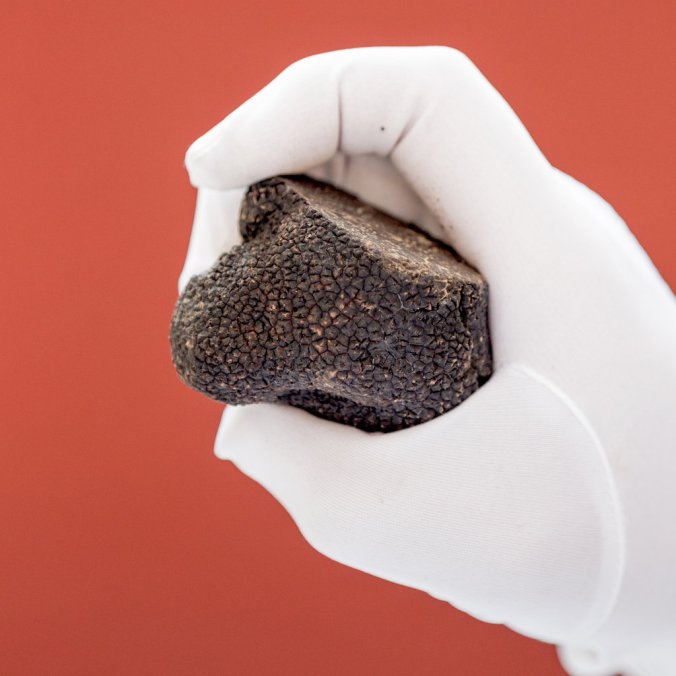
Black truffles at La Toque restaurant in Napa, Calif. The owner, Ken Frank, who buys truffles from Australia, backs efforts to grow them in Napa. Credit Jason Henry for The New York Times

Because they are such a mystery, and intersect various of our interests in these pages, we feel compelled to share this:

Has a Start-Up Found the Secret to Farming the Elusive Truffle?

The American Truffle Company has a new technique that it says can expand the range of the Perigord truffle in North America, but success is proving costly. Continue reading

Learning How To Eat

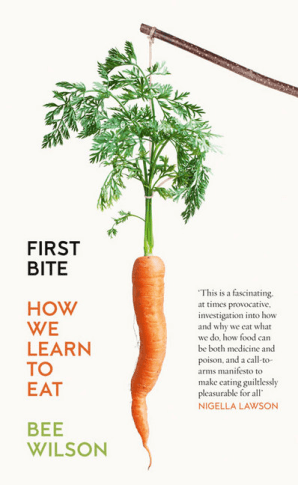
9780007549702When an author of Bee Wilson’s stature publishes it is not surprising to see reviews in the news outlets that we tend to source from in these pages. For the book to the right the first we saw was How Do We Get To Love At ‘First Bite’? on National Public Radio (USA), followed by reviews in the New York Times and the Guardian among others. We had even read the publisher’s blurb:
The way we learn to eat holds the key to why food has gone so disastrously wrong for so many people. But Bee Wilson also shows that both adults and children have immense potential for learning new, healthy eating habits. An exploration of the extraordinary and surprising origins of our taste and eating habits, First Bite explains how we can change our palates to lead healthier, happier lives.

But we had not gotten around to linking out to any of these reviews. Better late than never:

TEACHING GROWNUPS HOW TO EAT

By Nicola Twilley

Until the twentieth century, Japanese food was often neither delicious nor nourishing. Junichi Saga, a Japanese doctor who chronicled the memories of elderly villagers from just outside Tokyo, in the nineteen-seventies, found that, in the early years of the century, most families scraped by on a mixture of rice and barley, accompanied by small quantities of radish leaves, pickles, or miso. Animal protein was almost entirely absent in the Buddhist country, and even fish, as one of Saga’s informants recalled, was limited to “one salted salmon,” bought for the New Year’s celebrations, “though only after an awful fuss.” Continue reading

Tierra del Fuego

tdf

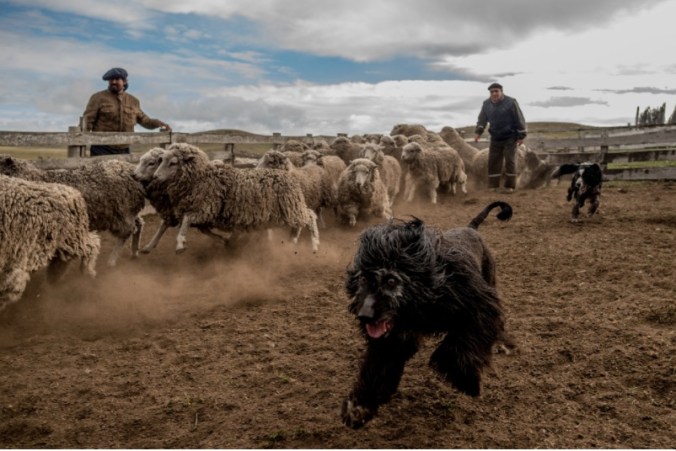
Dogs at this year’s shearing. Outside the season, gauchos may go weeks without seeing a person. Credit Tomas Munita for The New York Times

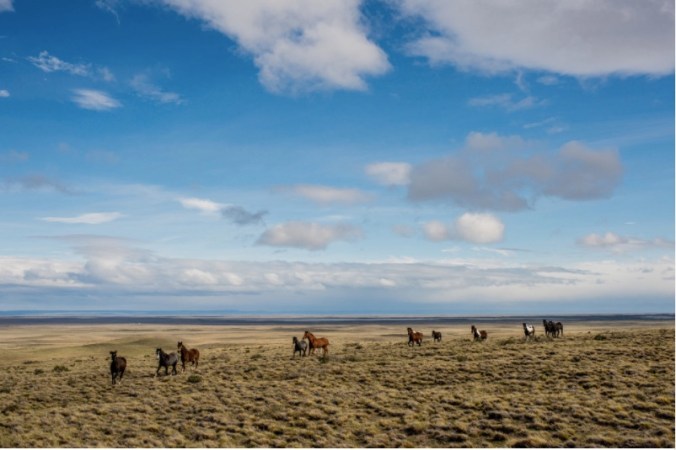
I am reminded of the 2008-2010 period of my life, which was spent mostly in Patagonia; some of it was in Tierra del Fuego. These photos, from an article in today’s New York Times, show that this newspaper is adapting.

tdf2

Horses, like these from Estancia Por Fin, help gauchos with shepherding sheep. Credit Tomas Munita for The New York Times

Continue reading

People At Play

1127-bks-heffernancook-master768-v2

Brandon Celi

This book review puts our work, with would be categorized as providing recreation services, in an interesting context:

Steven Johnson on How Play Shaped the World

By

WONDERLAND
How Play Made the Modern World
By Steven Johnson
322 pp. Riverhead Books. $30.

Steven Johnson’s “Wonderland” makes a swashbuckling argument for the centrality of recreation to all of human history. The book is a house of wonders itself. Marvelous circuits of prose inductors, resistors and switches simulate ordinary history so nearly as to make readers forget the real thing. Red wires connect haphazardly to blue, and sparks fly. Who needs a footnoted analysis of “the ludic,” as play is known to the terminally unplayful? Barnumism of the Johnson kind is much, much more fun. Continue reading

Thanksgiving 2016

2016-11-17_cmi-kapnos-thanksgiving_0555_wide-2edf6f9046c024dc907b0ee3ec9a299c612781e9-s500-c85We have appreciated the salt, a feature of National Public Radio (USA) since we started this platform. Even more so at a time of the year when food, and its significance to culture, is so strong in one part of the world. Their stories are not strictly about the taste pleasures of food, usually; more about the many other pleasures food can provide. So today, which is Thanksgiving Day in the USA, we are particularly grateful for their contributions:


At Thanksgiving, If You Take Sides, Make Sure They’re As Tasty As These

Chef Mike Isabella, a renowned restaurateur, has devised some delectable spinoffs of traditional turkey accompaniments, while staying true to classic roots. Continue reading

Evolution Of Responsibility

161128_r29058-1200x516-1479414303

Nathan Heller is one of the most consistently engaging, most compelling writers out there, and this new article is one more piece of evidence:

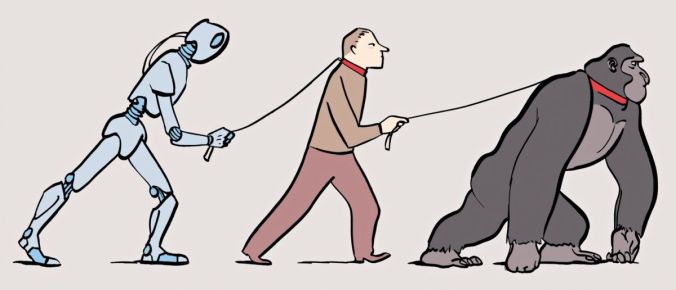
IF ANIMALS HAVE RIGHTS, SHOULD ROBOTS?

We can think of ourselves as an animal’s peer—or its protector. What will robots decide about us?

By

Harambe, a gorilla, was described as “smart,” “curious,” “courageous,” “magnificent.” But it wasn’t until last spring that Harambe became famous, too. On May 28th, a human boy, also curious and courageous, slipped through a fence at the Cincinnati Zoo and landed in the moat along the habitat that Harambe shared with two other gorillas. People at the fence above made whoops and cries and other noises of alarm. Harambe stood over the boy, as if to shield him from the hubbub, and then, grabbing one of his ankles, dragged him through the water like a doll across a playroom floor. For a moment, he took the child delicately by the waist and propped him on his legs, in a correct human stance. Then, as the whooping continued, he knocked the boy forward again, and dragged him halfway through the moat.

Harambe was a seventeen-year-old silverback, an animal of terrific strength. When zookeepers failed to lure him from the boy, a member of their Dangerous Animal Response Team shot the gorilla dead. The child was hospitalized briefly and released, declared to have no severe injuries. Continue reading

Santorini’s Rich History Is Getting Richer

15obstsunami1-master768

Credit James Rajotte for The New York Times

Some of La Paz Group’s senior contributors have recollections of Santorini going back three decades, and the history of the place is both geological and cultural; the complexity of that history is still being revealed:

An Ancient Tsunami That Ended a Civilization Gets Another Look

By

In the 17th century B.C., Santorini was a small volcanic island in the Aegean Sea, home to Akrotiri, a Late Bronze Age outpost of Minoan civilization, which preceded ancient Greece. Then the volcano erupted, burying Akrotiri in ash and obliterating much of Santorini, turning it into a few smaller islands. Continue reading

Thanks To Salt For The Grapefruit

1-grapefruit_custom-1d422962ec28bbb794bae89adbcee3da163ed53f-s800-c85-1

 If you are a fan of grapefruit, as we are of the salt (National Public Radio, USA) read the entire article:

Grapefruit And Salt: The Science Behind This Unlikely Power Couple

NADIA BERENSTEIN

Grapefruit’s bitterness can make it hard to love. Indeed, people often smother it in sugar just to get it down. And yet Americans were once urged to sweeten it with salt.

Ad campaigns from the first and second world wars tried to convince us that“Grapefruit Tastes Sweeter With Salt!” as one 1946 ad for Morton’s in Life magazine put it. The pairing, these ads swore, enhanced the flavor. Continue reading

Metropolis in Atlanta


Fritz Lang's 1927 film “Metropolis” ARCHIVES NEW ZEALAND

Fritz Lang’s 1927 film “Metropolis”
ARCHIVES NEW ZEALAND

In the wake of a U.S. election that left half the population bracing for a dystopian future, it seems a timely moment to present Fritz Lang’s 1927 silent classic, Metropolis. Considered the “father” of science fiction cinema, the film was meticulously restored in 2010.

But it’s the extra element of a live score composed and presented by the Alloy Orchestra that makes this screening an exceptional event. This unusual three man musical ensemble writes and performs live accompaniment to classic silent films using a combination of found percussion and state-of-the-art electronics to generate an amazingly varied array of musical styles.  Continue reading

Life Among The Lighthouses

Lighthouse.jpg

Writing now from Villa del Faro, in Baja California Sur, I am delighted to read this article from the Travel section this week in the NY Times:

Keeping the Fire of Irish Lighthouses Alive

The golden age of lighthouse construction is long gone, but in their wake are beautiful vistas and stories that bring modern Irish history to life.

By

To get to the Clare Island Lighthouse in County Mayo, in the west of Ireland, you climb up to the island’s northern cliffs along a road of stones, past damp sheep chewing grass, around the bend through an alley of fuchsia hedges in bloom. Keep walking until you reach the lighthouse and slip your key in the lock, hang your parka by the door and take a seat beside the peat-burning fireplace. Someone may be nearby to take your drink order, and the reward for a long walk will be a cold gin and tonic and the soft heat of the fire. Continue reading

Shepherds, Preserving Many Fine Forms Of Life

ShepherdLopate.jpg

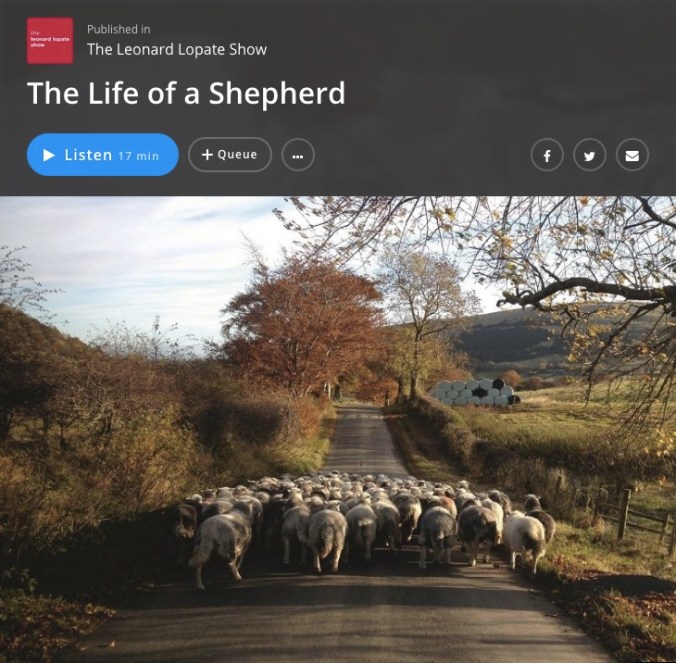
Ignore the irony of our recommendation that you click the image above in the interest of remembering a world without ubiquitous connectivity. Listen. Imagine. Digital detox might make more sense after that. Continue reading

If You Happen To Be In Tokyo


© SPL Lascaux international exhibition

© SPL Lascaux international exhibition

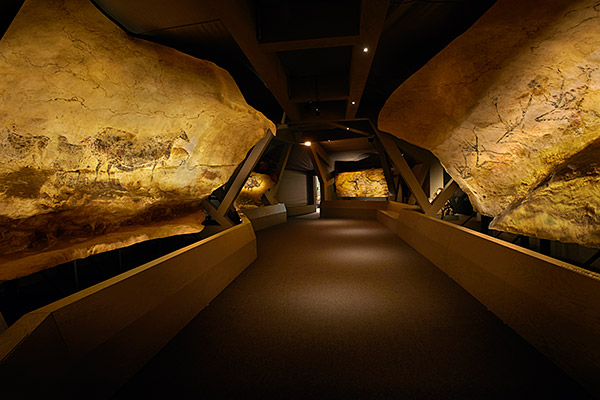
It’s the rare few who will have the opportunity to enter the original Lascaux Cave, but thanks to the foresight of the French government and the hard work of dedicated scientists and artists, an exact replica was opened in 1983 that gave visitors a chance to experience the amazing archaeological site. Nearly 20 years later additional replicas have begun to tour the world.

A few days ago we posted about Judith Thurman’s receiving a Medal of Chevalier in part for her inspiring writings about the Chauvet cave. It was a happy coincidence that the traveling exhibit had just opened in Toyko’s National Museum of Nature and Science.

The National Museum of Nature and Science, the Mainichi Newspapers, and Tokyo Broadcasting System Television, Inc. will hold a special exhibition, “Lascaux: The Cave Paintings of the Ice Age”, from Tuesday, Nov. 1, 2016 to Friday, Feb. 19, 2017. About 20,000 years ago, dynamic pictures of animals were painted on the walls of caves found in southwestern France, the Lascaux Caves. Continue reading

Quail Eggs & Food Culture

Frazier-QuailTheQuieterBackyardEggOption-1200.jpg

Quail eggs have fewer calories than chicken eggs, and with their higher protein ratio two or three can make for a surprisingly hearty breakfast. PHOTOGRAPH BY WOLFGANG KAEHLER / LIGHTROCKET VIA GETTY

This post on the New Yorker’s website is a good sample of what has changed about the writing style, among other things, in the changing food culture of North America. We have left out the first half of the post, which is not for the squeamish in general and certainly not for animal rights activists. Yet, it is realistic, honest, transparent and alot of other things that our global food systems have not been in the last century:

QUAIL, THE QUIETER BACK-YARD EGG OPTION

By

…In her book, “The Coturnix Revolution,” Alexandra Douglas makes a convincing case for quail’s superiority over chickens: they are less expensive, take up less space, and convert feed into edible protein more efficiently. Not only is a quail cage quieter than a coop of squawking chickens, it can be small; a square foot is plenty of room for a single quail. Continue reading

Guess Who’s Coming To Dinner?

screen-shot-2016-11-02-at-11.57.52-am_custom-3c65e15eba64733f55b1d77a7fd573e64c2125ec-s1100-c85.png

Neiman Marcus is selling collard greens for over $60, this holiday season. Neiman Marcus/Screenshot by NPR

As an election season in the USA, full of existential questions with no good answers, comes to a close we are presented with the puzzling offer of this retailer, which is not exactly existential but kind of akin to it:

Neiman Marcus Is Selling Frozen Collard Greens For $66 Plus Shipping

MERRIT KENNEDY

Luxury department store Neiman Marcus is well-known for its opulent holiday offerings.

For example, its “Christmas Book” holiday gift guide is offering his-and-hers “Island cars” for $65,000 each. And a trip to castles in the U.K. for eight will set you back a cool $700,000. Continue reading