Being Human, Sharing Relevant Information, Building Community

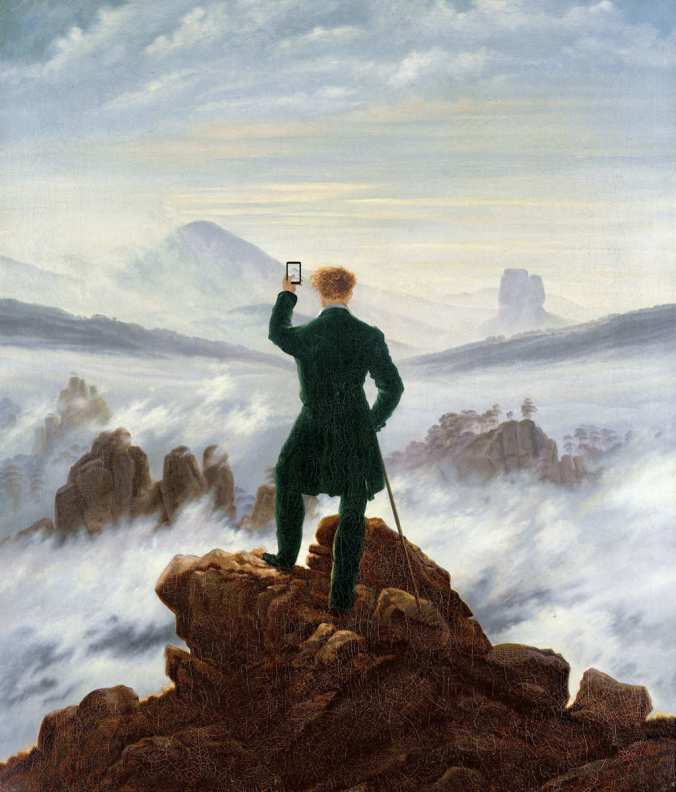
16-distraction-lede-w512-h600-2x

In the first few years of our building this wordpress platform to communicate about things that concern us and especially about things that inspire us, we occasionally found something that Andrew Sullivan had posted that was relevant here (only rarely since his site was mainly dedicated to politics and other topics that do not belong on our platform).

So we know a bit about him and always admired his relentless pursuit of what he believed in. We also know he is an excellent writer, so almost always worth a read. The same relentlessness we admire is also one we vigilantly guard against in these pages, where we have tried to limit our daily contribution to just a few essentials. We want only to have some shared space with a community of readers who care about some of the issues that interest us the most. This article Mr. Sullivan just published is definitely worth a read:

I Used to Be a Human Being

An endless bombardment of news and gossip and images has rendered us manic information addicts. It broke me. It might break you, too.

By

I was sitting in a large meditation hall in a converted novitiate in central Massachusetts when I reached into my pocket for my iPhone. A woman in the front of the room gamely held a basket in front of her, beaming beneficently, like a priest with a collection plate. I duly surrendered my little device, only to feel a sudden pang of panic on my way back to my seat. If it hadn’t been for everyone staring at me, I might have turned around immediately and asked for it back. But I didn’t. I knew why I’d come here. Continue reading

No Kitten Videos Here, But Plenty Of Cats

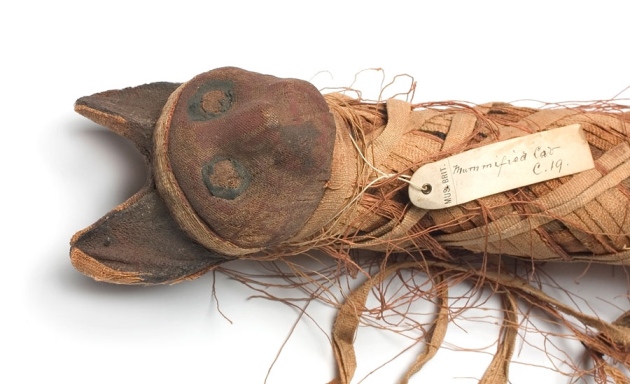
c0101823-egyptian_mummified_cat-spl_web

We are human, therefore we love cute kitten videos just like the next person. We just do not need to share them here. That is not our purpose. Ditto for puppy dog videos, though we have a soft spot for scientific explanation for how dog became man’s best friend. Especially when creatively oriented to non-scientists. Back to cats. We have been featuring them as often as possible here, when considered relevant. And then some links for good measure. Our thanks now to Nature, which brings scientific studies within reach of a motivated lay audience, for this story on one path by which cats came to their current prominent state of domestication in our lives:

How cats conquered the world (and a few Viking ships)

First large-scale study of ancient feline DNA charts domestication in Near East and Egypt and the global spread of house cats. Continue reading

If You Happen To Be In The Boston Area

so16_image_page_036_image_0001

Saint Barbara, attributed to the “Ghent Associates” of the Master of Mary of Burgundy, from a book of hours-missal, c. 1485-1490. Courtesy of Houghton Library/Harvard University

We check in from time to time at magazines published by universities where we have recruited. This article, which we appreciate topically because of the conservation of cultural heritage described, makes us wish we could visit the venues described in “Illuminations.”  Lily Scherlis provides a good example of why we keep coming back to this magazine–crisp, clear writing and a compelling argument in favor of looking back into history for an enriching perspective on crowdsourcing versus individual authorship (read to the end of the quoted section):

…These works were born into a world where literacy was scarce and almost universally affiliated with religion: the exhibition description refers to monasticism as, at its heart, a “cult of the book.” I imagine how compelling written religious text would have been to early readers: the words echo off the page, as if read by an invisible voice heard only by you, but are available to other readers as well. Continue reading

Carbon-Calculated Menu Planning

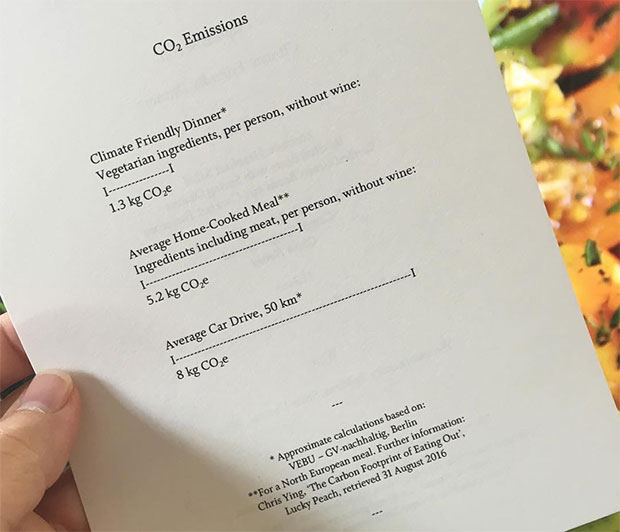
co2emmissionsmeal

The menu from Studio Olafur Eliasson’s dinner for the Climate Museum’s Miranda Massie. Image courtesy of the artist’s Instagram

From the folks at Phaidon, news of a top artist’s contribution to the climate change conversation, in a manner we can kind of relate to:

Olafur Eliasson puts carbon on the menu

When Eliasson’s studio cooked a meal for NYC’s Climate Museum director it listed one additional ingredient.

The artist Olafur Eliasson is on the board of the Climate Museum, a US institution which endeavours to use the sciences, art, and design to inspire dialogue and innovation that address the challenges of climate change. The museum hasn’t been built, yet Eliasson has submitted a few concept sketches, picturing a globular structure that should, someday soon hopefully stand in New York City. Continue reading

If You Happen To Be In Oxford (MS, USA)

9780871406804Paul Freedman in conversation with John T. Edge
If we could, we would be there to hear this conversation; no less a part of the attraction is to do so at an institution worthy of everyone’s book orders:

Monday, September 26, 2016 – 5:00pm
Square Books
129 Courthouse Sq
Oxford, MS 38655

Whether charting the rise of our love affair with Chinese food through San Francisco’s fabled The Mandarin, evoking the richness of Italian food through Mamma Leone’s, or chronicling the rise and fall of French haute cuisine through Henri Soule’s Le Pavillon, food historian Paul Freedman uses each restaurant to tell a wider story of race and class, immigration and assimilation. Freedman also treats us to a scintillating history of the then-revolutionary Schrafft’s, a chain of convivial lunch spots that catered to women, and that bygone favorite, Howard Johnson’s, which pioneered midcentury, on-the-road dining, only to be swept aside by McDonald’s. Lavishly designed with more than 100 photographs and images, including original menus, Ten Restaurants That Changed America is a significant and highly entertaining social history.

In case you missed it, a review of this book is finally available from one of the great food writers of our time:

Continue reading

Renaissance & Other Possible Interpretations Of Our Times

florence

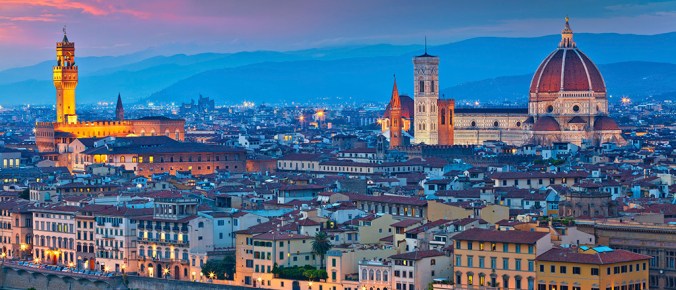
During my morning walk today, while taking in the Onam visuals, I was at the same time absorbing sound, in the form of conversation, from the same phone that was snapping pictures. I use the time of my walks to listen to podcasts, one of the easiest ways for me to stay attuned to happenings and ideas from the USA, my onetime home, and home to many of the people who visit properties we manage.

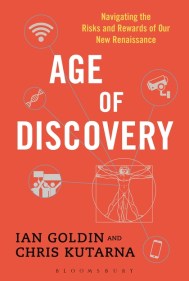
The central idea of today’s podcast, at once frank about the perils of the “Age” we are in now but also optimistic about how to harness modern tools to navigate these times, took me by surprise:

New Maps, New Media and a New Human Condition

AgeofDiscovery-copy.jpgscreen-shot-2016-09-14-at-2-14-06-pm

Some 500 years ago, Johannes Gutenberg, Nicolaus Copernicus, Michelangelo and others were part of the Renaissance, a time of significant cultural change. Now, authors Ian Goldin and Chris Kutarna say we are in the midst of a second Renaissance.

Continue reading

Onam, Kerala, 2016

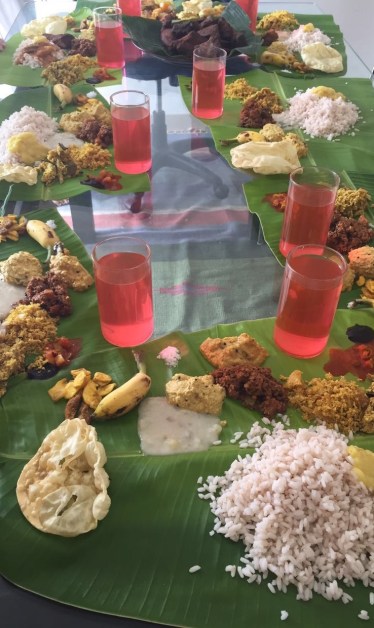
img_5224-1Yesterday, the midday meal was a traditional one for this time of year. We have written about Onam festivities each of the years that we have been based in Kerala, since 2010. Now, during our seventh such celebration, we finally hosted an Onam feast in our own home. In order to be sure that the guests at our table would have the best of the traditional foods of the season we made the only sensible decision: we ordered the feast from a local kitchen we favor.

These dishes, which we have written about in previous years, tasted as if they were the best we have yet had. Maybe because it was all so easy and pleasant. Our guests, anyway, we knew to be not high maintenance. It was a cross section, functionally speaking, of La Paz Group’s Kerala team, including (from left going around the table in the picture below) engineering, finance, revenue management, reservations, sales, design, me, and front right is the man in charge of it all, who was also the photographer. Continue reading

Keeping Shakespeare in Mind

Illustration by Mathew McFarren

Illustration by Mathew McFarren

Quite a few of our team can attest to the power of a liberal arts education, especially when put in such a joyful context.

Scott L. Newstok’s convocation speech to the Rhodes College class of 2020 embraces this joy, adding the cheeky tweak of asking the incoming class to approach their college experience in the “spirit of the 16th century”.

Building a bridge to the 16th century must seem like a perverse prescription for today’s ills. I’m the first to admit that English Renaissance pedagogy was rigid and rightly mocked for its domineering pedants. Few of you would be eager to wake up before 6 a.m. to say mandatory prayers, or to be lashed for tardiness, much less translate Latin for hours on end every day of the week. Could there be a system more antithetical to our own contemporary ideals of student-centered, present-focused, and career-oriented education?

Yet this system somehow managed to nurture world-shifting thinkers, including those who launched the Scientific Revolution. This education fostered some of the very habits of mind endorsed by both the National Education Association and the Partnership for 21st Century Learning: critical thinking; clear communication; collaboration; and creativity. (To these “4Cs,” I would add “curiosity.”) Given that your own education has fallen far short of those laudable goals, I urge you to reconsider Shakespeare’s intellectual formation: that is, not what he purportedly thought — about law or love or leadership — but how he thought. An apparently rigid educational system could, paradoxically, induce liberated thinking.

“Take advantage of the autonomy and opportunities that college permits by approaching it in the spirit of the 16th century. You’ll become capable of a level of precision, inventiveness, and empathy worthy to be called Shakespearean.”
So how can you think like Shakespeare?

Continue reading

Wulff & Konstali & Hygge

Brunch

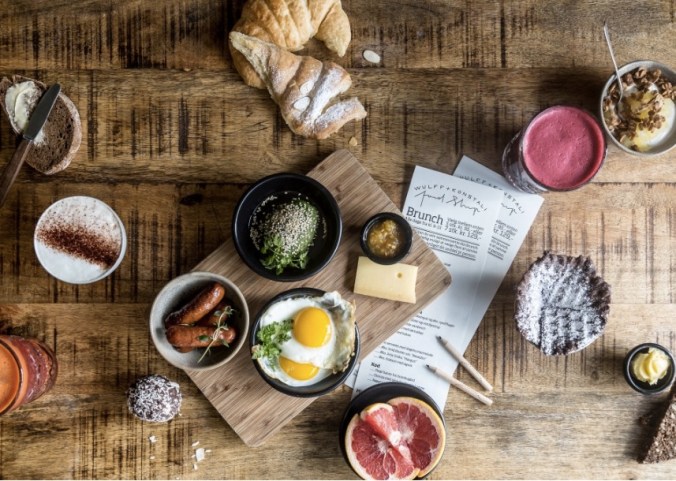
Image from the Galleri of Wulff & Konstali’s website

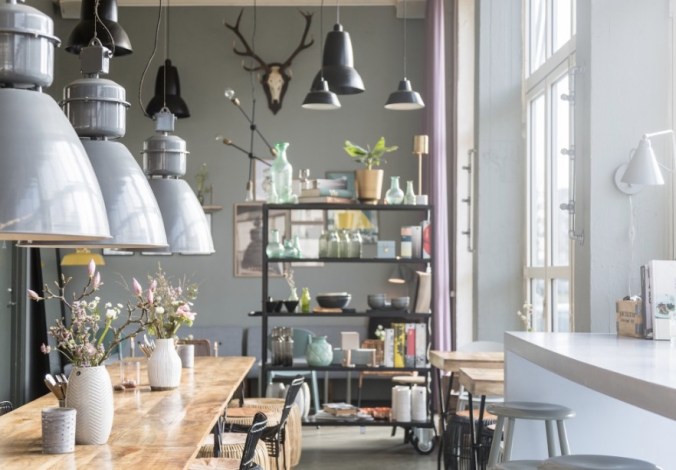
It is just after 10am Sunday morning in Kerala, as I type this. Maybe because brunch is associated with late Sunday mornings, or maybe because I just read Jocelyn’s post (or maybe both) my mind is wandering in the direction of food experience. While we have had (and hosted) many a fine brunch in Kerala at the moment my brunch-thinking has drifted to Copenhagen. You do not need to speak Danish to sense the hygge in the image above, or to want to experience it in the space pictured below.

Hyggespace.jpg

Image from the Galleri of Wulff & Konstali’s website

If you need a primer on hygge, the best place to find it is this article just published in the Guardian, which also happens to be how my attention was brought to Wulff & Konstali:

…“Hygge is when you treat yourself, it’s not that healthy, but it’s good food,” Agnete says. Continue reading

If You Happen to be in Hong Kong

e10171af-5ded-4e02-ad2a-89768ff00b5e

Source: globaltimes.cn

Milk tea is the liquid blend of East and West, and if you happen to be in Hong Kong, you will find yourself among a populace that covets this sweet, aromatic drink just as much as Americans crave their daily coffee. Milk tea is the equivalent fast and convenient to-go drink in Hong Kong, and the city gulps down about 2.5 million cups a day. The drink is a a local institution that has a a yearly Hong Kong milk tea contest and this year’s competition was steep, to put it mildly.

Milk tea is a blend of black teas, combined with a high proportion of either evaporated milk and sugar, or simply sweetened condensed milk. The use of concentrated milk products gives milk tea a very thick, creamy consistency, and a high sugar content makes the beverage a harder, stiffer, bolder drink than many Americans would associate with tea.

The specific methods and materials are closely kept secrets of individual diner-like cha chaang tengs, the primary drinking establishments for milk tea, but some of the basics remain the same.

Continue reading

Of Salt and Stories

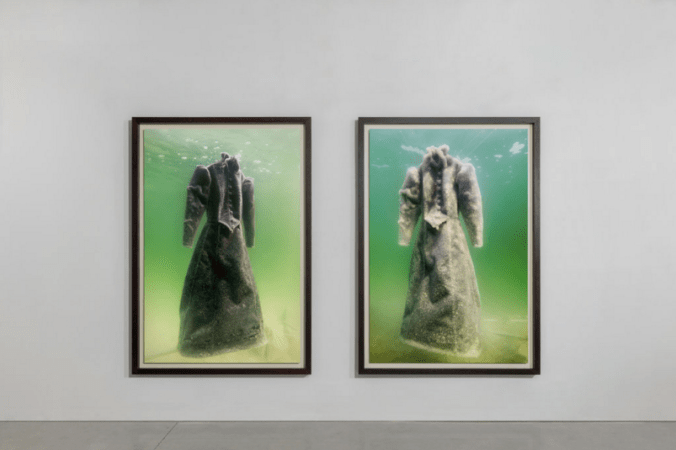
“Salt Crystal Bridal Gown III” (left) and “Salt Crystal Bridal Gown VI,” both 2014. Courtesy of the artist and Marlborough Contemporary

“Salt Crystal Bridal Gown III” (left) and “Salt Crystal Bridal Gown VI,” both 2014.
Courtesy of the artist and Marlborough Contemporary

It starts with a story. Written by Russian playwright S. Ansky in the early 20th century, The Dybbuk is an expressionistic drama about a young bride possessed by the malicious spirit of a dead suitor, and subsequently exorcised.

Jerusalem-born artist Sigalit Landau took inspiration from the story and her powerful connection to the Dead Sea, an otherworldly place she grew up visiting frequently with her family, and that she has incorporated into her art for years. Her “Salt Bride” installation at London’s Malborough Contemporary, enlists the work of the sea itself, in which a traditional black Hasidic gown (a replica of the costume worn by the bride in The Dybbuk, as portrayed by legendary actress Hanna Rovina) is submerged into the sea’s hypersaline waters. The salt crystals accumulated naturally over the net-like weave of the dress, left submerged over a period of 3 months, during which the process was photographed as an organic time-lapse. “Over time, the sea’s alchemy transforms the plain garment from a symbol associated with death and madness into the wedding dress it was always intended to be.” Continue reading

Guilt In The Eye Of The Beholder

00otg-losangeles-master768.jpg

A raspberry dessert at Café Gratitude in Hollywood. Credit Monica Almeida/The New York Times

A few days back I was struck by a post on this site about lab-grown foods, and wanted to continue the thought exercise by sharing a few comments on a brief article I had just read elsewhere on the intersection between performance art and food issues. Two more cents to add here, by way of a few excerpts from this fascinating, if alarming, article:

Eschewing a Vegan Lifestyle at Home, but Still Embracing It at Work

Continue reading

Guilty As Charged

Caplan-Bricker-Austrian-Food-Performance-Artists-1200

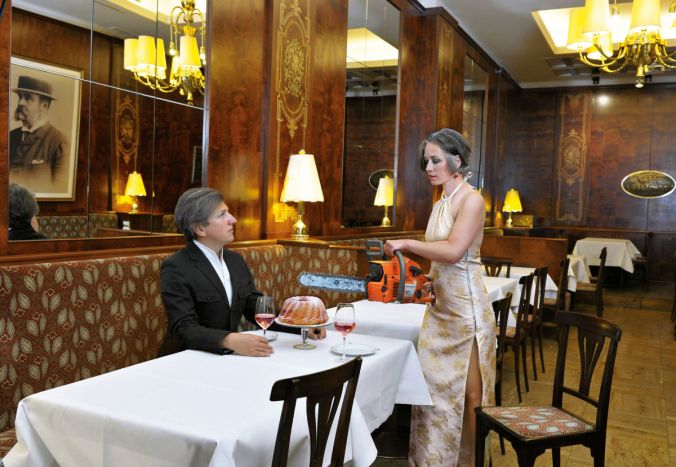
The Austrian performance artists Sonja Stummerer and Martin Hablesreiter, a.k.a. Honey and Bunny, want to make us reëxamine the culinary mores that we take for granted. PHOTOGRAPH COURTESY SONJA STUMMERER AND MARTIN HABLESREITER

I have been on the road for most of the last six weeks and have been consumer of the posts on this site, rather than contributor, for the entire stretch since we got distracted by a hurricane. That’s okay. Other contributors have carried the ball forward well, and before I forget I want to share one recent item I read elsewhere that seems a fitting counterpoint to Jocelyn’s most recent post.

That topic has a kind of ick factor I cannot articulate while at the same time is clearly a topic we are going to need to deal with more and more. I am certainly guilty of avoiding the topic, and must overcome the ick thing. Clearly linked to the lab/food topic is the issue of food waste, which we address on a regular basis here.

We need more diversity in our approach to these tough topics to avoid the feeling of being overwhelmed; antidotes to the ick/tough factor to make the topic more palatable, so to speak. We are so serious in our earnestness that we no doubt add to the weight of the topic, and I speak guilty as charged on that too. It may be that “playful” is an appropriate alternate approach from time to time, as this item suggests:

THE WASTEFULNESS OF MODERN DINING, AS PERFORMANCE ART

Many of us reflect, at least occasionally, on how our gastronomic habits affect the health of the planet. We regret that our takeout dinners come in a Styrofoam container inside a paper bag inside a plastic bag, with white plastic utensils in their very own plastic sheaths. We feel guilty when we order too much food at a restaurant and resign half an entrée to be scraped into the trash. But the pull of convention is most often stronger than these feelings. We eat in the manner we’ve grown accustomed to eating.

The sly and playful Austrian performance artists Sonja Stummerer and Martin Hablesreiter want to make us reëxamine the culinary mores that we take for granted. Continue reading

Patrimonial Matrimonial Innovation

10tuscany1-master768.jpg

A fort atop the Italian town of Montalcino. In October, residents there and in neighboring San Giovanni d’Asso will vote on whether to merge the two communities. CreditNadia Shira Cohen for The New York Times

Although we appreciate, even adore, the wines and the fungi referenced in this story, it is worth reading for a look at practical issues facing aging towns that possess world class patrimony:

A Merger of Brunello and Truffles? 2 Tuscan Towns May Be Better Together

By

SAN GIOVANNI D’ASSO, Italy — Two small towns in southeastern Tuscany, one famous for red wine, the other for truffles and organic grain, are considering a municipal marriage of convenience that could blur their cherished identities, separately formed over the centuries.

With a population of just 853, San Giovanni d’Asso can no longer deliver basic services to its citizens on a daily basis. Left with only three town officials to do the work, something as simple as getting an identity card drawn up and stamped requires making an appointment days in advance.

So the town’s mayor, Fabio Braconi, picked up the phone back in 2014 and sought help from a neighbor, Montalcino, 10 miles to the south across rolling wheat fields. Continue reading

Pepper’s Historical Place

A painting of Muziris by the artist Ajit Kumar. In 2004, excavations in Kerala sparked new interest in this lost port. Illustration: KCHR

A painting of Muziris by the artist Ajit Kumar. In 2004, excavations in Kerala sparked new interest in this lost port. Illustration: KCHR

Our first exposure to the name Muziris was during the planing stages of the 1st edition of the eponymous Kochi-Muziris Biennale in 2012. The flurry of activity in Fort Kochi not only brought Kochi into the spotlight of the international Art World, but added focus to the archeological works at Kerala’s ancient port.

Lost cities #3 – Muziris: did black pepper cause the demise of India’s ancient port?

Around 2,000 years ago, Muziris was one of India’s most important trading ports. According to the Akananuru, a collection of Tamil poetry from the period, it was “the city where the beautiful vessels, the masterpieces of the Yavanas [Westerners], stir white foam on the Periyar, river of Kerala, arriving with gold and departing with pepper.”

Another poem speaks of Muziris (also known as Muciripattanam or Muciri) as “the city where liquor abounds”, which “bestows wealth to its visitors indiscriminately” with “gold deliveries, carried by the ocean-going ships and brought to the river bank by local boats”.

The Roman author Pliny, in his Natural History, called Muziris “the first emporium of India”. The city appears prominently on the Tabula Peutingeriana, a fifth-century map of the world as seen from Rome. But from thereon, the story of this great Indian port becomes hazy. As reports of its location grow more sporadic, it literally drops off the map.

Continue reading

The Shed, New York City

Shed.jpg

When we first learned about the High Line it was at a moment in time when we were designing a hotel in a historic section of a south Indian harbor town, with pedestrian zones intersecting with vibrant merchant and other urban realities; the High Line served as an inspirational benchmark for thinking about public spaces creatively.

Just now, for a new project, a colleague referred us to the Rockwell Group’s hospitality practice to see an example of another relevant benchmark, and while exploring their website we came across the project they are engaging in with the designers of the High Line, giving us a new objective for the next visit to New York City:

Currently under construction on the far west side of Manhattan where the High Line meets Hudson Yards, The Shed will be housed in a 200,000-square-foot, six-level structure designed by Diller Scofidio + Renfro in collaboration with Rockwell Group. The radically flexible design of the performative structure can physically and operationally accommodate the broadest range of performance, visual art, music, and multi-disciplinary work. Continue reading

Indigenous-Outing

160808_r28495-1200

Mr. Anderson’s work is often, like his colleague Elizabeth Kolbert’s, unusually thick in detail, and often kind of heavy. This item is heavy, detailed, but fascinating. His writing is often without illustration yet this piece is reported with abundant and excellent photography. Read a snippet below to get a sense of the interior of the article:

AN ISOLATED TRIBE EMERGES FROM THE RAIN FOREST

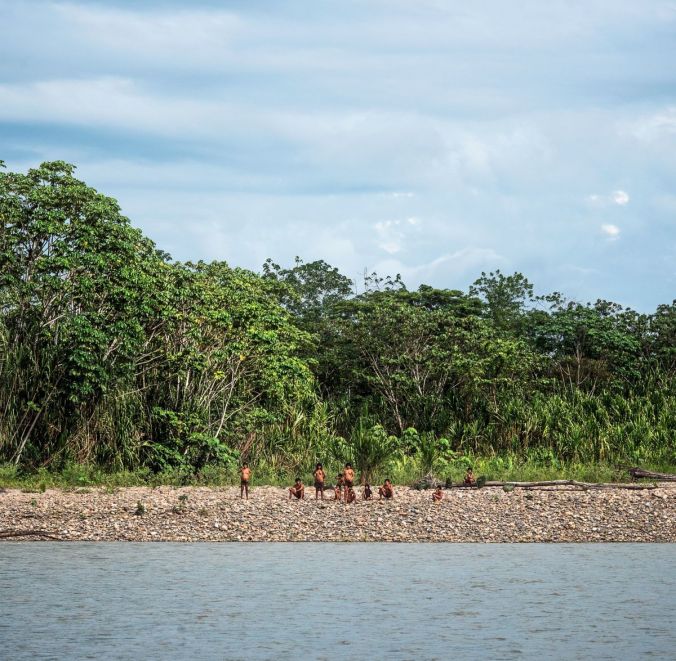
In Peru, an unsolved killing has brought the Mashco Piro into contact with the outside world.

By Jon Lee Anderson

…The Ministry of Culture’s team gathered a few months ago in Cuzco, high in the Andes, where a van was loaded with provisions. The leader was an anthropologist named Luis Felipe Torres, a slim man in his early thirties with an aquiline face and the unassuming manner of a professional observer. He was joined by Glenn Shepard, an American ethnobotanist. A youthful-looking man of fifty, Shepard had lived for a year in the nineteen-eighties among the Matsigenka people, who shared territory with the Mashco; he had learned their language and returned many times since. Shepard worked at the Emílio Goeldi Museum, an Amazonian-research center in Brazil, but he travelled to Peru frequently as an informal adviser to Torres’s department.

Continue reading

When Silence Is Golden

Finland

It is not a principle of branding, per se, that silence is golden; just the opposite normally, since getting the message out is the point, and messages seem defined by noise, however subtle or clever. But Finland, by way of this article in Nautilus, has had me thinking, in the couple days since I read it, about alternative views on the value of silence, on messaging, on branding:

One icy night in March 2010, 100 marketing experts piled into the Sea Horse Restaurant in Helsinki, with the modest goal of making a remote and medium-sized country a world-famous tourist destination. The problem was that Finland was known as a rather quiet country, and since 2008, the Country Brand Delegation had been looking for a national brand that would make some noise.

Over drinks at the Sea Horse, the experts puzzled over the various strengths of their nation. Here was a country with exceptional teachers, an abundance of wild berries and mushrooms, and a vibrant cultural capital the size of Nashville, Tennessee. These things fell a bit short of a compelling national identity. Someone jokingly suggested that nudity could be named a national theme—it would emphasize the honesty of Finns. Someone else, less jokingly, proposed that perhaps quiet wasn’t such a bad thing. That got them thinking. Continue reading

Library Law’s Legacy

wit-czech-master768

The National Library of the Czech Republic in Prague. Credit Pavel Horejsi for The New York Times

If you search this site for topics written about frequently, library might be among the top 10 topics, for reasons that many of those earlier posts would make clear. Today, a lovely short item from Eastern Europe, that makes us wonder:

Why Libraries Are Everywhere in the Czech Republic

By

PRAGUE — In the age of Amazon and the internet, the idea of going to a public library to borrow a book may seem ever more quaint and old-fashioned in many parts of the world, but one country, at least, is clinging to it tenaciously: the Czech Republic. Continue reading

Kerala Beef Fry

_89839519_89839518

The Kerala beef fry is the stuff of legend

Last week, sitting with a new colleague for lunch–I had ordered a classic north Indian version of the ubiquitous biryani served across the country; she had ordered a very Kerala dish, one with beef–I wondered why I had not ordered what she ordered, since it is the more local dish, and I am still not vegetarian. The BBC makes me wonder again:

The Indian state that is obsessed with beef fry

Not many people would associate India with beef. Spirituality yes, perhaps even vegetarianism, but certainly not beef.

But then they have probably never been to Kerala, the south Indian state that loves its beef – preferably fried.

The Kerala beef fry is the stuff of legend. Continue reading