Corn, Heritage & Conservation

980x

Masienda / Facebook

Thanks to EcoWatch for this:

Heirloom Non-GMO Corn Is Helping Sustain Mexico’s Heritage and Farmers

It’s not often that a conversation inspires an idea leading to a project that improves people’s lives and potentially transforms an industry. But that’s what happened to Jorge Gaviria, founder of Masienda.

While serving as a host and translator at the G9 Chefs Summit at Blue Hill at Stone Barns in Pocantico Hills, New York in 2013, Gaviria heard chefs discuss responsibly sourced ingredients. Continue reading

Old School Fromage

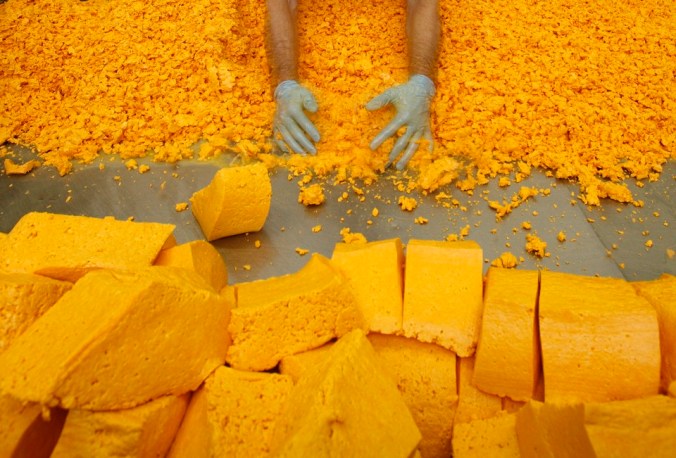
Cheesemaker David Clarke separates the curds and whey to make Red Leicester cheese at Sparkenhoe Farm in Upton

Cheesemaker David Clarke separates the curds and whey to make Red Leicester cheese at Sparkenhoe Farm in Upton, central England October 8, 2007. Red Leicester cheese had not been made in Leicestershire since 1956 until Clarke started producing his traditional, unpasteurised cloth-bound cheese using milk from his 150 pedigree Holstein Fresian cows. REUTERS/Darren Staples (BRITAIN)

Thanks to the Atlantic’s concern for our culinary well-being:

How Real Cheese Made Its Comeback

After decades of Kraft Singles, more Americans than ever are hungry for artisanal varieties of the past. An Object Lesson.

by LAURA KIESEL

As a child, I was a picky eater. Except when it came to cheese. Continue reading

Reflections On Collecting Things

Museum.jpg

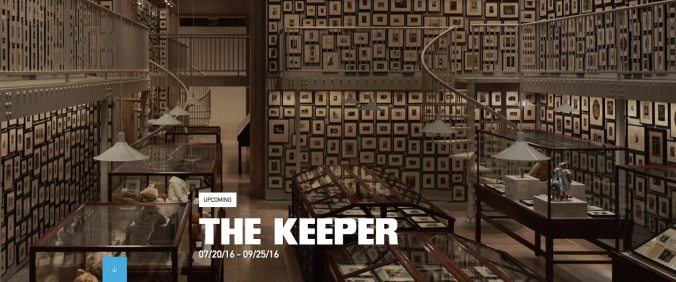
This exhibition, brought to our attention by a lengthy respectful review here, is the first time we have heard of this museum, but now that it is on our radar we stay tuned. This looks like our kind of show:

Object Lessons: The New Museum
Explores Why We Keep Things

Curators at the New Museum have created an exhibit with over 4,000 objects that examines the various ways we collect and own items.

By

We live in a sharing economy of collaborative consumption — services, not stuff. Crowdsourcing, peer-to-peer rentals like Airbnb: An interest, exemplified by millennials, in a temporary ownership of goods.

Apps, not objects. Continue reading

Demolition, Conservation & Creative Destruction

Puppet2

THE STAGE LIFE OF A PUPPET Watch as Dan Hurlin’s puppets from “Demolishing Everything with Amazing Speed” come to life.

Dance is not one of the art forms I have ever immersed myself in, so I only occasionally read articles by a Dance critic. Joan Acocella, however, is also a great book reviewer and I know I should always at least glance at what she publishes. This was one of those times when I was pulled in, and could not stop reading (or watching; click above to go to a short video based on the subject of her review).

Her brief description of a series of puppet shows captures my attention, in spite of my not having seen a puppet show in decades. First, it has to do with lost and found heritage being valorized by a talented artist–a variation on what we call entrepreneurial conservation. And the mix of written and video presentation of the review is a fine example of the rapid paced march of an old school, paper-based magazine to the drum of its new digital platform, something we can appreciate as the same happens in our sector (travel and hospitality). In that sense even the title of the work being reviewed, “Demolishing Everything with Amazing Speed,” echoes the Schumpeterian notion of creative destruction.

FORGOTTEN FUTURIST PUPPET SHOWS

Dan Hurlin stages Fortunato Depero’s unproduced plays at Bard SummerScape.

In 2013, Dan Hurlin, a performance artist and puppet artist, was working at the American Academy in Rome when he stumbled on evidence that during the First World War Fortunato Depero (1892-1960), one of the Italian Futurists, had written four puppet plays that were never produced. Where were they? Hurlin travelled to Depero’s home town, Rovereto, at the foot of the Italian Alps, to examine the man’s archive. “I sat at this big table, wearing those white cotton gloves they make you wear,” Hurlin remembers. Continue reading

The Sense Of A Place

proulx-desk

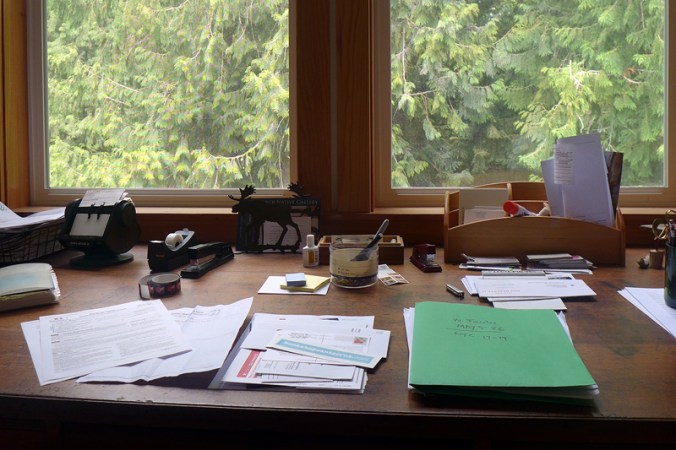
What Annie Proulx says about places she has lived–through her fiction especially but also in this interview below–rings a bell for us, considering the number of places we have chosen to live to do what we do. What the interview echoes specifically for me is the inherent improbability of accomplishing one of our key objectives: we want travelers to become as attached to places as we are, so that they will care about the conservation mission of our initiatives in each location as much as we do. It occurs to me that our guests spend about as much time with us in any given location as a reader spends on any given book by Proulx; also, books and our locations share in common the fact that they can be revisited an indefinite number of times.

That said, we want our guests to care more about these locations than even the most devoted reader cares about a Proulx character; not because we think less of her characters but because our conservation mission is about places in need of constant support. Improbability in this context refers to the question: how can our guests become intensely attached–as happens when a reader is gripped by a compelling character in a deeply human situation in an exquisitely described location–in a limited amount of time and continue to care intensely after they depart? That is our challenge, and we are constantly finding new ways of answering that question.

Another echo from reading what Annie Proulx says about the places she has lived, about belonging, feels strongly relevant. If we are a fraction as good at what we do as she is at what she does, belonging becomes irrelevant. What matters is how much sense we make of the place, and how much sensibility we harness in showcasing it to our guests. If you have read any of her books, you know how evocative place can be–like an additional character–and if that captures your attention you should read the interview that follows the introductory section excerpted below.

HOW THE WRITER RESEARCHES:
ANNIE PROULX

JOHN FREEMAN INTERVIEWS THE PULITZER PRIZE WINNER IN HER SNOQUALMIE VALLEY HOME

Annie Proulx is 80 years old and still not sure where she belongs. Standing in the atrium of her home in the Snoqualmie Valley, the Pulitzer Prize-winning novelist eyes a photograph of the cottage she once occupied in Newfoundland, the setting of her 1993 novel, The Shipping News. “I fell in love with that landscape,” Proulx says, speaking in the tone of a woman describing an ex-lover. Continue reading

What Would I Read At Villa del Faro?

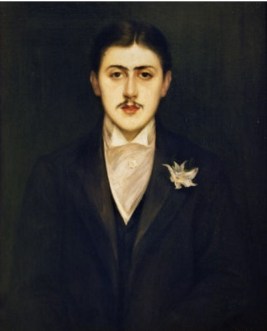
Proust

As a teen-ager, Marcel Proust filled out a questionnaire as part of a parlor game. His responses have experienced a startling afterlife. PHOTOGRAPH BY IMAGNO / GETTY

Seth’s post, followed by Jocelyn’s post, both reach me just after reading this fascinating short history on the so-called Proust questionnaire, which I first encountered in the back pages of Vanity Fair magazine when I had nothing better to do. I am reminded of two things: guilty pleasure reading, and actual reading of something other than news, news analysis, or long-form non-fiction–which are a mainstay of my contributions on this site.

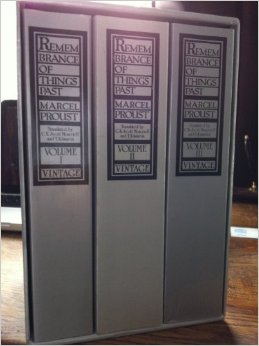
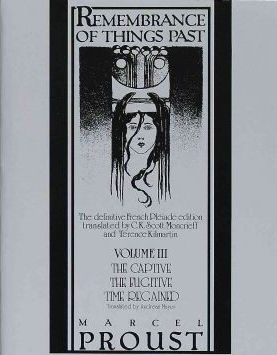
I am reminded of a third thing: Amie’s marathon reading of Proust, and the view of this 3-volume set around our home for a long stretch of time. Those books that she would lug around were the sign of an unreformed, unrepentant student of literature, whose career started as a book editor in New York City, when she had nothing better to do.
41vfEDKvg7L._SY344_BO1,204,203,200_

I say that mainly to contrast what I did with my guilty pleasure reading time back then, and what she did with hers. I say that because in more recent times, especially the past six years in India, she has had something much better to do, and plenty of it to do, and I think we are all better for that. Which has me thinking: if I had the time, what would I read if I could just leave it all behind right now and land at Villa del Faro with nothing but books (and at least a couple changes of clothes, of course)? Would I find that Proust set Amie has in storage? As an amateur nostalgist with limited writing talent, I might choose those volumes as a self-help guide.
9780394711843I write on this site partly to share about events, people and places that I believe are worthy of others’ attention; but also for the sake of further reflection and sense-making of those. Patterns repeat; some people and places important once come back to be important again.  For example, nearly five years ago I was on my third of five extended periods of work in Baja California Sur.  It was on an earlier visit in 2008 that I had met Andy Murphy, then with WWF, with whom I became friends and then eventually more with our project in Ghana. Continue reading

Libraries, Phaidon Style

ssanantonio-ricardo

Ricardo Legorreta’s San Antonio library, Texas, as illustrated by André Chiote

Phaidon has produced a book to meet our library fancy:

The world’s best libraries look even better as posters

See how architect André Chiote has illustrated buildings by Norman Foster, Oscar Niemeyer, Rem Koolhaas and co

When successful architects are tasked with designing important city or national libraries, they rise to the challenge. These practices, which often spend much of their time on overtly commercial work, seem to come to life when they put their civic-minded hats on. Continue reading

If Only I Could Have Learned So Quickly

Small Talk

The current issue of the New Yorker is a gold mine, but of particular note from my own experience and perspective is this gem of cross-cultural observation:

MY STRUGGLE WITH AMERICAN SMALL TALK

By

“How’s it going?” I ask the barista. “How’s your day been?”

“Ah, not too busy. What are you up to?”

“Not much. Just reading.”

This, I have learned, is one of the key rituals of American life. It has taken me only a decade to master. Continue reading

I’ll Just Take The Banjo

RStanley

We have not mentioned the banjo much around here. Shame on that! I am fond of the instrument for some of the same reasons I am fond of, say, an arboretum. The banjo is an instrument akin to other instruments of entrepreneurial conservation: the more it gets played well, the more it keeps alive a tradition, and even can improve on the tradition. An arboretum, well conceived, well kept, helps species survive in isolation that might otherwise have been lost from the planet entirely.

I see a reference here and there, for example mention of the Seeger family, who I have loved for many reasons my whole life. And Bela Fleck is Exhibit A in the case to be made for the banjo entrepreneurship; Steve Martin and Edie Brickell could be said to support that case as well. They all would acknowledge Dr. Ralph Stanley as essential to their craft’s survival and thriving, so it is with that in mind that I highly recommend you listen to or read this brief interview with him:

…GROSS: How did you get your first banjo?

STANLEY: My first banjo? My mother’s sister, my aunt, lived about a mile from where we did, and she raised some hogs. And she had – her – the hog – the mother – they called the mother a sow – of a hog. And she had some pigs. Well, the pigs were real pretty, and I was going to high school and I was taking agriculture in school. And I sort of got a notion that I’d like to do that, raise some hogs. And so my aunt had this old banjo, and my mother told me, said, which do you want, the pig or a banjo? And each one of them’s $5 each. I said, I’ll just take the banjo…

Continue reading

Recommended Podcast: Food Packaging

Screen Shot 2016-06-30 at 9.51.21 AM

If you are not yet listening to Gastropod, this would be as good a place to start as any:

Outside the Box: The Story of Food Packaging

The invention of food packaging is one of humanity’s greatest achievements. It may seem hard to imagine today, but the first clay pots made the great civilizations of the ancient world possible, while paper’s first use, long before it became a surface for writing, was to wrap food. But packaging’s proliferation, combined with the invention of plastics, has become one of our biggest environmental headaches. In this episode, we explore the surprising history of how our food got dressed—and why and how we might want to help it get naked again.

Continue reading

The Sense Of A Place

20150513SAVOY-slide-LLBP-jumbo

One of the finest food writers, Bee Wilson surprised me by choosing this moment to pen What Brexit Means for British Food, and to post it when most of us continue to consume information and analysis about the “more mportant” implications of that referendum one week ago. But then I read it, and was even more surprised. I expected her to mention how improved UK cuisine is after decades of exchange with the Continent’s great chefs, especially those like Guy Savoy who mentored more than one of today’s UK celebrity chefs. None of that. Much more interesting. I should not be surprised.

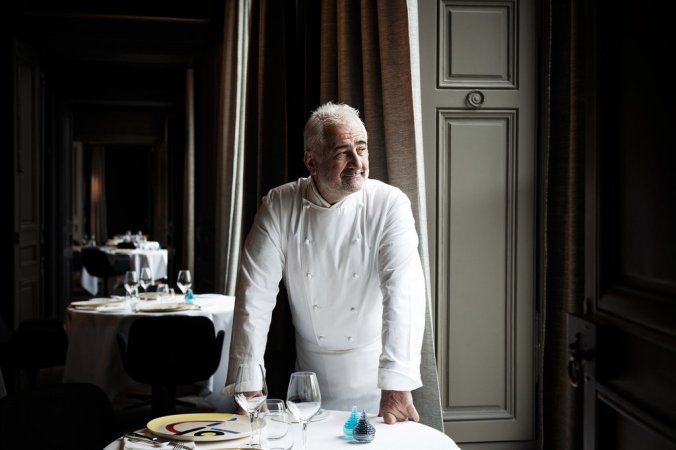
Read that post. Ironically, perhaps, it reminded me of this article from more than one year ago that I neglected to share here. Ironic because it seems quaint in light of current headlines from Europe and around the world. But the distraction seems timely. More than three decades ago I worked in restaurant Guy Savoy, in my hometown of Greenwich, CT (USA). Today we would call it a pop-up but in the early 1980s it was what I would call a miracle. He flew the Concorde weekly from Paris to operate this outpost for just a couple years and at the height of its success, shuttered it. His renewed focus on his Paris restaurant was surely what earned him the third Michelin star, which he has retained ever since.

I still do not tire of reading news about him, especially about how he keeps reinventing his home restaurant while retaining something essential. The chef-entrepreneur was one of the first to establish an outpost in the USA while maintaining his home base in France. It has been more than one decade since Amie and I enjoyed a meal as a guest in his rue Troyon restaurant. But not many days go by without my sensing the influence that working for him had on me. So, after reading Bee Wilson’s post, I also recommend that you have a look here:

Restaurant Guy Savoy Has a Striking New Home in Paris

Continue reading

Fermentation Is Here To Stay

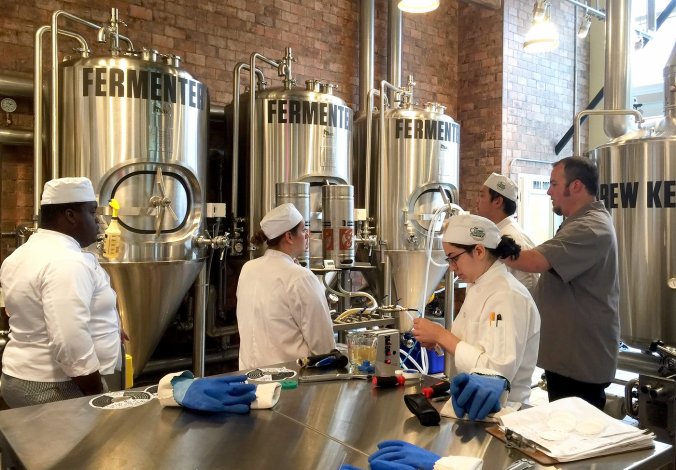
img_4710_edited_custom-418a86e926410db406b761744866d0e208210727-s1400-c85.jpg

The new brewery at Culinary Institute of America in Hyde Park, N.Y. The school now teaches the art and science of brewing, an elective course. Allison Aubrey/NPR

When the Culinary Institute Of America says so, we pay attention. We keep hearing about fermentation from our friends and colleagues in the know. So we watch for these stories. The Salt feature on National Public Radio must be, by now, one of our most go-to sources, and for good reason (considering what we care about):

Fermentation Fervor: Here’s How Chefs Boost Flavor And Health

ALLISON AUBREY

There’s an explosion of interest in friendly bacteria.

Beneficial microorganisms, as we’ve reported, can help us digest food, make vitamins, and protect us against harmful pathogens.

As this idea gains traction, so too does the popularity of fermented foods such as yogurt, sauerkraut and kimchi.

Though the science is tricky, researchers are learning more about how this ancient technique for preserving food may also help promote good health. Continue reading

If You Happen To Be In Atlanta

A rendering of the Atlanta Food & Wine Festival Vineyard in the City in Midtown. Credit: AF&WF.

A rendering of the Atlanta Food & Wine Festival Vineyard in the City in Midtown. Credit: AF&WF.

From newly minted bike lanes and bike sharing, to the Rails to Trails  Atlanta Beltline conservation project, each year Atlanta seems to be refining its “livability quotients”.  The Atlanta Food & Wine Festival just made it that much better. As pop ups go, a vineyard is a novel idea!

Each year the Atlanta Food & Wine Festival team and Advisory Council challenge themselves to create educational, engaging and entertaining programming and events for Festival guests. Continue reading

If You Happen To Be In ’s-Hertogenbosch, the Netherlands


Literally, “The Duke’s Forest”, ‘s-Hertogenbosch is a fortified historic city in the North Brabant Province of the Netherlands. Aside from being a lovely area with a beautiful church, the city is best known for it’s most famous Medieval citizen, the religious artist Hieronymus Bosch, known for his bizarre paintings of demons and human-animal-machine hybrids meant to invoke the “evil of mankind”.

While his apocalyptic,  fantastical work may have rather dour origins, it’s gone on to inspire the amazing exuberance of the the Bosch Parade since 2010.

A wondrous armada of vessels and objects inspired by the work and ideas of Medieval painter Jheronimus Bosch. Artists from all disciplines (art, theatre, dance, music, architecture) collaborate with groups of enthusiastic amateurs and volunteers to create this artistic, water-borne parade. This spawns not only a creative floating parade by and for the city, but also an extensive creativity network throughout the city. Continue reading

If You Happen To Be In London

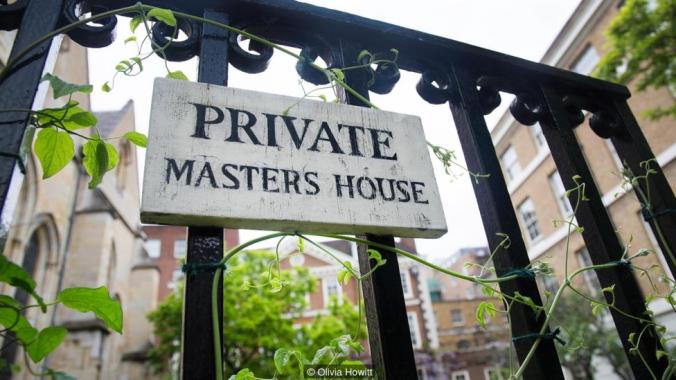
p03xgwg5

Behind closed doors The 2016 Open Gardens Weekend marks the first time the Master’s Garden is accessible to the public. For gardeners, one of the interesting aspects of the space is the difficulty of the soil – which, being situated on a raised plateau, is so free-draining that it is very dry. But, said gardener Bob McMeekin, the garden also comes with plus points: “Central London has its own micro-climate, and the garden is protected from pollution by the surrounding buildings.” (Credit: Olivia Howitt)

Heavenly Apricots

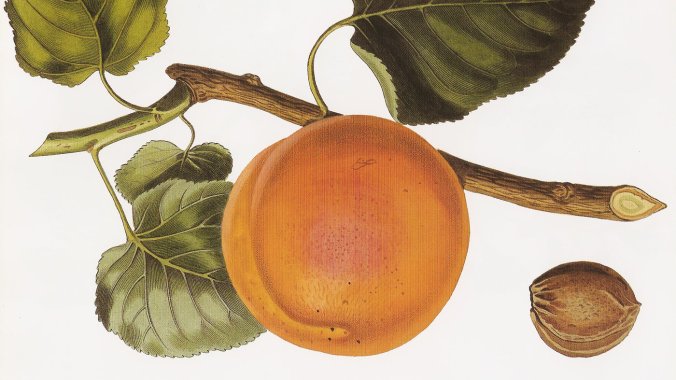
apricotbotanicalprint1_wide-a63e26cd892d8827bb5ef848d5ee69f1298599ee-s1400-c85

The ‘Turkey’ apricot, a hand-coloured engraving after a drawing by Augusta Innes Withers (1792-1869), from the first volume of John Lindley’s Pomological Magazine (1827-1828). The Romans dubbed the apricot the “precious one.” Poets praised its beauty. The conquering Arabs took it to the Mideast, where the luxurious fruit was exploited in sugary confections. The Royal Horticultural Society Diary/Wikimedia Commons

Thanks to National Public Radio (USA) and the Salt folks:

‘Moon Of The Faith:’ A History Of The Apricot And Its Many Pleasures

The Romans dubbed it the “precious one.” Poets praised its beauty. The conquering Arabs took it to the Mideast, where the luxurious fruit was exploited in sugary confections.

Continue reading

Questions We Never Thought To Ask, But Should Have

celery_custom-f77a18ccad839316bdd9e4df3fd35f4d43fa662d-s1400-c85.jpg

Why did humans start cultivating celery? It’s low-calorie and, one might argue, low flavor. We asked some experts at the intersection of botany and anthropology to share their best guesses. Cora Niele/Getty Images

Thanks to good old Salt, the special feature at National Public Radio (USA):

FOOD FOR THOUGHT

Celery: Why?

by NATALIE JACEWICZ

Celery, the mild-mannered straight man of the vegetable world, packs a puny six calories per stalk and — in my opinion — about as much flavor as a desk lamp. Yet despite its limitations, the fibrous plant has featured in Mediterranean and East Asian civilizations for thousands of years. Continue reading

Farm-Table Symbiosis

09caviarpeas-web2-master675

Preparing tear peas at Nerua, a restaurant at the Guggenheim Museum in Bilbao. The peas are known as “green caviar” among Spain’s top chefs. Credit Samuel Aranda for The New York Times

Mr. Minder’s reporting from the field, in this case the rarified field of Michelin-starred chefs, reminds us that the foodie phenomenon (sometimes now bordering on annoyingly precious, and risking the celebrity-worshipping tendencies that will ruin all good fun) is spreading good old fashioned common sense practices far and wide:

Top Chefs and Local Farmers in Spain Regenerate Their ‘Green Caviar’

ARRIETA, Spain — Making his way down a row of pea plants, Iker Villasana Hernaez, a Basque farmer, leans down to feel each pod individually before deciding whether it is ready to pick.

If the peas inside feel slightly hard, “best to leave it for one more day,” he said. “It’s really all about the perfect timing.” Continue reading

Invisible, With Clear Vision

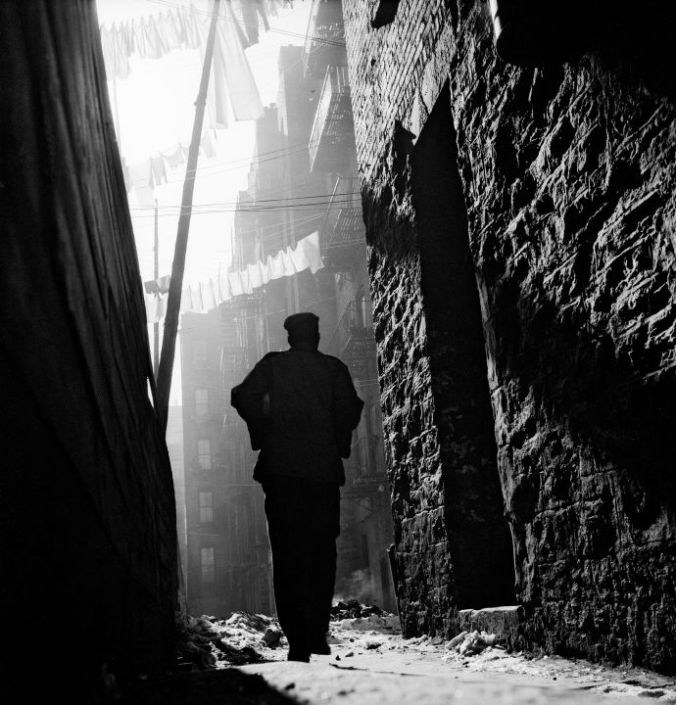
242_Parks-690

A forgotten portfolio, back for our viewing and reading pleasure a book offering the photography and writing of two giants, briefly reviewed here:

RALPH ELLISON AND GORDON PARKS’S JOINT HARLEM VISION

In the summer of 1947, editors from the short-lived magazine ’47, known since its shuttering in 1948 as The Magazine of the Year, contacted Ralph Ellison—then in the thick of his seven-year labor to complete “Invisible Man”—with an idea for a photo essay on the Lafargue Psychiatric Clinic in Harlem. Established a year earlier with help from Richard Wright, the clinic had become famous for its stance against segregation, not only in the clientele it served but also, perhaps more remarkably, in its all-volunteer staff. Ellison was excited by the prospect, and, after enlisting the photographer Gordon Parks—an acquaintance from Harlem artistic and intellectual circles—he accepted the assignment, though the magazine would go out of business before the photo essay could be published. Continue reading

Fourth Estate Considerations

the_fourth_estateWhen we started this exercise, aka blogging, we wanted to keep a running tab of “things” we care about as they showed up in various news sources, and to comment on those topics as often as we could share relevant examples from our own daily activities. Community, collaboration and conservation have been the catch-all topical themes.

Depending on the news for this exercise, not surprisingly we care about the state of the news in all its business/profession dimensions. We have a particular fondness for long form written journalism, and a particular loathing for its polar opposite, whatever that might be called. Gossip-mongering, ugh. So when I first saw headlines announcing that a gossip-mongerer had suffered a legal defeat last week, I smiled at the headline but could not otherwise be bothered to read the details. That changed dramatically when I read the short item below:

How Peter Thiel’s Gawker Battle Could Open a War Against the Press

BY NICHOLAS LEMANN

Probably the most important case in American press law is New York Times Co. v. Sullivan (1964), in which the Supreme Court, in a unanimous decision, made it just about impossible for a “public figure” to win a lawsuit against a news organization. Justice William Brennan, in the majority opinion, wrote, “The constitutional guarantees require, we think, a Federal rule that prohibits a public offi­cial from recovering damages for a defamatory falsehood re­lating to his official conduct unless he proves that the state­ment was made with ‘actual malice’—that is, with knowl­edge that it was false or with reckless disregard of whether it was false or not.” This standard, built on in succeeding cases, made this the country with the most pro-free expression, and specifically pro-press, laws in the developed world; post-Sullivan protections extend from publications to individuals, and from libel to invasion of privacy. “Libel tourism” means looking for a pretext to sue an American publication in England or some other friendlier venue, especially if you’re a celebrity. Conversely, the purveyors of recent monster revelations, like Wikileaks, have taken pains to find American publishing partners, because the right to publish is far more substantial here than elsewhere. Continue reading