Pre-Colonization Food

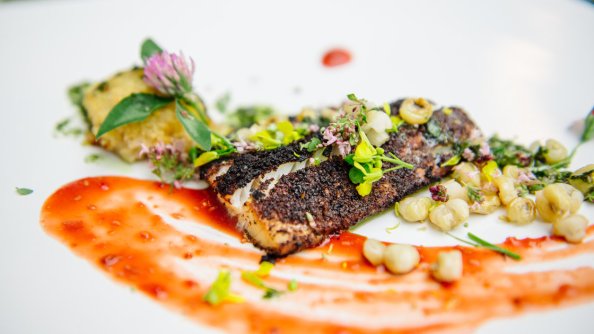
Sean Sherman’s Walleye filet with sumac and maple sugar, a white bean and smoked walleye croquette and toasted hominy; Becca Dilley/Courtesy of Heavytable.com

As we fine tune the concept of Malabar Soul Food at 51 we’re always on the lookout for other stories of cultural culinary crossovers. This is especially relevant with chefs who are pushing culinary limits by reaching back to early foodways like Sean Sherman, a member of the Oglala Lakota tribe. Mr. Sherman’s life is in the kitchen, but a great deal of his energies go into discovering the pre-colonization foods of his Great Plains ancestors. Thanks once again to NPR and the Salt for sharing this story.

Sherman, who calls himself the Sioux Chef, grew up on the Pine Ridge Indian Reservation in South Dakota. It’s where he first started to learn about the traditional foods of the Plains, whether it was hunting animals like pronghorn antelope and grouse, or picking chokecherries for wojapi, a berry soup.

“We were close to the Badlands and its sand hills, which is not the best growing area by far,” says Sherman, who’s now 40. “But we would also spend weeks in the Black Hills, crawling around and learning stuff.”

Sherman’s grandfather was among the first Native American children to go to mission schools on the reservation, and he was one of Sherman’s first teachers. Continue reading
If You Happen To Be In Big Sur (But You Don’t Have to Be…)

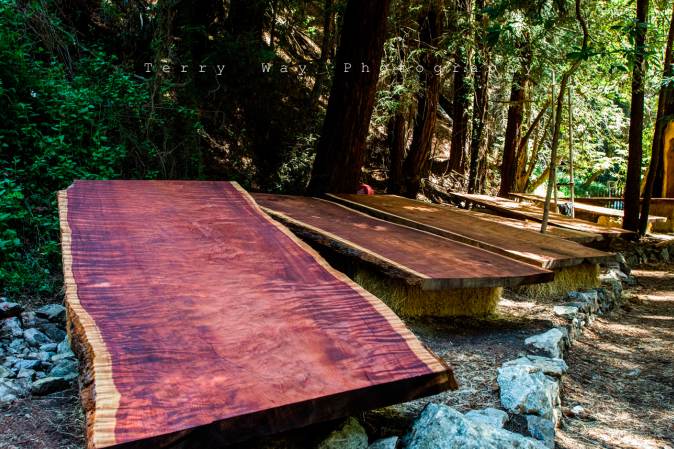
Big Sur fallen redwood auction: Proceeds benefit the Henry Miller Memorial Libarary

Big Sur fallen redwood auction: Proceeds benefit the Henry Miller Memorial Libarary

Although we’d never wish damage to a tree of this age and history we’re happy to hear that the rare and beautiful wood will help a cause near and dear to our hearts.

Profits generated from the redwood auction will be used for the following purposes:

Upgrading the Library to meet State and Federal regulatory requirements. This includes a water-treatment system, ADA compliant bathrooms, upgraded septic system, and more. Bringing the Library into compliance will ensure the Library can remain operational while also providing exceptional programming, including our acclaimed short film screening series,workshops, audio series, etc. This will require paying for building and maintaining a water system as well as paying related legal and administrative fees. Continue reading

Thinking Of Greece, 2014 And Beyond

This slideshow requires JavaScript.


Of all the links we have provided in recent years to stories in varied media, on various topics, this one surprises and delights us more than most.  The photos here may speak to anyone who has been in Greece and seen musicians play in out of the way places, those who keep traditions alive for the sake of the music and its cultural import.

Several La Paz Group contributors have heritage in Greece, in particular to one of the great folk music conservationists. Two La Paz Group scouts were in Greece this month investigating opportunities to collaborate, and this story captures more than one among many reasons why we expect to be operational in Greece in 2015:

Hunting for the Source of the World’s Most Beguiling Folk Music

Continue reading

Onam Redux

This slideshow requires JavaScript.

The most spectacular event of all Kerala festivals, Onam epitomises a new found vigour and enthusiasm about everything. The festival celebrates the return of King Mahabali, who is said to visit his subjects each year. To convince their beloved King that Kerala continues to be prosperous land of milk and honey people decorate their homes and celebrate to the fullest sometimes even faking prosperity to present a happy and flourishing facade to their King. Continue reading

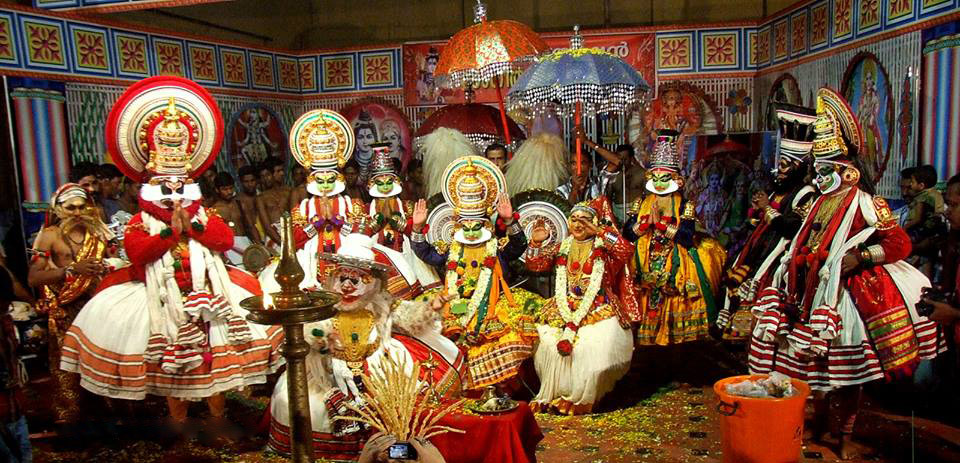
South Indian Music at the Kathakali Culture Center

I had the pleasure of listening to classical South Indian music the other night with a guest I happened to connect with at the 51 restaurant in Spice Harbour. We went to the oldest remaining theater in Fort Cochin for Kathakali, which is a traditional art form of Kerala that originated in the early 17th century. In this theater, they have famous Kathakali dance as well as classical music, meditation, and yoga. Even though we just went for the music, I got to learn a little bit more about the dance.

kathakali2

The made-up face of the Kathakali dancers is ubiquitous around Kerala. To do the make up takes at least one hour.

In Malayalam, ‘Katha’ means story and ‘Kali’ means play. I didn’t see the traditional Kathakali dance but from what I learned the dance has a storyline that is acted out through mime and drama. The stories are mostly based on Hindu mythology.

The instruments that we listened to were flute, mridangam, and kanjira. Mridangam and kanjira are drums. There was also a drone playing from an electronic shruti box.

The music put me into a dreamy state of mind. As I was listening I found my mind drifting back to all my music theory classes to help me wrap my mind around what I was listening to.  In the beginning they told us the ragas were in 8 count rhythm. Our minds can easily predict phrases that fit within a 4 count rhythm, so I wondered what made an 8 count so different. Then I realized the emphasis was on the 5th and 7th count which was pretty cool and made me understand why the phrasing was so unpredictable. Something about the syncopated rhythm and the ambiance sent me into a theta state of deep relaxation.

I was grateful to spontaneously meet that friend and get to experience that traditional aspect of Kerala culture!


Technology Aids Access Of Classicists To Classics

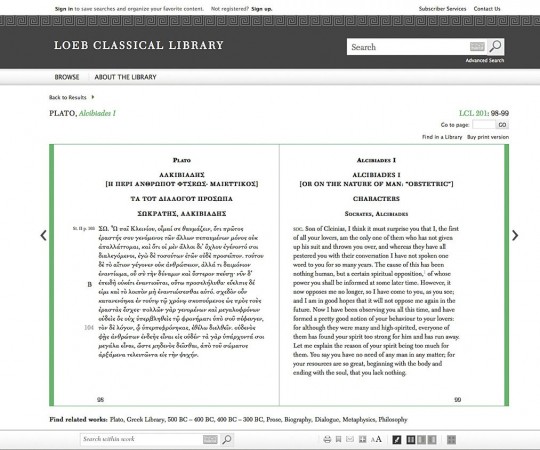
The Loeb classics, newly available online

The Loeb classics, newly available online

We do not know whether James has made his way to the library yet, but we imagine there are classical treasures in the vaults at Harvard University that can only be appreciated in person. But a scholar’s best friend will likely, increasingly be technology like this:

WHEN JAMES LOEB designed his soon-to-be-launched series of Greek and Roman texts at the turn of the twentieth century, he envisioned the production of volumes that could easily fit in readers’ coat pockets. A century later, that compact format is still one of the collection’s hallmarks. Beginning in September, however, the iconic books will be far handier than Loeb had hoped: users of the Loeb Classical Library (LCL) will have the entire collection at their fingertips. After five years of dedicated work on the part of the library’s trustees and Harvard University Press (HUP), which has overseen LCL since its creator’s death in 1933, the more than 520 volumes of literature that make up the series will be accessible online. Besides allowing users to browse the digitized volumes, which retain the unique side-by-side view of the original text and its English translation, the Digital Loeb Classical Library will enable readers to search for words and phrases across the entire corpus, to annotate content, to share notes and reading lists with others, and to create their own libraries using personal workspaces.  Continue reading

Our Daily Bread, Please

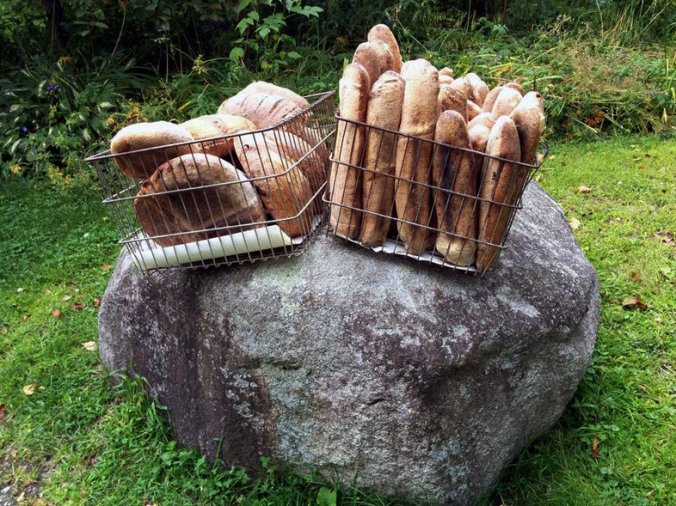
Rabin bread on a rock at the farmers market in Plainfield prior to setting up the table. Jon Kalish for NPR

Rabin bread on a rock at the farmers market in Plainfield prior to setting up the table. Jon Kalish for NPR

Where can we find the stones, here in Kerala, to build the oven to bake the bread to allow the reincarnation of this labor of love when the oven man and his wife of great heart from Vermont stop baking? We will find out. We will surely let you know. Meanwhile listen to and/or read this story, thanks to National Public Radio (USA):

When Jules Rabin lost his job teaching anthropology in 1977, he and his wife, Helen, turned to baking to keep their family afloat. For 37 years they’ve baked sourdough bread that people in central Vermont can’t seem to live without.

The year before Jules left Goddard College, he and Helen built a replica of a 19th century peasant oven, hauling 70 tons of fieldstone from nearby fields. The stones covered an igloo-shaped brick baking chamber 5 1/2 feet in diameter. Continue reading

Humans of New York: The power of documentation

10575445_746153385458764_7383111873998406356_o

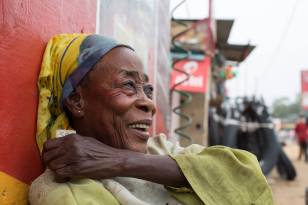
She said she’d let me take her photo if I bought some peanuts from her. Afterward, I asked if she could remember the saddest moment of her life. She laughed, and said: “You’re going to need to buy some more peanuts.” (Kasangulu, Democratic Republic of Congo) Photo Credit: Brandon Stanton

This article from the New York Times describes the recent social media phenomenon- Brandon Stanton’s Humans of New York site and facebook page. At first he was just making portraits of strangers in New York City after losing his job as a bond trader. Then it evolved into interviewing the people about their lives and using them as captions to the photos. Now, he has been commissioned by the United Nations to do a 50-day world tour doing the same thing, but in some of the areas of the world with “the most extreme headlines coming out” to document life on the streets there.  The purpose of the tour is to raise awareness for the UN Millenium Development Goals and to inspire a more global perspective.

I have been a part of the 9.2 million people following him on facebook and just watching the exponential rise in followers since this UN tour has been quite incredible. There has been overwhelming support for his work. Thousands of people writing extensive comments reflecting on how the portraits capture what’s happening in the world. I’ve noticed a lot of heartfelt dialogue inspired by his work in the comments. Continue reading

Say It Ain’t So, Ferran!

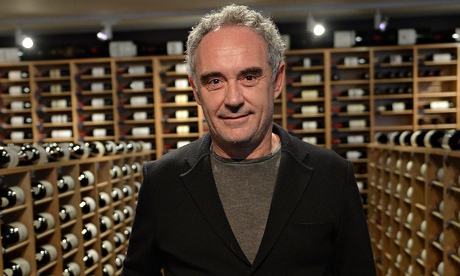
Ferran Adrià, of the award-winning restaurant elBulli. Photograph: Emmanuel Dunand/AFP/Getty Images

Ferran Adrià, of the award-winning restaurant elBulli. Photograph: Emmanuel Dunand/AFP/Getty Images

The quote from a group supporting the development of a museum on a protected coastal ecosystem–“We understand that it’s very easy to raise the populist flag in defence of the environment and that this always manages to attract a good number of supporters,”–says all you need to know to understand how important this issue is. In fact, it is not so easy. It is not easy at all to protect the last remaining unspoiled beaches in the world. We are sure that with a bit of publicity, the right outcome will prevail in this case:

When Ferran Adrià shut the doors of his elBulli restaurant in 2011, he quickly reassured gastronomes that it was not closing for good, just for a revamp. ElBulli would become a cultural foundation , complete with museum and visitor centre called elBulli 1846, all to reopen on an expanded plot in 2015.

Foodies may have been reassured, but not so environmentalists, who are furious that the expanded elBulli will eat up more space on the Cala Montjoi, one of Spain‘s few protected Mediterranean beaches. Continue reading

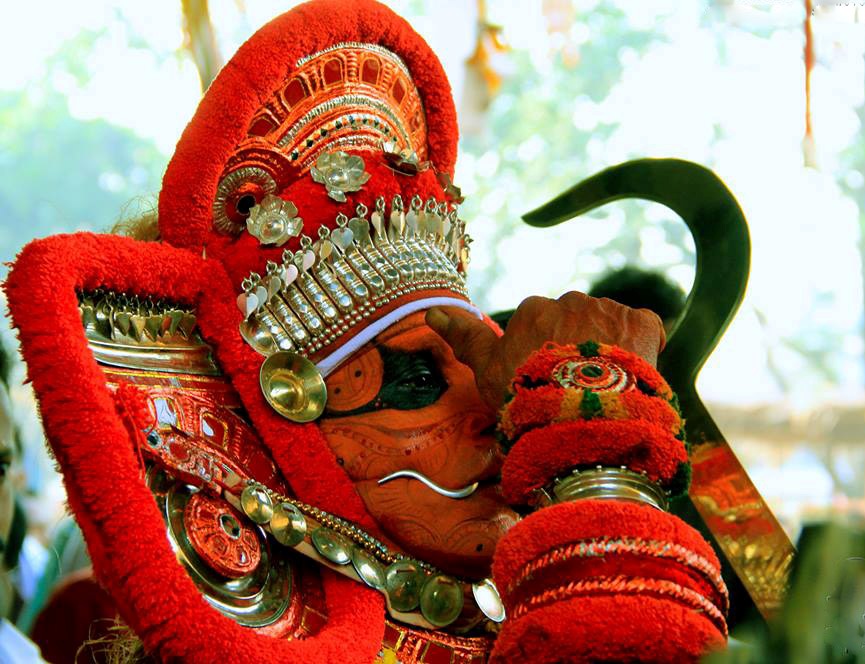
Festival Of The Gods – Theyyam

Photo credits : Shymon G

Photo credits: Shymon G

Theyyam is one of the most popular ritualistic dances of Kerala. It is a devotional performance with a surrealistic representation of the divine. Almost every village in Kerala has its own temple with an annual festival. So there’s always a local festival happening somewhere or the other, each with its own special flavour. Continue reading

Al Fresco Meals Across Time and Space

This slideshow requires JavaScript.

Long after humans made living indoors commonplace we still carry the strong desire to commune with nature in one way or another. Whether through gardening or exploration, we crave being outdoors, and that often has meant bringing our meals with us.

The origin of the word “picnic” is unclear. It first appeared in an English dictionary in 1748, and it probably derived from the French pique-nique.

A 17th-century French pique-nique may have been what we now think of as a potluck. In the 18th century, its American counterpart may have been more like a salon gathering. By the 19th century, though, it had become common for Americans to hold these events outside. Continue reading

River Blossoms

This slideshow requires JavaScript.

India’s famous flower markets are testiment to the people and culture’s strong identification with flowers in all aspects of their daily lives, both sacred and secular. Flowers are found in food and drinks, and as part of all the rights of passage of daily life, from birth to death and everything in between.

Although I’ve never been to Calcutta, I’ve read about the flamboyantly colorful Mallick Ghat Flower Market along the banks of the Hooghly River. Danish photographer Ken Hermann captures the proud men who make their living as Calcutta’s flower sellers.

‘I first went to the flower market during a visit to Calcutta three or four years ago and have wanted to do something on it ever since,’ explains Copenhagen-based Hermann.

‘It’s a beautiful and, at the same time, very stressful place but I was fascinated with it – and the flower sellers in particular. I really like the way they carry their flowers,’ he continues.

‘Sometimes it almost looks like they are wearing big flower dresses. I like that you see these strong and masculine men handling the flowers with so much care as if they were precious jewels.’

Hermann, whose work usually takes him into the grimier side of Indian life, was also enchanted by the flowers themselves, even if there were a few that he wasn’t allowed to photograph.

‘There are a lot of superstitions and religious belief in flowers in India,’ he explains. ‘I wasn’t allowed to photograph some of them because they were considered to be holy flowers and they would lose their power if I had.’ Continue reading

Temple Dance – Kerala

Photo Credits : Ramesh Kidangoor

Photo Credits: Ramesh Kidangoor

Kerala temples offer a veritable array of performing arts, often related to religious rituals and and mythological stories. The rhythm and elegance of the temple dances of Kerala are a result of  the various cultural influences that took place in the state. The dramatic costumes, vibrant colors, and throbbing music all make watching temple dances an unforgettable experience. Continue reading

Reflecting: Half-a-World Away

Cardamom Siesta

Cardamom Siesta

Five months have elapsed since my departure from Cardamom County and Raxa Collective in Kerala — sufficient time, in my opinion, to think back on my experience and growth during my adventures there, as well as the time I have spent back in the United States.

Words cannot express how thankful I am for having been given the opportunity to travel farther and live longer away from home than I ever have before, and in a truly amazing, diverse, and different region of the world than I could ever imagine.  The head honchos, Crist and Amie Inman, have an ethos rooted deeply in progressive ecological conservation that is truly admirable, and for the area they are established, borderline revolutionary.

Continue reading

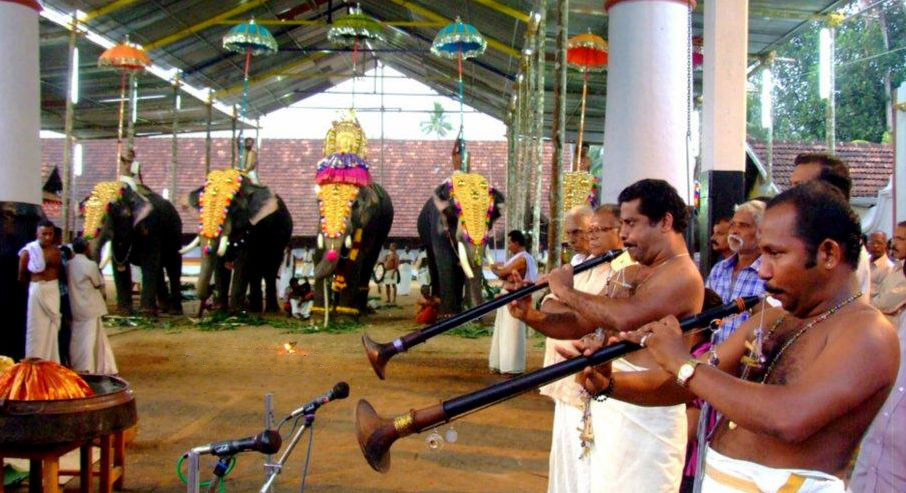
Melodious Rhythms of India: the Nadaswaram

Photo credits : Ramesh Kidangoor

Photo credits: Ramesh Kidangoor

Kerala lays claim to a wide range of native musical instruments, which all together play host to a great range of unique sounds and melodies. The nadaswaram is a wooden-body pipe about two and a half feet long. This double-reed wind instrument is typically played during temple rituals and processions, weddings, and other celebrations. The nadaswaram is thought to achieve the peak of its acoustic quality in open environments where the sounds can resonate outwards, which is why it has evolved into a procession instrument. Continue reading

Visiting Madurai Meenakshi Amman Temple

madurai_temples

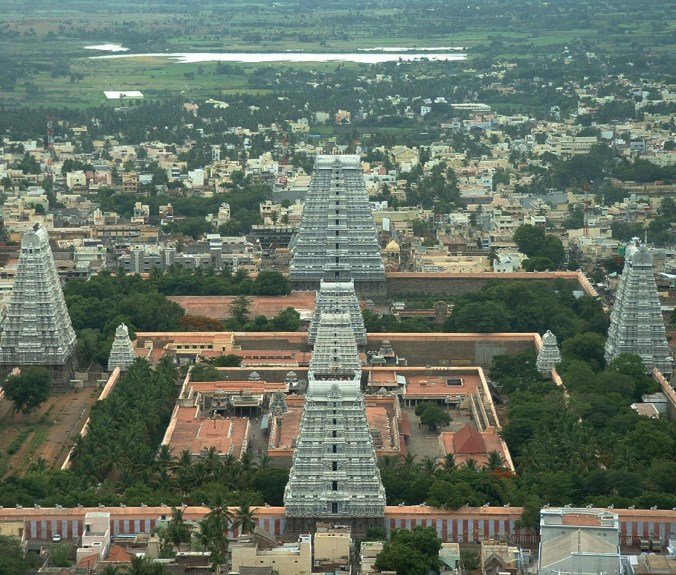
Upon visiting the Meenakshi Temple, I removed my shoes, checked my bag at the door and proceeded my barefoot adventure through the eastern tower of the temple city. Maduri is known as temple city because of how vast the Meenakshi temple is. There are 12 towers, the four larger ones face each of the directions North, East, South, and West. We explored the 1000 pillar hall, the holy pond, and many other parts of the ancient temple.  It seemed like every corridor and wall had some sort of sacred art or story to it. The history of the temple is as vast as temple city itself. The temple dates back at least 2500 years. In 1310, the temple was almost completely destroyed by an Islamic conqueror and so many of the important sculptures were destroyed. It was restored in the 14th century though by Hindu kings who regained power.

Continue reading

The Ritual of Karkidakam Vavu bali


Photo credits : Remash Kidangoor

Photo credit: Remash Kidangoor

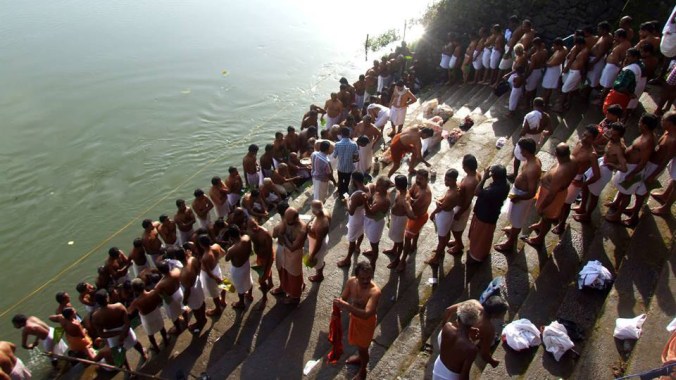
Karkidakam is the last month of Malayalam calendar, a calendar of significance for Hindus living in Kerala. On the eve of the new moon in Karkidakam–two days ago, July 26th–Keralite Hindus gather on the beaches and river banks to pay obeisance to their ancestors by performing the bali tharpanam ritual. This day is known as Karkidakam Vavu. Keralite Hindus believe that the souls of their ancestors attain liberation by the ritual pujas (prayers) and bathing on this day. Continue reading

Ganesha Puja at the Elephant Junction

IMG_0113

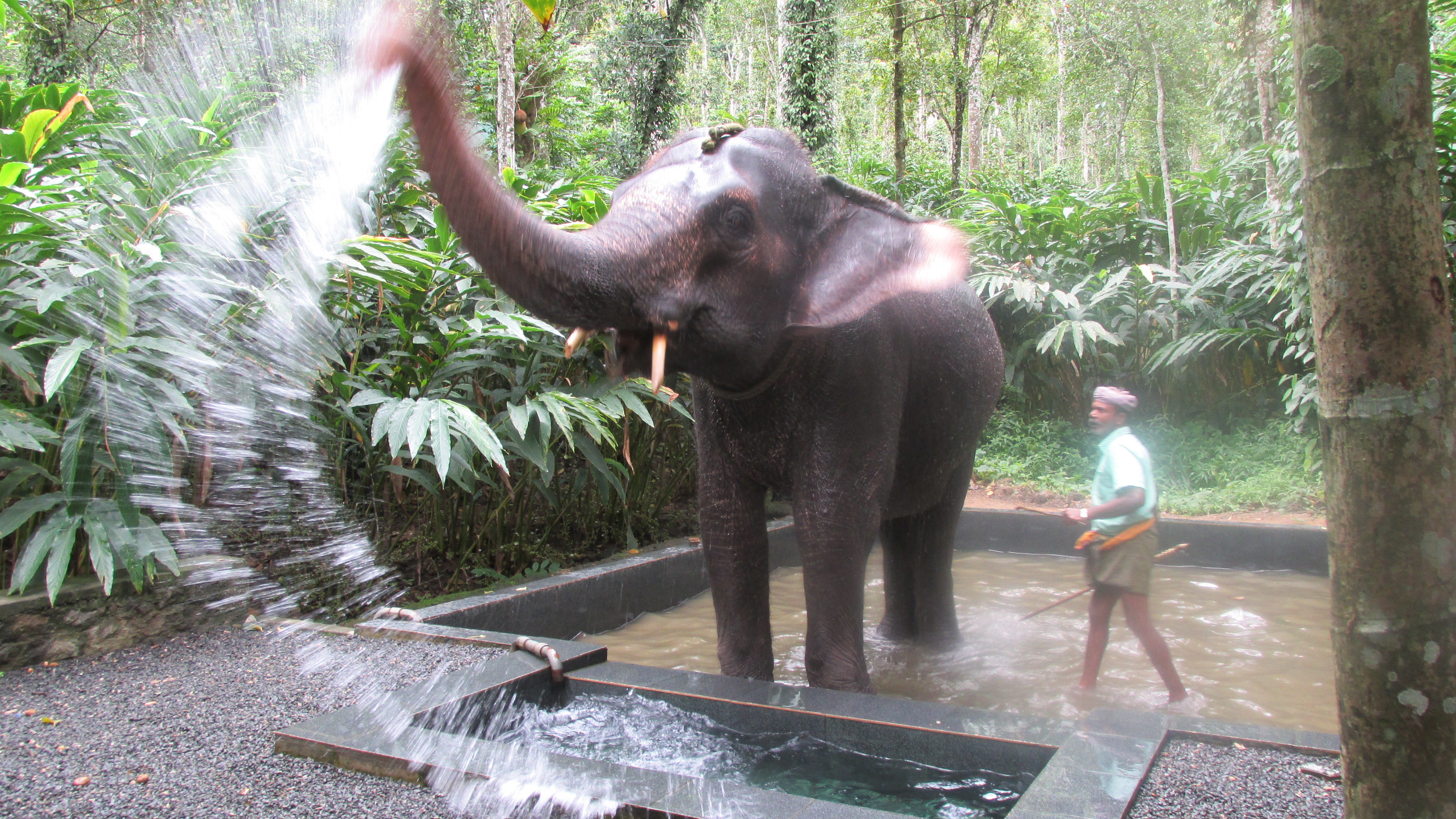
I felt so grateful to be a witness to this beautiful ceremony today. In Hinduism, puja is an offering ritual. The purpose was to bless ancestors and future generations. The puja was for Lord Ganesha to help remove obstacles. The occasion today was a special new moon that is very good for this particular puja. It was especially sacred because there were elephants there that participated in the ceremony. It was about four hours long. It was truly amazing to watch. I felt inspired to learn more about Hinduism afterwards.

IMG_0067


Continue reading

Classical Dance

Photo credits ; Ramesh Kidangoor

Photo credits: Ramesh Kidangoor

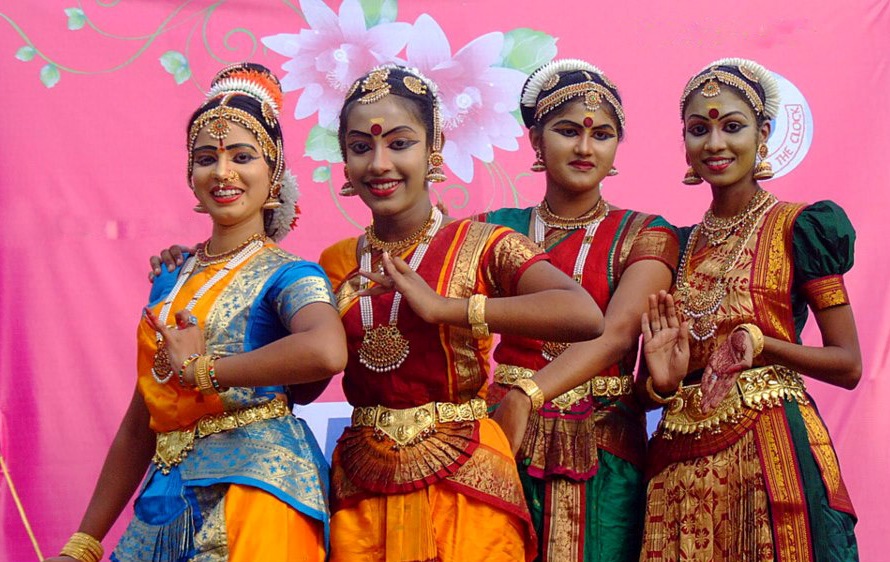
Classical dance forms in South India have accumulated from ancient customs that were closely linked to day-to-day life and culture of native peoples. The region around Kerala has thousands of years of tradition in fine arts and classical and folk dances. Continue reading

Humanity’s Diet Makes A Difference, Historically As Well As Futuristically

On the timescale of evolutionary history, paleo enthusiasts note, agriculture is a fad. Credit Illustration by Mike Ellis.

On the timescale of evolutionary history, paleo enthusiasts note, agriculture is a fad. Credit Illustration by Mike Ellis.

Since the early days of this blog we have been hungry consumers of environmental long form journalism, of which Elizabeth Kolbert’s New Yorker chronicles are best-in-category. They are also, frankly, almost always depressing.

Nonetheless, they put humanity into its natural context. This not-at-all-depressing chronicle demonstrates the value of that contextualization well:

The first day I put my family on a Paleolithic diet, I made my kids fried eggs and sausage for breakfast. If they were still hungry, I told them, they could help themselves to more sausage, but they were not allowed to grab a slice of bread, or toast an English muffin, or pour themselves a bowl of cereal.

Continue reading