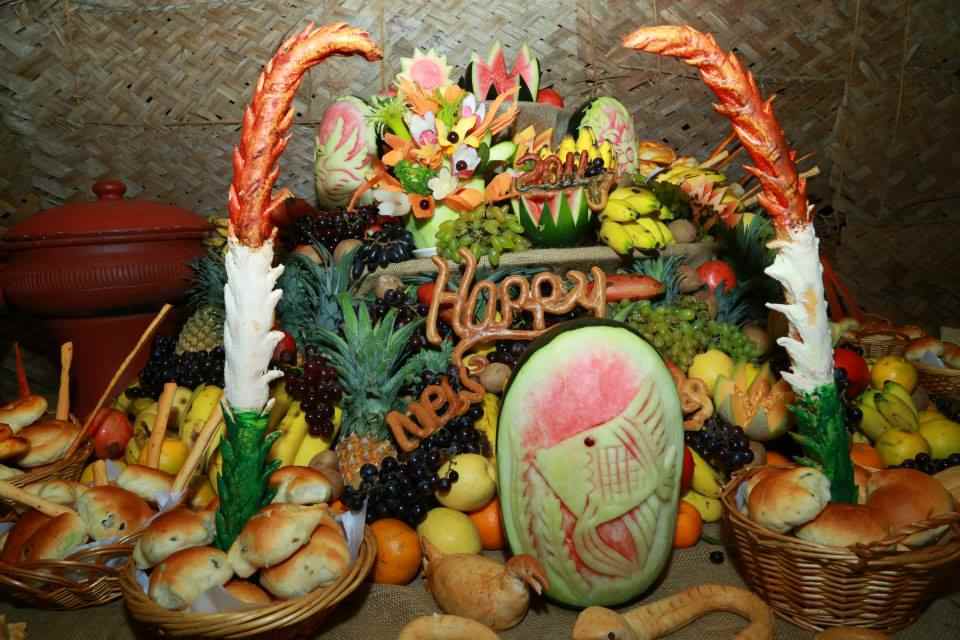
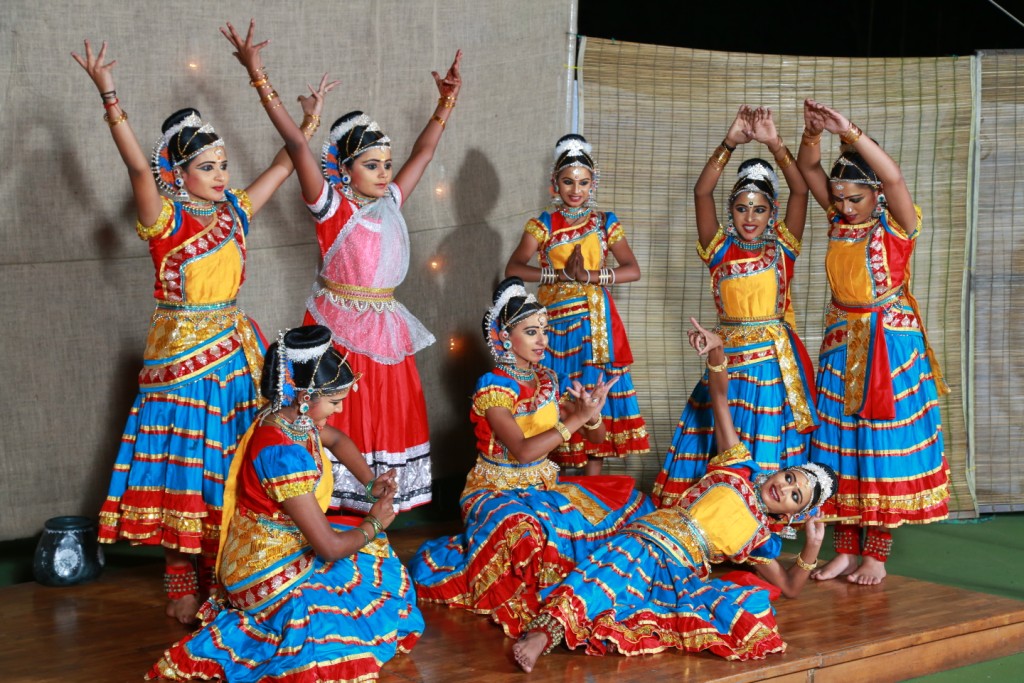
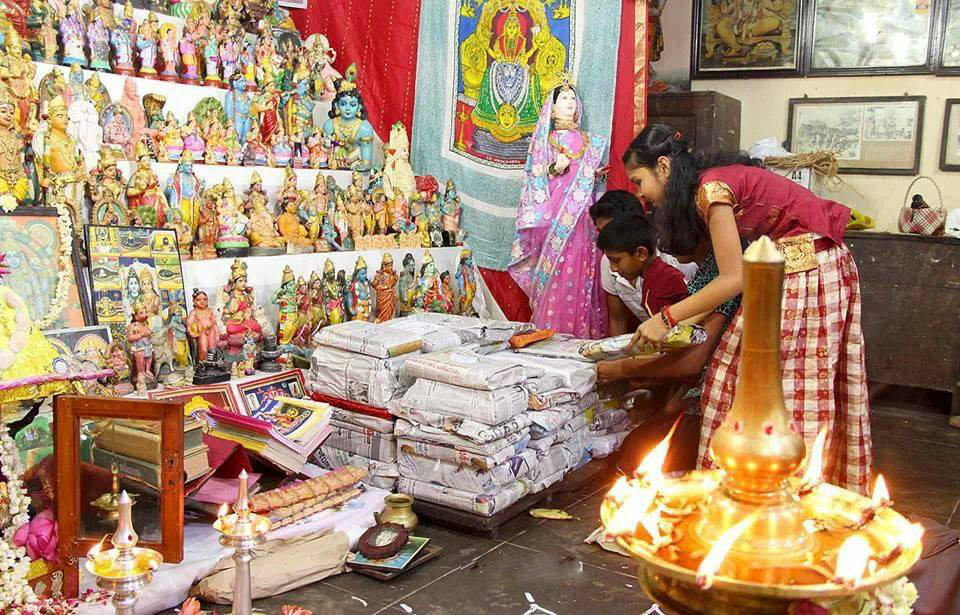
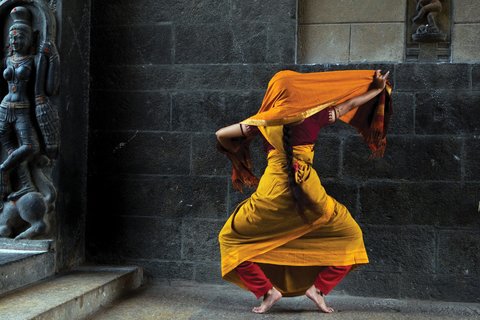
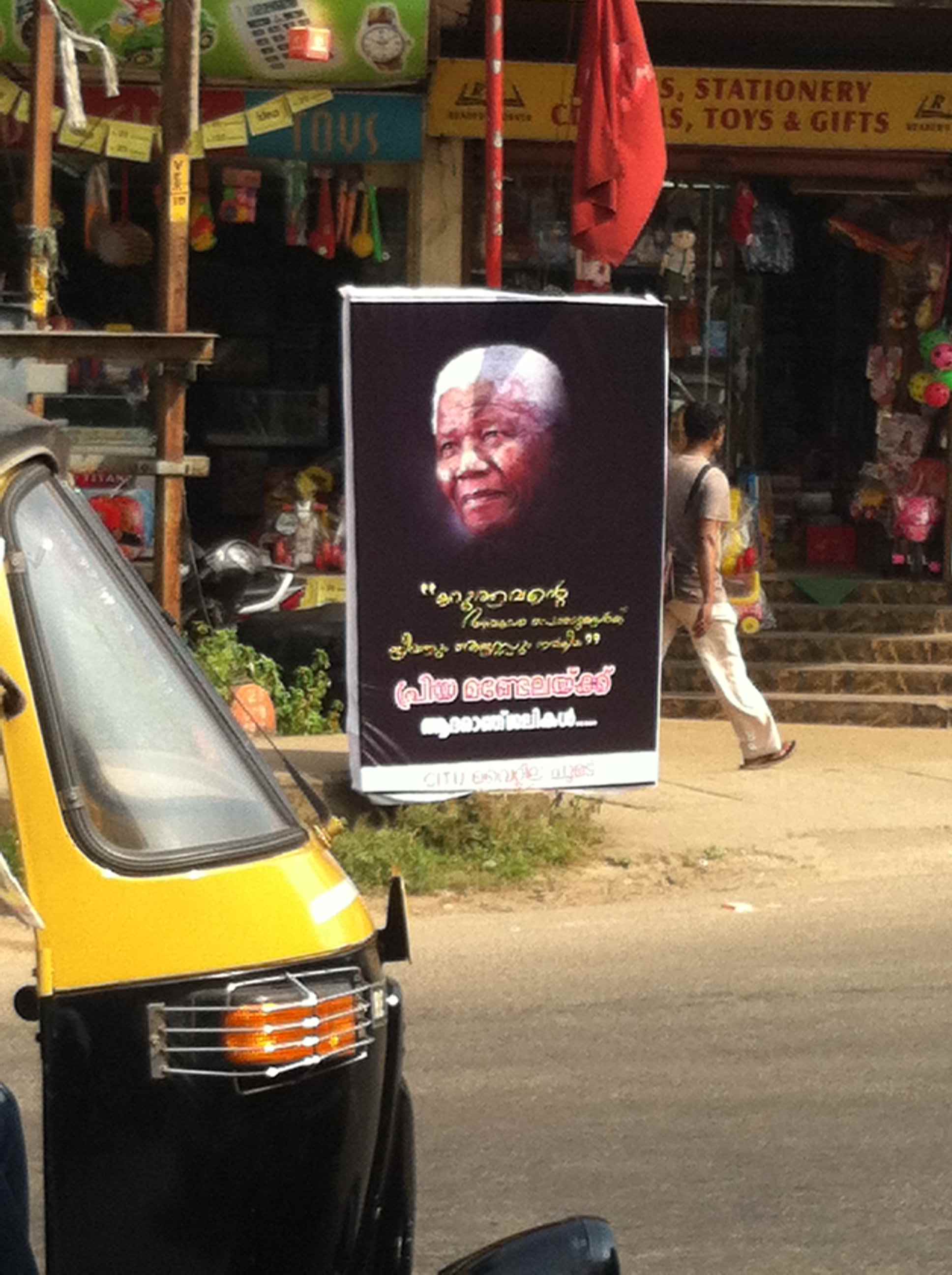
Kavadi Aatam is a religious dance offered to Lord Muruga during a pilgrimage, made mainly by men, which originated in Tamil Nadu. It is a colorful (as you can see in the photos) ritual dance widely prevalent in the Subramanya Temples in Kerala and Tamil Nadu during the festival season. The Kavadi, which are set on top of the dancers, can reach 10-15 feet high, and when the dancers twist and spin in a row it creates a quite beautiful effect.
Culture
New Year and New Beginnings, 2014
New Year’s Eve is a time of new beginnings.We believe in celebrating with all our guests all the achievements and learning of the previous year along with the joy of stepping into a new year with new expectations and beliefs and hope for new opportunities. We welcome our guests in the traditional Indian way with a small performance followed by aarthi and tikka and blessings from an elephant who represents the elephant headed god Ganesha, the god of beginnings. Continue reading
The Shifting Sands Of Relevance
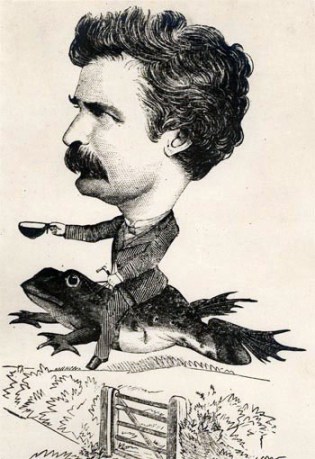
An essay published today in Lapham’s Quarterly reminds us of one man’s contribution to the travel writing genre in a previous century, in comic form but with clear hints at important cultural issues related to travel. The main theme of the essay, which is that not all writing important at a given moment in time travels well over time, is a humbling one considering the writer who is the subject of the essay:
On November 18, 1865, the New York Saturday Press published a short sketch called “Jim Smiley and His Jumping Frog” about a frog-jumping contest in rural California. It “set all New York in a roar,” reported one journalist, and soon went viral, reprinted in papers from San Francisco to Memphis. The story’s author was Mark Twain, the pseudonym of a twenty-nine-year-old writer born Samuel Clemens. At the time, Twain was living in California, enjoying provincial renown as a Western humorist. The success of “Jim Smiley” made him nationally famous. “No reputation was ever more rapidly won,” observed theNew York Tribune. Continue reading
Channel 13, Tens Of Millions Of Community Beneficiaries, And One Man’s Contribution
We recently mentioned how we rarely get to link to Hertzberg written commentary, and here is one more of those rare opportunities. The man he writes about, unknown to any of us at Raxa Collective, was involved in the creation of an institution that several of us were deeply influenced by.
Channel 13, serving the New York City metropolitan area television community, started several Raxa Collective contributors (and many millions of our generation and subsequent generations) on Sesame Street as children in the 1970s, and well into adulthood we were still watching Channel 13’s excellent programming. But none of us remembers this particular show Hertzberg writes about.
Technology, including television, is neither good nor bad; it is how we use it that makes it one or the other or somewhere in between. Television today seems mostly to have abandoned its potential for good, but here was a man continuing to stick to its potential for good well into his 80s. Anyone so important to the history of Channel 13 is a community-building hero, even if it is otherwise difficult to associate television with heroism or community:
In the spring of 1954, my parents finally allowed themselves to bring a TV set into our home—a state-of-the-art DuMont, black and white, of course, with the aspect of an alien insect: spindly legs, pointy antennae, a body entirely dominated by a single bulging, bulbous eye. Reception was spotty: ghosts, chance of snow, iffy horizontal hold. But what a wondrous treat.
Mom and Pop maintained that they had bought the set for the Army-McCarthy hearings. I believed them. I still believe them. But even at our tender ages, my sister (age eight) and I (ten) were perceptive enough to notice that they had grown awfully tired of having to wangle invitations from people as their only access to Sid Caesar and Imogene Coca. Continue reading
Prayers
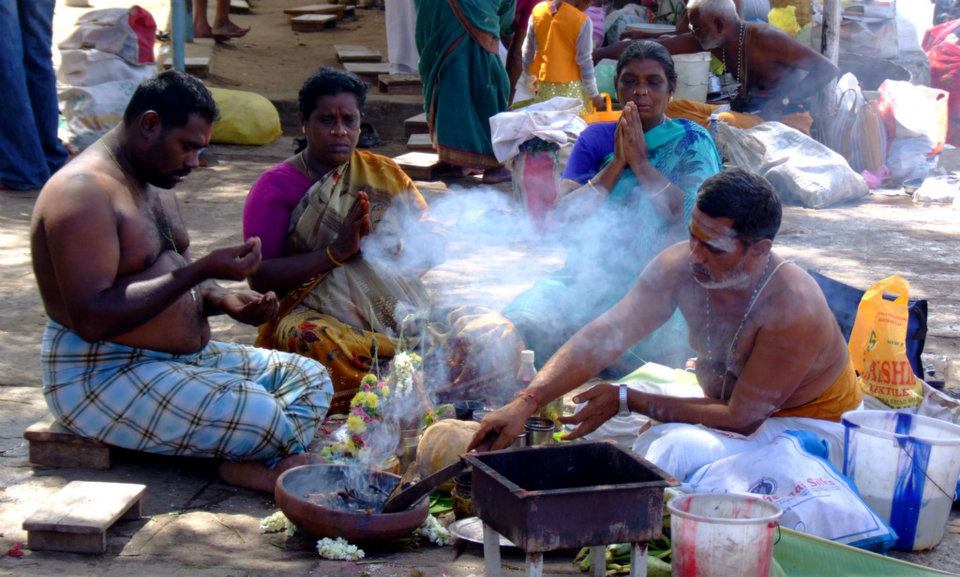
Worship is an integral part of every Indian’s life, especially Hindu’s. It starts from one’s early age with rituals performed during birth all the way to rituals performed upon one’s death. Worship rituals in Hindi are called ‘pooja‘ and are mostly performed by people who have dedicated their life to god. These individuals are called ‘pandits‘, and almost all pooja consists of a fire which is believed to be the path of offering, into which many things are burned as offerings. Continue reading
Dance and History
In India there are numerous classical dances and quite a few of them have originated from the state of Kerala. These dances are not only entertainment but rich in history into which mythological stories of centuries ago have been depicted. The artists pay tribute to the brave and the bold, and the battles that shaped our present way of life, culture and heritage. Continue reading
Theyyam
Theyyam is one of the most popular ritualistic dances of Kerala. Of the variety of performing arts, most have roots in folk tradition and are often related to religious rituals and mythological stories. Theyyam is a devotional performance with surrealistic representations of the divine. Continue reading
Then And There, Here And Now

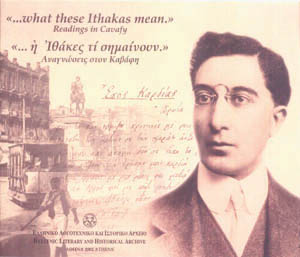
Orhan Pamuk says that “C. P. Cavafy makes no explicit reference to himself in his best and most stirring work; and yet, with every poem we read, we cannot help thinking of him.”
Does it take an Istanbulian to know one? Does it take a great writer to know one? You do not need to be a fan of poetry, nor of this particular poet, to appreciate the observations of one of the great observers of our time, with regard to living here and there but neither here nor there, and with regard to the idea of universality in art:
Cavafy was born in Alexandria, Egypt, in 1863, to a Greek family of wealthy drapers and cloth merchants. (The word kavaf, now forgotten even by Turks themselves, is Ottoman Turkish for a maker of Continue reading
What Part Of Sacred Is So Difficult To Understand?

Navajo activist Klee Benally chains himself to an excavator on the San Francisco Peaks, which he and 13 tribes consider sacred. Ethan Sing
We are encouraged to see more coverage of these important cultural-ethical issues:
The Paris auction of 27 sacred American-Indian items earlier this month marks just the latest in a series of conflicts between what tribes consider sacred and what western cultures think is fair game in the marketplace. Continue reading
India and Flowers
Flowers are an integral part of Indian festivals; people use them on a daily basis for offerings to their gods and goddesses at home. In India, people come door-to-door, similar to the way milk men make deliveries, and provide fresh flowers to every household — the large demand for floral offerings is catered to by the flower markets prominent in almost every major city in India. Continue reading
Ways of Worship
Hinduism employs many different gods, many of which represent aspects of the world or ideologies such as the Sun god, the god of prosperity, the wind god, etc. These various deities are depicted in the ancient scripts and are believed to be reborn in human form when the world is being exploited by evil in order to restore peace and harmony. Continue reading
Indian Art, The Business Side Of The Story
We would not know whether to say this news is welcome or not, but we thank India Ink for it nonetheless. On the one hand we have been inclined to disfavor the hyper-commercialization of art. On the other hand, it seems better to know that Indian artists are now getting their fair economic shake relative to Western artists:
Demonstrating the robust demand for Indian art, Christie’s first auction in India almost doubled its high estimate of $8 million to bring in $15.4 million, or 965.9 million rupees, selling nearly all the works on offer and breaking a number of records for Indian artists. Continue reading
Dance and Textiles – A Connection
It was mandatory in my family culture that young girls learn dance and music, the traditional dances like Bharathnatyam, Mohiniyattam and Kathakali, as well as Carnatic music. And I was inducted into a well known school of art to learn them.
The theory part included learning about the various dance formats, stories, and most importantly the costume. Continue reading
Tough Times’ Temptations
This was never a good idea for Spain. When we first read the horrifying news that Madrid was not only willing, but desperately vying, to become home to a megacasino and all the dark arts that accompany such a beast, we did not have the heart to share those reports. The ick factor hung like a cloud imagining it. In the last week, news broke that the whole deal had fallen through; here is a recap of the story’s perfect ending, from the New Yorker‘s website:
The puns practically wrote themselves, last week, when headlines announced that the billionaire casino magnate Sheldon Adelson had folded on a years-long bet to build a mega-casino in Spain. Dubbed EuroVegas, it was supposed to be Adelson’s foothold on the Continent: a thirty-billion-dollar venture, replete with twelve hotels, nine theatres, six casinos, and three golf courses.
A year earlier, Adelson had chosen Madrid as the sunny, temperate hub for his European incursion. He’s had a captive audience ever since. Presiding over a wobbly economy and an unemployment rate of around twenty-five per cent, the Spanish government was desperate for any large-scale investment, let alone one as immense as Adelson’s. The project’s gaudy name provoked derision, even revulsion, in some quarters in Spain. Continue reading
National Geographic Delivers
Once again, National Geographic delivers mesmerizing high definition captures of nature in its new film documentary “One Life;” always looking out for ways to demonstrate the awe-inspiring power present in the natural world, “One Life” is bursting with unbelievable slow motion shots and incredibly detailed images.
Masking Cultural History

(A man looks at an antique tribal mask, Tumas Crow Mother, circa 1860-1870, revered as a sacred ritual artifact by the Native American Hopi tribe in Arizona, displayed at the Drouot auction house ahead of its sale in Paris December 9, 2013. REUTERS/Christian Hartmann)
Reuters reports today on a remarkable act by a foundation to restore cultural artifacts, at long last, to their rightful place (click the image above to go to the source):
An American foundation bought nearly two dozen Native American artefacts and will return them to the Hopi tribe in Arizona, which had mounted legal challenges to their planned sale by a French auction house. Continue reading
A Different Kind Of Travelogue
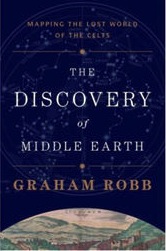
We are unabashedly in favor of reading, thinking and decision-making in advance of travel, during travel, and after travel. We are also in favor, when the fancy strikes, of just hitting the road without knowing why, where to, or for how long. On our pages you will find posts for either end of the spectrum from meticulously planned to wanderlust journeys. It is about discovery. So this book caught our attention. Nothing to do with hobbits, as reviewed by the Monitor (click the book image to the left to go to the source) it sounds like the perfect prelude, accompaniment or postscript for travel in a part of the world we have not been covering in our pages as much as we maybe should:
…In “The Discovery of Middle Earth,” Robb sets out to establish the momentous contributions made to the arts of cartography and communication by the once-great Celtic peoples, who at various points in history spread all the way from modern-day Turkey to Ireland. In the process, he consults old documents, interviews experts, examines artifacts, and bicycles more than 26,000 kilometers across France, taking his readers along with him… Continue reading
Culinary Flag-Waving
We’ve noted before how local cuisine helps to define local culture. From the regional to the national people are proud of their food ways.
We love these literal examples !