Holi, Incredibly Colorful India

This slideshow requires JavaScript.

For those of us non-Indians living in this colorful place, thanks to the Atlantic Monthly‘s decision to publish these photographs on its website.  That way, when we write home to family and friends, they will not have to just take our word for it.  The will see: India is incredible.


Kindi – Traditional Kerala Water Vessel

Kandi

Kindi

The Kindi is integral to all rituals and ceremonies in Kerala. The spouted vessel is made out of  bronze (odu), and is mainly used for Hindu’s Poojas. In Kerala each and every household keeps a kindi for special occasions. Continue reading

Gold Ornaments

Photo credits: Best Of Kerala

Photo credits: Best Of Kerala

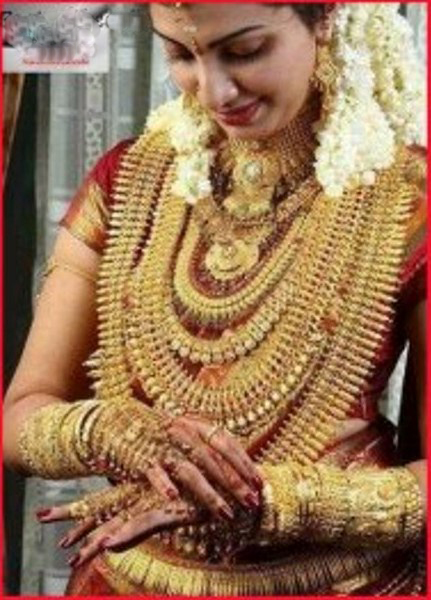
Throughout history the people of Kerala have had a special affinity for gold ornaments compared to people in other parts of India. Keralites love gold and the state is noted for a variety of gold designs made by traditional goldsmiths. Due to the influences of modern-day fashions the current trends are quite different. Continue reading

Flavours Of Kerala – Pickles

Photo credits: Ramesh Kidangoor

Photo credits: Ramesh Kidangoor

Pickles are an important part of Indian cuisine, especially in Kerala. There are numerous varieties of pickles, locally called achar, in Kerala’s traditional meals. Lime, Mango, Gooseberry, Carrot, Chili and Garlic are among the favorites. Several types of Achar are usually a must in Kerala’s Sadya meals served on the banana leaf during special occasions. Continue reading

Musical Crossovers

This slideshow requires JavaScript.

For some of us New Yorkers, it was a superb experience attending the India debut of Norah Jones in Mumbai recently.  The most recent installment of the India Ink series that mashes up images, themes and ideas related to the commonalities and differences between New York and Mumbai is a perfect complement to that recent musical outing: Continue reading

Communities of Learning, Science, And The Role Of Culture

A meeting of doctors at the university of Paris. From a medieval manuscript of “Chants Royaux”, Bibliothèque Nationale, Paris.

A meeting of doctors at the university of Paris. From a medieval manuscript of “Chants Royaux”, Bibliothèque Nationale, Paris.

Click on the image to the right to go to the source, an online publication we have consistently enjoyed so far:

The lone survivor of traditional Western European ‘scientific’ culture is science.

It has survived because it is now the handmaid of technology, without which contemporary civilization would collapse utterly. Anyone who doubts this should try to get a research grant for genuinely “pure” research.Today, in European cultures, and in other cultures that have borrowed it, science per se is strictly peripheral at best. It is not only inseparable from technology; it is all but completely divorced from philosophy. This is a far cry from the Middle Ages.

The centrality of science in all spheres of Western European culture was ensured when the crucial elements — all of them — were borrowed during the Crusades, more or less simultaneously, from Classical Arabic civilization. Continue reading

Dance Of Kerala – Mohiniattam

Photo credits:Ramesh Kidangoor

Photo credits: Ramesh Kidangoor

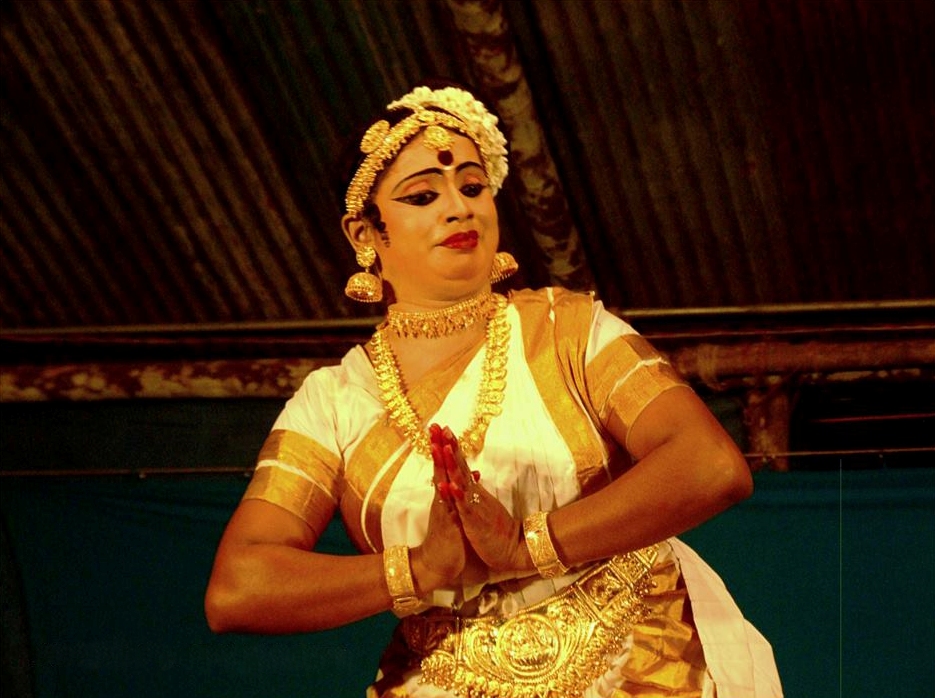
Mohiniattam is a gentle and graceful semi-classical dance form of Kerala. The orgins of this dance are traced to Dasiattam, the dance performed by women in temples as an offering to propitiate the Gods. The customary costume for Mohiniattam is a cream two-piece pleated sari with a wide gold border and traditional gold ornaments. The eyes are lined dramatically with kohl to enhance the dancer’s expressions. The hair is tied in a bun, placed at the side of the head and encircled by a string of fragrant jasmine flowers. Continue reading

Kochi’s Foodways Celebrated

Joan Nathan's Cochin Coriander-Cumin Chicken for Passover, adapted from Queenie Hallegua and Ofera Elias - cooked and styled by Andrew Scrivani  NYTCREDIT: Andrew Scrivani for The New York Times

Joan Nathan’s Cochin Coriander-Cumin Chicken for Passover, adapted from Queenie Hallegua and Ofera Elias – cooked and styled by Andrew Scrivani NYTCREDIT: Andrew Scrivani for The New York Times

We are always pleased to see Raxa Collective’s hometown in the news, but especially when the coverage focuses on cultural history in the part of town where we are developing a new property. Fort Kochi’s harbor area, including Bazaar Road where Spice Harbour (a waterfront hotel opening later this year, more on which in a future post) is located and where the spice trade is centered, completes the domestic route of the Malabar Coast’s spice trade. Spices are grown throughout the Western Ghats, they make their way down to sea level for transport in the coastal backwaters, and a large percentage end up on Bazaar Road where merchants, traders, godown (warehouse) keepers and others prepare them for shipment.  This has been the way of the spices for millennia, though Fort Kochi’s harbor has played its role in the spice route only in recent centuries. The New York Times writer Joan Nathan describes a culinary-religious heritage motivation for her visit here (minutes from our office location):

KOCHI, India — Dreaming of spices described in the Book of Kings, I came to this southern port city built in the 14th century to learn about its longstanding but tiny Jewish presence and its food, which some believe dates back to the time of the Bible. Continue reading

Kalpathy Ratholsavm – Chariot Festival

Photo credits:Ramesh Kidangoor

Photo credits: Ramesh Kidangoor

Kalpathy is an ancient Brahmin agraharam (village) situated in the heart of Kerala’s Palakkad district close to the Tamil Nadu border. Kalpathy Ratholsavm, The Chariot Festival, is based on vedic Tamil Brahmin culture. The main center of the festival is Kalpathi Sree Viswanatha Swami Temple. During the festival week the deity from Viswanatha Swami Temple is taken out and installed in the chariot and thousands of devotees drag the huge, intricately carved temple chariots bedecked with flowers, fruits and flags through the streets. Continue reading

Traditional Kerala Attire

Photo credits: Ramesh Kidangoor

Kasavu Mundu and Kasavu Neryathu are traditional handloom cotton fabrics with Kasavu (golden brocade) used for saris and as dress material by the Malayalee people. Woman elegantly wear the mundu (sarong type skirt) and neryathu (draped shoulder cloth) over a traditional sari blouse. Kerala men wear the mundu around the waist and the neryathu around the shoulders. Continue reading

Hindhu Festival – Maha Shivaratri

Photo credits: Ramesh Kidangoor

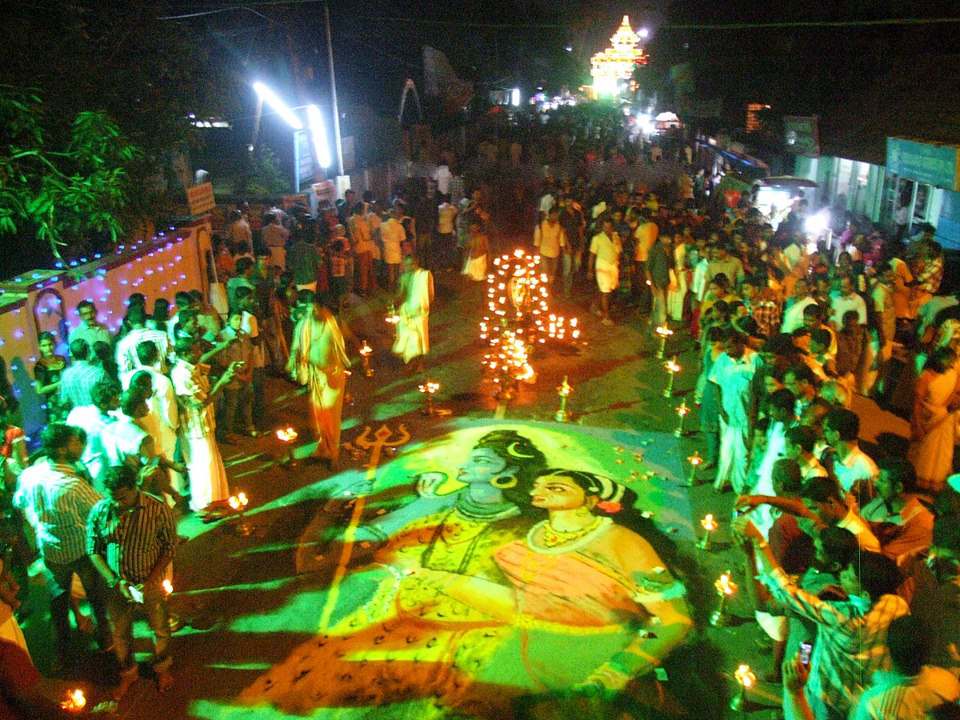
Maha Shivaratri means “the great night of Shiva”. Shiva- the name meaning auspicious- is one of the Hindu Trinity, comprised of Lord Brahma The Creator; Lord Vishnu The Preserver and Lord Shiva The Destroyer. This festival is said to commemorate the day on which Shiva protected the world by drinking a pot of poison that had the power to destroy the entire universe. Continue reading

Thookkuvilakku – Hanging Lamp

Photo credits: Ramesh Kidangoor

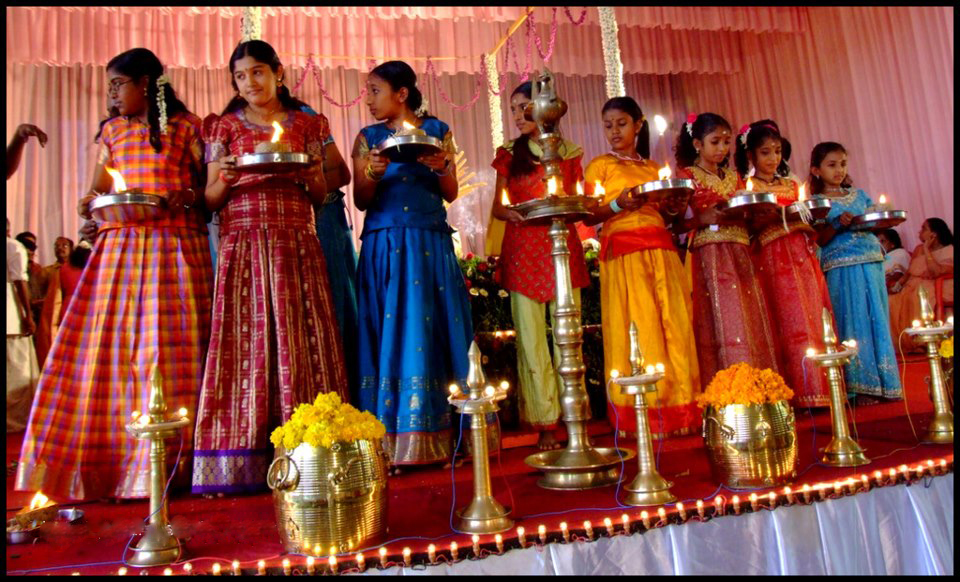
The Thookkuvilakku or traditional brass lamp, is an integral part of all rituals and ceremonies in Kerala and lighting the lamp on any occasions is believed to be auspicious. Bronze, popularly known as Odu in Kerala, is used for making all types of brass lamps. Continue reading

South Indian Open Markets

Photo credits: Ramesh Kidangoor

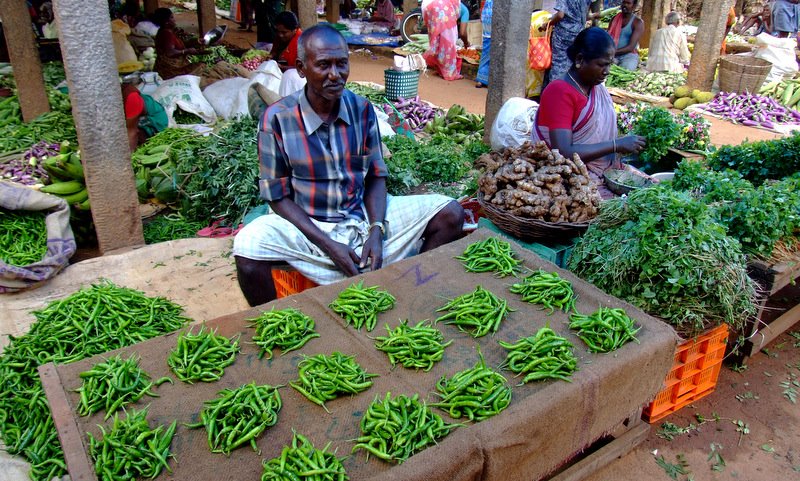
Vegetables and fruits typically constitute an essential part of the daily diet in India and they are in great demand year-round by most sections of the population. Open markets are very common in both small towns and cities of South India, where people buy and sell their fresh vegetables and fruits. Continue reading

Ottanthullal – Dance of Kerala

Photo credits: Ramesh Kidangoor

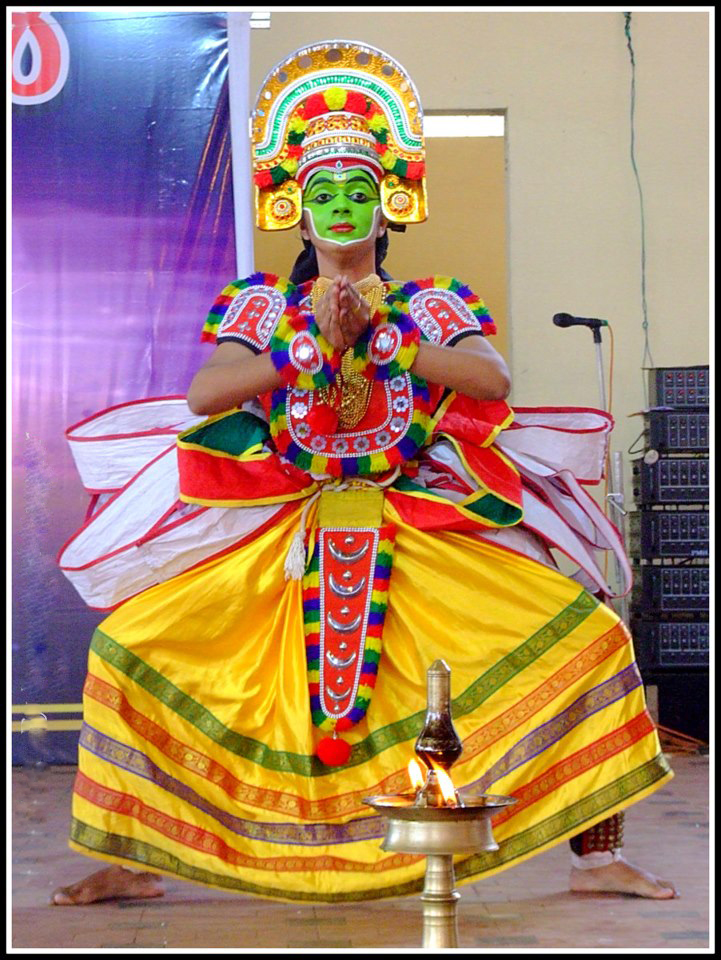
Ottanthullal is a combination of music, dance and linguistic variations, which is characterized by wit and humor. The most appealing aspect of the performance is the combination of storyteller and dancer in one actor, who effortlessly switches from one to the other. Continue reading

Mutthukkuda – Festival Umbrellas

Photo credits: Ramesh Kidangoor

Mutthukkudas are one of the main attraction in Kerala’s religious and political ceremonies, especially at the Thrissur Pooram, the state’s primary festival. During the pooram festival time there is one attraction called kudamattom (exchanging umbrellas) which is the most important aspect of the Trissur Pooram, were hundreds of beautiful long stemmed glittering umbrellas are exchanged rhythmically along with a traditional music orchestra and chenda melam played in the back ground. Continue reading

Pattu Pavadai – Traditional Long Silk Skirt

Pattu Pavadai is a traditional South Indian dress, especially in Kerala and Tamil Nadu. They are frequently made from the famous Kanchipuram silk fabrics. Young girls wear Pattu Pavadai during ritual functions and special occasions.

If You Happen To Be In Washington, DC

Nordic

From our friends in the north comes our favorite kind of cultural festival–all mixed up. It is reviewed in this podcast and explained on the Kennedy Center’s website:

About the festival

February 19-March 17, 2013, the Kennedy Center presents Nordic Cool 2013, a month-long international festival of theater, dance, music, visual arts, literature, design, cuisine, and film to highlight the diverse cultures of Denmark, Finland, Iceland, Norway, and Sweden as well as the territories of Greenland, the Faroe Islands, and Áland Islands. Continue reading

Temple Gopurams

Photo credits: Ramesh Kidangoor

The word Gopuram refers to the monumental tower built at the entrance of South Indian Dravidian temples. These Gopurams are multistoried structures decorated with painted sculpture and carvings depicting Hindu mythology. Continue reading

Kakkoor Kalavayal Race (Bullock Cart Race) – Kakkoor, Cochin

Photo credits: Ramesh Kidangoor

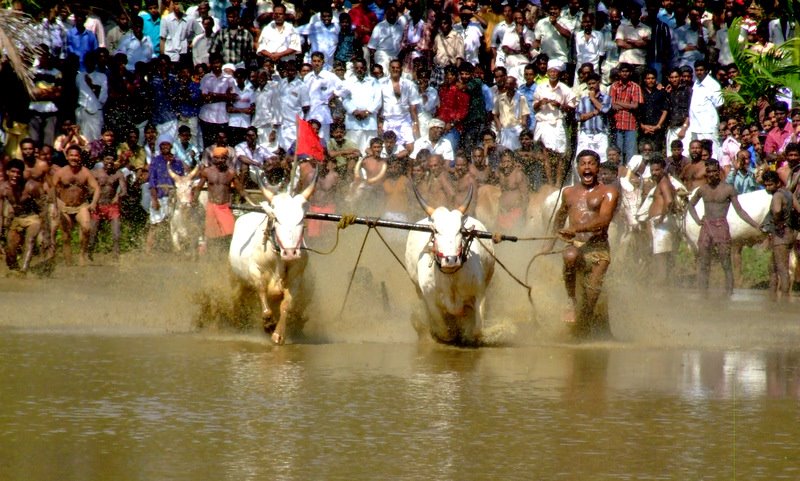
Kakkoor Kalavayal is a traditional post-harvest festival celebrated by the farmers of Kakkoor and  the surrounding villages near Cochin. Legend has it that this is the annual meeting of the Goddesses of the villages of Edapra and Ambassery. The most exciting moment of this festival is the grande finale of the bullock race. Continue reading

Le Macchine E Gli Dei

Machines and Gods: Dionysus at MCCM

The Musei Capitolini Centrale Montemartini is an interesting place, to say the least: it combines Italian machinery of mammoth proportions from the Industrial Revolution with ancient Roman statuary. These statues include the monolithic “Fortuna Huiusce Diei” (“Fortune of This Very Day”), various Greek gods (Venus, Dionysus as pictured above, and others), Roman emperors, famous statesmen, and lesser known wealthy citizens; the machinery, on the other hand, consists in titanic pieces of metal that when whirring generated tens of thousands of horsepower. Continue reading