Ottamthullal – Classical Dance

Photo credits : Shymon

Photo credits: Shymon

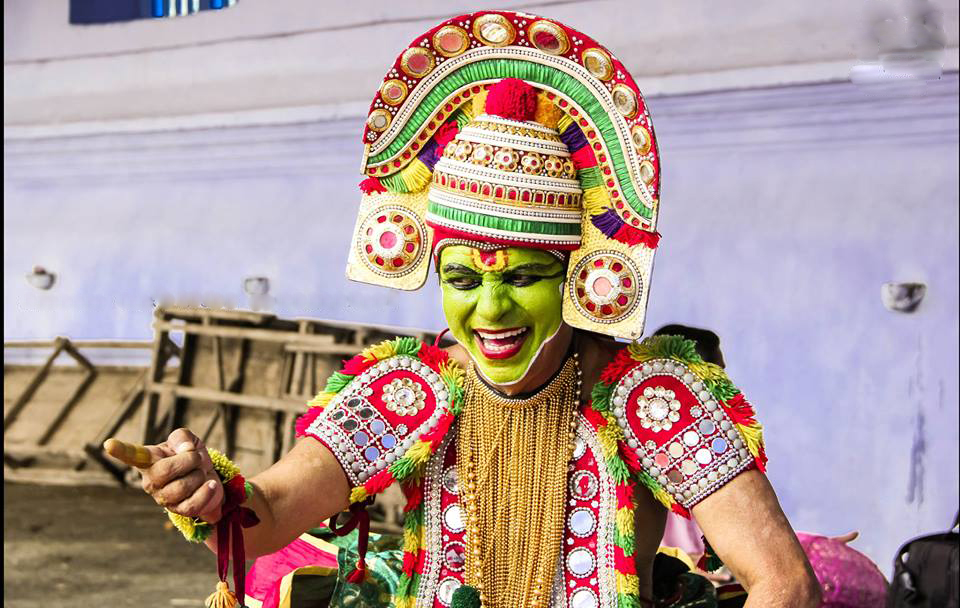
Ottamthullal is a very popular form of classical performing arts of Kerala. The actor wears a long ribbon of cloth looped around a waistband to form a knee-length skirt. A chest plate adorned with coloured  beads, glass and various ornaments covers the upper body, and tinkling bells are tied to the legs. Continue reading

Kathakali – An Introduction

Tiraseela

Tiraseela – the cloth that is used both as curtain and dramatic effect

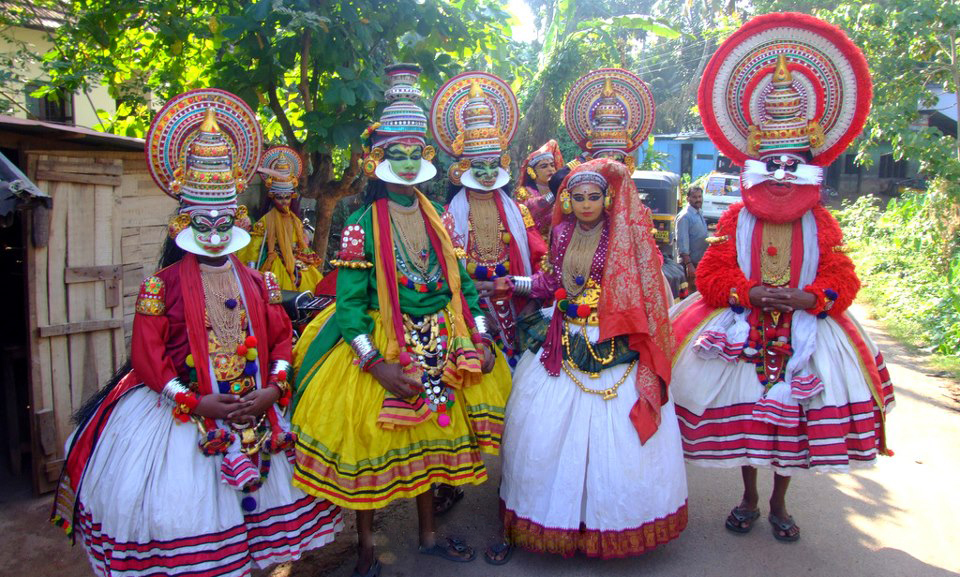
Kathakali is one of the oldest theatre forms in the world. Originating in the area of southwestern India now known as the state of Kerala, it is a group presentation in which dancers take various roles in performances traditionally based on themes from Hindu mythology, especially the two epics, the Ramayana and the Mahabharata.

One of the most interesting aspects of the art form is its elaborate make-up. Characters are categorized according to their nature, which determines the colors used in the make-up. Continue reading

Kerala Culture and Arts – Ranga 2014

Ashtapadi

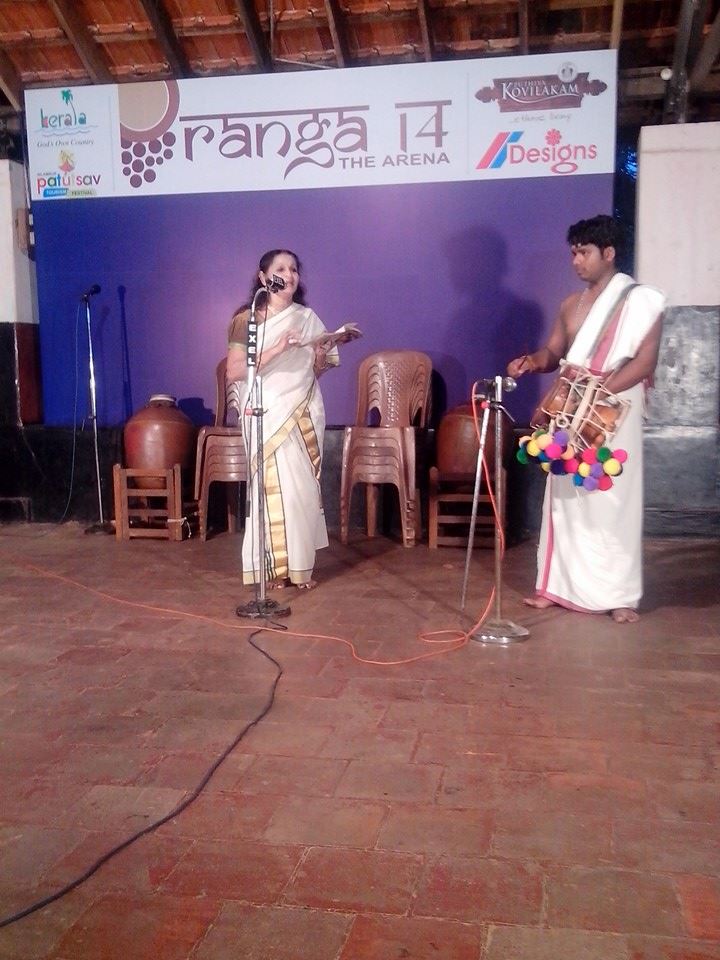
With the goal of conserving the cultural art of Kerala from extinction, Nilambur Kovilakam recently conducted an event called ‘Ranga 2014’ on the 17th and 18th of January.  It was a two day event wherein artists portrayed their talents to a mixed audience of people from the Kovilakam and visitors from farther afield. The major intention of this event was to showcase the cultural heritage of Kerala and demonstrate its art forms to an invited audience from various parts of the world.  Continue reading

Performing Arts of Kerala

Photo credit: Abhayan Menon

Photo credit: Abhayan Menon

The rhythm, elegance and finesse of the classical dance of Kerala is a result of the various cultural influences that took place in the state. These classical forms are a delicate fusion of ancient classical texts and folk traditions, often related to religious rituals and mythological stories. Continue reading

Kavadi Aatam: Ritual Dance

Photo credits: Ramesh Kidangoor

Photo credits: Ramesh Kidangoor

Kavadi Aatam is a religious dance offered to Lord Muruga during a pilgrimage, made mainly by men, which originated in Tamil Nadu. It is a colorful (as you can see in the photos) ritual dance widely prevalent in the Subramanya Temples in Kerala and Tamil Nadu during the festival season. The Kavadi, which are set on top of the dancers, can reach 10-15 feet high, and when the dancers twist and spin in a row it creates a quite beautiful effect.

Continue reading

New Year and New Beginnings, 2014


Photo credits: M N Shaji

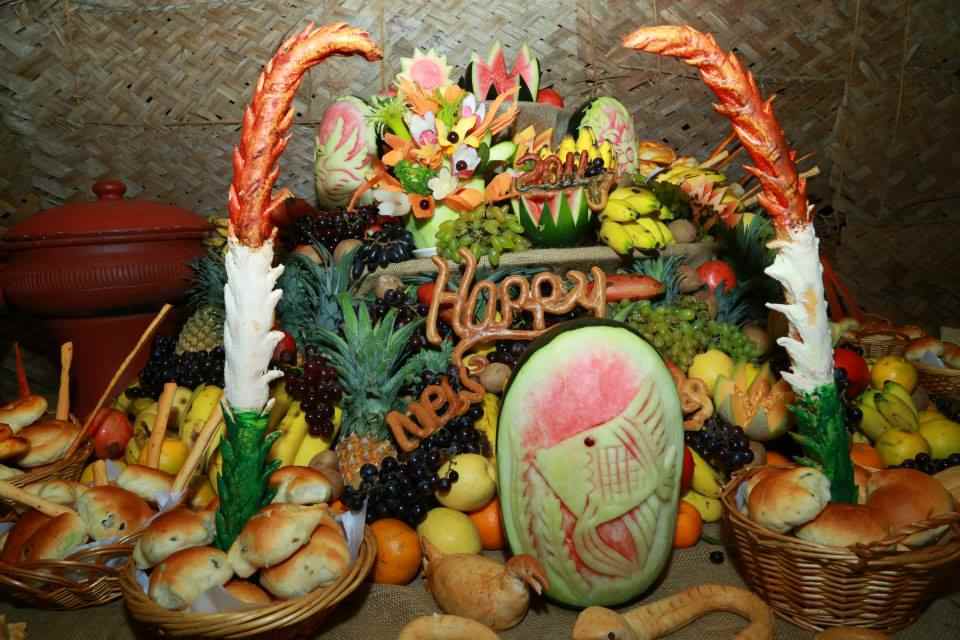
New Year’s Eve is a time of new beginnings.We believe in celebrating with all our guests all the achievements and learning of the previous year along with the joy of stepping into a new year with new expectations and beliefs and hope for new opportunities. We welcome our guests in the traditional Indian way with a small performance followed by aarthi and tikka and blessings from an elephant who represents the elephant headed god Ganesha, the god of beginnings. Continue reading

Dance and History

Photo credits: MN Shaji

In India there are numerous classical dances and quite a few of them have originated from the state of Kerala. These dances are not only entertainment but rich in history into which mythological stories of centuries ago have been depicted. The artists pay tribute to the brave and the bold, and the battles that shaped our present way of life, culture and heritage. Continue reading

Theyyam

Photo credits: Dileep Narayanan

Photo credit:  Dileep Narayanan

Theyyam is one of the most popular ritualistic dances of Kerala. Of the variety of performing arts, most have roots in folk tradition and are often related to religious rituals and mythological stories.  Theyyam is a devotional performance with surrealistic representations of the divine. Continue reading

Dance and Textiles – A Connection

dance

It was mandatory in my family culture that young girls learn dance and music, the traditional dances like Bharathnatyam, Mohiniyattam and Kathakali, as well as Carnatic music. And I was inducted into a well known school of art to learn them.

The theory part included learning about the various dance formats, stories, and most importantly the costume. Continue reading

Learning To Dance Yakshagana

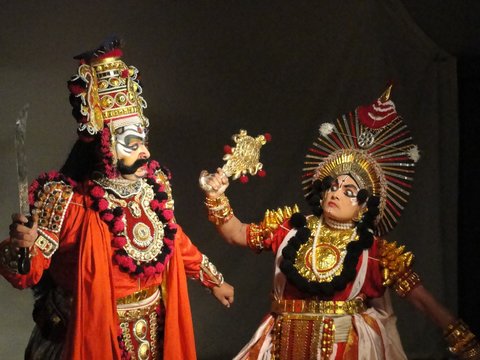
Courtesy of Karnataka Mahila Yakshagana A scene from Yakshagana performed by female artists in Bangalore, Karnataka, in January.

Courtesy of Karnataka Mahila Yakshagana. A scene from Yakshagana performed by female artists in Bangalore, Karnataka, in January.

Thanks to India Ink for bringing to our attention this article by Kavitha Rao:

BANGALORE — In a quiet Bangalore home, a group of middle-aged women are learning to walk, talk and dance like men. Continue reading

Music and Dance at the Water’s Edge

South Indian Classical Dance

South Indian Classical Dance

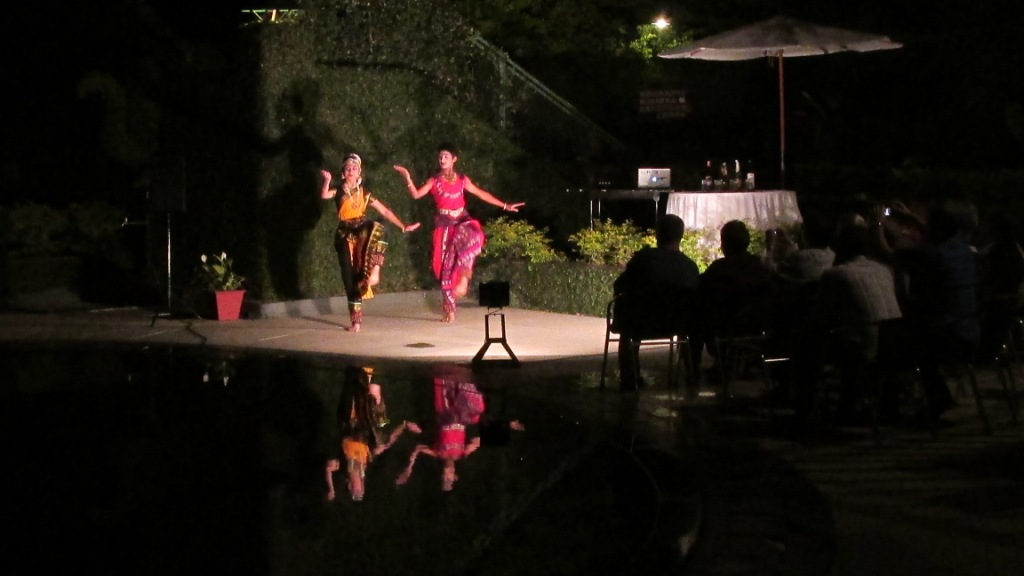
Guests at Cardamom County are usually out and about enjoying the Periyar Tiger Reserve, the town or the spice plantations during the day, but in the evening there’s a lot of excitement at Cardamom County, especially as we head in to the holiday season. Continue reading

Margam Kali

Photo credits : Sindhu J

Photo credit : Sindhu J

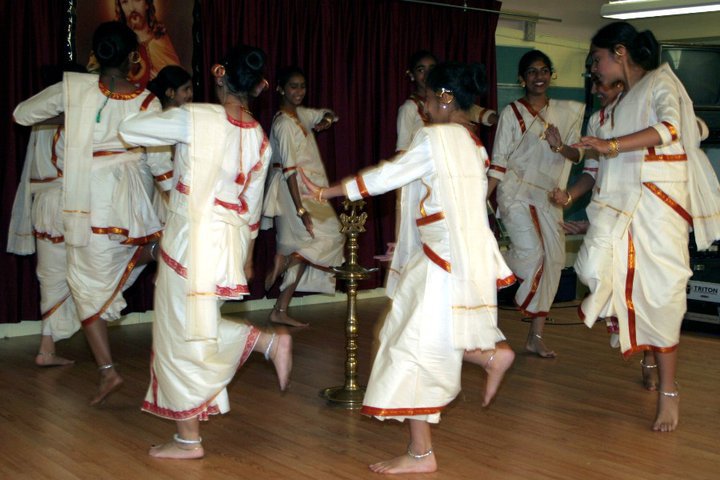
Margam Kali is one of the traditional group dances of Kerala practiced by Syrian Christians. The dancers wear the traditional  Kerala Christian dress (white dhoti and blouse) while singing, dancing and rhythmically clapping around a lighted lamp. The dance form dates back to the 16th century during the Portuguese era, telling the story of the arrival of St. Thomas to the Malabar coast. Continue reading

Kummattikali

Photo credits : Sooraj

Photo credits: Sooraj

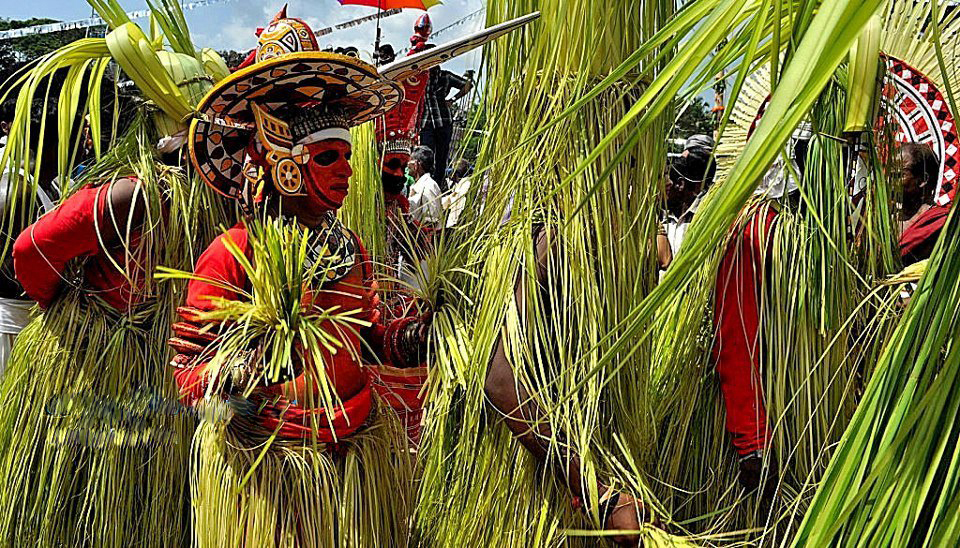
Kummattikali is a folk dance celebrating the arrival of King Mahabali to visit his subjects during Onam. Kummattikali is famous in the north of Kerala,  especially the region of Thrissur. It is believed that the presiding deity of Vadakkuumnathan Temple in Thrissur asked the attending spirits to perform for him. The dance they presented came to be known as Kummattikali. Decorated masks carved from wood adorn the face while the body is covered with a grass skirt . Continue reading

World Tourism Day 2013

Photo credit: Ranjith

The United Nations World Tourism Organization (UNWTO) invites people world wide to participate in World Tourism Day on September 27 every year. Kerala enjoys unique geographical features that have made it one of the most sought after tourist destinations in Asia. Continue reading

Pulikkali – Kerala

Photo credits : R R Ranjith

Photo credits: R R Ranjith

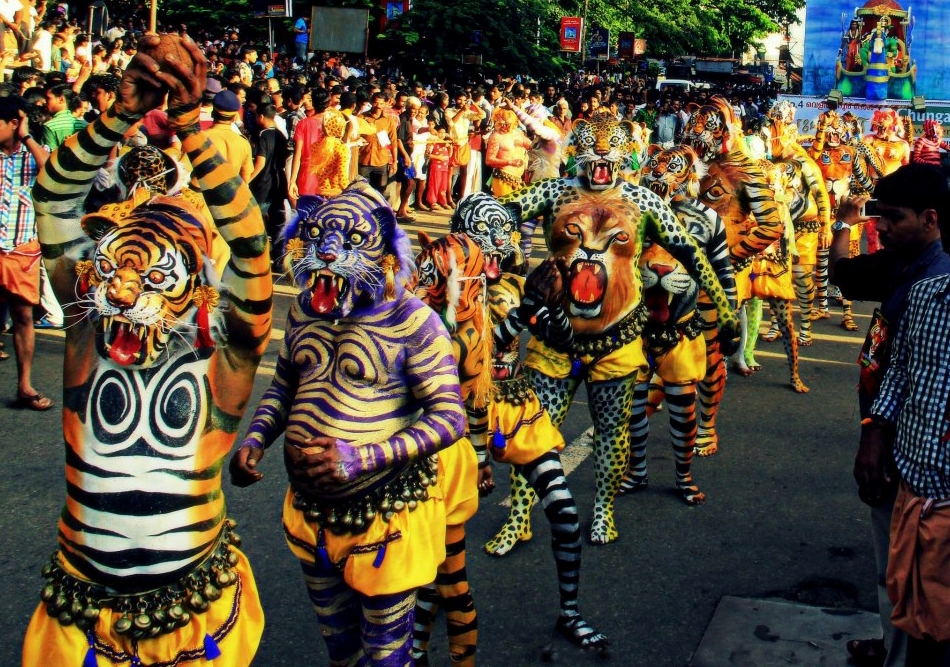
Pulikkali, which means “tiger play”, is a popular folk art form, also known as Kaduvakali. This iconic Onam event is mainly practiced in the Thrissur and Palaghat districts of Kerala. Participants painstakingly paint their bodies like tigers and don tiger masks. (The process can take the entire day to complete with first the removal of body hair and then the application of multiple layers of paint.) The procession also includes men representing hunters. The best performers are chosen out of the hundreds of participants.  Continue reading

Bharathanatyam Makeup

Photo credits : R R Ranjith

Photo credits: R R Ranjith

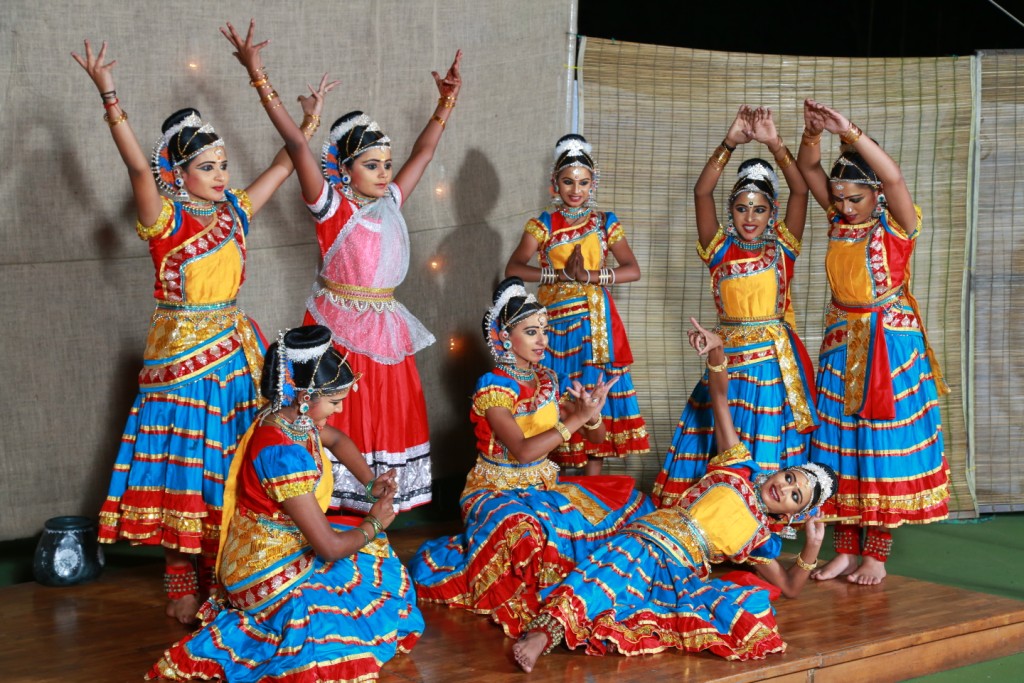
Bharatanatyam is a famous Indian form of classical dance. Dancers often use bold and colourful makeup to show grace on the stage. The makeup is very thick and dark with a lot of emphasis placed on the eyes, cheeks and lips. Bold use of kohl on eyes and brows help the audience notice expressions. Lots of powder and blush are used to give the face a clear, smooth apperance and lips are bright red to emphasize smiles and pouts. Continue reading
Semi-Classical Dance – Kerala

Photo credits : Ramesh Kidangoor

Photo credits: Ramesh Kidangoor

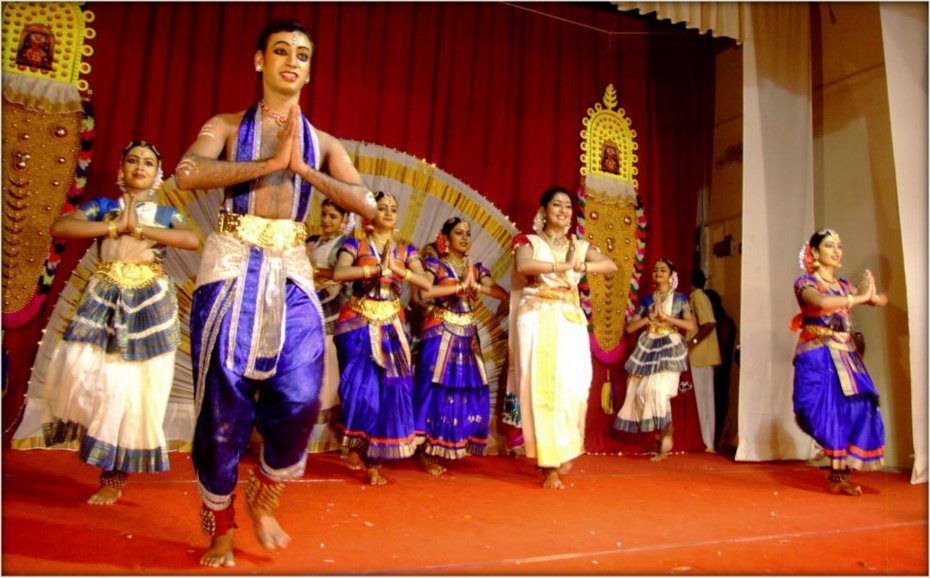
Semi-classical dance is a style that combines classical dance steps with a more contemporary feel. The movements are not as intricate as pure classical forms. This hybrid style features extensive body movements, expressions, grace, speed and immense creativity, giving the final product a more modern feel. Continue reading

Theyyam

Photo credits: Anuraj

Photo credits: Anuraj

Theyyam is based on a traditional belief system, and is a self-contained world without obligations to caste, community, society and religious faith. Fire has a major presence in many Theyyam myths. Continue reading

Kathakali Chamayam – Makeup and Costumes

Photo credits: R Ranjith

Photo credits: R Ranjith

Kathakali is known for its heavy, elaborate makeup and costumes.In fact, the makeup is so  intricate and the costumes so huge and heavy that it looks as though the artist is wearing a mask. The makeup is based on a certain set of colors each of which is used to represent a particular character. Only natural dyes are used on the face and the process will take hours. Continue reading

Kerala’s Classical Arts

Photo Credits: Ramesh Kidangoor

Photo Credits: Ramesh Kidangoor

From December to May Kerala comes alive with its colorful Temple festivals. Each Temple has its own lore, ranging from the fantastic to the bizarre, and always involving many people within their communities. Kerala’s classical arts such as Kathakali, Theyyam and Panchavadyam, among others enjoy a frenzied resurrection during the festival season. Continue reading