Plastic Bottles for Homes

pbv_bluff_2

Source: plasticbottlevillage.com

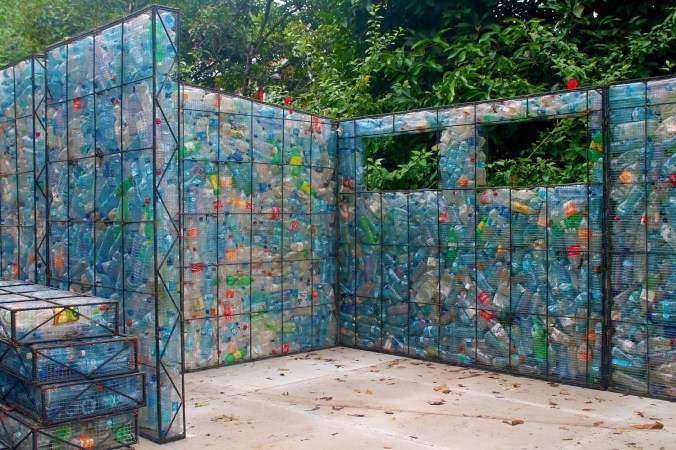
A Canadian man, Robert Bezeau, who lives in Bocas del Toro, Panama, woke up from a dream one night that transformed the future of a village – and our perception of plastic bottles. Bezeau dreamed of a village where everything was made of bottles and instead of leaving the idea dormant in his mind, he decided to act on his vision and turn it into a reality.

One hundred and fifty million tones of plastic waste are estimated to be floating in our oceans, and at the current pace it is predicted that by 2050 there will be more plastic than fish in the sea. Assuaging this brutal prediction, Bezeau’s company, Plastic Bottle Village, builds houses, roads, and more from plastic bottles that are collected from the surrounding communities. Continue reading

Warm and Wooly Homes

havelock_sheep_wool_fishermansdaughter

All images from triplepundit.com

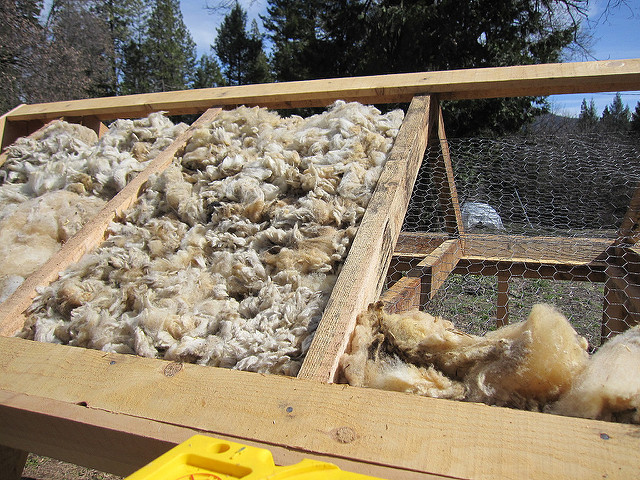
Sheep’s wool has long been proclaimed as one of nature’s best insulators, and San Francisco startup Havelock Wool, LLC has taken advantage of this property of wool to use it as a sustainable insulation product to meet the growing demand of higher efficiency buildings and homes. Although wool is typically known for keeping things warm, the company is also using the material for homes in warm and sunny environments:

The company recently tried out its products on a 17,000 foot mansion in Newport Beach, a destination harbor town in the middle of Southern California’s coastline. As with most insulating products, the material’s ability to lock out cold temps also gives it the ability to insulate homes during hotter weather. It absorbs moisture, drys out naturally and doesn’t become moldy.

But its most appealing quality is its environmental benefits.

Continue reading

Getting over “Range Anxiety” and into Electric Cars

electric-car-charger

Source: Conservation Magazine

If you have ever considered buying an electric car but haven’t done so in fear of the car battery dying before getting to a charging station – which is known as “range anxiety” – fear no more. A new study shows that most American drivers do not go beyond the distance that today’s electric cars can go in a single battery charge in one day.

87 percent of the vehicles on the road could be replaced by low-cost EVs on the market today even if they were only charged overnight, say the MIT researchers who conducted the study published in Nature Energy.

If this large-scale swap were to happen, it would lead to roughly 30 percent less carbon emissions even—if the electricity were coming from carbon-emitting power plants.

Continue reading

Speedier Retrofitting of City Buildings

Image by Shutterstock.com via Conservationmagazine.org

Lots of energy is wasted by buildings that don’t have appropriate insulation or efficient HVAC systems. We’ve shared stories on lower-impact construction, like this recent piece on passive homes, and Conservation Magazine now has an article on a new way to decide on the city scale what buildings to retrofit – replace old types of windows, switch out light bulbs, etc. – based on research in Massachusetts. Prachi Patel reports:

In 2015, buildings of all types accounted for 40 percent of all energy consumption in the U.S. and 20 percent of the nation’s carbon dioxide emissions. Retrofitting old, energy-inefficient structures with efficiency features will be key for reducing their large carbon footprint. Many cities and states offer substantial incentives to home and commercial building owners who make such upgrades.

But instead of offering incentives willy-nilly, cities could use a smarter way to get the biggest energy impact, researchers at Massachusetts Institute of Technology say. Some buildings are bigger energy-hogs than others. MIT professor of civil and environmental engineering Marta González and her colleagues have come up with a streamlined way to identify the culprits with the biggest room for improvements. Their simple model, published in the Journal of the Royal Society Interface, could help city planners identify buildings where retrofits will have the biggest effect on a city’s overall greenhouse gas emissions.

Continue reading

Good Spirited

Although we don’t particularly endorse consumption of alcohol or hold loyalty to any single brand or type of liquor, we’re always on the lookout for positive environmental news in any corporate setting, and we’ve recently learned that Bacardi Limited, perhaps the best-known makers of rum in the world (and owners of other alcohol brands Martini, Grey Goose, Bombay Sapphire, and Dewar’s Scotch), has been attempting to do better for the environment.

Called “Good Spirited,” (who doesn’t like a nice pun), Bacardi’s campaign involves recycling, waste reduction, energy efficiency, and other mechanisms to reduce the company’s environmental impact in the world and become more sustainable. For example, they’ve removed plastic straws and stirrers from their North American headquarter events in Florida and their Bombay Sapphire distillery in the UK, which they estimate will save more than 12,000 of the small plastic tubes from landfills annually.

In their original distillery in Puerto Rico, the company reuses water from rinsing Continue reading

Good News in Plastics

Compiled illustrations of a nylon chain above and PET chain below, both thermoplastic polymers, or simply put, types of plastic. Via WikiMedia, created by users YassineMrabet and Jynto, respectively.

There’s some cause to celebrate from a couple findings published recently in two journals, Nature and Animal Conservation, related to plastics, though of very different sorts. The first paper deals with a new method of plastic production using carbon dioxide and agricultural waste rather than petroleum as the raw input for PET plastic, and the second article studies the feasibility of introducing biodegradable fishing nets to replace nylon ones.

Continue reading

The Dumbest Experiment In History, By Far

Screen Shot 2015-04-05 at 7.14.35 AM

It’s official, our blog-crush on this particular conservation-focused entrepreneur. We have not yet heard (click above for a podcast in which “Neil deGrasse Tyson explores the future of humanity with one of the men forging that future: billionaire entrepreneur Elon Musk, CEO of SpaceX and Tesla Motors. Co-hosted by Chuck Nice and guest starring Bill Nye.”) or yet read (continue below to Motherboard‘s interview) anything to make us question that he is the real deal; a living, breathing visionary achiever of heroic proportions:

Elon Musk: Burning Fossil Fuels Is the ‘Dumbest Experiment in History, By Far’

Written by JASON KOEBLER, STAFF WRITER

Elon Musk, founder of Tesla and SpaceX, and chairman of SolarCity, and the guy who dreamt up the hyper loop, says we shouldn’t need an environmentally motivated reason to transition to clean energy. We’re probably going to run out of oil sometime; why find out if we can destroy the world while we do it, if an alternative exists?

“If we don’t find a solution to burning oil for transport, when we then run out of oil, the economy will collapse and society will come to an end,” Musk said this week during a conversation with astrophysicist and Cosmos host Neil deGrasse Tyson. Continue reading

And the Wheels of the Bus Go Round and Round…

Bristol’s Bio Bus runs on faeces and household waste. Photograph: Ben Birchall/PA

A little over 2 years ago contributor Megan Madill wrote about one of the “Green Cities” of Europe, not to mention all the wonderful bike sharing (and bike friendly) initiatives worldwide.

But this news from the city of Bristol via the Guardian takes first prize. The innovation itself is a wonderful thing, but our applause actually goes more to the cheeky graphics.

UK’s first ‘poo bus’ hits the road

Britain’s first “poo bus”, which runs on human and household waste, goes into regular service this month. Continue reading

No-till Farming On The Rise

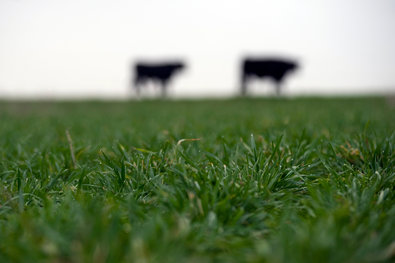
Brandon Thibodeaux for The New York Times. Cattle graze on farmland owned by Terry McAlister, near Electra, Tex. Mr. McAlister converted to no-till farming for its apparent economic benefits.

Brandon Thibodeaux for The New York Times. Cattle graze on farmland owned by Terry McAlister, near Electra, Tex. Mr. McAlister converted to no-till farming for its apparent economic benefits.

Thanks to the Science section of Tuesday’s New York Times for pieces regularly covering alternative approaches to agriculture, such as this one today:

Farmers Put Down the Plow for More Productive Soil

Soil-conservation farming, a movement that promotes not tilling fields and using “green” manures, is gaining converts in tough environments and markets.

Let Nature Do More Work For Us (Coconuts-R-Us)

Screen Shot 2015-01-30 at 11.45.00 AM

Kerala, the state in southwest India where many of Raxa Collective’s initiatives are located, is the “land of coconuts” if you translate the state’s name literally from Malayalam (the language of Kerala) to English.  This article in today’s Hindu highlights the introduction of a new bi-product of coconuts at the annual trade fair (click the image above to go to the trade fair’s brochure):

Coir-based organic acoustic panelling system developed

SARATH BABU GEORGE, January 30, 2015

In what could be a major boost to the coir industry, the National Coir Research and Management Institute (NCRMI) has developed a coir-based organic acoustic panelling system.

Christened ‘ACCOIR’, the acoustic panels have been designed in collaboration with the Institute of Indian Interior Designers (IIID) and the National Institute for Interdisciplinary Science and Technology (NIIST), a constituent laboratory of the Council of Scientific and Industrial Research (CSIR). Continue reading

Rainwater Harvesting, Try This At Home

rainhouse

Thanks to Conservation for this reference to a concept, a design, and a design firm which all catch our full attention:

THIS ENTIRE HOUSE IS A WATER FILTER

Hungarian design firm IVANKA is an avant-garde concrete company. Over the past decade, they’ve developed unexpected ways to incorporate this utilitarian material into everything from designer handbags to BMW concept cars. Lately, though, the company is focusing not just on luxury goods but on the most basic of everyday resources: clean water. Their new “bio-concrete” could turn houses, schools, and factories into giant water filters to produce drinking water from rain. Continue reading

Breakthroughs In Nutrition Via Entrepreneurial Conservation

Exo's peanut butter-and-jelly bar contains about 40 ground-up crickets and has a familiar nutty, sweet flavor. Meredith Rizzo/NPR

Exo’s peanut butter-and-jelly bar contains about 40 ground-up crickets and has a familiar nutty, sweet flavor. Meredith Rizzo/NPR

Thanks to National Public Radio (USA)’s food-focused program, The Salt, for another story on unexpected breakthroughs in nutrition:

…”Insects are probably the most sustainable form of protein we have on Earth,” Bitty Foods founder Megan Miller, who spoke passionately about eating bugs at a TEDx Manhattan event earlier this year, tells The Salt. “The only real barrier to Americans eating insects is a cultural taboo.” Continue reading

Humanity’s Diet Makes A Difference, Historically As Well As Futuristically

On the timescale of evolutionary history, paleo enthusiasts note, agriculture is a fad. Credit Illustration by Mike Ellis.

On the timescale of evolutionary history, paleo enthusiasts note, agriculture is a fad. Credit Illustration by Mike Ellis.

Since the early days of this blog we have been hungry consumers of environmental long form journalism, of which Elizabeth Kolbert’s New Yorker chronicles are best-in-category. They are also, frankly, almost always depressing.

Nonetheless, they put humanity into its natural context. This not-at-all-depressing chronicle demonstrates the value of that contextualization well:

The first day I put my family on a Paleolithic diet, I made my kids fried eggs and sausage for breakfast. If they were still hungry, I told them, they could help themselves to more sausage, but they were not allowed to grab a slice of bread, or toast an English muffin, or pour themselves a bowl of cereal.

Continue reading

Straw Bale Construction: Part 3/3

Guest Author: Virginia Carabelli

For Part 2, click here, or if you’re new to the post this is Part 1.

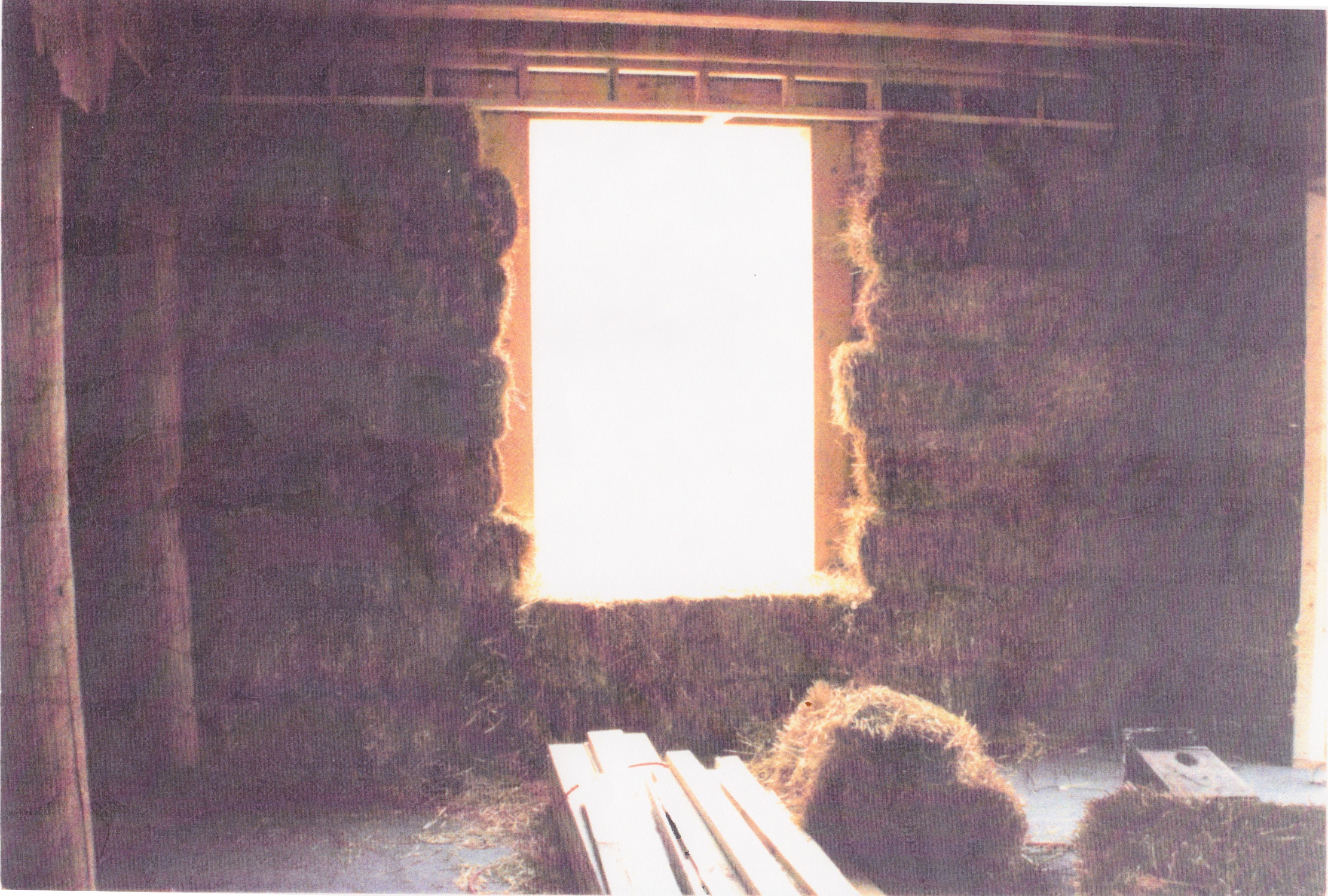
You might wonder at this point, what about permits? All materials used for building in the US have to be tested in a federally approved lab. Straw bales not only passed the required standards, but exceeded them in many tests. Federal building codes supersede state building codes, meaning that no state can legally forbid its use. Most people, including many building departments, are unaware of this fact. Each state, has slightly different requirements. For example, if you live in a seismologically active area, your building code will reflect that (by the way, straw bales perform exceedingly well in earthquakes).

So if you want to build a post and beam structure with straw bale insulation (which is the basic building technique), you should have no problem. However, if you want to build a load-bearing structure (no post and beam to support your roof), you will have to restrict yourself to a small building, following a given formula depending on the size of your straw bales. You might run into some resistance in certain states, although load-bearing was one of the required tests passed by this material. Here in New York, several lovely load-bearing straw bale structures have been legally built. Continue reading

Straw Bale Construction: Part 2/3

Guest Author: Virginia Carabelli

Before

Before

In case you missed the first part of this post, click here.

At this point, let me get the three things that may be on your mind out of the way, before I move to introduce the building technique, without getting too technical.

1. Fire – Fire needs oxygen to burn, a compacted straw bale + encasing in cement or mud plaster offers no oxygen for fire to take hold. Try and burn your phone book as is (do they still make them?) and you’ll see what I mean. At worse, it will smolder.

2. Pests – Straw is like a little stalk of bamboo, in a way. It is the stem of grains whose function is to carry nutrients to the head. It has no nutritional value, protein, etc., so bugs are not very interested in it—they prefer hay or alfalfa. In fact, Continue reading

Straw Bale Construction: Part 1/3

Guest Author: Virginia Carabelli

Hello everyone, I am delighted to be invited by RAXA Collective to participate in such a wonderful community! My name is Virginia Carabelli. I was born in Italy and raised both there and in France. I moved to the US in my late teens to attend college and fell in love with this beautiful country. I have always been more comfortable in nature and silence and have never been very interested in the rat race and busi-ness. I would much rather be than do.

I’ve always found our human ways mostly destructive and superficial, and had a plan since childhood to live life on my own terms as much as possible. In 1989 I achieved one of my childhood dreams: I bought a beautiful piece of property in a verdant valley in New Mexico, where I could live at least partially off the land. The community was mixed Spanish/Pueblo Indian, and many families lived in trailers (by that I do not mean a nice double-wide, but rather a large shipping container on cement blocks). Ecologically speaking, the valley was a fragile environment. With those two things in mind I said a simple prayer asking for guidance to build a home that would be in harmony with nature and also provide some good affordable housing for those in need. I had no idea how to do this, but I had only to wait a couple of weeks for Matts Myhrman to coincidentally walk into my life. Continue reading

Bedeviling Bovine Biproducts

cow-butt

Roberta Kwok, over at Conservation, shares a new view on the humble cow:

COWS VS. COAL

To reduce emissions, the usual thinking goes, we should promote alternative energy and declare war on coal. But researchers argue that policymakers are ignoring a crucial climate threat: cows. Continue reading

Better Brewed Beer

foamy-beer

A time-honored artisanal endeavor is quietly articulating a 21st century version of industrial production

When we have links to articles reviewing the literature of vegetarian cooking and/or first-person stories, told in multiple parts about the ecological benefits of eating invasive fish species, it is only fitting that we offer information about ecologically sensitive beverages. The community of craft beer producers in the USA in particular has undergone nothing less than a renaissance. Thanks to the magazine website of Conservation for this story:

From the outside, the New Belgium Brewery, located on 50 acres near downtown Fort Collins, Colorado, appears to be an environmentalist’s dreamscape. Company-issued bicycles surround the facility. A parking lot next to the brew house has an electric car charging station. Solar panels layer the roof of the bottling plant. A well-worn biking path snakes across the property. Continue reading

Duchamp Design Du Jour

tumblr_mjnoeg7QzL1qz5g9bo1_1280

Our thanks to Mel Duarte for this referral of a design idea that has artistic legs and history, but is as fresh as ever:

In a small Brazilian village, artist and photographer Mel Duarte came across this great example of turning an old thing into a new thing.

“I really like the idea of creative recycling, and hope to inspire people with the potential it offers. With this in mind, I took the chance when I was in a little town in Bahia, Brazil, called Serra Grande, to wander through the village looking for something that could express this idea. That’s how I came across the recycled toilet bowl – it’s such a lovely example of how waste can be turned into something funny and beautiful.” Continue reading

Earth Hour 2014


Earth Hour

Earth Hour

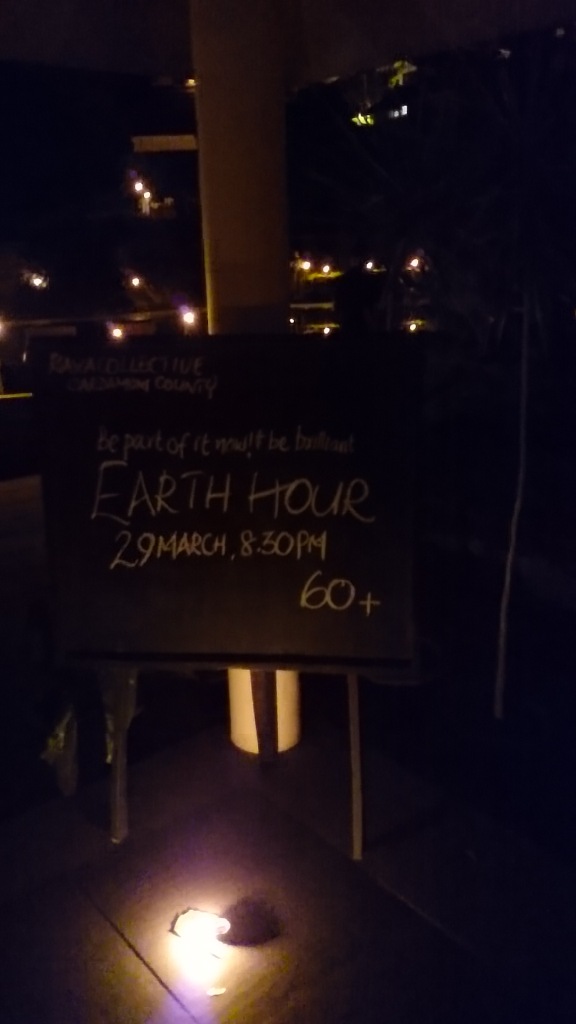
RAXA Collective properties joined the millions of people around the world celebrating Earth Hour on March 29th. Earth Hour is a voluntary movement with the goal to highlight global activism about energy consumption. One hour staggered in local time across the globe people come together and switch off all their electricity. Continue reading