Bikes Connected To The Grid

A man rides an ebike in Hermosa Beach, California. Photograph: Mel Melcon/Los Angeles Times/Getty Images

From one point of view ebikes could be viewed as just one more form of entertainment drawing energy from the grid. But an argument can be made that this increase in load on the grid is decreasing other carbon footprints. On top of that, maybe more people on bikes is its own gain:

Sales surge as cities and states look to cut pollution from cars and improve options for Americans to get around

After several years of false starts, electric bikes are finally entering the American mainstream, amid booming sales of a multiplying number of models on offer and as more states offer incentives for people to ditch their cars and shift to two, motor-assisted, wheels. Continue reading

Heat Pumps Catching On In Norway

The Tromsø sorting office of the Norwegian postal service Posten Bring is heated by heat pumps. The city is located almost 140 miles north of the Arctic Circle. Photograph: NurPhoto/Getty

Previous stories we have linked to about heat pumps have raised our expectations and hopes, but also raised the question of whether they will catch on. Here is the start to an answer:

You can walk around in a T-shirt’: how Norway brought heat pumps in from the cold

Device installed in two-thirds of households of country whose experience suggests switching to greener heating can be done

When Glen Peters bought a heat pump for his home in Oslo he wasn’t thinking about the carbon it would avoid. Continue reading

Green Mountain Power, Sunrun, FranklinWH & Innovative Electricity Options

Photograph by Ian Thomas Jansen-Lonnquist / Bloomberg / Getty

We need more energy, and here are some possibilities:

The Next Power Plant Is on the Roof and in the Basement

A Department of Energy report promotes a new system that could remake the energy grid.

On any given Monday in Vermont, Josh Castonguay, the vice-president of innovation at that state’s Green Mountain Power utility, told me, he studies the forecast for the days ahead, asking questions like “What’s it looking like from a temperature standpoint, a potential-of-load standpoint? Is there an extremely hot, humid stretch of a few days coming? A really cold February night?” If there is trouble ahead, Castonguay prepares, among other things, Vermont’s single largest power plant, which isn’t exactly a power plant at all—or, at least, not as we normally think of one. Continue reading

More Energy Use Annually Dwarfs Gains From Renewables

Ty Wright / Bloomberg / Getty

The facts about our progress combatting environmental crises are complex. Sometimes we sense hope and other times not so much. Zoë Schlanger, writing in the Atlantic, runs some numbers on mitigation from renewables:

One Huge Contradiction Is Undoing Our Best Climate Efforts

The math isn’t adding up.

You’d be forgiven for thinking that the fight against climate change is finally going well. Continue reading

Heirloom Captures Carbon

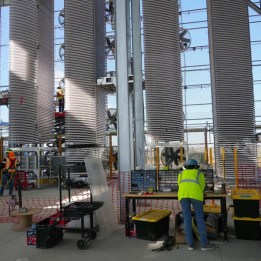
Heirloom’s plant in Tracy, Calif., pulls carbon dioxide from the air so it can be sealed permanently in concrete. Jim Wilson/The New York Times

We have been waiting for this day to arrive:

In a U.S. First, a Commercial Plant Starts Pulling Carbon From the Air

The technique is expensive but it could help fight climate change. Backers hope fast growth can bring down costs.

In an open-air warehouse in California’s Central Valley, 40-foot-tall racks hold hundreds of trays filled with a white powder that turns crusty as it absorbs carbon dioxide from the sky.

The start-up that built the facility, Heirloom Carbon Technologies, calls it the first commercial plant in the United States to use direct air capture, which involves vacuuming greenhouse gases from the atmosphere. Continue reading

Pricing Flights Realistically

United Airlines wants to zero out its greenhouse gas emissions by 2050, but without using conventional carbon offsets. Nicolas Economou/NurPhoto via Getty Images

If airlines can quantify what it would cost to become carbon neutral within a relevant timeframe, it implies that we know by how much they are currently fudging their investment model. If it is going to require an investment of X number of dollars over Y number of years to achieve carbon neutrality then they should invest, and price their flights accordingly. Then we will all know the real cost of flying, including the environmental cost. Thanks to Umair Irfan (long time since we last saw his work) and to Vox for this:

Emirates demonstrated a Boeing 777 flight fueled with SAF earlier this year. Giuseppe Cacace/AFP via Getty Images

Airlines say they’ve found a route to climate-friendly flying

Cleaner, faster, cheaper — the aviation industry’s plan to decarbonize air travel, explained.

If you’ve caught an ad for an airline lately on TV, a podcast, or the entertainment display on your flight, you’ve probably heard the company brag about what it wants to do about climate change.

Major airlines like AmericanDeltaSouthwest, and United have all set targets of achieving net-zero greenhouse gas emissions by 2050. They’re using a suite of tactics including buying more fuel-efficient aircraft, electrifying their ground vehicles, and increasing the efficiency of their operations. They’re also testing the winds on battery- and hydrogen-powered planes, as well as some radically different aircraft designs. Continue reading

What’s New With Wind Propelled Ships

Thank you as always, Cara Buckley. The topic today is wind power, again, this time more on its use propelling ships:

More ships are running on wind power, as the global industry tries to fight climate change. One concept has backing from Abba, the Swedish pop stars.

The Pyxis Ocean began its first wind-assisted voyage in August. Cargill and BAR Technologies

One ship was pulled across the sea with the help of an enormous sail that looked as if it belonged to a kite-surfing giant. Another navigated the oceans between China and Brazil this summer with steel and composite-glass sails as high as three telephone poles. Continue reading

Reminder Primer On Meat & Dairy

Raul Arboleda / AFP via Getty Images

We have been preaching, and practicing, reduction in the consumption of meat and dairy for as long as we have been sharing on this platform. Reminders of why are always welcome. Our thanks to Max Graham, a Food and Agriculture Fellow at Grist for this reminder-primer:

What would happen if the world cut meat and milk consumption in half?

Agricultural emissions would fall by almost a third. But getting there wouldn’t be easy.

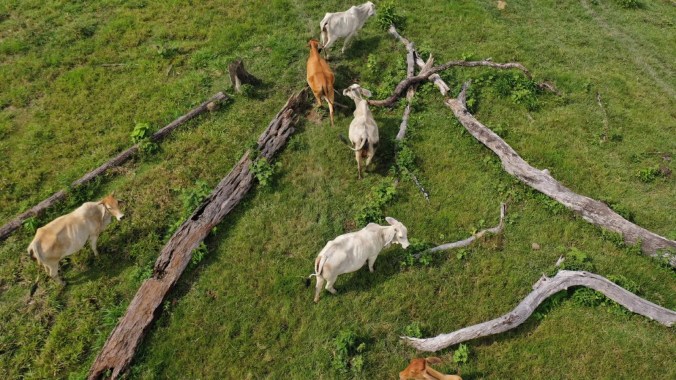
Cows are often described as climate change criminals because of how much planet-warming methane they burp. Continue reading

Carbon Capture, Scaled To Texas

A direct air capture system at the Carbon Engineering pilot facility in Squamish, British Columbia, Canada. Photograph: Bloomberg/Getty Images

Carbon capture technology has its skeptics, but it has steadily improved and is closer to proof of concept. Next step, scaling to Texas:

The world’s biggest carbon capture facility is being built in Texas. Will it work?

The plant will inject 500,000 tons of carbon dioxide into the ground each year – but is it just greenwashing from big oil?

Plastic membrane used in the direct air capture system. Photograph: Bloomberg/Getty Images

Rising out of the arid scrubland of western Texas is the world’s largest project yet to remove excess carbon dioxide (CO2) from the atmosphere, a quest that has been lauded as essential to help avert climate catastrophe. The project has now been awarded funding from the Biden administration, even as critics attack it as a fossil fuel industry-backed distraction. Continue reading

Heat Pumps Questioned

image: michael haddad

The technology of heat pumps was made understandable in an earlier article. While remarkable, questions have arisen. Read the following in full at The Economist to hear about it in more detail:

Heat pumps show how hard decarbonisation will be

The row over them portends more backlashes against greenery

They hang from the walls of utility rooms, nestle inside kitchen cupboards and hunker down in cellars. Continue reading
Insect Respect

Agronomist Caterina Luppa watches black soldier flies reproduce at Bugslife, a firm in Perugia, Italy, that is turning fly larvae into animal feed. LUIGI AVANTAGGIATO

We have featured this subject a few times over the years, especially once we started showcasing one such product. I acknowledge I am still not a total convert to an insect-centric diet, but every story like this draws me in, however slowly:

Edible Insects: In Europe, a Growing Push for Bug-Based Food

Marco Meneguz, an entomologist with BEF Biosystems in Casalnoceto, monitors black soldier flies as they mate. During mating, “the males gather in a courtship ritual characterized by fights and competitive displays,” he says. The blue light helps the flies see each other better. LUIGI AVANTAGGIATO

To rein in emissions, the E.U. is looking to insects as an alternate source of protein for livestock and people and is easing regulations and subsidizing makers of insect-derived food. In a photo essay, Luigi Avantaggiato explores the emerging bug food industry in northern Italy.

The European Union recognizes it has a meat problem. The bloc has no easy way to curb the climate impact of its livestock, which eat soybeans grown on deforested lands and belch heat-trapping gas. According to one estimate, Europe’s farm animals have a bigger carbon footprint than its cars.

Trent Barber, a technician at BEF Biosystems, vacuums up 200 pounds of fly larvae that are plump after two weeks of feeding on food scraps. The remaining food waste, now rich in excrement, will be sold as compost to farms. LUIGI AVANTAGGIATO

In this photo essay, Luigi Avantaggiato explores an unusual solution to this dilemma that is now gaining traction — feeding insects to livestock and, potentially, people. The European Commission says that insects could replace soy-based animal feed, helping to slow deforestation, or even supply an alternate source of protein for humans. Studies show that insects can furnish the same amount of protein as livestock while using as little as 10 percent of the land and producing as little as 1 percent of the emissions. Continue reading

Superbattery Explainer

The Economist’s explanation (subscription required) is clear:

Superbatteries will transform the performance of EVs

Provided manufacturers can find enough raw materials to make them

Asked what they most want from an electric car, many motorists would list three things: a long driving range, a short charging time and a price competitive with a similarly equipped vehicle that has an internal-combustion engine. Continue reading
Plastic Waste Losing Another Place To Land

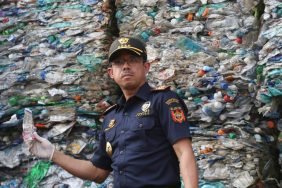
An Indonesian customs official intercepts a container full of illegally imported plastic waste in September 2019. ACHMAD IBRAHIM / AP PHOTO

When conscientious citizens learn more about where all the plastic goes when they do their part to recycle, it can be demoralizing. Recycling is important but the real solution is reducing the waste in the first place:

Indonesia Cracks Down on the Scourge of Imported Plastic Waste

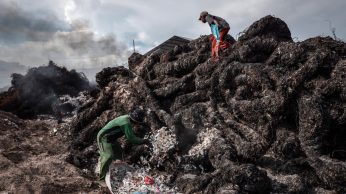
Workers prepare to burn plastic waste at an import dump in Mojokerto, Indonesia. ULET IFANSASTI / GETTY IMAGES

When China banned plastic waste imports in 2018, exporters in wealthy countries targeted other developing nations. Faced with an unending stream of unrecyclable waste, Indonesia has tightened its regulations and has begun to make progress in stemming the plastics flow.

In 2019, at a meeting in Geneva, Switzerland, delegates from 187 countries approved the first-ever global rules on cross-border shipments of plastic waste. Continue reading

Replanting With Edibles

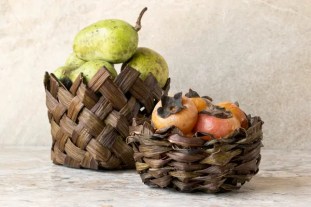
Your first taste of a ripe pawpaw, left, or American persimmon, right, may convince you to plant the trees, which can serve as the centerpiece of a permaculture food forest. J.B. Douglas

It is a relief, always, to read a Margaret Roach article when given the choice between her advice and any given news of the world:

Or just start by planting a few pawpaw or persimmon trees. Chances are, you’ll want more.

A long view of a food forest, with fruit trees growing in beds of companion plants.

At a permaculture site planted by Michael Judd, an edible landscape designer, each fruit tree is underplanted with beneficial companion plants, so “you’re not leaving your poor little fruit tree in a sea of grass,” he said. Michael Judd

Your first taste of a ripe pawpaw or persimmon can leave you hungry for more. That’s why Michael Judd is confident that he can persuade you to make room for several of these trees in your front yard — or even to surrender your lawn altogether.

Turning your yard into a meadow or blanketing it in an expanse of alternative ground covers aren’t the only ecologically viable options for replacing conventional grass. Continue reading

Paris & Continuous Greening

Paris’ iconic zinc roofs can heat up to 194 degrees F on a hot summer day. JAN WOITAS / PICTURE-ALLIANCE VIA GETTY IMAGES

We have celebrated the many greening efforts made in Paris over the last decade, and today is a small but important addition to our knowledge of those commitments. Our thanks to Jeff Goodell in Yale e360:

A rendering of a rooftop terrace installed by the Parisian startup Roofscapes. ROOFSCAPES

Paris When It Sizzles: The City of Light Aims to Get Smart on Heat

With its zinc roofs and minimal tree cover, Paris was not built to handle the new era of extreme heat. Now, like other cities worldwide, it is looking at ways to adapt to rising temperatures — planting rooftop terraces, rethinking its pavements, and greening its boulevards.

The tree-lined Boulevard des Italiens is much cooler than nearby streets that lack trees.

The tree-lined Boulevard des Italiens is much cooler than nearby streets that lack trees. MBZT VIA WIKIPEDIA

There’s a long tradition in France of taking August off for holiday. Paris virtually shuts down as the temperature drifts around in the seventies, and people go to the beach or the mountains to cool off and relax. Think of it as an old‑fashioned adaptation to heat. People who stick around during August are often older or have jobs that require them to stay and keep the city functioning. Continue reading

Celebrating Energy Independence

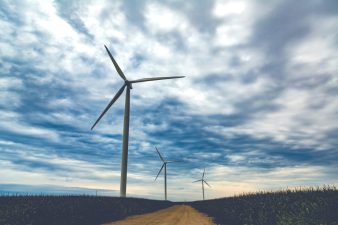
he Pioneer Prairie Wind Farm along the Iowa-Minnesota state line. TONY WEBSTER VIA WIKIPEDIA

If you are in the USA and are looking for more reasons to celebrate independence, consider renewables (thanks to Yale e360):

U.S. Wind and Solar Overtake Coal for the First Time

In a first for the U.S. power sector, wind and solar have generated more electricity than coal so far this year. Continue reading
Duckweed, By Plantible Foods

Duckweed at the Plantible Foods aqua farm in San Marcos, Calif. (Eric Thayer/for The Washington Post)

We link frequently to articles about meat replacement options, and this appears to be the first time that duckweed is the plant protein being featured. So, thanks to Michael J. Coren, a climate advice columnist at the Washington Post, for this:

The plant protein that could push meat off your plate

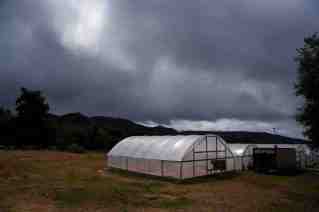
Plantible grows duckweed in ponds housed in greenhouses. (Eric Thayer/for The Washington Post)

SAN MARCOS, Calif. — I came to this aquatic farm an hour outside of San Diego because I wanted to see what could be the future of humanity’s protein supply.

At the moment, it looks more like a meth lab out of the drama “Breaking Bad,” jokes Tony Martens Fekini, the chief executive of Plantible Foods.

Debris from a machine that grinds duckweed. (Eric Thayer/for The Washington Post)

Decrepit recreational vehicles squat on the property. In one corner, people tend to vials, grow lights and centrifuges in a trailer lab. More than a dozen big ponds filled with duckweed, a tiny green plant, bask in the Southern California sunshine.

But the only thing cooking here is protein.

Continue reading

Celebrating French Environmental Commitments

Paris mayor Anne Hidalgo and the co-president of the Paris bid for the 2024 Olympics, Tony Estanguet, paddle on the Seine in Paris. Photograph: Reuters

Since 11+ years ago many valuable environmental opinions by George Monbiot have been linked to in our pages; today a celebration of a neighboring country’s efforts:

When it comes to rich countries taking the environment seriously, I say: vive la France

Emmanuel Macron’s government is at least doing the bare minimum to avert the planetary crisis – and putting the UK to shame

While we remain transfixed by a handful of needy egotists in Westminster and the crises they manufacture, across the Channel a revolution is happening. It’s a quiet, sober, thoughtful revolution, but a revolution nonetheless. France is seeking to turn itself into an ecological civilisation. Continue reading

Pyrolysis, Advanced Plastic Recycling, Explained

Plastic waste at a disposal plant in Tokyo. THE YOMIURI SHIMBUN VIA AP IMAGES

We have a difficult time giving Exxon and other petroleum companies the benefit of the doubt, but at minimum we want to understand what they say about what they are selling:

As Plastics Keep Piling Up, Can ‘Advanced’ Recycling Cut the Waste?

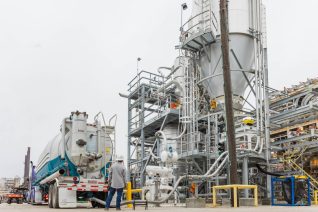
Exxon’s advanced recycling facility in Baytown, Texas. BUSINESS WIRE

Proponents of a process called pyrolysis — including oil and gas companies — contend it will keep post-consumer plastics out of landfills and reduce pollution. But critics say that by converting waste to petroleum feedstock, it will only perpetuate a dependence on fossil fuels.

Bob Powell had spent more than a decade in the energy industry when he turned his attention to the problem of plastic waste. Continue reading

Food Waste Best Practice, South Korea Edition

Unloading the food waste at a disposal facility in Seoul. Chang W. Lee/The New York Times

One of the most covered topics in our pages during the decade since we started paying attention to it, still going strong for all the wrong reasons; so, our thanks to the New York Times for assigning John Yoon (reporting, writing) and Chang W. Lee (for photographs and video) to go to South Korea:

Food waste being separated from plastic bags at the Goyang facility.

When wasted food rots in landfills, it pollutes soil and water — and warms the planet. Here’s how one country keeps that from happening.

Around the world, most of the 1.4 billion tons of food thrown away each year goes to landfills. As it rots, it pollutes water and soil and releases huge amounts of methane, one of the most potent greenhouse gases. Continue reading