Methane Leaks Plugged With Help From Above

Thanks to Public Broadcasting Service (USA) for this:

Satellites seek out methane leaks from pipelines, oil fields, landfills and farms

Satellite imagery shows a Russian gas pipeline (left) and highlights huge amounts of methane (right) being emitted from the pipeline on September 6, 2019. Kayrros and Modified Copernicus Data, 2019

The threat was invisible to the eye: tons of methane billowing skyward, blown out by natural gas pipelines snaking across Siberia. In the past, those plumes of potent greenhouse gas released by Russian petroleum operations last year might have gone unnoticed. But armed with powerful new imaging technology, a methane-hunting satellite sniffed out the emissions and tracked them to their sources.

Thanks to rapidly advancing technology, a growing fleet of satellites is now aiming to help close the valve on methane by identifying such leaks from space. The mission is critical, with a series of recent reports sounding an increasingly urgent call to cut methane emissions. Continue reading


Finnish Food Future

Solar Foods, a Finnish company, makes a weird promise on the landing page of its website; but still, thanks to the Guardian for this story behind the story:

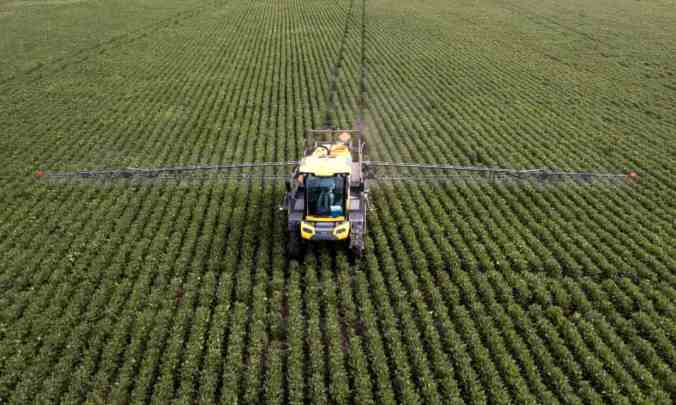
A soya bean field in Argentina. The study found a hectare of soya beans could feed 40 people, the solar-microbial process 520 per hectare. Photograph: Ivan Pisarenko/AFP/Getty Images

Microbes and solar power ‘could produce 10 times more food than plants’

The system would also have very little impact on the environment, in contrast to livestock farming, scientists say

Combining solar power and microbes could produce 10 times more protein than crops such as soya beans, according to a new study. Continue reading

More Charging Stations, Please

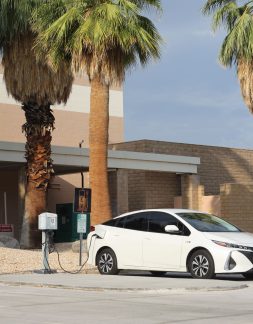
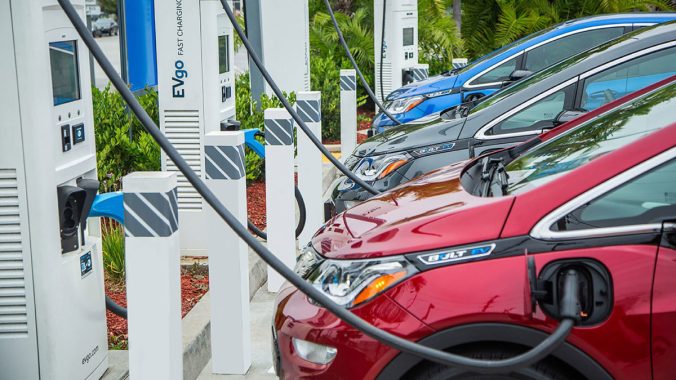
If we’re going to deal with the climate crisis, electric cars are a crucial part of the task. Photograph by Rebekah Zemansky / Shutterstock

In his weekly newsletter Bill McKibben shares an illuminating anecdote, titled Your Electric Vehicle Can’t Get There from Here—At Least, Not Without a Charge, about driving his electric car in New England that explains

Why we need to build a national network of charging stations fast.

I pulled into a Whole Foods parking lot in Bedford, New Hampshire, hoping against hope—but no, someone was already there, their Chevy Bolt plugged into the fast charger. Continue reading

The Sinking Cost Of Renewable Energy

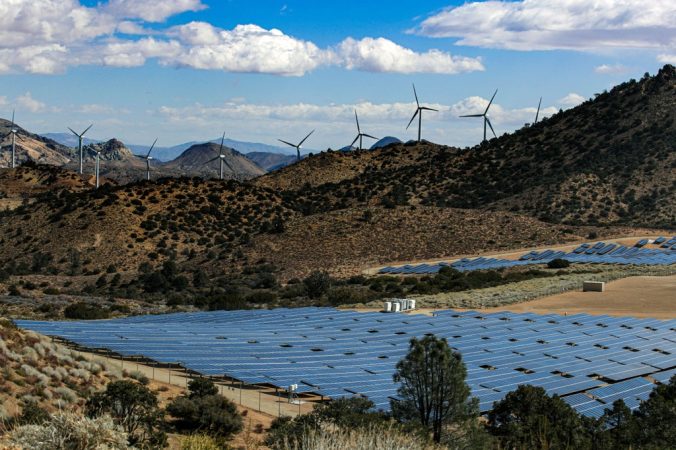
Because its costs continue to slide with every quarter, solar energy will be cheaper than fossil fuels almost everywhere on the planet by the decade’s end. Photograph by Irfan Khan / Los Angeles Times / Getty

Thanks to Bill McKibben, as always, for at least one bit of good news in his weekly newsletter:

Renewable Energy Is Suddenly Startlingly Cheap

Now the biggest barrier to change is the will of our politicians to take serious climate action.

Earth Week has come and gone, leaving behind an ankle-deep and green-tinted drift of reports, press releases, and earnest promises from C.E.O.s and premiers alike that they are planning to become part of the solution. There were contingent signs of real possibility—if some of the heads of state whom John Kerry called on to make Zoom speeches appeared a little strained, at least they appeared. (Scott Morrison, the Prime Minister of Australia, the most carbon-emitting developed nation per capita, struggled to make his technology work.) But, if you want real hope, the best place to look may be a little noted report from the London-based think tank Carbon Tracker Initiative. Continue reading

Urban Power Shifts

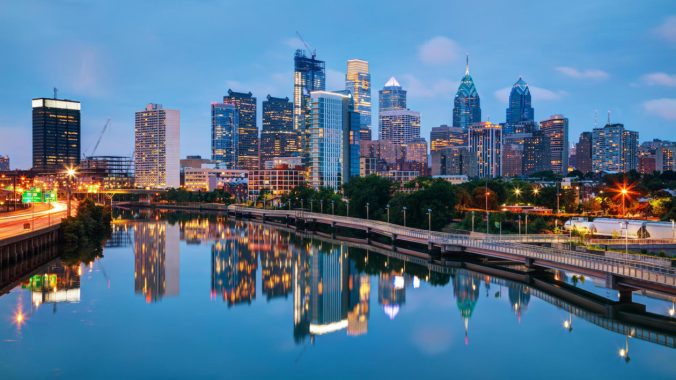
Center City Philadelphia, viewed from the Schuylkill River. ZOONAR GMBH / ALAMY STOCK PHOTO

Thanks to Jonathan Mingle  and Yale e360 for this analysis:

Cities Confront Climate Challenge: How to Move from Gas to Electricity?

Ending the use of fossil fuels to heat homes and buildings is a key challenge for cities hoping to achieve net-zero emissions. Nowhere is that more evident than in Philadelphia, where technical and financial hurdles and a reluctant gas company stand in the way of decarbonization.

In 1836, Philadelphians mostly used whale oil and candles to light their homes and businesses. That year, the newly formed Philadelphia Gas Works caused a stir when it lit 46 downtown street lamps with gas made from coal in its plant on the Schuylkill River. Continue reading

Scotland, Running On Almost 100% Renewables

GETTY IMAGES. Scotland’s renewables output has tripled in 10 years

Thanks to Scotland, for the ambition and demonstration; and to the BBC for reporting this:

Renewables met 97% of Scotland’s electricity demand in 2020

GETTY IMAGES. WWF Scotland is calling for an increased roll-out of electric vehicles

Scotland has narrowly missed a target to generate the equivalent of 100% of its electricity demand from renewables in 2020.

New figures reveal it reached 97.4% from renewable sources.

This target was set in 2011, when renewable technologies generated just 37% of national demand. Continue reading

Turning Point In USA’s Transition To Electric Vehicles

General Motors has partnered with EVgo to deploy more than 2,700 fast chargers across the U.S. CREDIT: GM

John Paul MacDuffie and Sarah E. Light, both professors at the Wharton School of Business at the University of Pennsylvania, have published an article on Yale E360 highlighting the improving potential for electric vehicles to dominate the USA market sooner than previously expected:

EV Turning Point: Momentum Builds for U.S. Electric Vehicle Transition

Driven by GM, Tesla, and the Biden administration, the U.S. is now poised to press ahead in the transformation to electric vehicles. Big challenges still loom, but technological advances, government support, and growing consumer appeal will drive the inevitable switch to EVs.

Last month’s failure of the Texas electric grid, coming just weeks after General Motors’ pledge to make only electric vehicles by 2035, highlights the daunting task the United States faces as it takes the first steps toward weaning its economy off fossil fuels. Continue reading

Offshore Wind Power, Eastern USA

Construction work underway at the Coastal Virginia Offshore Wind project, located 27 miles off the coast of Virginia Beach. DOMINION ENERGY

Thanks to Yale e360:

On U.S. East Coast, Has Offshore Wind’s Moment Finally Arrived?

After years of false starts, offshore wind is poised to take off along the East Coast. Commitments by states to purchase renewable power, support from the Biden administration, and billions in new investment are all contributing to the emergence of this fledgling industry.

The Block Island Wind Farm off the Rhode Island coast was the first commercial offshore wind farm in the U.S. when it became operational in 2016. DON EMMERT/AFP VIA GETTY IMAGES

About 60 miles east of New York’s Montauk Point, a 128,000-acre expanse of the Atlantic Ocean is expected to produce enough electricity to power around 850,000 homes when it’s populated with wind turbines and connected to the onshore grid in the next few years.

Fifteen miles off Atlantic City, New Jersey, another windy swath of ocean is due to start generating enough power for some 500,000 homes when a forest of 850-foot-high turbines start turning there in 2024.

Continue reading
Gas Stoves & Clever Misinformation

Mother Jones illustration; Getty

Thanks to Mother Jones for this article spotlighting why you might want to rethink your attachment to gas as a cooking fuel:

How the Fossil Fuel Industry Convinced Americans to Love Gas Stoves

And why they’re scared we might break up with their favorite appliance. Continue reading
Denmark’s Clean Energy Island

A simulation of Denmark’s clean energy island, due to be completed before 2033. Photograph: Danish government

Wind is picking up speed in the race for energy’s future, and to help governments meet climate goals. Denmark is in that race to win. Thanks to the Guardian for this story:

Denmark strikes deal on £25bn artificial wind energy island

Thanks to an inter-party agreement, the clean energy hub in the North Sea is set to be the largest construction project in Danish history

Denmark’s government has agreed to take a majority stake in a £25bn artificial “energy island”, which is to be built 50 miles (80km) offshore, in the middle of the North Sea.

The island to the west of the Jutland peninsula will initially have an area of 120,000 sq metres – the size of 18 football pitches – and in its first phase will be able to provide 3m households with green energy. Continue reading
Making A Better Carbon Chain

Animation by Megan McGrew/PBS Newshour

Thanks to Isabella Isaacs-Thomas and PBS Newshour for a look at our carbon chain through the lens of a scientist determined to making that chain more sustainable:

How this chemical engineer is hacking plastic production to promote sustainability

The products many of us purchase on a regular basis — the water bottles, clothes and, perhaps especially in the era of COVID, take-out containers from our local restaurants — are often plastic, disposable and bound to outlive us for generations. But the enormous amount of plastic waste that humans leave behind is a logistical and ecological nightmare, and experts say potential solutions must be approached from multiple angles, both for the planet’s sake and for our own. Continue reading

Look, Smell, Taste, Don’t Waste

Catchy. Effective? We will see.  Thanks to the Guardian for this view on a UK initiative to reducing food waste at home:

Cut food waste at home by sniffing and tasting, urges new campaign

National government-backed initiative will replace ‘use by’ with ‘best before’ and urge people to judge for themselves

Worried about whether the yoghurt, milk and cheese sitting in your fridge is still safe to eat? Rather than rely on the misleading “best by” date stamped on the side, perhaps its time to “sniff and taste” your staple foods. Continue reading

Checking Your Decision-Making On Climate Criteria

Illustration by Ka Young Lee

We missed this useful brief exercise when it was first published a few months ago. Our thanks to Veronica Penney for the quiz and the scientific study it was based upon:

Think You’re Making Good Climate Choices? Take This Mini-Quiz

If you take an airplane trip, can you make up for the planet-warming emissions from that flight by doing things like driving less and turning off the lights in your house? Continue reading

A 2020 Bright Spot

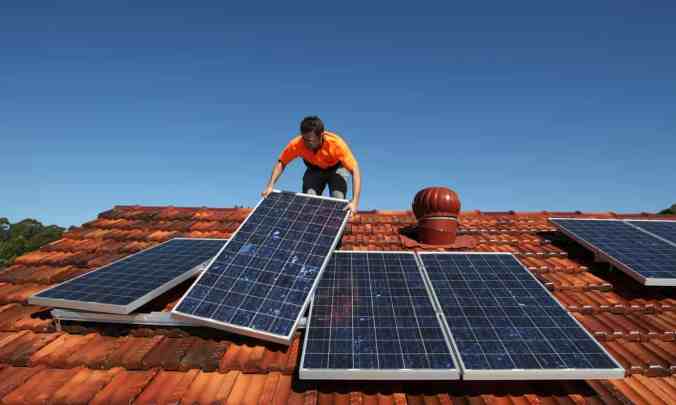
Solar panels are installed on to the roof of a house in Sydney, Australia. Almost 90% of new electricity generation in 2020 will be renewable, the IEA says. Photograph: Reuters

Thanks to the Guardian’s Environment editor Damian Carrington for this sunny news:

International Energy Agency expects green electricity to end coal’s 50-year reign by 2025

Global renewable electricity installation will hit a record level in 2020, according to the International Energy Agency, in sharp contrast with the declines caused by the coronavirus pandemic in the fossil fuel sectors. Continue reading

Upcycled Foods, Circa Late 2020

The first time I saw upcycling in action, I did not know the word. It became part of my vocabulary in 2012. And then I started seeing it more frequently, but only years later before I would see it in relation to food. Now it is more mainstream, but this PBS news segment shocked me anyway, with the revelation of how much waste there is in the production of tofu. In my experience growing up in the USA, tofu was one of the first “green foods” on the market. Little did we know. Shock is sometimes followed by awe. Case in point: Renewal Mill is providing solutions to tofu production waste and other forms of food waste that seem obvious once you see them do it. But first, someone had to do it. I have not tasted their products yet but I am confident I would savor it on multiple dimensions.

Getting Real About Plastic

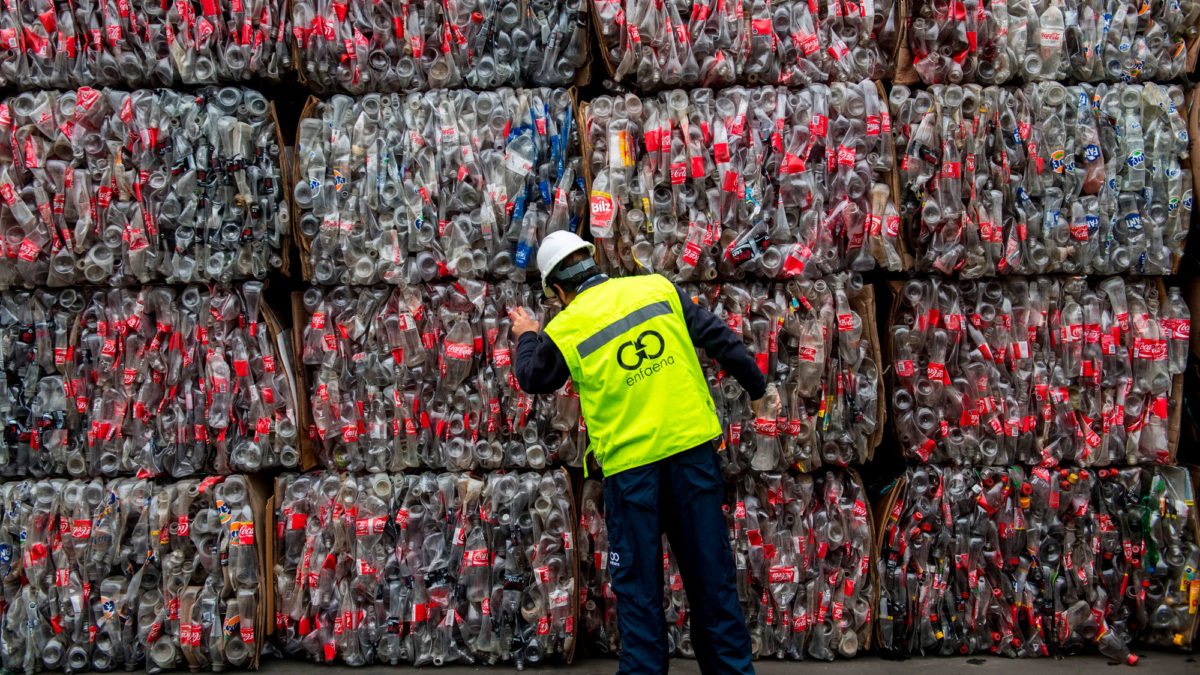
A worker examines plastic bottles at a recycling center in Santiago, Chile. MARTIN BERNETTI/AFP VIA GETTY IMAGES

We admit to optimism as recently as three months ago on this issue, which we have been reading about since five years ago. Thanks to Jim Robbins for keeping it real:

Why Bioplastics Will Not Solve the World’s Plastics Problem

Coca-Cola’s new PlantBottle is made from 30 percent sugar cane and other plants, with the rest made from traditional oil-based plastic. COCA-COLA

Bioplastics are being touted by industry marketers as the solution to plastics pollution. But the idea that bottles and packaging made of plant-based material can simply be discarded and then break down and disappear is false – recycling and reuse are the only strategies that can work.

Coca-Cola calls it the PlantBottle — a new kind of recyclable plastic container, 30 percent of which is made from sugar cane and other plants, with the remaining 70 percent made from traditional oil-based plastic. The company says that PlantBottle packaging now accounts for nearly a third of its North American bottle volume and seven percent globally. Continue reading

New Machines, New Skills, New Hope

McKibben-NorthDakotaWindTurbines

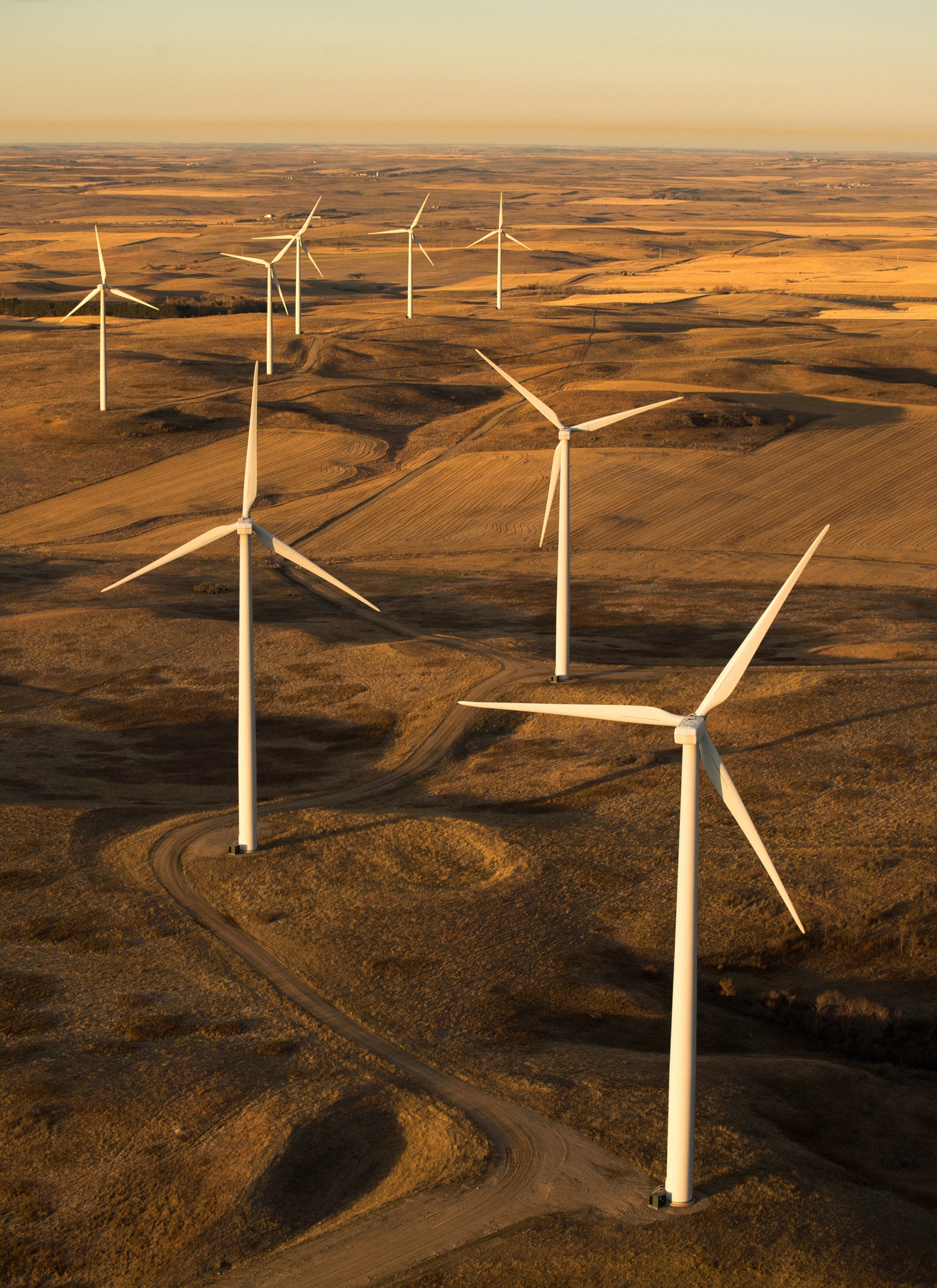
Renewable-energy projects are now finding capital faster than fossil fuels. Photograph by Ken Cedeno / Getty

Since our platform name change, each daily post has been either about coffee or about birds. We have not neglected or forgotten our commitment to all the other important environmental, conservation, culture and related themes this platform has showcased, under whichever name. Today, Bill McKibben, one of our favorite sources of both depressing and heartening environmental news, is our go-to for some good news:

North Dakota Oil Workers Are Learning to Tend Wind Turbines—and That’s a Big Deal

I enjoy big machinery, and it punched all those buttons,” Jay Johnson told me. “They really are big, and, if you like machinery, then there you go.” Johnson has one of the jobs that might, with luck, come to define our era. At Lake Region State College, in Devils Lake, North Dakota, he trains former oil workers for new careers maintaining giant wind turbines. The skills necessary for operating the derricks that frack for crude in the Bakken shale, he says, translate pretty directly into the skills required for operating the machines that convert the stiff winds of the high prairies into electricity. That is good news, not only because it’s going to take lots of people to move the world from oil and gas to solar and wind but because people who work in hydrocarbons are going to need new jobs now that the demand for hydrocarbons is dropping. “It’s impossible to overstate the stillness” in the oil fields now, Johnson says. “Nothing is happening, zero work, and it sure is scary.” Continue reading

Bureo & Tin Shed Ventures

tsv-main-logoBureo is news to us, and we like good news. We are always on the lookout for fellow travelers, and while Tin Shed Ventures is by no means new it is news to us. And newsworthy based on the partners they have chosen:

Tin Shed Ventures is Patagonia’s corporate venture capital fund, which invests in start-ups that offer solutions to the environmental crisis. Originally launched as $20 Million and Change in May 2013, Tin Shed Ventures partners with businesses focused on building renewable energy infrastructure, practicing regenerative organic agriculture, conserving water, diverting waste and creating sustainable materials. Continue reading

The New Commute

merlin_173044968_b11a15e2-c026-42bf-b05b-38a6d8a3782a-jumbo

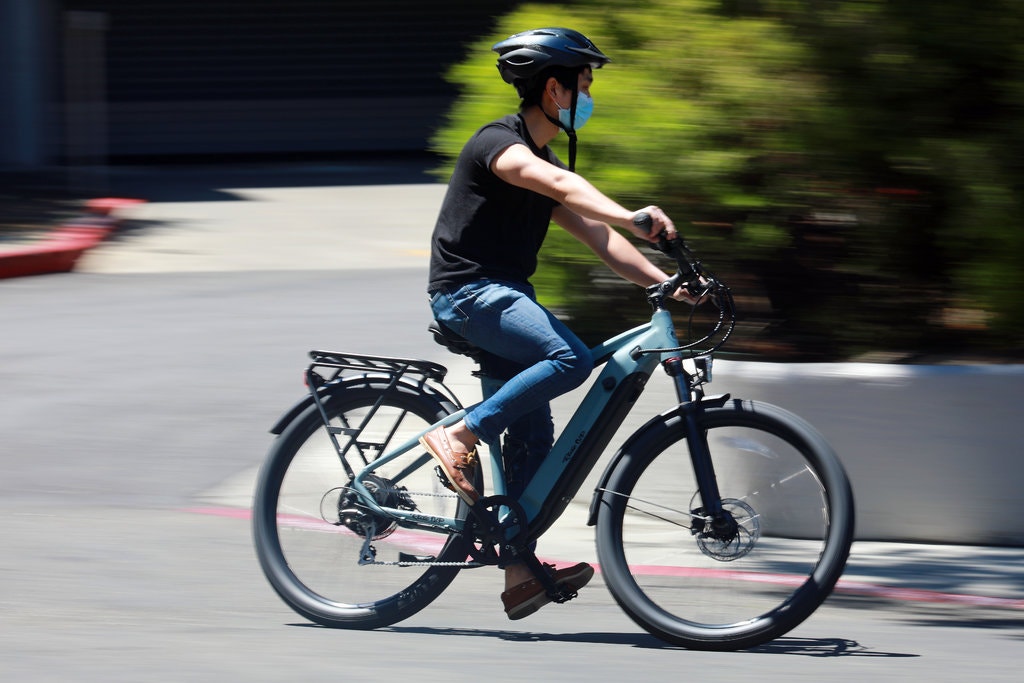
Jim Wilson/The New York Times

If they displace congesting and polluting four-wheel alternatives, they are worth a look:

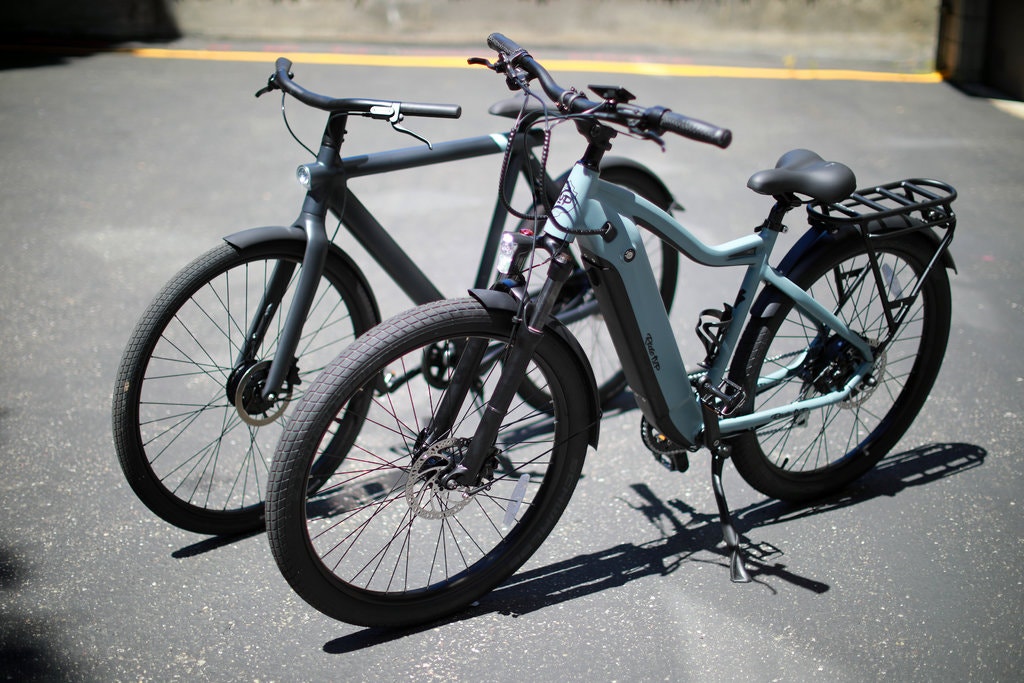
E-Bikes Are Having Their Moment. They Deserve It.

The benefits of owning a battery-powered two-wheeler far outweigh the downsides, especially in a pandemic.

merlin_173044839_217a78b8-1b5d-41a2-9a95-0f9a3a39095d-jumbo

Credit…Jim Wilson/The New York Times

Many of us are entering a new stage of pandemic grief: adaptation. We are asking ourselves: How do we live with this new reality?

For many Americans, part of the solution has been to buy an electric bike. The battery-powered two-wheelers have become a compelling alternative for commuters who are being discouraged from taking public transportation and Ubers. For others, the bikes provide much-needed fresh air after months of confinement. Continue reading

What To Do With Expired Trees

USDA_USFS_Sierras_web

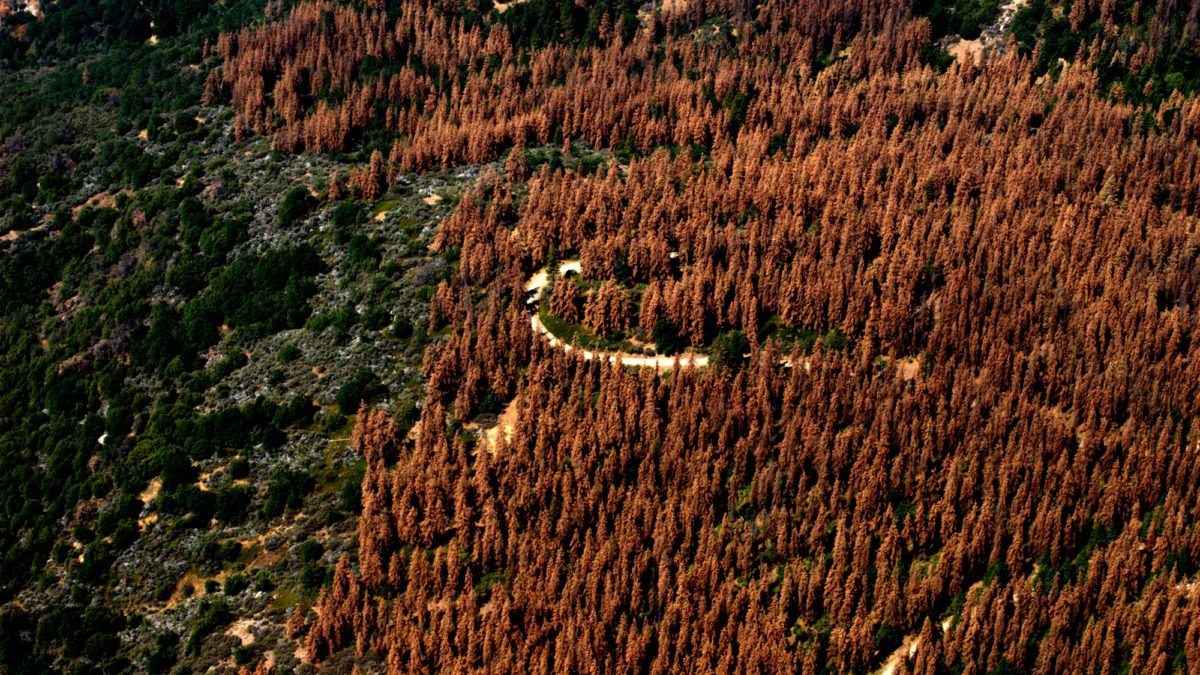
Dead trees in a California forest in August 2016. U.S. FOREST SERVICE

It sounds like the inverse of rewilding’s restorative approach, when there is a large patch of expired trees; decisions must be made. Thanks to Jane Braxton Little for laying out the questions:

In California, A Push Grows to Turn Dead Trees into Biomass Energy

As forests in California and the Western U.S. are hit by rising numbers of fires and disease outbreaks related to climate change, some experts argue that using dead and diseased trees to produce biomass energy will help to restore forests and reduce CO2 emissions.

Jonathan Kusel owns three pickups and a 45-foot truck for hauling woodchip bins. He operates a woodchip yard and a 35-kilowatt biomass plant that burns dead trees, and he runs a crew marking trees for loggers working in national forests. Those are a lot of blue-collar credentials for a University of California, Berkeley PhD sociologist known for his documentation of how the decline of the timber industry affects rural communities. Continue reading