Mass Timber & Metrics Of Ecology

Mjosa-Tower_Norway_42987-Bilder-til-Mj_starnet-episode-3_web.jpg

Mjösa Tower, the world’s tallest wooden building, under construction in Brumunddal, Norway. ANTI HAMAR

Thanks to Yale e360 and especially to Jim Robbins, as always, for keeping us up to date on the most interesting new developments in our natural world and its built spaces:

As Mass Timber Takes Off, How Green Is This New Building Material?

Mass timber construction is on the rise, with advocates saying it could revolutionize the building industry and be part of a climate change solution. But some are questioning whether the logging and manufacturing required to produce the new material outweigh any benefits.

Carbon12_Portland_web.jpg

Carbon 12 in Portland, Oregon is the tallest building in the United States made with mass timber. COURTESY OF KAISER + PATH
2 / 4

The eight-story Carbon 12 building in Portland, Oregon is the tallest commercial structure in the United States to be built from something called mass timber.

If the many fervent boosters of this new construction material are right, however, it is only one of the first mass timber buildings among many, the beginning of a construction revolution. “The design community in Portland is enthralled with the material,” said Emily Dawson, an architect at Kaiser + Path, the locally-based firm that designed Carbon 12.

The move to mass timber is even farther along in Europe. That’s because mass timber – large structural panels, posts, and beams glued under pressure or nailed together in layers, with the wood’s grain stacked perpendicular for extra strength – is not only prized as an innovative building material, superior to concrete and steel in many ways, it is also hoped it will come into its own as a significant part of a climate change solution. Continue reading

In Case Of Emergency, Plant Trees

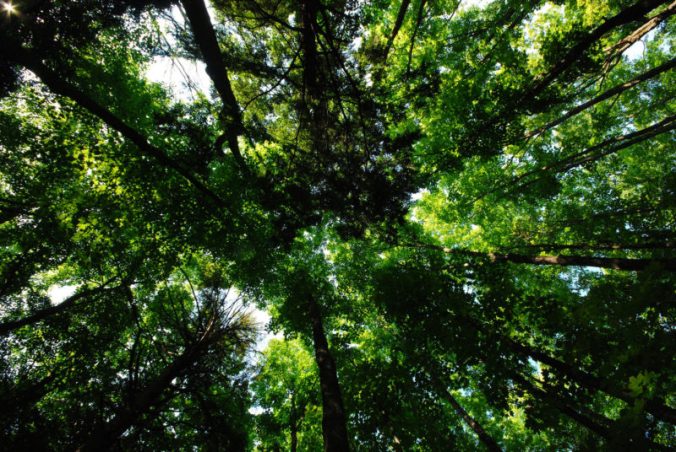
Fox-Maple-Woods_Wisconsin_JoshuaMayer_web.jpg

Fox Maple Woods in Wisconsin. JOSHUA MAYER / FLICKR

Emergency? The evidence is clear in the case of the environment, and it is a global emergency with a global solution. Thanks to Yale e360 for this summary of a new finding:

Planting 1.2 Trillion Trees Could Cancel Out a Decade of CO2 Emissions, Scientists Find

There is enough room in the world’s existing parks, forests, and abandoned land to plant 1.2 trillion additional trees, which would have the CO2 storage capacity to cancel out a decade of carbon dioxide emissions, according to a new analysis by ecologist Thomas Crowther and colleagues at ETH Zurich, a Swiss university. Continue reading

I’d Like To Spend Some Time In Mozambique

merlin_140018319_94bfdc4a-189d-4677-b377-eb8b81f1a037-jumbo.jpg

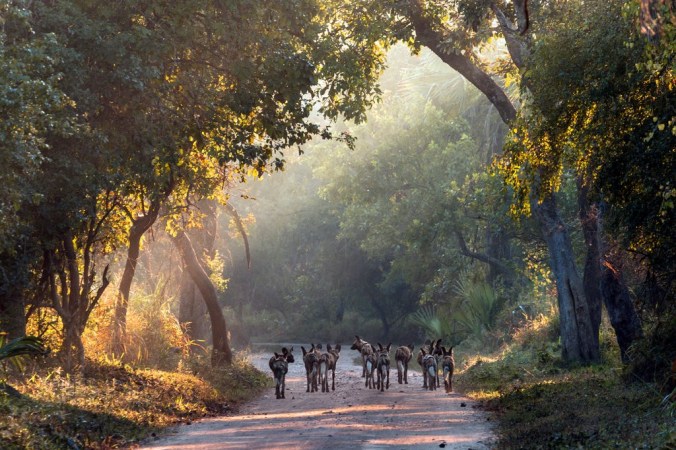
Wild dogs, apex predators missing from Gorongosa National Park for decades, have been reintroduced and are slowly making a comeback, part of an ongoing experiment in reviving the park ecosystem after years of devastating war. Credit Brett Kuxhausen/Gorongosa Media, via Associated Press

Thanks to one of our favorite science writers, the ever-optimistic Natalie Angier, for this note of hope:

In Mozambique, a Living Laboratory for Nature’s Renewal

At Gorongosa National Park, scarred by civil war, scientists are answering fundamental questions about ecology and evolution, and how wildlife recovers from devastation.

merlin_141449499_47b588fd-25e2-4c3c-81b1-1071419e6d19-jumbo.jpg

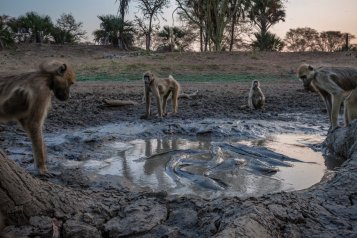
Baboons and sharptooth catfish in the Mussicadzi River in the park during the dry season. The baboons in Gorongosa are brazen and plentiful, as there aren’t many leopards to keep them in check. Credit Piotr Naskrecki & Jen Guyton/NPL/Minden Pictures

GORONGOSA NATIONAL PARK, MOZAMBIQUE — The 14 African wild dogs were ravenous, dashing back and forth along the fence of their open-air enclosure, or boma, bouncing madly on their pogo-stick legs, tweet-yipping their distinctive wild-dog calls, and wagging their bushy, white-tipped tails like contestants on a game show desperate to be seen.

Since arriving at the park three months earlier, as they acclimated to their new setting and forged the sort of immiscible bonds that make Lycaon pictus one of the most social mammals in the world, the dogs had grown accustomed to a daily delivery of a freshly killed antelope to feast on. Continue reading
Agroecology, A Guiding Principle For Food Entrepreneurship

Ryan Donnell for The New York Times

Our attention has been on food entrepreneurship recently, and here we continue the thread. With agroecology, a new word and robust concept, we have new food for thought. And for that we thank one of our favorite food writers, who we have relied since the first year of this platform. Many of the food stories we have linked to over the years have been authored by him. A year ago we linked to this story, which marked the first time we noted him as an activist. We expect, after reading Bringing Farming Back to Nature, which he co-authored with Daniel Moss, that he has found his new calling:

Workers in a paddy field in the state of Andhra Pradesh, India. Credit Noah Seelam/Agence France-Presse — Getty Images

Farming the land as if nature doesn’t matter has been the model for much of the Western world’s food production system for at least the past 75 years. The results haven’t been pretty: depleted soil, chemically fouled waters, true family farms all but eliminated, a worsening of public health and more. But an approach that combines innovation and tradition has emerged, one that could transform the way we grow food. It’s called agroecology, and it places ecological science at the center of agriculture. It’s a scrappy movement that’s taking off globally. Continue reading
Global Problems, Forests & Solutions

19lovejoy-reid-jumbo.jpg

Thomas E. Lovejoy a pioneer in the use of economics to conserve forests and other ecosystems globally is joined by John Reid, who has worked in the Amazon since 1965, in presenting a case for:

How Big Forests Solve Global Problems

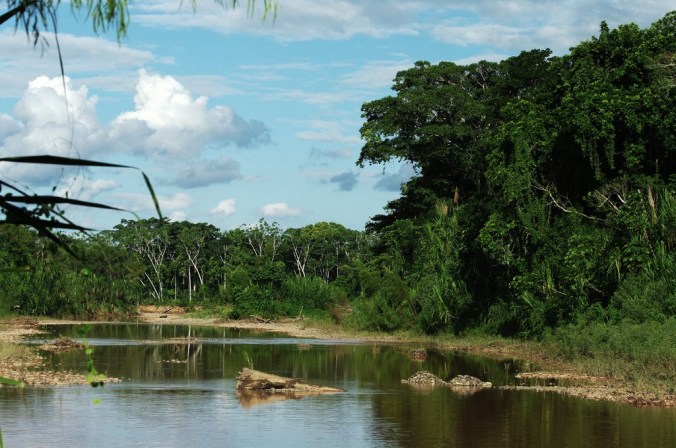
Sit on a log by the Madidi River in Bolivia at dusk and you can hear what an Amazon forest should sound like. The music includes red howler monkeys, breathy thumps from the mutum jungle fowl, droning cicadas, eerie calls locals attribute to deadly bushmaster vipers and the unhinged excitement of elusive titi monkeys. Around your feet, the beach is crisscrossed by jaguar tracks and those of the pony-size tapir, a shy beast that, if you keep quiet, will saunter out of the forest and swim across the river.

This is what scientists call an “intact forest landscape.” It’s a swath of at least 500 square kilometers (about 193 square miles, equal to 70,000 soccer fields) of unbroken forest. Because of their size, these areas have maintained all their native plant and animal life and biophysical processes. These forests still adorn parts of our planet’s tropical midsection, notably the Amazon, Congo Basin and the island of New Guinea. And they form a northern belt, the boreal forests of Canada, Russia, Alaska and Scandinavia. Continue reading

Biodiversity From Another Perspective

lrivera-species-yale

ILLUSTRATION BY LUISA RIVERA/YALE E360

Thanks to Jim Robbins at Yale 360 for this:

Beyond Biodiversity: A New Way of Looking at How Species Interconnect

In a development that has important implications for conservation, scientists are increasingly focusing not just on what species are present in an ecosystem, but on the roles that certain key species play in shaping their environment. Continue reading

Keeping Species Populations Healthy


lead_960x.jpg

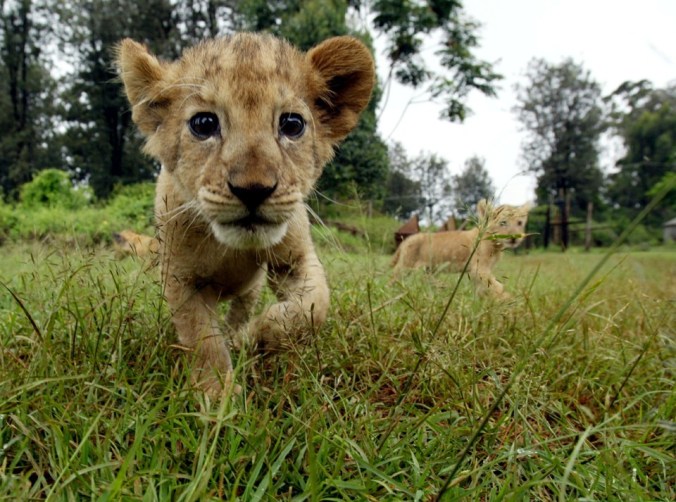
Lion cubs in Kenya. Radu Sigheti / Reuters

At Chan Chich Lodge we are aware that the half million acres of forest surrounding us are essential habitat not just for the specific jaguars, pumas, ocelots, margays and jaguarundis we have the good fortune to see with some frequency. Rather, that scale of acreage is essential for species survival. We are in a large forest corridor that is increasingly rare and unfortunately fragile in other locations throughout the Americas where they still exist. We do what we do with that in mind. Thanks to Ed Yong, at the Atlantic, for this context on extinction:

Imagine if every animal and plant on the planet collapsed into a single population each, says ecologist Gerardo Ceballos. If lions disappeared except from one small corner of Kenya, the prey they keep in check would run amok everywhere else. If sparrows were no more except in one Dutch forest, the seeds that sparrows disperse would stay in place everywhere else. If honeybees became isolated to one American meadow, the flowers that they pollinate would fail to reproduce everywhere else. None of those species would be extinct per se, “but we’d still be in very bad shape,” says Ceballos. Continue reading

A Metric For Reinvention

Edge.jpg

Click above for 26 minutes of intelligent contemplation. Neuroscience meets environmentalism. He was a New York Times science writer, then the author of one of the most influential nonfiction books of recent decades. Now, he is the gift that keeps on giving:

Daniel Goleman

One way a systems perspective could help with the environmental crisis is through understanding that we have a very narrow range of affordances, the choices presented to us. Continue reading

Optimal Mangrove

sundarbans.jpg

Photo: NASA

Thanks to Anthropocene’s Brandon Keim for the summary and insights from  Mangroves optimized: How to make coastal habitats sequester even more carbon:

Of all the carbon buried in the floors of Earth’s oceans, most of it is found in the narrow strip of tidal marshes, seagrass beds, and mangroves along their edge. Known as blue carbon ecosystems, these vegetated coastal habitats “occupy only 0.2% of the ocean surface, yet contribute 50% of the total amount of carbon buried in marine sediments,” write researchers, led by Deakin University ecologist Peter Macreadie, in the journal Frontiers in Ecology in the Environment. Meter for meter, they’re some of the most effective carbon storage systems we have. But could people make them even more effective? Continue reading

Ranching, Recovery & Reason

MasterSceneofSilverCreek-GuiseppeSiata-1260x708.jpg

If you missed this post, it is worth a read for perspective either before or after the story below, and even if you do not read the story below that one should not be missed. Thanks to Cool Green Science:

Ridding the West of cattle remains a priority for some organizations and individuals. “Ranching,” the director of one prominent group told High Country News, is among “the most nihilistic lifestyles this planet has ever seen. Ranching should end. Good riddance.” Another group charges that ranching causes “desertification.” Another proclaims that “grazing spreads weeds.” Still another cites as a “myth” that “profitable livestock production and ecological preservation can coexist.” Continue reading

Osage Nation’s Reign Of Terror

20253bbcb2dd6c45dd81207b5472e853c352bbd3Many of our links to the too many stories of injustice perpetrated against Native Americans in the last year had to do with pipelines.  Some stories focus on the positive, but there remains plenty of negative. The only time we have noted the Osage Nation in these pages, it was under the happier circumstances of someone doing the right thing by them.

David Grann’s new book is being reviewed, and he is being interviewed, just as one of his earlier articles has become a powerhouse cinematic experience. He is our kind of sleuth, and so it is strange that we have not linked to his work before. Thanks to Theodore Ross in the New Republic for bringing this to our attention:

…In the early 1900s, the Osage were among the wealthiest people in the United States, after a large oil reservoir was discovered beneath the barren Oklahoma scrubland they had been driven to by white settlers and the federal government. Then tragedy: a string of murders, each following close on the heels of the next, as a bloody plot to separate the Osage from their money and land unfolded.

Grann tells the story of these murders, the conspirators, and the new breed of lawmen from the FBI who hunted them down. He also reveals a far worse scheme, one that encompasses America’s institutional racism and violence, and the exploitation of Native Americans… Continue reading

Footprint Improvements

Footprint

Believe it or not, there is some good news out there on the carbon footprint trail. Thanks to Mathis Wackernagel, whose work I have appreciated even without posting more since 2011, and to his whole team for sharing this:

Ecological Footprint Explorer Open Data Platform Launches April 5, 2017

The US per capita Ecological Footprint dropped nearly 20% during the last eight years of available data (2005 and 2013), a total reduction that matches the entire Footprint of Germany. Continue reading

Mangroves Need Intent And Action

srilanka_tsunami.jpg

Image: Irish Typepad / Flickr

Thanks to Anthropocene for this summary by Brandon Keim of new scientific findings showing that Good intentions alone won’t grow new mangroves:

Perhaps no single ecosystem is more emblematic of nature’s benefits to humans than mangrove forests. Lining tropical and subtropical coastlines worldwide, they’re nurseries for countless species and protect inland areas from hurricanes and storms. They’re an environmental feature beyond our wildest technical capacities. Continue reading

Tropical Peatland & Carbon Storage

2764

The remote Cuvette Centrale peatlands in the central Congo basin is one of the most carbon-rich ecosystems on Earth. Photograph: Simon Lewis/University of Leeds

This story was also covered in the New York Times, but the Guardian had a jump on the scoop, and included a photo (above) that more effectively helps to understand peat’s role in carbon capture; so we feature their story here:

World’s largest tropical peatland found in Congo basin

Carbon-rich peatlands could store three years’ worth of world’s total fossil fuel emissions, say scientists Continue reading

Walden Pond’s Enduring Lessons

08stager-master768.jpg

Kevin Hooyman

When a professor does years of research and teaching on a topic related to this particular pond, and then takes the additional effort to share his observations in cogent form as an op-ed, we believe it is worth at least 5-10 minutes of reading time:

What the Muck of Walden Pond Tells Us About Our Planet

By

In 1845, Henry David Thoreau repaired to a cabin in the woods beside Walden Pond “to front only the essential facts of life, and see if I could not learn what it had to teach.” During the last two years, my students and I have come to that same pond to see what we could learn from the sediments beneath it. Continue reading

Tree Elders & Drought

sequoias-1_custom-9d831bf09949d38d3d16746b895b30fc2bfa786a-s1100-c85.jpg

Giant sequoias in the Sierra Nevada range can grow to be 250 feet tall — or more. John Buie/Flickr

Thanks to National Public Radio (USA):

How Is A 1,600-Year-Old Tree Weathering California’s Drought?

It’s been a brutal forest fire season in California. But there’s actually a greater threat to California’s trees — the state’s record-setting drought. The lack of water has killed at least 60 million trees in the past four years.

Scientists are struggling to understand which trees are most vulnerable to drought and how to keep the survivors alive. To that end, they’re sending human climbers and flying drones into the treetops, in a novel biological experiment. Continue reading

Viewing the Nobel Prize Through a 21st Century Lens

We believe in the core principle from market-based economics that incentives drive behavior. We lean toward behavioral economics as a more robust and believable model than the standard “homo economicus” (read oversimplified but mathematically model-able idea of human decision-making) taught to most 20th century students. We believe that desire for recognition is an incentive commonly found among super-achievers. And this explains why “big” prizes are created and tend to matter over time. Not to  suggest that geniuses chase prizes (on the contrary, much of the time).

But the Nobel probably inspires its fair share of young academics in a few fields. For that reason we find this editorial opinion piece quite compelling, especially due to the first example given:

In the mid-1960s, Robert Paine, a scientist at the University of Washington in Seattle, discovered a hidden organizing principle in the coastal ecosystem he was studying. When a certain species of starfish was present, a panoply of algae, limpets, barnacles, anemones and mussels lived in delicate, dynamic balance. But when he removed the starfish and tossed them into the ocean, that balance collapsed and one kind of mussel took over.

Dr. Paine coined a term to describe the starfish’s outsize influence: keystone species. Keystone species have since been identified in forests, in grasslands, in the ocean and even in the human gut. The concept has become one of ecology’s guiding theoretical principles, Continue reading

The Legacy of U.S. National Park System

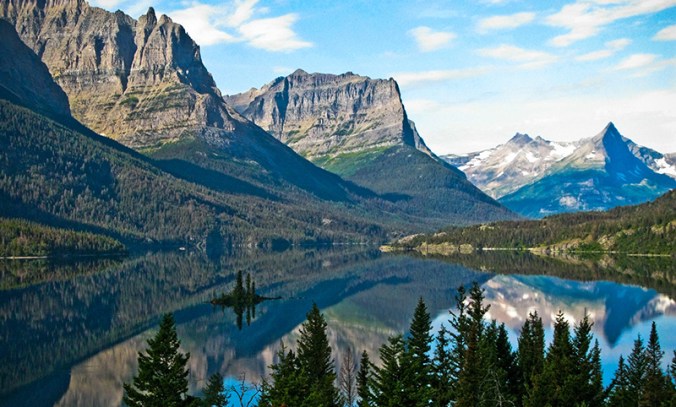
glaciernationalpark_davesizer800

Saint Mary Lake in Glacier National Park, Montana. All images from: Yale News

Thanks to Yale News for a wonderful commemoration to the history and value to the scientific community of the U.S. National Park system – visit our National Parks category page for over a hundred posts on the subject – as we celebrate its centennial today (US time, it’s still August 25th):

As the United States marks the centennial of the National Park Service, which was officially established 100 years ago this week, the nation’s parks are being widely celebrated for their natural grandeur and vistas, their wildlife, and their abundant recreational opportunities.

Far less appreciated though is the critical role that the U.S.’s 59 national parks and hundreds of other park service units play in scientific research, providing unspoiled, protected, and accessible landscapes that host research that can be done few other places. In fact, with a long history of data and field study on everything from wildlife to wildfires, the national parks offer scientists an incredibly rare living outdoor lab. And the high profile of the parks in the American imagination often provides an avenue for conveying that research to the public.

Continue reading

If You Happen To Be On Long Island (NY, USA)

WetLandforWeb.jpg

Photo © Jacques-Jean Tiziou / http://www.jjtiziou.net

From the website of Parrish Art Museum:

About WetLand

WetLand is a modified houseboat made by the ecological artist Mary Mattingly to demonstrate easy-to-do sustainability projects (solar power, rain water collection and purification, vegetable gardening, upcycling, etc.). WetLand describes the impact each individual can have on the environment. The vessel is being brought to the East End in conjunction with the exhibition, Radical Seafaring, and will be located on Long Wharf in Sag Harbor. Continue reading

Microplastics Killing Fish

2556

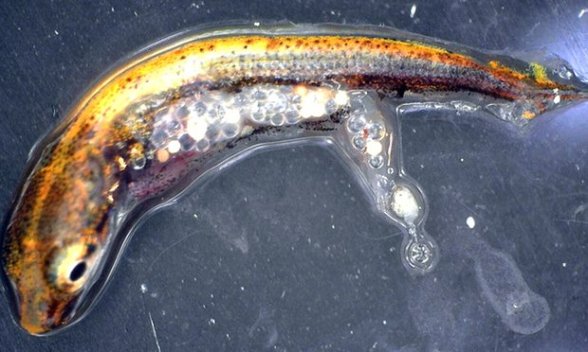
Microplastics visible in a pike. Photograph: Oona Lönnstedt/Science

We’ve posted about microplastics before, since they are becoming a problem for oceans’ health. They can be found in sea salts and all over our shores, but also in fish, where the tiny particles stunt growth and alter the behavior of some species that ingest the plastics. Fiona Harvey reports for The Guardian:

Fish are being killed, and prevented from reaching maturity, by the litter of plastic particles finding their way into the world’s oceans, new research has proved.

Some young fish have been found to prefer tiny particles of plastic to their natural food sources, effectively starving them before they can reproduce.

The growing problem of microplastics – tiny particles of polymer-type materials from modern industry – has been thought for several years to be a peril for fish, but the study published on Thursday is the first to prove the damage in trials.

Continue reading