Horticultural Midwifery

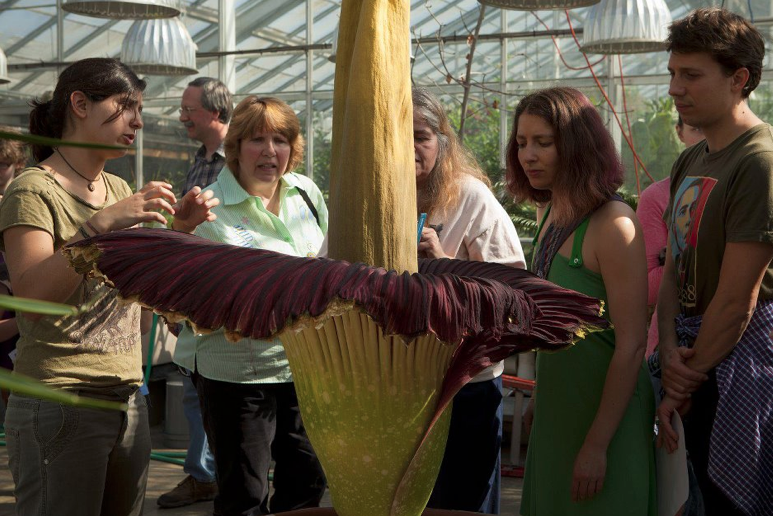
Photo: Robert Barker / Cornell University

At risk of being labeled a “horticultural geek” I feel compelled to continue Audrey‘s story.  (Although I surely should stop calling the plant by that name, but once again, I can’t seem to help myself.)

Most plants in cultivation require human pollination in order to remain genetically viable.  The Titan Arum is no acception.  In fact, this plant actually can’t self pollinate because the 450 female flowers that ring the base of the column-like structure (spadix) are receptive days before the the 500 to 1,000 male flowers above them are ready to  shed their pollen. (Even in botany females mature earlier than males!) Continue reading
Humongous, Malodorous and Rare


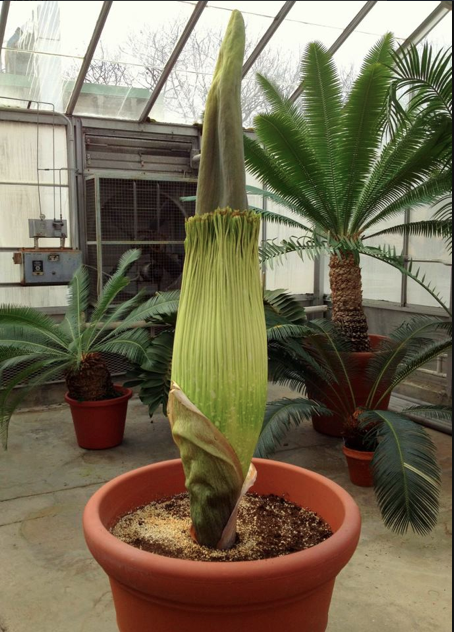
It’s big. It’s green. Its growth is rapid. And even before it actually blooms it easily brings “Audrey”, the plant from The Little Shop of Horrors to mind. An extremely rare titan arum, also called the corpse plant, is expected to bloom at the Kenneth Post Lab Greenhouses at Cornell University this week.

Titan arum, also known as Amorphophallus titanum, is a plant that grows in the wild only in the rainforests of Sumatra and rarely blooms in cultivation. Many universities and botanical gardens have specimens, but there have been approximately only 140 such cultivated blooms in recorded history.   Continue reading

Really, Monsanto?

We try to be careful consumers of information, and link out to stories that match our interests and have relevant factual content.  Not everything that every government says passes the “truthiness” test, but we are reflexively interested in the views and findings of a group like this:

PEER is a national non-profit alliance of local, state and federal scientists, law enforcement officers, land managers and other professionals dedicated to upholding environmental laws and values.

Reflexive does not mean blindly accepting of everything they say, but we are inclined to pay attention to scientific findings related to the environment.  When they raise issues like this related to wildlife refuges then the inclination transforms into something stronger and more urgent: Continue reading

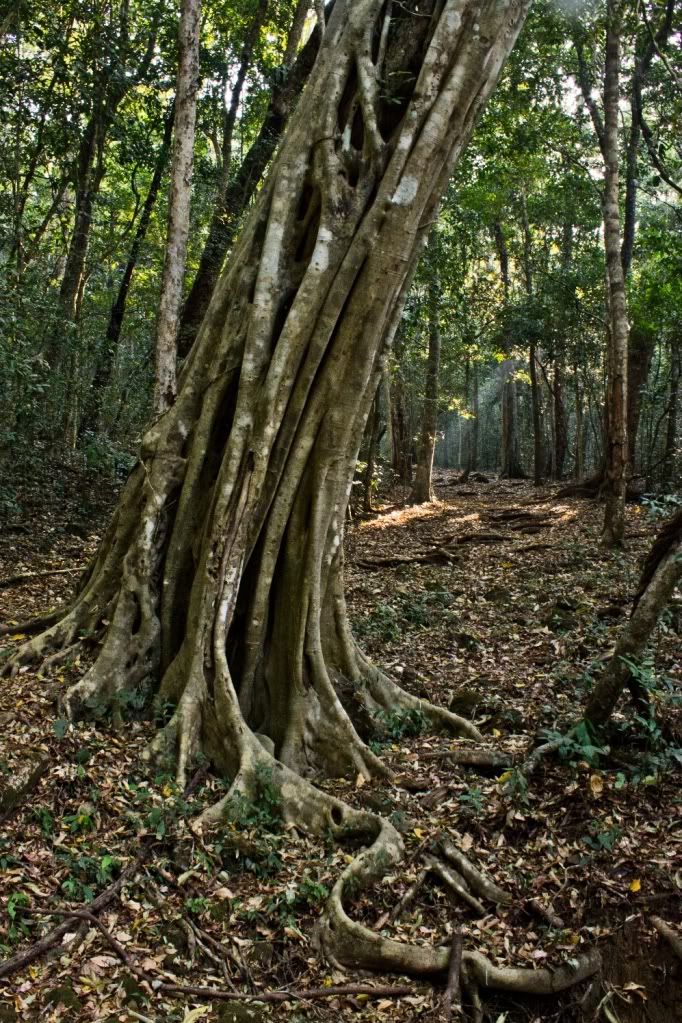
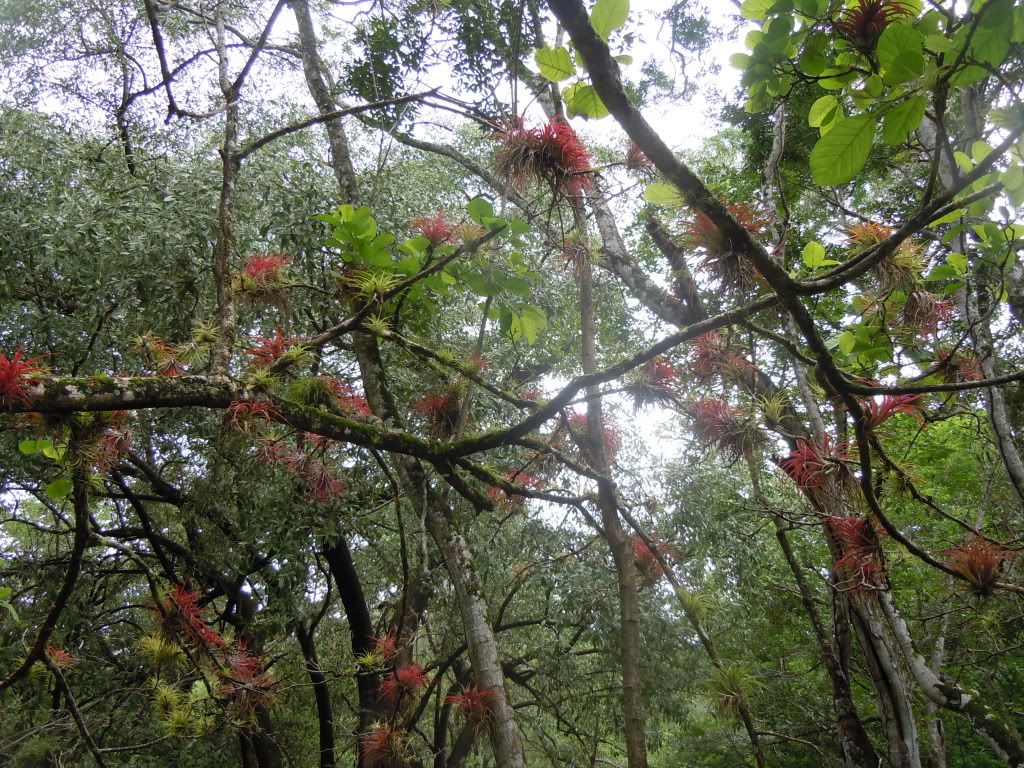
Crepuscular Forest

Elusive, elemental, and extremely beautiful – this natural phenomenon is breathtaking and actually quite simple to explain. Commonly known as light beams, crepuscular rays are caused by an effect similar to Rayleigh scattering, and are rare to see in a natural environment save near the twilight peripheries – hence the name. Steam, smoke, and dust during the rest of the day makes these beams visible to us from all angles, but short of these mediums, angle and hour are the most significant factors for seeing them.

Continue reading

Canopy Capture

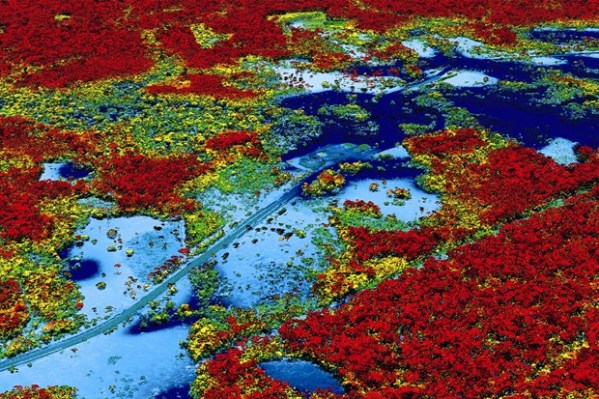
Click the image above to go to a story covered in Wired about a novel approach to mapping threatened rainforest, using existing technology in an innovative manner:

A small, twin-propeller plane flies over the Amazon rainforest in eastern Peru. The scale of the vegetation is extraordinary. The tree canopy stretches as far as the eye can see — an endless array of broccoli florets bounded only by haze and horizon. Greg Asner, 43, has seen the rainforest from this vantage point many times before, but he still stares out of the window in rapt fascination.

Continue reading

Optimism and Opportunity

Many of my posts reflect my outlook to err on the upside of life’s circumstances.  I try to drown out my inner (and often powerful) pessimism by surrounding myself with positivity and optimism.  I find that this is a careful balance of being hopeful while remaining realistic.  Today, when I was taking a break from my coursework, or the slightly negative part of my day, I watched an encouraging Ted Talk that I think demonstrates hopeful realism.

Johan Rockstrom suggests that the earth is at a point where major transformation must occur.  He optimistically recommends that we use and continue to use crises as opportunities and local initiatives to transform and sustain life.  Also, he makes a realistic statement that climate change is not our biggest problem only a symptom of our land use.

I found this talk engaging and thought-provoking.  I agree that I transformation is soon to happen and I look forward to being a part of it.

Blue Revolution

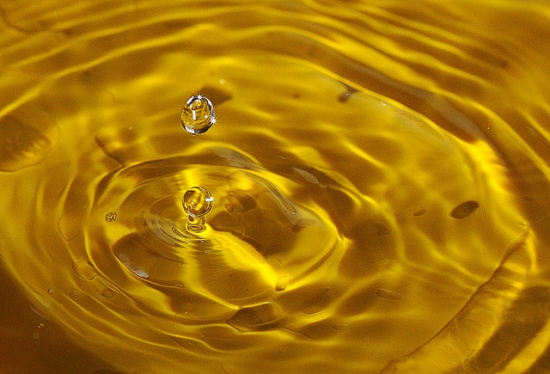
The Utne Reader, long the aggregator of choice for news on a wide variety of topics from a wide variety of sources, has a great new life on the internet: bigger, better, faster. An item currently on their website (click the image above to go there) is worth a look because of the provocatively obvious (to anyone living in a location where water scarcity is already an issue) opening line:

It’s time to confront our long-held, deeply ingrained belief that water should be forever free, Cynthia Barnett contends in her new book Blue Revolution: Unmaking America’s Water Crisis, which recently came out on Beacon Press.

Continue reading

Melville’s Muse

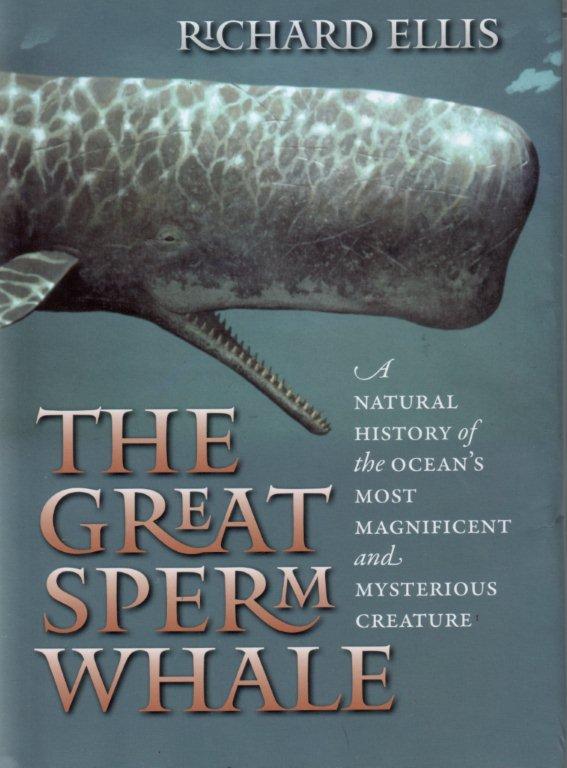
Click the image above to go to the publisher’s website (which also sells the book directly).  If your only knowledge of the title creature comes from a high school literature class, the blurb on the book’s promotional page might make you think this book belonged in the syllabus of the last biology course you took:

Ranging far and wide, Ellis covers the sperm whale’s evolution, ecology, biology, anatomy, behavior, social organization, intelligence, communications, migrations, diet, and breeding. He also devotes considerable space to the whale’s hunting prowess, including its clashes with the giant squid, and to the history of the whaling industry that decimated its numbers during the last two centuries.

According to the review provided in the Times Literary Supplement, the book deserves more attention than that blurb would imply. Continue reading

Ideas About Why To Hug A Tree

In several earlier posts Seth highlighted the evolution of environmental philosophy in readings for a course he was taking at Cornell University.  For those of us not lucky enough to be in a course like that, there is a magazine whose current issue covers some of the same terrain.  From one of the articles in that issue (click the image above to go directly to the source):

Leopold argued for the extension of what we see as worthy of our respect from the human community to include animals and the natural world, or what he referred to as ‘the biotic community’. His famous principle, briefly expressed, was, ‘A thing is right when it tends to preserve the integrity, stability and beauty of the biotic community. It is wrong when it tends otherwise’.

Continue reading

Ecological Adventure Careers

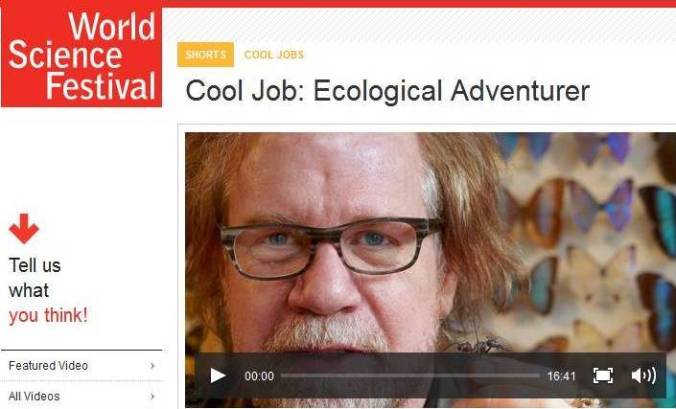
Click the image above to go to the location of this video featuring ecologist and explorer Mark Moffett who

has trekked across the globe to find his stories and capture them on film. Just like the creatures he photographs, Mark can be found crawling in the dirt or clinging to the tops of trees to get that perfect shot. Joined by a scaly friend, he shares his breathtaking work, urging all of us to go out and find stories of our own. Continue reading

Orchidian Slaves

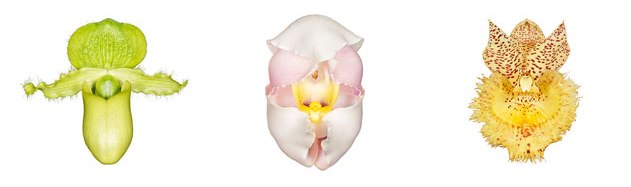
Cooperation is so remarkable as to seem beautiful, in that warm and fuzzy way that purring makes us feel.  But what about beauty?  Is it a common good, a selfless gift to others?  Beauty, as the cliche has it, is in the eye of the beholder.  Sometimes in the nose, and other times in the ears, too.  According to an article in Smithsonian a particular species of orchid might employ more than one strategy for attracting those it needs assistance from:

They trick animals into pollinating them and usually give nothing in exchange. Some orchid species mimic nectar-producing flowers to lure bees; others emit the fetid smell of rotting meat to attract carrion flies.

Richard Dawkins, an evolutionary biologist, published a book in 1976 called The Selfish Gene that would help explain the orchid’s beauty as a tool of entrapment.

Slow, Steady, Go

The January 23 issue of The New Yorker has an article on one wealthy man’s approach to conservation.  Click the image to the left to go to the article and if you are a subscriber to the magazine, and follow conservation trends, this will get your day off to an interesting start, provide a good respite from work in the middle of the day, or send you to bed dreaming.

It is paywalled, but as always available for purchase, and as always providing a tempting reason to subscribe to the magazine.  In case you do not have time to read it, or spare funds for a subscription, take a look at this short video based on some of the material covered in the article.

Continue reading

Pachyderm Surprises

Click the image above to go to the source.  As one of our favored magazines writes about one of our favorite topics (but the species from another continent), we share some surprises:

1) African and Asian elephants are sometimes thought to differ only by the location of the animals, but, evolutionarily speaking, they are species as separate as Asian elephants and woolly mammoths.

2) The elephant’s closest living relative is the rock hyrax, a small furry mammal that lives in rocky landscapes across sub-Saharan Africa and along the coast of the Arabian peninsula.

Continue reading

Chemparathy (Hibiscus rosa-sinensis)

Chemparathy (shoe flower)  is one of the fabulous plant to have in our garden, which is an evergreen perennial shrub and native of china. So, it is also called as china rose, Chinese Hibiscus.  It is the national flower of Malaysia.

Continue reading

Shankupushpam (Butterfly Pea)

One of my favourite flowers is the cute Shankupushpam, known worldwide as Butterfly Pea (Clitoria ternatea). The luminescent blue flower with the yellow core is the most striking feature. Continue reading