What the Trees Read

Without question, the section of Cayuga Lake’s Inlet that receives the most traffic is a small area of shoreline at the corner of the second tendril extending east from the Inlet into Ithaca. Community members and college students are attracted to this little spot on the Inlet, known as Steamboat Landing, because the Ithaca Farmer’s Market spends its weekends there, sheltered under a long wooden pavilion topped by a green metal roof. Dozens of stalls are laden with earthly, culinary, and artistic crafts; more than a couple hundred people a day visit each of them to browse and purchase these locally produced goods.

This quaint market is surrounded by a mixture of modern development and natural shoreline that I could not have noticed from the Inlet’s waters—only by walking around Steamboat Landing was I able to understand the spot’s significance to the Ithaca community, and connect elements of Henry David Thoreau’s and Aldo Leopold’s writings with the history of the place. Continue reading

Prime Directive, Reconsidered

Global climate change will soon be changing ecosystems around the world to such an extent that many species will no longer have proper habitats to survive and reproduce in. Over the past several years, the scientific community has been discussing the possibility of moving such species to new ranges in order to conserve biodiversity and reduce potential for extinction. This controversial process, known as assisted colonization or managed relocation, might be able to save some species from their current state of risk, but it may also prove dangerous for the natives of whatever area the “colonizers” are moved to. By diligently evaluating the perils and uncertainties of relocation and carefully considering the repercussions of leaving species to their shrinking habitats, The Nature Conservancy (TNC), given its mission and vision statements, should determine that in most cases, the costs of assisted colonization outweigh the benefits.

Patagonian mountains

By assisting the colonization of species with limited ability to adapt or relocate, the annual number of species gone extinct might be lowered in the coming decades. There are, however, disagreements as to whether or not humans should meddle with species movement. Continue reading

The Natural

Teddy Roosevelt and John Muir at Yosemite 1903

One hundred and fifty-two years after his birth, Theodore Roosevelt’s legacy as a conservationist lives on in the nearly 230 million acres of land he helped place under public protection.  During his 2 terms as the 26th President of the United States of America he established 150 National Forests, 51 Federal Bird Reservations, 5 National Parks, 18 National Monuments, 4 National Game Preserves, and 21 Reclamation Projects, in many cases designated the first of their kinds. Continue reading

A World Apart*

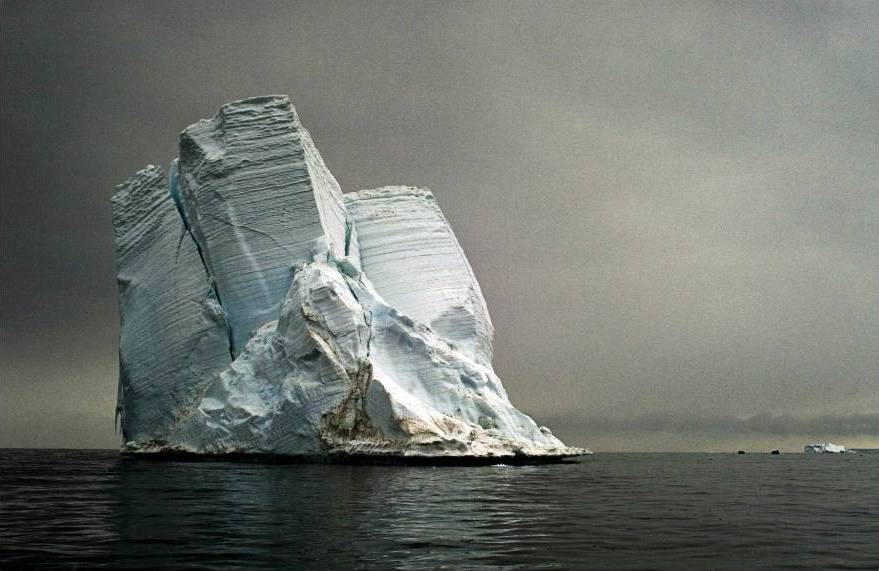
Stranded Iceberg III, Cape Bird Antarctica, December 2006, Camille Seaman

2011 TED fellow Camille Seaman has been photographing Icebergs for 10 years.  In her talk below she speaks of her first visceral response to their immensity and their fragility.  Her images tell the stories of their births, as they face their environments as distinct individuals, and poignantly of their deaths, as they each move toward their inevitable end. Continue reading

Paying for Ecosystem Services

Tim Chen has covered ecosystem services as they relate to ecotourism; below I’ve written some additional information on how the process might work on the market.

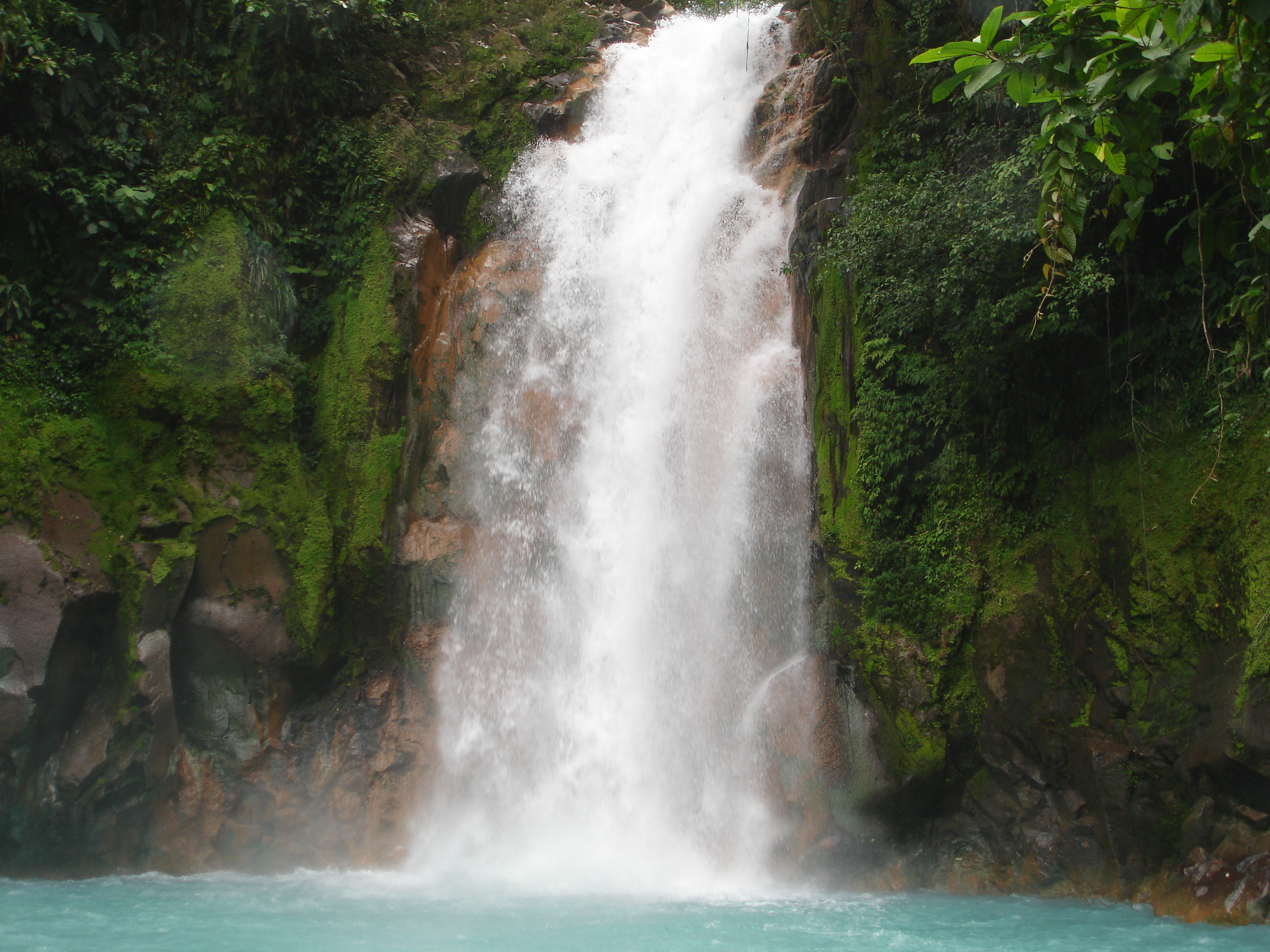
Sulfur-rich waterfall in Costa Rica

As developing countries increasingly convert natural ecosystems to areas controlled by humans, ecosystem services (e.g., waste absorption, water purification, soil conservation) are being lost. In order to prevent these shifts, people who live in urban areas or have no close relationship with, for example, their sources of drinking water are often willing to pay people who do have direct impacts on the watersheds. Payment for ecosystem services (PES) has become a measure by which higher-resource groups can induce lower-resource communities or individuals to protect local wetlands, forests, or other areas in order to maintain the ecosystem services that support a particular standard of living. Before such payment schemes can be established, however, certain scientific analyses must be carried out to determine the most efficient allocation of resources and facilitate the selection of the right service providers. Continue reading

Bismar’s Birds

Our involvement with conservation tourism around the world has taught us the vital importance of guides, whether they be for cultural visits or treks in the forest.  Good interpretation is something that cannot be underestimated, in fact, it has been said to us before that “a visit to the rain forest without a guide is like a visit to the library without knowing how to read.”  In both cases there are opportunities to take in the atmosphere, but without the interpretive element that atmosphere is missing an infinite amount of context.

A good nature guide must have the obvious strengths of a “good eye”.  They must also be able to communicate well with their visitors, even if language barriers are present.  (Herein lies part of the beauty of the scientific names for flora and fauna!)  It’s an even greater boon if the guide’s “good eye” translates into being a good photographer.

Bismar López is an example of one of these talented guides, and we hope to highlight more from different parts of the world in the future.  He’s been guiding at Morgan’s Rock, a nature resort in southern Nicaragua (where Seth Inman spent the summer interning) since 2008. Growing up in a small community near the reserve has helped develop his love of Nature, especially birds. Continue reading

Defensive Adaptation

This slideshow requires JavaScript.

The animals in the previous post from the Galapagos, and the one before that, are both fond of the outer skin of young cacti.   Young, in this case, means plants that are several months to several years old.  In one of the photos above (with an iguana visible) you can see the youthful protective skin of the cactus, full of spines on the trunk.  As a cactus matures, it develops a bark-like skin. Continue reading

Iguana Charisma

The lovely finch tells a story, aesthetic and scientific, that most of us accept as the gospel truth, about adaptation and evolution.  A good interpretive guide can help the average lay person understand the story.  Charles Darwin penciled out some of the first notes that guides use to explain why finches vary in color, beak size, behaviors, etc. and plenty of very smart people have contributed to the evolution of those explanations.  So we continue to learn.

This slideshow requires JavaScript.

A visit to the Galapagos Islands should include attention to the finch, considering the role they played in the ability we now have to understand some of the mysteries of the natural world.  Continue reading

Eight Year Echo Of Hope

When I described, a couple weeks ago, the echo of hope emanating from the Gulf of California it is fair to say I was pleasantly surprised.  That may be putting it too mildly, especially in hindsight now that I have seen a major new entrepreneurial initiative come to life there.  I will be writing more about that in the coming days.

But for now, I am in the Galapagos Islands and another echo is resonating.  In this case, for me, the echo is an eight year feedback.  As mentioned in this earlier post I had worked here on and off over several years, and the last time I was here there were some challenges that seemed intractable.  Today, upon arrival and for the remainder of the day, I had the opposite feeling of the last time I was here.  The photos below show the first thing I did with Reyna and Roberto after leaving the airport.  In the first photo you can see, as I did, just a simple conversation between them and one of the workers; then slowly a parade of otherworldly creatures crept into the photos…

This slideshow requires JavaScript.

Continue reading

Gulf Of California Partnership

Reviewing events in the region since I was last there, I came across this news (three years late, for something this interesting, is better than never to learn about it). WWF, to its great credit and the world’s benefit, found creative ways to partner with entities during the time since I completed my small task for them.  Listening to this man speak on behalf of the aquarium, I see the enormous educational impact such an institution can have (and here I must acknowledge that I have always found zoos and aquariums melancholia-inducing places, with charismatic mega-fauna trapped in relatively small spaces for us to muse over; but I am changing my perspective):

The WWF press release at the time started:

Long Beach, Calif., April 30, 2008— Described by Jacques Cousteau as the world’s aquarium, Mexico’s Gulf of California is one of five marine ecosystems in the world with the highest diversity of wildlife.

Continue reading

Mission-Driven Development in Baja California Sur

In the first third of the 17th Century the Spanish crown sent Jesuit priests to establish missions in what is now Baja California Sur.  The fourth of these–Misión San Francisco Javier Vigge Biaundó–was active from 1699-1817.  What is amazing is that the installation has remained intact even centuries after its last priest left (abandoning the missions at the gun-pointing insistence of the crown as independence movements fomented, which is a story worthy of your further investigation).  Having found this particular oasis in the last third of the 17th Century, the priests cultivated grapes, dates, olives and other produce which, remarkably, still grow here today.

This slideshow requires JavaScript.

It is visually and olfactorally stunning to be in a place with the cactus and other desert flora native to the region Continue reading

La Giganta, Baja California Sur

As noted in the first and second posts on this topic, the question at hand is whether there is a formulation that can effectively bring thousands of hectares of private lands into a conservation area that is supported by entrepreneurial activity.  That activity puts conservation and social welfare of the local communities as the top priorities–the motivation for bringing conservation-minded travelers to valorize these protected areas.

This slideshow requires JavaScript.

Continue reading

Gulf Of California

I had not been exposed to the corridor known as La Giganta, which you can see in the background of the above photo, when I carried out my work on behalf of WWF several years ago.  Now that I have, over the last week, I can only say that it had such an impact on me that I am still processing it.  It is partially the geology of this portion of the peninsula known as Baja California Sur.  It is partially how that geology intersects with the marine ecosystem. But it is mostly–and here I refer to the impressions I am still processing–the intersection of local people with those two natural wonders that really got to me.  The photo above looks from the back of a panga (the type of boat local fishermen use) as we departed a property that is best described as an oasis. Continue reading

New Energy From The Amazon

Guest Author: Tyler Gage

Crist asked if I would share some of our experience starting up Runa because, as a social enterprise, we are working in some of the same space–environmental and social responsibility being centerpieces of our business model–as other businesses that Raxa Collective showcases on this site.  We agreed that a good place to start would be with some questions we encounter frequently.  If there is interest in hearing more, I will be back to tell more of the story in finer detail.

Your website says Runa does not actually farm Guayusa. What do you do and why should people care about Guayusa?

Runa is creating markets for beverages created with Guayusa (“gwhy-you-sa), a native Amazonian tree leaf that contains more caffeine and double the antioxidants of any tea. With a flavor that is smooth and clean, guayusa offers a new kind of energy what the indigenous Kichwa people call “mental strength and courage”. Continue reading

A Four Year Echo Of Hope

For all of the challenges facing the Gulf Of California region ecologically, global trends in sustainable tourism offer potential solutions.  Broadly speaking, the mass tourism model propagated on the most accessible coastal regions of the world—particularly those visited by European and North American travelers—has been challenged by this alternative model.

Still, the mass tourism model has its advocates, in Mexico as in other parts of the world, and creeps into the planning models of destinations where sustainable development is the nominal platform. This happens because for at least half a century the notion of success or failure in tourism development has been defined according to this older model.  If WWF is to have an effective strategy for conservation in the GOC region, then a clear definition of competitiveness vis a vis sustainability must be established.

Those words opened the first draft of a report submitted four years ago . Continue reading

Field of Dreams

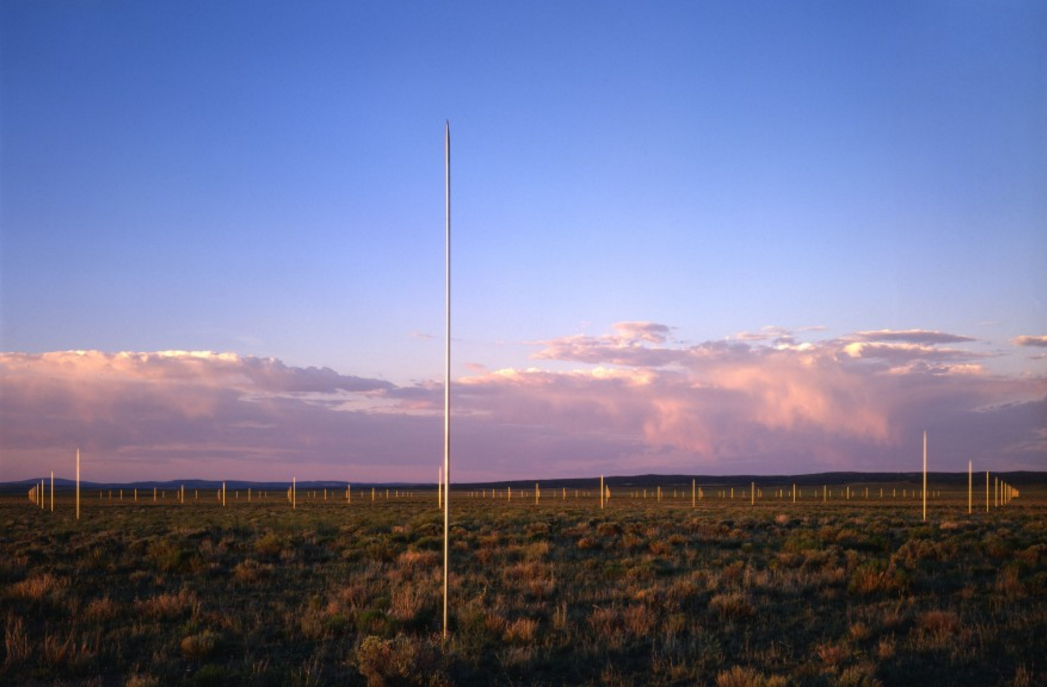
Walter De Maria, The Lightning Field, 1977. © The Estate of Walter De Maria. Photo: John Cliett

Walter De Maria, The Lightning Field, 1977. © The Estate of Walter De Maria. Photo: John Cliett

Based on his oeuvre one would say that Walter De Maria is an artist fascinated by mathematical precision and order. His work at Gagosian Gallery in New York City or The Nelson-Atkins Museum of Art in Kansas City in the United States or even the Chichu Art Museum in Naoshima, Japan exemplify this focus on the predictable progression of sunlight as it relates to planetary rotation and the perfection of spheres.

Continue reading

Tree House Redux


When I ponder the question “why I travel” I often return to the same answer; I travel to gather new experiences, to learn, to refresh, to reconnect with something lost.  I think we all have the tendency to become complacent with the familiar. Even one step outside of that familiarity brings us closer to a broader vision.  And for many who live in urban areas, the drive to step outside is a power in itself.  I believe we are programmed to feel connected with the outdoors, soothed by the power of green, taking in spiritual chlorophyll like deep breaths, to speak metaphorically.

But not everyone who craves communion with nature is ready to “rough it” in her embrace.  An innovative hotel built in Sweden’s Boreal forest (the same forest region that has inspired Land Art Installations) offers an inspiring way to wake up amid birdsong. Continue reading

Walton Ford, Come To India!

In my last post, I walked along a border–the one separating the land of nostalgia from the land of meaning–and am still not sure which side of the border I was on.  One person’s memory lane is full of madeleines, and another’s may have no particular there there (so be it, glass houses and all).  The link to Brother Blue is the puzzle.  Can anyone, out of context, realize who that man was and what he accomplished from that little bit of Lear jive?  I do not know.  But recycling is an ethos that India is instilling, so I go with it.

The thread linking Thoreau and Brother Blue for me the other day kept un-spooling, and led me back to my favorite living artist:

Live an Example

Lullwater at Emory

Do you respect your friends? Unless you have very strange relationships, I’m guessing you can say that your friends’ ideals and opinions are meaningful to you. If you know that a buddy doesn’t enjoy country music, you’re probably not going to blast Keith Urban when he’s around. If your best friend can’t stand whistling, maybe you’ll refrain from providing your most rousing rendition of the Star Wars theme song. If she’s not so into politics, perhaps that’s not the person you’ll run to and inform of Glenn Beck’s latest revelation.

The point is, what matters to your friends usually matters to you, and vice versa. If you’re mindful of this Continue reading