Wordsmithing: Entrepreneurial Conservation

Two previous posts about words pointed out how common usage can alter the course of their meaning over time in surprising ways. We might not even recognize the original meaning today, some perishing in dungeons and others flying too high for their own good. The risk of writing these particular posts is when their intent seems anything other than constructive. Who wants to cast a stone, first or otherwise? We live in glass houses, and all that. In the spirit of focusing on that intent, this quick post draws together two words: entrepreneurial conservation.

As any phrase should, these words together build something more valuable, more effective, than either could on its own. If words can be cousins, as implied in a previous post, then phrases can be part of an extended family too: these two words, as a phrase, share linguistic DNA with social enterprise, but OED does not know it yet. The phrase (and our work) recognizes that for all the heroic efforts of traditional conservation organizations—The Nature Conservancy, WWF, Conservation International, etc.—not to mention incredible government commitments to national and state parks throughout the world in the last century, there is still a deficit of conservation.

The world still loses more wilderness than it protects. Ditto for intangibles in the domain of cultural heritage. So, what else to do other than pitch in and see what we can do? And if it can be shown that conservation is good business, then more people and organizations will pitch in. Watch Adrien’s posts for more on this in Patagonia, and Reyna’s upcoming posts from the Galapagos Islands. Those are two pristine natural wonderlands with limited human populations. But also watch for posts from Kerala, India — where the story is more complex with regard to population growth and wilderness conservation. Or from Nicaragua, where we feel Morgan’s Rock is leading the way in Central America with a robust mixed-use model that makes use of each idea we have put on the anvil so far: resort (old meaning), luxury (new meaning), entrepreneurial and conservation (combined meaning).

Banner Images: Where, What, Who?

Hopefully the new images in the banner catch the eye. I hope they are aesthetically to the point. In fact, all of these photos are taken by two of our contributors, Milo and me.  Since the pictures are shown randomly with no sequence, I wanted to show all the un-cropped version pictures at once with some background information.

First 12 pictures are taken by Milo.

Pheonix Oysters (Pleurotus pulmonarius) grown on paddy straw in Milo’s apartment in Cochin

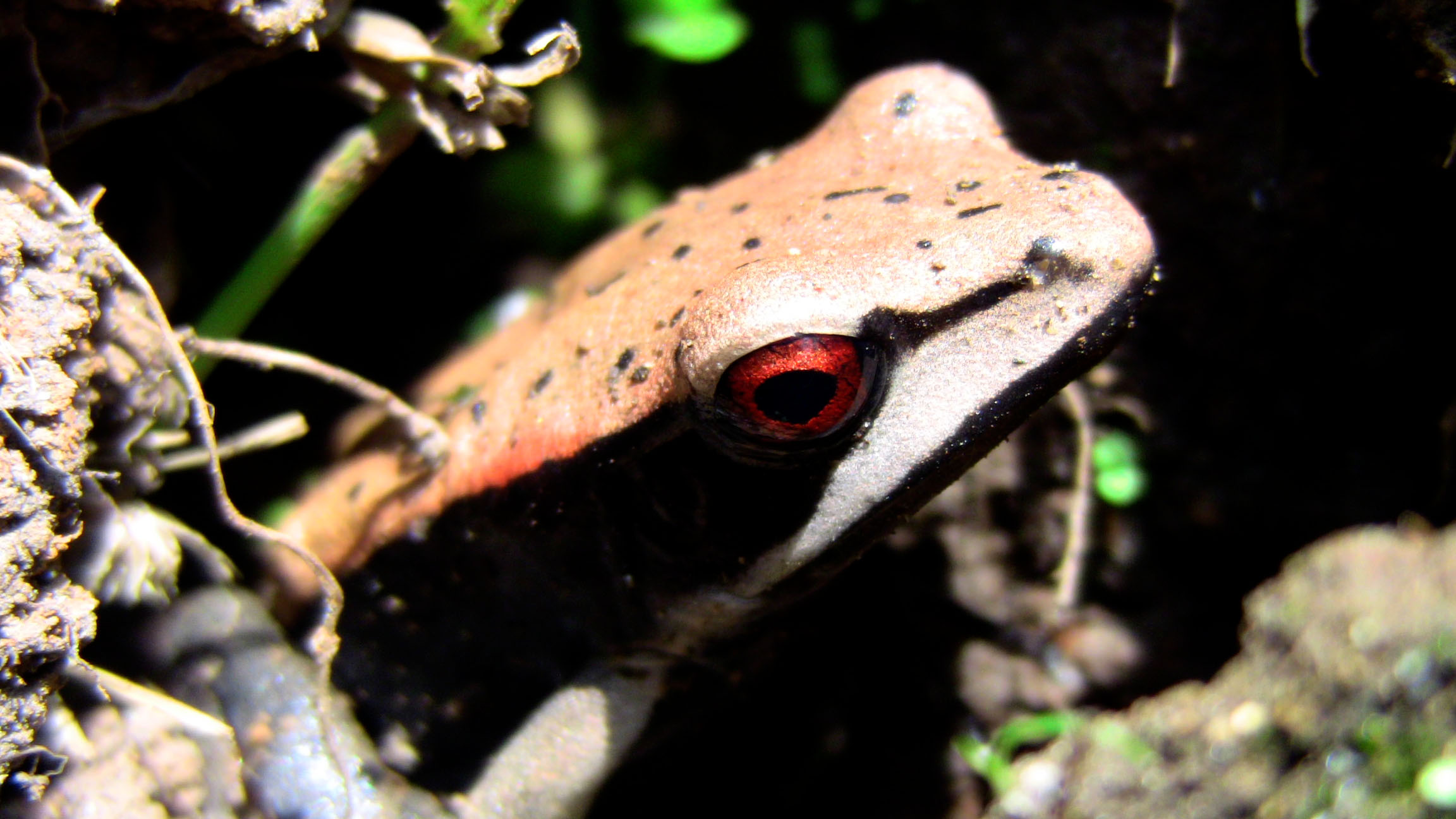
One of thousands of frogs on the road to the boat landing in Thekkady on Border Hike Continue reading

Biodiversity Buffers

Private reserves have been established in many countries around the world, dramatically expanding the conservation provided to biodiversity in public parks by voluntarily protecting buffer zones. Despite their smaller size (relative to public parks) on an individual basis, in aggregation these private reserves are significant providers of environmental services.

So far the Nicaraguan Red de Reservas Silvestres Privadas includes 50 private reserves that protect 7,467 hectares—18,453 acres—of various ecosystems. Each one has renewable status as a reserve for ten years at a time, and is exempted from income taxes for ten years, property taxes for whatever amount of time the land is a private wildlife reserve, and retail sales taxes on goods that contribute to the reserve.

The Nicaraguan Ministry of Environment and Natural Resources (MARENA) supports certification of conservation activities, includes the private reserves in sustainability workshops, and helps bring teams of scientist investigators to the reserves to conduct studies like the one done at Morgan’s Rock/El Aguacate. Among other things, the reserve owners must make a yearly management plan, comply with environmental norms, and protect the wildlife inside their property. Some of the required contents of a management plan include Continue reading

Reserve @ Morgan’s Rock

El Aguacate, the protected forest at Morgan’s Rock, is part of the Nicaraguan network of private reserves, or La Red de Reservas Silvestres Privadas. Over the past two days, a team of three biologists (one botanist in this forties and two zoologists in their twenties) has been walking through the reserve, photographing and documenting the wildlife they encounter in order to perform a sort of valuation study of the natural resources at El Aguacate. For the past week this team has been in the Rivas/San Juan del Sur area qualitatively assessing the floral and faunal density and diversity at around thirteen different private reserves; similar teams around the country are doing the same according to region.

Gecko; species to be identified

José Gabriel Martínez Fonseca, one of the zoologists who also sports a Nikon camera that seems to have a telephoto lens (it looks almost a foot long), calls his photography enterprise Svaldvard Ink., after watching a show on the Svalbard archipelago in Norway on the Discovery Channel as a kid. Interested in the polar bears, he wrote down what he heard and years later preferred his own spelling of the word, adopting it as a username/alias for business. With his camera and skill as a biologist whose job it is to document species of reptiles, amphibians, birds, and mammals, José was able to photograph animals that have evaded my lens during my time at Morgan’s Rock. He was happy to share his images with me, so now I can share some of the best of them: all the photos in this post are his. Continue reading

Mombo Jombo

Early this morning Pierre and I set out from Morgan’s Rock towards Granada, which is maybe two and a half hours away. Before reaching the city, we turned onto a road that led to Mombacho Volcano, an inactive peak with several extinct (and some fully collapsed) craters. The volcano is protected by the Mombacho Volcano Nature Reserve, created in 1996 by the several local fincas on the volcano’s foothills that comprise the NGO Cocibolca Foundation. Our time at Mombacho, described in the rest of this post, is part of the exploratory trip that Pierre and I are taking over the next three days, assessing the possibility of connecting Morgan’s Rock’s tour offerings with other operators in the area.

The day’s activities started at the Mombacho Volcano Nature Reserve (MVNR), where we met our guide Jennifer. We decided to take the longest trek, called the Puma Trail, so named because there are some big rocks and even caves that pumas are said to live in, although none have been sighted in a decade. Prior to starting this four-hour hike we stopped by an area called Los Fumalores where Jennifer had fun by daring us to put our hands in a small hole next to the trail, reassuring us that no snakes would be inside. As we placed our hands near the opening in the ground, we could immediately feel a stunning temperature difference. The place is called Los Fumaroles because sulfuric gases rise from volcanic holes and crevasses in hot gushes, heating the surrounding stone to a surprising degree. This area also provides a nice view of Las Isletas, which are known as children of Mombacho because they are islands initially created from a volcanic eruption. I mentioned Las Isletas very briefly here.

The Puma Trail’s path is very well maintained, Continue reading

(Un)expected Visitors, Redux

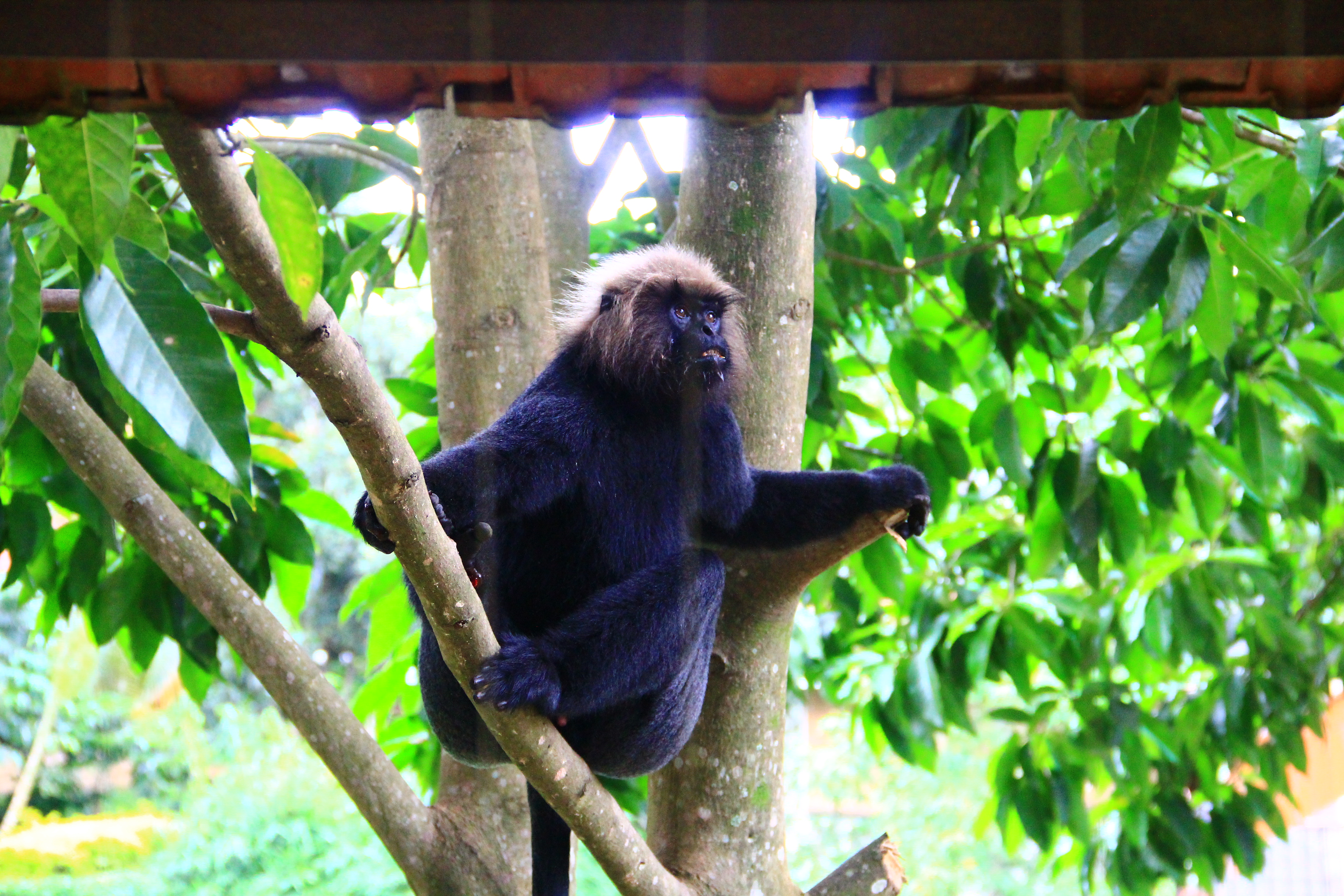
Normally I would apologize.  Writing again about monkeys, considering the abundance of posts we already have on the topic, may seem repetitive.  However, after debating it with myself, and looking over my photos, I decided I just have to share these amazing, close-up shots of the Nilgiri langur.  Nilgiri langurs, compared to the macaques, are a rare species, and not often sighted outside the official boundaries of the forest. Michael provided a bit more information about them in his earlier post, Unexpected Visitors.

In his post, Michael predicted that we would not see this species again at Cardamom County. Surprisingly, they have returned twice since that post. Their visit during which I took these photos was not so different from the prior one, except that  in contrast to their previous avoidance of a scene, this time they cried loudly, and jumped and ran around unusually. One of them even ran right through a gathering group of human admirers! This is remarkable because they are usually very shy and markedly wary of human interaction. But within a few moments, we found out why they were acting so out of character. Continue reading

Unveiling Fungi

Fungi are some of the most under-appreciated organisms on the planet, and even the most simple forms can be fascinating and capable of enthralling all but the most listless eyes. Most people associate the word ‘mushroom’ with the button-shaped, styrofoam-flavored Agaricus bisporus, also known as Portabella, Crimini, baby bella, et cetera, ad nauseam. The marketing ploys for peddling this poor excuse for a mushroom are legion, and no matter what name comes on the package, it’s always the same. In that light, the purpose of this post is to unveil the magnificent beauty of the Fifth Kingdom.

Continue reading

How Smart Can Wood Be?

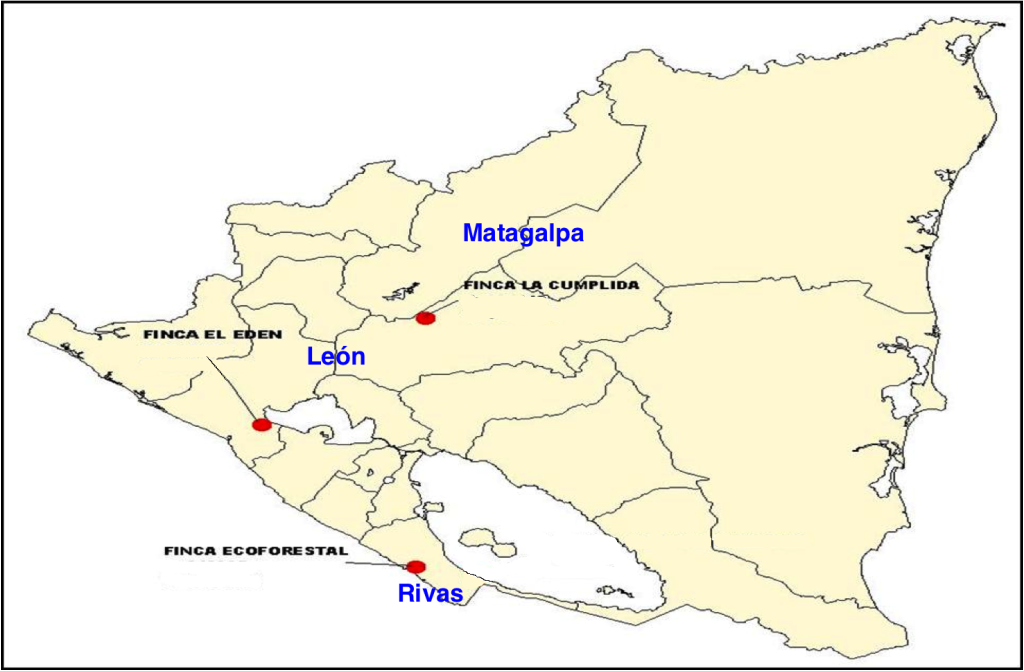
Yesterday I met with Javier López, the forestry engineer for Agroforestal, S.A. This company covers the tree plantations at La Cumplida, Ecoforestal/El Aguacate (Morgan’s Rock’s finca), and El Eden; it is not to be confused with Cafetalera Nicafrancia, which manages the coffee (and the planted trees growing in the coffee fields) at La Cumplida, or MAPIINIC S.A., which administers the forests felled by Hurricane Felix in 2007 at a finca called Rosita.

Javier, often known simply as “Prófe,” [PRO-feh] which translates as “Prof” (a nickname for Professor), has worked to get certification from Rainforest Alliance’s forestry auditor SmartWood (and by association the FSC and RA itself)

In 2009 Agroforestal became certified for forest management. To do so the company had to go through the same continuous improvement process that I described a bit in my post about coffee certification. An initial evaluation is made, and subsequent audits over the next 5 years that the certification is valid provide the certifier with evidence of progress and room for improvement. From what I saw of a couple examples, SmartWood seems to emphasize explicit documentation, which makes sense given the nature of the forestry industry: extractive at its most basic, but also focusing on replanting trees as long-term investments.

Some of SmartWood’s requirements are as simple as Continue reading

When Foxes Fly

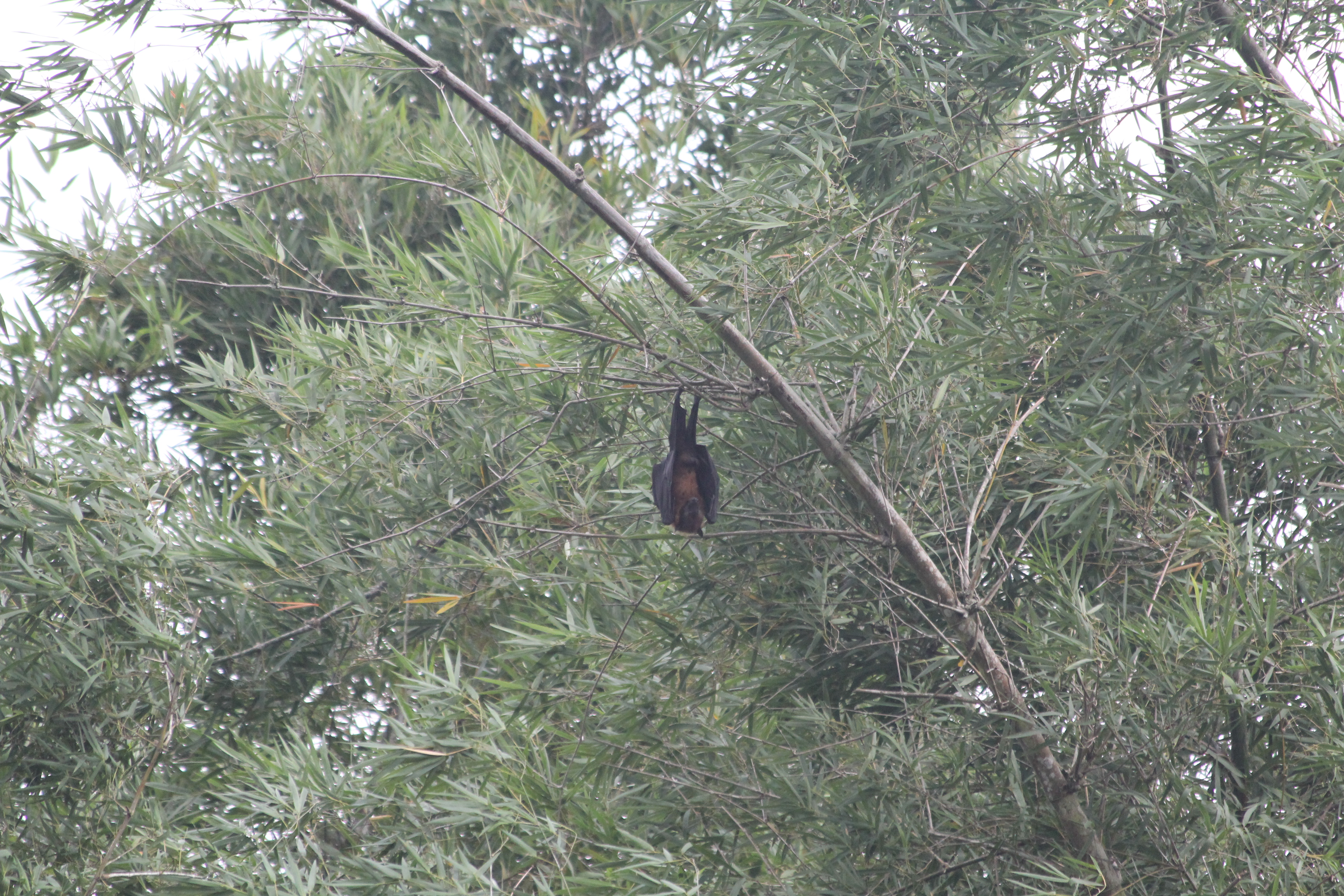
Cardamom County faces onto the Periyar Reserve. From much of the property, including most guest rooms, the view is clear onto a huge stand of bamboo.  In the upper reaches you can always see dark bundles dangling during the day time.  By late afternoon, the bundles start moving.  When will they transform into something recognizable?

When foxes fly.  That’s when.   And it is best when it happens before sundown because with a wingspan of up to three feet, it looks like a prehistoric raptor at first glance.  It is difficult to take good quality photos of these creatures in flight because lighting is not usually right.  Around 2:30 p.m. recently, on an extremely windy day the motion woke them and they took flight. Annoying to them, probably, but very fortunate for me.  Continue reading

Valuating Rainforest Ecotourism in Costa Rica

In my last post, I claimed that only a small number of studies have been done on valuating eco-tourism as an ecosystem service. I was wrong. After some more digging around, I’ve discovered that a fair number of studies address this topic, though only a small number of studies actually evaluate specific regions of the world. One of the most interesting reports I stumbled upon was from the Journal of Environmental Management. In 1998, Susan Menkhaus and Douglas Lober, two researchers from Duke University, published a paper that focused on Costa Rican rainforests and their ecotourism value. If you’d like to read the whole thing, it’s titled “International Ecotourism and the Valuation of Tropical Rainforests in Costa Rica.

Rainforests provide dozens of ecosystem services. In Costa Rica, they serve the booming eco-tourism industry.

By way of background, Costa Rica is a textbook example of effective management of natural resources, tourism, and integrated public policy. It is widely recognized as the greenest country in the world, and it remains the most visited Central American country. Covering less than 0.05% of Earth’s landmass, Costa Rica contains a whopping 5% of the world’s biodiversity, has 12 different life zones, and boasts one of the highest land protection rates in the world. Nearly half of the tourists that come to Costa Rica engage in some sort of eco-tourism activities. Needless to say, Costa Rica is the best nation to take as an example for this study, which attempts to quantify the value of Costa Rica’s rainforests from a tourism standpoint. Keep in mind, however, that the authors only sought to calculate the eco-tourism value of the rainforests—not anything else related to the forests’ medicinal, timber, or biodiversity value. Continue reading

La Cumplida’s Private Reserve

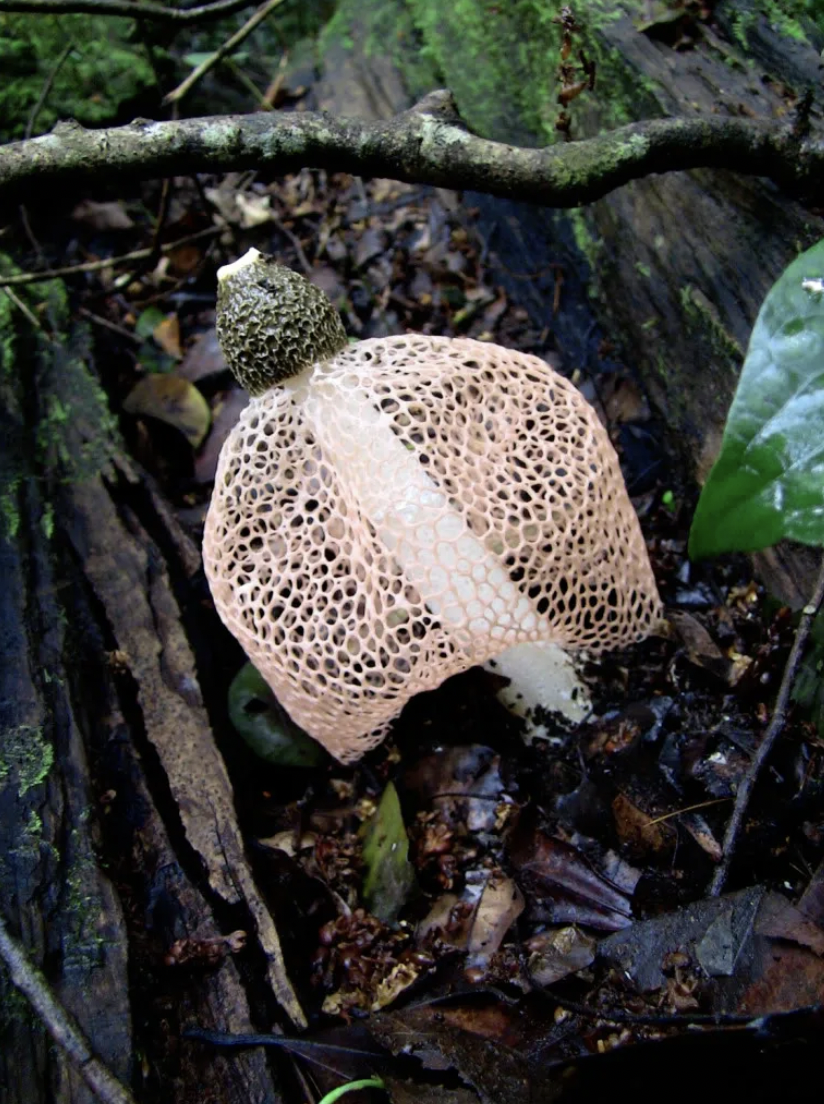
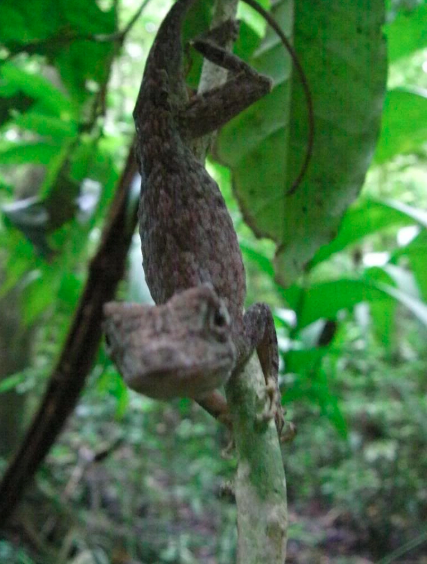
Author’s Note 19/7/11: The lizard pictured at the beginning of the post has been identified as a pug-nosed anole. The first group of stinkhorn pictures (paragraph 2) are of the species Phallus duplicatus, and the second group of pictures (last paragraph) are of Phallus indusiatus. The green mushroom linked to by the word “others” (paragraph 4) is Hygrocybe sp. and the grey/white ones are Psathyrella candolleana. Credit and thanks for mushroom identification goes to Milo Inman.

*

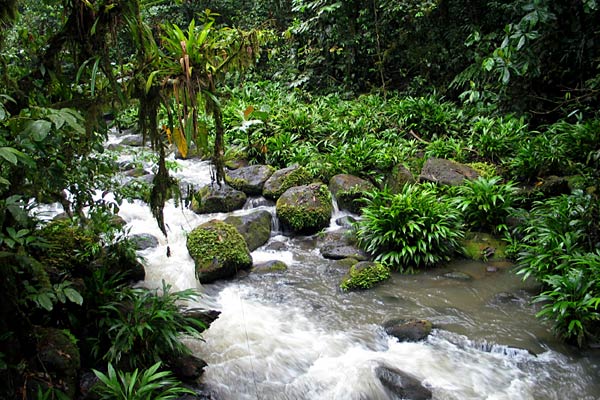
The untouched forest of the reserve at La Cumplida is a hilly cloud forest with few trails and many streams that served as much of our path through the trees. My guide, a local named Santos, and I started in the foothills outside of the reserve and entered the forest by climbing up some steep, muddy inclines.

The protected area amounts to 600 hectares, or 1,482 acres. Santos and I had walked for only about twenty minutes when I spotted the first attraction of the day: some stinkhorn mushrooms. Two were just a white line of pulp, but one was still not fully decomposed and looked as phallic as ever, having lost its veil.

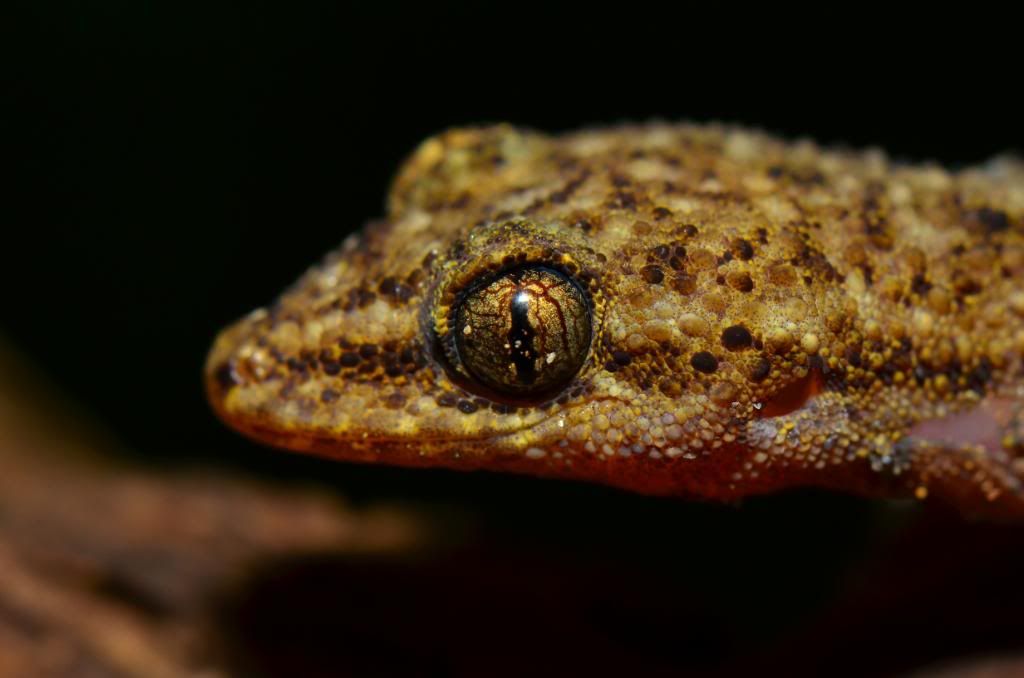
Only around half an hour of hills later, Santos stopped me and pointed out a sapling in front of us. He said some words that I didn’t understand, so I tried looking more closely to decipher his meaning. At last I saw the outline of a faint figure sticking out of the tree’s trunk. I slowly approached and saw that a lizard, perhaps the length of my hand, was grasping the sapling and facing downwards, its scales a mottled variety of wood colors, like a camouflaged chameleon but clearly not of that species based on its head shape. The poor lighting in the forest didn’t allow for the best pictures, but I was glad to get a couple, especially these ones of the lizard curiously raising its head at the closely approaching camera lens.


We advanced further into the forest and saw only the dense and variegated foliage around us

Continue reading

Damsel in Distress

Although I was slightly disappointed at not having been able to track any of the more sought-out fauna of the reserve, I was content with the numerous photographs of a wide variety of bizarre and alien-like insects I was able to take during the Cloud Walk. I know that I am one of few who appreciate the seemingly unpretentious and trivial organisms of the class Insecta, and it is my hope and objective to arouse both interest and awareness of the mind-boggling diversity that reside not only in protected areas, but literally in our backyards.


Insects compose well over three quarters of all animal species – there are well over a million species, and the number of new species discovered each year isn’t decreasing despite rapid deforestation. Continue reading

Colonial History & Volcanic Mystery

We left in the morning with Bismar and the guests, transported by the senior driver Inocencio. Our first stop was about an hour and a half away: a town called San Juan de Oriente but known as La Cuña de los Artesanos, or “Artesans’ Cradle,” because literally everyone in town works with crafts for sale to tourists or hotels. We entered one of the pottery shops and went downstairs into the workshop, where a young man was waiting to give us a short presentation on pottery. He explained about his family’s business slowly in Spanish and Bismar translated for the guests. Then he took his seat at a wheel and started shaping a small bowl, using several homemade tools—a bicycle spoke, for example—to straighten its edges. The expression on his face showed how much he enjoyed the work, which certainly looked fun even should one have to shape clay all day, every day. After a couple minutes, a small and perfectly round pot was on the table in front of us. He talked some more about clay and then said, “At this moment in the process, the clay is still very fragile,” and demonstrated by plunging his fingers into the side of the vessel, leaving a deep impression in it.

Leaving the wheel, he led us to a larger table where wall lampshades were being made. Tools like a polished beach pebble and a child’s plastic spinning top were used to spread and smooth the paint that was applied with a brush made of a hollow pen and the hair of the girls in the family. A small kiln sat smoking in the corner, baking about twenty of the lampshades. Once the guests asked a couple questions, we thanked the young man, whose unbefitting name it turns out was Stalin, and went up to, of course, the pottery store. Continue reading

Ecotourism as an Ecosystem Service

A good friend of mine has been working on developing a curriculum for sustainability lessons in Utica, and she asked me just a couple days ago for some help with the topic of ecosystem services. I thought it strange that she came to me (a hotelie, no less) for help on such a scientific topic, and I had to admit to her that my knowledge of the topic was shallow. Nonetheless, I pointed her to the UN’s 2005 Millennium Ecosystem Assessment (MA), the four-year study that is considered by the environmentalist community as the go-to resource on ecosystem services. I had skimmed the hefty 155-page synthesis report a few months earlier—I’d only initially did it because Eric Ricaurte, my research adviser, had recommended it to me—and I didn’t remember much from it. So after recommending the MA, I decided to read through some sections of it again.

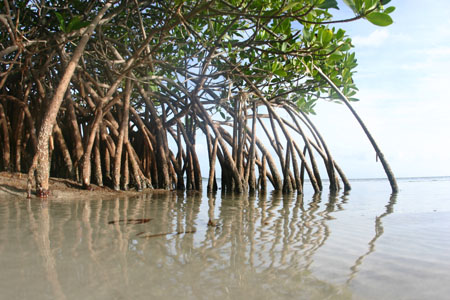
Mangroves are a recognized source of ecosystem services. They buffer against storms, prevent erosion, and filter out toxins.

By way of background, ecosystem services are resources and processes that the natural environment provides for us. For example, trees provide oxygen for us to breathe, fish in the ocean serve as food, and earthworms help decompose our waste. But what caught my eye immediately from the Millennium Ecosystem Assessment was how it recognized ecotourism and recreation as important ecosystem services for humans. I couldn’t help but smile: while attempting to preserve their surrounding environments, eco-resorts around the world are also drawing upon this valuable ecosystem service by deriving revenue from it. Continue reading

Scuba Fishing

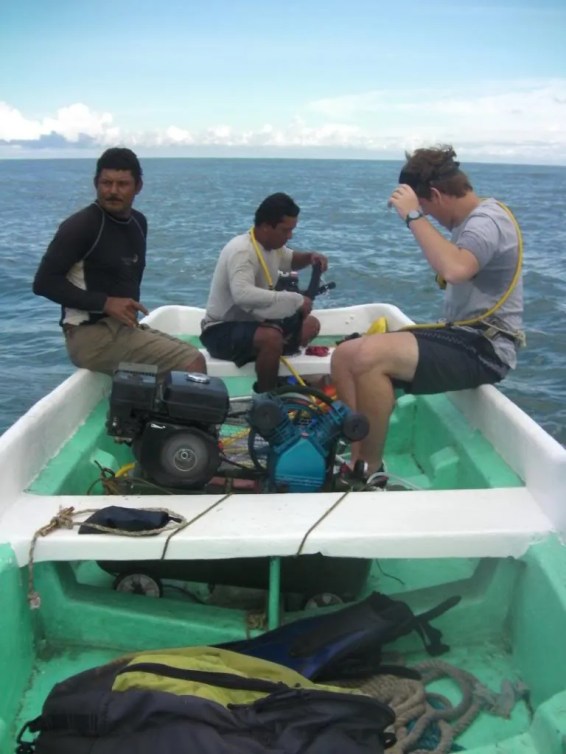
This morning Pierre and I got up early to go on a scuba fishing expedition with Jacinto and Juan. Using a kayak to cross the wide and deep channel the sea was cutting into the estuary, we headed to a spot where the waves were a bit calmer, and the fishermen came in a small motorboat to take us over to the Eco I. Unfortunately, it turned out that the smaller boat was to be our vessel for the morning, since the Eco I was out of fuel. A green air compressor machine sat in the middle of the boat, and the long air hose sat coiled at the bow with a couple pairs of flippers and snorkel sets.

Pierre and I installed ourselves at the stern and started putting on sunscreen. “The water visibility is a bit low today, but we will try to find some lobsters,” said Jacinto in Spanish. Juan drove the boat past Morgan’s Rock and close to the rocks on the next cove over. Then he handed the tiller to Jacinto and started pulling on some flippers, signaling for me to do the same. The two fishermen showed me how to operate the air regulator, which was the same sort found on a tank scuba set, and they helped tie the hose so that it fell over my shoulder and across my back.

Continue reading

Kayak Surfing with a Friend

Today I met Pierre de Chabannes, a young Frenchman interning at the Ponçon’s La Cumplida farm in Matagalpa. A student at a French University, he is working on repairing and improving the current hydroelectric dam/canal system in place at La Cumplida so that the farm can produce enough electricity to supply the surrounding area in Matagalpa.

After showing Pierre around the ecolodge, we decided to go kayaking in the cove. We went out past Morgan’s Rock and then crossed over to the other side of the cove before returning to the coast, where we caught a wave onto shore and tried surfing a couple times. Eager to surf some more, Pierre switched his seat to the back of the kayak (we’d had them in the middle), where he thought it would allow him to control the direction better, as well as prevent the nose of the kayak from plunging into the water and causing a flip (which had happened to both of us already). Controlling the direction was also useful because we had both been pushed parallel to the wave we were riding several times despite out best efforts. When he switched to the back seat, Pierre surfed all the way to shore with little difficulty, so I soon made the same change. Continue reading

Finca Work

I had more butterfly luck this morning when, exiting the trail from my lodgings onto a dirt road, I spotted a Hamadyas glauconome glauconome, commonly known as the Guatemalan or Glaucous Cracker, on a tree nearby. Although I didn’t know it at the time, the males of this species can create a cracking sound while flying. I had heard this sound from flying insects several times as I biked along the road during my stay here, but had never been able to identify the source. The specimen photographed here was a female, however, because once I got close enough to take the shot, it flew away silently. After breakfast, I was crossing the long suspension bridge that leads to the bungalows and one of the trees next to the railing, whose canopy was roughly level with the bridge, had flowers that had attracted another butterfly. Despite the length of time that the butterfly stayed at the flowers to collect nectar, I have not been able to identify it from the various photos I took, because it never opened its wings to show the markings that would give it away in a guidebook.

However, one animal I have been able to identify is a little lizard that I found while walking a trail. More specifically of the family Polychrotidae, or an anole lizard, the species I was lucky enough to encounter was the indigo-throated anole, Anolis sericeus. I have learned that all anoles have at least some ability to change color, they all have dewlaps, which are cartilaginous frills below the neck, and, like many lizard families, they can relieve themselves of their tail if sufficiently threatened. Fortunately my presence was only frightening enough for the anole to reveal its beautiful frill and, as I approached for a close-up, run off.

When I was done with my little hike, I headed to the finca, where I was to see the recently planted saplings and the cleaning of last year’s crop area. Continue reading

Sunset Hill

The right arm of the Ocotal cove, the hill directly visible from the restaurant and beach, is just as important a landmark as Morgan’s Rock itself, since it is actually part of the property and is not hidden from view at certain angles. When one looks out at the ocean from the ecolodge, one sees this hill first; the rocks at its base withstand the constant onslaught of thundering waves, and the steep rocky slope is almost completely covered in verdure.

The prominence might be called Sunset Hill, due to its function as the lookout point for guests who wish to watch the sun descend into the ocean from a high vantage point. From most locations on the property, viewing a full sunset is impossible since the Hill is in the way.

I left the ecolodge in the morning today to climb Sunset Hill and see what the trail was like without the dim lighting that would accompany a sunset. Before approaching the hill, I found two low-hanging coconuts and cut them with some stem as handles—I knew it would be a hot and long climb and wanted some refreshment at the top. Despite the additional weight, the climb was not too difficult, but I was left sweating when I reached the first stop: a bench set in the trough of the two wave-like hills with a view of the whole cove and ecolodge. Setting the larger coconut aside, I grabbed the other and used my pocket-knife (Wenger Swiss Army, Patagonian Expedition Race Edition) to cut a channel through to the small orb holding the water. The can-opener proved the perfect tool for this job, since the blade was short enough to present little danger to my fingers in case of a mishap, and I could also apply significant pressure to leverage chunks of husk out of the way without fears of bending or breaking the metal.

After a few minutes I had reached my goal. This fact was drawn to my attention mostly by the popping sound and burst of water that sprayed up to soak my face. Setting my dripping glasses aside (I only wear my old pair while hiking, in preparation for these unforeseeable events) to dry, I widened the hole slightly and titled the large vessel back to drink the refreshing water.

I am used to drinking coconut water from the fruit itself, but in a very different fashion: street-vendors in Central America and India use a machete to hack the top off the coconut and stick a straw in the near-perfect circle they’ve created. Using my tiny tool to pry open the fruit’s tough skin and press my lips to it like a certain Tom Hanks character made me feel much less touristy than I do when I buy a street-coconut. After all, I had not only selected the fruit off the tree myself, but had also carried it up a significant slope and used its water to cool off before continuing the climb to the Sunset Summit.

To reach the summit, one merely has to climb the stairs set into the hill. This is not a great challenge, but in what was now a midday heat, the stairs were unwelcome. However, compared to the tall limestone steps of Tikal temples, or the uneven sandstone tomb-paths of Petra, these simple wooden planks set into the earth were nothing—a mere ten-minute task, if that. When I completed my ascent, it was instantly clear why the hill has been chosen as a sunset lookout. The height of the hill, along with its projection from the mainland by roughly a kilometer, presents a worthy view even without the sun setting over the water. A little lizard, which I later identified as a rose-bellied spiny lizard, was resting in the full sun that fell on the top of a railing post.

I enjoyed my second coconut in a cooler location: the middle of the stairs, where the overhanging branches of bushes and trees create a tunnel blocking the sun. A little more cautious, I avoided getting sprayed, and slowly consumed my drink before descending the hill and returning to the beach. On my way there, I saw a pair of mating butterflies that I believe to be Papilio thoas nealces, and once I got to the beach I found a Draedula phaetusa. As I walked from the beach to the road, a Microtia elva fluttered along the path and rested a while on a nearby bush. It was a lucky day for butterflies, and I look forward to photographing and identifying more of them, especially once I have a camera that can zoom!

More Wood

The finca connected to Morgan’s Rock, part of the Agroforestal forestry business whose owners also run MR and SM, is in the process of clearing the brush covering a large swath of land where new trees will be planted. The trees are going to be more separated than in the past so that more of them can grow to full potential faster. Some of the previous plantation plots have suffered from underdevelopment as a result of too much competition between cramped trees. As a result, these confined trees grow straight up and don’t mature in width as quickly, staying thin and branching upwards to reach the sun. One of the positive effects of this growth is that the branches are very straight instead of curvy, but there is less wood. Over the years the finca has planted over 1.5 million trees for harvesting, and 100,000 for reforestation.

When I arrived at the new plot of trees, Israel, supervisor of the workers clearing the land, showed me the distance difference between saplings, marked by long wooden stakes in the ground already cleared. There would be about a meter more between each tree and row. He pointed to the plantations on our right and started saying the names of different trees interspersed in the endless rows. “Caoba Africana, roble, cedro.” African Mahogany, oak, cedar. Other semiprecious-wood trees in the plantation are teak and pochote, which is covered in stubby spines from top to bottom. Every now and then I could see a tree with a yellow line painted on it, marking it for cutting in the coming months. Israel told me that at the moment they are culling about 20% of each tree plantation to promote the growth of healthy trees and cultivate wood for Simplemente Madera. This amounts to roughly 500 trees for each plot where healthier trees are busy growing to optimum maturity. A potential project would be following one of the trees marked for culling through the steps of cutting, processing, preparing, and buying; in “The Omnivore’s Dilemma,” Michael Pollan followed a calf from youth through fattening, slaughtering, processing, and the final consumption.

Sea Kayaking

Yesterday afternoon Harvey and I tried kayaking around the cove. Since the waters were very calm once we got past the waves, we decided to also paddle out of the cove and even past the literal Morgan’s Rock, a jagged tooth of rock sprouting from the ocean with a couple tufts of grass growing on it here and there. The Rock is actually part of the neighboring cove even though it doesn’t look it from the Ocotal beach (the ecolodge’s). We sat around for several minutes at a time, just feeling the waves lift and lower us on the water. It is an eerie feeling when you are so low in the kayak that you watch a swell block out the horizon and rise above your head, only to carry you up set you back down as it passes you, not truly a wave until it reaches the beach. Even with these peaceful pauses, the speed with which we were able to reach the rock told me that reaching San Juan del Sur by kayak within four hours was easily possible. After making sure that the next day’s weather would be safe, I made plans to set out early in the morning for SJdS with a fishing boat, the Eco I, as an escort.

*

Today I left the beach at around 6:50AM. It was high tide, and there were many small waves crashing onto the shore and my kayak as I tried to make my way over to the fishing boat anchored a couple hundred meters out. Once I was properly soaked, I got past the waves and greeted the two fishermen, Jacinto and Alejandro, passing them my backpack after removing my large water bottle and sunglasses. Jacinto checked his phone—it was 7:00AM, time to start. I shoved off the Eco I and started paddling.

The monotony of the trip was broken by scenery and “visits” by animals. A needlefish jumped out of the water a couple yards in front of me; frigate birds would start a dive towards the water and suddenly pull up, their prey apparently swimming for cover; over a dozen butterflies (not all at once) fluttered wildly over the waves of the open ocean–a comical sight. I couldn’t help thinking that if I was only a few miles further off shore, I may attract dolphins. However, despite my motored escort boat I didn’t feel safe kayaking out that far, and my job was to determine the duration of a trip to any of the coves south of Morgan’s Rock. Throughout the trip the coastline was a comforting danger—I could easily see the waves crashing violently into the many rocks protecting the shore, so I always maintained my distance from the coast even though there may be less wind to slow my voyage.

Huge rock formations and green forests provided most of the interesting landscape, although I also passed the well-known surfing beach, Maderas (which I will save more details on for a future post) and the Survivor filming site Playa El Toro. While in the open ocean I took two or three breaks of about a minute each to drink some water and stretch my fingers and shoulders, as well as to rearrange the Buff I had put on my left shoulder to block some of the harsh rays poking through the clouds (one of which, by the way, looked stunningly similar to a hummingbird’s head, with eye detail and everything). Once I entered the San Juan del Sur bay, passing the immense US Navy Hospital Ship on my right, the wind picked up to the point that I had to take several more breaks to loosen my shoulders. I had no idea how long I’d been kayaking, but I was ready to ride a wave onto shore and use my legs for a change. When I was a couple hundred meters from the beach, the fishing boat pulled up behind me and dropped anchor. I went ashore and bought the fishermen and myself a drink and some snacks, then kayaked back to the Eco I and tied my craft to the larger one. From leaving the Eco I at Morgan’s Rock to returning to it from the San Juan del Sur shore, the trip had taken two and a half hours.

Our ride back was much more relaxing, and I asked Jacinto questions about potential and current ocean excursion offerings while Alejandro fished and made a comment every now and then. One fun activity that Jacinto mentioned is diving with an air-hose the way it used to be done with huge brass helmets (except now one simply uses a mouthpiece), so I plan on trying that out as soon as possible.

Kayaking in the sea brought back memories of the last time I had a paddle in my hands: while exploring the blue caves in the cliffs of Koločep, an island off the coast of Dubrovnik, Croatia. Although the Adriatic Sea is radically different from the Pacific Ocean, my arm muscles certainly thought the same of the two experiences.