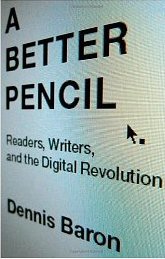
Voltaire Strikes Again

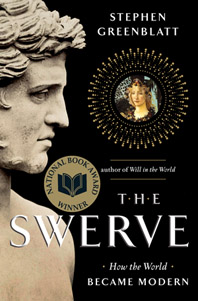
The cover illustration is not very inviting, but the reviews and blurbs in more than one newspaper make it sound worth the read:

Not really a dictionary, but a series of short essays on such topics as equality, Hell, miracles, religion, tyranny and superstition by one of the leading spirits of the Enlightenment. The tone is witty, catty, and there are many neat aphorisms such as: “Atheism does not prevent crimes, whereas fanaticism commits them.”

Incidentally, in case you are already a Voltairophile, you may want a deeper well from which to draw inspiration.  In which case you may want to pay a visit to Oxford.

Continue reading

152 Years And Counting

Besides being the most useful holiday known to man (however it is celebrated, as well as whenever, and by whomever) today is the birthday of the first publication of Darwin’s On the Origin of Species by Means of Natural Selection, or the Preservation of Favoured Races in the Struggle for Life.

Did you know that Charles Darwin and Abraham Lincoln were born on the same day?  And that Lincoln was responsible for making Thanksgiving a national holiday in the USA? Continue reading

Almost Missed It

It is just the way things are.  My reading list/pile is always longer/taller than I have time for.  And living between the rice fields and spice-laden Western Ghats I do not have access to the kind of bookstores we took for granted while living elsewhere.  Amazon does not deliver in India, nor would I put a penny in their coffers until I have the sense that they are not trying to monopolize the book trade, not to mention everything else.

Even if I had access to a great book store I might not have picked this one up off the shelf, though I admire the author’s writing.  I have not been in the mood for anything too canonical or Great lately; rather merely useful, interesting, lesser reading.  Short- and long-form journalism tend to be my standard fare. There was something in the pile with Greenblatt’s name on it, a magazine article, that I kept burying for months and which persistently kept resurfacing. Continue reading

God’s Cow

Today I saw something very odd: dozens of ladybugs crawling along the top of a recycling bin. Some were the dark red that we normally associate with ladybugs, while others were a pale orange verging on yellow. Strange looking half-formed ladybugs, seemingly crouched in tight balls, adhered themselves along the surface as well. In the midst of it all swarmed long, fat black bugs with orange spotting along their backs. What was going on here? And what was this panoply of ladybug life occurring on a recycling bin in the middle of a college campus?

Two ladybug pupae

When I afterwards looked up ladybugs, I found that I had actually witnessed something pretty cool: the full life cycle of Coccinellidae, known as the ‘ladybug’ in America but the ‘ladybird’ elsewhere in the world. It’s also known as ‘God’s cow,’ the ‘ladyclock,’ or the ‘lady fly.’ There are over five thousand species worldwide, but the name ‘ladybug’ is perhaps most readily synonymous with the image of a small, round red bug with black spots.

The ladybug, as I had seen, has four distinct phases in its life cycle. The life of the ladybug begins in an egg; small clutches hatch after three or four days at which point the larval form of the bug emerges. It may molt three to four times over a period of about twelve days before pupation (i.e., the beetle creates a pupa). Continue reading

Another Friedman Keeper

This quote may not be clear without the context, so read the full story here.  But following my previous mention of its author I was pleased to see that he is still writing from India, and I am most interested in this snippet because it captures a general point beyond the specific innovation he describes in the full article.

That conversation is the sound of history changing.

And not just for India. We’re at the start of a nonlinear move in innovation thanks to the hyperconnecting of the world — through social media, mobile/wireless devices and cloud computing — which is putting cheap innovation devices into the hands of so many more people, enabling them to collaborate on invention in so many new ways.

Continue reading

2011 Sustainability Roundtable at the Hotel School

Last week, I had the pleasure of attending the 3rd annual Sustainability Roundtable at Cornell University. The roundtable was attended by several notable industry executives from Marriott, InterContinental, Starwood, and Wyndham. It covered five topics: sustainability across global platforms, standardizing environmental footprints of hotel stays, customer choices, sustainability in the meetings/events sector, and leveraging trends and overcoming barriers in sustainability. Participants came from a wide variety of backgrounds; hospitality franchisors, owners, operators, suppliers, consultants, utility providers, investors, and researchers were all represented. In short, it was a meeting of the best, most passionate minds in sustainable hospitality. Although their discussion covered a wide range of important issues, the session that I found most interesting was “Sustainability and Customer Choices,” which I’ll briefly touch on.

Roger Simons, Manager from Meeting Professionals International (MPI); AJ Singh, Associate Professor of Michigan State University; and Ted Saunders, Director of Sustainability for Saunders Hotel Group partake in a lively discussion at the roundtable that the Center for Hospitality Research hosted.

Continue reading

Strengthening Helpers’ High

Lately, I have been pondering altruism, one’s unselfish devotion to the well-being of others often without regard to personal well-being.  I admit I am befuddled by the concept.  It challenges theories of evolution and even caused Charles Darwin to question his own theory of natural selection—how could these acts of self-sacrifice exist in a world full of the fittest habitants, that possess only an incentive to survive and reproduce?   Regardless, I find it very encouraging to witness such selfless behaviors from my fellow mankind.    This behavior takes many forms in many aspects at many different times.

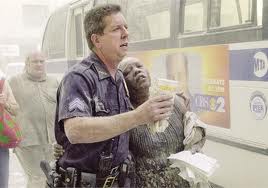
For instance, I reflect on the aftermath of September 11, 2001.  This date was one of the earliest times in my life when I acknowledged altruism’s existence.  I remember people gathering in tribute to the dead, celebrities organizing benefit concerts to raise money, and yellow ribbons streaming across nearly every home and shirt lapel signifying compassion for lost lives.  After Hurricane Katrina swept through the Gulf Coast, citizens all over the nation offered their support; my family even opened our home to refugees for a few weeks.  Similarly, this year’s September flooding of the southern tier of New York and the recent damaging snow storms of the East Coast have brought out the kindness and generosity of neighbors.  From the Flight 93 passengers to storm rescuers, altruism spurs many questions: Why are some people willing to help even at their own expense?  Why do some feel the urge to help more strongly than others?  Can altruism be learned or is it innate? Continue reading

Revisiting The Tiger Trail

When I send emails to friends, colleagues, and others about this website, and the objectives of Raxa Collective, I normally add links to a few posts that I think are representative.

Almost always, this one is included.  Michael captured the moment well.

As we continue adding contributors to this site, and the diversity of topics and locations we pay attention to expands, for some reason I still come back to the Tiger Trail as a favored topic because it is such a good example of what we care about.

That tendency to return, at least in thought, led me to reconnect with a “lost” member of our Tiger Trail entourage. Continue reading

Opening Doors

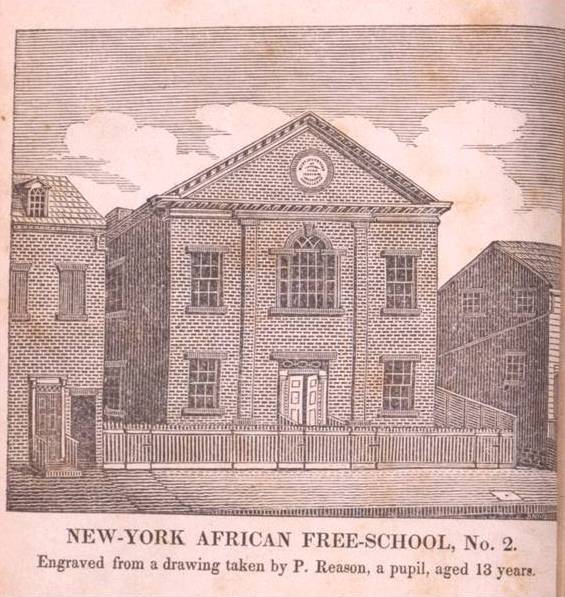
Source: Schomburg Center for Research in Black Culture / Manuscripts, Archives and Rare Books Division/ The New York Public Library, via Columbia University

The New York African Free School was established November 2, 1787, seventy-eight years before slavery was officially abolished by the 13th Amendment of the U.S. Constitution. Despite the fact that slavery was considered “crucial to the prosperity and expansion of New York”, groups such as the New York Manumission Society were established that advocated for African Americans and abolition.

Certainly ahead of its time, the school was co-educational, teaching reading, writing, arithmetic, and geography equally to children of both slaves and free men. Vocational skills were taught as well; the boys were offered astronomy and cartography, skills needed by seamen, and the girls learned sewing and knitting. Continue reading

Crabby and Ant-sy (In The Best Possible Way) in Colombia

Guest Author: Nicole Kravec

This slideshow requires JavaScript.

I woke up smiling and drenched in sweat.  It took me a moment to remember exactly where I was, as my exuberance to investigate Colombia’s diversity resulted in new accommodations nightly.  But as I peeped my head out of the hammock and became further enveloped by the Caribbean humidity, I was content with the decision to spend a few days in one place.   I spied a horse grazing near the backpacker tents, heard gentle ocean waves rolling, and smelled fried plantain patacones pattiesContinue reading

Scraping Hell’s Attic

The Sulphur-Bottom Whale

The sulphur-bottom whale is the largest mammal on (or under) the earth’s surface; many speculate that it might be the largest animal ever to have inhabited our terraqueous globe. These immense creatures can typically grow to between eighty and a hundred feet long, with the largest specimens caught suggesting that the whales might exceed one hundred and ten feet in length! The weight of the sulphur-bottom whale is commensurate with its size: they can weigh between one hundred and one hundred and fifty tons. For comparison, the largest elephant ever recorded weighed a mere twelve tons. If the sulphur-bottom whale rolled over in its sleep Continue reading

Galapagos Education #3/3

This blurry photo was taken in the town square the same evening as my visit to the school.  It was a musical and cultural show the school had orchestrated for the townspeople.  While school productions such as this may be universal, I was still struck by something: in none of my work visits from 1998-2003 had I seen such a display of community.  The men who play volleyball in the town square every evening respectfully halted their fiercely contested games, and many took a seat to watch and listen.

And while perhaps universal, this show in such a place had some magic beyond the music and dance steps: it was a sign of progress in the sustainable development of the islands.

Galapagos Education #2/3

This slideshow requires JavaScript.

Reyna walked me through the school and explained the transformation it has undergone in the last few years.  The transformation began with the realization that children in these islands were in the midst of amazing nature, but that nature was not incorporated into the education they received.  Nor was sustainability.  Going from school room to school room I could see that this was corrected, and then some.  No unnecessary paving, nor walls where they were not needed.  Many classrooms are literally open air.  Kids do not have to lean out a window to see what is happening in the trees.  The science classroom looks familiar, yet better. Continue reading

Galapagos Education #1/3

There were several reasons for the visit to the Galapagos Islands that I just completed.  I have known Reyna and Roberto for 15 years, since the time Reyna and I worked on a research project together.  One reason for the visit was to understand what has changed on the islands since my last visit, from the perspective of locals.  The biggest news, perhaps, was the radical improvement in the quality of education.  The photos below show the name of the school, and generous sponsors, from a sign at its entry; two children climbing over the wall from their home to the school grounds at the start of the day; a bit of sport; and the pathway from one classroom to the next.

This slideshow requires JavaScript.

Rotam fortunae non timeo!

Rotam fortunae non timeo -- "I do not fear the wheel of fortune!"

“Mortal men travel by different paths, though all are striving to reach one and the same goal… happiness,”[1] or so says Boethius, the great Roman philosopher. I think we can all agree that, no matter what we want to do or how we choose to do it, our ultimate goal is happiness. It is “the good which once obtained leaves nothing more to be desired.”[2] It doesn’t necessarily take a philosopher to realize this, though; approach any random person and he or she will probably confirm that a happy life, is, of necessity, a good one.

But what is happiness? We say we are “happy” when we get an A on a test, win an important sports game, or finish a grueling paper—but what do we mean by it? The joy from these moments, however real at the time, begins to appear ephemeral in retrospect. Think back to the 6th or 7th grade: do you still glow with warmth when you remember getting a 93 on an Earth Sciences test (if you remember at all!)? Continue reading

Occupy Language!

The collection of thoughts, links, images, etc here is meant to bring attention to ideas and actions for a challenged and challenging world.  Written and spoken language, to say the least, have been important tools to this end for some time.  The language we use on this site, by default, is a function of those of us who banded together on a given day at a given time to do this jig.  Other languages, the cultural patrimony sometimes referred to as intangible, are hopefully strengthened, rather than weakened by this effort.

This fellow makes some very important points about the English language.  We have not read his book, but from his excerpted thoughts there is good cause to read more reviews and add it to the maybe list.  Meanwhile, we make our cultural case (another reason, beyond skiiing, to put Kashmir on your map?) to keep languages alive, perhaps especially of those not included on the most-alive list:

There are anywhere from 350 to 500 million native English speakers, and up to 1 billion more who use it as a second or additional language to some extent. That’s 20% of the world’s 6.9 billion people. There are close to 7,000 languages spoken around the world today, but according to Ethnologue, 39% of the Earth’s people speak one of eight brand-name languages: Chinese, Spanish, English, Arabic, Hindi, Bengali, Portuguese, and Russian (Japanese is number 9). Of these, only English can claim global dominance.

Saving Rhyme and Reason

For me, reading has always been a route out of a chaotic world.  That doesn’t mean that I read “fluff”. Far from it.  (Anyone familiar with The Iliad  or Beowulf, knows that neither Sam Peckinpah nor Akira Kurosawa invented the specificity or depiction of violence.)  But whether sitting with my children and reading aloud, or better still, sitting with my children while we all read individually, books bring an intangible into our lives by opening doors that remain available to us indefinitely.

Frequently the educational systems in many parts of the world pressure students into making choices that seem almost binary; the “science track” or “business track” for example, setting them on an educational road that is fundamentally an express lane highway, with little chance of turn offs and detours.  These systems produce very smart people in their fields, but it doesn’t easily provide opportunities for reaching full potential. Continue reading

Gulf Of California Partnership

Reviewing events in the region since I was last there, I came across this news (three years late, for something this interesting, is better than never to learn about it). WWF, to its great credit and the world’s benefit, found creative ways to partner with entities during the time since I completed my small task for them.  Listening to this man speak on behalf of the aquarium, I see the enormous educational impact such an institution can have (and here I must acknowledge that I have always found zoos and aquariums melancholia-inducing places, with charismatic mega-fauna trapped in relatively small spaces for us to muse over; but I am changing my perspective):

The WWF press release at the time started:

Long Beach, Calif., April 30, 2008— Described by Jacques Cousteau as the world’s aquarium, Mexico’s Gulf of California is one of five marine ecosystems in the world with the highest diversity of wildlife.

Continue reading