Prefab Solar Classrooms Power Education in Kenya

According to a UN report, there are around 57 million children who don’t have a school to go to.The UN’s Educational, Scientific and Cultural Organisation (Unesco) says in some areas it could take 70 years before there are enough primary school places for every child. There has been some progress though; there are now half as many children unable to go to school as there were in the year 2000. That means in the past 13 years around 60 million more children now have access to an education. And initiatives like Aleutia’s definitely play a big role in bringing down the number of children who lack access to education.

Continue reading

Notes from a Natural History Museum

Harvard Natural History Museum

I recently had the chance to visit the Harvard Natural History Museum. Despite having lived in Cambridge for nearly a year, and having often thought about visiting the museum when I passed by going to and from my apartment, I had not stopped in until now. What a treat! The collections are full, diverse, and well curated. On this occasion, I spent most of my time in the animal wing, but I plan to return soon to take in the flora and minerals, and spend much more time in choice display rooms (e.g. the absolutely gorgeous Mammals/Birds of the World permanent exhibit: see below for pictures).

A ground sloth skeleton. It is hard to get an idea of the size of this creature from this photo, but it probably weighed several tons while alive!

Continue reading

Winnie-the-Pooh Wants to Save the Bees

Planting a bee-friendly tree beneath Warwick Castle. Via The Telegraph.

Last month, I shared a story from Cornell’s orchards, where apple blossoms were pollinated this year solely by local wild bee species rather than commercial honeybees. Funnily enough, the same day I posted that story, the science editor for The Telegraph wrote a piece concerning bees across the Atlantic, where the British Beekeepers Association has partnered with one of the original Winnie-the-Pooh illustrators to make a new story encouraging children to care for these productive insects. As Pooh tells Piglet in the new story when they realize there is a shortage of honey, “you can only be careful for so long before you run out altogether.” Sarah Knapton reports:

Beekeepers are also hoping to engage children by encouraging them to bake with local honey, become beekeepers, visit nearby apiaries and throw seed-bombs to help the spread of wildflowers.

New illustrations show AA Milne’s characters Christopher Robin, Piglet, Tigger, Eeyore and Pooh making a vegetable patch in the Yorkshire Dales, building a bee box in the shadow of the Angel of the North in Gateshead, and planting a flowering tree in the shadow of Warwick Castle.

The friends are also pictured dropping bee-balls in Birmingham, painting in Sherwood Forest, Nottinghamshire and visiting a honey show in Glastonbury.

Continue reading

Stepping Up to the Plate

Polystyrene lunch plates are being shown the door in some US cities. PHOTO: NRDC

Polystyrene lunch plates are being shown the door in some US cities. PHOTO: NRDC

New York, Los Angeles, Chicago, Miami, Orlando, and Dallas. Six cities. 4,536 schools. 2,848,000 students enrolled. 469,000,000 meals served annually. And one organisation that unites them all and its plans to combine purchasing power and coordinate menu creation and food service in schools. Meet the Urban School Food Alliance. And here’s their latest idea: ditching polystyrene lunch trays and replacing them with compostable lunch plates. It’s a significant move since all together, the schools in the Alliance serve up 2.5 million meals a day.

But what’s most revolutionary about these new plates is what they’re made of. The polystyrene used in traditional lunch trays is a petroleum-based plastic that won’t break down for hundreds of years. When the trays end up in landfills — and 225 million of them do every year — they leech pollutants into the water and air, according to the group. The new plates, by comparison, are made of recycled newsprint and can break down within a matter of weeks in commercial composting facilities. They’re also only a tiny bit more expensive, at $0.049 apiece compared with $.04 apiece for the plastic trays.

Continue reading

Revisiting a Year-old Thesis Experience


It’s been exactly — down to the same date, funnily enough — four months since I posted anything about Iceland in particular, seven months since I shared an excerpt from my honors thesis, and one year since I submitted that thesis to the history department at Cornell University. It’s interesting that as I write this I’m back in Ithaca, on campus, and during the last week have been involved in the proofreading process for two friends writing English theses to be turned in tomorrow. And then, coincidentally but not by chance, Hua Hsu writes a book review in the New Yorker that revolves around how to write a thesis.

Reading Hsu’s discussion of Eco’s book, as well as revisiting parts of my thesis to be able to give advice to my English-major friends, is a rewarding and somewhat nostalgic experience. There are several of Eco’s points that
particularly resonate with me, such as Continue reading

Umberto Eco, Come To Kerala!

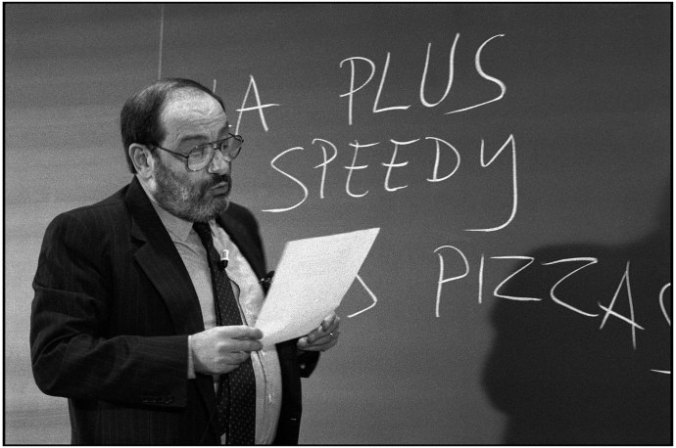
In “How to Write a Thesis,” Umberto Eco walks students through the craft and rewards of sustained research. CREDIT PHOTOGRAPH BY MARTINE FRANCK / MAGNUM

In “How to Write a Thesis,” Umberto Eco walks students through the craft and rewards of sustained research. CREDIT PHOTOGRAPH BY MARTINE FRANCK / MAGNUM

I have excerpted the first two paragraphs, and the last two, of a delightful and delightfully odd book review in order to finally extend an invitation to Umberto Eco that is long overdue. The review is odd only in the sense that the book was first published when I was a sophomore in high school, 20 years before I completed my doctoral dissertation (which I was working on 20 years ago), and is only now appearing in English for the first time, one year after my son completed his undergraduate honors thesis (the best advice we could send him back then was this).

The review is anything but odd, if you have been following our blog for the last four years.  It is about the effort required to understand sufficiently, and to communicate effectively, on a topic you care about–and provides some tricks of the trade that sound geared for university students but apply to members of our collective as well.  We are not in thesis mode at Raxa Collective. What we do is not theoretical, but grounded in the grind of hard work every day in our chosen profession. But we are in constant search mode for thesis-forged talent who know how to express themselves, to join us as interns or as employees (see Rosanna’s post for our latest talent acquisition in this spirit).

Umberto Eco is my favorite author, mainly because of one short book of his collected writings that I read when I was working on my doctoral dissertation. And mainly for that same book I extend to him an invitation to visit with us in Kerala, as our guest. Maybe I did not need the book reviewed below to complete my thesis, but I am sure I would have devoured it if given the opportunity at that time:

“How to Write a Thesis,” by Umberto Eco, first appeared on Italian bookshelves in 1977. For Eco, the playful philosopher and novelist best known for his work on semiotics, there was a practical reason for writing it. Up until 1999, a thesis of original research was required of every student pursuing the Italian equivalent of a bachelor’s degree. Collecting his thoughts on the thesis process would save him the trouble of reciting the same advice to students each year. Since its publication, “How to Write a Thesis” has gone through twenty-three editions in Italy and has been translated into at least seventeen languages. Its first English edition is only now available, in a translation by Caterina Mongiat Farina and Geoff Farina. Continue reading

Ecological Intelligence, Desperately Needed, Requires Social Intelligence, The Foundation Of Which Is Individual Emotional Intelligence

Screen Shot 2015-04-08 at 11.41.53 AM

To do what we do, at Raxa Collective, and to do it well, and to succeed, requires alchemy. We are neither sure we are doing it, nor how to do it, nor whether it can be explained; thus, alchemy. No formula. For those of us with management education, of a certain age, there was a certain author who brought alchemy closer to theory, and so closer to the grasp. A conceptual grasp more often than an actual grasp. Mastery? Not even close. But try? Yes. In the beginning it was all about emotional intelligence, but expanded in interesting directions to now include even ecological. Important ideas. Powerful tools. In the current Education section of the New York Times, a small dose that helps understand why:

How to Be Emotionally Intelligent

What makes a leader? Knowledge, smarts and vision, but also the ability to identify and monitor emotions and manage relationships.

Inspired By Libraries Without Borders

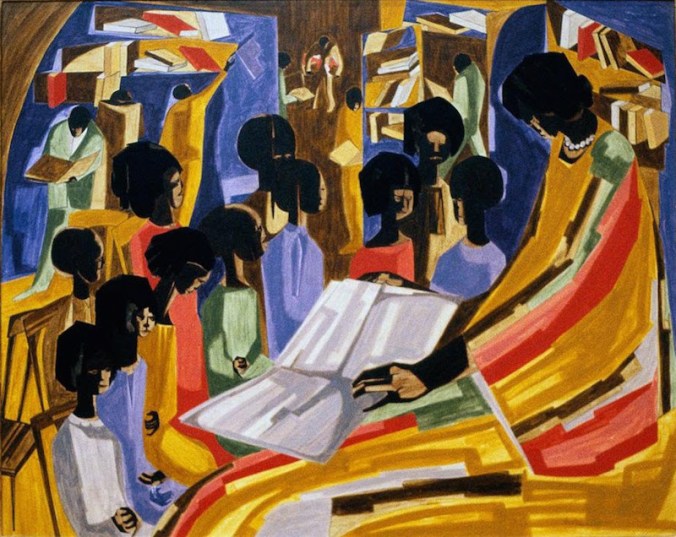
jacob-lawrence-library-1

from a series on libraries by Jacob Lawrence.

What a wonderful surprise, to come across this talk by Kenan Malik, on a topic that has been of interest to us for some time:

I gave a talk at the launch at London’s Institut Français of Libraries without Borders, the charity inspired by Patrick Weil that aims to increase global access to books and libraries. Also speaking were Ian McEwan, Lisa Appignanesi, Barbara Band and Patrick Weil himself. Here is a transcript of my talk.


Let me begin with a story not of a library or a book but of a grand piano. The one grand piano in Gaza, that was discovered still intact in a theatre destroyed by an Israeli missile during last year’s war. A piano that has been restored string by string, hammer by hammer, by Claire Bertrand, a young French music technician who travelled to Gaza specially to bring the piano back to life, in a project financed by Daniel Barenboim. Continue reading

Embracing Student Activism


Students have been rallying for change since the time of Plato with varying degrees of effectiveness. In fact, the act of questioning authority through dialogue is part and parcel to the educational process. It’s heartening when the voices of resistance from multiple communities join forces to activate change.

Congratulations to the students of Syracuse University for rallying SU to remove endowments to direct investments in coal, gas and oil companies.

Syracuse is the biggest university in the world to have committed to remove its endowment from direct investments in coal, oil and gas companies. It aims to make additional investments in clean energy technologies such as solar, biofuels and advanced recycling.

In a statement, the university said it will “not directly invest in publicly traded companies whose primary business is extraction of fossil fuels and will direct its external investment managers to take every step possible to prohibit investments in these public companies as well”. Continue reading

Recognizing the Gift of the Galapagos

157

“We’ve all been given a gift, the gift of life. What we do with our lives is our gift back.”

-Edo, Sacred Economics

Being in the Galapagos was such a gift.

I remember reading a list in the newspaper when I was 14- something like “Top 10 Places to Visit Around the World”, and the Galapagos was on it with descriptions of black rocks and blue-footed boobies and I remember thinking how can I lead a life that takes me to places like that? The Galapagos Islands are a sacred mecca of biodiversity that most people will never have the privilege to see and I feel uncomfortable that I went without having to make any particular effort: I just chose a college and a study abroad program and voilà! my dreams came true. I feel immense gratitude for this. More importantly I feel a sense of obligation. I have an obligation to respond to this gift wisely and with intention in the way I conduct my life.

The sense of obligation is interesting to me because currently I’ve been reading about gift economies in my Economic Anthropology class. There is a concept called hau from the New Zealand Maori that tries to explain the sense of obligation to reciprocate when given a gift. From Wilk and Cligget’s book Economies and Cultures:

Hau is a term for the force of the identity of the owner of an object, which is attached to the object. Thus, upon giving the object away, part of the owner’s hau goes with it. And this is why receiving the gift always carries an obligation to reciprocate, because the hau wants to return to its original owner, though now it may be attached to another’s object.

In class, we’ve been talking about when things are separated from their origin, their story, the people who made it, there is some kind of erasure of the hau that represents the giver and we don’t feel compelled to respond in kind. Continue reading

If You Happen To Be In Ithaca: But You Don’t Have To Be

One of the many reasons we highlight the Cornell Lab of Ornithology on the pages of this site is the vastness of their offerings to both students and the general community (actual and virtual) sharing current studies in the field of ornithology. Continue reading

Muro de las Lágrimas: Historical Conservation in the Galapagos


151

Isla Isabela: Paradise with a dark history

I am currently on study abroad in Ecuador, which has provided me with a mountain of experiences to post about when my homework will allow. I recently had the good fortune to go to the Galapagos, a dream I’ve had since I realized they existed. I am still so struck by everything I saw. In this post, I’ll just highlight one of the places on Isla Isabela that started some good conversations among my classmates about historical conservation of sites of trauma. Also, I will share a poem I wrote about the location.

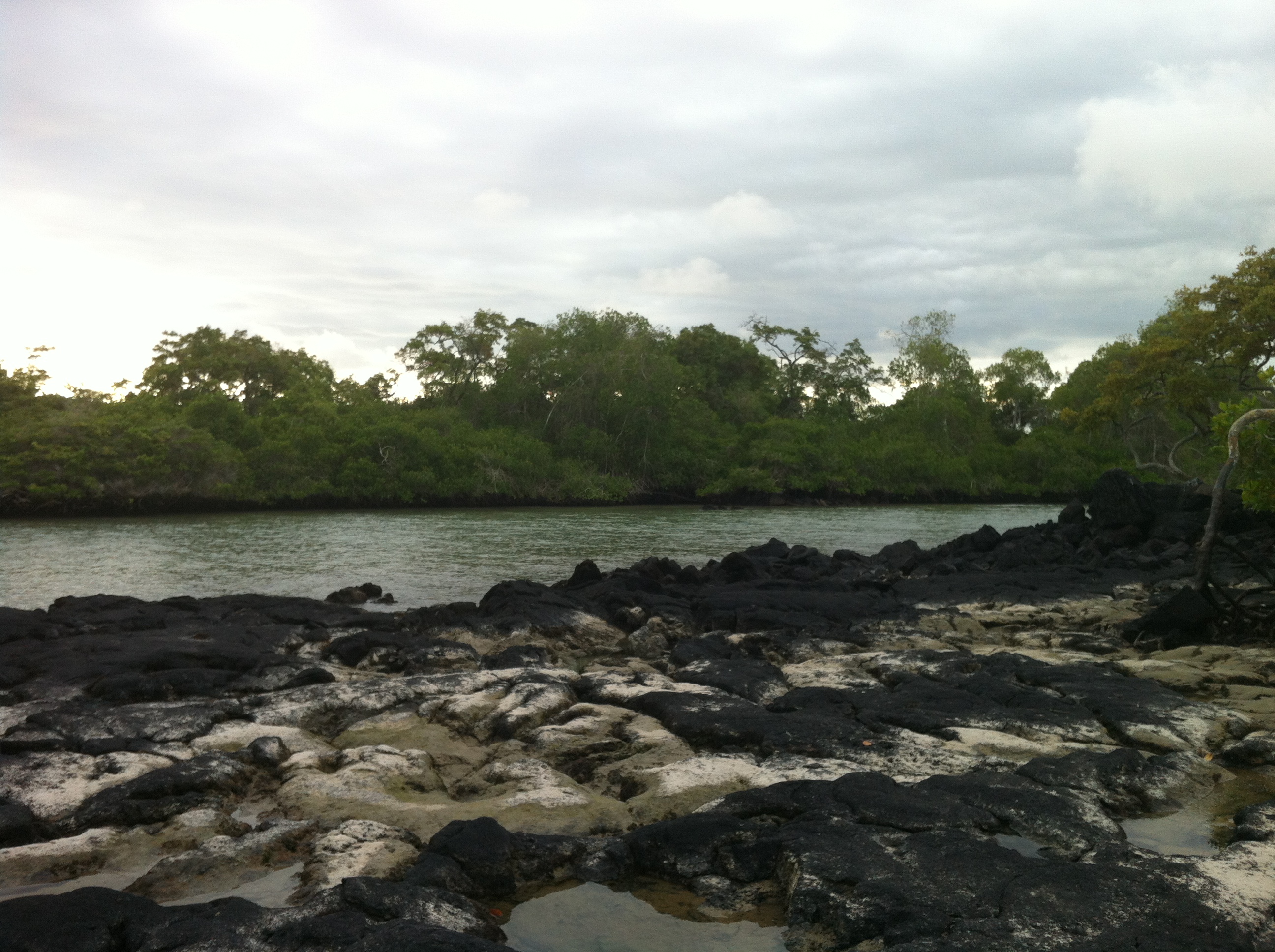
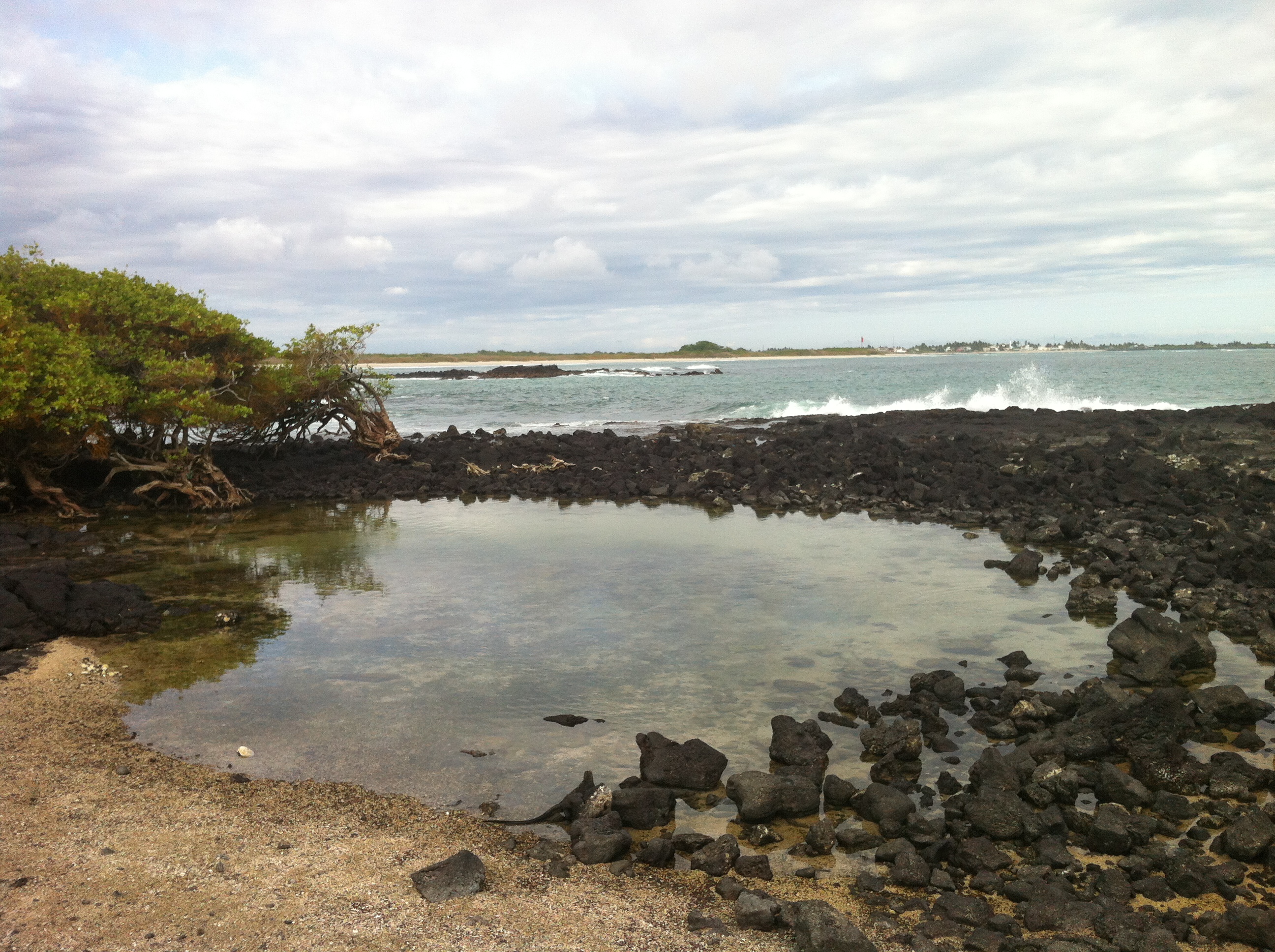
Former President Ibarra of Ecuador used the island of Isabela as a penal colony (1946-1956), where prisoners were forced to do agricultural labor. They had to carry lava rocks from all over the island to construct the walls of their own prison. There are stories that they would cry as they carried the rocks. I was told that bodies are inside the walls from the rocks falling down while they were building them. The saying that accompanies the island’s history is: Los valientes lloran y los cobardes mueren, which means “The brave cry and the cowards die.” After ten years, the prisoners escaped by creating a play for the guards about prisoners escaping. They got the guards drunk, and actually escaped during the play.

Despite the story of escape, it couldn’t feel like a happy ending. My friends and I were talking about how it felt to visit this site of trauma as tourists. What is the role of historians and purpose of preserving places exactly as they were in the past? Is it to empower us with memories that in our normal lives we couldn’t have access to? Who are these memories for? For some people, this type of oppression is not of the past. They don’t need external reminders because the struggle for survival is part of their daily lives. There was conversation in the group about how preserving sites of trauma allows many of us to experience a sense of empathy before moving on to our daily, more privileged lives. This is how the set-up of touring through the site of trauma left us feeling. Continue reading

Redefining Recycling

In the early years of this site we highlighted a concept of “the fourth r” – focusing on the restaurants and events planners who support a form of social entreprenuership by donating excess food to local shelters. On an annual basis huge amounts of prepared foods go to waste in all forms of venues, but the classic buffet-style cafeteria is a long-term culprit. But luckily creative solutions have gone hand-in-hand with awareness of the problem. At the time we used the term “recycled” when taking about the food programs. Kudos to the new voices who redefined at as “repurposed.”

Back in 2011 when I was a student at the University of Maryland in College Park I once noticed a massive pile of trash in front of a dining hall. A closer look revealed that it was mostly food — a half-eaten sandwich, a browning apple and what appeared to be the remains of the day’s lunch special.

The heap was gross, but intriguing. Turned out it was a stunt to get students thinking about how much food they throw out each day.

Nowadays, students are coming face to face with their food waste, and its environmental and social impact, a lot more often. They also have more opportunities do something about it. Continue reading

Transformative Practices For A Better World

Christophe Archambault/AFP/Getty Images

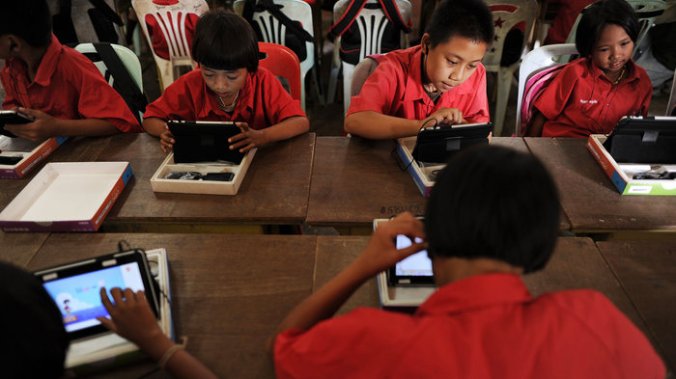
Students use tablets in a classroom in Mae Chan, a remote town in Thailand’s northern province. Christophe Archambault/AFP/Getty Images

Scanning the developing world, anywhere that poverty puts lives at risk, it is useful to have a short list of particularly transformative practices as in this four minute story podcast from National Public Radio (USA):

There are so many projects in global health that sometimes it’s hard to figure out which ones are the most important.

So Lawrence Berkeley National Laboratory set out to list the 50 breakthroughs that would most transform the lives of the poor, especially in sub-Saharan Africa and South Asia. Shashi Buluswar, an author of the study, spoke with Morning Edition‘s Renee Montagne. Here’s a sampling:

A low cost, fuel-free way to desalinate water. Many people in the world do not have enough fresh water to grow crops, and more and more fresh water runs off into oceans. Desalination creates usable water out of salty or brackish sources. “Right now it’s tremendously energy intensive and expensive,” Buluswar tells Montagne, “so trying to come up with a much more affordable, scalable and energy-efficient way of desalinating water would be tremendous.” Continue reading

Teaching, Reading, Books, And The Art Of Heroic Generosity

teacher-dorchester_wide-e26ec96b4bf01b90583733bad7518f51e86db66b-s1300-c85

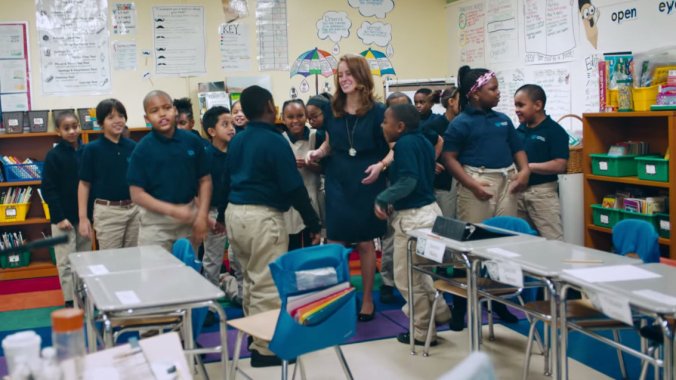
Third-grade teacher Nikki Bollerman, 26, won a contest that gave her students books for the holidays. When she also won $150,000, she decided it should go to her school. YouTube

No matter how much we talk about books, or libraries, or teachers, or reading, we are not sure. We hope we would do the same as Ms. Bollerman. The fact that we are not sure is the real reason why this story is a must share, must read. We like her decision very much and will do our best to follow her lead:

One thing’s for sure: Nikki Bollerman believes in her school and the kids who go there. How else to explain Bollerman, 26, giving a $150,000 windfall to the Boston area public charter school where she teaches third grade?

The story comes to us from member station WBUR, which reports that Bollerman’s generosity got the attention of Mayor Marty Walsh, who met with her and some of her students Monday.

“I want to thank Nikki for your kindness and your humility, and you are certainly a shining example of great things to the city of Boston,” Walsh said. “We are grateful for your hard work and generosity. You have inspired lots of people with your selfless act.” Continue reading

Preservation Of Language

We have posted on the topic of intangible patrimony and include it in our explanation of entrepreneurial conservation; the topic extends to our interest in reading and the liberal arts. Below is a link to an op-ed piece published today, penned by a savvy academic whose primary focus is language, that we consider worthy of the brief reading time, even if you are not a language fanatic:

07gray-thumbWideGRAY MATTER

Why Save a Language?

The Sweeping View, For Historians And Non-Historians Alike

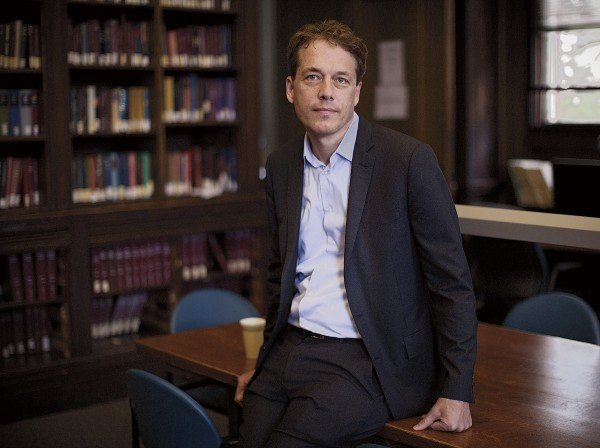
Photograph by Charlie Mahoney: Sven Beckert

Photograph by Charlie Mahoney: Sven Beckert

The historians among our contributors, as well as the many readers who seem most oriented to those posts, will find this article from Harvard magazine in synch with many of our non-history stories and posts on this blog. These “sweeping” views are a daily recurring theme for many of us who have worked in more than one region of the world:

The New Histories

Scholars pursue sweeping new interpretations of the human past.

IN MAY 1968, the university’s students wanted to change the world. Left-thinking ideologies like Maoism and socialism were in their minds, and “Vietnam” was on their lips. They went on strike, skipping classes and exams. They rioted and clashed with police. One student was killed, 900 arrested.

If this sounds like a scene from Kent State, where student demonstrators were killed two years later, that is because the May 1968 unrest at the University of Dakar in Senegal was part of the same general mood around the world that moved students to protest, says Omar Gueye, professor of history at Cheikh Anta Diop University in Dakar. Gueye spent six months at Harvard during the 2013-14 academic year as a postdoctoral fellow at the Weatherhead Initiative on Global History (WIGH), a program premised on the belief that events like these—not unlike the seemingly contagious uprisings of the Arab Spring—can be fully understood only in a global context. Continue reading

Good Writing, According To Steven Pinker

Thanks to Intelligence Squared for the last dozen years of excellent debate, Oxford style, and in particular for this recent conversation that picks up where this last post, and the one before that, left off in terms of making us want to hear more from Steven Pinker:

STEVEN PINKER ON GOOD WRITING

with Ian McEwan

Steven Pinker is one of the world’s leading authorities on language, mind and human nature. A professor of psychology at Harvard, he is the bestselling author of eight books and regularly appears in lists of the world’s top 100 thinkers.

On September 25th he returned to the Intelligence Squared stage to discuss his latest publication The Sense of Style, a short and entertaining writing guide for the 21st century. Pinker argued that bad writing can’t be blamed on the internet, or on “the kids today”. Continue reading

Foodpreneurship

Revolution Foods makes healthy kids meals for both schools and stores. Co-founder Kristin Richmond says mentoring and support have been key to the success of her business. Shelly Puri/Courtesy of Revolution Foods

Revolution Foods makes healthy kids meals for both schools and stores. Co-founder Kristin Richmond says mentoring and support have been key to the success of her business. Shelly Puri/Courtesy of Revolution Foods

In the past year, with conceptualization and then food trials that led to the opening of 51, this story catches our attention and interest. Thanks to the salt, over at National Public Radio (USA) for the new vocabulary:

Culinary Institute’s School For ‘Foodpreneurs’ To Cook Up Innovation

The Culinary Institute of America may be best known for churning out chefs. And some of its graduates — from Grant Achatz to Roy Choi to Anthony Bourdain — have succeeded in entertaining and inspiring a new generation of foodies.

But not all CIA graduates don chef toques. Continue reading

Education, Innovation, Puzzling Future

Online education is a technology with potentially revolutionary implications—but without a precise plan for realizing that potential. CREDIT PHOTOGRAPH BY MELANIE STETSON FREEMAN / THE CHRISTIAN SCIENCE MONITOR VIA GETTY

Online education is a technology with potentially revolutionary implications—but without a precise plan for realizing that potential. CREDIT PHOTOGRAPH BY MELANIE STETSON FREEMAN / THE CHRISTIAN SCIENCE MONITOR VIA GETTY

If the first post of today was rather too depressing, here is an interesting puzzle to take your mind off that subject. In honor of all of this year’s interns, many of whom are probably thinking about MOOCs for various reasons, we thank the New Yorker’s Elements writer Maria Konnikova for this intriguing distraction:

On July 23rd, 1969, Geoffrey Crowther addressed the inaugural meeting of the Open University, a British institution that had just been created to provide an alternative to traditional higher education. Courses would be conducted by mail and live radio. The basic mission, Crowther declared, was a simple one: to be open to people from all walks of life. “The first, and most urgent task before us is to cater for the many thousands of people, fully capable of a higher education, who, for one reason or another, do not get it, or do not get as much of it as they can turn to advantage, or as they discover, sometimes too late, that they need,” he told his audience. “Men and women drop out through failures in the system,” he continued, “through disadvantages of their environment, through mistakes of their own judgment, through sheer bad luck. These are our primary material.” He then invoked the message emblazoned on the Statue of Liberty: Open University wanted the tired, the poor, the huddled masses. To them, most of all, it opened its doors. Continue reading