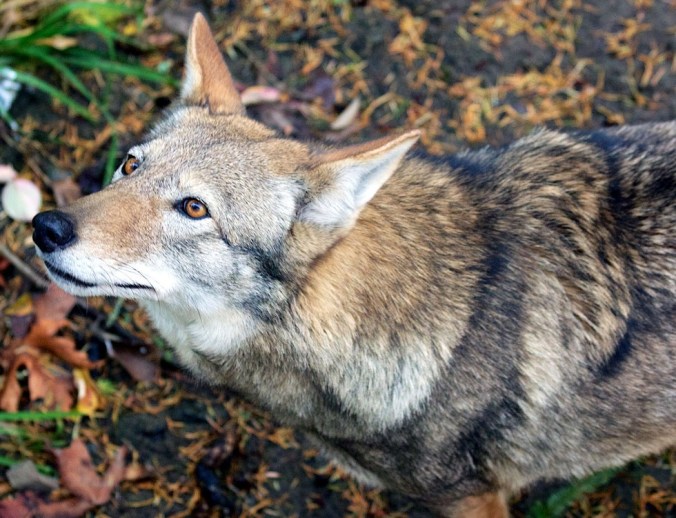
45 Red Wolves Remain In North Carolina

980x (3).jpg

Captive red wolf at Species Survival Plan facility, Point Defiance Zoo and Aquarium (Tacoma, Washington).B. Bartel / USFWS

Thanks to EcoWatch for this news

The U.S. District Court for the Eastern District of North Carolina today issued a preliminary injunction that orders the U.S. Fish and Wildlife Service (USFWS) to stop capturing and killing—and authorizing private landowners to capture and kill—members of the rapidly dwindling population of wild red wolves. Continue reading

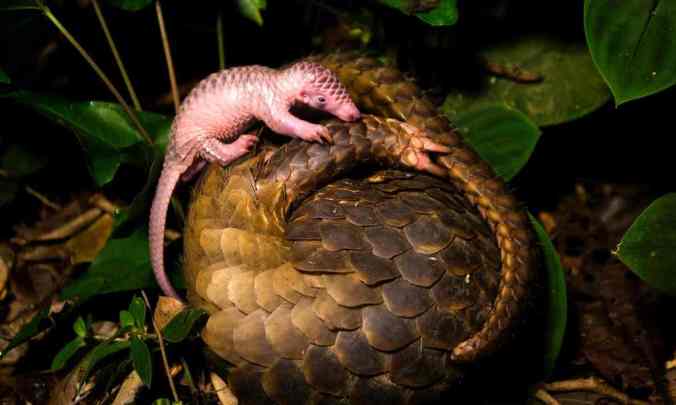
Pangolins, Remarkable In More Ways Than One

1187

More than 1 million wild pangolins have been killed in the last decade. Photograph: Paul Hilton/WCS

We honestly knew little, perhaps nothing, about these creatures until very recently when they were in the news; and they were almost gone before we learned about them. Suddenly, thankfully, pangolins have been given the attention they deserve from the folks (including all of us) who may be able to help them survive as a species:

Pangolins thrown a lifeline at global wildlife summit with total trade ban

World’s most illegally trafficked mammal wins total ban on international trade in all species under the strictest Cites protection possible

Pangolins, the world’s most illegally trafficked mammal, were thrown a lifeline at a global wildlife summit on Wednesday with a total trade ban in all species. Continue reading

Bees, Status, Survival Of The Fitted

1004542_1_0922-bumble-bee_standard

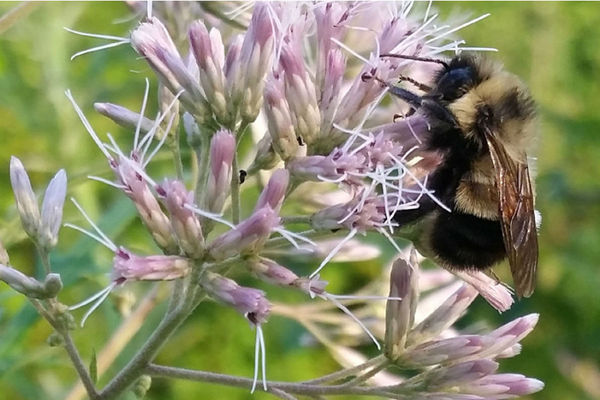
A rusty patched bumble bee, under consideration for listing as an endangered species by the US Fish and Wildlife Service, pollinates a flower in Madison, Wis. Rich Hatfield/Reuters/File

The CS Monitor has an article today that raises an interesting question, whether the same rules that have worked well for eagles, owls, fish, wolves and bears (among other animal species) would be effective for the humble bumble bee and other similar creatures. We see a very good fit between the problem, which we have noted here frequently, and the solution, whose track record is not perfect but it is clearly the best mechanism we’ve got:

Could putting a bumble bee on the endangered list save it?

By Weston Williams

The past several years have not been kind to the humble bee.

But perhaps none suffer more than the rusty patched bumble bee, orBombus affinis, a fuzzy insect with a rust-colored patch on its abdomen. The bee used to be a common sight across the Midwestern United States, but now, the bee struggles to survive in a habitat broken apart by increased farming and commercial development.

The US Fish and Wildlife Service (FWS) is proposing to list the bee as endangered, which would grant it significant protections and hopefully save the bee from extinction. Continue reading

The Medicine We Fear Instinctively

Specter-Gene-Drives-And-Endangered-Birds-1200.jpg

Genetically modified mosquitoes could be the solution to Hawaii’s quickly disappearing avian population, including the island’s famous honeycreepers. PHOTOGRAPH BY RESOURCE HAWAII / ALAMY

Michael Specter writes frequently (but not exclusively) about frighteningly unpleasant, sometimes devastatingly horrible topics with grace not often found in technically rigorous writing. Here, in a short post, he addresses the prospects of a technology many rightly fear and its potential to address many rightly feared environmental (the one in the title below obviously catches our attention) and health challenges:

COULD GENETICALLY MODIFIED MOSQUITOES SAVE HAWAII’S ENDANGERED BIRDS?

By

Every four years, thousands of environmentalists gather at the World Conservation Congress to assess the state of the planet, and to consider what might be done to protect it.  Continue reading

Pandas & Baboo

dsc01051_zpsamb3vgjs

Giant panda feasting on some bamboo at Chengdu Research Base.

Reading this morning’s news about the giant panda being moved from “endangered” to “vulnerable” by the International Union for Conservation of Nature, reminds me of my small stuffed (artificial) panda bear called Baboo and the backstory to getting him.

During my semester abroad in China two years ago, I made a trip to Sichuan province and visited the Chengdu Research Base of Giant Panda Breeding. I had never seen a panda before and the opportunity to watch many of them (not only the giant panda, but also the red panda) was an opportunity I did not want to miss.

Continue reading

Elephant Footprint Land

We know how much an Asian elephant eats, but until today we didn’t know the biodiversity footprint of African elephants – that is, the literal biodiversity in the footprints left by these massive animals as they walk around, hopefully avoiding beehives. John Platt reports for Scientific American on the ecosystem engineers’ effects from walking:

When you weigh upwards of 6,000 kilograms, you tend to leave a trace of yourself wherever you walk. That’s definitely the case with African elephants (Loxodonta africana), which, according to new research, is actually a boon for dozens of other, much tinier, species.

As discussed in a paper published this week in the African Journal of Ecology, elephant feet play an important ecological role in Uganda, and probably in other countries. As elephants walk through the forest, they leave deep footprints behind them. These footprints then fill up with water, creating little foot-shaped microhabitats for at least 61 different microinvertebrate species from nine different orders.

Continue reading

World Orangutan Day

tnc_56625009_preview_cropped

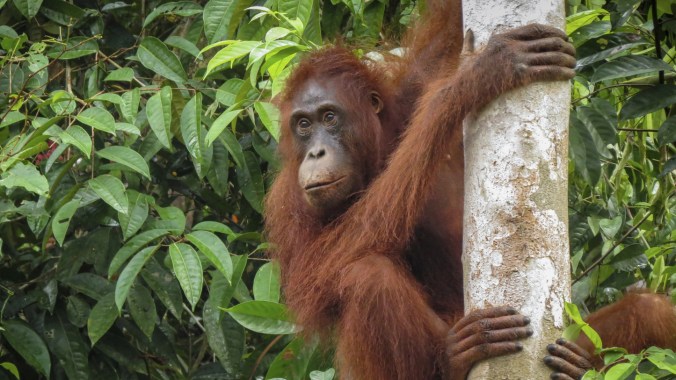
An orangutan in Tanjung Puting National Park in Borneo, Indonesia. All photos from: The Nature Conservancy

About a week ago we celebrated World Lion Day. Today we celebrate a different, long-limbed animal that likes to climb trees, the Orangutan. There are two species of this magnificent arboreal ape, both of which are facing potential extinction due to deforestation, poaching, the illegal pet trade and forest fires. As of last month, the status of the Bornean orangutan was classified as “critically endangered,” but conservationists are not giving up and are taking significant measures to improve forest management by working together with local communities and developing public-private partnerships.

The harmony between humans and apes began to unravel with the arrival of European explorers, who hunted them extensively during the 19thcentury. But it was not until the mid-20th century that human activities began to imperil orangutans’ existence. Extensive deforestation not only directly threatened orangutan habitat, it made the forest more easily accessible to humans. This led to both conflicts with orangutans, as the apes will eat crops, and made it easier for poachers to hunt the animals.

Continue reading

Pinocchio in the Forest

pinocchio20lizard_zpsnwefj0ks

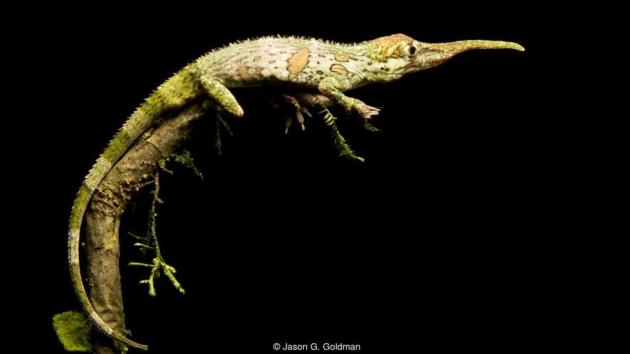
Source: BBC.com

Eccentric and alien-like creatures abound on Earth, but often times these species are found in very remote and small areas. The Ecuadorian horned anole, also known as the “Pinocchio lizard,” is a species that would likely appear in Discovery Channel’s TV series Life (if it has not done so already).  This curious lizard with a long, malleable nose was found in the Mindo cloud forests of Ecuador’s Pichincha Province in the 50’s. Aside from its peculiar nose, what makes the story more intriguing is that it ‘disappeared’ from human research world for almost 40 years until it was rediscovered by a group of birders (hurray birders!) in 2005. The purpose of the horn and how it moves are still a mystery, but Jason Goldman has written an article for the BBC Earth website that elucidates some of the rare reptile’s habits:

Lucas Bustamante carefully aims his laser pointer at a small branch some 50ft (15m) above the ground. The green spot of light is clearly visible, but I just cannot see the lizard he has spotted: just branches, leaves and moss.

Continue reading

Birds Back From Beyond Brink

gettyimages-129031564_custom-0155a178bff9fc85b180038391dbdbe1bf478731-s1400-c85

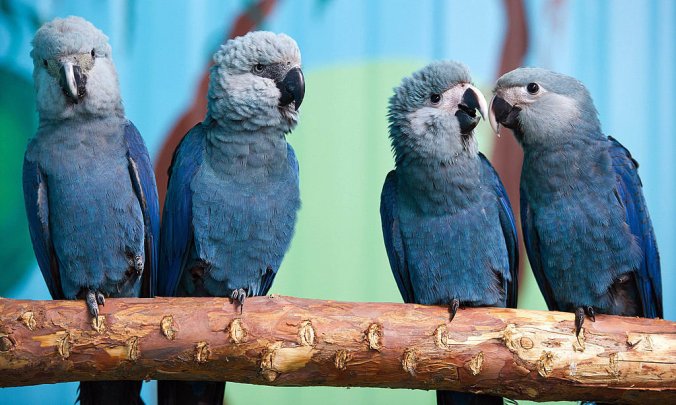
Spix’s macaws (L-R) Felicitas, Frieda, Paula and Paul sit on a branch in their aviary in Germany. The species has not been seen in the wild for 15 years until the recent sighting in Brazil. DPA/AFP/Getty Images

Thanks to National Public Radio (USA):

An Avian Mystery: Rare Parrot Spotted In Wild For First Time In 15 Years

For the last 15 years, Spix’s Macaw has been presumed extinct in the wild. That’s until one of the blue-feathered parrots was spotted and caught on video flying near the town of Curaca, Brazil.

Conservators say the appearance of the mysterious rare bird represents “a new hope” for the area.

The bird was first spotted by a local farmer named Nauto Sergio Oliveira, a government conservation institute said in a statement. Oliviera told his neighbors, and the next day his wife Lourdes Oliveira and daughter Damilys trekked out at dawn in search for the bird.

The rare parrot appeared in a nearby riparian forest and Damilys managed to catch it on video: Continue reading