Solar Energy Benefits for All

h_bostonia_16-9939-solarpanel-116

All photos from: Boston University Bostonia

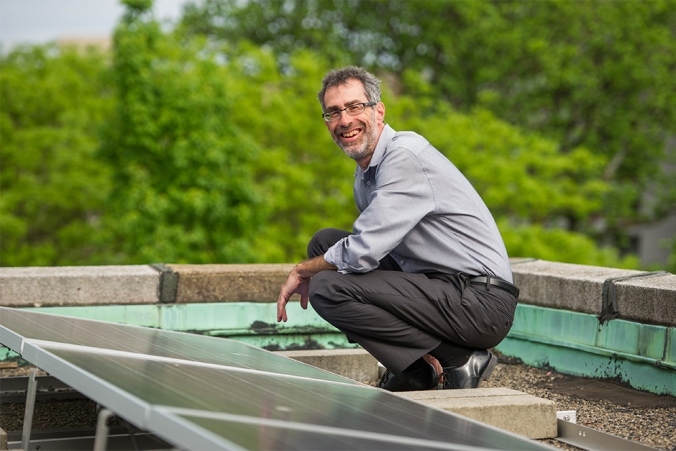
It seems obvious that investing in renewable solar energy saves money for those who install photovoltaic (PV) systems for their homes. However, what might not be so obvious is that PV systems also reduce electricity prices for all those with no solar panels, as professor Robert Kaufmann from Boston University discovered. His research revealed that the approximately 40,000  households and community groups with solar panels in Massachusetts reduce electricity prices for all of the three million electricity ratepayers in the state, including those with no solar panels.

“Until now, people have focused on how much was being saved by those who owned PV,” says Kaufmann. “What this analysis quantified was that it actually generates savings for everybody.”

Continue reading

Lights Out for Halogens in Europe

4608

Image source: The Guardian

A new light display is illuminating Europe – one that is more energy efficient. As of today, no new retail orders will be possible for directional halogen bulbs in EU countries and therefore the last halogens left in stores will not be replaced with new stock.  Halogen bulbs can waste up to 10 times more energy that LEDs and the first targets of the halogen bulb ban, which will go into full effect in 2018, are GU10 spotlights and PAR30 floodlights.

Which? magazine last month advised its readers to switch to LEDs, which can cut lighting electricity bills by up to 90%, according to the cool products efficiency campaign.

“With bulb purchase costs included, British homes on the average tariff will pay £126 per socket over a 10-year period for halogen lights, compared to £16 for LEDs,” said Jack Hunter, a coolproducts spokesman.

Continue reading

First-ever Electricity Surplus in India

Unregulated coal mining is polluting rivers in Meghalaya, India (Flickr/ECSP via climatechangenews.com)

We’ve covered a couple examples of alternative energy in India, but in general there’s a long way to go towards providing electricity to even most of the population, which generally suffers power outages. Now, the country has a surplus for the first time, but at what cost? Indian energy is still mostly in coal, and six of the country’s cities are in the top ten worst-polluted in the world. Tali Trigg writes for his blog Plugged In on Scientific American:

Like Germany, India has struggled to achieve power selling parity between its southern and northern regions, but is finally starting to see prices close-to-equal across the country. While India’s achievement is remarkable from one point-of-view, the fact remains that 300 million Indians still do not benefit as they have no access to electricity and most of the added capacity is from highly-polluting coal power causing grievous air quality.

Continue reading

Reducing Air-Conditioner Use

10airconditioner-master768

Source: New York Times

More than 90 percent of American homes have air-conditioners, which accounts for approximately 6 percent of all the country’s residential energy use and translates to about 100 million tons of carbon dioxide released every year. To save on energy consumption, one can turn off the AC units while not present in the room or increase the thermostat to a higher temperature so that the AC will not turn on as often. However, another aspect of air-conditioners that is not frequently talked about is the actual chemical compounds in AC systems that are responsible for keeping a room cool on a hot summer day. The compounds are called hydrofluorocarbons (HFCs), and it’s a greenhouse gas that contributes to global warming.

HFCs represent a small portion of total greenhouse gas emissions, but they trap thousands of times as much heat in the atmosphere as carbon dioxide.

Good news: If your air-conditioner is working properly, it won’t release HFCs into the atmosphere. Some HFCs are released during the manufacturing process, if your air-conditioner or refrigerator has a leak, or when you throw a unit away, possibly causing some molecules to escape, especially if it’s disposed of improperly (Here’s some guidance on proper disposal).

Continue reading

Keep Up Your Sustainable Efforts

5611

Source: The Guardian

Some positive news for all sustainable development worldwide (so yes, please continue your individual efforts to reduce your energy consumption and mitigate your carbon footprint, because they are paying off):

The amount of coal, oil, gas and renewable energy used by the global economy is falling quickly, a clear sign that economic growth is having less of an impact on climate change than in the past, according to new data from the U.S. Department of Energy.

The measure of the amount of energy that is used per unit of gross domestic product is known as energy intensity, and it’s an important indicator in the progress countries are making in tackling climate change. Globally, energy intensity has fallen 30 percent since 1990 and about 2 percent between 2014 and 2015.

Continue reading

Cool Chemistry

120556_web

Source eurekalert.org

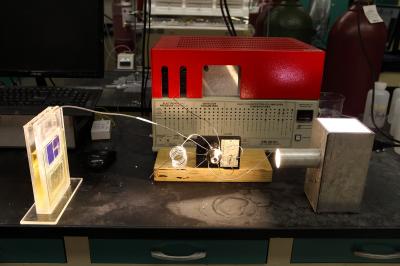
Increasing levels of CO₂ are the principle cause of the alarming climate changes that we have observed in the past several decades, so why not use the same chemical compound that is causing all our woes to generate fuel, or electricity, as we saw here a few days ago? The scientific community is well aware of the common and “conventional” renewable energies, so researchers at the University of Illinois at Chicago have engineered a solar cell that converts atmospheric carbon dioxide directly into usable hydrocarbon fuel, using only the sunlight for energy.  This new invention removes the necessity of batteries and solves two crucial problems: Continue reading

Cornell Research on Capturing Carbon to Generate Electricity

Architectures of metal/CO2 electrochemical cells as capture systems. (A) Secondary metal/CO2 electrochemical cell where CO2 is concentrated by recharging. (B) Primary metal/CO2 electrochemical cell where captured CO2 is concentrated or converted to Cn (n ≥ 2) valuable products. Image and caption from Science Advances, W.I. Al Sadat and L.A. Archer

Several of our contributors have a Cornell background, and this new technology that can convert carbon dioxide to electricity through a simple series of chemical reactions is the product of a couple researchers at the School of Chemistry and Biomolecular Engineers. Prachi Patel reports for Conservation Magazine:

A new technology offers a one-two punch against carbon pollution. Researchers have made an aluminum-based battery cell that captures carbon dioxide and simultaneously generates a large amount of electricity. That means a way to mitigate carbon emissions while meeting increasing demand for energy.

Continue reading

Hydropeaking Dams = Fewer Insects

Hoover Dam, photo © US Bureau of Reclamation

Although we’ve heard of dams causing environmental and community problems before, we’ve also seen how they can be beneficial to society, and it’s clear that they’re a double-edged sword. Most recently on the topic, we learned that with proper planning and design, hydropower can be less of an enemy to conservation. Now, research highlighted in Conservation Magazine displays the possibility of helping native river-reliant insect populations by adjusting how dams “hydropeak,” or change river flow to compensate for electricity demand. Sarah DeWeerdt reports:

Scientists know that hydropower dams often decrease the abundance and diversity of aquatic insects downstream. But until now it wasn’t clear why—after all, dams cause a range of environmental stressors such as alterations in water flow, temperature, and sedimentation.

A massive new study led by the U.S. Geological Survey lays much of the blame on hydropeaking, the practice of varying river flows below a dam depending on electricity demand. Because of hydropeaking, the amount of water released from a dam can vary by as much as ten-fold throughout the day, creating an artificial intertidal zone that propagates for hundreds of kilometers downstream.

Continue reading

Speedier Retrofitting of City Buildings

Image by Shutterstock.com via Conservationmagazine.org

Lots of energy is wasted by buildings that don’t have appropriate insulation or efficient HVAC systems. We’ve shared stories on lower-impact construction, like this recent piece on passive homes, and Conservation Magazine now has an article on a new way to decide on the city scale what buildings to retrofit – replace old types of windows, switch out light bulbs, etc. – based on research in Massachusetts. Prachi Patel reports:

In 2015, buildings of all types accounted for 40 percent of all energy consumption in the U.S. and 20 percent of the nation’s carbon dioxide emissions. Retrofitting old, energy-inefficient structures with efficiency features will be key for reducing their large carbon footprint. Many cities and states offer substantial incentives to home and commercial building owners who make such upgrades.

But instead of offering incentives willy-nilly, cities could use a smarter way to get the biggest energy impact, researchers at Massachusetts Institute of Technology say. Some buildings are bigger energy-hogs than others. MIT professor of civil and environmental engineering Marta González and her colleagues have come up with a streamlined way to identify the culprits with the biggest room for improvements. Their simple model, published in the Journal of the Royal Society Interface, could help city planners identify buildings where retrofits will have the biggest effect on a city’s overall greenhouse gas emissions.

Continue reading

Newer Clean Energy Use by Big Companies

At peak production, Intel’s new solar carport can carry half of the campus’ electricity demand. Photo by Intel via GreenBiz

Businesses are finally seeing the sense of clean energy, which we try to share about as much as possible when it comes to savings and renewables or alternative sources. Heather Clancy at GreenBiz reports on the use and investment of clean energy by several big US businesses, like GM with landfill gas, Intel with solar panels, and Google with renewable energy contracts:

Despite uncertainty surrounding the future of the Clean Power Plan and contractual nuances that make even the smallest project feel unnecessarily complex, big businesses seem more committed to renewable energy than ever.

“This time it’s not about fashion, it’s about real economics, about real business opportunity,” said economist Mark Kenber, CEO of the Climate Group, during a keynote interview at last week’s GreenBiz 16 conference in Scottsdale, Arizona.

Continue reading

To Dam or Not to Dam

In southern Laos, near where the Don Sahong dam will soon rise, a fisherman’s son snoozes above his father’s weir, waiting for fish migrating upstream to tire and wash back into the trap. PHOTO: David Guttenfelder

In southern Laos, near where the Don Sahong dam will soon rise, a fisherman’s son snoozes above his father’s weir, waiting for fish migrating upstream to tire and wash back into the trap. PHOTO: David Guttenfelder

Dams are barriers built across rivers and streams to confine and regulate water flow for irrigation and hydroelectricity. However, in recent years, the social, economic, and environmental impacts of these constructions have become a pressing concern. While dams are integral to agricultural irrigation, and can help control floods, the construction causes mass displacement, increases risks of earthquakes and landslides. Along the Mekong in China, the people need clean electricity but also the fish and rice that and undammed river provides.

Ban Pak Ing may be a vision of the future for many Mekong villages. Five more dams are under construction in China. Downstream, in Laos and Cambodia, 11 major dams—the first on the main stem of the lower Mekong—are either proposed or already being built. By disrupting fish migration and spawning, the new dams are expected to threaten the food supply of an estimated 60 million people—most of whom live in villages much like Ban Pak Ing. The electric power generated by the lower Mekong dams is destined largely for booming urban centers in Thailand and Vietnam. Kraisak Choonhavan, a Thai activist and former senator, calls the lower Mekong dams “a disaster of epic proportions.”

Continue reading

Hydropower by Design

Itaipu Dam, a binational hydroelectric dam on the Paraná River located on the border between Brazil and Paraguay. The dam is the largest operating hydroelectric facility in terms of annual energy generation. Photo/caption © Erika Nortemann/The Nature Conservancy

Dams, although greener in some senses than coal factories in terms of their electric output, almost always have other serious environmental repercussions in the form of habitat destruction and river flow interruptions that adversely affect fish species. Hydropower from giant dams on rivers has been described as a brute force technology, and the construction of new dams can create public outcry as well as political issues in water distribution. The publication of new research, in part by The Nature Conservancy, shows how hydroelectric projects, often so destructive, can be less harmful if planned thoroughly beforehand to take the whole river basin and water system into account, rather than just a small tract of river. Jeff Opperman reports for TNC in a blog article that describes the elements of concentration, confrontation, and collaboration involved in pairing new hydropower with river conservation:

Concentration.

That’s what makes rivers so valuable — both for fish and for energy.

A river is the concentrated water of a whole region as rain and snow across an entire basin becomes runoff, is funneled into cataracts, creeks and canyons, and collected into the narrow ribbon of a river channel (narrow in a relative sense — even a river channel several kilometers wide is incredibly narrow compared to its basin which may be hundreds of thousands of square kilometers in area).

Continue reading

Passive Homes in Washington, DC

Photo © Passivhaus Institute, Germany

Energy-efficient and eco-friendly homes have been the subject of posts here in the past. Virginia Carabelli shared her first-hand experience with straw bale construction, and we’ve seen stories about earthships made from recycled material and houses covered in solar panels. Now we’re learning about a whole category of houses that can be certified as “passive” to a standard popularized in Germany. These buildings are like a thermos: extremely well insulated so that heating and cooling costs can be minimized to the point where the house is projected to use up to 90% less energy than the average house. Habitat for Humanity, in collaboration with other organizations for funding and discounts on domestic electronics, is building several houses in the DC area for a low-income neighborhood: Wendy Koch reports for National Geographic:

Built partly by volunteers, these low-budget Habitat for Humanity homes—now nearing completion—don’t look like anything special. They have basic brick facades like others in their gentrifying Ivy City neighborhood.

They stand out in other ways: 12-inch-thick exterior walls and triple-pane, imported-from-Ireland windows offer more than double the insulation required of new homes. In lieu of a furnace, tiny, wall-mounted Mitsubishi units provide heating and cooling. (See related blog post: “Laying the Foundation for Sustainable Housing in D.C.“)

Continue reading

And the Wheels of the Bus Go Round and Round…

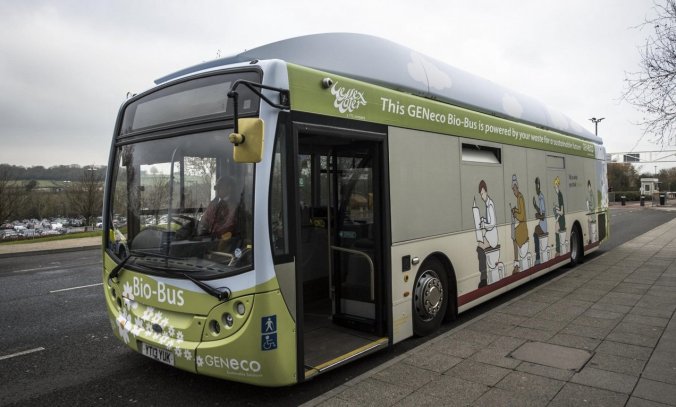
Bristol’s Bio Bus runs on faeces and household waste. Photograph: Ben Birchall/PA

A little over 2 years ago contributor Megan Madill wrote about one of the “Green Cities” of Europe, not to mention all the wonderful bike sharing (and bike friendly) initiatives worldwide.

But this news from the city of Bristol via the Guardian takes first prize. The innovation itself is a wonderful thing, but our applause actually goes more to the cheeky graphics.

UK’s first ‘poo bus’ hits the road

Britain’s first “poo bus”, which runs on human and household waste, goes into regular service this month. Continue reading

21st Century Alchemy

Scientists at the City University of Hong Kong can turn coffee grounds and stale bakery goods into a sugary solution that can be applied to manufacture plastic. Photograph: Alamy

Scientists at the City University of Hong Kong can turn coffee grounds and stale bakery goods into a sugary solution that can be applied to manufacture plastic. Photograph: Alamy

We frequently talk about the recycling on these pages, with an eye toward the developing awareness that the concept is no longer limited to inorganic, static materials. This recent article in the Guardian indicates that plant cellulose based plastic is just the tip of the iceberg in the possible ways to convert the mountains of food waste in many parts of the world into materials with environmental benifits.

Scientists at the City University of Hong Kong have found that they can turn coffee grounds and stale bakery goods – collected from a local Starbucks – into a sugary solution that can be used to manufacture plastic. The food waste was mixed with bacteria and fermented to produce succinic acid, a substance usually made from petrochemicals, that can be found in a range of fibres, fabrics and plastics. Continue reading

Algae Could Turn Toxic Water Into Metal and Biofuel

Contaminated water at Wheal Jane, where the Department for Environment is spending £2m a year on combating pollution. Photograph: Rex Features. Via The Guardian.

We’ve featured pieces on different biofuels before, though probably not enough of them. We’ve also recently seen an example of how science can help clean up the messes that other scientifically informed — but less environmentally scrupulous — activities create, like the new carbon-scrubbing structures that might be used in coal plants. The topic of bioremediation is one of great interest and which we plan on sharing more about, especially in the mycological realm. For now we’ll start with this story of algal bioremediation and resource recuperation in Cornwall, one of England’s most historically important mining regions. Jamie Doward reports for The Guardian:

A groundbreaking research project to clean up a flooded Cornish tin mine is using algae to harvest the precious heavy metals in its toxic water, while simultaneously producing biofuel.

If the project, which is at a very early stage, is proven to work, it could have huge environmental benefits around the world.

Continue reading

A New Break for Alaska’s Bristol Bay

Helicopter view of the area surrounding Bristol Bay, Alaska. Still image extracted from WH.gov video linked below.

We’ve hosted a good number of Alaskan “bird of the day” photos here, and we share the near-universal affinity for the charismatic Arctic mammal that is the polar bear. Two years ago, Carol Browner and John Podesta wrote an open letter on Bloomberg.com opposing any more drilling in the Arctic, and now we’re happy to announce that President Obama signed an executive order last week that bans exploration for oil and gas in Bristol Bay until another president chooses to counteract the order in the future. Read coverage by Peter Baker for the New York Times below:

Mr. Obama first put the ecologically sensitive area of the Bering Sea — home to an important population of whales, seals and sea lions — off limits to oil rigs in 2010, but that restriction was set to expire in 2017, several months after he leaves office. With the new executive memorandum that he signed in the Oval Office on Tuesday, Mr. Obama made the ban permanent unless a future president acts to reverse it and allow leasing of the waters of the bay.

“It is a beautiful natural wonder, and it’s something that’s too precious to us to just be putting out to the highest bidder,” Mr. Obama said in a one-minute video announcing his decision, which was posted on the White House website.

Continue reading

The Sense in Sustainability

adak-fish-farm-krishnankotta-mala

Today we went to  a 68 acre fish farm in Thrissur called ‘Haya Poya’. They were using a traditional box system (the local name is petty para) to collect fish and manage the water level. We went to learn about implementing aquaculture at Kayal Villa, a newer property.

By using this traditional method, they do not have to introduce new varieties of fish in order to farm. They do this mainly because it is less costly to collect the fish naturally than to artificially introduce fish. Also, since it is all local varieties, it limits the possibility of messing up the natural ecosystem with foreign invasive species.

During our ride home, the agronomist, Mr. Deyal, and I continued the conversation about doing what’s ecologically beneficial is actually easier and more cost-efficient. He said

“Only an ecologically viable system will be economically viable. When we fight against the environment, the environment will go against us and we will have to invest more money to protect against it.”

This reminds me of a conversation I had with an oil driller recently. When I asked him what the most challenging thing about his job was, he said ‘going against nature,’ and then proceeded to tell me how rebellious nature was to the oil drilling process and how costly it is. I found it interesting that although their career choices were the antithesis of each other, the conversations I had with them had parallel messages: going against nature is costly.  Continue reading

Energy, Development and the Global Environment

Bosch is testing the viability of electric cars in Singapore. Photograph: Samuel He/Bosch

Bosch is testing the viability of electric cars in Singapore. Photograph: Samuel He/Bosch

Normally we avoid articles that look strictly like press releases promoting a PR firm’s client.  However, in this case, a couple of exceptions were allowed.  First, we like the storyline because of its relevance to three years’ worth of posts on our site.  Second, there is not one iota of obnoxious flimflam, which is what normally forces us to avoid press releases.

But, an additional component to this one really made the difference. Nearly one year ago two of Raxa Collective’s contributors had the opportunity to visit Duke University and sit in the office of the founder and director of their Center for Energy, Development and the Global Environment. A conversation that was meant to last 15 minutes continued for hours that day, because of the credible commitment that Center and its leadership are making to ensure that future business leaders see sustainability as serious business. So, we gladly pass this newsworthy article on:

When it comes to sustainability ambitions, Singapore might take the prize. The island nation, which currently relies on neighboring Malaysia for its water, is aiming for water self-sufficiency by 2050, with 55% of its water needs met via recycled water and 25% from seawater desalination. Continue reading

Tackling Tough Topics

Author Vaclav Smil tackles the big problems facing America and the world.   Andreas Laszlo Konrath

Author Vaclav Smil tackles the big problems facing America and the world. Andreas Laszlo Konrath

Thanks to this interview in Wired magazine (click the image above to go to the source) we hear a bit about the craft of a thinker-writer’s approach to major economic, environmental and technological puzzles, one book at a time, but at an amazing pace:

You’ve written over 30 books and published three this year alone. How do you do it?

Hemingway knew the secret. I mean, he was a lush and a bad man in many ways, but he knew the secret. You get up and, first thing in the morning, you do your 500 words. Do it every day and you’ve got a book in eight or nine months.

What draws you to such big, all-encompassing subjects?

I saw how the university life goes, both in Europe and then in the US. I was at Penn State, and I was just aghast, because everyone was what I call drillers of deeper wells. These academics sit at the bottom of a deep well and they look up and see a sliver of the sky. They know everything about that little sliver of sky and nothing else. I scan all my horizons. Continue reading