More Ideas For A Dairy

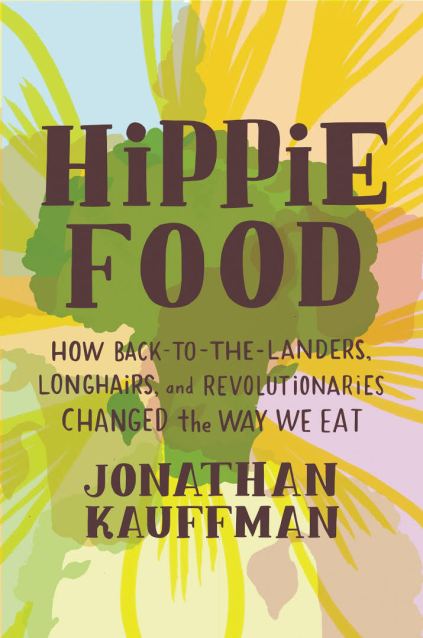
HippieFoodWhen we took up residence at this dairy, and started paying attention to stories involving dairies, most involved how to add value by making something more than liquid for bulk sale. No matter how good that milk is, what else might be done here to ensure that the farm is worth more than its real estate value? Maybe more liquid is the answer? Or maybe solid foods that are discussed in this book, as reviewed by Michael Pollan:

For a revolution that supposedly failed, the counterculture of the 1960s and early 1970s scored a string of enduring victories. Environmentalism, feminism, civil and gay rights, as well as styles of music, fashion, politics, therapy and intoxication: In more ways than many of us realize, we live in a world created by the ’60s. (Though, as our politics regularly attest, some of us are rather less pleased to be living in that world than others.) Jonathan Kauffman’s briskly entertaining history, “Hippie Food,” makes a convincing case for adding yet another legacy to that list: the way we eat. Continue reading
Plastic Reduction Via Straws Off The Menu

3500 (5).jpg

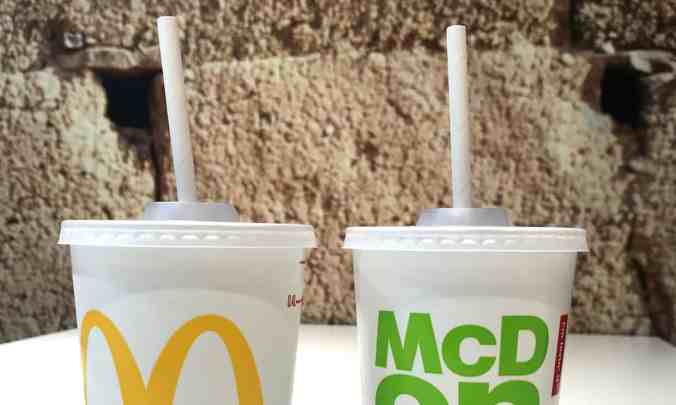
The switch will affect McDonald’s 1,361 outlets in Britain but not the rest of its 36,000 restaurants worldwide. Photograph: McDonald’s/PA

Most of the stories we link out to are examples of revolution, or at least incremental innovation, by way of market forces. At a time when there appear to be incentives for sliding backwards, it is even more important to highlight the rationality and logic of conservation. One small but important example here on the plastic reduction front, where the clientele of a large company take the lead:

McDonald’s to switch to paper straws in UK after customer campaign

Fast-food chain, which uses 1.8m straws a day, says plastic straws will go by 2019

McDonald’s will end the use of plastic straws in its British restaurants next year, after nearly half a million people called on the company to ditch them.

The decision by the US fast-food chain to switch from plastic to paper straws follows a trial at a number of outlets in the past two months. The firm uses around 1.8m straws a day in the UK.

The switch will affect McDonald’s 1,361 outlets in the UK, but not the rest of its 36,000 restaurants worldwide. Continue reading

Water, Power & Discontent

Early last year an article in the Guardian reminded me of work I had done in Montenegro in an earlier decade. The work was among the most impactful in my life, both professionally and personally, but the reminder was more a warning than a celebration. Something similar just happened with work I carried out in the region Rachel Dixon, a travel writer for the Guardian, brought to my attention with the film above, mentioned in this article:

Adventure in Albania: kayaking in one of Europe’s final frontiers

With wild rivers, mountains and Unesco sites aplenty, Albania is emerging as an exciting Mediterranean destination – but its wilderness could be devastated by huge dam-building projects

5188‘Go, go, go!” The white-water rafting guide shouted orders from the back of the boat and our five-strong crew paddled hard to stay on course. We were tackling a stretch of the Vjosa, a 270km river that begins in Greece (where it is called the Aoös) and flows through Albania and into the Adriatic just north of the city of Vlora. I was on a recce trip for a new southern Albanian break with Much Better Adventures, which specialises in long weekends to wild places in Europe and North Africa. But this trip was not just a fun adventure – rather just part of a campaign to save the river, which is under threat from proposed dams. A documentary film, Blue Heart, out this month, will highlight the fight to protect Europe’s last wild rivers, with help from ecotourism…

The film, and the article, have to do with the power of water. And the power of humans in deciding what to do with water. Not all reminders can be pleasant. This one is bittersweet. One sweet part is the call to action.

CallAct1

Step 1: Register your interest in hosting a screening

We are aiming to host hundreds of screenings of Blue Heart globally in 2018 to raise awareness of the plight of the people affected in the Balkan region. If you are interested in hosting a screening, please complete the form below and a member of our team will get back to you ASAP.  Please note the film is 40 mins long and we recommend that you allow at least 20 mins for a post screening discussion. Continue reading

Commerce, Conscience & Conservation

06Patagonia1-jumbo

Yvon Chouinard, the founder of Patagonia, with its chief executive, Rose Marcario, in the tin shed where he once forged and hammered metal. The outdoor-clothing company has mixed commerce and activism since the early 1970s. Credit Laure Joliet for The New York Times

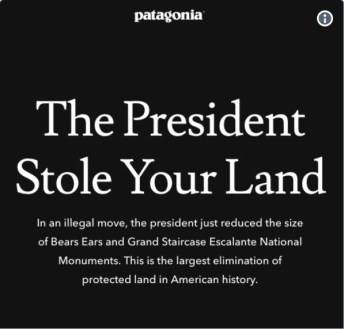
Since the early days of this platform we have linked to stories about this company many times, and its founder in particular is in our pantheon of role models. During these seven years we have also studiously avoided linking to stories involving politics, other than highlighting activism that holds public officials accountable. This story below borders on  too much politics, but I find the company’s position not only acceptable, but as usual about this company, aspirational. Thanks to David Gelles for this story about how Patagonia has supported grass-roots environmental activists for decades and how it is suing the president in a bid to protect Bears Ears National Monument:

merlin_136030764_da829491-ce0c-4974-a0f9-b170acc558c4-superJumbo

Patagonia employees at the Ventura, Calif., headquarters, where there are picnic tables in the parking lot, on-site day care and easy access to the beach.CreditLaure Joliet for The New York Times

VENTURA, Calif. — The offices of Patagonia occupy a low-slung complex of stucco buildings in this sleepy beachside town in Southern California. There are solar panels and picnic tables in the parking lot, day care with a jungle gym by the main lobby and easy access to the beach, where employees surf during lunch break. It is a corporate Eden of sorts, where idealistic Californians run a privately held company that sells about $1 billion of puffy down jackets and organic cotton jeans each year.

Screen Shot 2018-05-05 at 7.06.08 AMBut on an unseasonably hot and windy Monday morning in early December, Patagonia headquarters were transformed into something that quickly resembled a war room. There were emergency conference calls with Washington lawyers. Court filings were prepared. Web designers remade the company’s home page.

It wasn’t a business crisis that had mobilized the company, however. It was politics. Continue reading

Two Op-Eds Arguing The Same Powerful Case In Two Different Ways

23Englander-superJumbo.jpgNathan Englander came to my attention nearly six years ago. A novelist who lives in Brooklyn, he got me thinking about story-telling in a way that was very important to me, two years into our residency in India. He did something important for me again this last week, focusing my attention on an act I would normally ignore. But his point resonated with me because of the subject’s connection to the state of nature. So I thought about how to link to his op-ed in a manner consistent with our objectives on this site.

22conniff-superJumbo.jpg

Credit Lan Truong

Four years ago Richard Conniff, who writes about wildlife and human and animal behavior, started a long series of regular appearances in our pages. The day after Nathan Englander published the op-ed I mentioned above, Richard Conniff published an op-ed referencing the same act, a day in advance of Earth Day. And it is powerful. So I knew how to proceed, and with this excerpt you may be inclined to read both op-eds in full:

I was thinking about Mr. Buckel and about despair a few nights later, over a drink with Joe Walston of the Wildlife Conservation Society. As director of that organization’s worldwide field conservation work, Mr. Walston routinely comes face-to-face with the dark forces of human overpopulation, mass extinction of species, climate change and pollution. But he is also the co-author of a paper being published this week in the journal BioScience that begins with the uplifting words of Winston Churchill to the British nation in June 1940, under the shadow of the Nazi conquest of France: “In casting up this dread balance sheet and contemplating our dangers with a disillusioned eye,” Churchill declared, “I see great reason for intense vigilance and exertion, but none whatever for panic or despair.” Continue reading

Plastic Reduction Success Story

5150 (1).jpg

A UK levy of 5p per bag introduced in 2015 has already reduced single-use plastic bags by 85%. Photograph: Stuart Kelly/Alamy Stock Photo

We never tire of reporting on efforts at plastic-reduction, so thanks to Juliette Jowit and the Guardian for this update:

Drop in plastic bags littering British seas linked to introduction of 5p charge

Scientists find an estimated 30% drop in plastic bags on the seabed in the same timeframe as charges were introduced in European countries

A big drop in plastic bags found in the seas around Britain has been credited to the introduction of charges for plastic bags across Europe. Continue reading

Accentuate The Positive, But Also Be Vigilant

180402_r31793 (1)

William Ruckelshaus, who ran the E.P.A. under Nixon and Reagan, said that Pruitt and his top staff “don’t fundamentally agree with the mission of the agency.” Illustration by Paul Sahre; photograph by Saul Loeb / AFP / Getty (man)

The vast majority of posts on this platform are stories related to environmental conservation, social responsibility, community innovations. Forward-looking. Positive, if you want to think of it that way. But we keep our eyes open for clouds on the horizon as well. Yesterday’s post was a reminder that we should keep our eyes open to pernicious changes in the national park system of the USA. Today we get deeper into the underbelly of that particular issue, and the illustration above, which accompanies an epic (allow 80 minutes to read or listen to it) expose on Scott Pruitt, and as illustrations go it is a blunt hint of what to expect from the article that follows. Creepy. Ugly. Needing serious attention. Thanks to Margaret Talbot and her editors at the New Yorker:

Scott Pruitt’s Dirty Politics

How the Environmental Protection Agency became the fossil-fuel industry’s best friend.

One afternoon last April, Scott Pruitt, the administrator of the Environmental Protection Agency, travelled to the Harvey Mine, in Sycamore, Pennsylvania, to declare that the agency had a new direction, which he called “Back to Basics.” It was an unusual place for the nation’s chief steward of clean air, land, and water to set out a policy agenda. Consol Energy, the owner of the Harvey facility, which is part of the largest underground coal-mining complex in North America, has been fined repeatedly by the E.P.A. for violations; in 2016, it had to pay three million dollars for having discharged contaminated wastewater into the Ohio River and its tributaries. Past E.P.A. administrators have spoken of creating jobs as a welcome potential by-product of the agency’s work, especially if they are green jobs, but creating or protecting energy jobs is not supposed to be the mission—protecting human health and the environment is. As the speech that Pruitt gave at the mine demonstrated, he seems to have these priorities reversed. Continue reading

Keeping It In The Ground?

louisianapipelineprotest-d0864bee2b618a1d4d9ff96d2cbe12ac53c96f8b-s1600-c85

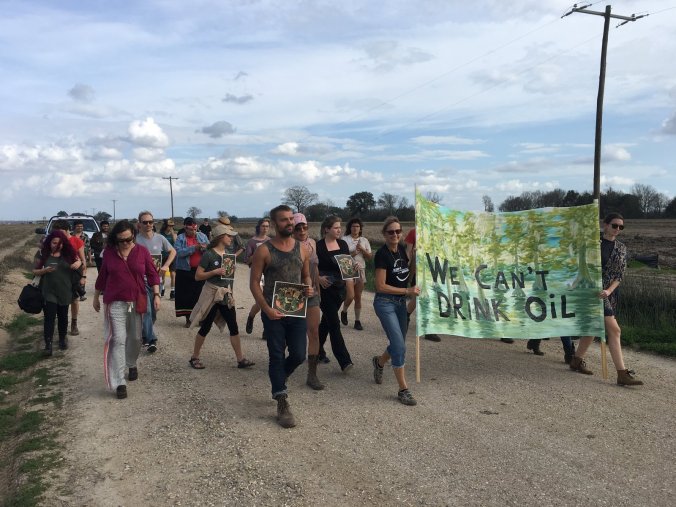
“Keep it in the ground” activists protesting the Bayou Bridge Pipeline on February 17, 2018 near Belle Rose, Louisiana. Travis Lux/WWNO

Under the current circumstances in the USA (you know what we mean) it is not straightforward to consider optimism obvious. But stranger things have happened. Thanks to National Public Radio (USA) for reminding us that when times get tough, the tough tough it out on behalf of us all:

cherrifoytlin-e88dddf32b0f52e571f94c798a180f7125ec1c59-s500-c85

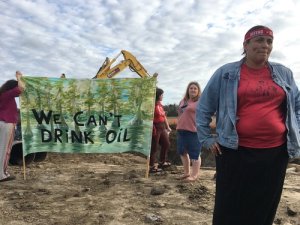
Activist Cherri Foytlin vows to physically block construction of the Bayou Bridge Pipeline in Louisiana.
Travis Lux/WWNO

The United States oil business is booming and the country could soon be the largest crude oil producer in the world. Despite this record-breaking production, climate change activists campaigning to move away from fossil fuels say they are making progress.

Here’s the idea underpinning the ‘keep it in the ground‘ movement: to address climate change, activists say known reserves of fossil fuels will have to be left untouched instead of burned. In the meantime, they want countries to transition to renewable forms of energy such as solar and wind. Continue reading

Starbucks Taking Some Responsibility

5118

Thanks to the Guardian’s consumer affairs correspondent, Rebecca Smithers, for this:

Starbucks trials 5p takeaway cup charge in attempt to cut waste

People buying hot drinks in cardboard cups in 35 London branches will pay ‘latte levy’

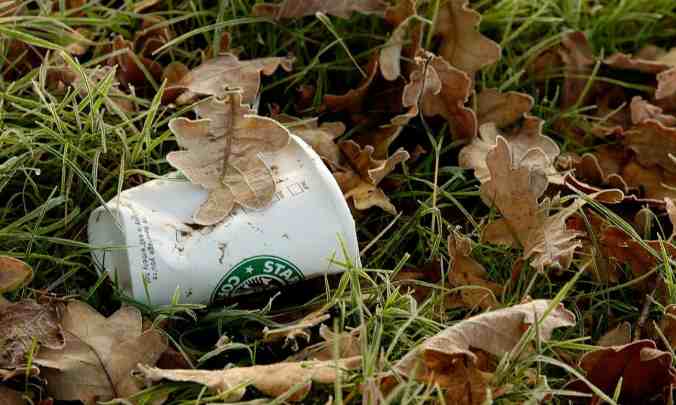
Starbucks will be the first UK coffee chain to trial a “latte levy” – a 5p charge on takeaway coffee cups – under plans that aim to reduce the overuse and waste of 2.5bn disposable cups every year.

In the latest offensive in the war against plastic waste, the chain said it hoped the move, starting on Monday, would help change behaviour and encourage customers to switch to reusable cups instead. Continue reading

A Pro-Environment Form Of Apartheid

4928

Jonathan Watts, over at the Guardian, has this news:

Britain and Europe must ban palm oil in biofuel to save forests, EU parliament told

Forest peoples affected by plantations urge EU to enact ban despite diplomatic opposition

If Britain and other European nations are to fulfil forest protection goals, they must ban the use of palm oil for biofuel and tighten oversight of supply chains, a delegation of forest peoples told parliamentarians this week.

The call for urgent, concrete action comes amid an increasingly heated diplomatic row over the issue between the EU and the governments of major palm-producing nations such as Indonesia, Malaysia and Costa Rica.

The European parliament voted last April to prohibit sales of biofuels made from vegetable oils by 2020 in order to meet its climate goals. This was followed by a related vote last month. Whether and how this might be implemented is now being considered by the European Commission and member states.

Continue reading

Big Chicken

BookCoverMaryn McKenna escaped our notice until now, as did her recent book Big Chicken:

In this provocative narrative, acclaimed journalist Maryn McKenna reveals the fascinating history of chicken—and how the common backyard bird became an industrial commodity impacting human health around the world. Crucial to its meteoric rise: the routine use of antibiotics, a practice that would transform agriculture, change the world’s eating habits, and contribute to the deadly rise of drug-resistant infections around the globe.

Bringing us on an extraordinary journey from the vast poultry farms of the United States to laboratories, kitchens and sidewalk markets around the world, McKenna reveals how economic, political and cultural forces converged to make America’s favorite meat a hidden danger—and how companies, activists, farmers and chefs are carving a path back to better, safer food.

Named a Best Science Book of 2017 by Amazon, Smithsonian, and Science News; an Essential Science Read by Wired; a Best Health Book by the Toronto Globe and Mail; and a Best Food Book of 2017 by Civil Eats and the Atlanta Journal-Constitution

Antibiotics changed the world.

Then we gave them to the animals we eat.

This is the story of what happened next. Continue reading
Intact Coral And Its Above-Water Counterparts


Coral

Heron Island and its hundreds of species have so far been spared the worst of the crisis. But scientists there fear what the future may hold.  Illustration by Lily Padula

Helen Sullivan, founding editor of the South African literary magazine Prufrock, shares a short essay for the environmentally-minded:

On a recent trip to Heron Island, a speck of sand and foliage on the southern end of Australia’s Great Barrier Reef, I found myself on a walking tour of the local birdlife. My group’s guide was young, determinedly friendly, and seemed to feel not a little trapped. She looked as though she might, at any moment, reconsider everything and run as far as she could—which is to say, not very far: Heron is just half a mile long. We began with the egrets, which inspired the island’s not altogether accurate name, and which are born either black or white; our guide pointed out monochrome pairs roosting together in the trees. Then it was on to the buff-banded rails, which reminded me of thin, shifty, omnivorous quails. Beneath a Pisonia tree, also known as a grand devil’s-claws, we encountered a rowdy group of white-capped noddies. (The caps, our guide told us cheerfully, were to stop the birds’ brains from overheating in the sun.) Noddies, which feed on fish and make their nests by glueing together fallen Pisonia leaves, lead perilous lives. The trees’ seeds are sticky, often adhering to the birds’ charcoal-feathered bodies. Sometimes, a noddie will get covered in so many seeds that it can no longer fly, and so it falls to the ground and starves to death, its carcass fertilizing the nutrient-poor sand in which the Pisonia grows. “The noddies have a really special relationship with the devil’s-claws,” our guide said.

Heron Island is also home to the Barrier Reef’s oldest research station, where Sophie Dove, a biology professor at the University of Queensland, has lately been studying the effects of climate change on corals. Though she was off on the mainland when I visited, we caught up a few days later. Continue reading

10 Million Acres Added to Chile’s Parks

I don’t normally expect to get my daily news from Instagram, unless it’s an update from a personal friend. I follow the company Patagonia because they feature beautiful photos like those above, but yesterday they shared this fantastic announcement. Visiting Patagonia about a decade ago was an amazing experience that I hope to repeat before too long, and I am thrilled that there will be some new national parks to visit. Jonathan Franklin reports for The Guardian:

McDivitt Tompkins, the former chief executive of the outdoors company Patagonia, handed over 1m acres to help create the new parks. The Chilean government provided the rest in federally controlled land.

McDivitt Tompkins has spent 25 years working on land conservation in Chile with her late husband Doug, who founded North Face and Esprit. Doug Tompkins died in a kayaking accident in Chile in 2015.

“This is not just an unprecedented act of preservation,” said [Chile’s President Michelle] Bachelet, who flew to this remote Patagonian valley on Monday to receive the donation. “It is an invitation to imagine other forms to use our land. To use natural resources in a way that does not destroy them. To have sustainable development – the only profitable economic development in the long term.”

Continue reading
1491, 1493 & 2048

1920 (1).jpg

Ulises Fariñas

We have appreciated Charles C. Mann since our earliest awareness of his historical work when we started this platform in 2011. Now, he peers into the future, and we cannot close our eyes to the prospects he raises in this futurist epic in the upcoming edition of the Atlantic:

Can Planet Earth Feed 10 Billion People?

Humanity has 30 years to find out.

All parents remember the moment when they first held their children—the tiny crumpled face, an entire new person, emerging from the hospital blanket. I extended my hands and took my daughter in my arms. I was so overwhelmed that I could hardly think.

Afterward I wandered outside so that mother and child could rest. It was three in the morning, late February in New England. There was ice on the sidewalk and a cold drizzle in the air. As I stepped from the curb, a thought popped into my head: When my daughter is my age, almost 10 billion people will be walking the Earth. I stopped midstride. I thought, How is that going to work? Continue reading

Doomsday Discussion

Each day we scan the news for stories that will help make sense of the environmental challenges facing humanity, with special attention to potential solutions and collective action taken to rise up to those challenges. Earlier this year we declined to link out to this story that was a collection of doomsday scenarios:

NYLogo

The Uninhabitable Earth

Famine, economic collapse, a sun that cooks us: What climate change could wreak — sooner than you think.

By David Wallace-Wells

This article reporting on a recent panel at Harvard University has caused us to reconsider the decision:

112917_despair_014_605_embed

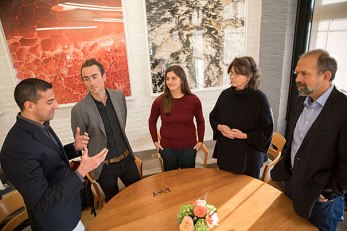
Nikhil Advani (from left), David Wallace-Wells, Elizabeth Wolkovich, Nancy Knowlton, and Campbell Webb.

…Unfortunately, that vision isn’t fiction, but rather Wallace-Wells’ summation of climate change’s little-discussed worst-case scenario for the year 2100.

“I think there’s real value in scaring people,” the journalist said Wednesday during a panel at the Geological Museum, sponsored by the Harvard University Center for the Environment.

The event, “Hope and Despair: Communicating an Uncertain Future,” explored whether doom and gloom are more effective than hope in spurring climate action. Panelists agreed that fear is a potentially powerful lever, but also insisted on the importance of covering success stories. Progress is an important motivator, keeping people from succumbing to despair in the face of bad news. Continue reading
Environmental Leadership Born Of Cold-Eyed Pragmatism

Dale Ross, the mayor of Georgetown, Texas, says the decision to source all the town’s energy from renewable resources was based in cold-eyed pragmatism. Photograph: Katie Hayes Luke for the Guardian

This is what America’s eco city of the future looks like

Georgetown mayor Dale Ross is ‘a good little Republican’ – but ever since his city weaned itself off fossil fuels, he has become a hero to environmentalists Continue reading

Art of the Anthropocene

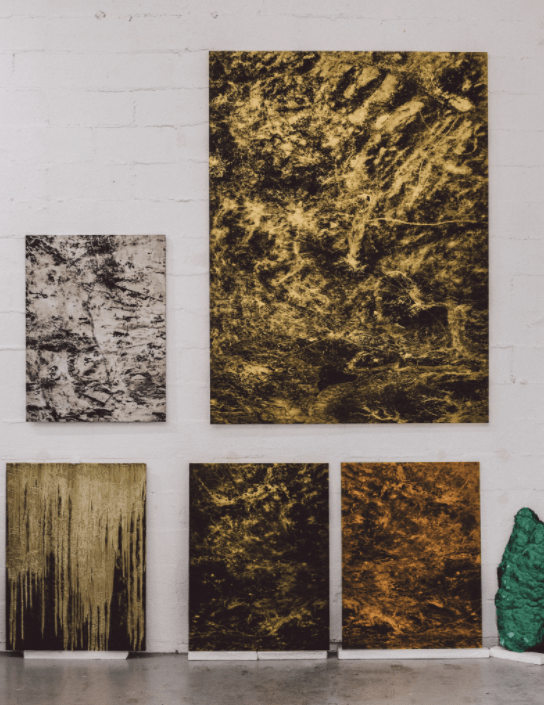
A series by Mr. Guariglia depicting the impacts of agriculture and mining on the Asian continent. The shimmering panels are layered with gold and other precious-metal leaf, gesso and acrylic ink. Below right is botryoidal slab of malachite from a mine in Africa. Credit Nathan Bajar for The New York Times

Tapping into a long, intertwined history of “photographers depicting nature with an eye to its fragility”, multimedia artist Justin Brice Guariglia translates his unprecedented access to NASA mission flights to visually quantify what is currently coined the Anthropocene Era.

Readers lucky enough to have the opportunity to view his coming exhibition, at the Norton Museum of Art in West Palm Beach, Fla., from Sept. 5 to Jan. 7 should do so!

Earlier this year at the Telluride Mountainfilm Festival, the artist Justin Brice Guariglia fell into conversation with a stranger.

“I got stuck on a gondola ride with a climate change denier,” Mr. Guariglia said recently. The stranger clearly had no idea who he was dealing with.

Not only had Mr. Guariglia previously talked his way into joining a NASA scientific mission over Greenland so that he could photograph melting polar ice caps. He also had even created a mobile app called After Ice, which allows users to take a selfie that is overlaid with a watery filter indicating the sea level projected in their geo-tagged location in the 2080s.

So when the man on the gondola said the earth’s warming temperatures were just part of a cycle, Mr. Guariglia recalled, “I took off my jacket and I said, ‘Does this look like a cycle to you?’” Continue reading

The Fourth Estate Asking Questions About Sustainable Agriculture

img_0086_custom-e02be884d2146582492b3313dc275f8aa2261bea-s1300-c85.jpg

Wade Dooley, in Albion, Iowa, uses less fertilizer than most farmers because he grows rye and alfalfa, along with corn and soybeans. “This field [of rye] has not been fertilized at all,” he says.
Dan Charles/NPR

Thanks to National Public Radio (USA) and Dan Charles for doing their job, keeping the questions coming, even on topics we think we know the answers to:

Does ‘Sustainability’ Help The Environment Or Just Agriculture’s Public Image?

Brent Deppe is taking me on a tour of the farm supply business, called Key Cooperative, that he helps to manage in Grinnell, Iowa. We step though the back door of one warehouse, and our view of the sky is blocked by a gigantic round storage tank, painted white.

“This is the liquid nitrogen tank,” Deppe explains. “It’s a million-and-a-half gallon tank.” Continue reading

Farming Fish For The Whole World

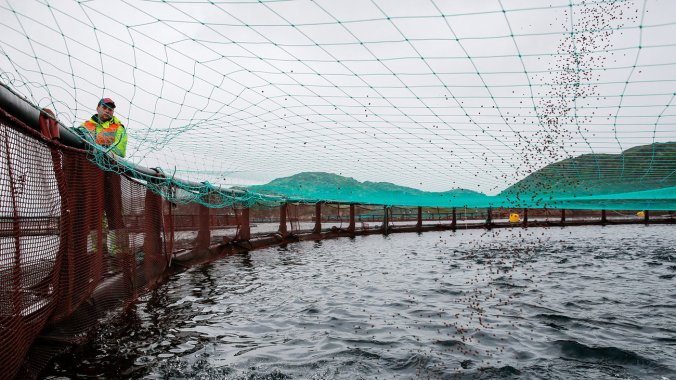
nets-1_wide-01c3b5ebd0d717bd50433e402fd75dc5e35d6f44-s1300-c85

A Russian fish farming operation in Ura Bay in the Barents Sea.
Maxim Zmeyev/AFP/Getty Images

Thanks to Alastair Bland and the folks at the salt at National Public Radio (USA) for this look at the prospects for aquaculture on a global scale:

For years, scientists and activists have sounded the alarm that humans’ appetite for seafood is outpacing what fishermen can sustainably catch.

But new research suggests there is space on the open ocean for farming essentially all the seafood humans can eat. A team of scientists led by Rebecca Gentry, of the University of California, Santa Barbara, found that widescale aquaculture utilizing much of the ocean’s coastal waters could outproduce the global demand for seafood by a staggering 100 times. Continue reading

Words For Wonders

bannerlwec_v2

Does the banner above work for you, as a call to action? Or in any way to care? If yes, click on it; if not, read on:

If Moses had promised the Israelites a land flowing with mammary secretions and insect vomit, would they have followed him into Canaan? Though this means milk and honey, I doubt it would have inspired them.

Screen Shot 2017-08-09 at 10.54.29 AMWe believe that pairs of words such as ecosystem services have value, and we celebrate cases related to the concept of ecosystem services. Ditto for words like natural capital. Still, the point is well taken from one of our favorite editorialists, reminding us that words matter:

So why do we use such language to describe the natural wonders of the world? There are examples everywhere, but I will illustrate the problem with a few from the UK. On land, places in which nature is protected are called “sites of special scientific interest”. At sea, they are labelled “no-take zones” or “reference areas”. Had you set out to estrange people from the living world, you could scarcely have done better. Continue reading