Some Climate Solutions Are Simple

20FOREST-master1050.jpg

A male chimpanzee hooting in the wild forests of western Uganda. Deforestation in the country is occurring at some of the fastest rates on Earth, shrinking the habitat of this endangered species. Credit Suzi Eszterhas/Minden Pictures

Thanks to the New York Times for this refresher on the basics of climate change and what is needed that we can most easily do to counter its effects:

A Cheap Fix for Climate Change? Pay People Not to Chop Down Trees

By Brad Plumer

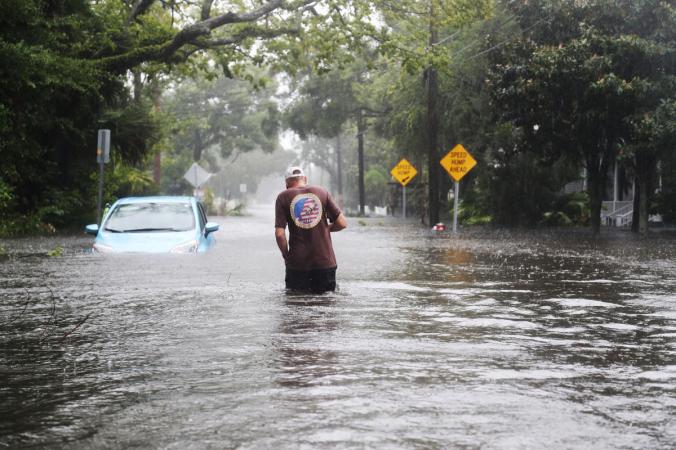
The tropical forests in western Uganda, home to a dwindling population of endangered chimpanzees, are disappearing at some of the fastest rates on Earth as local people chop down trees for charcoal and to clear space for subsistence farming.

Now, a team of researchers has shown that there is a surprisingly cheap and easy way to slow the pace of deforestation in Uganda: Just pay landowners small sums not to cut down their trees. Their study, published in the journal Science on Thursday, demonstrated this by conducting something all too rare in environmental policy — a controlled experiment. Continue reading

A Metric For Reinvention

Edge.jpg

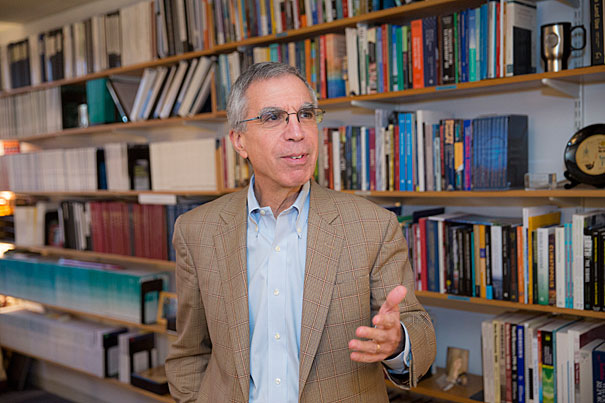
Click above for 26 minutes of intelligent contemplation. Neuroscience meets environmentalism. He was a New York Times science writer, then the author of one of the most influential nonfiction books of recent decades. Now, he is the gift that keeps on giving:

Daniel Goleman

One way a systems perspective could help with the environmental crisis is through understanding that we have a very narrow range of affordances, the choices presented to us. Continue reading

The Wonders Of Trees Never Cease

goat-02_custom-060bac4eeff1a0b290ff201210009e650a2025d0-s1400-c85.jpg

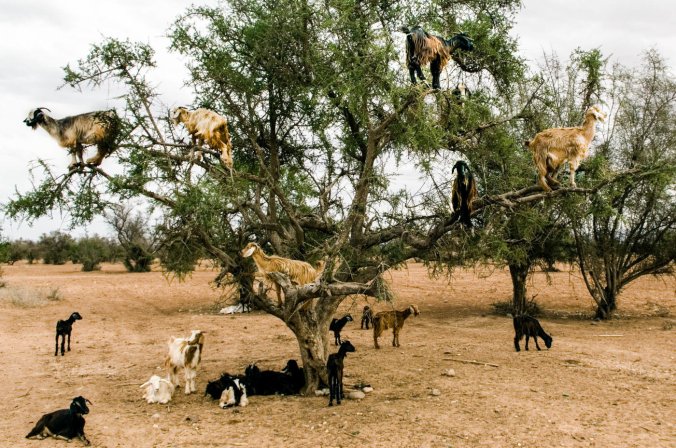
Goats climb an argan tree in Morocco to dine on its fruit. Jeremy Horner/Getty Images

At Chan Chich Lodge we are just embarking on a tree-related culinary journey, so any counterintuitive story about trees is likely to catch my attention these days.

FigDeer.jpg

Thanks to Marc Silver at National Public Radio for the story about the picture above, Do Tree-Climbing Goats Help Plant New Trees? It is a short read and worth every second of your attention if you are interested in arboreal foodstuff.

This image to the left, while not as amusing as the one above, shows a deer doing the same thing with less panache. That deer will spread the seeds of that wild fig far and wide in the forest, increasing food supply. Continue reading

Rewilding, Panthers & People

Filkins-The-Return-of-the-Florida-Panther.jpg

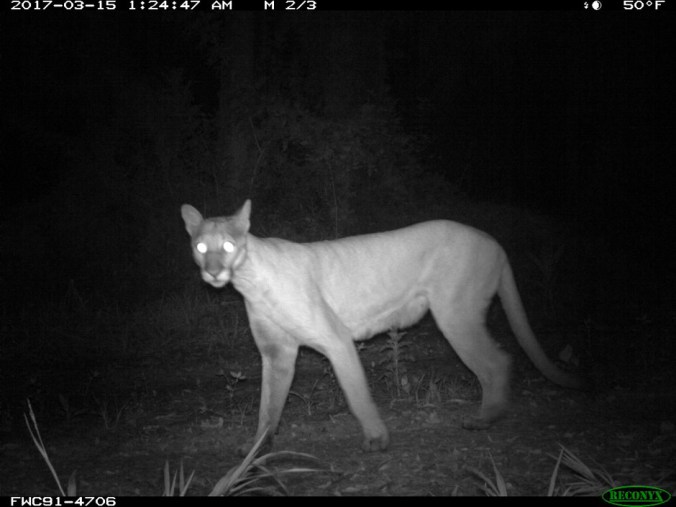
As Florida panthers have begun to multiply, they’ve been forced to search for new home ranges. PHOTOGRAPH COURTESY FLORIDA FISH AND WILDLIFE / FLICKR

Rewilding is a topic I started linking to as a matter of solidarity. While based in south India, I had plenty of exposure to residual evidence of the complicated–sometimes resplendently beautiful and other times brutally tragic–relationship between mankind and wild animals as played out over millennia, and still evolving. So I have kept an eye open for these stories, and have posted so many times on the topic that it might give the impression that it is a thing. As if it is happening more or better than it is really happening. But it is happening so I will keep the links coming.

Now I am in Belize most of the year, where the man-cat relationship is also millennia old, and as constant challenge as ever. But I am seeing it from well within the confines of Chan Chich Lodge and its surrounding hundreds of thousands of acres of healthy cat habitat. I know there are big cats in the USA, but not enough. That is why this story is a thrill. Dexter Filkins, never yet cited in these pages but whose reporting I depend on for other kinds of stories, was not a byline I expected to see on this story, but thanks to him for it:

For years, the Florida panther, a majestic creature that lurks in and around the forests of the ovbnm,./, has teetered on the edge of permanent disappearance. Closely related to the mountain lion, the panther once roamed across much of the South, but the ever-advancing modern world pushed it into a tiny corner of Southwest Florida. By the late nineteen-seventies, fewer than thirty survived.

Since then, the panther has been coming back, helped by a government- and privately backed expansion of its habitat. Florida panthers are now thought to number around two hundred. Indeed, there are so many big cats in the Everglades that they are venturing out in search of new territory. Continue reading

Dams, Development & Destruction

3500 (2).jpg

Munduruku people demonstrate in front of the Brazilian Ministry of Mines and Energy, calling for the suspension of construction of the Belo Monte hydroelectric plant. Photograph: Lunae Parracho/Reuters

Thanks to John Vidal and the Guardian for this coverage in Latin America:

The rains had been monumental throughout April 2014. By early May, the operators of the 219 MW Cachoeira Caldeirão dam being built in Brazil’s remote Amapá state knew that levels on the Araguari river were dangerously high. If some water was not released fast, the whole thing might collapse. There would be no danger to people because any run-off would be absorbed by two other dams downstream, the hydropower company thought.

But communications failed and no one warned the small town of Ferreira Gomes, nestled on the banks of the Araguari nearly 50km away. Continue reading

Model Mad, Mechanism

gettyimages-671595622_wide-3b228004a6ccebbd2b6b9901d8a92f181b3643b1-s1400-c85

In this era, when saying no in creative manner has been raised to an art form, we remain on the lookout for model mad; but it does not have to be creative or novel. If there is an established machinery to utilize, utilize it! Here is an example. We are not surprised that, when asked, people say they want their environment protected, nonetheless we are pleasantly surprised that the “system” such as it is continues to even ask:

Public To EPA On Cutting Regulations: ‘No!’

As part of President Trump’s executive order to review “job-killing regulations,” the Environmental Protection Agency last month asked for the public’s input on what to streamline or cut. It held a series of open-mic meetings and set up a website that has received more than 28,000 comments, many of which urge the agency not to roll back environmental protections. Continue reading

Reanimating Coffee

fuel-gauge-coffee-mugConsidering the coffee farming and roasting operation, not to mention all the coffee served at Chan Chich Lodge; also considering the constant search for new options relevant to ecologically sensitive operations, this catches our attention. Thanks to Anthropocene and Prachi Patel:

A simpler route to biodiesel from used coffee grounds

The world produces almost 10 million tons of waste coffee grounds every year. Researchers have now discovered an efficient way to turn that waste into a green fuel. Their simple one-step process, outlined in the Journal of Environmental Chemical Engineering, would save time and the cost of producing biodiesels from coffee. Continue reading

Environmentalism, It’s Just Good Business

Solar panels at the Googleplex, headquarters of Google in Mountain View, Calif. Its data centers worldwide will run entirely on renewable energy by the end of this year, the technology giant announced in December. Credit Smith Collection/Gado, via Getty Images

Although the current administration may be cloaking themselves in a fog of denial, we’re happy to read that much of corporate America is staying the course of their own emissions goals.

Nearly half of the Fortune 500 biggest companies in the United States have now set targets to shrink their carbon footprints, according to a report published Tuesday by environmental organizations that monitor corporate emissions pledges. Twenty-five more companies adopted climate targets over the last two years, the groups said.

Almost two dozen companies, including Google, Walmart and Bank of America, have pledged to power their operations with 100 percent renewable energy, with varying deadlines, compared with just a handful in 2015. Google’s data centers worldwide will run entirely on renewable energy by the end of this year, the technology giant announced in December.

“We believe that climate change is real, and it’s a severe crisis,” said Gary Demasi, who directs Google’s energy strategy. “We’re not deviating from our goals.” Continue reading

One Possible Future of Fish

Open-ocean aquaculture could reduce environmental concerns associated with aquaculture in coastal waters. Photo courtesy of NOAA Fisheries.

We’re always looking for well-balanced discussions on innovative but occasionally controversial forms of food production.  Open ocean aquaculture is an example, and we appreciate the Food & Environment Reporting Network for offering just that, suggesting that many of the environmental concerns with aquaculture are mitigated by using deep water locations.

President of the New Orleans–based Gulf Seafood Institute, Harlon Pearce knows better than anyone that wild fisheries alone can’t supply U.S. consumers’ growing demand for fish. Which is why he’s doing his best to bring everyone to the table to achieve one goal: farming the Gulf of Mexico. Continue reading

Ranching, Recovery & Reason

MasterSceneofSilverCreek-GuiseppeSiata-1260x708.jpg

If you missed this post, it is worth a read for perspective either before or after the story below, and even if you do not read the story below that one should not be missed. Thanks to Cool Green Science:

Ridding the West of cattle remains a priority for some organizations and individuals. “Ranching,” the director of one prominent group told High Country News, is among “the most nihilistic lifestyles this planet has ever seen. Ranching should end. Good riddance.” Another group charges that ranching causes “desertification.” Another proclaims that “grazing spreads weeds.” Still another cites as a “myth” that “profitable livestock production and ecological preservation can coexist.” Continue reading

Historians Do Not Get Mad, They Give Perspective

ian-frazierNormally we clip short excerpts and link to full articles, or whatever it is we think worth sharing from a third party source. The exception is, on rare occasions, with important news that should be read in full at once, such as a public service announcement. Here is one of those, in our estimation. We suggest you read it to the end, now. Ian Frazier, a staff writer at The New Yorker, has avoided the sap, but treads close to the heartwarming notion that folks in a divided, tense situation might be able to listen to one another, with the help of a mission-driven historian:
Patricia Limerick, well-known historian of the American West, gave a talk at the community center in the town of Burns, Oregon, one evening not long ago with her heart slightly in her throat. Limerick belongs to the small category of historians who are occasionally recognized on the street, and she gives talks all the time. What made this one different was that Burns is the county seat of Harney County, home of the Malheur National Wildlife Refuge, the site, last year, of a six-week takeover by armed protesters, who demanded that the federal government return the land—though to whom was not exactly clear. One of the occupiers was killed in the standoff. Limerick knew that her audience, about seventy-five county residents, included both supporters and opponents of the protest. The mood in the room seemed congenial, not tense, but she couldn’t be sure. A local man had told her about a past confrontation between the two sides in which many had likely carried firearms. He said he thought that if someone had dropped a book people might have started shooting. Continue reading

Noting Progress When It Becomes Visible

2500.jpg

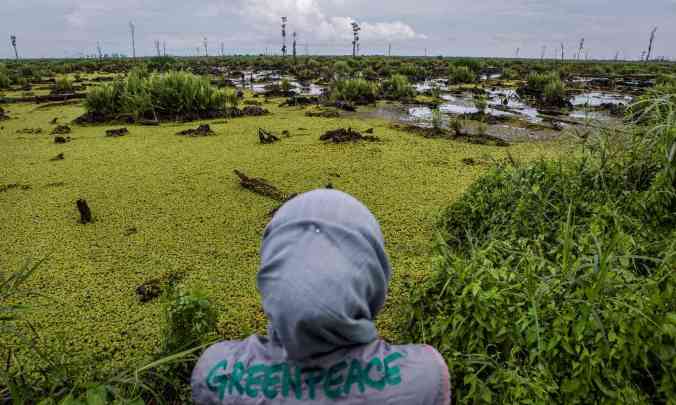
A Greenpeace investigator surveys an IOI palm oil concession in Ketapang, Indonesia. Photograph: Ulet Ifansasti/Greenpeace

If You Happen to Be at the Smithsonian – But You Don’t Have to Be

Science, entrepreneurship, conservation and innovation converge at this amazing open source summit with events in multiple Smithsonian locations ranging from New York City, Washington DC and Panama City.

Frequent contributor to this site Phil Karp, will participate in a forum on Restoring Nature. The synergy of forum subjects with our interest in wild foods and our work in conservation focused hospitality makes us wish we were there.

What’s Working in Conservation

Earth Optimism celebrates a change in focus from problem to solution in the area of global conservation with an unprecedented gathering of thought leaders, scientists, environmentalists, artists, civic leaders and international media.

The global conservation movement has reached a turning point. Continue reading

Dismantling Protection, Effectively & Efficiently

Kolbert-earth-day-trump-1200.jpg

How is it that an Administration as disorganized as Donald Trump’s has been so methodical when it comes to attacking the environment? PHOTOGRAPH BY JOE RAEDLE / GETTY

I committed myself to not name the name, because it adds fuel to a flame that is already out of control. But if you have read any of the posts in our model mad series the name is clearly implied.  Plenty of others name so well that it is best just to link their work. One of the best namer of names when it comes to our environment, and failure to protect it, is Elizabeth Kolbert. She occasionally points out that we do not simply fail to protect, but willingly allow the named to dismantle critical protections. We are sadly impressed that Dame Doomsday doesn’t disappoint with her latest contribution:

Next week, millions of Americans will celebrate Earth Day, even though, three months into Donald Trump’s Presidency, there sure isn’t much to celebrate. A White House characterized by flaming incompetence has nevertheless managed to do one thing effectively: it has trashed years’ worth of work to protect the planet. As David Horsey put it recently, in the Los Angeles Times, “Donald Trump’s foreign policy and legislative agenda may be a confused mess,” but “his administration’s attack on the environment is operating with the focus and zeal of the Spanish Inquisition.” Continue reading

Happy 20th Anniversary, Meg!

543092After posting this quick thought about foraging, I sent a link to Meg, and she reminded me that she had not only been to Belize but that there is a book about her time here.

As I explored the book I realized that it was first published 20 years ago, incidentally the year when I first visited Belize. I also discovered that the book is in wide circulation among educators in the USA, for hopefully obvious good reasons:

Journey along with Dr. Meg Lowman, a scientist who, with the help of slings, suspended walkways, and mountain-climbing equipment, has managed to ascend into one of our planet’s least accessible and most fascinating ecosystems–the rain-forest canopy. “Fresh in outlook and intriguing in details, this book will strengthen any library collection on the rainforest.”–Booklist Continue reading

Green Farming Productivity

Thanks to Anthropocene, for this article, which adds to today’s green food theme:

On many farms, reducing pesticides probably won’t hurt profit or yields

Rare Birds, Climate Change & Dialogue

Headshot-Jerry

Jerry Taylor, founder of the Niskanen Center, a libertarian think tank.

We like birds. We like rare birds. Jerry Taylor sounds worthy of attention. Thanks to Marc Gunther and Yale 360 for Climate Converts: The Conservatives Who Are Switching Sides on Warming:

It’s hardly being noticed, given the current political atmosphere in Washington. But a small yet growing number of Republicans, conservatives, and libertarians are starting to push for action on climate.

As liberal Democrats and conservative Republicans pull farther apart in the long-running, increasingly polarized debate over climate change, Jerry Taylor is a rare bird — Continue reading

Model Mad, Markets

01leshy-master768

Leigh Wells

On a day often reserved for gags and laughs, we instead repeat, without much cheer but plenty of conviction, two of our favorite words: entrepreneurial conservation. Two opinion pieces today highlight the role of both government and market forces as vehicles of environmental protection. When government must take action, as John D. Leshy and Mark Squillace point out, there is a law that allows the President of the United States to protect nature in the public interest. That law is endangered, and it is not okay, these model mad legal scholars remind us. They also point out that markets have tended to follow and reward the actions Presidents have taken to protect natural monuments in the last 111 years since that law was enacted.

A former Mayor of New York City, who also has credibility when it comes to market forces, reminds us in another editorial that with or without a President’s leadership we can still make progress on our environmental commitments. But only if all the rest of us are fully on board, and ready to shake things up when needed, providing all the more reason for each of us to keep all these model mad examples fresh in mind. If you only have time for one quick read at the moment, make this the one:

Climate Progress, With or Without Trump

What To Expect When You Are Expecting An EPA

121415_stavins_184_605.jpg

“For some environmental problems that are truly localized, there is little argument against a state approach,” said Stavins. “However, for environmental problems that are interstate … and for a global commons problem, such as climate change, the federal government really should take the lead.” File photo by Kris Snibbe/Harvard Staff Photographer

We are thankful to the Harvard Gazette for this summary of Professor Stavins by Alvin Powell:

The Senate’s confirmation of former Oklahoma Attorney General Scott Pruitt as administrator of the Environmental Protection Agency (EPA) has alarmed environmentalists.

In Oklahoma, Pruitt prided himself on fighting the agency he will now run, with his website describing him as “a leading advocate against the EPA’s activist agenda.” He sued the agency to fight regulation and expressed doubt about the human causes of climate change, though he moderated those views in his confirmation hearings.

Robert Stavins is the Albert Pratt Professor of Business and Government at the Harvard Kennedy School, director of the Harvard Project on Climate Agreements, and a past member of the EPA’s Science Advisory Board. The Gazette asked him about the EPA’s future under Pruitt. Continue reading

Model Mad, Effective

2900.jpg

Utah’s congressional delegation has vigorously fought to open Ute tribal land, currently partially protected by the Bears Ears National Monument, above, to drilling. Photograph: Francisco Kjolseth/AP

Thanks to the Guardian for first bringing this to our attention, another example of model mad, and a pretty big deal too: