Model Mad, March

02march-1485980066966-master768

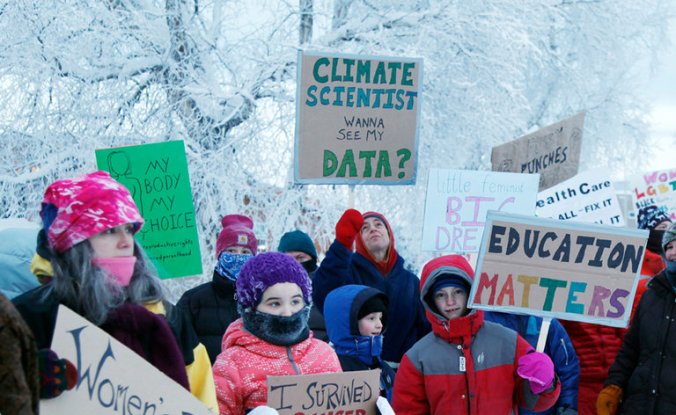
A women’s march in Fairbanks, Alaska, last month. The movement inspired a group of scientists to organize their own demonstration in Washington. Credit Robin Wood/Fairbanks Daily News-Miner, via Associated Press

We have not had a shortage of model mad stories, which may be the silver lining to the cloud, so thanks to the Science section of the New York Times for this contribution:

Listen to Evidence’: March for Science Plans Washington Rally on Earth Day

By

Within a week of its creation, the March for Science campaign had attracted more than 1.3 million supporters across Facebook and Twitter, cementing itself as a voice for people who are concerned about the future of science under President Trump.

Now, hoping to transform that viral success into something approaching the significance of the women’s march last month, the campaign has scheduled its demonstration in Washington for Earth Day, April 22. Continue reading


Model Mad, Corporate

oh418v0r-1Thanks to EcoWatch for identifying these companies for speaking out, as is their right and responsibility as much as their self-interest–a good self-interest in conservation–and providing another example of model mad, corporate style:

The most anticipated outdoor recreation event of the year just finished in Salt Lake City, Utah, where hundreds of outdoor brands from small business outfitters to industry pioneers like Patagonia and Black Diamond Equipment gathered to witness the cutting-edge in outdoor gear. Continue reading

Model Mad, McKibben

McKibben-ABadDayfortheEnvironmentwithManyMoretoCome-1456x750-1485299497.jpg

PHOTOGRAPH BY DOUG MILLS / THE NEW YORK TIMES / REDUX

Bill McKibben is the founder of 350.org and we have posted on him so many times in the past for his environmental and other forms of activism we sometimes forget that he also has a day job, as the Schumann Distinguished Scholar in environmental studies at Middlebury College. Today he posted in a manner that captures well what we meant when we used the word mad, and qualified our intent to remain madly determined:

…There’s not the slightest evidence that Americans want laxer environmental laws. A poll released last week showed that nearly two-thirds of Americans would prefer that the E.P.A.’s powers be preserved or strengthened. Solar power, meanwhile, polls somewhere in the neighborhood of ice cream among Democrats, Independents, and Republicans alike. Continue reading

Scotland’s Awesome Accomplishments

4248

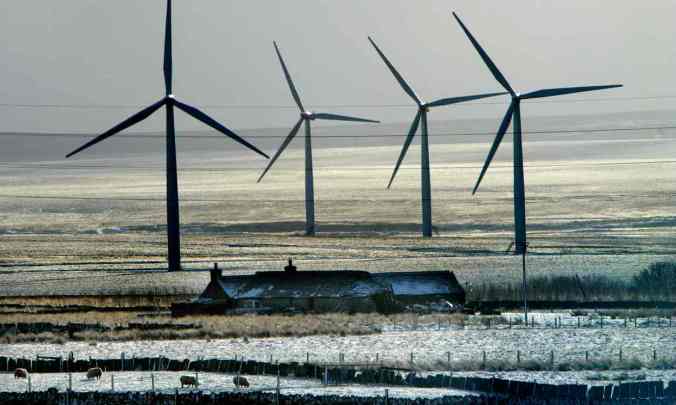
Scotland’s new strategy calls for a totally carbon-free electricity sector by 2032. Photograph: Murdo Macleod for the Guardian

Thanks to the Guardian for their excellent environmental coverage:

Scotland sets ambitious goal of 66% emissions cut within 15 years

Holyrood ministers aim higher after hitting target of 42% cut by 2020 six years early, but say Brexit poses challenge Continue reading

Tropical Peatland & Carbon Storage

2764

The remote Cuvette Centrale peatlands in the central Congo basin is one of the most carbon-rich ecosystems on Earth. Photograph: Simon Lewis/University of Leeds

This story was also covered in the New York Times, but the Guardian had a jump on the scoop, and included a photo (above) that more effectively helps to understand peat’s role in carbon capture; so we feature their story here:

World’s largest tropical peatland found in Congo basin

Carbon-rich peatlands could store three years’ worth of world’s total fossil fuel emissions, say scientists Continue reading

Bumble Bees & Conservation

06About-blog427-v2.jpg

The rusty-patched bumblebee, once common across the continental United States, has been designated an endangered species. Credit Clay Bolt

One more gift of protection:

A Bumblebee Gets New Protection on Obama’s Way Out

By and

The Obama administration, rushing to secure its environmental legacy, has increased protection for a humble bumblebee. Continue reading

The State Of Great

29brown-hp-master768

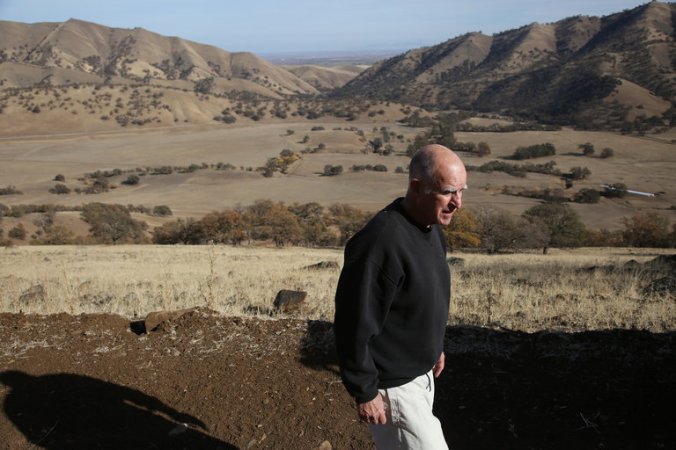
Gov. Jerry Brown at his 2,514-acre family ranch in Colusa County, Calif. “I wouldn’t underestimate California’s resolve if everything moves in this extreme climate denial direction,” he said. “Yes, we will take action.” Credit Jim Wilson/The New York Times

This article, by Adam Nagourney and science writer Henry Fountain, gives climate-concerned citizens everywhere hope that recent tectonic shifts on the political landscape in the USA will not result in complete abandonment of reason within all the states of that union:

LOS ANGELES — Foreign governments concerned about climate change may soon be spending more time dealing with Sacramento than Washington.” Continue reading

Redeeming Schemes Punctuated With Question Marks

5687

An impression of the town square at the Babcock Ranch development in Florida. Photograph: Babcock Ranch

For every redemption story there seems to be at least one more redemption puzzle. Conundrums. This is one of those. We want to love the scheme for some of its nobler aspects, but then realize it is impossible to do so unconditionally. And finally, simply, impossible:

The solar-powered town: a dream for the environment – or a wildlife nightmare?

Babcock Ranch, the brainchild of ex-NFL player Syd Kitson, aims to be a model of sustainability but campaigners fear it will be tragic for endangered panther

Edward Helmore in New York

Florida real estate has a bad habit of reflecting the boom-and-bust cycles of the US economy but Babcock Ranch, a new development opening early next year and designed to be the world’s first solar-powered town, is hoping it can provide the Sunshine state with a model for sustainable living. Continue reading

Greening Museums

garden_drawing

Illustration by Emily Woodworth

There have been moments in recent months when continued attention to the little details we see, and link to concerning incremental improvements in environmental sensitivity, social responsibility, or any other sustainability metric seems akin to “rearranging the deck chairs on the Titanic.” Political turmoil, and specifically political commitment to dismantle environmental protection in various influential countries, might make incremental change seem even less significant to some. These deck chairs are different. Every instance of care and action is a data point worthy of attention, and we will continue to connect the dots. Today, from the Field Museum of Chicago and their awesome Green Team:

THE FIELD MUSEUM’S GREEN TEAM

A Greener Field (the Museum’s “green team”) began as a grassroots recycling effort in 1989, and now has over 40 members representing every area of the Museum.  Staff members who share the Museum’s commitment to improving sustainability attend monthly meetings which provide an outlet for them to share successes and challenges in terms of greening their departments, as well as a vehicle to initiate and help implement institution-wide programs.  From bike sharing programs to recycling and composting Continue reading

Thank You, Guardian & John Vidal

1993

Vidal visiting the experimental solar thermal power plant on the outskirts of Masdar, UAE, in 2011.

When the photograph to the left was taken we were just starting to gather stories here.  John Vidal was the veteran among major news-gathering organizations and the Guardian had shown leadership with an Environment section. Not always pleasant, but fair to say that Mr. Vidal has balanced the good, the bad and the ugly better than most. Thanks to him for that.

In 27 years as environment editor at the Guardian, I have seen both devastation and progress. Now I’m retiring – but I still have hope for the future of the planet

John Vidal on an Arctic ice floe in 2012.

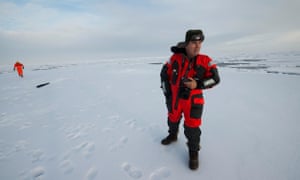
John Vidal on an Arctic ice floe in 2012. Photograph: Daniel Beltrá/Greenpeace

In September 1989, Guardian editor Peter Preston took me to one side. “Environment? Your idea. You do it,” he said. I was on the arts desk and had quite forgotten that, two years earlier, I had proposed that we cover this fast-emerging issue in more depth and with new pages. Continue reading

Rolling Back Environmental Laws, A Rolling Plague

5150

The proposals threaten indigenous territory in Brazil, opponents say. Photograph: Alamy Stock Photo

We hear it is coming to the USA after inauguration next month, and has been a tendency in tough times in many places–relaxing environmental protections to encourage economic growth. Bad ideas have a way of spreading and our thanks to the Guardian for their observations in Brazil:

Brazil’s plan to roll back environment laws draws fire: ‘The danger is real’

Environmental and indigenous activists condemn plan they say would threaten indigenous territories and make compliance with Paris deal impossible Continue reading

Big Weather & Big Cats At Chan Chich Lodge

Cockscomb Basin Wildlife Sanctuary is of interest because it is a pioneer in conservation in Belize–as Chan Chich Lodge is in its own way. But in writing about it Vicky Croke, for The Wild Life at WBUR (National Public Radio, Boston, USA), reminds a few of us of our time in Belize during Earl, and the aftermath during which jaguar sitings have been, and continue to be, inexplicably spectacular:

Jaguars Interrupted: Counting Big Cats After A Hurricane

Two months after Earl hit Belize, researchers at the world’s first jaguar reserve are still taking stock.

By Vicki Croke

This past summer, within days of gathering spectacular camera-trap footage of a female jaguar and her two tiny cubs sauntering through the Cockscomb Basin Wildlife Sanctuary in Belize, field scientists with Panthera, the global wild cat conservation organization, got the news that a tropical storm was forming and might just come their way. Continue reading

Another Small Step For Mankind

05standing-master675

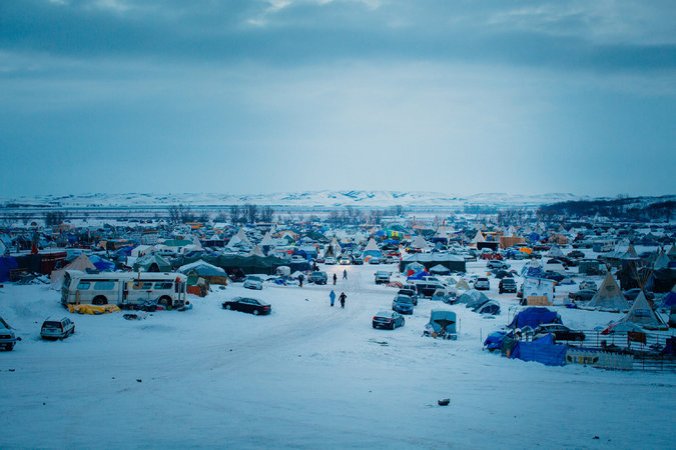
A camp in Cannon Ball, N.D., where cold weather has set in. Credit Alyssa Schukar for The New York Times

Protesters for a cause we could understand and side with, namely the keeping of commitments made long ago to the pre-Columbian inhabitants of the North American continent, have apparently won. Not so common, so we celebrate. And we like the twist in this story below, with unexpected allies. We did not quite believe the news when we first saw it, but now it seems certain enough to post it for posterity:

As North Dakota Pipeline Is Blocked, Veterans at Standing Rock Cheer

By

FORT YATES, N.D. — After four deployments to Iraq and Afghanistan, after being hit by a roadside bomb and losing two friends to explosions, Jason Brocar floated from job to job, earning enough to pay for long solo hikes where his only worries were what he would eat and where he would sleep. He was deep into a rainy trek through Scotland when he noticed friends back home talking about a place called Standing Rock. Continue reading

The Definition Of Rich

22rockefellerjp-master768

David Kaiser, is a fifth-generation Rockefeller and the head of a family fund fighting Exxon Mobil. Credit Sasha Maslov for The New York Times

The saying “that is rich” means, in this case, something more like–Really, Exxon Mobil?

Exxon Mobil Accuses the Rockefellers of a Climate Conspiracy

By

Exxon Mobil, under fire over its past efforts to undercut climate science, is accusing the Rockefeller family of masterminding a conspiracy against it. Yes, that Rockefeller family. Continue reading

Imposter Fish

mystery-fish

We are curious to know more:

Imposter fish may be more sustainable

In a first of its kind study, researchers tackled the environmental and financial impacts of consumers purchasing mislabeled fish. And—as upsetting as the mislabeling of any food is—they found a surprising silver lining. Continue reading

Five Years Of Protection From Drilling

web_eho_6328-edit

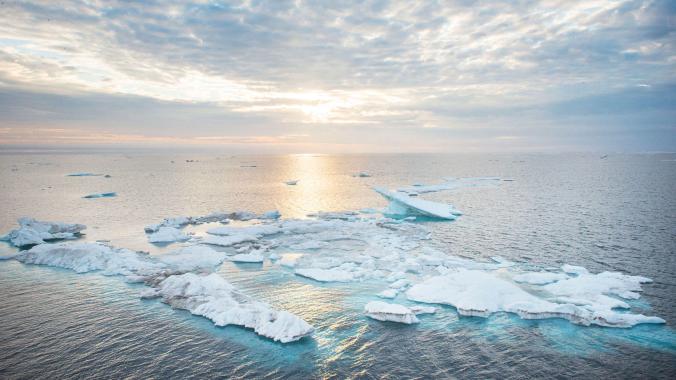
Melting sea ice in the Chukchi Sea, one of the areas included in the ban. Photo: Esther Horvath

Thanks to Audubon Magazine for their coverage of this news:

U.S. Offshore Drilling Banned Along Arctic and Atlantic Coasts for Next Five Years

A new federal leasing plan released today outlines where energy companies can look for oil while protecting vital bird habitat.

by Martha Harbison

After months of deliberations, the Bureau of Ocean Management announced its final five-year plan for offshore energy-exploration leases today. In that plan, no drilling leases would be available in U.S.-held Arctic and Atlantic waters from 2017 to 2022, meaning that no new drilling could happen in those areas until at least 2022.  Continue reading

The Future Of Food & Taxes

5126

Food production causes a quarter of greenhouse gas emissions, largely from the raising of cattle and other livestock. Photograph: Mike Kemp/Getty Images

Tax meat and dairy to cut emissions and save lives, study urges

Surcharges of 40% on beef and 20% on milk would compensate for climate damage and deter people from consuming as much unhealthy food

Damian Carrington

Climate taxes on meat and milk would lead to huge and vital cuts in carbon emissions as well as saving half a million lives a year via healthier diets, according to the first global analysis of the issue. Continue reading

Climate Revolution

31stoneweb-master768

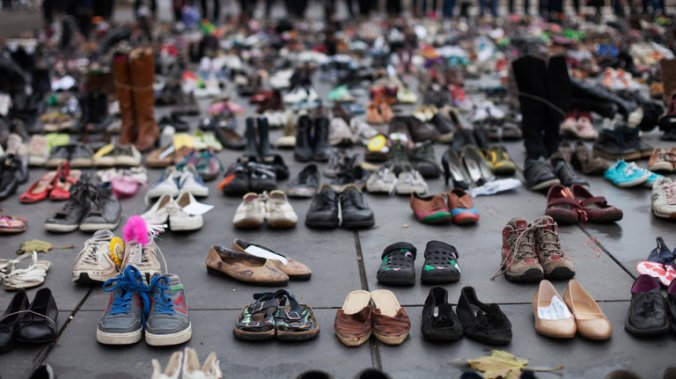
Shoes representing protesters at the climate talks summit in Paris last year. Credit Andre Larsson/NurPhoto, via Getty Images

Thanks to Mr. Godoy and Mr. Jaffe for this strong, clear and compelling statement:

We Don’t Need a ‘War’ on Climate Change, We Need a Revolution

Eric S. Godoy and

This year is on track to become the hottest ever recorded, and a growing number of environmentalists are using a particular type of language in response. Some are calling for a huge “mobilization” to “combat” climate change. In an article in the New Republic in August, Bill McKibben, the unofficial spokesperson of the climate movement in the United States, insisted in very literal terms that, we are at war with climate change. Continue reading

Better Coverage Of Standing Rock

gettyimages-600956964_wide-d6580ce32963e1f82fcc9439c89f9a578584c963-s1100-c85.jpg

Robyn Beck /AFP/Getty Images

An important story deserves full coverage, for as long as it requires:

More Than 1 Million ‘Check In’ On Facebook To Support The Standing Rock Sioux

It’s a show of support for the tribe that has been rallying against construction of the Dakota Access Pipeline, which the tribe says could contaminate drinking water and harm sacred lands

By Merrit Kennedy

More than 1 million people have “checked in” on Facebook to the Standing Rock Indian Reservation page, in a show of support for the tribe that has been rallying against construction of the Dakota Access Pipeline. Continue reading

False Equivalence, Exhibit A?

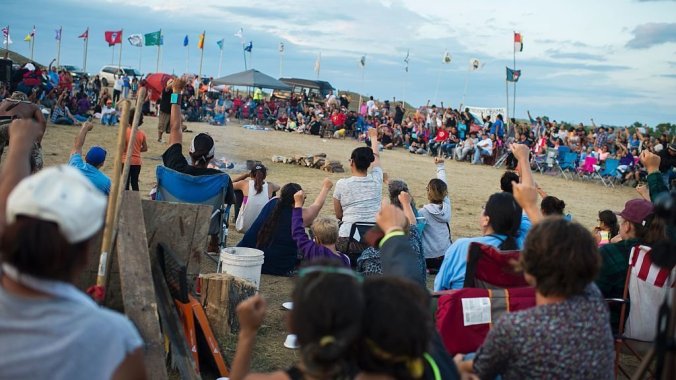
02dakota1-master675We are concerned about false equivalence journalism, especially on environmental topics, so we have read this story twice before highlighting it. The human interest attraction is meant to be heightened by including the law enforcement perspective.

02dakota2-master675One of the most respected journalists of our time, however, seems to have committed the error right on the heels of an obviously awkward parallel story that serves as a perfect cautionary tale for false equivalence. We still recommend reading it, so you can decide for yourself:

The View From Two Sides of the Standing Rock Front Lines