Dakota Access & Fairness

4500

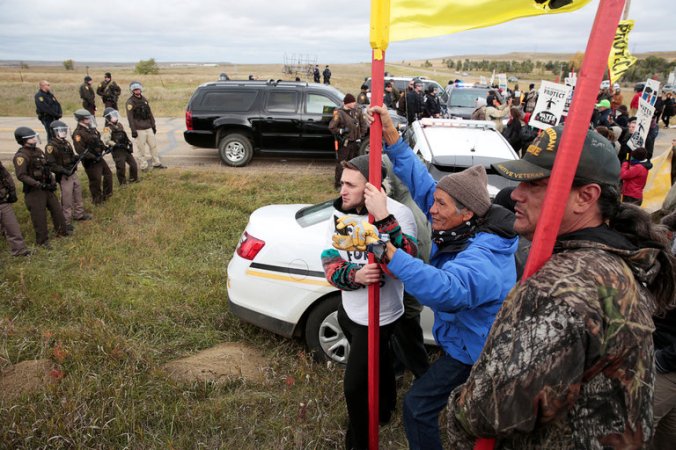
Chief Arvol Looking Horse, spiritual leader of the Sioux nation, leads his people to peacefully pray near a law enforcement barricade just outside of a Dakota Access pipeline construction site. Photograph: Stringer/Reuters

It looks hypocritical from our vantage point:

Dakota Access pipeline protesters see bias after Oregon militia verdict

Activists at the Malheur wildlife refuge were carrying guns – but ‘if native people were armed, we would be killed,’ says an activist at Standing Rock

in Cannon Ball, North Dakota

Johanna Holy Elk Face couldn’t help but chuckle. The 63-year-old Native American was one of hundreds of activists gathered to block construction of the Dakota Access pipeline on Thursday, when police with tanks and riot gear surrounded them and began making mass arrests. Continue reading

Bolivia & Chinese Oil Exploration

5040

Thanks as always to the Guardian for its coverage of important environmental issues:

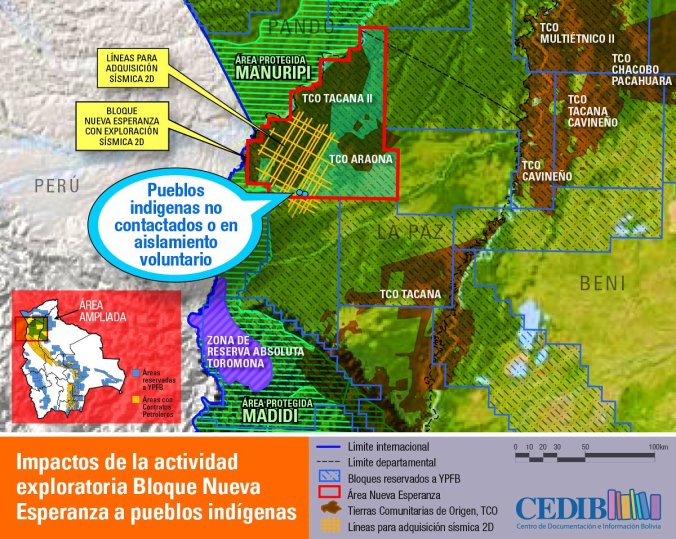
Fears for isolated Bolivian tribe met by Chinese oil firm in Amazon

Company operating near the border with Peru has reportedly had near encounters with indigenous people living in “isolation

David Hill

Teams from a Chinese oil and gas company exploring in the remote Bolivian Amazon have reportedly had near encounters with a group of indigenous people living in what the United Nations calls “isolation”, raising major concern for the group’s welfare. Continue reading

Dakota, Keystone & Resistance

29mckibbenWeb-master768.jpg

Dakota Access Pipeline protesters facing police officers in North Dakota this month. Credit Terray Sylvester/Reuters

As usual, Mr. McKibben is on the correct side of the debate and urges the rest of us to join that side and resist in solidarity:

Why Dakota Is the New Keystone

By

MIDDLEBURY, Vt. — The Native Americans who have spent the last months in peaceful protest against an oil pipeline along the banks of the Missouri are standing up for tribal rights. They’re also standing up for clean water, environmental justice and a working climate. And it’s time that everyone else joined in.

The shocking images of the National Guard destroying tepees and sweat lodges and arresting elders this week remind us that the battle over the Dakota Access Pipeline is part of the longest-running drama in American history — the United States Army versus Native Americans. In the past, it’s almost always ended horribly, and nothing we can do now will erase a history of massacres, stolen land and broken treaties. But this time, it can end differently. Continue reading

Coffee Grounds To The Rescue

coffee-grounds-2.jpg

Kevin O’Mara/Flickr.com

Thanks again, after a series of earlier excellent items, Anthropocene:

A caffeine fix for heavy metal cleanup

Each year, coffee drinkers across the globe create six million pounds of waste in the form of spent coffee grounds. Some of us chuck it in our compost pile, but most of it becomes just another garbage disposal challenge. Continue reading

Beware & Resist The Frack

4896

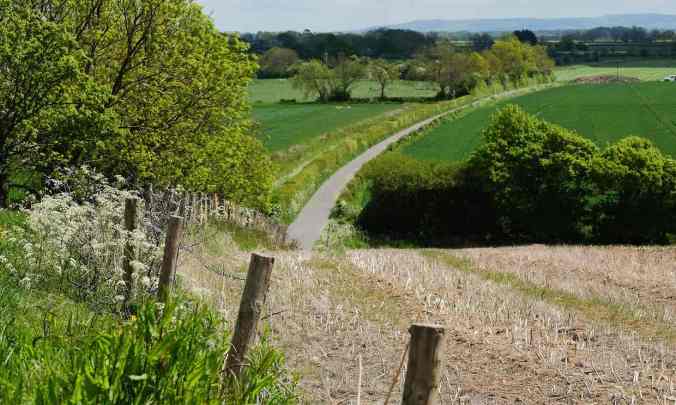
Countryside near the village of Kirby Misperton in North Yorkshire where a planning application by Third Energy to frack was recently approved. Photograph: Ian Forsyth/Getty Images

Many claim to tire of hearing about climate change, species extinction, threats from fracking and other environmental issues of great importance. Thanks to the Guardian for continuing to pay attention:

Majority of potential UK fracking sites are rich in important wildlife

Almost two-thirds of proposed areas have higher biodiversity, valuable for functions such as pollination and pest control, analysis shows

Many of the areas that have been recently marked as potential sites for fracking are rich in wildlife that perform crucial functions from pollination to decomposition, researchers have found.

Scientists say that almost two-thirds of the areas that have been labelled as suitable for shale gas extraction have levels of biodiversity equal to or above the national average, according to a new analysis of records collected from across the country. Continue reading

Nudging In The UK

3500

Electric cars using the bus lane (left) during morning rush hour in Oslo, Norway. Photograph: Pierre-Henry Deshayes/AFP/Getty Images

Like the little victories in wilderness conservation, which may be too little to late or maybe a bright spot on a bleak horizon, the small moves in the right direction on other environmental fronts seem promising, and therefore worthy of note. We salute Mayor Khan for his efforts to get Londoners to do their part, according to this story below. It reminds me of Richard Thaler‘s explanation of the power of nudging things along in the right direction, and wishing these nudge stories were more commonplace in the eight years since we started hearing about them:

Electric vehicles could go first at traffic lights under UK clean air zone plans

Government proposals to tackle air pollution in five UK cities could see electric vehicle drivers using bus lanes and getting priority at traffic lights

Drivers of electric vehicles could be allowed to use bus lanes in five UK cities and even go first at traffic lights, to tackle illegal levels of air pollution, the government has suggested. Continue reading

Honeybees, Workers, Unite

honeybees

Every now and then a podcast changes my view on something important. Sometimes I cannot tell exactly what shifted my view–case in point is the podcast below which is full of facts I already knew, and if you have been following our site at all in recent years you would have seen dozens of posts covering many of these same facts. But somehow the personal touch of the two guests on this podcast intensified my view of the importance of bees in general, honeybees in particular, and our responsibility for finding a path to a future where bees can survive:

How Honeybees — and Humans — Are Being Stung by Environmental Problems

It’s just a tiny insect, but the humble honeybee has a huge impact on our way of life. Aside from providing honey, honeybees are responsible for pollinating a majority of the crops consumed in the United States and around the world, from blueberry patches in Maine to almond groves in California. But honeybees are facing both natural and manmade threats that are killing them by the millions. A major result of these threats — colony collapse disorder — is already being felt in the beekeeping industry, which has reported astounding losses in recent years. Continue reading

Absurdity In Vivid, Brilliant Living Color

05porter-master768

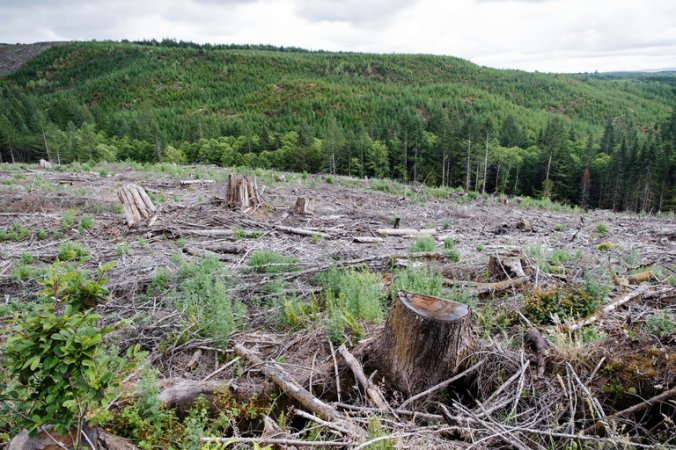
Clear-cutting along Highway 30 in Oregon. A bipartisan group of senators wants the government to assume that burning forests to generate electricity does not add carbon dioxide to the air but is instead “carbon neutral.” Credit Leah Nash for The New York Times

We have stayed away from politics as much as possible on this platform, except to celebrate innovative successes in the interest of conservation; but this news item is a must-share due to the gravity of its weirdness:

Next ‘Renewable Energy’: Burning Forests, if Senators Get Their Way

Eduardo Porter

President Obama’s Clean Power Plan — the central plank in his strategy to combat climate change — is in danger.

It’s not just that it is under attack in court, where its legality was challenged last week by a coalition of 28 states and scores of companies and industry groups. Or that fossil fuel interests and Republicans in Congress will keep trying to block it, whatever the courts decide.

The president’s plan to reduce emissions of heat-trapping carbon dioxide from the nation’s power sector could be undone within a matter of weeks by an unlikely bipartisan collection of senators that includes staunch Republican climate change deniers as well as Democrats who support the administration’s strategy. Continue reading

Bill McKibben On Oil, Banks & Solidarity With A Just Cause

screen-shot-2016-09-28-at-2-50-55-pmFighting Big Oil and Big Banks to Save Sacred Lands, Precious Water and Unraveling Climate

Bill McKibben

Most Americans live far from the path of the Dakota Access Pipeline—they won’t be able to visit the encampments on the Standing Rock Sioux reservation where representatives of more than 200 tribes have come together in the most dramatic show of force of this environmental moment. They won’t be able to participate in the daily nonviolent battle along the Missouri River against a $3.7 billion infrastructure project that threatens precious water and myriad sacred sites, not to mention the planet’s unraveling climate. Continue reading

A Business Model To Fish For

patagonia

Heroes are, by definition, not easy to come by. When they get profiled, read it (this one is thankfully not merely fluff):

…The ordeal, and the perspective of middle age, snapped him to attention and caused him to refine the company’s mission. In the eighties, he’d been feeling increasingly uneasy about being a businessman and about the transformations and compromises that seemed inevitably to accompany corporate success. The company, he worried, was straying from its hard-core origins. “I was faced with the prospect of owning a billion-dollar company, with thousands of employees making ‘outdoorlike’ clothing for posers,” he said early in 1991, in a speech to the employees, in which he outlined his misgivings and his new resolutions. These subsequently appeared in the Patagonia catalogue, as a manifesto, under the heading “The Next Hundred Years.” Continue reading

Pope Francis says Destroying Environment is a Sin

Photograph: Galazka/Sipa/Rex Shutterstock via The Guardian

We don’t have any religious affiliation here on the site, but understand that the Roman Catholic Pope has a tremendous influence in the world given his position. Any stance that he takes to protect the environment through denouncing pollution and agents of climate change is a good one in our book regardless of the church or theological basis. Josephine McKenna reports:

Pope Francis has called for urgent action to stop climate change and proposed that caring for the environment be added to traditional Christian works of mercy such as feeding the hungry and visiting the sick.

In a message to mark the Catholic church’s World Day of Prayer for the Care of Creation that he launched last year, Francis said the worst impact of global warming was being felt by those who were least responsible for it – refugees and the poor.

Continue reading

Comic Heroes Promote STEAM

steam-comics-01_custom-178e12d22e5a23c61e43f2d12b77fd95c322801d-s800-c85

Moon girl and Spiderman. Image from Marvel

Comic superheroes is a curious topic to cover here, but relevant with the development of Marvel’s new comic series of STEAM Variants. Five of Marvel’s heroes are stepping to into a new role and tackling new challenges in science, technology, engineering, art, and math (hence STEAM, sometimes referred to as STEM, which lacks the art component) with the intent of inspire young readers to explore their passions in those disciplines.

“We plan to continue to motivate our fans to explore their passions in the fields of science, technology, engineering, art, and math and present these disciplines through some of our favorite young heroes who are doing just that — following their dreams and preparing for the challenges that await them ahead,” David Gabriel, Senior VP for Sales & Marketing of Marvel Comics said in a statement.

Continue reading

Understanding The Limits Of Growth

k10544Compared to birds, jaguars, national parks and such, this book sounds like a snoozer. But as we scan the media for ways to understand the precarious predicament of the natural world, this book sounds worthy of the challenge (thanks to NYRB) as we contemplate the balance between the environmental costs of all that growth versus all the dramatic improvements in health and other welfare:

…a magnificent book on the economic history of the United States over the last one and a half centuries. His study focuses on what he calls the “special century” from 1870 to 1970—in which living standards increased more rapidly than at any time before or after. The book is without peer in providing a statistical analysis of the uneven pace of growth and technological change, in describing the technologies that led to the remarkable progress during the special century, and in concluding with a provocative hypothesis that the future is unlikely to bring anything approaching the economic gains of the earlier period. Continue reading

Restorative Justice, Environmental Case Study

1500.jpg

I am linking to this with a long series of links to rewilding stories in mind. Thanks to the Guardian for occasional environmental rags to riches stories:

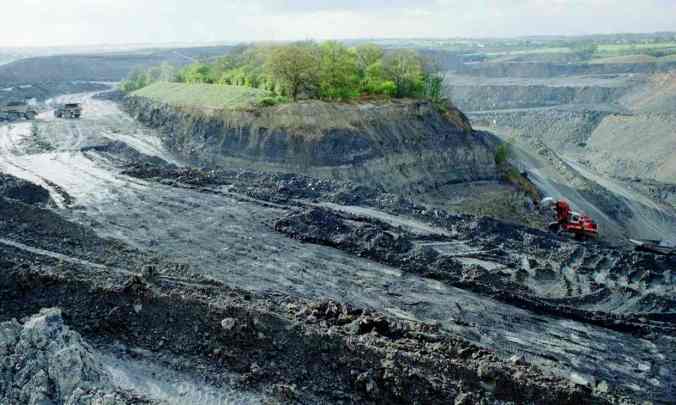
How millions of trees brought a broken landscape back to life

After 25 years, the decision to site the National Forest amid derelict coal and quarry workings has borne spectacular fruit

by John Vidal

Twenty-five years ago, the Midlands villages of Moira, Donisthorpe and Overseal overlooked a gruesome landscape. The communities were surrounded by opencast mines, old clay quarries, spoil heaps, derelict coal workings, polluted waterways and all the other ecological wreckage of heavy industry.

The air smelt and tasted unpleasant and the land was poisoned. There were next to no trees, not many jobs and little wildlife. Following the closure of the pits, people were deserting the area for Midlands cities such as Birmingham, Derby and Leicester. The future looked bleak.

Today, a pastoral renaissance is taking place. Around dozens of former mining and industrial communities, in what was the broken heart of the old Midlands coalfield, a vast, splendid forest of native oak, ash and birch trees is emerging, attracting cyclists, walkers, birdwatchers, canoeists, campers and horse-riders.

Continue reading

Bill McKibben Deserves Better

07mckibbenSUB-master768.jpg

We frequently have linked to articles about, and to messages by, this man whenever we see them. It is not surprising to read this, but it is important that we are all aware of this additional price he pays for the actions he takes on behalf of the environment:

MIDDLEBURY, Vt. — THERE are shameful photos of me on the internet.

In one series, my groceries are being packed into plastic bags, as I’d forgotten to bring cloth ones. In other shots, I am getting in and out of … cars. There are video snippets of me giving talks, or standing on the street. Sometimes I see the cameraman, sometimes I don’t. The images are often posted to Twitter, reminders that I’m being watched.

In April, Politico and The Hill reported that America Rising Squared, an arm of the Republican opposition research group America Rising, had decided to go after me and Tom Steyer, another prominent environmentalist, with a campaign on a scale previously reserved for presidential candidates. Using what The Hill called “an unprecedented amount of effort and money,” the group, its executive director said, was seeking to demonstrate our “epic hypocrisy and extreme positions.” Continue reading

Expeditions In The Interest Of Science (Secondary Discovery, Nature’s Majesty)

p03xtfz4

The survey crew inventories the park for butterfly habitats (Credit: John McLaughlin)

This BBC article, featuring butterfly hunters in the very northwestern-most spot in the lower 48 of the USA, reminds us of an expedition we tracked not long ago:

Equal parts academic and mountain man, wildlife biologist John McLaughlin has scaled mountains and traversed snowbound passes to identify more than 40 butterfly species.

It’s best to bring an ice axe when counting butterflies in North Cascades National Park. Located on the Canadian border in the US state of Washington, the park is renowned for its jagged peaks, limited trails and annual snow pack.

“Before my census crew could learn to identify over 40 butterfly species,” John McLaughlin recalled, “they had to know how to safely traverse snowbound, steep passes and – if necessary – to self-arrest using an ice axe.” Continue reading

Art In The Name Of Environment

9778_f52b43f6e0e444510cf55c5869d8d06b

RAIN OCULUS: In Marina Bay Sands, Singapore, a large whirlpool—functioning as both a skylight and a rain collector—forms inside a 70-foot diameter acrylic bowl and falls 2 stories to a pool below. Kahn, collaborating with Moshe Safdie, completed this artwork in 2011. Photo courtesy of Ned Kahn

Nautilus has brought our attention back to a subject that, on last look made us uncomfortable, but now our fascination and wonder are back where they belong:

The environmental artist Ned Kahn, a MacArthur Foundation “genius grant” awardee, gravitates toward phenomena that lie on the edges of what science can grasp—“things,” he tells me over the phone, “that are inherently complex and difficult to predict, yet at the same time beautiful.” The weather, for example, has, because of its chaotic yet orderly nature, “fascinated me for my whole career,” he says. For almost the last 30 years in particular, he’s been creating dynamic installations that he thinks of as “observatories”: Since they frequently incorporate wind, water, fog, sand, and light, he states on his website, “they frame and enhance our perception of natural phenomena.”

Take his most recent project, the “Shimmer Wall”. Composed of over 30,000 tiles, it will be a 1,100-foot long façade of a new building, home to the “Ocean Wonders: Sharks!” exhibit, set to open this year at the New York Aquarium (over $80,000, toward a $100,000 goal, has been donated for its construction). It will house over 100 species of animals, including but not limited to a variety of crustaceans, sharks, fish, rays, and turtles. “They were struggling with the façade and someone on the design committee knew about my work and approached me,” says Kahn. “That led to the idea that we’re doing a skin for the aquarium inspired by fish skin, shark skin, scales. I’ve been doing a number of faceted, fragmented, kinetic artworks influenced by scales—that move with the wind and, when you step back, you get an idea of how the wind affects it.” Continue reading

GreenBiz Interview with CEO of Audubon

We like the Audubon Society, the publications they produce, and of course, the artist himself. Over the last half decade, a new CEO for the Society has rewritten their strategic plan and seen overwhelming success in involvement of all sorts. Elsa Wenzel interviewed this CEO, David Yarnold, for GreenBiz:

The Audubon Society appears to be doing everything right in social media and marketing. It’s got apps, maps, a buzz on social media, an engaging website and a funny blog. It’s hip to crowdsourcing and citizen science: In just one weekend, 163,000 of its volunteers recorded on smartphones their sightings of more than 5,000 bird species. Audubon said its digital platforms reach a million people, a staggering climb from just 35,000 a couple of years ago.

Much credit for this goes to David Yarnold, CEO and president. He joined Audubon in 2010 after a long career in journalism at the Pulitzer-winning San Jose Mercury News, and a stint as president at the Environmental Defense Fund.

Continue reading

Environment, Rights & Responsibilities

Okeowo-Rebecca-Martin-Fights-Niagara-Bottling-1200.jpg

The singer Rebecca Martin helped keep Niagara, a water-bottling company, from tapping a reservoir near her adopted home, in upstate New York. “What’s more important than drinking water? Nothing,” she says. PHOTOGRAPH BY PAT KEPIC

Thanks to Alexis Okeowo for this note about actions our fellow citizens take, a reminder of our rights and responsibilities:

A JAZZ SINGER FIGHTS NIAGARA BOTTLING

By Alexis Okeowo

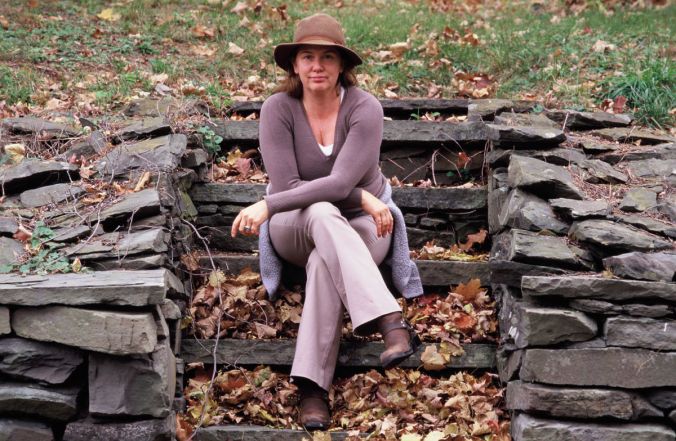
For years, Rebecca Martin was used to being transient, without a permanent home or commitments. As a jazz musician who performed both solo and with a band named Once Blue, Martin spent much of her time on the road touring and performing, while being loosely based in New York City. When she decided, almost fifteen years ago, to move to Kingston, ninety miles north of the city on the Hudson River, she felt a sense of relief. She had “really lost touch with the idea of community and responsibility to one another,” she said, and took the chance to grow her family and settle down. She started noticing ways that her new town could improve. There was a shop in her neighborhood that was selling large knives, big enough to be called swords, near two schools. Continue reading

Ozone Hole over the Antarctic is Shrinking

Launching an ozonesonde. This balloon transported instrument measures a vertical profile of the ozone layer. Credit: NOAA via Flickr

Thankfully, there’s good news on the atmospheric front from the southern edge of the world, where chlorofluorocarbons released in the seventies and eighties had created a hole in the ozone layer. The seasonal gap in this ultraviolet-blocking layer is not as big this year as others in the past, thanks to prompt and concerted action to prevent release of dangerous chemicals. Alexandra Witze writes for Scientific American:

It’s the beginning of the end for the Antarctic ozone hole. A new analysis shows that, on average, the hole — which forms every Southern Hemisphere spring, letting in dangerous ultraviolet light — is smaller and appears later in the year than it did in 2000.

The 1987 global treaty called the Montreal Protocol sought to reduce the ozone hole by banning chlorofluorocarbons, chlorine-containing chemicals — used as refrigerants in products such as air conditioners — that accelerated ozone loss in the stratosphere. The study shows that it worked.

Continue reading