Graylings Recovering

Spawning Arctic Grayling at Green Hollow Genetic Brood Reserve. Photo © Emily Cayer FWP

Graylings sound like wild beings out of a fantasy series, but in fact they’re a type of fish found all over the world in different species, some threatened with population decline, and some stable. The Arctic grayling, found in Russia and Canada but also some areas in Alaska, Montana and Wyoming, has suffered extirpation from certain spots in the latter two states during the last hundred years or so, due to anthropogenic effects. Ted Williams reports for The Nature Conservancy:

The Arctic grayling’s spotted, orange-trimmed dorsal fin looks as if it had been photoshopped. It’s half as long as the body and just as wide; and it glows with impossible shades of violet, green and turquoise. This gaudy trout cousin was deposited by the retreating glacier in the coldest, clearest waters of the contiguous states.

So common was the species in Michigan that a city, Grayling, took its name. And as recently as the early 20th century grayling abounded in the upper Missouri River system. While these fish still thrive in Alaska and Canada, they’ve been wiped out in Michigan and persist only in about 15 percent of their historic range in Montana and Wyoming.
Continue reading

Watch Your Wood, Know Its Origin

2000 (1)

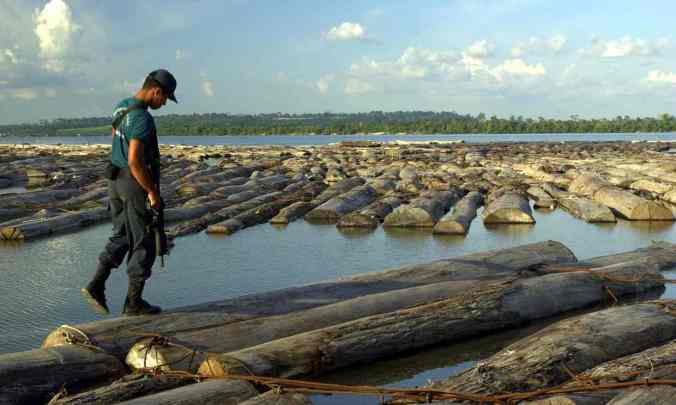
An armed officer inspects a seizure of thousands of illegal mahogany logs in Brazil. Photograph: Dado Galdieri/AP

Thanks to the Guardian for this reminder that we consumers need to do our caveat emptor duties when buying wood products:

Deforestation is rife in the Amazon, Colombia and the Philippines, say environmental groups

British shoppers could be unknowingly buying wooden furniture, flooring and even food items that are byproducts of destructive illegal logging in the Amazon, environmental campaigners are warning.

Friends of the Earth is calling on ministers to make companies reveal the source of their products in order to stop the black market trade. Last week human rights watchdog Global Witness revealed that 185 environmental activists were killed in 2015, many of whom had been trying to stop illegal logging in the Amazon. An estimated 80% of Brazilian hardwood is illegally logged.

Continue reading

Op-ed: Can Brexit Work for the Environment?

Magazine cover by Barry Blitt

We’ve been reading for several weeks now in The Guardian that leaving the European Union would not be good for the United Kingdom’s air pollution problems, their landfill waste management, their wildlife conservation, and so on. Now that the vote has been made and the break will happen, Craig Bennet, CEO of the environmental justice and advocacy group Friends of the Earth, has written a piece for the British news source pleading with readers to not let a departure from the E.U. start a downward spiral on environmental issues for the U.K:

Friends of the Earth campaigned vigorously to remain in the EU. Membership of Europe has been good for our ‘green and pleasant land’, and the plain truth is that pollution doesn’t recognise national boundaries. It seems obvious to me that the best way of solving anything other than very local environmental problems is for countries to cooperate and develop solutions under a common framework.

Continue reading

John Muir’s Writings About Yosemite

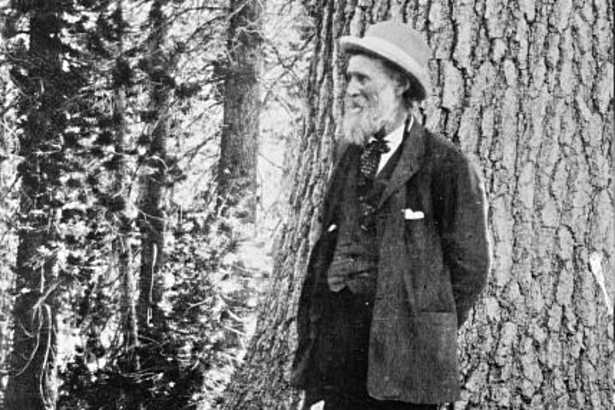
lead_large (3).jpg

Library of Congress

We posted about John Muir’s writings in the Atlantic four years ago, once we realized they were so accessible in that magazine’s archives. In that post, two years into our foray in India, we simply wanted to share our amazement that Muir had written about India as an example relevant to the case for protecting the forests of North America. We have also posted about Muir indirectly, including a lovely photo-documented post about his visit with Teddy Roosevelt to several wilderness areas that would become iconic national parks.

As we prepare for the expansion of our activities in India, and in advance of our announcement of two exciting new conservation initiatives in Mesoamerica that we will embark upon next month, I have been going back through our archives, enjoying some examples of the historical perspective this platform has allowed us to share.

Today, in the spirit of the centenary of the National Parks Service, and considering this past weekend’s visit to Yosemite by the President of the USA, it makes sense to share another of Muir’s several contributions to The Atlantic, this one specifically about the first national park (which predates the creation of the NPS):

The Yosemite National Park

“All the world lies warm in one heart, yet the Sierra seems to get more light than other mountains.”

JOHN MUIR   AUGUST 1899 ISSUE

Of all the mountain ranges I have climbed, I like the Sierra Nevada the best. Though extremely rugged, with its main features on the grandest scale in height and depth, it is nevertheless easy of access and hospitable; and its marvelous beauty, displayed in striking and alluring forms, wooes the admiring wanderer on and on, higher and higher, charmed and enchanted. Benevolent, solemn, fateful, pervaded with divine light, every landscape glows  Continue reading

Pristine Nature?

Nijhuis-TheresNoSuchThingAsPristineNature-1200

A domesticated cat and a native tropical bird, in Papua New Guinea. Environmentalism has long been a nostalgic enterprise, but the unspoiled past that it aspires to looks increasingly like an illusion. PHOTOGRAPH BY LEONARD FREED / MAGNUM

If you have been reading our blog for any stretch of time you would be aware that we believe in pristine nature, and the importance of its conservation. We do not spend alot of time picking nits about the definition of pristine nature, but from time to time we are reminded that details, aka reality, is in need of fact-checking:

Southward, Ho!

160523_r28182-290x149-1462985555 (1)

I had never before had the experience of beholding scenic beauty so dazzling that I couldn’t process it, couldn’t get it to register as something real. ILLUSTRATION BY BLEXBOLEX

We are happy any time this novelist takes time from his main craft to devote time to what seems to be his main personal passion, which might be identified as birding, or else more broadly speaking the environment in which birds thrive (or not). From this week’s New Yorker, another journey far away, southward, by Jonathan Franzen with an eye to environmentalist perspective:

The End of the End of the World

An uncle’s legacy and a journey to Antarctica.

BY

Two years ago, a lawyer in Indiana sent me a check for seventy-eight thousand dollars. The money was from my uncle Walt, who had died six months earlier. I hadn’t been expecting any money from Walt, still less counting on it. So I thought I should earmark my inheritance for something special, to honor Walt’s memory.

It happened that my longtime girlfriend, a native Californian, had promised to join me on a big vacation. She’d been feeling grateful to me for understanding why she had to return full time to Santa Cruz and look after her mother, who was ninety-four and losing her short-term memory. She’d said to me, impulsively, “I will take a trip with you anywhere in the world you’ve always wanted to go.” To this I’d replied, for reasons I’m at a loss to reconstruct, “Antarctica?” Her eyes widened in a way that I should have paid closer attention to. But a promise was a promise. Continue reading

Greenpeace, At It, As Ever

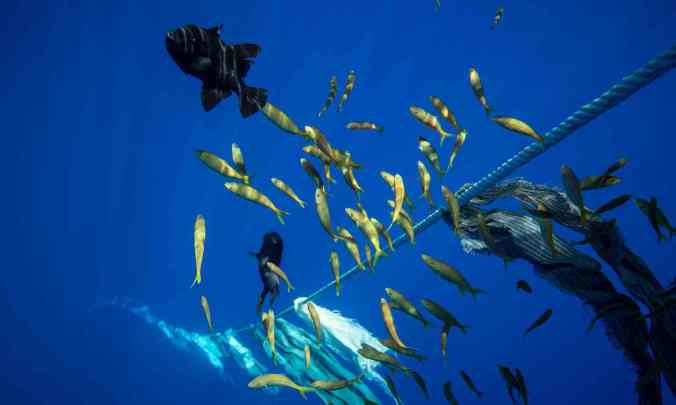
2500.jpg

Thanks to the Guardian for ongoing coverage of the band of environmentalists who are doing their best to keep the planet’s oceans healthy:

Greenpeace activists target destructive fishing in Indian Ocean – in pictures

With some Indian Ocean tuna stocks on the brink of collapse, the expedition exposes harmful methods by the world’s largest tuna company, Thai Union, owner of John West

Continue reading

Balancing Conservation With Use

Bill-Clark_605

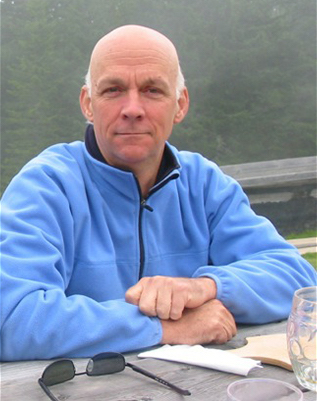
Photo courtesy of William Clark. William Clark, Harvey Brooks Professor of International Science, Public Policy, and Human Development at Harvard Kennedy School, has co-authored a new book on sustainability. “Achieving more equitable and sustainable use of the Earth requires a great deal of working together,” he said.

Thanks to the Harvard Gazette for this interview with William Clark:

Pursuing sustainability

A Q&A on connecting science and practice, balancing conservation with use

By Amanda Pearson, Weatherhead Center Communications

United Nations Secretary-General Ban Ki-moon on Friday will welcome 130 heads of state who have pledged to sign the Paris Agreement, the global agreement on managing climate change. For William Clark, Harvey Brooks Professor of International Science, Public Policy, and Human Development at Harvard Kennedy School (HKS), sustainability is a global imperative and a scientific challenge like no other.

Clark sees the Paris Agreement as just one step, though an important one, in this urgent pursuit, as officials wrestle with how to meet the needs of a growing human population without jeopardizing the planet for future generations. He and co-authors Pam Matson of Stanford University and Krister Andersson of the University of Colorado at Boulder tackle that issue in a new book, “Pursuing Sustainability: A Guide to the Science and Practice.” By looking at sustainability as a means of alleviating poverty and enhancing well-being, the book highlights the complex dynamics of social-environmental systems, and suggests how successful strategies can be shaped through collaborations among researchers and practitioners.

Clark, who trained as an ecologist, said that while exhausting Earth’s natural resources would jeopardize future generations, sustainability could counter that. The goal is to find a healthy equilibrium between human adaptation and natural evolution. Clark, the co-director of the Sustainability Science Program at HKS, spoke with the Weatherhead Center for International Affairs about building a more sustainable future. Continue reading

Food Footprints

sugarpic2_custom-cf06be909a47e87ffeab74b513462532b5f1261e-s1400-c85

Leonard Scinto, a researcher at Florida International University, standing beside a concrete post that measures the subsidence of soil in the Everglades Agricultural Area. In 1924, the top of the post was level with the ground surface. Dan Charles/NPR

Five minutes to listen to how your food greens, or does not green, our planet (thanks to National Public Radio, USA):

The Environmental Cost Of Growing Food

Let’s say you’re an environmentally motivated eater. You want your diet to do as little damage as possible to our planet’s forests and grasslands and wildlife.

But how do you decide which food is greener? Continue reading

Go, Phil, Go

Sohn-TheEcologistWhoRanAway-290x149-1462229623

A worker near the Pebble Mine, in Alaska ’s Bristol Bay region, which is at the center of a long-running legal battle between a Canadian developer, native tribes, commercial fishermen, and environmentalists. PHOTOGRAPH BY AL GRILLO / AP

Thanks to Tim Sohn for bringing Phil North to our attention:

The E.P.A. Ecologist Who Became a Wanted Man

BY

When Phil North retired from the Environmental Protection Agency, after a mostly quiet twenty-three-year career in Alaska, his plan was to embark on an around-the-world sailing trip with his wife and two young children. But when it came time to weigh anchor, there was a problem: the aging boat that North had docked in South Carolina proved unsalvageable. A hunt for another suitable vessel in his price range yielded nothing. After a series of discussions and a vote, the family decided, in early 2014, to fly to New Zealand. “We were only going to go for three months, but we loved it and ended up buying a camper van and driving around for ten months,” North, who is fifty-nine, told me recently. “And then our visa ran out, and we thought, We’re so close to Australia, we can’t not go.” So they went, and toured the country for another year. Continue reading

Spiral Jetty: Art that Informs

Photo by George Steinmetz, September 2002

In 1970, artist Robert Smithson built a massive sculpture as a piece of land art, or an “earthwork,” that is normally found just below the surface of the water of Great Salt Lake at Rozel Point. In drought conditions, the art piece, titled Spiral Jetty, becomes visible, often with salt encrustations that decorate the basalt spiral formation. Great Salt Lake, in addition to being salty, is also home to microorganisms that live or even thrive in extremely salty conditions and produce pigments that give them a red to orange color, which becomes visible in the water at times. Chau Tu reports for this week’s Science Friday written piece:

Great Salt Lake is known as a terminal basin, meaning its water has no outlet. “Water escapes through evaporation, and everything else stays there,” says Jaimi Butler, coordinator of the Great Salt Lake Institute. At the time the sculpture was built, the water level of the lake was particularly low. But by 1972, the water rose again to near-average levels, submerging the artwork.

“Smithson anticipated that the lake would rise and fall, the residue of salt crystals causing the black rocks to glisten white whenever the water level dropped,” the New York Times Magazine wrote in 2002. And indeed, that very year, regional droughts caused the jetty to reappear “for the first prolonged period in its history,” according to the Dia Foundation, which now owns the sculpture. (The Great Salt Lake Institute partners with the Dia Foundation and the Utah Museum of Fine Arts to oversee the Spiral Jetty.)

Continue reading

Double Major

tigerweb_750

Endangered tiger and rainforest habitat decline. Image credit: Jill Pelto

In the years since Raxa Collective has been operational in India, we have welcomed several dozen interns to Kerala from a dozen or more countries around the world, most but not all from university programs that have some attention to sustainable development. The majority of those interns have been graduate students preparing for a career in international business. Most of our interns will not work full time in sustainable development after graduating. But they want this experience to ensure that their work has a kind of “double major” effect so their exposure to sustainability programming is embedded in their more mainstream functional business activities.

Those interns not from university programs are typically taking a sabbatical from their regular work life. They also are typically looking to add the equivalent of a second major to their regular professional life.  Thanks to Clara Chaisson at EcoWatch for this pointer over to an scientist/artist who is doing the same, in her own way:

Scientists are notorious for struggling to communicate the importance of their work in compelling ways. Continue reading

A Great Race

As I type this post the 20 4 person co-ed teams participating in the 2016 Patagonia Expedition Race are hopefully getting a good night’s sleep before tomorrow’s Kayak and Rope evaluations. From our collaboration with the organizers, both behind the scenes and in the field, we know the teams are going to need it!

Statistically, fewer than half the teams that start the grueling combination of trekking, mountain biking, kayaking and rope traverses complete the race. The teams receive minimal assistance – basic maps that require extreme orienteering and problem solving – to make the best time from checkpoint to checkpoint in often inhospitable environments.

Imitating the journeys of our Indian forefathers, competitors advance over plains, mountains, glaciers, native forests, swampland, rivers, lakes and channels; guided only by mind and spirit but driven on by physical stamina and experience.

Every edition features a unique route. Past racers have found themselves in the Southern Continental Ice Field, the Strait of Magellan, Torres del Paine, Tierra del Fuego, the Beagle Channel and Cape Horn. The land is diverse, the challenge real, the adventure untamed. Continue reading

Hydropower by Design

Itaipu Dam, a binational hydroelectric dam on the Paraná River located on the border between Brazil and Paraguay. The dam is the largest operating hydroelectric facility in terms of annual energy generation. Photo/caption © Erika Nortemann/The Nature Conservancy

Dams, although greener in some senses than coal factories in terms of their electric output, almost always have other serious environmental repercussions in the form of habitat destruction and river flow interruptions that adversely affect fish species. Hydropower from giant dams on rivers has been described as a brute force technology, and the construction of new dams can create public outcry as well as political issues in water distribution. The publication of new research, in part by The Nature Conservancy, shows how hydroelectric projects, often so destructive, can be less harmful if planned thoroughly beforehand to take the whole river basin and water system into account, rather than just a small tract of river. Jeff Opperman reports for TNC in a blog article that describes the elements of concentration, confrontation, and collaboration involved in pairing new hydropower with river conservation:

Concentration.

That’s what makes rivers so valuable — both for fish and for energy.

A river is the concentrated water of a whole region as rain and snow across an entire basin becomes runoff, is funneled into cataracts, creeks and canyons, and collected into the narrow ribbon of a river channel (narrow in a relative sense — even a river channel several kilometers wide is incredibly narrow compared to its basin which may be hundreds of thousands of square kilometers in area).

Continue reading

Fish Fraud Falling

fish-marketThanks to Conservation Magazine for pointing us to this bit of scientific evidence that, while fisheries are on the whole in a dismal state, steps are being taken in Europe to address one of the symptoms:

Over the past few years, dozens of studies have documented a global fish fraud epidemic, in which fish are mislabeled as species they are not. It’s a problem with detrimental environmental, economic, and even potential health effects. Continue reading

Short Essay On The Commons

160125_r27591-320

ILLUSTRATION BY CHRISTOPH NIEMANN

Several times since 2011 I have referenced my doctoral dissertation, which addressed the “tragedy of the commons,” in these pages. Seth, during his study on the history of environmentalism movements, has also posted on this concept. Now, , excellent writer of one page essays explaining complex economic issues, takes a recent odd news item and helps us understand the role of government in regulating the use of the commons:

Ammon Bundy, the leader of the armed militia that stormed the Malheur National Wildlife Refuge, in Oregon, has a simple solution for fixing the economy of the West: get the federal government out of the way. His group’s chief demand is that the federal government hand over all of Malheur to local control. The ultimate goal, he says, is “to get the logger back to logging, to get the rancher back to ranching, to get the miner back to mining.” Bundy’s tactics make him easy to dismiss as a kook, but his ideology is squarely in the mainstream of Western conservatism, with its hostility to government ownership, skepticism about environmental rules, and conviction that individual enterprise is being strangled by government regulations. Continue reading

What The Age Of Humans Looks Like

Screen Shot 2016-01-14 at 6.25.23 PM

Soybeans harvested at a farm in Tangara da Serra, in western Brazil. CreditPaulo Whitaker/Reuters

The Science section this week in the New York Times takes a very big picture look at human impact on the earth, putting in terms of geological time:

Welcome to the “Anthropocene” — a new epoch in our planet’s 4.5 billion year history. Thanks to the colossal changes humans have made since the mid-20th century, Earth has now entered a distinct age from the Holocene epoch, which started 11,700 years ago as the ice age thawed. That’s according to an argument made by a team of scientistsfrom the Anthropocene Working Group. Scientists say an epoch ends following an event – like the asteroid that demolished the dinosaurs and ended the late Cretaceous Epoch 66 million years ago – that altered the underlying rock and sedimentary layers so significantly that its remnants can be observed across the globe. In a paper published Thursday in Science, the researchers presented evidence for why they think mankind’s marks over the past 65 years ushered in a new geological time period. Here are a few examples: Continue reading

Reasons For Rethinking Thoreau

151019_r27147-320

A series of blog posts since we debuted here in 2011 shows that we are Thoreauvians–quite likely referencing that 19th Century American writer more than any other writer. Our conservation ethos would explain that devotion. And yet, always at the ready to reconsider, in the spirit of small-l liberalism, we are open to the possibility that we had it wrong on this front all along. For example, at least one contributor to this blog, at 17 years old, took a can of spray paint and committed a crime in the form of grafitti, with a quotation from Thoreau spread across nearly 30 feet of a wall that had gone up in a place where the 17-year old was sure that wall did not belong. How could that have been right? And if wrong, while Thoreau was certainly not to blame, was it evidence that sometimes Thoreau has been improperly invoked?

The opening six paragraphs of this article– revisionism at its small-l liberal best–will likely hook you to read it to the end, if the paragraph above rings any bells:

On the evening of October 6, 1849, the hundred and twenty people aboard the brig St. John threw a party. The St. John was a so-called famine ship: Boston-bound from Galway, it was filled with passengers fleeing the mass starvation then devastating Ireland. They had been at sea for a month; now, with less than a day’s sail remaining, they celebrated the imminent end of their journey and, they hoped, the beginning of a better life in America. Early the next morning, the ship was caught in a northeaster, driven toward shore, and dashed upon the rocks just outside Cohasset Harbor. Those on deck were swept overboard. Those below deck drowned when the hull smashed open. Within an hour, the ship had broken up entirely. All but nine crew members and roughly a dozen passengers perished. Continue reading

A Robot To Police The Oceans’ Ecosystems

rtx1i8gp

National Public Radio (USA) is carrying this story, which we guess will catch the interest of Phil Karp, among others interested in the health of our ocean ecosystems:

Climate change, pollution, and unsustainable fishing practices have threatened the world’s largest coral structure but there’s some hope for Australia’s Great Barrier Reef. An intelligent robot is ready to protect it. Continue reading

The Greenest Island in the World?

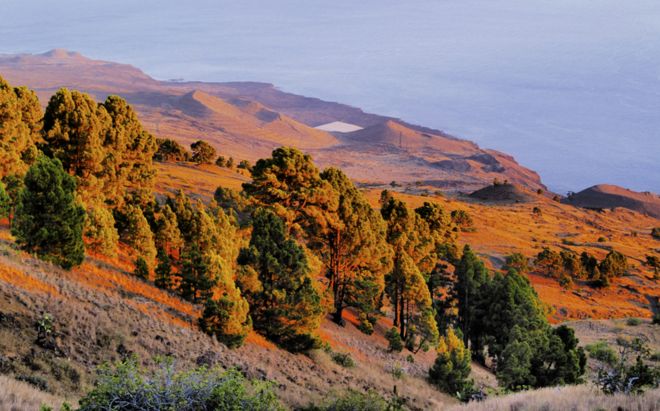
The smallest and most isolated of the Canary Islands, El Hierro, has a way of combining hydro and wind power that may allow it, one day, to get all its energy from renewable sources. PHOTO: BBC

The smallest and most isolated of the Canary Islands, El Hierro, has a way of combining hydro and wind power that may allow it, one day, to get all its energy from renewable sources. PHOTO: BBC

The question is not about who has the densest forests or flora resources showing up high estimates in green. It is one of keeping up a sustained model of efficient use of alternative and natural sources of energy. And on that front, El Hierro seems like it’s well on its way to self-sufficiency on the energy front.

For more than 30 years, El Hierro has been dreaming of becoming self-sufficient. And this year it took a big step forward. At the end of June its new hydro-wind facility, Gorona del Viento, came fully on stream and in July and August it provided roughly half of the island’s energy needs.That means the island’s 10,000 inhabitants are suddenly less reliant on supplies of diesel arriving over unpredictable seas from Tenerife, 200km away. In July, Gorona del Viento saved 300 tonnes of fossil fuels, but that is predicted to rise to 500 tonnes per month before long – the equivalent of saving 40,000 barrels of oil and 19,000 tonnes of emitted CO2 per year.

Continue reading