Be, Cause (Simon Pearce)

This slideshow requires JavaScript.

He is an entrepreneur, so we find him interesting.  As with some other entrepreneurs featured on this podcast, we find him more interesting because of a higher calling in his business model.  He starts with excellence as defined by a few keywords–simplicity, quality, clarity, individuality, functionality–but he clearly cares about family and others outside his business. We find him most interesting because Simon Pearce contributes to the common good.  It is these ethics, not revealed directly in the From Scratch interview, but visible (though not “in your face” visible) on his company’s website, that make him worthy of more attention:

KP LoveYourBrain Bowl

Simon Pearce will DONATE 100% of THE PROFITS from the sales of the KP LoveYourBrain Bowl to the Kevin Pearce Fund.

Continue reading

Sport Beyond The Self

The tiresome doping scandals plaguing many sports are rivaled mainly by the ego blasts emanating from winner-take-all superstar players; but this conversation with Edson Arantes do Nascimento (better known as Pelé) has a soothing effect:

Pelé, when you are the best at something how hard is it not to get arrogant about it?

I used to tease the kids because I played better than them. But my father told me, “Don’t do this with the kids because you know how to play football; God gave you the gift to play football. You didn’t do anything. You have to respect people, because it is important to be a good man, a good person.  From now on, you must be this example.” Continue reading

Those Fabulous Buffett Boys

It sure sounds like a great way to pass time, giving away billions of dollars. The fact that they seem to think deeply about the implications of their wealth, as well as their methods of getting and giving, makes them even more noteworthy. Thanks to tax-payer, and listener-supported National Public Radio in the USA for bringing the other brother/son to our attention with this story:

Get Howard Buffett into the cab of a big ole’ farm tractor and he’s like a kid — albeit a 58-year-old, gray-haired one. He’s especially excited when it comes to the tractor’s elaborate GPS system, which he describes as “very cool.”

“I’m driving hands-free,” says Buffett, the son of billionaire investor Warren Buffett. Continue reading

Extinction Is Forever, Except When It Is Not

But where would I live? Royal BC Museum

But where would I live? Royal BC Museum

From the fellow who brought you Dolly, a philosophical yet practical consideration of the ethics of cloning an extinct species:

It is unlikely that a mammoth could be cloned in the way we created Dolly the sheep, as has been proposed following the discovery of mammoth bones in northern Siberia. However, the idea prompts us to consider the feasibility of other avenues. Even if the Dolly method is not possible, there are other ways in which it would be biologically interesting to work with viable mammoth cells if they can be found. Continue reading

Convocation Power Well Used

Open, N.Y.

Open, N.Y.

We are grateful when people whose name and heritage give them convocation power use their power on behalf of others less fortunate (until they shake our confidence), so we give thanks to the New York Times and to Peter Buffett, both privileged, for sharing this startling opinion piece. We, a small group of moderately privileged people with a small platform for sharing ideas, are particularly interested in the intersection of good and market forces, so Mr. Buffett’s challenge here is germane to our mission and to our practice:

I HAD spent much of my life writing music for commercials, film and television and knew little about the world of philanthropy as practiced by the very wealthy until what I call the big bang happened in 2006. That year, my father, Warren Buffett, made good on his commitment to give nearly all of his accumulated wealth back to society.

Continue reading

False Starts, Heroic Conclusions

ESSAY: A Different River Every Time
What is ‘smart’ and how does it fit our consciousness? Is there just one way to it? Are smarter people happier, richer? The answers may not always be that obvious. by SANDIPAN DEB

…Which, of course, brings us to that common capitalist question: “If you’re so smart, why aren’t you rich?” There is something abhorrent about this query. Of course, Mukesh Ambani is super-smart, but so was Jagadish Chandra Bose, who invented wireless communication at least a couple of years before Guglielmo Marconi, who received the Nobel prize for the breakthrough (It is now established that Marconi met Bose in London when the Indian scientist was demonstrating his wireless devices there, and changed his research methods after that meeting). Bose also invented microwave transmission and the whole field of solid state physics, which forms the basis of micro-electronics. Bose’s contributions are all around us today, from almost every electronic device we have at home to the most powerful radio telescopes in the world. But he steadfastly refused to patent any of his inventions, or to license them to any specific company. Some 70 years after Bose’s death, the global apex body, Institute of Electrical and Electronics Engineers, officially acknowledged Bose to be the father of wireless communication.

This is an excerpt whose catchy question pervades an essay worth reading in full. Intelligence, specifically smart Indian people, is the subject of a whole special issue of Outlook magazine. We have pondered amazing people from India on occasion in the past, and if the brief tale above intrigues you then see this post about Tesla versus Edison, but for now Continue reading

Birders, Language Apps, And Protected Area Rules

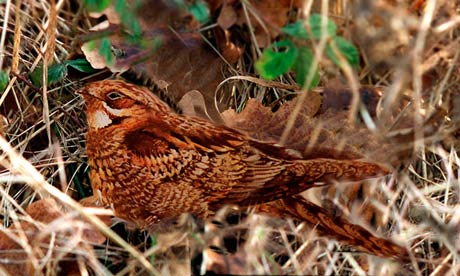
Several visitors to Brownsea Island, Poole Harbour, were found to be using apps that imitate the unusual 'churring' call of the nightjar to coax out the bird. Photograph: Don Mcphee for the Guardian

Several visitors to Brownsea Island, Poole Harbour, were found to be using apps that imitate the unusual ‘churring’ call of the nightjar to coax out the bird. Photograph: Don Mcphee for the Guardian

Where is Ben, apart from being on the road to 2,000 birds, when you need him? We are curious how widespread the use of such apps might be among serious birders. Read this Guardian story to the end and you may agree with us that this language app is more likely to do harm than good:

To the long list of nature reserve do’s and dont’s can be added a thoroughly 21st-century injunction: don’t use your apps to pap the feathered denizens. Continue reading

Nth Degree Ethics

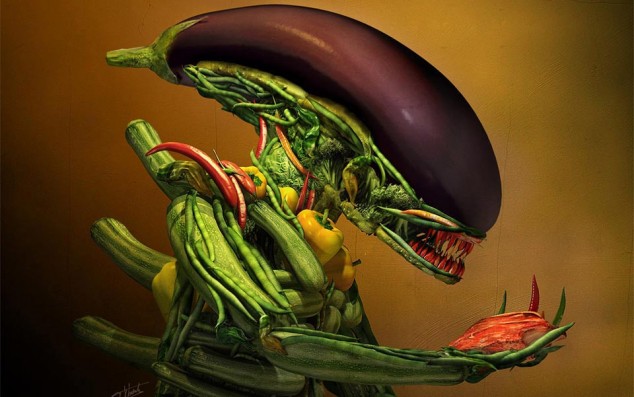
After-Archimboldo-634x397

It is a new publication, and we like its irreverence.  Challenging vegan ethics, at least to those of us still carnivorously inclined, is a task best carried out by such audacious writers and editors tasked with building an audience (that actually reads) from scratch.  We wish Aeon the best and will point to it whenever the story seems worth passing on, and can recommend this for starters (as if the picture did not already capture your imagination):

The animal rights movement wants to prevent the most powerful species on the planet from oppressing every other species, just as human rights campaigners try to stop the most powerful people from oppressing those who are least powerful. The problem, they say, is ‘human privilege’, a privilege that almost all of us abuse.

Continue reading

The Gift, A Gift

Recent guests of Raxa Collective, mentioned here, handed Amie and me this book prior to our parting ways. Upon reading this blurb, we expected to find it enriching if and when we could find the time to read the gift, The Gift, which:
“actually deserves the hyperbolic praise that in most blurbs is so empty. It is the sort of book that you remember where you were and even what you were wearing when you first picked it up. The sort that you hector friends about until they read it too. This is not just formulaic blurbspeak; it is the truth. No one who is invested in any kind of art, in questions of what real art does and doesn’t have to do with money, spirituality, ego, love, ugliness, sales, politics, morality, marketing, and whatever you call ‘value,’ can read The Gift and remain unchanged.”—David Foster Wallace

Continue reading

Good Goods And Value Proposition

From free-range eggs to green energy, sales of ethical products and services are bucking the economic trend. Photograph: Daniel Berehulak/Getty Images

From free-range eggs to green energy, sales of ethical products and services are bucking the economic trend. Photograph: Daniel Berehulak/Getty Images

Some unusual news in tough times, about consumers spending more even when they have less, if the product speaks good:

Sales of ethical goods and services have increased despite the recession, growing to more than £47bn last year.

Since the onset of the economic downturn five years ago, the value of ethical markets from Fairtrade products and green energy to free-range and sustainable food has grown from £35.5bn to £47.2bn, according to a report produced by the Co-operative Bank.

The annual ethical consumer markets report shows that sales in the sector have grown from £13.5bn in 1999. Continue reading

From the 2012 Net Impact Conference, Part 2

Continuing on my previous post about the 2012 Net Impact Conference, I want to address some of the interesting and debatable issues that several company panelists spoke about during the conference. I dedicate this post to addressing Monsanto’s climate change adaptation strategies. A very interesting discussion on how businesses have been approaching climate change adaptation included panelists from the World Resources Institute, AT&T, Monsanto, and a few universities. Monsanto’s strategies related to increased crop yield, and its view was that higher production was the clear answer to climate change risk and food insecurity.

Monsanto has experienced a haunted past (and continues to suffer from a poor reputation among environmentalists) with activist groups protesting its GMO seeds and its aggressive litigation against farmers.

Continue reading

Learning, Thinking, Doing

Cornell University President David Skorton, and his renaissance man colleague Glenn Altschuler co-write a blog called College Pros(e) and today they make an argument about college majors, and what matters in choosing them–a perspective we happen to share in its entirety.  Click their image to go to the post, which is worth more than the three minutes it takes to read it:

…Liberal arts majors actually do just fine, with incomes far in excess of the median in the United States. And many of them, like the Cornell graduates surveyed in 2009 (download here), are as satisfied or more satisfied with their lives as their classmates in other disciplines. For them, to quote an English proverb, enough is as good as a feast.

The liberal arts, moreover, also serves as a preferred pathway to rewarding and remunerative careers…

Read the whole post here.

Food, Storytelling & Art

Another session of Michael Pollan‘s course at UC Berkeley brings us back to the colorful, and colorfully clad, storyteller Peter Sellars, alluded to nearly one year ago.  Intensely bracing.  Give it the full 90 minutes it deserves (halfway through he begins making references to pre-vedic texts in India about food’s sacred role in life, and the importance of sharing it; at minute 56 he begins a very interesting discussion of Coca Cola in Kerala, and thereafter many references to wonderful phenomena in south India).

Heroes & Tuna

A Sea Shepherd activist cuts a tuna fishing net in the Mediterranean in 2010.
Photograph: Simon Ager/Sea Shepherd

Click the image above to read the whole viewpoint, which we have commented on previously here and here, captured briefly here:

These people are, in my view, heroes. They are stepping in where governments have failed, to protect our common heritage. They are among the few people on Earth who will be able to give a straight answer when their children ask them what they did to prevent the avoidable ecological tragedies we now confront.

So What’s the Deal with Foie Gras?

Crist’s recent post brought up an interesting and current issue: foie gras. If you’re unfamiliar with what foie gras is, it’s essentially fattened duck or goose liver. It is a French delicacy and widely appreciated for its rich flavor and buttery mouth-feel. But foie gras production has come under fire recently: California has banned the sale of foie gras (effective July 12, 2012), and it is illegal in Israel, Argentina, and several European countries. So what’s the deal with foie gras?

Foie gras: tasty dish or cruel exploitation? You decide.

Continue reading

Would You? Could You? Should You?

Daylight robbery: bees toiling to make honey. Photograph: Saul Loeb/AFP/Getty Images

Click the image to the right for the provocative source of the questions, which begins quite matter-of-factly:

As a vegan, honey is officially out of bounds. The originator of the vegan movement, Donald Watson, singled it out as a no-go food stuff in the British Vegan Society manifesto of 1944.

Merged Publications & Happy Museums

Neither had been on our radar before, but with a bit of investigation, we congratulate Satish Kumar on his decision to merge them (click the image below to go to the new site hosting both publications):

A quick sampling of articles led here and to the conclusion that our site will be following this publication for news of a non-conformist nature: Continue reading

Being Full of It: A Meaningful Word

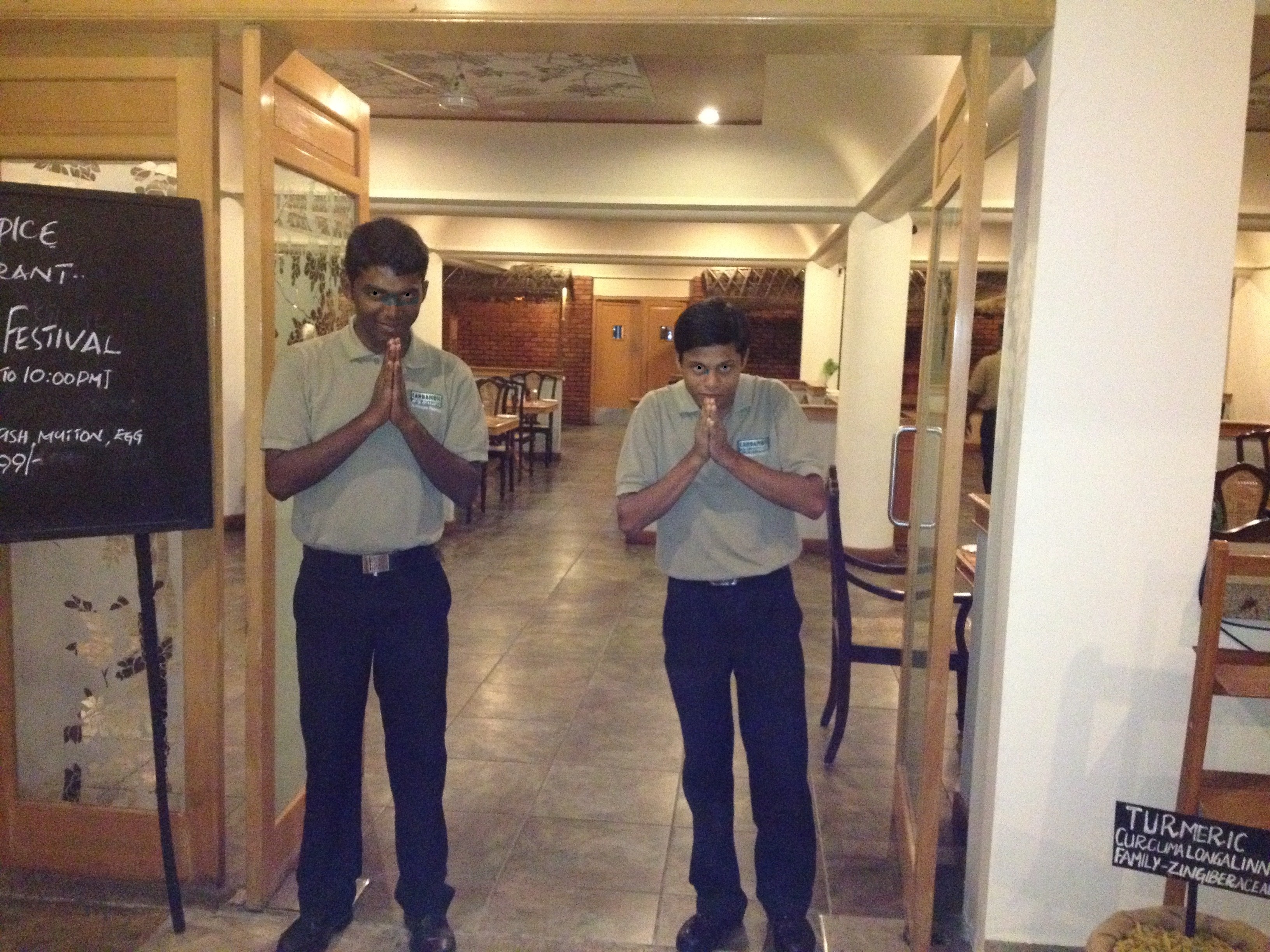
Since arriving in Kerala, I have been greeted many ways.  I have exchanged many smiles and hellos, and I have been veiled with jasmine garland and pressed with traditional dika.  However, the greeting I find most profound lies in a single word: Namaskaram.

Two people, worlds apart, meet with this word.  Each of their hands draws together in a prayerful pose in the nest of their individual chests.  With a bow of their heads, they utter, “Namaskaram.”  At first, it seemed like a simple interaction, yet when I asked the native people for the meaning, I learned that it has a much deeper connotation.

A signal of respect.  A promise of hospitality.  A notion of putting aside one’s ego.  All of these meanings are understood with Namaskaram.  I witness and experience them with nearly every interaction among the people here at Cardamom County, but the latter meaning, putting aside one’s ego, has struck a powerful chord in me. Continue reading

A Very Tough Call

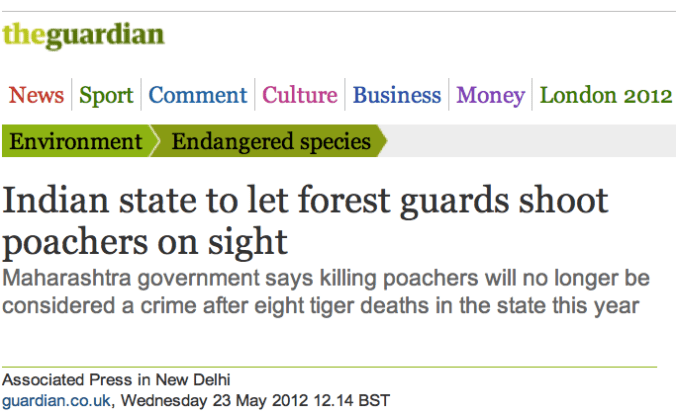
Click the headline above to go to the story below:

A western Indian state has declared war on animal poaching, allowing forest guards to shoot hunters on sight to curb attacks on tigers, elephants and other wildlife. Continue reading

Commoner’s Dilemma


A Perfect Moral Storm: The Ethical Tragedy of Climate Change 
by Stephen Gardiner, Oxford, 512 pp, £22.50, July 2011, ISBN 978 0 19 537944 0
 

Click the LRB banner above to go to the review of this important book, which starts:

For the benefit of anyone who has spent the past decade or so on a different planet, the most frequently asked questions about climate change on this one are as follows. Is it getting warmer? Yes, surface temperatures have risen by 0.8°C from pre-industrial levels. Are humans causing it? Almost certainly.