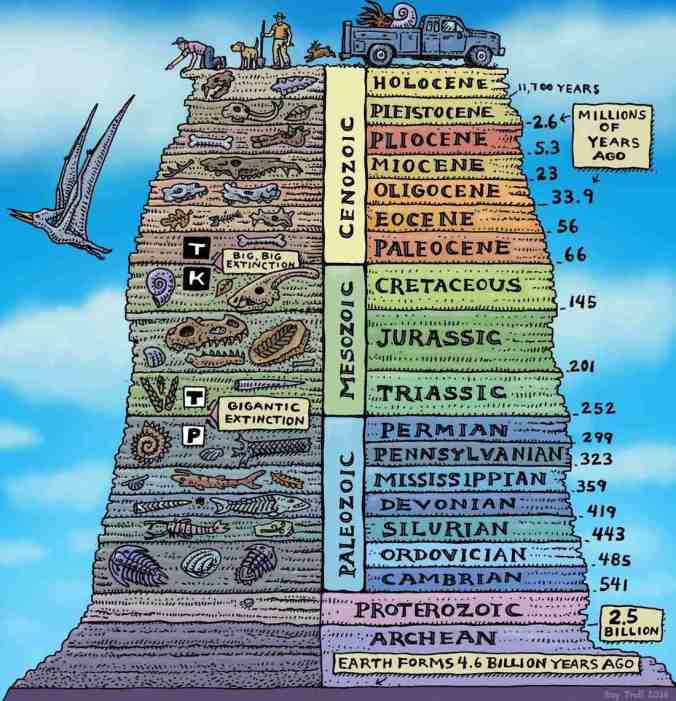
Perspective On The Ages

ages_custom-9ff69ab35ab626c9478bbdca45cef0f576c4797a-s1100-c85

The Geologic History of Earth. Note the timescales. We are currently in the Holocene, which has been warm and moist and a great time to grow human civilization. But the activity of civilization is now pushing the planet into a new epoch which scientists call the Anthropocene. Ray Troll/Troll Art

Big words in the title may distract from the excellent point of this “cosmos & culture” article at National Public Radio (USA), worth a read:

Climate Change And The Astrobiology Of The Anthropocene

You can’t solve a problem until you understand it. When it comes to climate change, on a fundamental level we don’t really understand the problem.

For some time now, I’ve been writing about the need to broaden our thinking about climate. That includes our role in changing it — and the profound challenges those changes pose to our rightly cherished “project” of civilization. Continue reading
Extinction As Impetus For Travel?

header-image

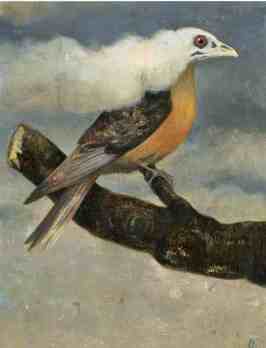
We are all used to looking at guidebooks to learn more about a country before we visit – but how often do we stop and think about the things we can’t see there anymore? We’ve created Unknown Tourism, a series of vintage-style travel posters to commemorate some of the wonderful creatures we’ve lost, and are in danger of forgetting.

We try to be glass half full, so we will wait and see where this campaign (click the banner above) is going. I am drawn to anything that raises awareness of the need for conservation. It helps that the illustrations are evocative. Bravo to Expedia UK for thinking outside the box and making it look good.

But a travel company highlighting extinction to encourage travel is certainly going to strike some as problematic. Even there, I say bravo to them for taking a step in an unusual direction, and I hope it leads somewhere meaningful (as opposed to just attractively intriguing). Continue reading

An Important Question From E.O. Wilson

4202

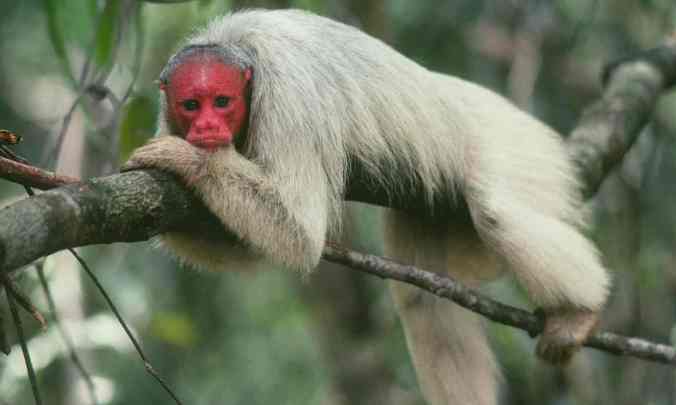
A bald uakari monkey (Cacajao calvus) in the flooded forest of the Amazon in Brazil. The IUCN Red List categorizes this species as vulnerable. Photograph: Alamy

Thanks to the Guardian for continuing to give a platform where it is most needed with respect to the natural environment:

Could we set aside half the Earth for nature?

Renowned biologist E.O. Wilson wants to set aside half of the planet as protected areas for nature. But is this possible? And, if so, how would it work?

by Jeremy Hance

As of today, the only place in the universe where we are certain life exists is on our little home, the third planet from the sun. But also as of today, species on Earth are winking out at rates likely not seen since the demise of the dinosaurs. If we don’t change our ways, we will witness a mass extinction event that will not only leave our world a far more boring and lonely place, but will undercut the very survival of our species.

So, what do we do?

E.O. Wilson, one of the world’s most respected biologists, has proposed a radical, wild and challenging idea to our species: set aside half of the planet as nature preserves.

Continue reading

Thank You, WWF Mexico, For Your Work In The Gulf Of California

2362

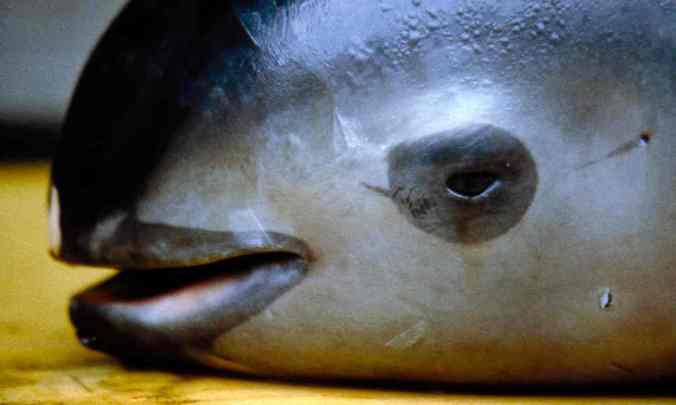
There are just 60 vaquita marina left in the wild, according the the latest estimate. Photograph: Ho New/Reuters

Even when there is tragic news, we take some comfort in seeing the WWF’s ongoing efforts to counter our worst tendencies as humans to deplete natural resources irresponsibly. Thanks the Guardian, and its French colleagues, for this news:

World’s smallest porpoise ‘at the edge of extinction’ as illegal gillnets take toll

Now only 60 of Mexico’s vaquita marina left despite the navy enforcing a ban on the fishing net, latest study shows

Environmentalists warned on Friday that Mexico’s vaquita marina, the world’s smallest porpoise, was close to extinction as the government reported that only 60 were now left. Continue reading

The Sound of Silence

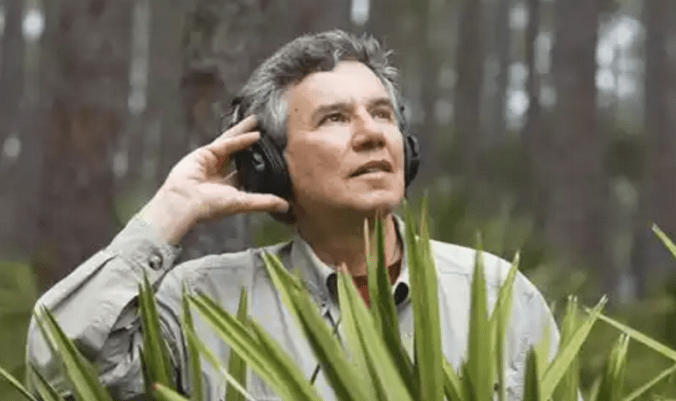
Musician and naturalist Bernie Krause has spent 40 years recording over 15,000 species in many of the world's pristine habitats. Photograph: Courtesy of Hachette Book Group

Musician and naturalist Bernie Krause has spent 40 years recording over 15,000 species in many of the world’s pristine habitats. Photograph: Courtesy of Hachette Book Group

For many of us, part of the joy of a walk in the woods is the range of senses engaged. The wind rustling through the trees is enhanced by the diversity of the creatures that call that ecosystem home. But with habitat loss due to either changing climate or other human impact. many of the sounds heard for millennia are falling silent.

Bernie Krause has spent his life archiving these sounds. They’re worth more than just a listen. They’re a call to action.

When musician and naturalist Bernie Krause drops his microphones into the pristine coral reef waters of Fiji, he picks up a raucous mix of sighs, beats, glissandos, cries, groans, tones, grunts, beats and clicks.

The water pulsates with the sound of creatures vying for acoustic bandwidth. He hears crustaceans, parrot fish, anemones, wrasses, sharks, shrimps, puffers and surgeonfish. Some gnash their teeth, others use their bladders or tails to make sound. Sea anemones grunt and belch. Every creature on the reef makes its own sound.

But half a mile away, where the same reef is badly damaged, he can only pick up the sound of waves and a few snapping shrimp. It is, he says, the desolate sound of extinction. Continue reading
Sumatran Rhino Siting In Borneo

2rhino_750-copy.jpg

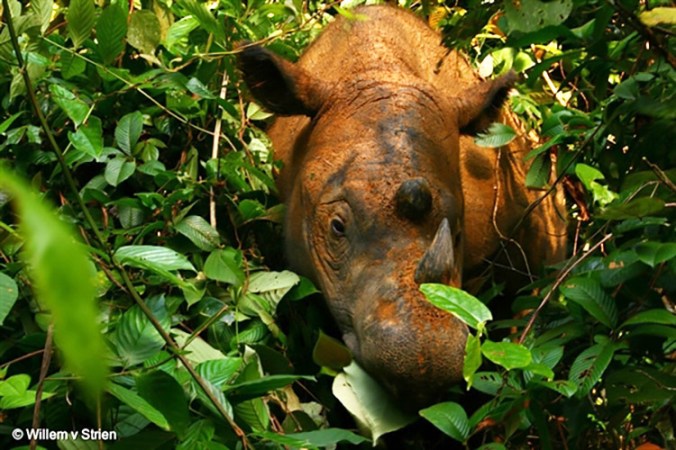
A rhino in the Sumatran Rhino Sanctuary in Way Kambas National Park, Indonesia (2008). Photo credit: Willem v Strien / Greenpeace

Thanks to EcoWatch for this remarkable news:

An excited World Wildlife Fund (WWF) team released details of how the female rhino was safely captured in East Kalimantan (part of Indonesian Borneo) last month and has now been transported to a more protected region. Over the last few years, evidence from camera traps and footprints has indicated that these rhinos still survived in Borneo’s forests, but this is the first known encounter with a live animal since the early 1970s. Continue reading

How to Prevent Extinction

Illustration by Jon Han for the New York Times

In last Sunday’s edition of the New York Times, the eminent ecologist E. O. Wilson–who we’ve posted about several times in the past for his inspiring and erudite thoughts on nature and biophilia–wrote an opinion editorial on “The Global Solution to Extinction,” in which he partly reminisced about his studies in biology, and also offered his suggestion on how to prevent further extinctions: increase the area of nature refuges, or in other words, boost habitat conservation. Here’s an excerpt of the first half of his piece:

DURING the summer of 1940, I was an 11-year-old living with my family in a low-income apartment in Washington, D.C. We were within easy walking distance of the National Zoo and an adjacent strip of woodland in Rock Creek Park. I lived most of my days there, visiting exotic animals and collecting butterflies and other insects with a net that I had fashioned from a broom handle, coat hanger and cheesecloth. I read nature books, field guides and past volumes of National Geographic. I had already conceived then of a world of life awaiting me, bottomless in variety.

Seventy-six years later, I have kept that dream. As a teacher and scientist I have tried to share it. The metaphor I offer for biological diversity is the magic well: The more you draw, the more there is to draw.

Continue reading

Ever Heard of a Quoll?

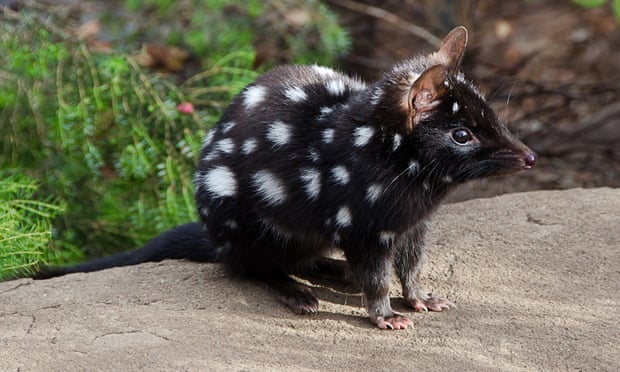
An eastern quoll. Professor Adrian Manning said it was the first ‘translocation’ of wild eastern quolls ‘into a free-ranging situation’ on the Australian mainland. Photograph: Marc Faucher, via The Guardian

We’re always happy to hear about the reintroduction of a previously extirpated species to its original habitat, even if we’re wary of some of the more ambitious projects from prior extinctions. Even though we weren’t aware of the existence of this cute marsupial named the Eastern Quoll, we’re glad to know that it is returning to its homeland. Elle Hunt reports for the Guardian:

The eastern quoll is making a comeback to mainland Australia, from where it disappeared more than 50 years ago, with a new generation introduced to the Australian Capital Territory from Tasmania.

A team of researchers from the Australian National University has reintroduced a group of wild eastern quolls from Tasmania into the Mulligan’s Flat Woodland Sanctuary in Canberra.

The small, carnivorous marsupial has not been seen there for almost 80 years.

Prof Adrian Manning, who led the team from the ANU’s Fenner School of Environment and Society, said it was the first “translocation” of wild eastern quolls “into a free-ranging situation” on the Australian mainland.

Continue reading

The Grey Parrots Go Missing


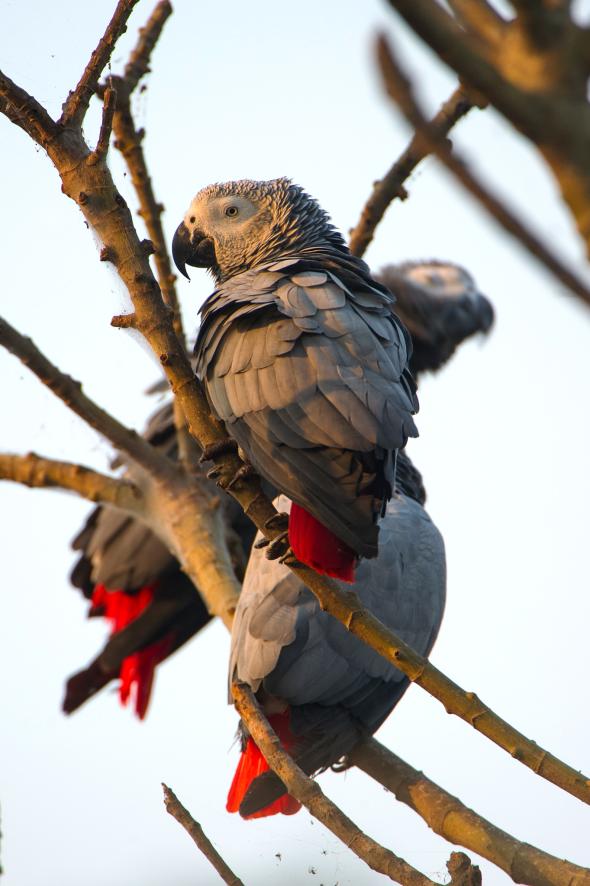
These African Grey parrots were rescued from smugglers and released on Ngamba Island in Lake Victoria. The African Grey parrot is the single most heavily traded wild bird. PHOTO: CHARLES BERGMAN

These African Grey parrots were rescued from smugglers and released on Ngamba Island in Lake Victoria. The African Grey parrot is the single most heavily traded wild bird. PHOTO: CHARLES BERGMAN

In all that we write about conservation, a related tag – unfortunately – happens to be extinction. Brought about by forest loss, miscalculated development plans, social and political apathy towards ecosystems, lack of awareness – the reasons we’ve all heard of. Now, National Geographic reports on the disappearance of the ‘talking bird’:

Flocks of chattering African Grey parrots, more than a thousand flashes of red and white on grey at a time, were a common site in the deep forests of Ghana in the 1990s. But a 2016 study published in the journal Ibis reveals that these birds, in high demand around the world as pets, and once abundant in forests all over West and central Africa, have almost disappeared from Ghana. Uncannily good at mimicking human speech, the African Grey (and the similar but lesser-known Timneh parrot) is a prized companion in homes around the world. Research has shown that greys are as smart as a two-five year-old human childcapable of developing a limited vocabulary and even forming simple sentences.

Continue reading

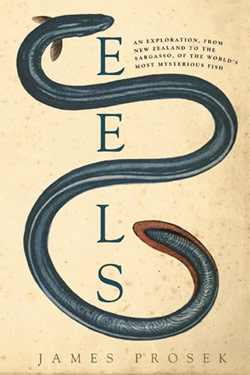
Prosek, Eels, Conservation

Screen Shot 2015-04-24 at 4.54.32 AM

When we invited James Prosek to Kerala it was in part due to his artistic sensibility with eels, and a year after that invitation we gave that peculiar but enchanting sensibility more attention.  But by then we had already noticed his bird work at the Cornell Lab of Ornithology, which Seth had watched as it went up, and his family went to inspect at the time of his graduation from Cornell. And so while Prosek has a long history with aquatic conservation Raxa Collective had a new view of Prosek that gravitated to his work with birds.

We are now glad to be reminded of his aquatic passions, in a blog post about conservation by Silvia Killingsworth, the managing editor of The New Yorker, where Prosek features as one of several consulted experts on the fate of the “lowly” eel, which turns out to be much more fascinating than expected (do read the post from start to finish for both conservation and foodie reasons):

book_eels-lg…Both the Japanese and European species have been listed as endangered by the International Union for the Conservation of Nature.

And yet, according to James Prosek, an artist, naturalist, and the author of the book “Eels,” the American eel will never be listed under the Endangered Species Act. The E.S.A, Prosek told me last week, “works well for creatures that could go down to a population of six hundred, and eels will never get down to that. Maybe a million, and that won’t be enough to sustain collective consciousness”—it won’t sound bad enough to make the public care. Continue reading

Welcome Back, Fabulous Foxes

foxes2-sfSpan

We all knew these foxes could make it, if we made the effort together. They have made it off one of the worst lists possible, for a species, and are on the road to recovery. According to IUCN Red List Guidelines:

…a species may be moved  from a category of higher threat to one of lower threat if none of the criteria of the higher threat category has been met for five years or more…

This news, (thanks to the New York Times for reporting good news in their Science section, from time to time when good news is available) in no way makes the future indefinitely rosy for these creatures, so vigilance and diligence are still required, but we will chalk this up as a victory for conservation:

Imperiled Foxes on California Islands May Come Off Endangered List

Ticking Clocks Of Botanical Gardens

shutterstock_192530375-copy

Image © KPG_Payless | Shutterstock

Thanks to Conservation for Roberta Kwok’s summary of scientific news we had not quite expected, nor wished for:

A relaxing stroll in a botanic garden sounds like a lovely way to spend an afternoon. These green oases can encourage people to appreciate nature and bring attention to conservation issues. But some botanic gardens might harbor an ecological threat: they could be prime sources for invasive species to spread into the wild. Continue reading

The Sophie’s Choices Of Conservation

Screen Shot 2014-11-21 at 5.53.37 PM

Life is not fair.  Sometimes it is really unfair, especially when it comes to entire lifeforms disappearing, or not disappearing, subject to choices we humans make, with all our inherent biases. Thanks to Nautilus for bringing this research to our attention:

Which Endangered Species Would You Save?

Conservation is in the eye of the beholder.

BY CARRIE ARNOLD

You have just been appointed Conservation Czar. But there is a catch. You can only save three animals. Look at the 12 animals below and click on the three that you would save. After you make your choices, you will learn about the endangered status of each animal.

Continue reading

A Book To Gift The Bird-Lovers In Your Life

raffin_birdsofpandemonium_hc_jkt_rgb_hr-updated

We first heard about it here. This book may be the perfect solution to your next gift-giving occasion for the bird lover(s) in your life. We are still on alert and concerned about Amazon, so if you do not have find this in your local bookstore, please place your order somewhere that supports independent booksellers, or perhaps National Public Radio (USA) for this book. The publisher has this to say about the book:

“A remarkable book. Reading about the birds of Pandemonium will make you laugh and cry; it will make you see more clearly the need to take care of our planet; and it will confirm that one person with a passion can make a difference.” —Jeff Corwin, nature conservationist Continue reading

Rewilding With Horses

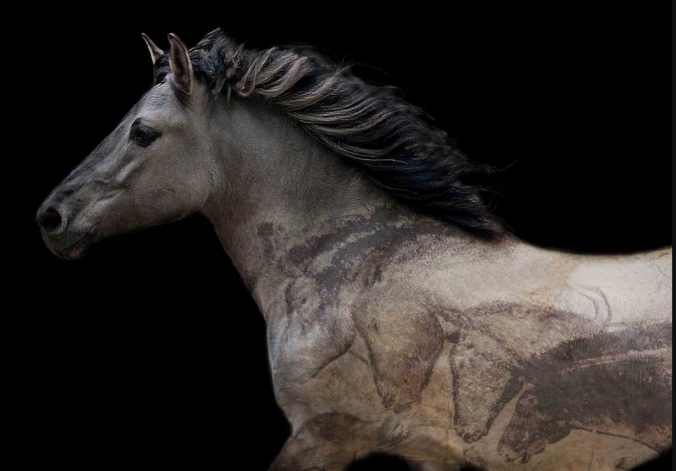
The poster for “TARPAN: Repainting An Ancient Picture” . Horsefly Films

The poster for “TARPAN: Repainting An Ancient Picture” . Horsefly Films

Related to a recent post, on an interesting “what if” question that has no answers, here is a kind of answer. Thanks to Rewilding Europe for this press release:

It is the worthy result of over a year of work by Jen Miller and Sophie Dia Pegrum, two American filmmakers at Horsefly Films. It is also the second in their ongoing series of informative and beautiful films documenting and celebrating rare horse breeds and the unique, and often vanishing, cultures that surround them. Continue reading

Reversing Extinction Risk

extinctiontimes

Thanks to Conservation for this note on the relationship between the proper identification of a species’ extinction risk and the amount of time practically required to do something about it:

Congratulations, you’ve made the IUCN Red List of Threatened Species! Now what? Is that enough to promise your salvation? Or will the increasing press of climate change on your vulnerable/endangered/critically endangered back spell your doom anyway?

A new study aimed to answer this question, of just how long placement on the Red List gives conservationists to try and save a species on its way to oblivion thanks to climate change. Continue reading

Golden Swallows, Jamaica Expedition

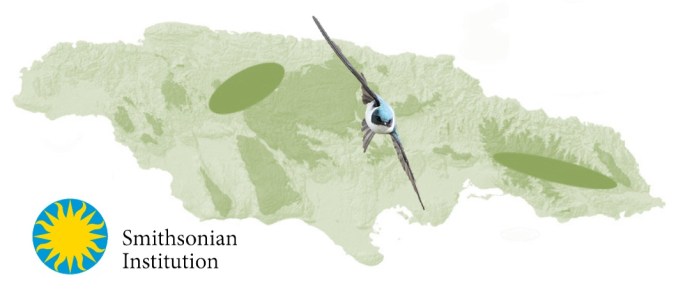
Article BannerIt was in 1844 that English naturalist Philip Henry Gosse arrived in Jamaica for his first time. Gosse would ultimately spend 18 months on the island, where he became fascinated in studying the local birdlife he found there. After returning back to London, he went on to publish a book entitled, “The Birds of Jamaica,” in which can be found the first formal descriptions of many birds still cruising about the Caribbean landscape today. The encounters he had with one bird in particular inspired Gosse to write the following:

This exceedingly lovely little Swallow, whose plumage reflects the radiance of the Hummingbirds, is found, as I am informed by Mr. Hill, in the higher mountains formed by the limestone range of the very centre of the island, as in Manchester, and St. Ann’s. It is not until we ascend this central chain, that we meet with this sweet bird, occasionally in the more open dells, but principally confined to the singular little glens called cockpits.

In this passage Gosse speaks of the Golden Swallow, a small passerine that has only been historically known from two islands, Hispaniola and Jamaica.  And while populations of this species continue to persist in several mountain ranges of Haiti and the Dominican Republic, the beautiful bird that Gosse describes in his Jamaican travels has not been seen on that island for more than 25 years.

Continue reading

Conservation, Passenger Pigeons, History Of Extinction

Gérard DuBois

Gérard DuBois

My favorite doomsday journalist (and I mean that as the highest compliment) posted over the weekend an unamusing memo to remind us that this is an important centenary anniversary. It ups the ante on our commitment to the community of birdwatchers, casual and serious alike, who support important conservation of wildlife habitat all over the world.

It is not amusing to be reminded about various tragic commons, especially ones for which collective action would seem to have been achievable. We link to these stories in the hope that doomsday outcomes will become less likely if we remind ourselves often enough.

Yesterday the ever-better New York Times, newspaper of record that pays more and better attention to environmental issues than most other publications, saw fit to print this piece by the Executive Director of the Cornell Lab of Ornithology, for which we give our thanks and share with you in whole due to its value as a public service:

ITHACA, N.Y. — THE passenger pigeon is among the most famous of American birds, but not because of its beauty, or its 60-mile-an-hour flight speed. Nor is it a cherished symbol of our great country. No, we remember the passenger pigeon because of the largest-scale human-caused extinction in history.

Continue reading

Saving Species–One Paper, One Video, One Course, And One Initiative At A Time

saving-species-logo-long-small

We thank Stuart Pimm for his ongoing excellent contributions to conservation through science and education, as well as creative activism, and congratulate him and his colleagues for their most recent publication:

new scientific paper was published today in the prestigious journal Science and it has important findings for biodiversity. Though it reaffirms what we already know—that there is a global extinction crisis and it is worse than we believed—it also details how technology and smart decision-making are offering hope for endangered species and their habitats. Continue reading

Extinction And Its Discontents

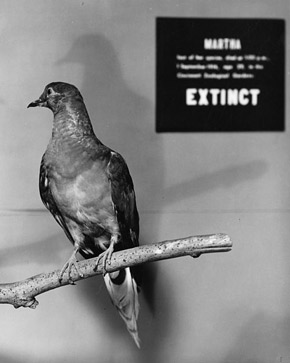
Photograph: Smithsonian Institution Archives.

Photograph: Smithsonian Institution Archives.

I consciously favor stories of alternative approaches and progress on solving environmental challenges rather than the easier-to-find doom and gloom stories, which can have the effect of making one want to turn off the news altogether. I also strive, often in vain, to not be trite. But on occasion I am willing to push that edge as well–pop tarts? yes, when the story is worth telling. Among the toughest topics is extinction, because of its foreverness, and repeated stories with ethical heaviness embedded. Still, I try.

Elizabeth Kolbert, the New Yorker‘s point person on ecological challenges, not least mass extinction, has a remarkable ability to make information about impending cataclysm compelling; she compels me with that information to open my eyes rather than shut them; she also has reasoned ideas about that information, as this post on the magazine’s website displays:

Sometime in the summer of 1914, probably on September 1st but perhaps a few days earlier, the last passenger pigeon on Earth expired. The bird, named Martha, had spent most of her life at the Cincinnati Zoo. Until a few years before her death, she had a companion, George, who shared her ten-by-twelve-foot cage. Whether the two ever tried to mate is unknown. Like the Washingtons, they left no heirs. Continue reading