Nagarhole National Park – Karnataka

Photo credits : Ramesh Kidangoor

Photo credits: Ramesh Kidangoor

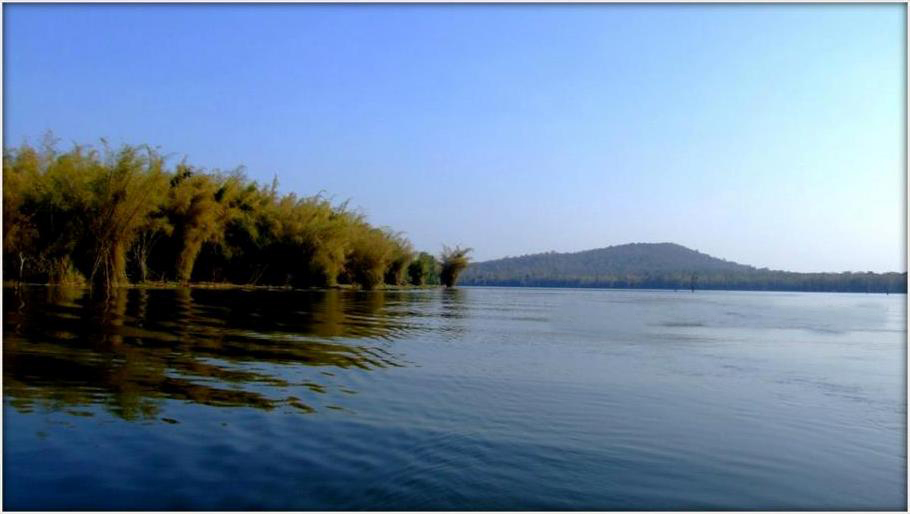
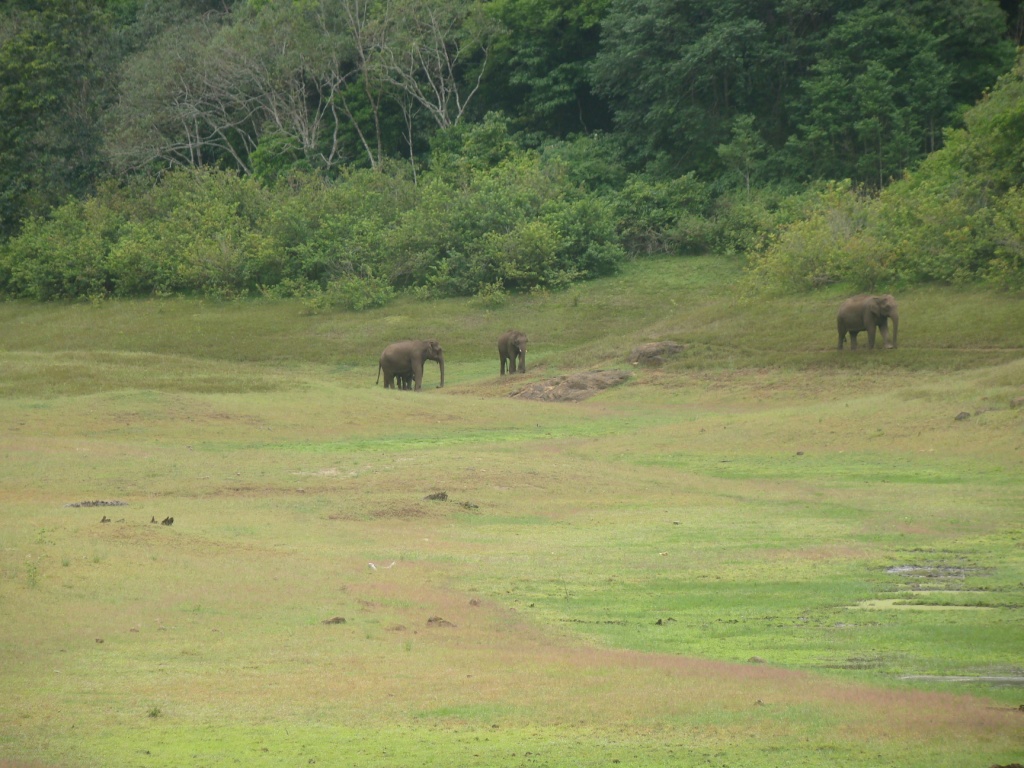
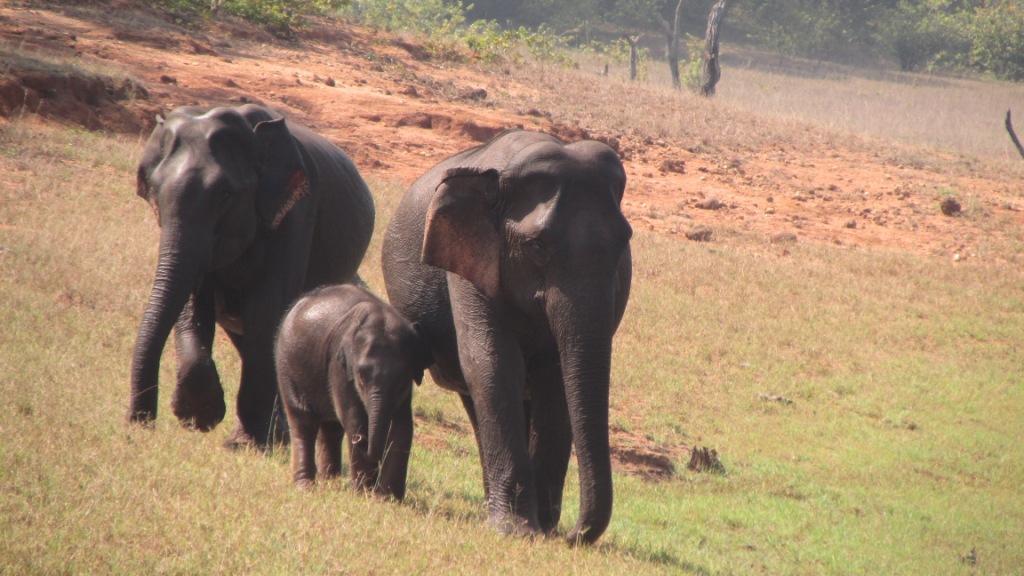
Nagarhole National Park (also known as Rajiv Gandhi National Park) is among the most well maintained wildlife reserves in India.  Located in the state Karnataka, this national park has an abundance of fauna, including large mammals such as wild elephant, bison, tiger, leopard, wild dog and spotted deer. Continue reading

Thekkady Nature in Focus

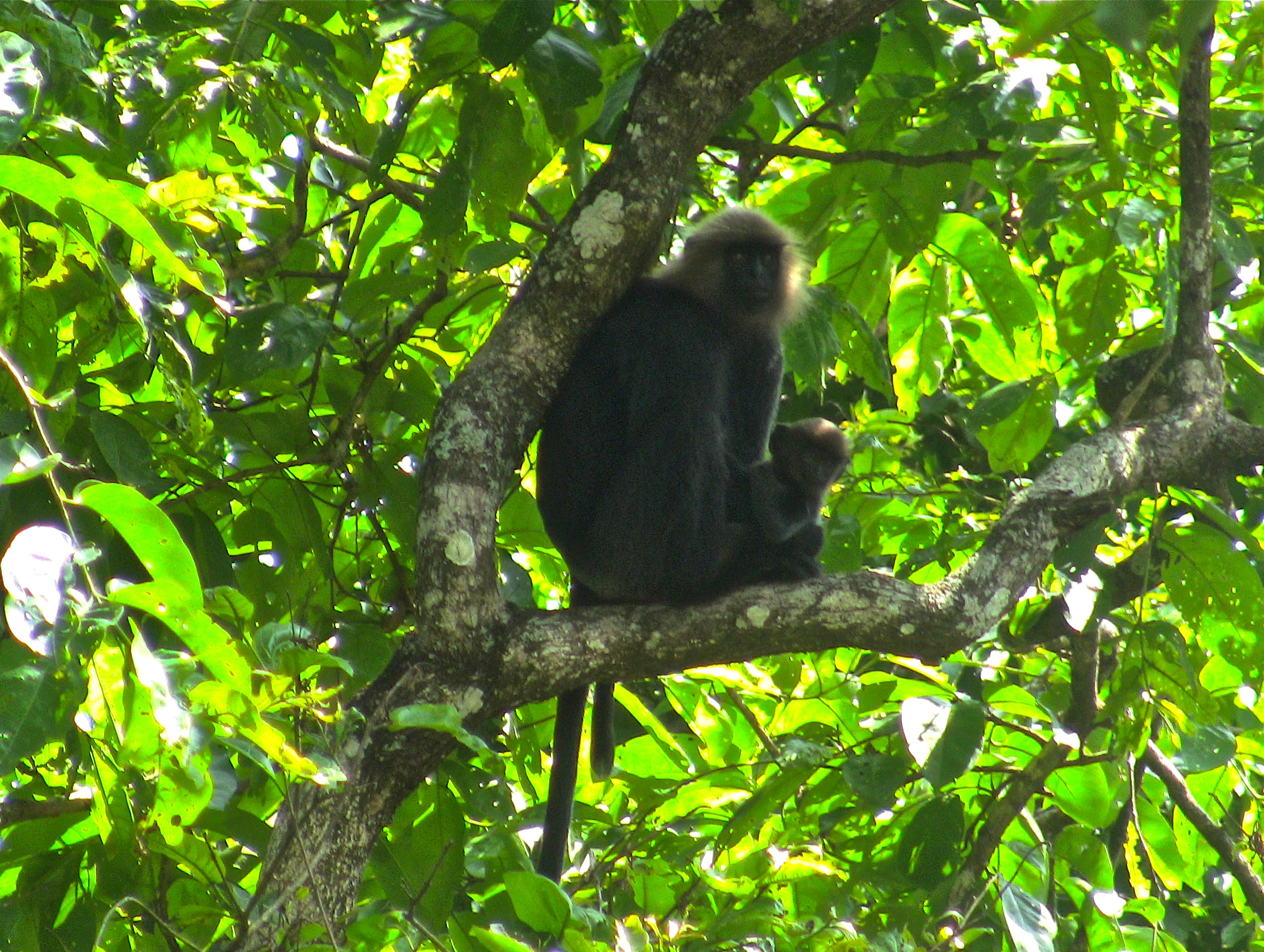
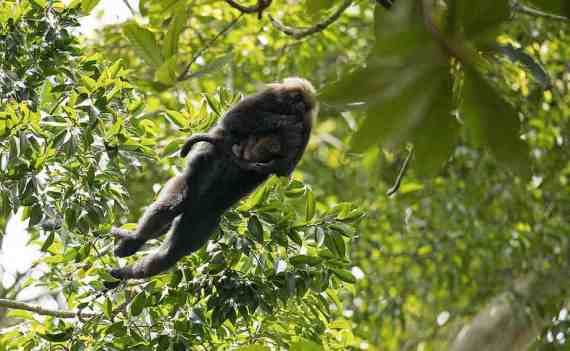
Adult nilgiri langur holding young leaping between trees

I’m a pediatrician by profession but a wildlife photographer by passion. They might not appear connected at first glance but the joy of being with children and the ability to be patient and understand their world has assisted me behind the camera in the field. Photographing animals has allowed me to use my expertise to get closer insights into their behavior.
The idea of having a photographic workshop in the lap of nature, in the Western Ghats with renowned wildlife photography guru Sudhir Shivaram was very exciting. I felt like a child waiting to get a new toy.


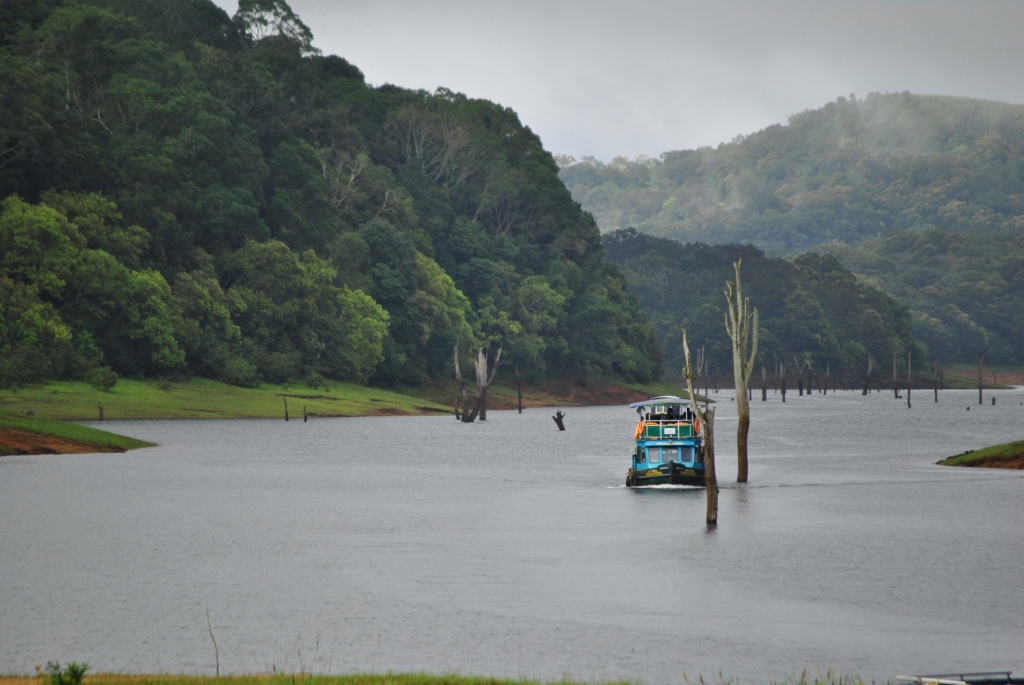
Thekkady-Kumily and the Periyar Tiger Reserve lie near the border between Kerala and Tamil Nadu. Periyar lake is an important watershed and a lifeline for wildlife in the region. The lake was created by the building of the Mullaperiyar Dam in 1895. What was started as a private game reserve became a wildlife sanctuary, and later the Periyar Tiger Reserve. While the area where the reserve is located is well-known as Thekkady, the town is named Kumily. It was a 5 minutes drive from our hotel to the PRT (Periyar Tiger Reserve) and from the entrance it’s a 500 meter walk to reach the boating jetty. From the jetty point, many visitors to the reserve take an hour-long boating safari where, with luck, the action along the bank can be viewed. For birders, most of the aquatic species can be expected, so luck is far less of an issue.

The evening of our arrival we had a workshop session during which our mentor gave us a good grip on exposure, metering, ISO and lots of inputs about the technical aspects of photography in general and wildlife photography in particular.

White-cheeked Barbet by Dr. Eash Hoskote - La Paz Group

White-cheeked Barbet

Early morning on the first day after a quick tea and snacks we headed out to PRT with all our gear. We were met by forest naturalists who were very well versed with the local conditions and the birding scene at that particular time of the year. We were given thick canvas knee-length “leech” socks which are dusted with tobacco powder, making them 100% leech resistant. We boarded a small raft driven by rope pulley to cross one of the many “fingers” of the many branched reservoir. After a brief time following the banks of the water we turned into the dense forest, where the penetration of morning sunlight was minimal. With such heavy equipment we really had to dodge the trees and hanging vines and made our way through the forest. The bird species sighted that first day were Malabar Trogon, White-bellied flycatcher, small blue kingfisher, spot-billed ducks, grey heron, Indian pond heron, little cormorant, white-cheeked barbet and a Malabar frog as an added bonus. It was a good 3 hr forest walk with birds chirping, frogs croaking and crickets making their presence felt. While just walking out of the PRT, we had a good sighting of a pair of grey Malabar hornbill with good photographic opportunity for all of us at close range. Our mammalian captures included a Malabar giant squirrel munching a nut and a group of Nilgiri langurs with young ones jumping around trees providing fantastic opportunities for dynamic shots. Continue reading

Prehistoric Hemispherical Face-Off

Robert Krulwich/NPR

Wondrous prehistory, thanks to Robert Krulwich:

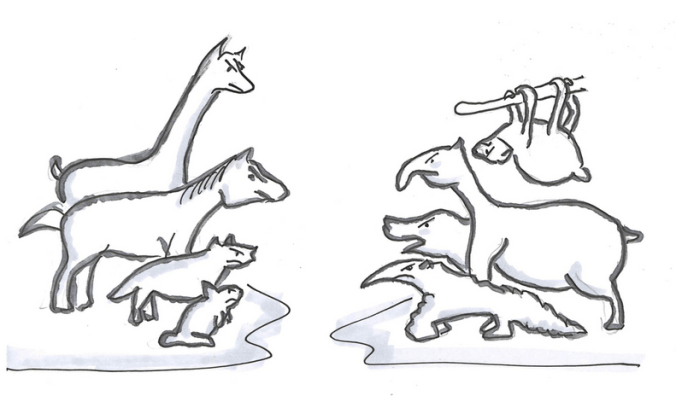
This is the story of two continents doing battle, North America versus South America. It is also a biological mystery.

For a very long time, North America and South America were separate land masses. The Pacific Ocean slipped between them, flowing into the Caribbean. The Isthmus of Panama was there, but it was underwater. The two continents didn’t touch.

As a result animals on both continents, especially mammals, evolved independently. They didn’t, couldn’t, interbreed. And yet, both North and South America had mountains, plains, long lazy rivers, deltas and supported similar forms of mammalian life. In fact, when biologists look back at the fossils, they found almost mirror like populations. Continue reading

PhotoSingularities: Wild Boar

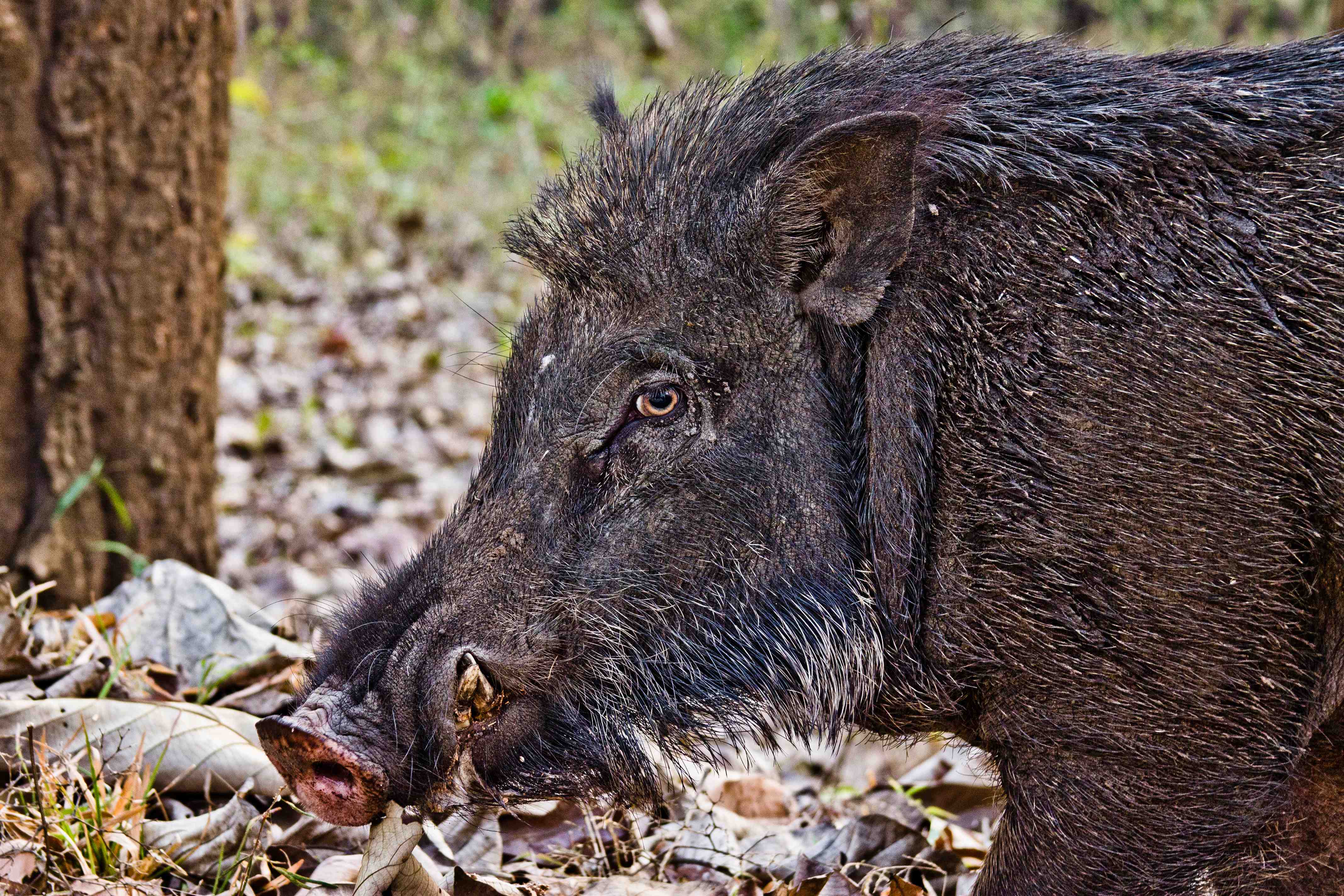
This photograph was taken in Parambikulam Wildlife Sanctuary, Kerala. This male boar was one of several dozen in a sounder (wild boar’s collective noun) seen from our vehicle at close proximity – we shared the road with them for some time and I was able to capture it from eye level before he wandered back into the forest.

Wild Periyar – Avifaunal Hotspot

malabar parakeet

malabar parakeet

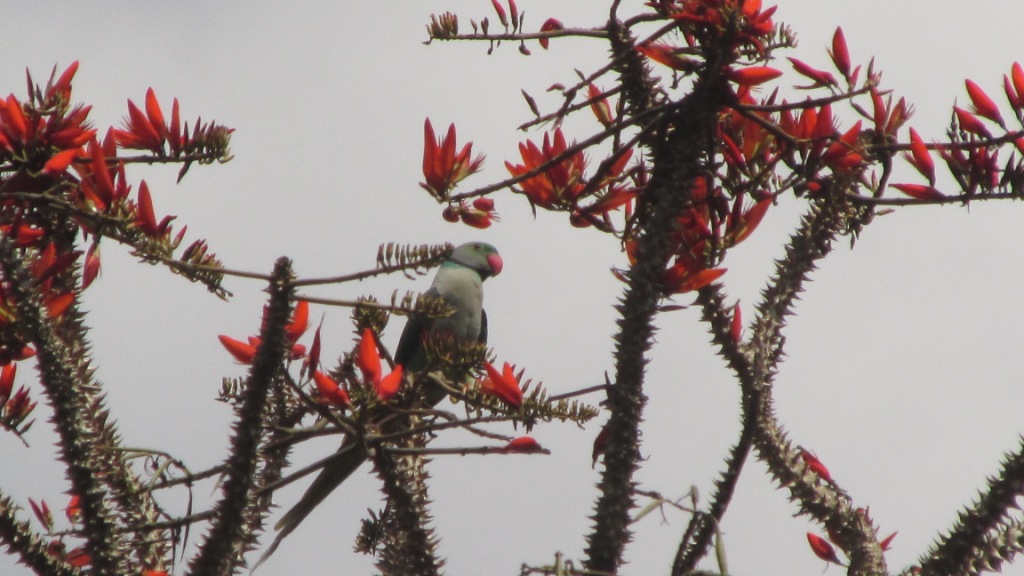
Periyar Tiger Reserve is an avifaunal hotspot extraordinaire and one of the most facinating birding destinations in the entire Western Ghats. The verdure of rolling hills, rich flora and a many-armed reservoir supports an impressive 323 species of birds, including Malabar Parakeet, Hill Myna, Bulbuls and Hornbills. Continue reading

Periyar Sightings June 9th 2013

Elephants

On the morning of June 9th, Shaleen James went for a nature walk in the Periyar Tiger Reserve.  While originally from Mumbai, she was visiting Cardamom County.  Shaleen enjoyed her trekking and had many good sightings and consequently, has kindly shared some of her photos with us. Continue reading

Endangered species : Nilgiri Langur

Two centuries ago, under the British rule, much of the Western Ghats forests were cut down to be replaced by tea plantations. In 1895, the damming of the Periyar river plunged 26 square km of pristine forests into what is now called the Periyar Lake. The 925 km2 of dense hilly forest that form the Periyar Wildlife sanctuary may seem huge, but it is actually a limited territory for the endemic species. Continue reading

Periyar Sightings, 6th June 2013

Photo credits : Mary Mathew

Photo credits: Mary Mathew

Mary Mathew and her family recently joined us at Cardamom for two days. They had some good sightings during their boat excursion in the Periyar Tiger Reserve this morning and shared some of their photos with us. Continue reading

Mudumalai Wildlife Sanctuary

Photo Credits: Roji Antony

Photo Credits: Roji Antony

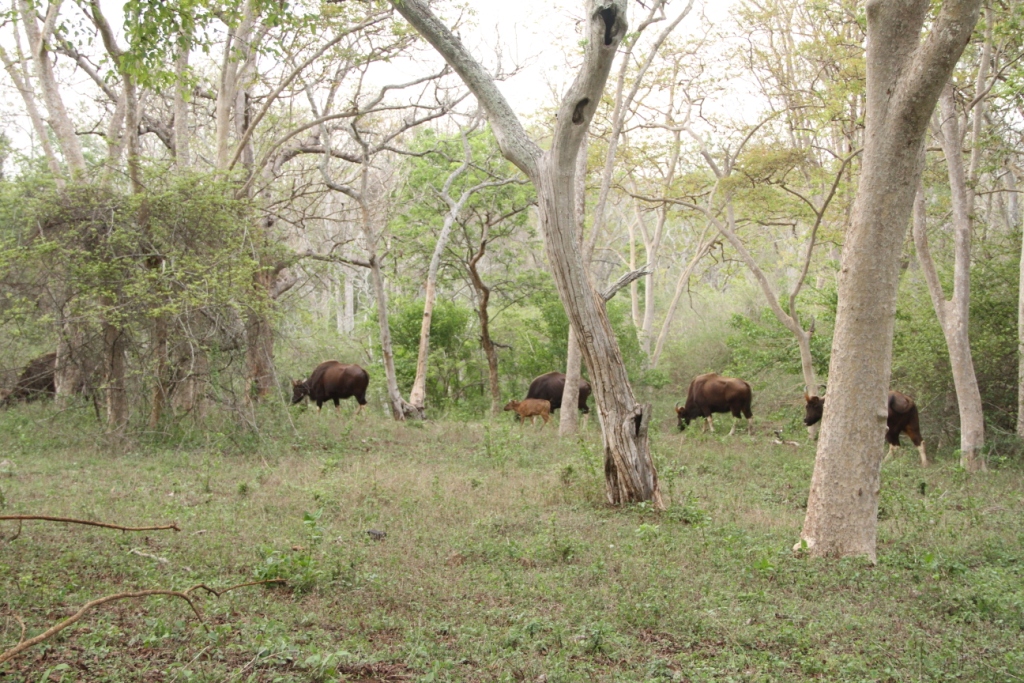
Mudumalai Wildlife Sanctuary is one of south India’s famous national parks, nestled amidst the Nilgiri Hills Biosphere in Tamil Nadu. This sanctuary is situated at the tri-junction of Tamil Nadu, Karnataka and Kerala near the Mysore plains. With an area of 321 sq km of natural forest, Mudumalai is famous for Elephant, Wild Gaur, Tiger, Leopard and Deer, as well as being home to over 200 species of bird. Continue reading

Best of Salim E.I.: Indian Cobra (Spectacled cobra)

India Cobras are common in both forests and cultivated areas in holes near streams and watersheds. They are strong swimmers and juveniles are more dangerous than adults.

Continue reading

Beauty Of Kerala – Wayanad

photo Credits: Nidhin Poothully

Photo credits:  Nidhin Poothully

The road leading to Wayanad is smooth and even and surrounded by greenery from deciduous forest to soaring bamboos. The sanctuary around Wayanad is rich in fauna and flora. Elephants are the most common wildlife sighting, sometimes even amidst the the thick bamboo groves flanking the road en route to the sanctuary. Continue reading

Sharks As Charismatic Megafauna

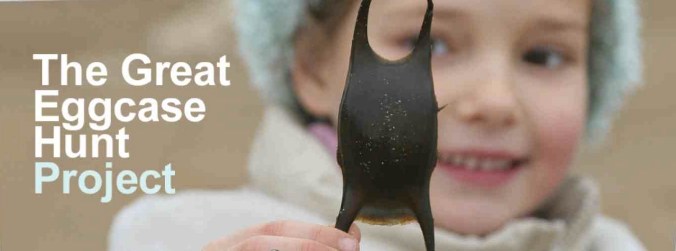
If you are like most people, the words shark and trust do not normally work well together in the same sentence. Sharks are predators, and predators predate. So unless you are a professional you should not take anything for granted when in their waters. But the two words work together well in a sentence about this organization, and the project they have launched to help sharks is intriguing. Entrepreneurial, even.  Click the image above to read more about this initiative:

With over 600 species of skate and ray worldwide, at least 16 species have been regularly recorded in UK coastal waters; most of these species reproduce by laying tough leathery eggcases on the seabed. Of more than 30 species of British sharks, only two species lay eggcases that are commonly found on our beaches; the Smallspotted Catshark and the Nursehound. Continue reading

Nagarahole National Park – Karnataka

Photo credits: Ramesh Kidangoor

Nagarahole National Park is located near Mysore in Karnataka, covering an area of 643.39 sq km. This national park is one of the best-maintained wildlife reserves in the country. The name of the park is derived from naga, which means cobra in Kannada (the local language of Karnataka) and hole, referring to streams, or river. The park, also known as Rajiv Gandhi National Park, has an  abundance of fauna including spotted deer, wild boar, gaur, elephants, leopard and tigers. Continue reading

Periyar Sightings: March 22, 2013

Mr. Senthil, a cardamom planter in Kerala, went for a forest trek yesterday and experienced one of his best trips in the Periyar so far. He was happy to share some of his photos. Continue reading

Guyana’s Jaguars

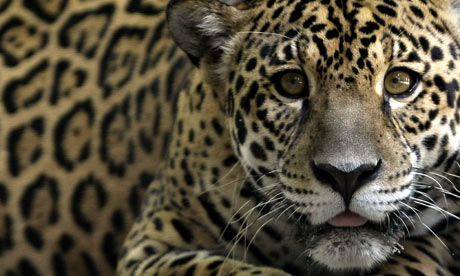
Jaguars once roamed widely from the south-western United States to Argentina, but have lost nearly half of their natural territory and have disappeared altogether from some countries. Photograph: Mauricio Lima/AFP/Getty Images

Jaguars once roamed widely from the south-western United States to Argentina, but have lost nearly half of their natural territory and have disappeared altogether from some countries. Photograph: Mauricio Lima/AFP/Getty Images

Bravo to Panthera for its achievements in the couple of years since we first learned about it in this 60 Minutes segment.  And thanks to the Guardian‘s ongoing coverage of such important topics:

The lushly forested nation of Guyana on Thursday joined a regional pact to protect jaguars, the elusive spotted cat that is the biggest land predator in the Americas but has become vulnerable as expanded agriculture and mining carves away at their fragmented habitat. Continue reading

Wild Periyar: December 20, 2012

Mr. Shaji, a local photographer, joined one of the morning treks and shared his photos. According to him these are the common sightings he experiences early in the day, which is always the best time for wildlife viewing. Continue reading

Periyar Tiger Reserve (Thekkady, Kerala)

The Periyar Tiger Reserve is one of India’s most famous wildlife sanctuaries. Periyar was declared a Forest Reserve in the late 19th centuary, a Wildlife Sanctuary in the 1930s and a Tiger Reserve in 1977. This land of emerald vistas, productive grasslands, orchid-studded rain forests, moss-laden trees and dripping ferns provide food and shelter to mammals, including Elephants, Tigers, Dholes, Leopards, and Wild gaur, as well as birds, amphibians and insects.

Continue reading

Wild Periyar – Mud Puddling (Butterflies)

Common Blue Bottle; Graphium sarpedon

Mud puddling is a social insect activity usually involving newly hatched males where several butterflies of one or more species gather on moist banks of sand or mud. Mud puddling butterflies often spend a long time on these damp patches, where they suck salts along with water to obtain nutrients. Continue reading

Wild Periyar – Elephant Paradise

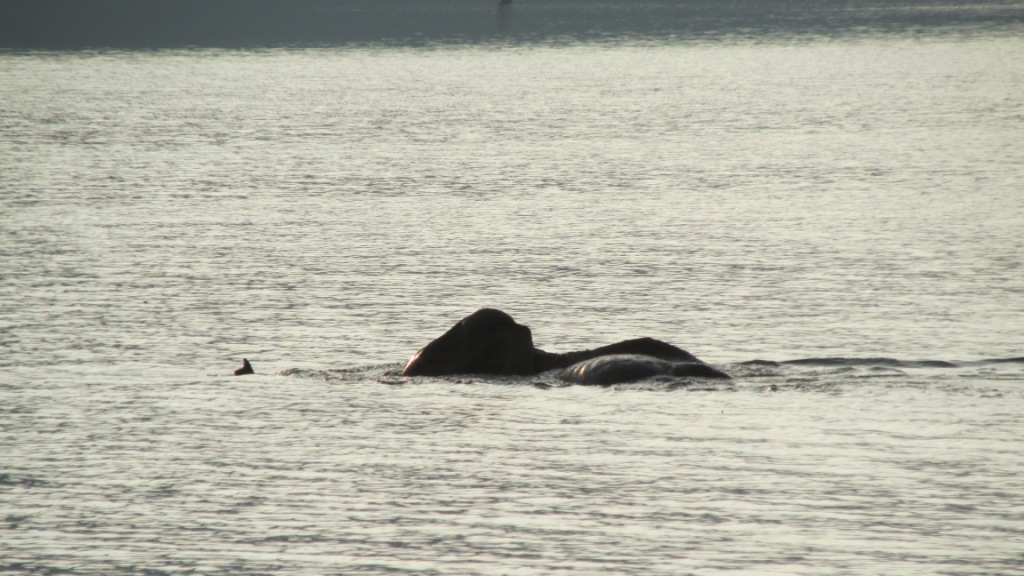
Although the Periyar dam reservoir had cut off the traditional migratory paths of elephants way back in 1899, four years after construction of the dam had started the world’s largest land animals had learned how to overcome the watery impediment. Entire herds, calves in tow, now routinely swim across the reservoir, presenting lucky visitors with one of Periyar’s more unforgettable and thrilling spectacles.

Continue reading