Mislabeling Fish Products

07fraud-master768

Source: New York Times

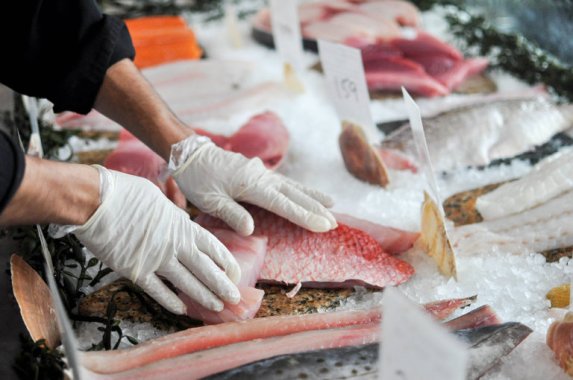
Mislabeling fish products, as well as others food products, is a global issue that researchers have struggled to accurately gauge the severity of. It has also been tough to ascertain if efforts to control the fraudulent practice are making progress. According to a report on seafood fraud released on Wednesday, 1 in 5 seafood samples tested worldwide turn out to be completely different from what the menu or packaging says. The ocean conservation group that created the report, Oceana, tested 25,000 seafood samples, and of those, 20 percent were incorrectly labeled.

“It is likely that the average consumer has eaten mislabeled fish for sure,” said Beth Lowell, the senior campaign director for Oceana and an author of the paper. “You’re getting ripped off, while you enjoyed your meal you’re paying a high price for a low fish.”

Continue reading

Joining the Sustainable Fishing Soupbowl

ap_150457879317

Illegally harvested shark fins. Source: shareamerica.com

Given the critical decline of fish populations worldwide, it’s reassuring to hear that high-profile U.S. corporations, and ones in the hotel industry at that, are taking a stand against unsustainable fishing practices. Here’s the story as told on Share America:

Rogue vessels use banned equipment, damage breeding grounds and destroy tons and tons of by-catch, marine life that is caught in nets but not desirable in the markets.

Thirty percent of world fisheries are tapped beyond their limits, while another 60 percent are being fished at maximum capacity.

Major U.S. hotel chains, restaurants and supermarkets have responded by requiring that fish they serve be harvested sustainably.

Continue reading

Feeding Fish with Methane?

Our last post on farmed fish revolved around grubs – dried black soldier fly larvae – as an alternative and more sustainable feed in aquaculture. Today I learned about yet another method for feeding fish that doesn’t involve catching wild fish or using petroleum-reliant grains, and actually helps control a problematic greenhouse gas, methane. Kristine Wong writes for Civil Eats, a website that acts as a “daily news source for critical thought about the American food system”:

Wild seafood is disappearing rapidly and many consumers have turned to farmed fish as a way to help reverse the trend. But finding a sustainable source of food for carnivorous fish such as salmon and tuna—which rank as the second and third most popular types of seafood in America—has been a persistent challenge for aquaculture producers.

Continue reading

A Fishy Excursion

img_9262_zps6rndumkn

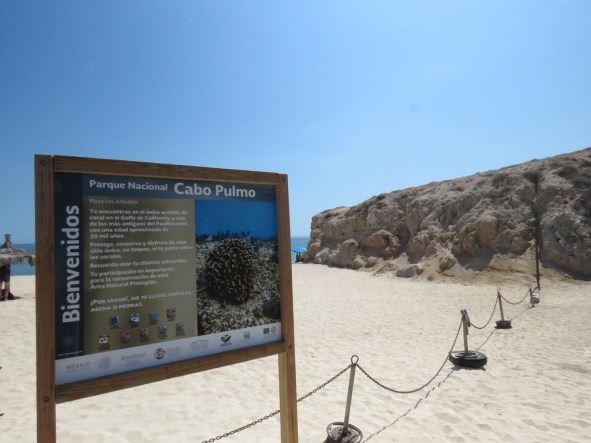
Thirty minutes north from Villa del Faro is a place called Los Arbolitos, which translates to “the little trees,” and is part of Cabo Pulmo National Park. I will just state from the beginning that this area does not have any trees, or small trees for that matter, only a sturdy watchtower on top of a sandbank that from a distance could perhaps look like the outline of a tree, and some scrubby bushes. Los Arbolitos is a small, secluded bay with crisp white sand and smooth crystalline waters, making it an ideal spot for snorkeling. Continue reading

Rethinking Fish

5120

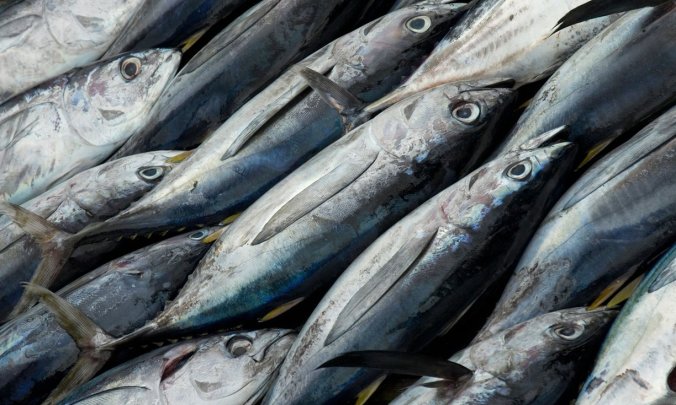
More than 40% of popular species such as tuna are being caught unsustainably, UN FAO says. Photograph: Alamy

Articles like this have me thinking about the meal I had last night, which had not one bit of animal protein in it, and wondering whether I could happily resist adding my own weight to the immensity of the food problem, especially with regard to fish:

Global fish production approaching sustainable limit, UN warns

Around 90% of the world’s stocks are now fully or overfished and production is set to increase further by 2025, according to report from UN’s food body

Continue reading

Graylings Recovering

Spawning Arctic Grayling at Green Hollow Genetic Brood Reserve. Photo © Emily Cayer FWP

Graylings sound like wild beings out of a fantasy series, but in fact they’re a type of fish found all over the world in different species, some threatened with population decline, and some stable. The Arctic grayling, found in Russia and Canada but also some areas in Alaska, Montana and Wyoming, has suffered extirpation from certain spots in the latter two states during the last hundred years or so, due to anthropogenic effects. Ted Williams reports for The Nature Conservancy:

The Arctic grayling’s spotted, orange-trimmed dorsal fin looks as if it had been photoshopped. It’s half as long as the body and just as wide; and it glows with impossible shades of violet, green and turquoise. This gaudy trout cousin was deposited by the retreating glacier in the coldest, clearest waters of the contiguous states.

So common was the species in Michigan that a city, Grayling, took its name. And as recently as the early 20th century grayling abounded in the upper Missouri River system. While these fish still thrive in Alaska and Canada, they’ve been wiped out in Michigan and persist only in about 15 percent of their historic range in Montana and Wyoming.

Continue reading

Potential New Food for Farmed Fish

Photo of microalgae by CSIRO ScienceImage via WikiMedia Commons

We’ve known for some time that lots of fish food used in pisciculture is actually just wild fish, whether processed or not. Conservation Magazine is reporting that microalgae may provide the solution for sustainably feeding fish in farms:

Aquaculture could play a key role in sustainably feeding our growing planet. The problem is that when it comes to feeding the fish, it seems hard to hit the mark on sustainability. Fish oil and fishmeal are draining the oceans of ecologically important forage fish. But when the aquaculture industry substitutes these marine-based foods with vegetable oils and grains, they are driving an enormous amount of additional farming, with all its attendant impacts on the environment. What’s more, this vegetarian diet produces fish that are lacking in the marine omegas that are so important for human health.

Continue reading

Lionfish Removal and Awareness Day Festival


Photo credit: Erin Spencer

Photo credit: Erin Spencer

I’ve posted previously about the lionfish invasion that is threatening coral reef and other marine ecosystems throughout the Caribbean, Gulf of Mexico, and Southern Atlantic Seaboard of the United States. As I’ve noted in earlier posts, it is the general consensus of the scientific and conservation community that eradication of lionfish from the Atlantic is impossible. However, there is growing evidence that systematic removal efforts can be effective in controlling lionfish populations and in reversing their negative impact on reef health. The challenge faced by marine protection agencies and marine resource managers is how to undertake these removals on a regular and financially sustainable basis. I’m convinced that this challenge can best be met by an integrated approach involving coordinated action by public and private actors complemented by the creation of markets for lionfish products.

All of these elements were in evidence at the Lionfish Removal and Awareness Day festival in Pensacola, Florida which I attended last month. Organized by the Florida Fish and Wildlife Conservation Commission (FWC), the two-day event included a lionfish derby (with more than 8,000 lionfish removed by volunteer divers), lectures about the invasion and the threat that it poses, lionfish cooking and tasting, and sale of lionfish products.

Notable among the sponsors of the event was Whole Foods, which had announced a few weeks earlier that it was going to begin selling lionfish at its stores in California and Florida. The move by whole foods was sparked by the decision late last year of Monterey Aquarium’s Seafood Watch program to list lionfish as a best choice under its sustainable seafood recommendations, citing the invasive nature of the species. As I had noted in a previous post, Seafood Watch had previously declined to list lionfish due to the absence of an established commercial fishery, but to their credit, the group responded to what they described as a “grassroots campaign” and revisited the issue. Moreover, since taking the decision to list lionfish, Seafood Watch has been active in raising awareness about the invasion and in promoting lionfish consumption. Continue reading

More Good Fishery News in Arctic

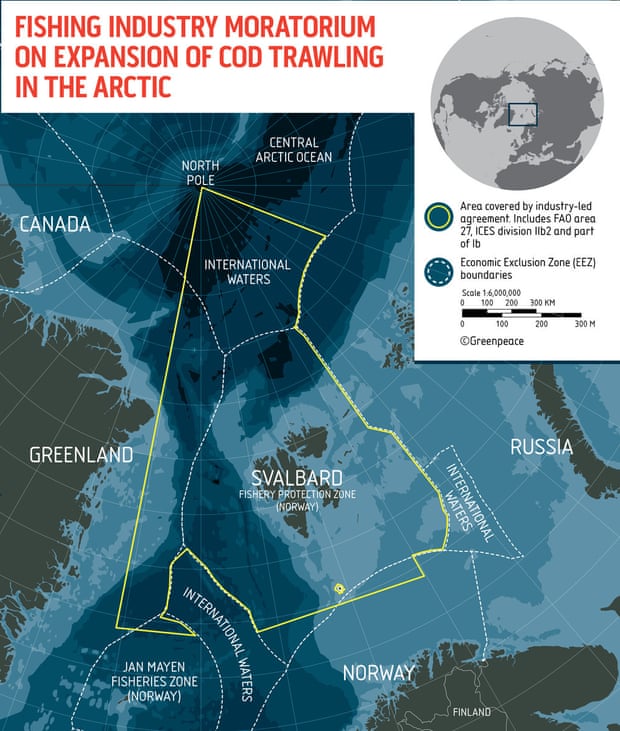
Map of the area of northern Barents Sea including the waters around Svalbard where some of the world’s largest seafood and fishing companies have committed not to expand their search for cod into. Photograph: Greenpeace

We read yesterday about countries agreeing to stand against piracy in fishing, which is great, and The Guardian is continuing its optimistic reporting by sharing news on leading seafood-consuming companies have decided to source from industrial fisheries that don’t target a particularly pristine Arctic region. Jessica Aldred reports:

Fishermen and seafood suppliers struck a major deal on Wednesday that will protect a key Arctic region from industrial fishing for cod.

Companies including McDonald’s, Tesco, Birds Eye, Europe’s largest frozen fish processor, Espersen, Russian group Karat, and Fiskebåt, which represents the entire Norwegian oceangoing fishing fleet, have said their suppliers will refrain from expanding their cod fisheries further into pristine Arctic waters.

“From the 2016 season the catching sector will not expand their cod fishing activities with trawl gear into those areas where regular fishing has not taken place before,” the deal reads.

Continue reading

Science Cannot Serve Two Masters

overfishing_custom-1e6a0790cb0cea389c8c2aa9c4927c8b6f5686a1-s1400-c85.jpg

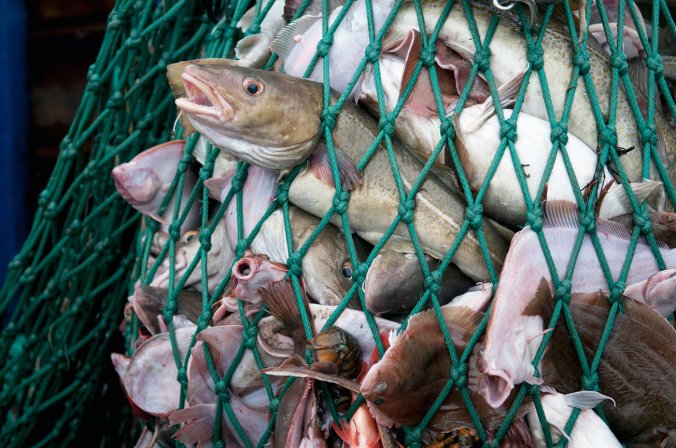
A fishing dragger hauls in a net full of Atlantic cod, yellowtail flounder and American lobster off the coast of New England. Greenpeace says Ray Hilborn, a prominent fisheries scientist known for challenging studies that show declines in fish populations, failed to fully disclose industry funding on some of his scientific papers. Jeff Rotman/Getty Images

Go to the dictionary, or notes from a science course you might have taken, to be reminded of the definition of how this body of knowledge operates, and the importance of avoiding bias is evident. When it relates to the survival or collapse of species, avoiding bias seems even more important than the definition implies. Science serves the interest of objective, verifiable truth; not economic or political interests (thanks to National Public Radio, USA):

Fisheries Scientist Under Fire For Undisclosed Seafood Industry Funding

A prominent and outspoken fisheries scientist at the University of Washington is under attack from Greenpeace for not disclosing industry funding in several scientific papers stretching back to 2006. Continue reading

Bad News for Lionfish in Costa Rica, Good News for Costa Rica

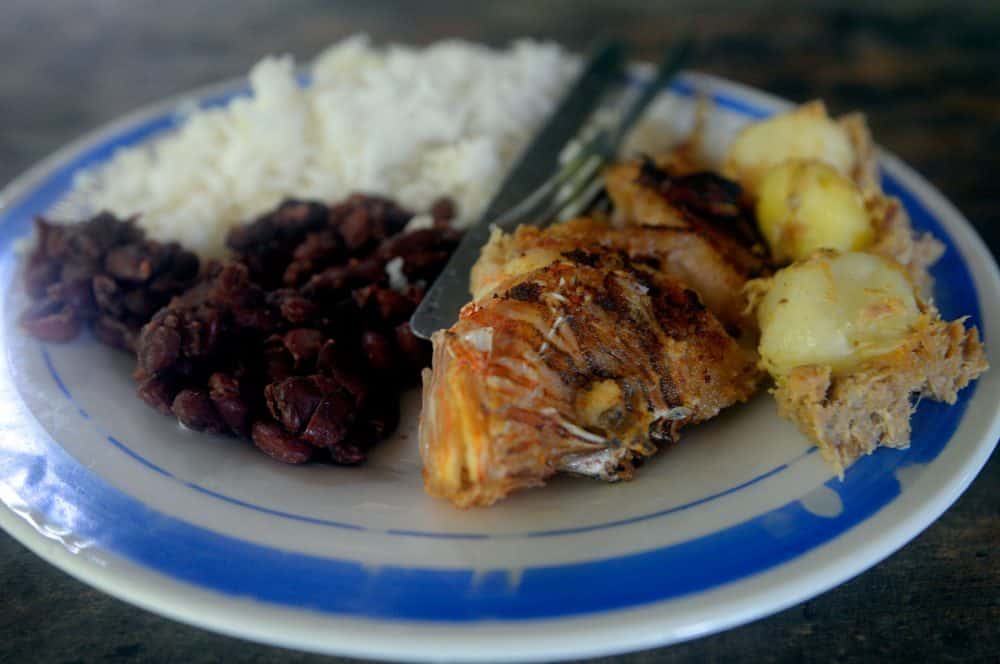
After a long day of fishing, the lionfish are fried and served up with rice and beans. Lindsay Fendt/The Tico Times

We’re always keeping our eye out for updates on the lionfish situation, and that’s why we’re happy to see that some more efforts are being made in Costa Rica to control a problem that is pretty out of control. More from Lindsay Fendt from the Tico Times:

Local efforts to curb the encroachment of invasive species in Costa Rica’s Caribbean got a big boost this week with the formation of a National Commission for the Management and Control of Lionfish. The new commission will provide government support for Caribbean fishing associations that are already actively combatting the proliferation of lionfish (Pterois).

Introduced to the Atlantic Ocean from the Indo-Pacific sometime in the 1980s, the lionfish has been wreaking havoc on Caribbean fish populations. The fish can gobble up two smaller fish every minute and lay up to 30,000 eggs each year, depleting catches for fishermen and damaging the ecosystem. Though not the hardest hit country in the region, Costa Rica has approximately 90 lionfish per hectare and fishermen have reported an 80-87 percent decline in their catches since 2009 when the fish began to appear off the country’s coast.

Continue reading

Fish Fraud Falling

fish-marketThanks to Conservation Magazine for pointing us to this bit of scientific evidence that, while fisheries are on the whole in a dismal state, steps are being taken in Europe to address one of the symptoms:

Over the past few years, dozens of studies have documented a global fish fraud epidemic, in which fish are mislabeled as species they are not. It’s a problem with detrimental environmental, economic, and even potential health effects. Continue reading

More Reasons For A Plant-Dominated Diet

4368

Global fish catches rose from the 1950s to 1996 as fishing fleets expanded and discovered new fish stocks to exploit. Photograph: Eyal Warshavsky/Corbis

We serve fish. We love fish. We love fish too much, all of us. Every day we get more evidence of the logic for shifting more of our diet to be plant-based, and this article in today’s Guardian adds one more powerful data point:

Overfishing causing global catches to fall three times faster than estimated

Landmark new study that includes small-scale, subsistence and illegal fishing shows a strong decline in catches as more fisheries are exhausted

Global fish catches are falling three times faster than official UN figures suggest, according to a landmark new study, with overfishing to blame. Continue reading

Dory: Not so Ditzy in Real Life

1024px-blue_tang_28paracanthurus_hepatus29_02

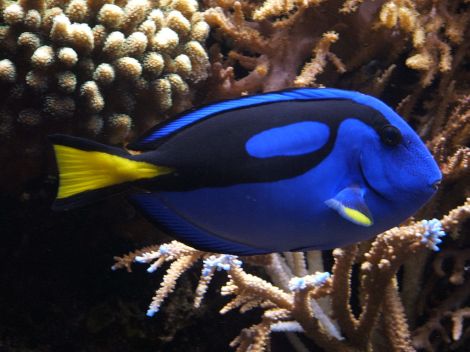
Blue tang (Paracanthurus hepatus) at Monterey Bay Aquarium by Wikimedia contributor Tewy.

We’ve all seen the humorously scatterbrained black-and-blue fish Dory in Pixar’s Finding Nemo, but only those who have spent some time snorkeling or diving in tropical waters have seen the real-life surgeonfish–as that class of fish is called–just keep swimming in its natural habitat. Next year, Finding Dory will act as a sequel to the immensely popular aquatic animation film from 2003. Before you watch it in cinemas, you can learn a little about the actual fish that Dory is based on, via BBC Earth:

“I suffer from short-term memory loss,” Dory tells Nemo. “I forget things almost instantly, it runs in my family.”

It’s very funny and ultimately touching, but this depiction is just a little unfair. The fish Dory is based on does not have short-term memory loss. It is rather more awesome than that.

It has several names, including royal blue tang, regal tang and surgeonfish. Its scientific name is Paracanthurus hepatus.

Continue reading

Building an Empire, A Fish at a Time

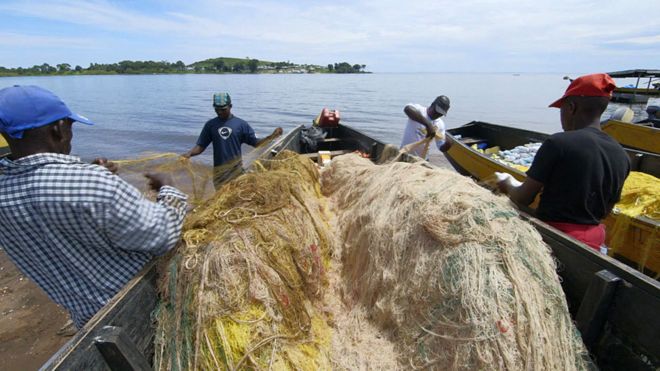
When Mama Sylvia started fishing 27 years ago, all she had was a small canoe, which she paddled with an oar. PHOTO: BBC

When Mama Sylvia started fishing 27 years ago, all she had was a small canoe, which she paddled with an oar. PHOTO: BBC

We talk about sustainable development. Often, the definition is relegated to the environment domain alone and does not cover social and human capital. The United Nations has identified gender equality as one of the key Millennium Development Goals, validating the fact that every small victory is a step forward for the larger good. Like Mama Sylvia’s story.

Gertrude Nabukeera, or Mama Sylvia as she is usually known, stands with her arms resting on her hips as she supervises a handful of men unloading the catch from a fishing boat. It’s early in the morning and the boats are bringing their night’s catch in at the Nakatiba landing site, on the island of Bugala in Lake Victoria, Africa’s largest expanse of fresh water. More than 400m long and lined with motor-driven boats, this landing site is owned and run by Mama Sylvia.There are concrete stalls from which she sells the catch of the day, and to the right an icebox the size of a freight container in which she stores the fish.

It’s unusual for a woman to be the boss of a fishing business in Uganda, or anywhere else for that matter, but even more surprising is the fact that she herself was once a fisherwoman – one fisherwoman among many, many fishermen.

Continue reading

Helping Salmon Get By

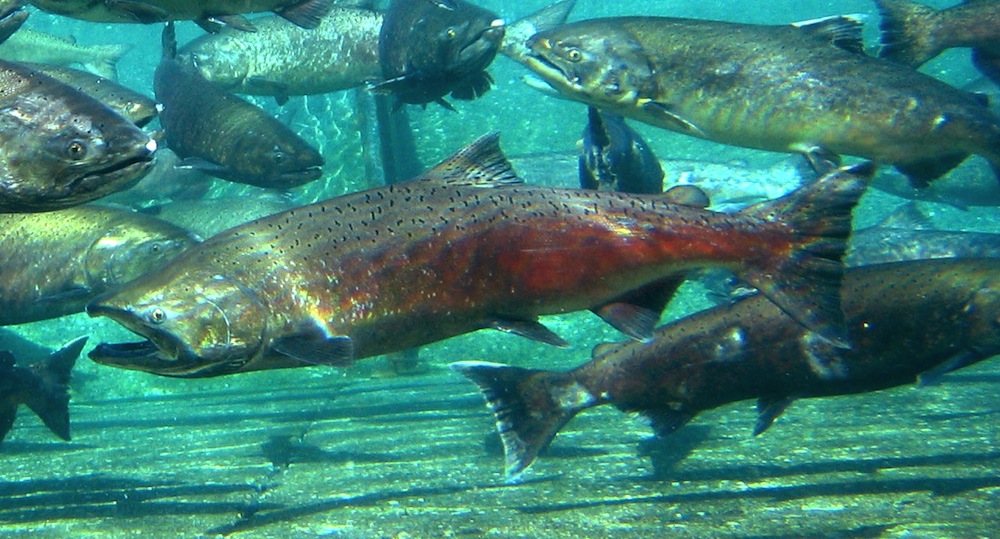
Drought and man-made obstacles lead fishery to boost releases of Chinook into Sacramento River, in hopes that a few thousand return to spawn.  PHOTO: Livescience

Drought and man-made obstacles lead fishery to boost releases of Chinook into Sacramento River, in hopes that a few thousand return to spawn. PHOTO: Livescience

To boost the dwindling population of natural chinook salmon in California, hundreds of thousands of fish are spawned and released by federal and state agencies every year. This year, 600,000 salmon were released earlier than normal because of a historic drought in California.

The California drought, the state’s worst on record, has taken a terrible toll on those already-diminished winter Chinook salmon runs. It’s not just that there isn’t enough water; there’s not enough cold water, especially after competing interests such as urban areas and big agriculture—each equipped with more political muscle than wild salmon advocates have—take their share. In 2014, the returning winter Chinook numbers were the worst that fishery officials had ever seen. In a normal year, about 25 percent of the eggs produce baby salmon healthy enough to migrate; last year, with only 5 percent surviving their infancy in the unusually warm water, nearly the whole winter run was wiped out.

Continue reading

In the Name of the ‘Salvation’ Fish

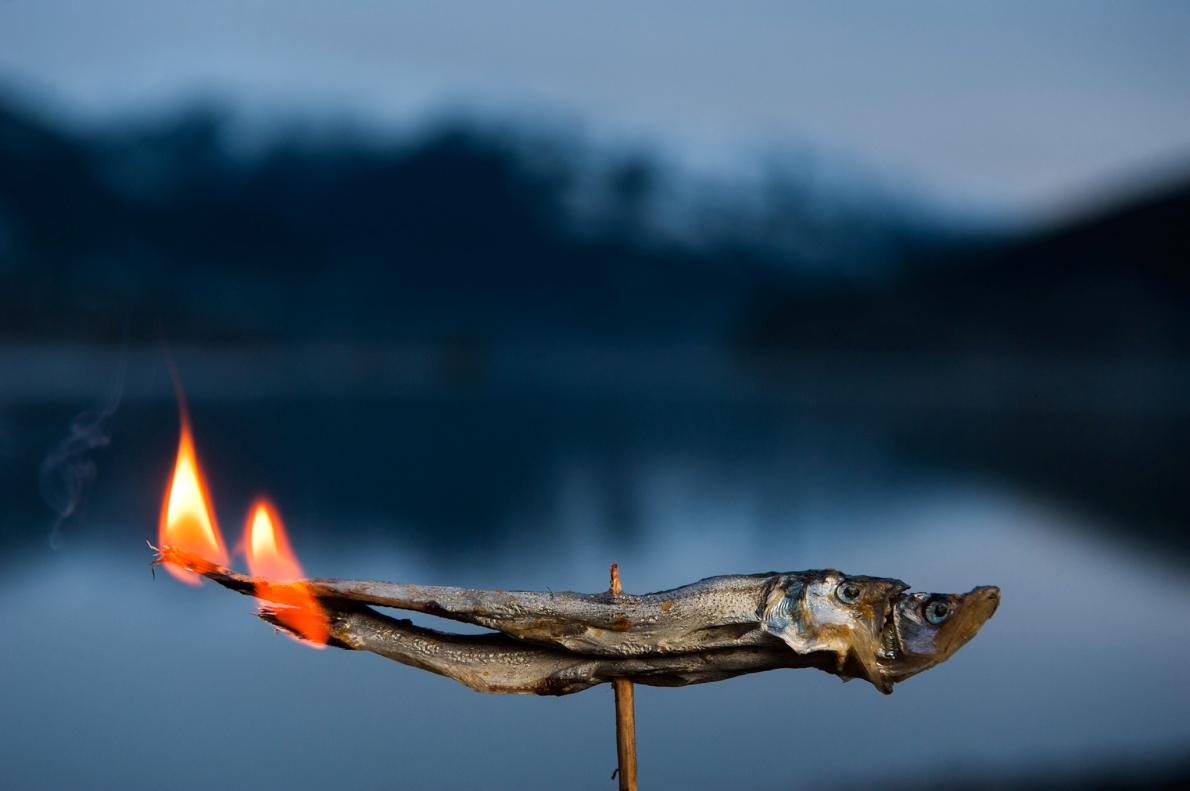
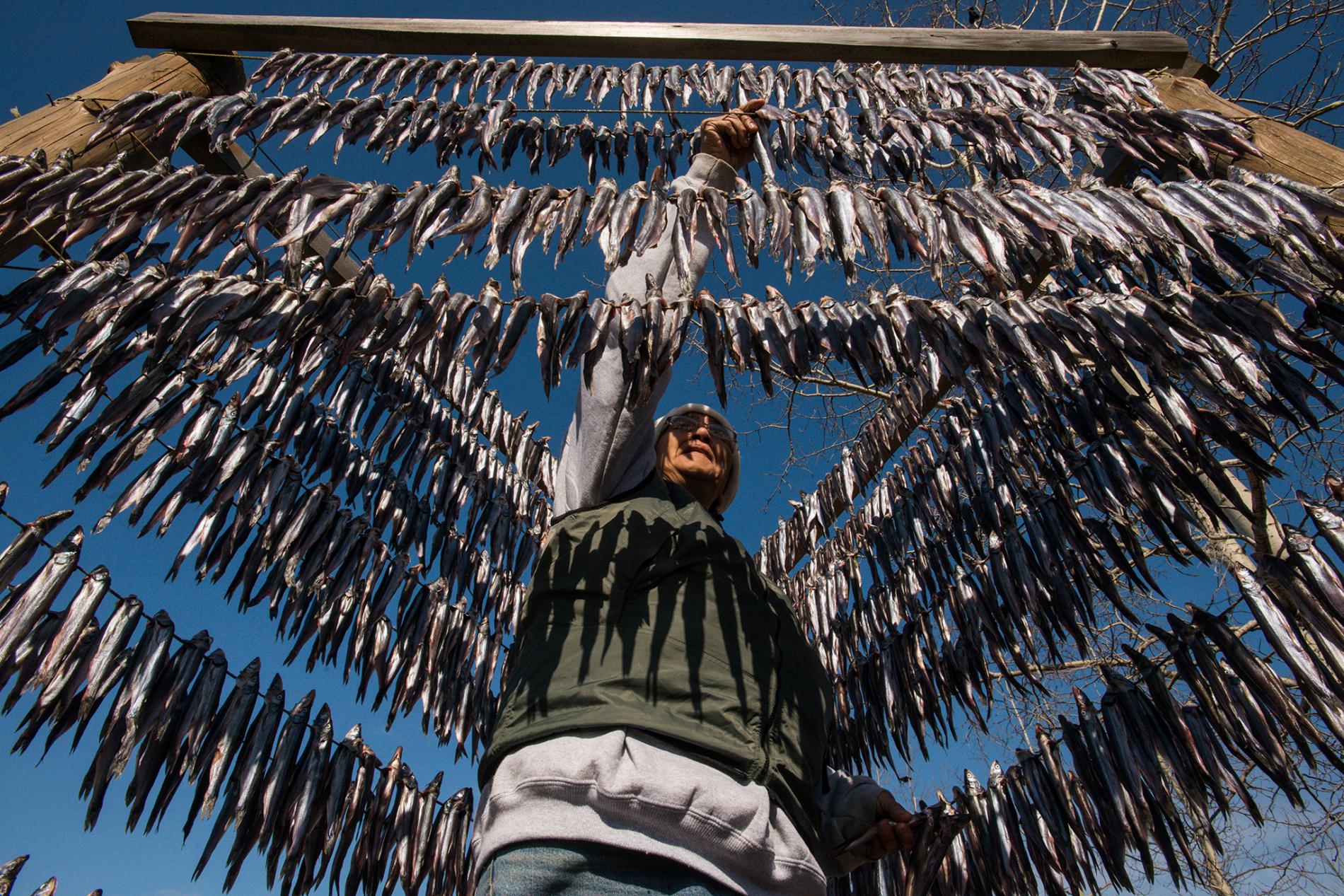
Also known as candlefish, eulachon (Thaleichthys pacificus) are so oily that they can ignite when dried. Traditionally, eulachon were used at times as lights by Nisga'a people.  PHOTO:  PAUL COLANGELO

Also known as candlefish, eulachon (Thaleichthys pacificus) are so oily that they can ignite when dried. Traditionally, eulachon were used at times as lights by Nisga’a people. PHOTO: PAUL COLANGELO

A Nisga'a woman hangs eulachon on a ganee'e, or air-drying rack. PHOTO: PAUL COLANGELO

A Nisga’a woman hangs eulachon on a ganee’e, or air-drying rack. PHOTO: PAUL COLANGELO

Often referred to as “salvation fish” for safeguarding native people from starvation, the eulachon is now in need of a lifeline itself—as its habitat and population are in danger. National Geographic reports on the fish’s historical and cultural significance and the the many changes in the ocean that have led to the decline of the eulachon’s numbers:

The fish are also known as halimotkw, often translated as “savior fish” or “salvation fish.” Eulachon return to the rivers here to spawn at the end of the North Pacific winter, when historically food supplies would be running low. In lean years the eulachon’s arrival meant the difference between life and death for people up and down the coast.

Today, the fish that used to safeguard native people from starvation is itself in need of a lifeline.

Continue reading

The Japanese Fine Art of Bragging

Gyotaku, the art of making inked prints from real fish, originated in 19th century Japan. Above, three examples from modern Gyotaku artist Heather Fortner (from left): Under the Rainbow Rainbow Trout; Little big skate and Primary colors butterfly ray. Courtesy of Heather Fortner

Gyotaku, the art of making inked prints from real fish, originated in 19th century Japan. Above, three examples from modern Gyotaku artist Heather Fortner (from left): Under the Rainbow Rainbow Trout; Little big skate and Primary colors butterfly ray. Courtesy of Heather Fortner

How did fishermen record their trophy catches before the invention of photography? In 19th century Japan, fishing boats were equipped with rice paper, sumi-e ink, and brushes in order to create gyotaku: elaborate rubbings of freshly caught fish.

Fish printing often attracts those who have a connection with the ocean or marine life. Wada, who is Japanese-American, grew up in Hawaii and was taught how to fish by his family at a young age. And before she became a gyotaku artist, Fortner was a commercial fisherman, research vessel deckhand, and a ship’s officer and Master in the U.S. Merchant Marine. “I have always loved the ocean and anything from the ocean,” she says.

She adds: “Gyotaku allows you to express an appreciation for the natural world by partnering with the finest artist in the world: Mother Nature.”

Continue reading

Support Needed for Lionfish Jewelry Workshop

© Seavenger’s Trident Super Dive Store

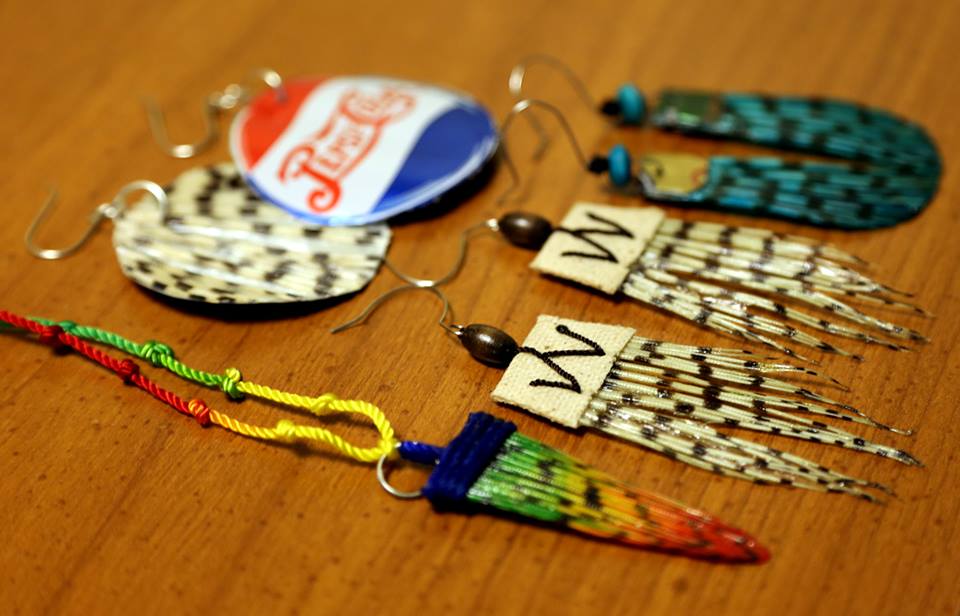
For the past several years, I have been involved in helping to develop markets for lionfish jewelry as a way of addressing the threat posed by this invasive species, which is severely compromising the health of coral reefs throughout the Caribbean by eating reef-dwelling fish. Belize is home to the second largest barrier reef in the region, and its lobster and conch fisheries could really benefit from a break of overexploitation, so encouraging lionfish fishing in any way possible will promote reef recovery.

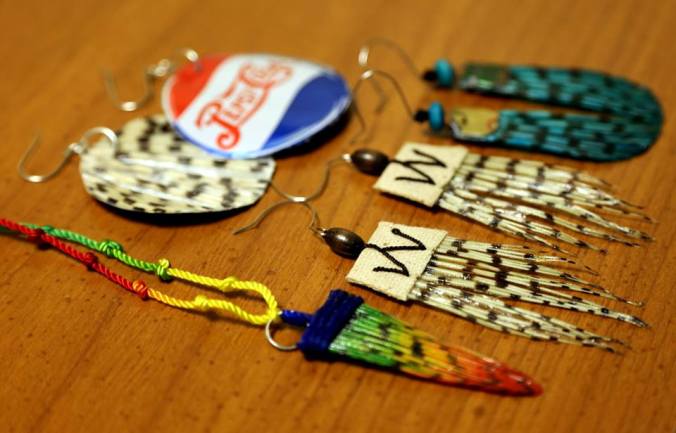
My last post, in fact, was about my trip to northern Belize last summer, when I collaborated with two local NGOs in Belize to train women from a coastal community on how to create lionfish jewelry. This August, I will again be joining one of these groups – Blue Ventures, for a lionfish jewelry workshop for women from other areas. As you can see from the pictures here and in my previous posts, lionfish fins, tails, and spines are beautiful; they’re also relatively low-cost to transform into jewelry. These parts of lionfish were previously discarded, but when kept and transormed into jewelry the value of landed lionfish catch increases by up to 40%, creating additional incentives for fishers to target and remove lionfish Continue reading

Getting Social Underwater

 A coral grouper (Plectropomus leopardus) being cleaned by a cleaner shrimp (Urocaridella antonbruunii), in the Maldives. --- Image by © Jason Isley - Scubazoo/Science Faction/Corbis

A coral grouper (Plectropomus leopardus) being cleaned by a cleaner shrimp (Urocaridella antonbruunii), in the Maldives. — Image by © Jason Isley – Scubazoo/Science Faction/Corbis

Let’s talk social behavior. We know much about human relations and the social activities of animals like the chimpanzee. But how about underwater? Yes, the waters, too, are filled with social interactions if rapport between coral groupers and giant moray eels are anything to go by. Several studies have followed how the duo teams up to hunt and have their own ‘code’ of vigorous shimmying, head-stands and head-shaking to communicate about prey. Now, while gestures are commonplace among humans and are expected of intelligent animals like monkeys and dogs, how do fish manage this complex communication with their tiny brains? Redouan Bshary may be the man with the answers.

Continue reading