Better Buying, Canned Tuna Edition

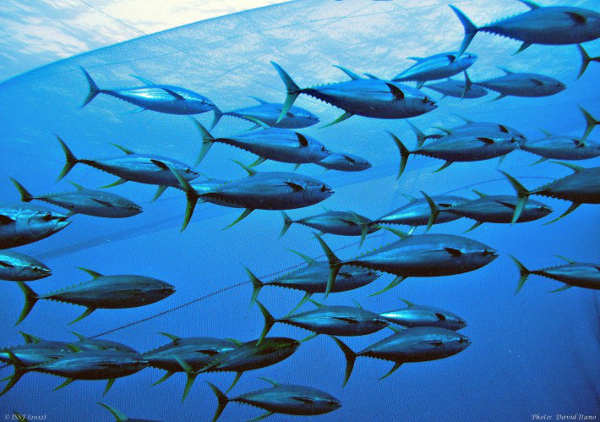
Seafood companies are responding to the public’s increased interest in whether fishing practices deplete tuna populations. Photo credit: David Hano/International Sustainable Seafood Foundation

Seafood companies are responding to the public’s increased interest in whether fishing practices deplete tuna populations. Photo credit: David Hano/International Sustainable Seafood Foundation

Thanks to Ecowatch for the updated primer on better canned tuna shopping criteria:

Canned tuna is one of the world’s most popular packaged fish, but it has also long been controversial. Between issues of overfishing resulting in fishery depletion and bycatch that threatens other species including the much-publicized incidental capture of dolphins by tuna fishermen, it has gotten a bad name. With the increased awareness of the harm tuna fishing can cause, companies have stepped up to try to reassure consumers that they are paying attention to the health of our oceans. Continue reading

Fighting Invasive Lionfish – Update

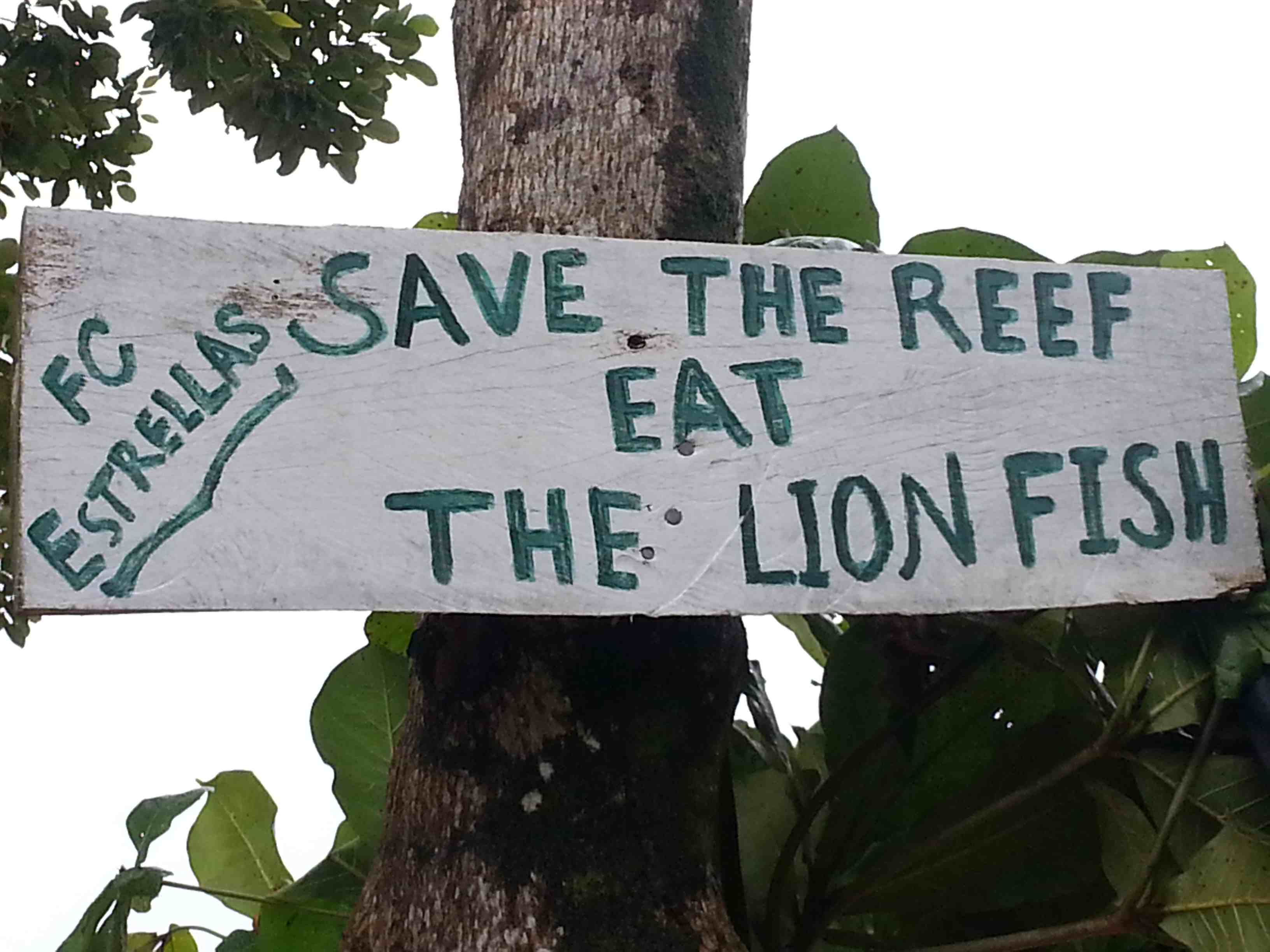
I’ve posted previously about the lionfish invasion that is threatening coral reef and other marine ecosystems throughout the Caribbean, Gulf of Mexico, and Southern Atlantic Seaboard of the United States. Availability and dissemination of information about the invasion was recently given a big boost through launch of the Invasive Lionfish Web Portal The portal is a collaborative effort of a number of partners, led by the Gulf and Caribbean Fisheries Institute. It is a great resource, providing links to a range of information about the invasion, including journal articles, videos, photos, recipes, a Twitter feed, etc..

Another recent development has been the release of a draft United States National Invasive Lionfish Prevention and Management Plan. Developed by the U.S. Government’s Aquatic Nuisance Species Task Force, the plan is intended to help coordinate the actions of the various government agencies and other stakeholders involved in dealing with the invasion. While such a plan is long overdue, and in that sense is welcome, I’m quite disappointed that the plan largely ignores, and indeed implicitly discourages, an important element of an effective strategy for addressing the invasion – namely the use of market-based approaches.

As I’ve indicated in my previous posts, the Atlantic lionfish invasion is a unique problem that requires innovative solutions. Continue reading

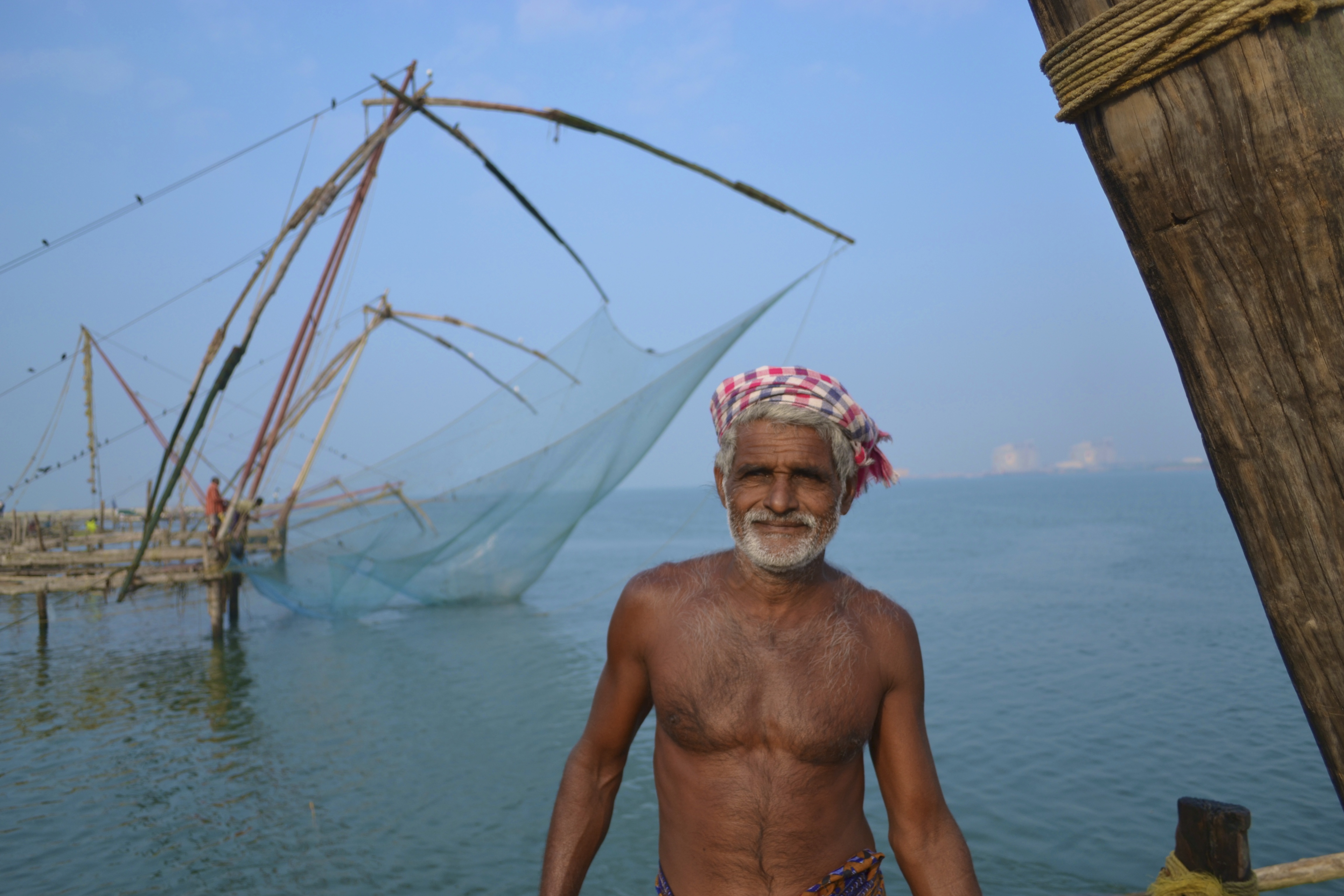
Chinese Fishing Nets, Kerala

Marconi in front of of the nets in Fork Kochi

Marconi

Marconi is an original decedent of the Mongolian people (a Chinese state at the time) who were the creators of the “Chinese Fishing Nets” in Kerala, India. These structures are at least 30 ft high and the nets stretch out more than 50 ft across the water! It takes half a dozen people to even attempt to heave the nets which work on a pulley system with GIANT boulders hanging from the opposite side to counteract the weight. Continue reading

Cod, Revisited

Atlantic Cod. Photo credit Pat Morris.

We’re always happy to find another reason to link to an old environmental history post on cod, or fish stocks in general. In an op-ed for the New York Times a few days ago, environmental and maritime historian W. Jeffrey Bolster starts to answer the question, “Where have all the cod gone?”

PORTSMOUTH, N.H. — IN November, regulators from the National Oceanic and Atmospheric Administration shut down recreational and commercial cod fishing in the Gulf of Maine, that enchanting arm of the coastal sea stretching east-northeast from Cape Cod. They did not have much choice: Federal law requires action to rebuild fish stocks when they are depleted, and recent surveys revealed cod populations to be at record lows, despite decades of regulations intended to restore them.

Continue reading

Electric Eels Can Paralyze Prey

Photo via National Geographic

We’ve seen eel art before, but actually don’t know much about these fish or their biology. Electric eels are even more fascinating for obvious reasons, but of course are also that much more mysterious to us. National Geographic science writer Ed Yong fills us in with the help of Vanderbilt University biologist Ken Catania below:

A fish swims in the Amazon, amid murky water and overgrown vegetation. It is concealed, but it’s not safe. Suddenly, two rapid bursts of electricity course through the water, activating the neurons that control the fish’s muscles. It twitches, giving away its position, and dooming itself. Now, it gets zapped by a continuous volley of electric pulses. All its muscles contract and its body stiffens. It can’t escape; it can’t even move. Its attacker—an electric eel—moves in for the kill.

Continue reading

Fish Have Plenty To Shout About

More than eight hundred fish species are known to hoot, moan, grunt, groan, thump, bark, or otherwise vocalize. CREDIT ILLUSTRATION BY KYLE T. WEBSTER

More than eight hundred fish species are known to hoot, moan, grunt, groan, thump, bark, or otherwise vocalize. CREDIT ILLUSTRATION BY KYLE T. WEBSTER

Thanks to Emily Anthes and the Elements section of the New Yorker‘s website for this post expanding our sonic horizons, and especially for the accompanying recordings to assure you that fish can shout:

In 1909, a French doctor named Étienne Lombard discovered something that most people intuitively know: humans raise their voices in noisy environments. Lombard first observed the effect—which came to be named for him—at the Hôpital Lariboisière, in Paris, where he noted that his patients spoke more loudly when he filled their ears with the hiss or crackle of a “deaf-making apparatus.” The patients seemed to adjust the volume of their speech reflexively, and Lombard suggested that the phenomenon could be used to identify malingerers—those who were faking their hearing loss in order to collect workers’ compensation.

Continue reading

The Sense in Sustainability

adak-fish-farm-krishnankotta-mala

Today we went to  a 68 acre fish farm in Thrissur called ‘Haya Poya’. They were using a traditional box system (the local name is petty para) to collect fish and manage the water level. We went to learn about implementing aquaculture at Kayal Villa, a newer property.

By using this traditional method, they do not have to introduce new varieties of fish in order to farm. They do this mainly because it is less costly to collect the fish naturally than to artificially introduce fish. Also, since it is all local varieties, it limits the possibility of messing up the natural ecosystem with foreign invasive species.

During our ride home, the agronomist, Mr. Deyal, and I continued the conversation about doing what’s ecologically beneficial is actually easier and more cost-efficient. He said

“Only an ecologically viable system will be economically viable. When we fight against the environment, the environment will go against us and we will have to invest more money to protect against it.”

This reminds me of a conversation I had with an oil driller recently. When I asked him what the most challenging thing about his job was, he said ‘going against nature,’ and then proceeded to tell me how rebellious nature was to the oil drilling process and how costly it is. I found it interesting that although their career choices were the antithesis of each other, the conversations I had with them had parallel messages: going against nature is costly.  Continue reading

River Blossoms

This slideshow requires JavaScript.

India’s famous flower markets are testiment to the people and culture’s strong identification with flowers in all aspects of their daily lives, both sacred and secular. Flowers are found in food and drinks, and as part of all the rights of passage of daily life, from birth to death and everything in between.

Although I’ve never been to Calcutta, I’ve read about the flamboyantly colorful Mallick Ghat Flower Market along the banks of the Hooghly River. Danish photographer Ken Hermann captures the proud men who make their living as Calcutta’s flower sellers.

‘I first went to the flower market during a visit to Calcutta three or four years ago and have wanted to do something on it ever since,’ explains Copenhagen-based Hermann.

‘It’s a beautiful and, at the same time, very stressful place but I was fascinated with it – and the flower sellers in particular. I really like the way they carry their flowers,’ he continues.

‘Sometimes it almost looks like they are wearing big flower dresses. I like that you see these strong and masculine men handling the flowers with so much care as if they were precious jewels.’

Hermann, whose work usually takes him into the grimier side of Indian life, was also enchanted by the flowers themselves, even if there were a few that he wasn’t allowed to photograph.

‘There are a lot of superstitions and religious belief in flowers in India,’ he explains. ‘I wasn’t allowed to photograph some of them because they were considered to be holy flowers and they would lose their power if I had.’ Continue reading

A Sophie’s Choice Moment For Two Species, One Environment, And No Solomon In Sight

Damian Mulinix — Chinook Observer. A small portion of the cormorant colony as seen from a bird blind.

Damian Mulinix — Chinook Observer. A small portion of the cormorant colony as seen from a bird blind.

You can read about this in a major media outlet, but try another approach for this story. Local journalism is alive and well, and covering complex, important topics through the local lens:

A plan to kill 16,000 double-crested cormorants on East Sand Island has some residents on the North Coast scratching their heads. Although still in the proposal phase, the plan drew many to an open house in Astoria last week to ask questions of the federal agencies involved. “I can’t believe in this day and age we can’t come up with an alternative solution to killing things,” said Tommy Huntington of Cannon Beach. Continue reading

Humanity’s Diet Makes A Difference, Historically As Well As Futuristically

On the timescale of evolutionary history, paleo enthusiasts note, agriculture is a fad. Credit Illustration by Mike Ellis.

On the timescale of evolutionary history, paleo enthusiasts note, agriculture is a fad. Credit Illustration by Mike Ellis.

Since the early days of this blog we have been hungry consumers of environmental long form journalism, of which Elizabeth Kolbert’s New Yorker chronicles are best-in-category. They are also, frankly, almost always depressing.

Nonetheless, they put humanity into its natural context. This not-at-all-depressing chronicle demonstrates the value of that contextualization well:

The first day I put my family on a Paleolithic diet, I made my kids fried eggs and sausage for breakfast. If they were still hungry, I told them, they could help themselves to more sausage, but they were not allowed to grab a slice of bread, or toast an English muffin, or pour themselves a bowl of cereal.

Continue reading

Flavors Of Kerala: Prawn Masala

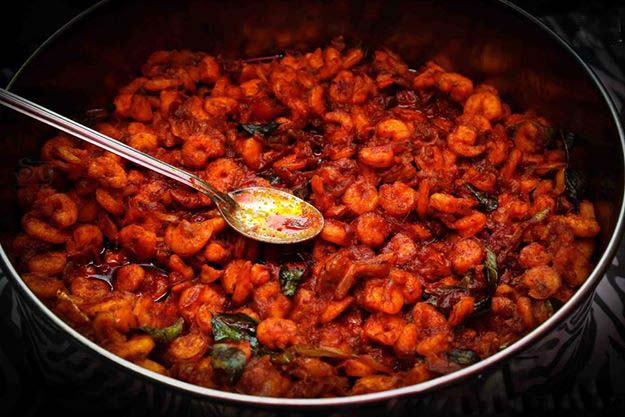
Photo credits : Shymon

Photo credit: Shymon

Prawns (also called shrimp) are plentiful in the backwaters and coastal areas of Kerala. Prawns are one of the most popular seafood ingredients in Kerala, cooked in a variety of ways to suit different traditional dishes.

The delicious and spicy prawn masala is a favorite way to use the small crustaceans. The prawns are first marinated in a variety of spices, including turmeric, chili powder, pepper, and salt. They are then sauteed in a pan with a small amount of oil, chopped onions, garlic, ginger, green chili, tomato and curry leaves until brown. Finally, adding the marinade, they are allowed to simmer over a low flame for another ten minutes. Yum! Continue reading

Sardine Fish Curry

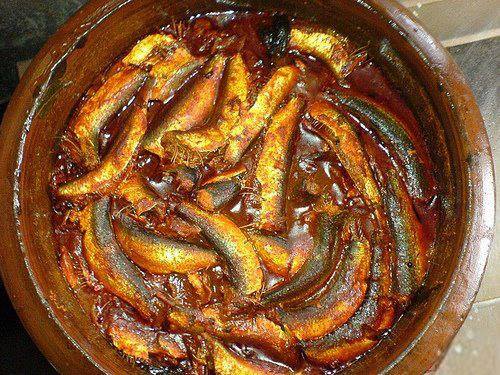
Photo credits : Shymon

Photo credits: Shymon

In Kerala, sardines are always available fresh from the sea. Rich in Omega-3 fatty acids, sardines are prepared in most households as a staple, especially as a fish curry. Sardine fish curry is one of the most popular dishes in Kerala, and it is not only very tasty, but very spicy too. Continue reading

Citizen Science in Belize – Update on Lionfish Jewelry: Part 2

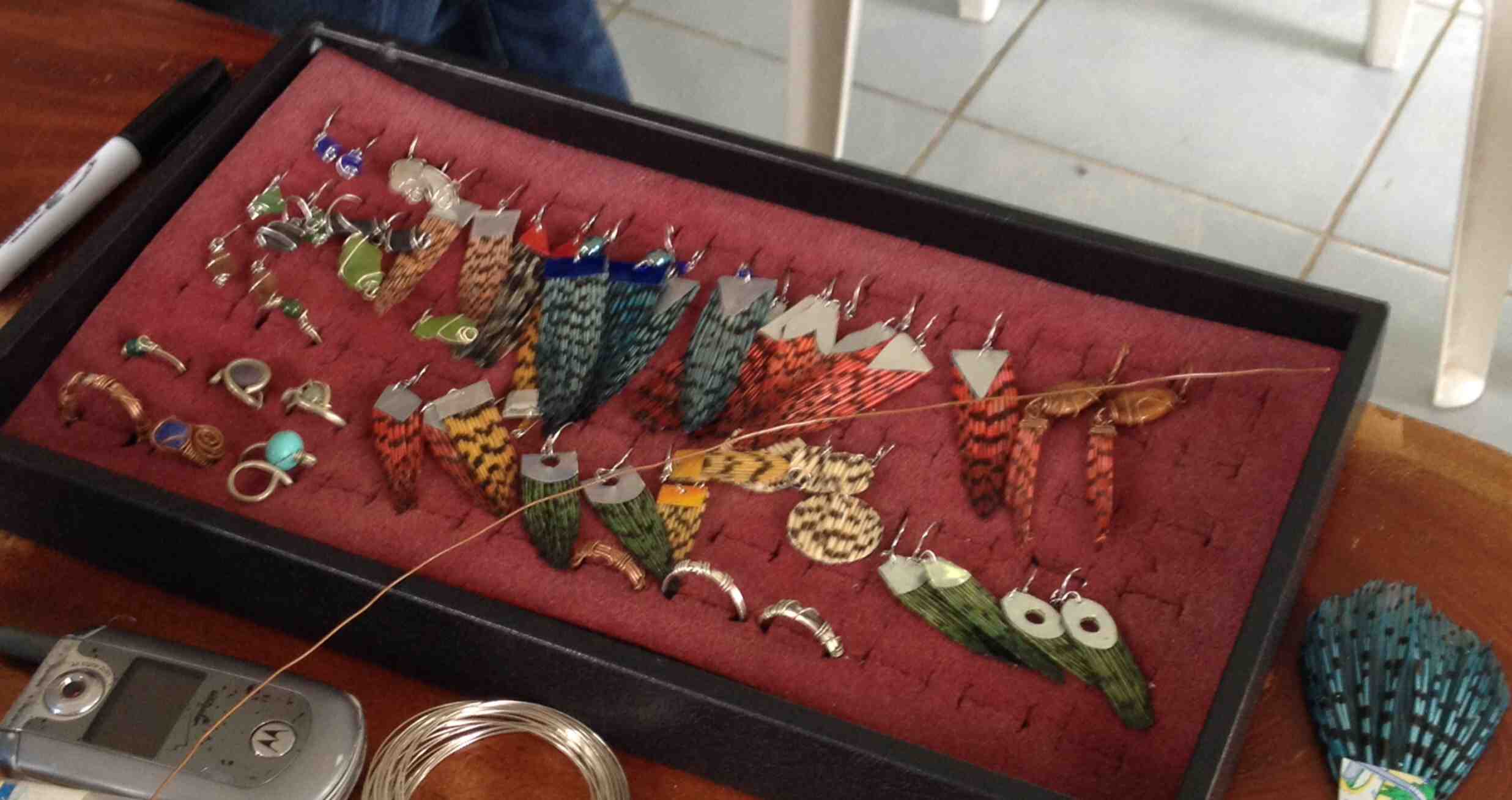
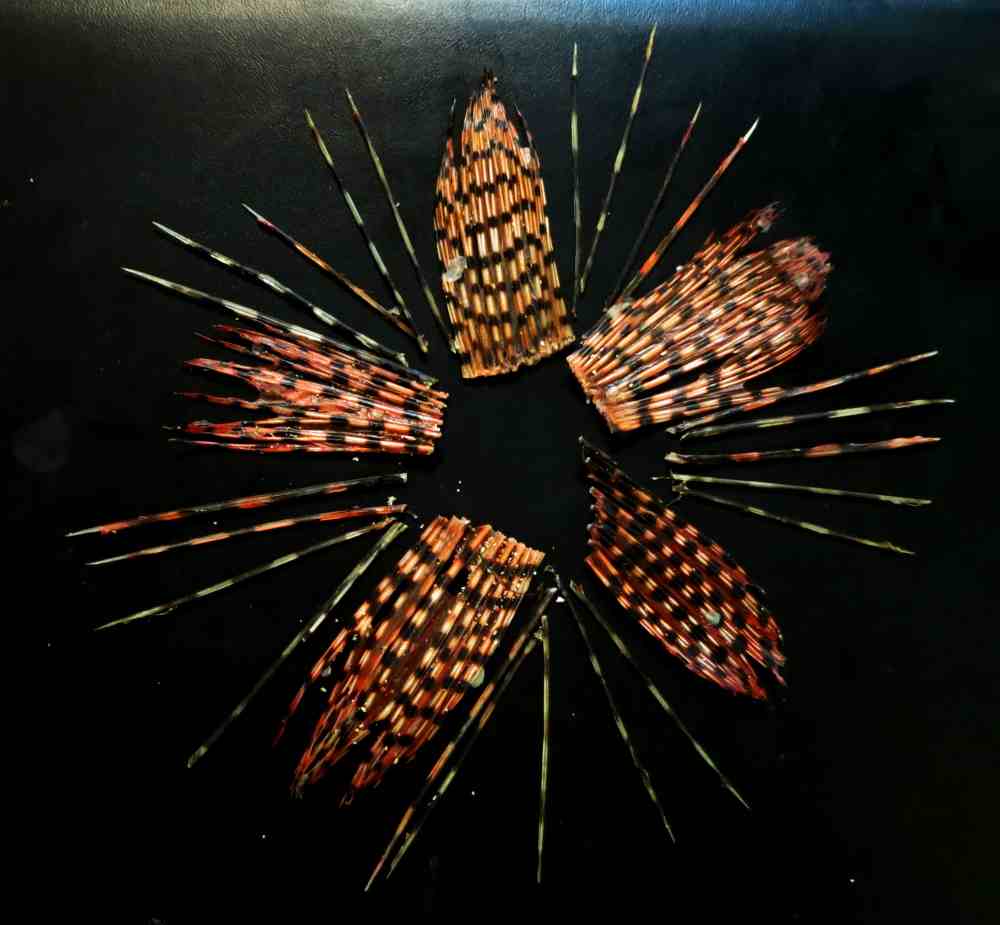
Assorted lionfish jewelry from Palovi Baezar, Punta Gorda, Belize

Assorted lionfish jewelry from Palovi Baezar, Punta Gorda, Belize

In Part 1 of this post I wrote about my recent visit to Belize to help with further development of the nascent  market for lionfish jewelry; one of several market-based approaches to addressing the threat to Southwest Atlantic marine ecosystems posed by the invasion of this non-native species. I noted that the market is most advanced in the area around Punta Gorda, in Southern Belize, in large measure due to the support provided by ReefCI which has provided training on jewelry making to a group of local women and is supplying them with lionfish spines, fins, and tails as well as marketing assistance.

Lionfish spines, fins, and tails ready for jewelry

Lionfish spines, fins, and tails ready for jewelry

While ReefCI’s involvement has been instrumental in getting things started, further development and expansion of the market will require engagement with artisans and women’s groups in other parts of the country, particularly areas closer to major tourist markets. Interventions are also needed to develop a reliable and sustainable supply chain for lionfish jewelry production and sales. I was pleased to hear from one of the jewelry makers in Punta Gorda that a local fisherman had approached her about selling lionfish tails. This was music to my ears, as one of the motivations behind the lionfish jewelry idea has been to up return to fishers in order to create added commercial incentive for them to hunt lionfish (the fish cannot be caught using conventional fishing methods such as hook and line or nets, but must instead be speared or hand-netted by diving). Continue reading

Controlling Invasive Lionfish – Update on Market Solutions: Part 2/2 — Lionfish Art

spines and tails-photo3

Array of dried lionfish spines and tails -ready for jewelry use Credit: ReefCI

In Part 1 of this post regarding market-based solutions to fighting the lionfish invasion that is threatening coral reef and other marine ecosystems throughout the Caribbean, Gulf of Mexico, and Southern Atlantic Seaboard of the United States, I wrote about the challenge of developing commercially sustainable strategies for undertaking the systematic removals that are needed to keep lionfish populations under control. I discussed the need to develop a series of vertical markets, pointing to promotion of lionfish as a seafood choice as the most obvious of these. Capture of juvenile lionfish for the aquarium trade as another.  A third market, and one in which I’m personally involved, is use of lionfish spines and tails for jewelry and other decorative items.  Continue reading

Know Your High Seas, EEZs, And 1-2-3s

EEZs are shown in green and high seas in blue. EEZs comprise 42% of the planet’s oceans.

EEZs are shown in green and high seas in blue. EEZs comprise 42% of the planet’s oceans.

We are in awe of the scientists who help us understand this topic we write on and link to from time to time. The metrics required to understand overfishing in any meaningful way cannot be simple. But, a marker for a fishing zones we had not even known existed–the EEZ–is a good place to start counting:

The ocean is a big place, but not all seas are created equal. While 58% of the seas are classified as “high seas,” and open to access from all nations, there are over 150 exclusive economic zones (EEZs), which are the sole domain of the countries that operate them. EEZs comprise the remaining 42% of the ocean. The patchwork quilt of economic interests that blanket the ocean pose a problem for the fish who live there and the fisheries that exploit those fish. Continue reading

Controlling Invasive Lionfish – Update on Market Solutions: Part 1/2


I’ve posted previously about the lionfish invasion that is threatening coral reef and other marine ecosystems throughout the Caribbean, Gulf of Mexico, and Southern Atlantic Seaboard of the United States. As I noted in earlier posts, it is the general consensus of the scientific and conservation community that eradication of lionfish from the Atlantic is impossible. There have been some anecdotal reports that native predators such as groupers and snapper are beginning to recognize lionfish as prey, but there is no systematic evidence, as of yet, of widespread predation. So the conclusion remains that human intervention is the only way to keep lionfish populations in check. The good news is that there is growing evidence that systematic removal efforts can indeed be effective in controlling lionfish populations and in reversing their negative impact on reef health. A study published earlier this year found that populations of snapper and grouper rebound by 50-70 percent once lionfish are removed. And it isn’t necessary to remove 100 percent of lionfish for recovery of native fish populations to take place; the study found that reduction of lionfish populations by as little as 75 percent will do the trick. This is important, given difficulties in reaching lionfish at depths beyond the limits of divers.  Also, removal efforts may become more difficult over time, as lionfish on reefs where regular culling takes place begin to wise up and hide from divers (click here for a cute poetic rendition of findings of a study on this behavioral adaptation).

Thus the challenge is to find a sustainable basis on which to undertake the systematic removals that are needed to keep lionfish populations under control. Continue reading

Natural Capital Valuation and Protection of Marine Megafauna

Photo © Fabrice Jaine

I’ve noticed a number of positive and interesting developments as of late in the area of marine species protection, pointing to an increasing recognition, by policymakers, of the value of natural capital and associated ecosystem services, particularly the value arising from ecotourism.

In February of this year, the Government of Indonesia granted full protection to manta rays within its nearly 6 million square kilometer exclusive economic zone (EEZ), making it the world’s largest sanctuary for manta rays. This reverses the trend of the past three decades wherein Indonesia has had the dubious distinction of being home to the world’s largest fishery for sharks and rays. Why the reversal? It seem that studies showing that the ecotourism value of a manta ray is an estimated $1 million over its lifetime, as compared to the onetime value of several hundred dollars for its gill rakers and meat played a key role in persuading policymakers to take action to protect the iconic species.

A few weeks later, the President of Palau announced that the country’s entire 200 nautical mile EEZ will be declared a marine sanctuary and closed to commercial fishing and seabed mining.  This follows a move a few years earlier to declare Palau a shark sanctuary. In explaining the reasoning behind the moves Palau’s president noted that a dead shark is worth several hundred dollars, whereas a live shark is worth $1.9 million in tourism during its life span, and that his country will promote scuba diving, snorkelling and ecotourism as an alternative income to commercial fishing. Continue reading

If You Happen To Be In Denver

We are always on the lookout for more information about counter-intuitive relationships between various communities of outdoor enthusiasts–including those involving people with guns, bows & arrows, and fishing rods–and their collaboration with/as conservationists. An op-ed article today on the Atlantic‘s website, by Tovar Cerulli, got us thinking about posting something we would title “Hunters, Anglers, Conservationists:”

For many environmentalists, the word “hunter” suggests a mindless brute, an enemy of nature who loves guns, kills for fun, and cares nothing for biodiversity or ecological integrity. For many hunters, the word “environmentalist” suggests a self-righteous tree-hugger, an enemy of freedom who hates guns, has no respect for hunting, and imagines nature as a Disney-like fantasyland where humans should not tread.

Though these stereotypes contain grains of truth, hunters and environmentalists aren’t as separate as many imagine. The Nature Conservancy counts many hunters among its members and staff and works closely with hunting-conservation organizations. Likewise, Pheasants Forever has thousands of non-hunting members who appreciate the organization’s work on behalf of native prairie habitats, wetlands, butterflies, and clean water.

Then we clicked through his byline to see that he is affiliated with this organization that is hosting an event this weekend in Denver and decided this would make a more interesting post: Continue reading

Ocean Ownership And Caveat Emptor

carved-ocean

The U.S. has laid claim to 2.5 billion acres of coastal seas, but that vast area produces very little seafood for Americans. Therein lies a dilemma: should the U.S. cultivate giant offshore fish farms in its piece of the sea or keep taking most of the fish we eat from foreign waters?

Conservation magazine raises the following question, and goes a long way to answering it in their current issue:

NATIONS HAVE CARVED UP THE OCEAN. NOW WHAT?

…In the minds of most consumers, there is a clear dividing line between which fish are wild and which are farmed. But the truth is that this line is increasingly a blurry one.  Continue reading

UK Chef Uses Celebrity To Shame Dodgy Fish Retailing

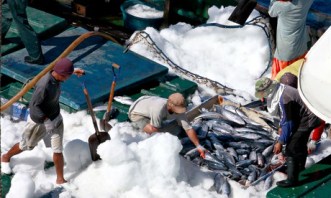
A catch of tuna from an illegal purse seine fishing vessel is loaded onto a cold storage vessel off the Indonesian coast. Photograph: Alex Hofford/AFP/Getty Images

A catch of tuna from an illegal purse seine fishing vessel is loaded onto a cold storage vessel off the Indonesian coast. Photograph: Alex Hofford/AFP/Getty Images

Bravo to one Top Chef who is using his media power to good effect, a story we thank the Guardian for reporting (click the image to the left to go to the source):

Tesco is facing the wrath of TV chef Hugh Fearnley-Whittingstall and environmental pressure group Greenpeace after stocking a cut-price brand of tuna linked to a controversial fishing method that can kill sharks, rays and turtles.

The supermarket switched its own-label canned tuna to environmentally friendly pole-and-line caught sources in 2012 in a high-profile change after criticism from Fearnley-Whittingstall and his Fish Fight campaign. But later the same year Tesco began to stock the Oriental & Pacific brand of tuna, which is caught using the purse seine method – where large nets scoop up all kinds of ocean creatures attracted by floating rafts known as fish aggregation devices. Continue reading