The Life and Times of a Kerala Fishing Town

Returning with the day's catch

Returning with the days catch

We’ve written previously about Keralalites’ love for fish. However, eating it is only half the story; how it enters into people’s lives is another part of it. Here we’ll share how daily life starts for many locals in a fishing town.

Fishermen usually leave their nets in the water overnight and come back in the morning with prayers in their heart for a good catch. Often luck is with them and their prayers are answered, primarily due to the healthy waters along Kerala’s coastline. Continue reading

Kerala’s Brainy Cuisine

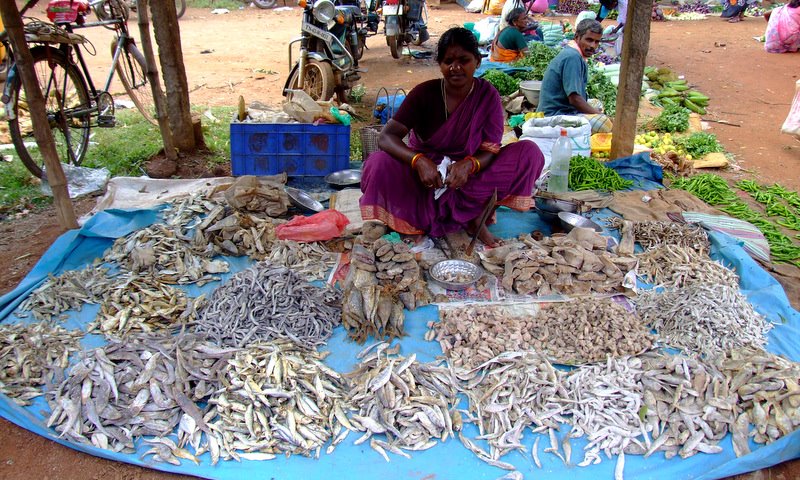
Dry Fish

Dry Fish

The state of Kerala is known to be the most literate state in India and one is able to understand why after noting the Malayali’s profound love for fish.

Fish is an integral part of Kerala cuisine, including breakfast, indicating the vast diversity of recipes that are available considering it is often eaten  twice or thrice a day. The benefits of fish are well publicized, specifically that the Omega 3 fatty acids help in brain development. Continue reading

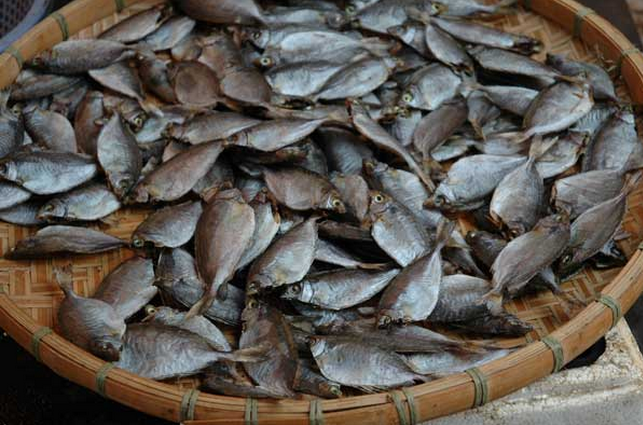
Fish Stock

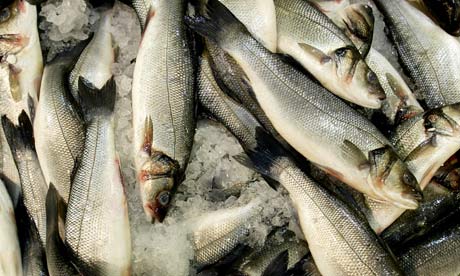
A display of Sea bass for sale at Billingsgate Fish Market in London. Photograph: Scott Barbour/Getty Images


Seth got us started with historical perspective on this topic a couple years back, and Phil recently created the most popular series of posts of the year, also on this topic; we have even tried sharing a sense of humor when possible.  But grim tidings continue:

First it was the cod, then the haddock, the swordfish and even the anchovy – now sea bass looks likely to join the list of no-nos for eco-conscious dinner party menus.

Stocks of the palatable species have sunk to their lowest in the past 20 years, according to a new assessment by the International Council for the Exploration of the Seas. Continue reading

Citizen Science in Belize – Update – If You Can’t Beat’em, Wear’em

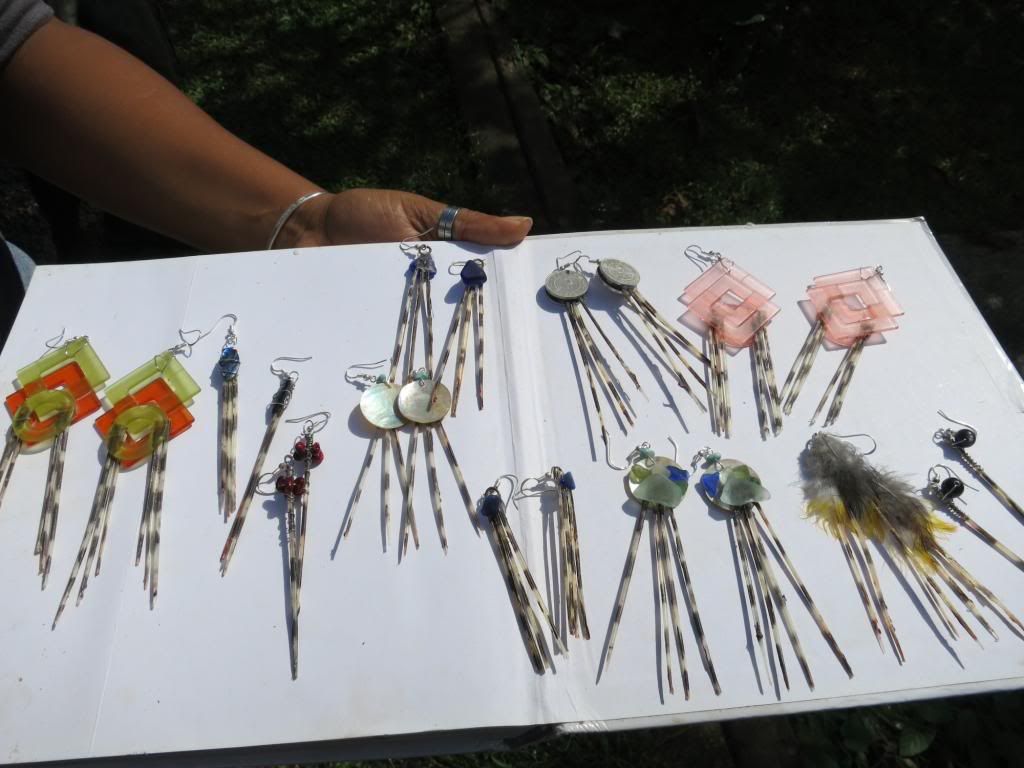
Lionfish spine earrings crafted by Palovi Baezar, Punta Gorda, Belize. Credit: Polly Alford, ReefCI

In earlier posts about my volunteer experience in Belize with ReefCI, I talked about the lionfish invasion that is threatening coral reef and other marine ecosystems throughout the Caribbean, Gulf of Mexico, and Southern Atlantic Seaboard of the United States, and noted that, at least for the foreseeable future, human intervention, particularly the establishment of a commercial fishery for the species, appears to be the only solution to keep the invasion under control.

I mentioned the idea of lionfish jewelry as a possible way of increasing the economic return to fisherfolk who may otherwise be reluctant to go after lionfish given the difficulty of catching them (the fish must be harvested by spearing or hand netting rather than through traditional methods such as lines or nets). I’ve been pleased to learn that at least one artisan in Belize has picked up on the idea, using some of the lionfish spines that I collected while I was there. She has already crafted some beautiful earrings (see photo above) and is working on other jewelry items as well as decorative mirrors. Elsewhere, jewelry crafted from lionfish tails and fins is being sold online, and through a retail outlet in Curaçao.  Continue reading

Fish Feed

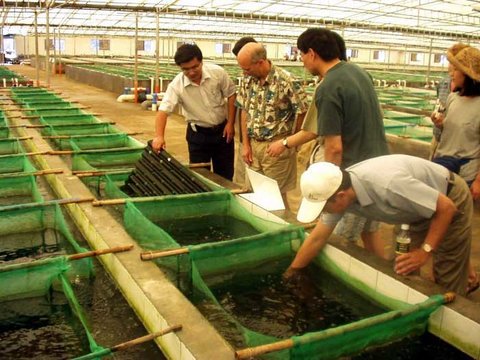
Aquaculture is found world-wide but one irony of the industry is that often wild caught fish are used as feed for their farm raised cousins, which is both counter-productive and environmentally unsustainable. A recent breakthrough by scientists at the University of Maryland Center for Environmental Science’s Institute for Marine and Environmental Technology will make that vicious cycle a thing of the past.

“Aquaculture cannot sustainably grow and expand to meet growing global population and protein demand without developing and evaluating alternative ingredients to reduce fishmeal and fish oil use,” said the study’s lead author, Dr. Aaron Watson.

Supported by another paper published in the Journal of Fisheries and Aquaculture, the team has proven that a completely plant-based food combination can support fast-growing marine carnivores like cobia and gilthead sea bream in reaching maturity just as well as—and sometimes better than—conventional diets of fish meal and fish oil made from wild-caught fish. Continue reading

Citizen Science in Belize: Part 2/2 – If You Can’t Beat’em, Eat’em

Photo by Alexander Vasenin

Lionfish sushi – Photo © World Lionfish Hunters Association (click on photo to visit their website)

In Part 1 of this post I talked about the lionfish invasion that is threatening coral reef and other marine ecosystems throughout the Caribbean, Gulf of Mexico, and Southern Atlantic Seaboard of the United States.  Scientists, environmental groups and governments that are studying the problem have all come to the conclusion that it is probably impossible to eradicate lionfish in the Atlantic – they are here to stay. Continue reading

Citizen Science in Belize: Part 1/2

Photo © ReefCI

Photo © ReefCI

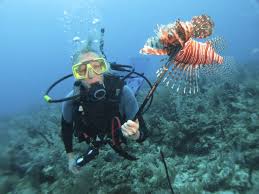
It might seem strange to accompany a posting about marine conservation with a photo of a fish on a spear, but in this case, it is entirely warranted.

I recently returned from the Sapodilla Cayes Marine Reserve in Southern Belize, where I spent two weeks working as a volunteer with ReefCI, a NGO dedicated to coral reef ecosystem conservation. Located 30 miles off the coast of Belize on the southern tip of the Mesoamerican Barrier Reef (the second largest in the world, after Australia’s Great Barrier Reef), the Sapodilla Cayes constitute a unique ecosystem.

Along with other volunteers, I assisted the ReefCI marine biologist with population surveys of conch, lobster, and commercial fish species, as well as coral reef health checks. At least one, and sometimes two surveys were carried out each day. The data collected is provided to the Belize Fisheries Department as well as to other cooperating NGOs.

Now about that fish on a spear. One of ReefCI’s projects is lionfish control. Spears Continue reading

“Buy a Fish, Save a Tree”

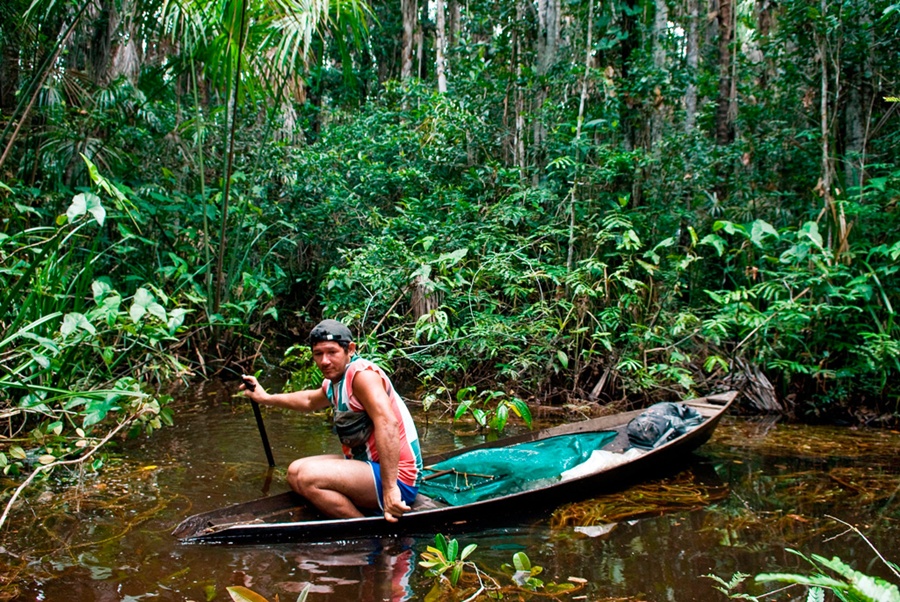
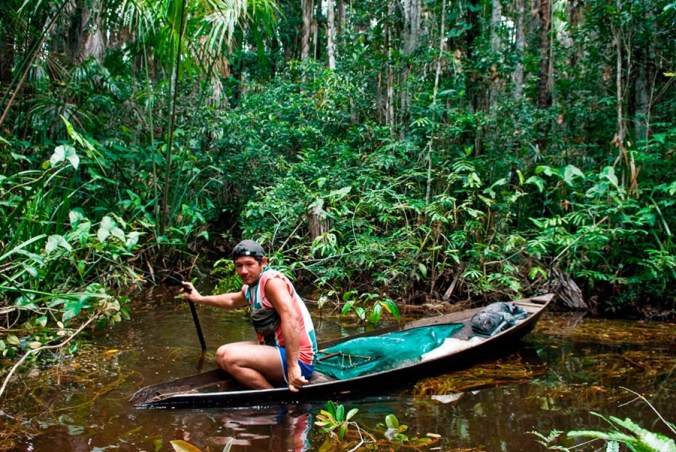
A fisherman on the Rio Negro Photo courtesy of Discover Magazine

A fisherman on the Rio Negro – Photo courtesy of Discover Magazine

One would normally associate conservation with protecting the natural environment and the animals in it, but this Discovery Magazine article shows a new, almost counter-intuitive, way the local people are helping conserve and protect the Amazon Rainforest.

At sunrise on a September day in 1991, as Scott Dowd’s riverboat floated up the Rio Negro in Brazil, flocks of shrieking macaws streaked the sky red and gold. Otherwise, “my full field of vision was filled with jungle,” he remembers.

Best of all for the self-described “fish nerd” from Weymouth, Massachusetts, the dark waters beneath his boat teemed with beautiful fish—species he’d kept in aquarium tanks since he was 10. Now he was headed to the place they’d come from: Barcelos, a town of 20,000 in the heart of the Amazon.

But when he got there, he was horrified.

The riverfront was jammed with men in dugout canoes. They had come from the surrounding municipality, a rainforested area the size of Pennsylvania, bringing hand-woven baskets lined with plastic, now brimming with tiny, colorful fish. Tubs of the fish they caught would fill the entire bottom floor of an 80-foot ferryboat headed to Manaus, 280 miles to the south.

The fish were bound for exporters supplying home aquaria around the world. The estimated catch of tropical fish leaving the area, Dowd discovered, was more than 40 million fish per year. “My kneejerk reaction to this was, this was out of control!” he says.

But now, 22 years later, he eagerly admits: “I could not have been more wrong.” Continue reading

The Love/Hate Relationships of Icelandic Steeds and Stockfish: Ichthyophagy

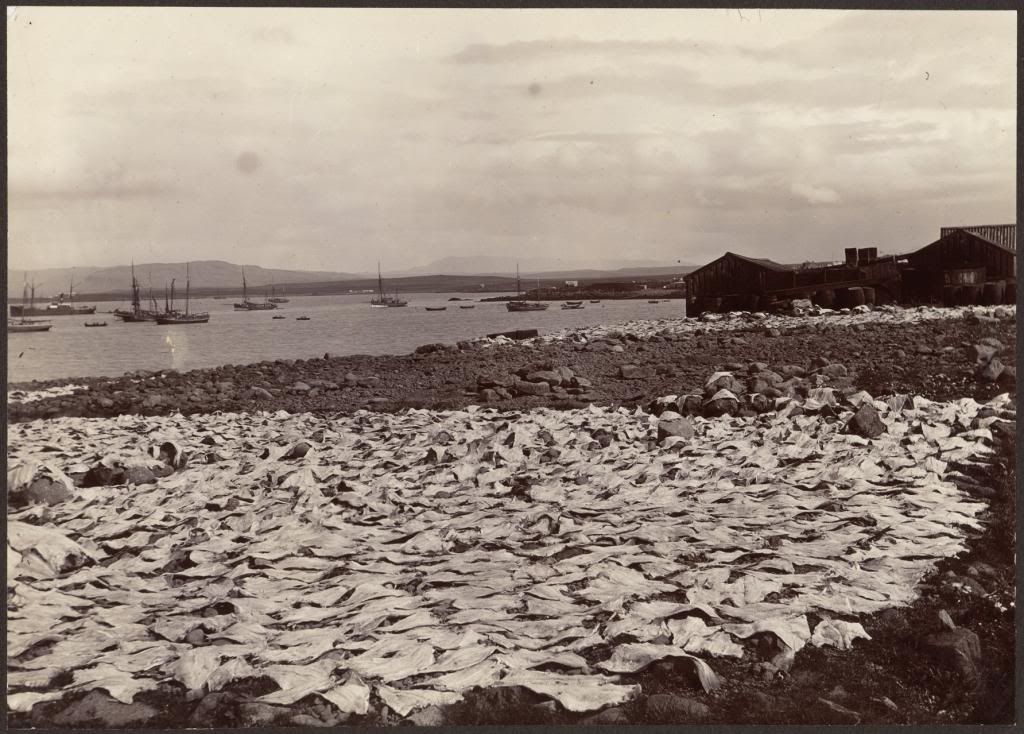
Reykjavík, Fish drying and shark oil station. Collodion print by Frederick Howell ca 1900. Bequest of Daniel Willard Fiske; compilation by Halldór Hermannsson; Cornell University Library Rare & Manuscript Collections.

Every account of travel in Iceland will cover the national meals in some fashion, but normally they are portrayed as quaint and disgusting. Many of the travelers of the period address the ‘unhealthy penchant for putrefied foods’ that revolved around stockfish. This included salmon and some other species but mostly meant cod, which was quite abundant in the oceans around the island. The fish would be cleaned and dried, and sometimes smoked, to provide food throughout the year, and the same applied for mutton. Dairy products from cattle, namely butter and cream, was often allowed to go rancid, much to the dismay of continental Europeans. Here is a paragraph I’ve translated from Jules-Joseph LeClercq, the Belgian who I referred to in my last post about Icelandic equitation, in his book Terre de Glace (1883):

I do not know how I can still respect those who are able to digest the horrible dishes to which my host introduced me, in particular dried shark-meat and whale fat. Overcoming my repugnance, I wanted to taste these incredibly novel delicacies, and was rewarded with an upset stomach for eight days. Continue reading

Urban Fish Market

photo credits: Ramesh Kidangoor

photo credits: Ramesh Kidangoor

Urban fish markets are a common sight in Kerala. The extensive network of rivers, coastline and backwaters means that fish is central to the local menu and these open-air markets provide a daily supply of fresh fish. Continue reading

Veeshuvala – Local Fishing Net

Photo credits : Ramesh Kidangoor

Photo credits : Ramesh Kidangoor

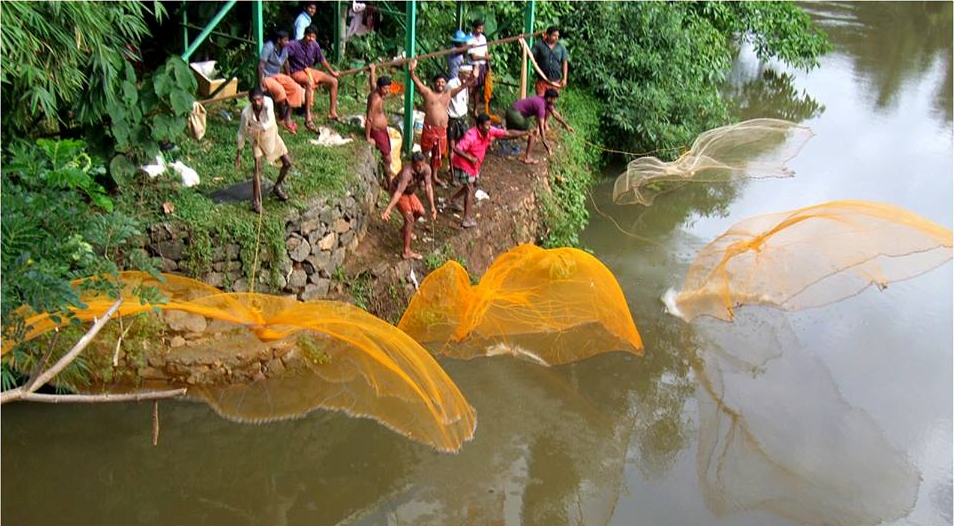
There are many fishing techniques employed in the backwaters, rivers and canals of Kerala. The local people have a name for each tool and method employed to trap the fish. The most common is Veeshuvala, where a circular net, six to seven meters in diameter and weighted at the edges, is thrown from the shores in a distinctive fashion – a quick spin of the body to gain momentum, then releasing the gathered net at just the right moment. The weights ensure that the net flares out like a umbrella before it lands on the water. A string attached to the hub is then pulled from the banks to haul in the trapped fish. This method of fishing is very common in Kerala especially during monsoon. Continue reading

WED 2013: Europe dumps fish dumping

WED 2013 - Raxa Collective

On June 5, we’ll celebrate World Environment Day. This year UNEP focuses on the theme Food waste/Food Loss. At Raxa Collective we’ll be carrying out actions and sharing experience and ideas. Come and join us with your ideas and tips to preserve foods, preserve resources and preserve our planet.

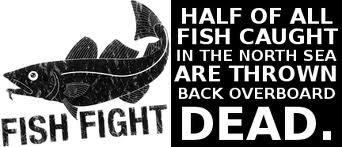
www.fishfight.net

…and about 80 per cent of Mediterranean stocks and 47 per cent of Atlantic stocks are overfished. It may seem rather odd but the European Union’s policy to avoid overfishing consists in tossing dead fish back in the sea if a fleet exceeds its quota.

For decades industrial fleets have been subsidised to plunder the European waters working under the rules of the  Common Fisheries Policy devised in the 1970s. And the rule of ‘discards’ has been let’s say counter-productive in reviving the fish stock. The practice allows fleets to net quantities of fish exceeding their quota, then simply throw any unwanted dead fish overboard.

Continue reading

Fisheries And European Responsibility

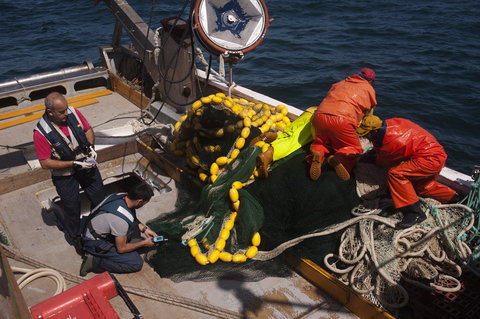
Laura Leon for The International Herald TribuneGovernment inspectors, left, check out a fishing vessel off the Spanish port of Cádiz.

Laura Leon for The International Herald Tribune
Government inspectors, left, check out a fishing vessel off the Spanish port of Cádiz.

Thanks to Green Blog:

Two weeks ago, the European Parliament voted overwhelmingly to require that the 27-nation bloc’s fisheries be managed on a sustainable basis within a few years. Continue reading

Flavours Of Kerala- Karimeen (Pearlspot)

Kerala’s extensive network of rivers and backwaters means that fish is plays a central role on any menu and Karimeen (Pearlspot) has come to symbolise that part of the cuisine. Karimeen is a bony fish, treasured for its taste. Its most famous recipe is Karimeen Pollichathu where it is marinated in masala, wrapped in a banana leaf and broiled. Continue reading

Friends In High Places

Not all marine creatures have equal opportunity of species survival.  As in any social milieu, some are better connected than others; some have benefactors to look out for them; others do not. Thanks to Green Blog, more on the protection of certain charismatic species (but not not others) in the wild blue yonder:

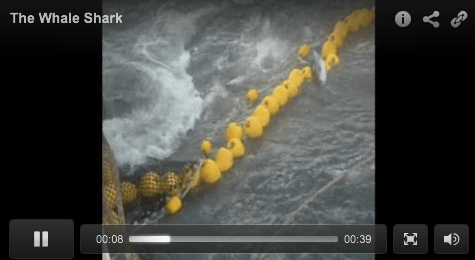
Whale sharks get some respect; the bigeye tuna, not so much.

That was the gist of the message from the Western and Central Pacific Fisheries Commission, whose member nations agreed this week at a meeting in Manila to help reduce whale shark deaths in Pacific fisheries. The commission did not act on a recommendation from scientists that the catch of bigeye tuna be sharply reduced. Continue reading

An Award, In A Word: SafetyNet

Safetynet won this year’s James Dyson Award and is explained on the website of that award program:

Function

The goal of the SafetyNet system is to make commercial fishing more sustainable by significantly decreasing the numbers of non-target and juvenile fish caught during the trawling process. Escape Ring devices form a part of this system, and are currently the focus of the development work. The rings tackle the problem of

Continue reading

Salmon, Protected

Click the image above to go to the story in Green Blog:

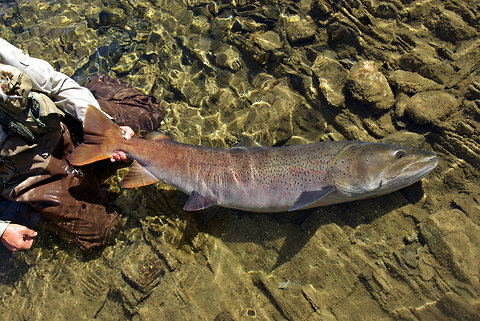
They call them “river wolves” — hundred-pound salmon large enough to snack on ducklings and on mice and muskrats fording the rivers. Five species of these huge fish inhabit the river waters of China, Mongolia, and eastern Russia, and all of them are finally on the “red list” of species compiled by the International Union for Conservation of Nature. Continue reading

Understanding Atlantic Bluefin Declines

An excellent book review in this week’s New Yorker, about a topic we write on and link to from time to time:

Last year, in an effort to save the Atlantic bluefin from annihilation, Monaco proposed that the fish join animals like the giant panda and the Asian elephant on a list of creatures that cannot be traded—either alive or cut up for parts—across international borders. When the proposal came up for a vote at a U.N. meeting in Doha this past March, the U.S. voted in favor of it. “The science is compelling,” Tom Strickland, the Assistant Secretary of the Interior for Fish, Wildlife, and Parks, told the Times. “That species is in spectacular decline.” Nevertheless, the measure was defeated.