Cod’s Feeling the Heat

Zach Whitener, research associate at the Gulf of Maine Research Institute, holds a cod while collecting samples for a study. PHOTO:  Gulf of Maine Research Institute

Zach Whitener, research associate at the Gulf of Maine Research Institute, holds a cod while collecting samples for a study. PHOTO: Gulf of Maine Research Institute

As climate change has warmed the Earth, oceans have responded more slowly than land environments. But scientific research is finding that marine ecosystems can be far more sensitive to even the most modest temperature change. A telling effect of rising temperatures is the problems fishing is plagued by.

Cod was once so plentiful in New England that legend had it you could walk across the local waters by stepping on the backs of the fish. Now, though, this tasty species is in such trouble there that cod fishing is practically shut down. And scientists say it looks like rapid warming in the Gulf of Maine explains why regulators’ recent efforts to help the cod while allowing fishing were a failure.
Continue reading

On the Rocks

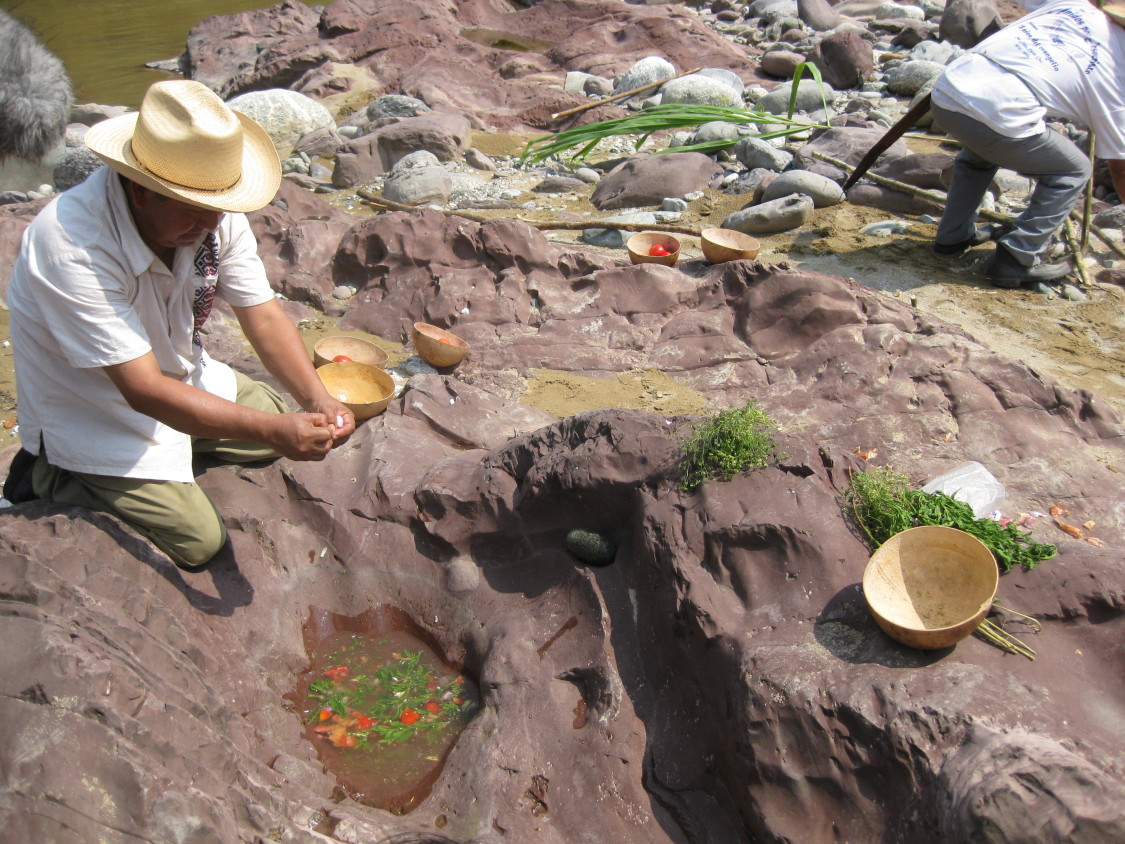
Chinatec elders prepare stone soup the traditional way, by the Papaloapan River. PHOTO: SARAH BOREALIS

Chinatec elders prepare stone soup the traditional way, by the Papaloapan River. PHOTO: SARAH BOREALIS

National Geographic’s The Plate explores the “global relationship between what we eat and why, at the intersection of science, technology, history, culture and the environment”. The latest in its daily discussion on food is the preparation of  real stone soup in Oaxaca, Mexico.

The soup originated in a remote ritual site in the Papaloapan River basin, about 12 hours by car from Oaxaca City, in the highlands of the Sierra Madre mountain range. The geography there is very rocky, and in the Pre-Ceramic [period,] Chinantec ancestors developed an elemental way to cook their food using fire and stone. The ritual site features large boulders excavated to serve as large cooking pots, and I guess you might say that the rest is history! The recipe for stone soup features local ingredients and really is a product of this unique environment.

Continue reading

What Lies Beneath Your Feet

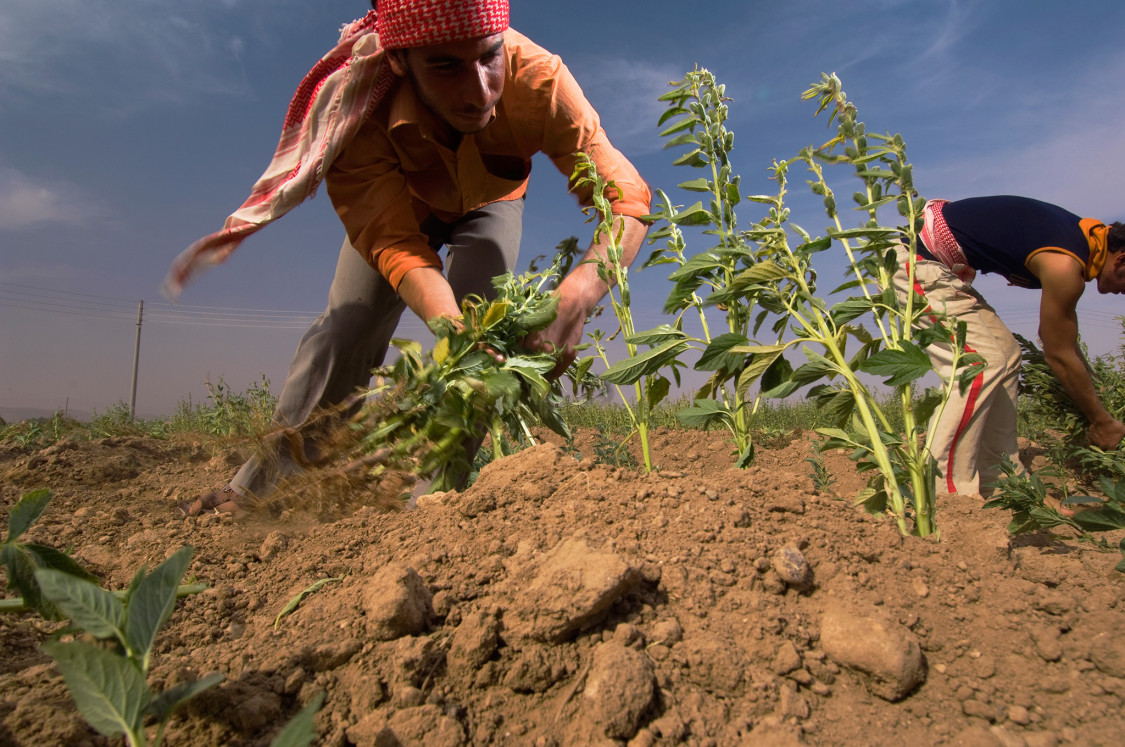
Farmers harvest sesame in Syria. PHOTO: JIM RICHARDSON

Farmers harvest sesame in Syria. PHOTO: JIM RICHARDSON

The 68th UN General Assembly declared 2015 the International Year of Soils. It aims to increase awareness and understanding of the importance of soil for food security and essential ecosystem functions. According to scientists, soil is being eroded faster than that the Earth can replace it. So the next time the words ‘dirt cheap’ come up, think again and take not the soil below your feet for granted.

Dirt is not only rare, but it’s complicated. To the uninitiated, dirt may look like grubby generic mush, but actually it has character, individuality, and a taxonomy all its own. Soil scientists recognize twelve major orders of dirt, each divided into suborders, groups, subgroups, families, and series, according to its various allotments of minerals and organic matter. Each dirt has a pedigree. Furthermore, dirt is proactive. It’s not an inert blanket; it’s a dynamic entity.

Continue reading

An NBA Star and a Campaign to Protect Sharks

Yao Ming has teamed up with the conservation nonprofit WildAid to spread the word that shark fin soup bears bad news. PHOTO: Toshifumi Kitamura/AFP/Getty

Yao Ming has teamed up with the conservation nonprofit WildAid to spread the word that shark fin soup bears bad news. PHOTO: Toshifumi Kitamura/AFP/Getty

Yao Ming may now be a retired professional basketball player but him making it to the  All-NBA Team five times is not a forgotten feat. That and the fact that at the time of his final season, he was the tallest active player in the NBA, at 2.29 m (7 ft 6 in). Ming, who was born in Shanghai, China, started playing for the Shanghai Sharks as a teenager. Now, miles away from the court, his life is still closely linked to the sharks – the animal kind. Ming is a strong advocate on protecting sharks and is pushing for a ban on shark fin soup, a delicacy that significantly contributes to the estimate of 1 in 4 sharks now being endangered.

The number of sharks in our seas has been steadily decreasing for decades. About 100 million sharks a year are killed — 73% of those are targeted for their fins, which are usually cut off before the shark is left to die.

Continue reading

Giving Food a Longer Life

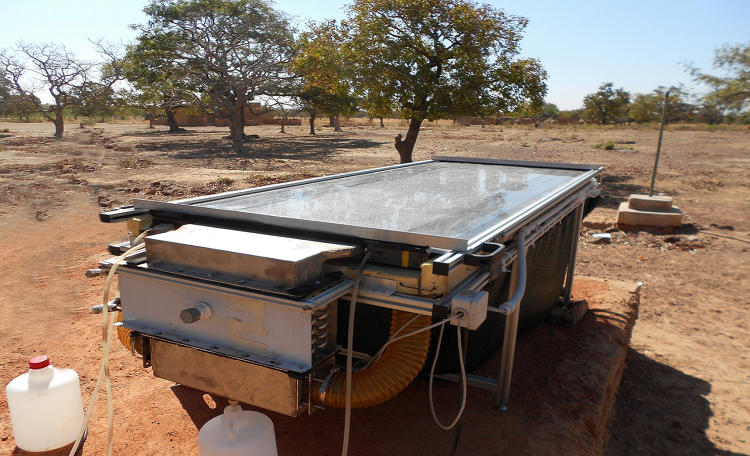
The FoodWa, which comes in two sizes, and is like a big ventilated box. The smaller "Batch" version can handle about 11 pounds at a time. PHOTO: CoExist

The FoodWa, which comes in two sizes, and is like a big ventilated box. The smaller “Batch” version can handle about 11 pounds at a time. PHOTO: CoExist

Each year, the world loses or squanders a third of the food it produces. This means that somewhere between planting seeds in fields and providing nourishment to the world’s 7 billion people, approximately 1.3 billion tonnes of food with a value of more than US$1 trillion is lost or wasted. These numbers are simply untenable in a world where, according to Food and Agriculture Organization, some 870 million people do not have enough to eat. In fact, according to the FAO-commissioned study that tallied these numbers, if just one-fourth of lost or wasted food were saved, it could end global hunger.

And drying food, to prevent it from rotting during storage, maybe a solution. A clean, green solution especially with the FoodWa system that uses solar energy to dry foods.

Continue reading

Forging Understanding Through Food

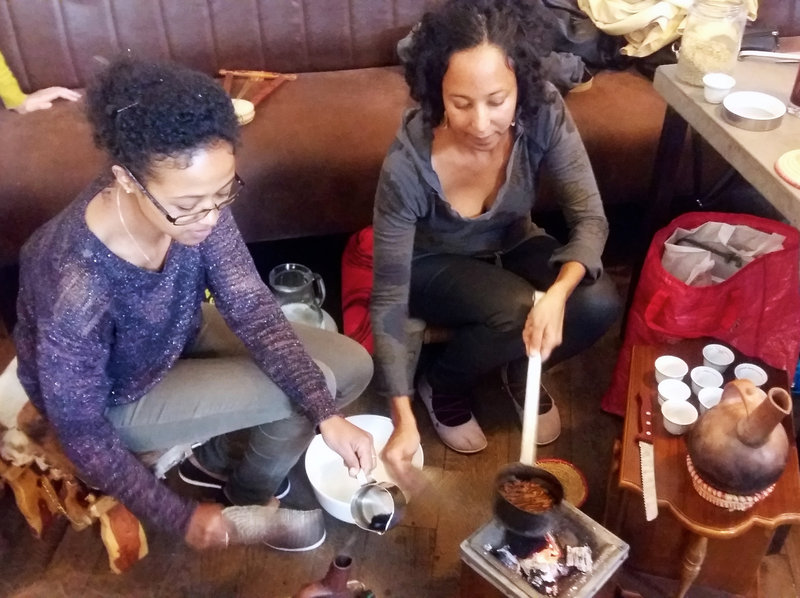
Luwam Melake (left), a recently arrived Eritrean refugee, and Saba Tesfay, who is half-Hungarian and half-Eritrean, wash, roast and grind coffee beans during a traditional Eritrean coffee ceremony. PHOTO: Lauren Frayer for NPR

Luwam Melake (left), a recently arrived Eritrean refugee, and Saba Tesfay, who is half-Hungarian and half-Eritrean, wash, roast and grind coffee beans during a traditional Eritrean coffee ceremony. PHOTO: Lauren Frayer for NPR

What are ways to combat xenophobia, an aversion to what is perceived as foreign? Especially when that involves fragile human spirits, miles away from their homelands and hoping on the faintest possibility of refuge in an alien land. Budapest is showing the way.

Customers crowd into a bustling Budapest restaurant for dinner. They open their menus, expecting to read about stuffed paprikas and Hungarian goulash.

But instead they find … Eritrean sourdough pancake bread. Afghan pie. Syrian sweets.

“It’s a little bit difficult, because not all the ingredients are available in Hungary. So a few of them are coming from Austria or other countries. But we can do it!” laughs Judit Peter, the bartender and director of special projects at Kisuzem, a trendy, bohemian bar in Budapest’s historic Jewish quarter. “People really like it. We’ve served 80 portions a day — and that’s quite a lot for a small kitchen like ours.”

Continue reading

Helping Salmon Get By

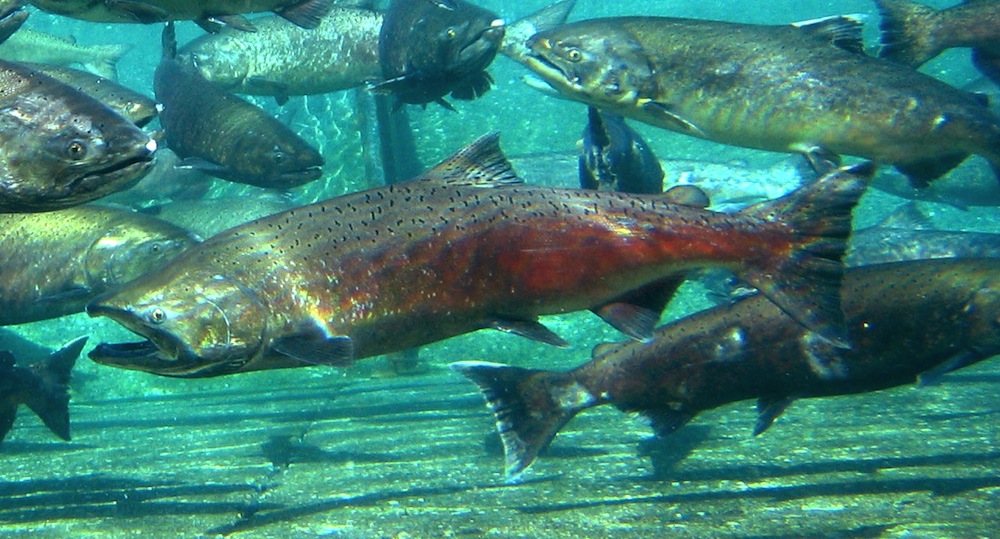
Drought and man-made obstacles lead fishery to boost releases of Chinook into Sacramento River, in hopes that a few thousand return to spawn.  PHOTO: Livescience

Drought and man-made obstacles lead fishery to boost releases of Chinook into Sacramento River, in hopes that a few thousand return to spawn. PHOTO: Livescience

To boost the dwindling population of natural chinook salmon in California, hundreds of thousands of fish are spawned and released by federal and state agencies every year. This year, 600,000 salmon were released earlier than normal because of a historic drought in California.

The California drought, the state’s worst on record, has taken a terrible toll on those already-diminished winter Chinook salmon runs. It’s not just that there isn’t enough water; there’s not enough cold water, especially after competing interests such as urban areas and big agriculture—each equipped with more political muscle than wild salmon advocates have—take their share. In 2014, the returning winter Chinook numbers were the worst that fishery officials had ever seen. In a normal year, about 25 percent of the eggs produce baby salmon healthy enough to migrate; last year, with only 5 percent surviving their infancy in the unusually warm water, nearly the whole winter run was wiped out.

Continue reading

Celebrating Flour Power

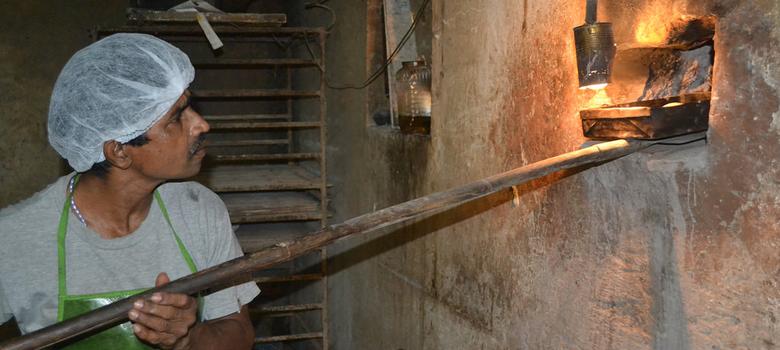
The Poderanchem Fest will pay tribute to the state's unique baking traditions and the people who keep them alive. PHOTO: Scroll

The Poderanchem Fest will pay tribute to the state’s unique baking traditions and the people who keep them alive. PHOTO: Scroll

India is home to celebrations that pan religions, occasions like harvest, birthdays of legendary heroes, and more. And now the country gets its first platform celebrating bakers. All the way from the tourist-laden beaches of Goa.

It’s the sound of Goa. Every morning at the crack of dawn, the bulb horn of the poder wakes up people across the state, encouraging them to start their day with cheap, freshly baked bread.  On Friday, the state’s humble bakers will finally get turn in the spotlight. Goa’s first Poderanchem Fest, or Baker’s Festival, being hosted in the leafy North Goa village of Succorro, will feature a baker’s parade and stalls selling traditional and new varieties of pao, in addition to the region’s favourite foods to eat the bread with.

Read more here.

Fortune at the Bottom of the Tea Cup

On Canadian tasseomancer Amy Taylor's vintage tea-leaf reading cups, your reading is determined by where your leaves fall on the preprinted symbols on the cups. PHOTO: Mike Taylor for NPR

On Canadian tasseomancer Amy Taylor’s vintage tea-leaf reading cups, your reading is determined by where your leaves fall on the preprinted symbols on the cups. PHOTO: Mike Taylor for NPR

Divining fortune from tea leaves has been around for almost as long as there has been tea, over five thousand years. Tea-Leaf reading which is also known as Tasseomancy like any other divination art has multiple origin histories. Tea-leaf reading tells fortunes using the symbols and the patterns formed by the residue of tea left in the cup. More of an art rather than a science, there are no universal guidelines that dictate what the patterns mean. Tea-Leaf reading is mostly done as a daily reading about life, love, work and money issues, though a longer timeframe may be determined as well.

Continue reading

Opening the Arctic Vault

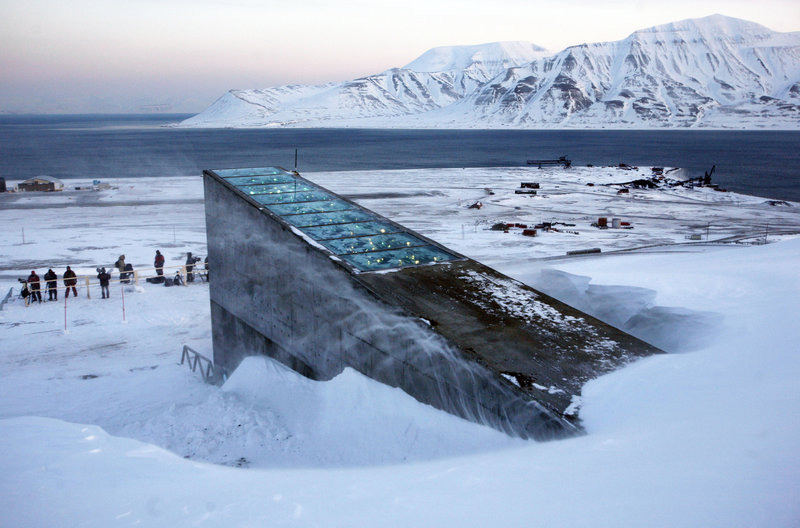
The Svalbard Global Seed Vault was inaugurated in 2008. The "doomsday vault" lies inside an Arctic mountain in the remote Norwegian archipelago of Svalbard. For the first time, scientists are taking some seeds out. PHOTO: John McConnico/AP

The Svalbard Global Seed Vault was inaugurated in 2008. The “doomsday vault” lies inside an Arctic mountain in the remote Norwegian archipelago of Svalbard. For the first time, scientists are taking some seeds out. PHOTO: John McConnico/AP

The ongoing civil war in Syria has led to the first-ever withdrawal from the Svalbard “doomsday” Global Seed Vault, a giant storage unit for plant seeds that’s tucked into the side of a frigid mountain in Norway. In the seven years since the Vault opened, hundreds of thousands of seed samples have gone into its icy tombs. And not one has come out—until now. This week the International Center for Agricultural Research in Dry Areas asked for the return of 325 little black boxes of seeds it had stored in the Svalbard vault. For many years, the center housed its own seed bank near Aleppo, Syria. Now, its scientists hope to use the Svalbard samples to regenerate that collection outside of their war-torn home.

Continue reading

When Food Unites

Vigorón served at El Gordito in Granada, Nicaragua. The combination of soft, starchy yucca; salty, rough pork cracklings; and tangy, cool slaw made with cabbage, onions, tomato, mimbre fruit (also known as mimbro), chile and vinegar offers a distinct interplay of textures and flavors. PHOTO: Julie Schwietert Collazo for NPR

Vigorón served at El Gordito in Granada, Nicaragua. The combination of soft, starchy yucca; salty, rough pork cracklings; and tangy, cool slaw made with cabbage, onions, tomato, mimbre fruit, chile and vinegar. PHOTO: Julie Schwietert Collazo for NPR

No matter how different our ethnic backgrounds, beliefs, views and values are, we can all sit around a dinner table and unite in sharing a meal that includes different tastes and types of food from all over the globe – the palate knows no boundaries and no limitations. In a divided country like Nicaragua, all differences melt when it comes to vigoron. The national dish that cuts across political ideologies, economic status, and strong preferences.

Continue reading

The Food Museum Is Here

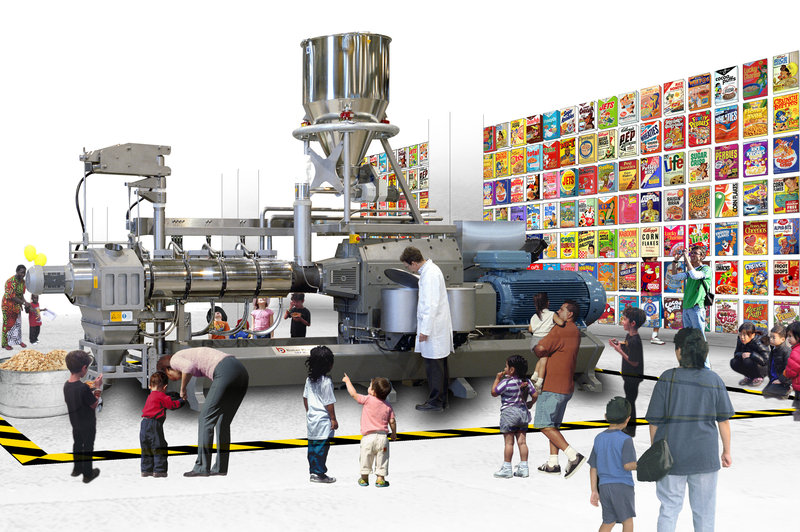
The Food and Drink Museum will open in its first permanent home – a mini-museum in Brooklyn — in October.  Above, an artist's rendering shows one potential exhibit – on ready-to-eat cereal — in MOFAD's final space. In the foreground is an extruder, a giant machine used to cook and shape cereal.

The Food and Drink Museum will open in its first permanent home – a mini-museum in Brooklyn — in October. Above, an artist’s rendering shows one potential exhibit – on ready-to-eat cereal — in MOFAD’s final space. In the foreground is an extruder, a giant machine used to cook and shape cereal. PHOTO: MOAFD

Everyone eats. People of all ages and backgrounds, from picky and apathetic eaters to gastronomes and food lovers, should care about food. Informed eaters are better eaters. They make better choices for their taste buds, health, community, and environment.Food is culture. It is more than simply what is on our plates: it is a common denominator of human relationships.Food is personal. People should be approached with a non-judgmental attitude about their diet.Food is participatory. To best learn about food, you must taste, smell, and think.Food is fun. A positive, non-fear-based outlook is the best way to approach food education.

The Museum of Food and Drink couldn’t have worded it more finely. And they are doing one better by working towards opening doors in Brooklyn come October. So hold on to all your questions about food (well the one about the chicken and the egg is still debatable), for answers may be at hand.

Continue reading

15,000 Seats and a Slice of History

At its height, the Brookdale could seat up to 15,000 people a day. No other restaurant on Earth could do that. PHOTO: Medium

At its height, the Brookdale could seat up to 15,000 people a day. No other restaurant on Earth could do that. PHOTO: Medium

It has the distinction of having been the world’s largest restaurant. A crown jewel in the cafeteria culture. A place at the centre of a community; a place where everybody could meet, a place that fueled artistic passions. Where everyone from Jack Kerouac to Ray Bradbury ate. A place steeped in revolution, built on the goodness of people. This is the story of Clifton’s Brookdale Cafeteria, Los Angeles.

Continue reading

Bringing Food Closer in South Africa

Lakheni is a social enterprise which harnesses the aggregated buying power of low-income communities to give them access to discounted staple food.

Lakheni is a social enterprise which harnesses the aggregated buying power of low-income communities to give them access to discounted staple food.

The Global Social Venture Competition (GSVC) provides aspiring entrepreneurs with mentoring, exposure, and $50,000 in prizes to transform their ideas into businesses that will have positive real world impact. And one of the winners this year is Lakheni, a service that could serve as a low-cost replacement for brick-and-mortar stores.

Continue reading

Sustainable Seafood, from Dock to Dish

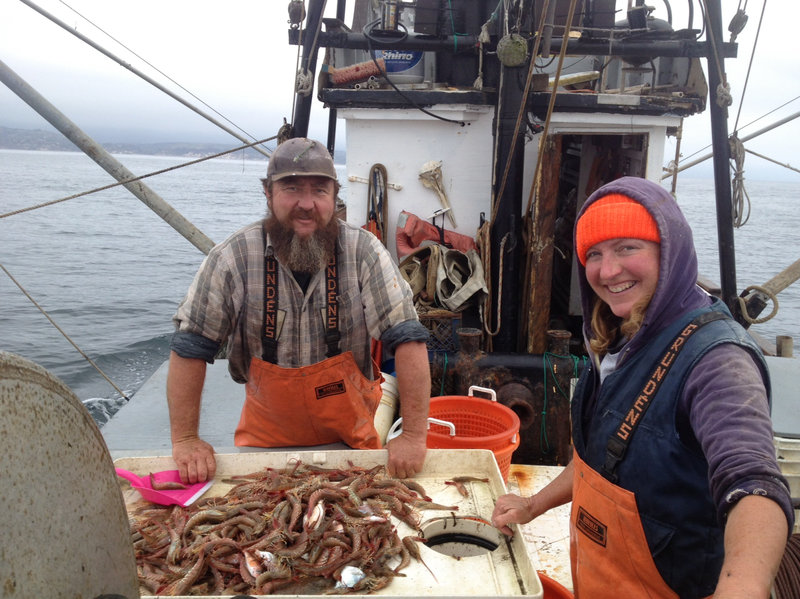
Sixteen Santa Barbara-based fishermen are participating in the Dock to Dish pilot program in California. Seen are Keith and Tiffani Andrews fishing for ridgeback shrimp on the fishing vessel Alamo. PHOTO:   Sarah Rathbone

Sixteen Santa Barbara-based fishermen are participating in the Dock to Dish pilot program in California. Seen are Keith and Tiffani Andrews fishing for ridgeback shrimp on the fishing vessel Alamo. PHOTO: Sarah Rathbone

You’ve heard of farm-to-table. At its heart, farm-to-table means that the food on the table came directly from a specific farm. Also emphasizes a direct relationship between a farm and a restaurant or store. The vocabulary of the movement is changing now to include produce from the seas, giving birth to the concept of dock to dish.

The pile of fish marks an important step toward a fundamentally different way that prominent chefs are beginning to source American seafood: the restaurant-supported fishery. Call it an evolutionary leap from community-supported-agriculture programs, which support local farmers, and community-supported fisheries, which support small-scale fishermen. Both models rely on members who share the risks of food production by pre-buying weekly subscriptions.

Continue reading

The Good Race Against Food Waste

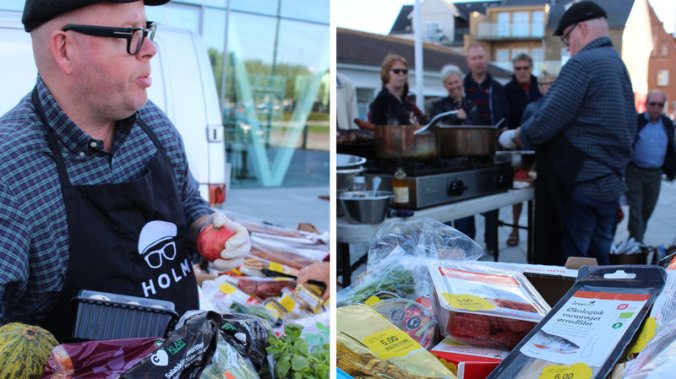
Claus Holm, a Danish celebrity chef, demonstrates at a festival on the Danish island of Fyn how expired products lurking at the back of the fridge can still be delicious. PHOTO: Sidsel Overgaard for NPR

Claus Holm, a Danish celebrity chef, demonstrates at a festival on the Danish island of Fyn how expired products lurking at the back of the fridge can still be delicious. PHOTO: Sidsel Overgaard for NPR

By 2050, the world will need 60 per cent more calories per year to feed a projected population of 9 billion. Cutting the rate of global food loss and waste could help bridge this food gap while creating environmental and economic benefits. And the people of Denmark are already well ahead in the race to cut food waste. While the Stop Wasting Food movement is the national embodiment of a collective consciousness, the need to cut back on waste has seeped through the consumer chain, as NPR finds.  Continue reading

Going Back to the Melon

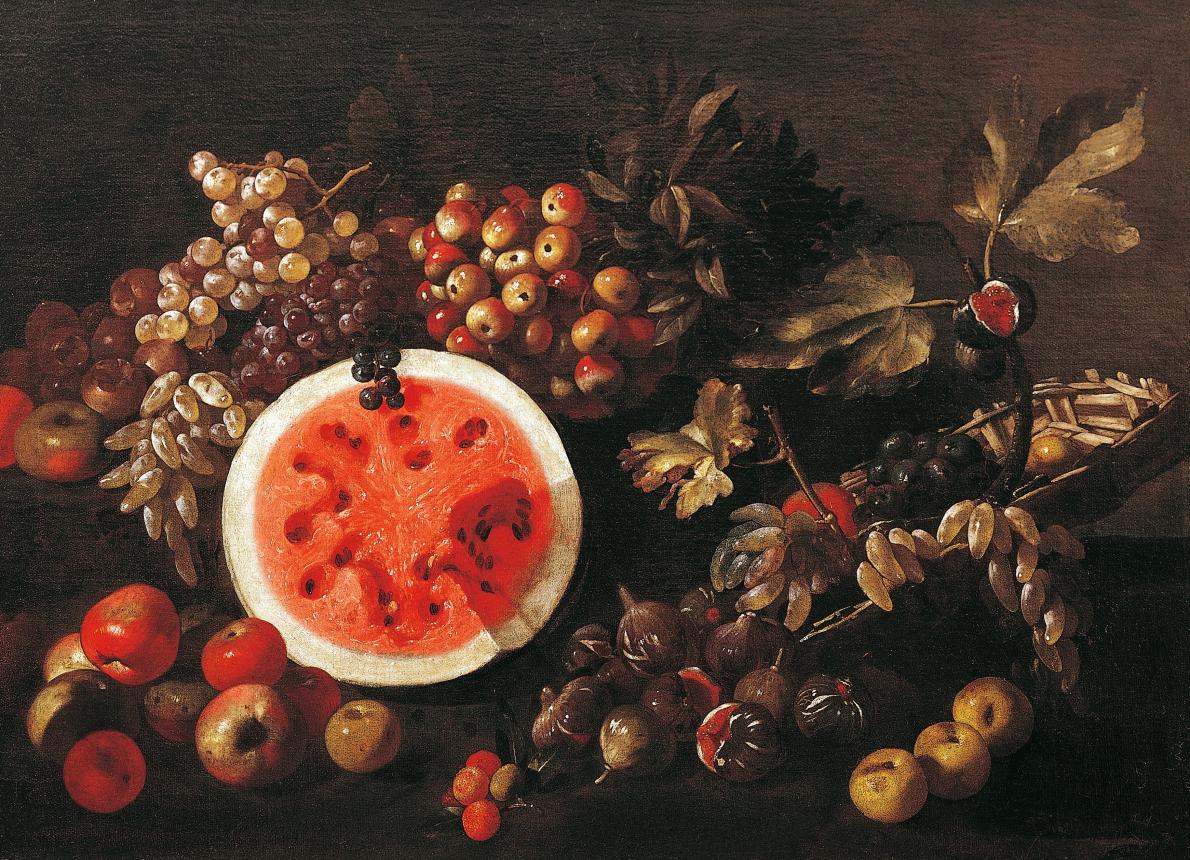
The watermelon has long inspired artists, such as Giuseppe Recco's Still Life With Fruit (1634-1695). The first color sketches of the red-fleshed, sweet watermelon in Europe can be found in a medieval medical manuscript, the Tacuinum Sanitatis.  PHOTO: Dea, A. Dagli Orti/Deagnostini/ GETTY

The watermelon has long inspired artists, such as Giuseppe Recco’s Still Life With Fruit (1634-1695). The first color sketches of the red-fleshed, sweet watermelon in Europe can be found in a medieval medical manuscript, the Tacuinum Sanitatis. PHOTO: Dea, A. Dagli Orti/Deagnostini/ GETTY

Watermelon may be the best picnic dessert nature ever created with its sweet juice cleverly bound inside that spongy red (sometimes yellow) matrix, and fully protected by psychedelic green rind. And no matter how you slice it, this green cannonball of nutrition is attracting scientific attention as an elixir that reduces muscle pain after workouts and a whole lot more. And the myriad ways it lends itself beautifully in the kitchen. But what about its history? Continue reading

Because Every Vegetable Deserves Love

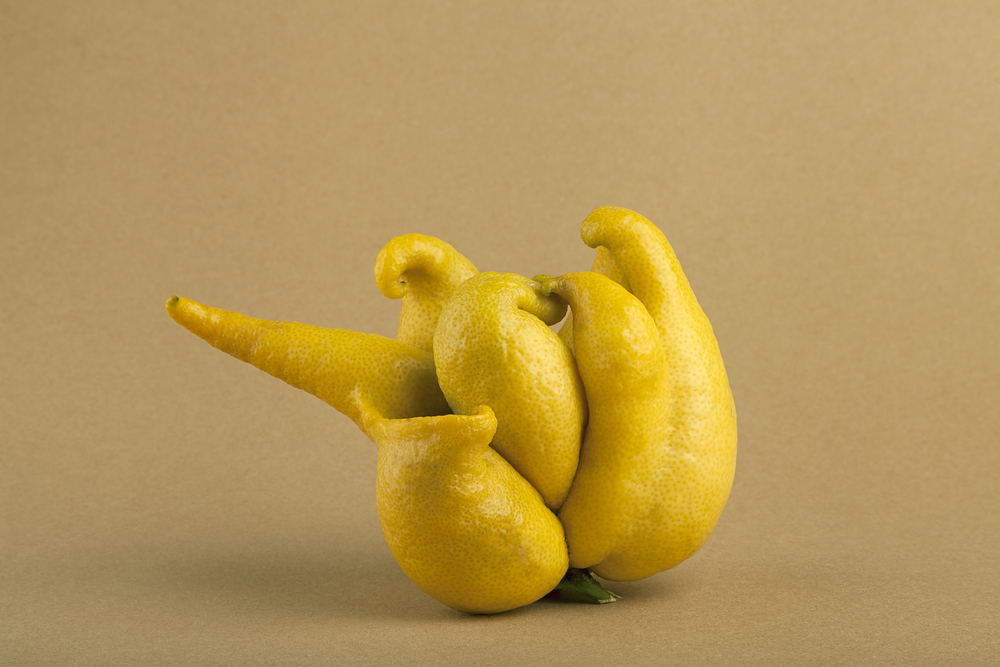
"Cosmetically challenged" farm produce make for tons of  food waste globally. PHOTO:  JCPestano/Shutterstock)

“Cosmetically challenged” farm produce make for tons of food waste globally. PHOTO: JCPestano/Shutterstock)

If you live in Berkeley, Oakland, and Emeryville, often find yourself complaining about high pricing of groceries, this is for you. Above bring fruits and vegetables to you at economical rates, this start-up is concerned with the noble business of minimizing food waste. How they do it – by collecting rejected asymmetrical farm produce and shipping 10-14 pounds of oddball deliciousness to your doorstep, and it’ll only cost $12.

Continue reading

Pizza Done the Farm-to-Table Style

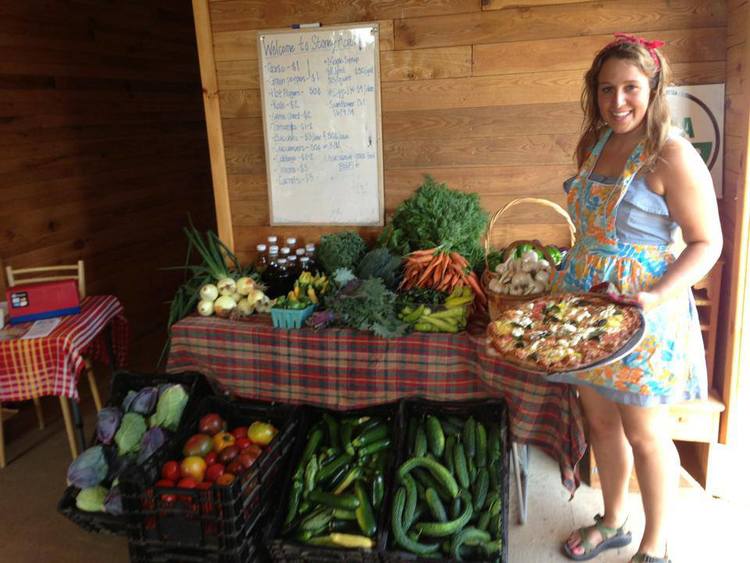
Pizza night on the Stoney Acres Farm in Athens, Wis. PHOTO: Stoney Acres

Pizza night on the Stoney Acres Farm in Athens, Wis. PHOTO: Stoney Acres

The farm-to-table concept is one that we keep revisiting often. And get a taste of almost everyday, be it in the hills of Thekkady, Kerala or in the Costa Rican valley. Farm-to-table can mean different things to different people. At its heart, it means that the food on the table came directly from a specific farm. Literally, the table could actually be at the farm and cooks or chefs prepare and serve the food at the farm (even in the field). Akin to what farmers in the Midwest are doing.

Continue reading

Keeping Flies Away from Olives

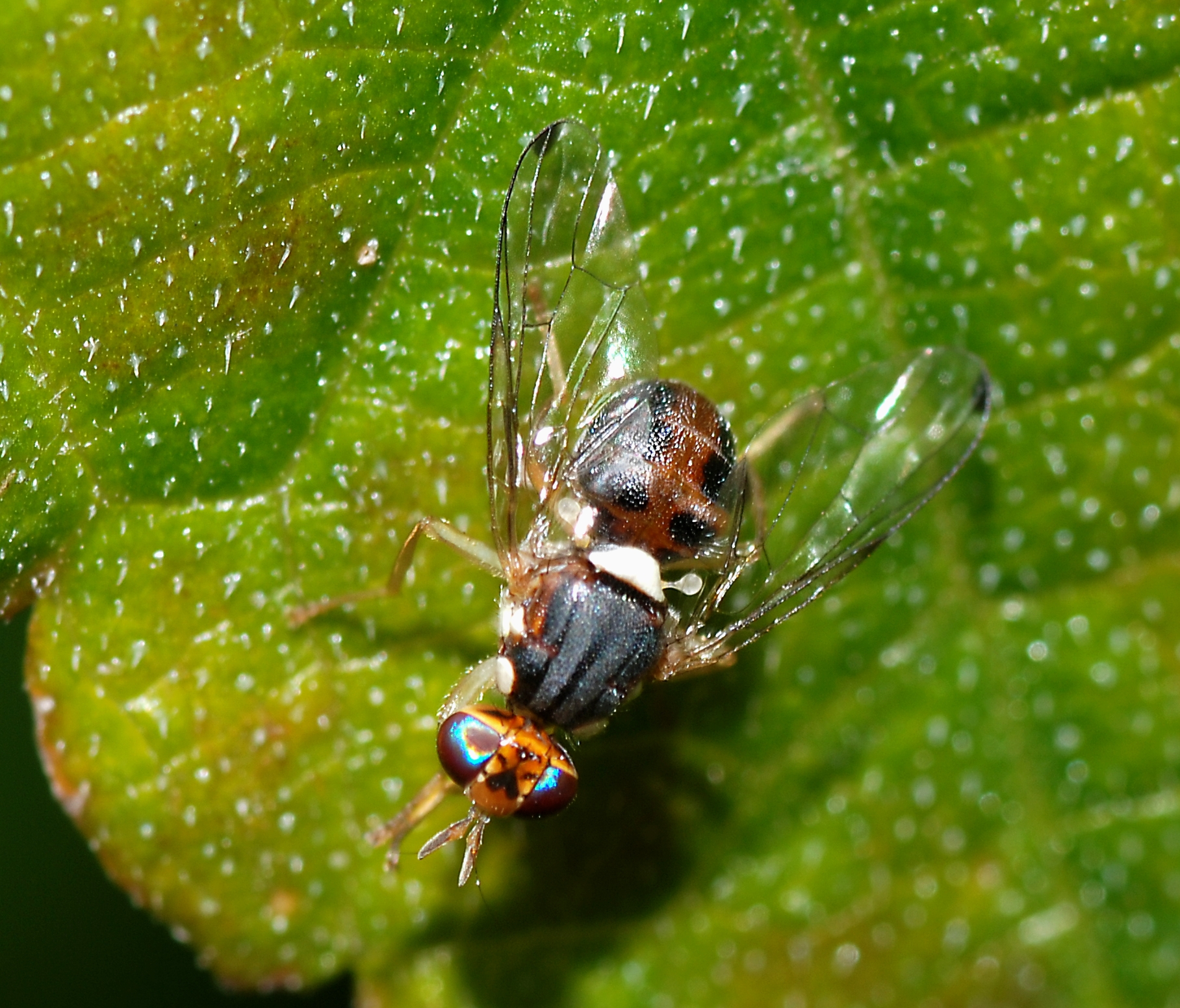
 Every year in Catalonia, Spain, farmers have to fight the olive fruit flies so they don’t ruin the year’s crop. PHOTO: Wikipedia

Every year in Catalonia, Spain, farmers have to fight the olive fruit flies so they don’t ruin the year’s crop. PHOTO: Wikipedia

The olive fly (Bactrocera oleae) is the single major pest for olives, causing widespread crop damage and significant financial losses to Europe’s olive farmers. The control of the fly has been largely based on the use of chemicals, but the intense use of insecticides leads to development of insecticide resistance, which makes control problematic. In addition, legislation on insecticides have seen some of them being phased out. An alternative? The almost-DIY fly trap.

Continue reading