Farming, Biodiversity & Cooperative Conservation

All over the world farmers like Bishnu Maya (in Nepal) are the main custodians of agricultural biodiversity through the conservation, use and improvement of plant genetic resources on-farm

Click the image above to go to the source of this interesting look at the relationship between farming, biodiversity and conservation:

The study ‘Flows under stress: availability of plant genetic resources in times of climate and policy change’ describes how eight members of the CGIAR Consortium, whose research is focused on plant genetic resources, are (re)organizing their conservation and improvement activities in light of climate change adaptation. Continue reading

Favored Food Journalism

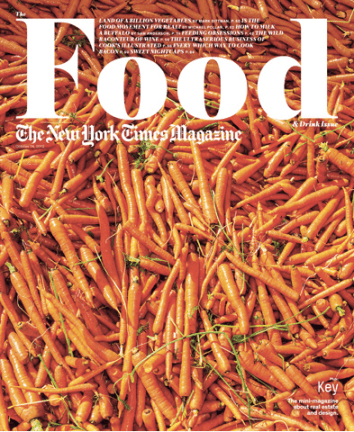
One of our favorite annual food-related publishing traditions has come to pass, again.

Mark Bittman (“California’s Central Valley is our greatest food resource. So why are we treating it so badly?”) has an excellent contribution.

And Michael Pollan (“Is this the year that the food movement finally enters politics?”) covers a topic that, four years ago, got us thinking he might be tapped for a [Hope + Change] Cabinet position.

Both of these are worth the click (among your 20 free clicks per month if you are not a subscriber) and the read time:

1.  Vote for the Dinner Party

2.  Everyone Eats There

Fishing Boats

Kerala is an important fisheries centre with a 590 kilometre long coastline on India’s southwest corner.  Additionally, multiple rivers and backwaters, and several lakes offer vast potential to the industry. Plywood boats with outboard motors, sailboats and canoes are dot the water, adding colour to the already scenic landscape.

Continue reading

What Box?

This slideshow requires JavaScript.

From the innovators who get paid to think outside the normal boundaries, and who brought us the disposable cup above, the website explains what they do in general and what they did in this case:

Sardi Innovation is an Outsourcing Business Innovation Center. 

Cookie Cup, “Sip the cofee then eat the cup” The cookie cup is made of pastry that is covered with a special icing sugar that works as an insulator making the cup waterproof and sweetening at the same time.

Cookie Cup [has collected] very  important Awards in Ecology, Marketing, Business Strategy and Design sectors.

Food, Storytelling & Art

Another session of Michael Pollan‘s course at UC Berkeley brings us back to the colorful, and colorfully clad, storyteller Peter Sellars, alluded to nearly one year ago.  Intensely bracing.  Give it the full 90 minutes it deserves (halfway through he begins making references to pre-vedic texts in India about food’s sacred role in life, and the importance of sharing it; at minute 56 he begins a very interesting discussion of Coca Cola in Kerala, and thereafter many references to wonderful phenomena in south India).

Michael Pollan, Food Activist In Journalism Professor’s Clothing

Thanks to The Edible Schoolyard Project and UC Berkeley, Michael Pollan‘s course about the challenges and opportunities of our food system is offered for all of us to share in.  Course Description:

As the costs of our industrialized food system—to the environment, public health, farmers and food workers, and to our social life—become impossible to ignore, a national debate over the future of food and farming has begun. Telling stories about where food comes from, how it is produced—and how it might be produced differently—plays a critical role in bringing attention to the issue and shifting politics. Each week, a prominent figure in the debate explores: What can be done to make the food system healthier, more equitable, more sustainable? What is the role of storytelling in the process?

Sour Cherry

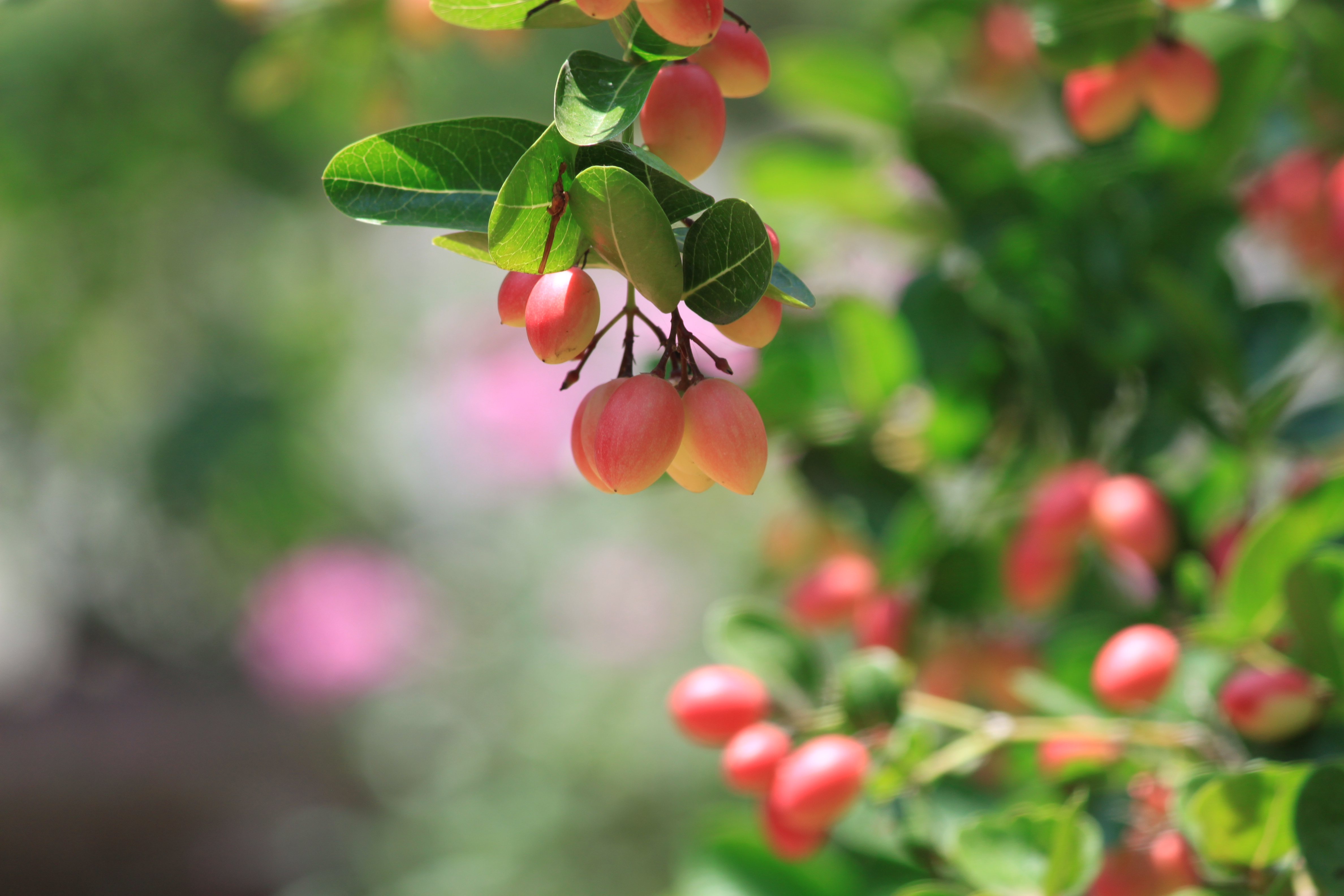
The Sour Cherry is a tree in the Rosacease family found in the high ranges of Kerala, a state famous for its fruits. The fruit is small and fleshy, ranging from rose to a deeper red colour. They are popular for making jams, desserts and other culinary purposes. The fruits are also used for medicinal purposes as they are low in cholesterol and rich in fiber and vitamin C. Continue reading

Taro (Colocasia esculenta)

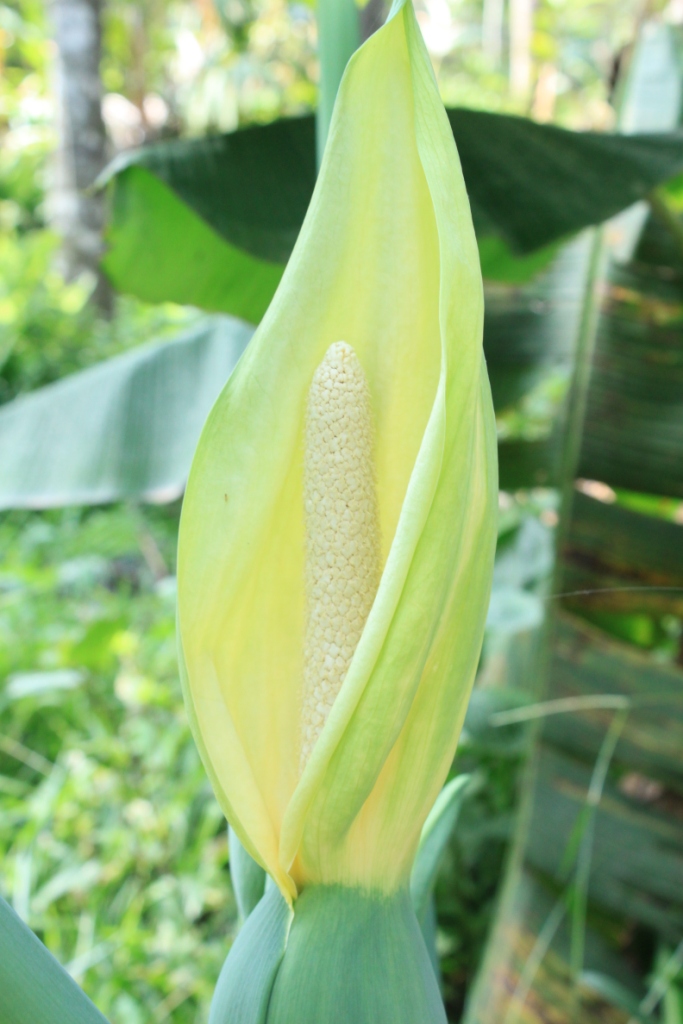
Taro is a gregarious herb growing from tubers on the banks of streams, ponds and marshes and in moist patches of the forest at altitudes up to 1400m. Taro is widely cultivated throughout Kerala, Tamil Nadu and Sri Lanka primarily for its tubers, but the eaves and stems are also cooked and eaten. Continue reading

Mind Your Food’s Aquifer

Click the map for the brief review of what looks to be an important paper published in the current issue of Nature (which requires subscription for the entire article so this review in the Science section of the New York Times is important for non-subscribers).  For some, the constant reminders are tedious.  We appreciate them nonetheless because it is so much easier to forget, ignore, pretend otherwise that water is an infinite resource.  Not only is it finite, but solving this puzzle may be the next most important thing for mankind to get right:

The study underlines a problem that scientists have already pinpointed: that the demand for groundwater in several major agricultural regions of the world is unsustainable. Continue reading

Go, Marcus!

In case you missed my earlier post on the topic, you may want to listen to that podcast before reading this more straightforward “business wunderkind” story in today’s Sunday New York Times.  Still, the closing paragraphs of the story circle around to why this fellow has our attention.  Great food interests us, yes; entrepreneurship, yes; but even more so this sense of community:

He often seeks interaction with the broader community, whether at his restaurants, through the Internet, or on his daily subway ride. In Harlem, he has held free cooking classes for children and has helped expand the farmer’s market in the area. More than 70 percent of Red Rooster employees are local residents, many of whom had little experience with fine dining. The restaurant hired additional managers to get the employees up to speed.
“When you look at strategy, it’s not set up to be a pure moneymaking machine,” says Derek Evans, the media adviser for the Marcus Samuelsson Group. “It’s a passion machine.”

50 Years Onward, Progress Via Anthropology

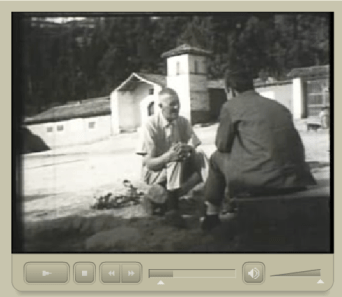
Anyone born in the USA between 1930 and 1970 would recognize the two CBS journalists in this brief documentary.  Some born elsewhere in that period might recognize them as well.  Probably few outside small towns in Central New York and Central Peru would recognize the name of the professor featured here.
So That Men Are Free
McGraw-Hill Films (1963)
Reporter: Charles Kuralt
Presenter: Walter Cronkite
 

I’m Walter Cronkite. We take you to one of the remote areas of the world to the high Andes of Peru. CBS News correspondent, Charles Kuralt reporting…The seeds came here in the head of an anthropologist, a man usually the observer, not the creator of change.  Dr. Allan Holmberg of Cornell University…

Continue reading

A Different Protected Status

Holstein cows that graze on the tidal flats of the Wadden Sea provide beef with a distinctive flavour, say farmers. Photograph: Angus Taylor/Alamy

Picking up on the thread that Tim started most recently, then Crist responded to and Martin further commented on, and placing all that within the larger context of our interest in conservation, here is a novel twist on protected status for an animal from today’s Guardian (click the image above to go to the story):

The meat from wading sea cows that graze on Denmark‘s west coast has been given protected geographical food name status by the EU – the same status enjoyed by champagne and parmesan cheese.

The protection covers the meat from the Holstein cattle raised in the marshes of the Wadden (wading) sea in southwestern Jutland.

“It gives us a good stamp on a good product that we have,” said Andreas Andreasen, who represents an association of local farmers.

“We sought this approval so that it could be known more widely.”

The beef is said to gain a distinct flavour from the tidal flats’ salt content, in a grazing tradition that goes back 1,000 years.

“Chefs have told us there is a distinct difference in the meat’s taste from other cows – a more powerful taste,” said Andreasen.

According to the Danish ministry of food, blind taste tests of the Wadden Sea beef proved the meat was juicier, more tender and more fragrant than conventional beef.

Tree of Life

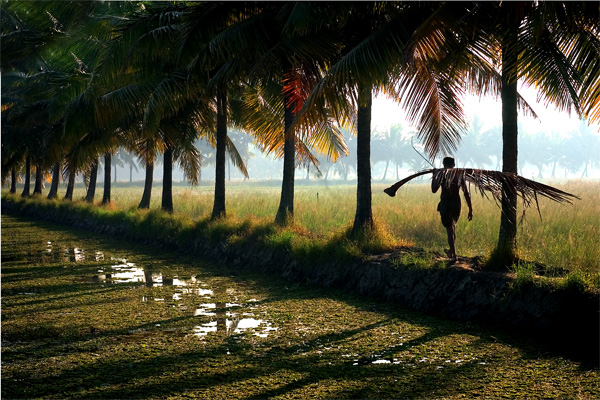
Kerala is one of the leading producers of coconut in the world, producing thirteen billion nuts per annum. Not only is the tree an iconic fixture of the Kerala landscape dotted with green palms and their swaying fronds but this tree is an integral part of the state economy.  Numerous products and by-products are derived from all parts of the tree, providing food, shelter and fuel, as well as the raw material for various local crafts. Not surprisingly, in Malayalmam this multi-faceted tree is known as kalpakavriksham or the “Tree of Life”.

Continue reading

Yes, Marcus

I am known among friends, colleagues and family for being a slave to hyperbole.  I like to think I am master, but it always gets the better of me. When I love something you will have no doubt about it; and the inverse is true. I will use the strongest words to convey my admiration or displeasure, or whatever.  Guilty as charged.  Here goes: in just under 40 minutes of listening to the author of this book speak in an interview, I am compelled to say that I have never heard a better interview in my life.  It is not merely the superb vocabulary he uses to describe how he became a chef; it is not merely the amazing story line; it is the man’s values, which drip from every word he utters.  Click the image to the left to go to the podcast of that interview:

“Being born in Ethiopia, where there was a lack of food, and then really cooking with my grandmother Helga in Sweden. And my grandmother Helga was a cook’s cook.”

Helga’s roasted chicken, pan-fried herring and black bread captivated Samuelsson, who spent many afternoons watching and helping his grandmother cook.

“We were jarring, pickling, there was always a bowl of chicken soup ready to be served, there was always sausage ready to be made,” he says. “She was incessant all year round with cooking. … It was really in those rituals that my love for food was built.”

Part-Time Vegetarianism

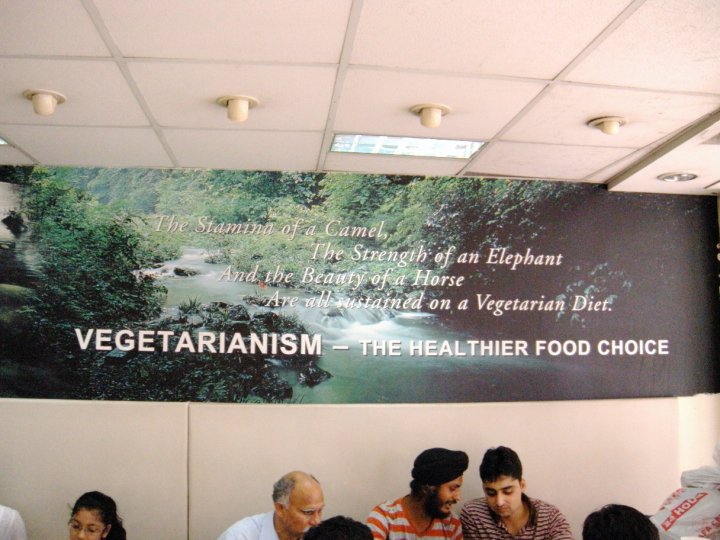
Always willing to join a conversation about (or over) food, I’ve been reminded by recent posts by Timothy and Crist of an interesting dietary strategy I discovered while living in Singapore: Meatless Mondays. I watched it as a news story over a year ago, around the same time I watched a TED talk by Graham Hill entitled Why I’m a Weekday Vegetarian. Both of these programs helped me to find a compromise that reconciles the cognitive dissonance I have as a meat-eater aware of the environmental implications of the livestock industry. 

It’s simple: Eat less meat. Continue reading

So What’s the Deal with Foie Gras?

Crist’s recent post brought up an interesting and current issue: foie gras. If you’re unfamiliar with what foie gras is, it’s essentially fattened duck or goose liver. It is a French delicacy and widely appreciated for its rich flavor and buttery mouth-feel. But foie gras production has come under fire recently: California has banned the sale of foie gras (effective July 12, 2012), and it is illegal in Israel, Argentina, and several European countries. So what’s the deal with foie gras?

Foie gras: tasty dish or cruel exploitation? You decide.

Continue reading

The Case Against Red Meat

Are you trying to eat healthier? Then stop eating red meat.

That’s the message that we’ve see in the past few years: dozens of news articles and medical journals tell us the dangers of red meat–beef in particular. The recent scare over pink slime has further increased distaste and caution around ground beef, and the suspicion is beginning to spread to other types of meat as well. Amidst all of the hype about meat in our diets, sustainability- and health-conscious consumers might wonder why scientists are focusing on red meat. Why not chicken, pork, or fish? The answer is two-sided: one relates to health concerns, and the other relates to environmental impacts of cattle-raising. Let’s briefly look at both.

Want to dig in? Not so fast, suggests the results from a study of the Harvard School of Public Health. Eating just a few ounces of red meat every day can increase your risk of colon cancer and heart disease.

Continue reading

Not A Creature Was Stirring…Or So I Thought

Like many people that can’t sleep at two o’clock in the morning, I let my nose lead me into the kitchen.  In the wee morning hours, I was surprised to find one, lone and hardworking chef, Jimmy, preparing the morning’s breakfast buffet.  I was drawn to the beverage station where I stood aghast, hoping my drip coffee machine would appear.  As I looked pained with an overwhelming desire for caffeine, Jimmy’s hospitality ensued.  He lowered the heat to his Aloo Bhaji, grabbed a saucepan, and began making me some coffee the “old fashioned” way with only a pot, water, ground coffee, and a sieve.

With my fuel source performing caffeinated magic, I observed his hard work ethic, learned how to make Kozhukattai, and had good conversations despite my poor and minimum Malayalam and his frequent inability to understand my East Texas “twangy” accent.  I was filled with respect when I found he alone prepared the delicious breakfast for the guests of the retreat.  I grew greater appreciation for my Wusthof knives; and, once again, I was, and continue to be, awed and inspired by the hospitality and giving character of the people I’ve met in Kerala.

Rarely do I find such great rewards for sleepless nights, but this night I found gold.  I’m thankful and I “remove my hat” to Jimmy of the Allspice Restaurant.  It’s people like these in this culture that increase my fondness for this state of India and strengthen my wish to stay or repeatedly return.