Coffee, Birds & How They Matter

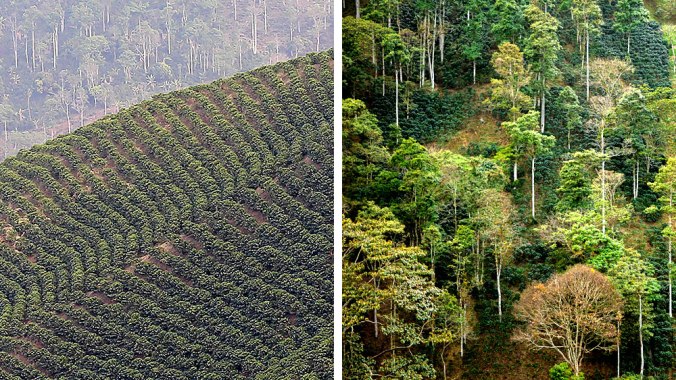
Sun-grown coffee (left) is a monoculture of coffee bushes. Shade-grown coffee (right) offers more habitat for forest species. Photos: Chris Foito/Cornell Lab Multimedia; Guillermo Santos).

Sun-grown coffee (left) is a monoculture of coffee bushes. Shade-grown coffee (right) offers more habitat for forest species. Photos: Chris Foito/Cornell Lab Multimedia; Guillermo Santos).

Our lives in the New World Tropics has allowed a frequent convergence between birds and coffee, even in the most simple terms of enjoying birdsong in our garden over the first morning cup. That very garden of our home in Costa Rica sits in what was historically cafetal (a coffee finca), with large trees shading the coffee that still grows along the little stream that runs along the property line. Blue-crowned motmots (the Central American cousin to the Andean Motmot mentioned below, have been frequent residents.

The coffee plantings at our home are insignificant compared to the 100+ acres of Gallon Jug Estate shade-grown coffee at Chan Chich. Of the nearly 350 bird species recorded in the Chan Chich Reserve’s 30,000 acres, a large percentage are migratory, making their home in the coffee as well as the healthy forest habitats that make up the reserve.

Sustainable agriculture is rarely a “get rich quick scheme”, but taken within the context of the “seventh generation stewardship”, the benefits will continue to outweigh the costs.

In Colombia, Shade-Grown Coffee Sustains Songbirds and People Alike

By Gustave Axelson

Early one morning last January, I drank Colombian coffee the Colombian way—tinto, or straight dark.

I sipped my tinto while sitting on a Spanish colonial veranda at Finca Los Arrayanes, a fourth-generation coffee farm and hotel deep in northwestern Colombia’s Antioquia region. The sun had not yet risen above the high ridges of the northern Andes. In the ambient gray predawn light, the whirring nocturnal forest insects were just beginning to quiet down.

My senses of taste and smell were consumed by the coffee, which was strong and bold in a pure way, the flavor flowing directly from the beans, not a burnt layer of roast. But my eyes were trained on a small wooden platform that held a couple of banana halves. The first bird to visit was an Andean Motmot, one of Colombia’s many Alice in Wonderland–type fantastical birds. It sported a green-and-turquoise coat and black eye mask, and it was huge—longer than my forearm, with a long tail with two circles at the end that swung rhythmically from side to side like the pendulum of a clock.

The motmot flew away and I took another sip of coffee to be sure I didn’t dream it. Another bird soon landed on the platform to pick at the bananas. This one was yellow, though Colombians call it tangara roja, because males of this species are completely red. In its breeding range, birders from the Carolinas to Texas know it as the Summer Tanager.

For more than 5 million years, a rainbow of Neotropical migrant birds (tanagers, warblers, and orioles) has been embarking on epic annual migrations from breeding grounds in North America to the New World tropics. In Colombia, these wintering areas are a lot different now than they were just 50 years ago. From the 1970s to the 1990s, more than 60 percent of Colombian coffee lands were cleared of forest as new varieties of sun-grown coffee were planted. During that same period, populations for many Neotropical migrant species plummeted—a drop many scientists say is related to deforestation of the birds’ wintering areas across Central and South America.

And yet, coffee doesn’t require deforestation. Continue reading
Bumble Bees & Conservation

06About-blog427-v2.jpg

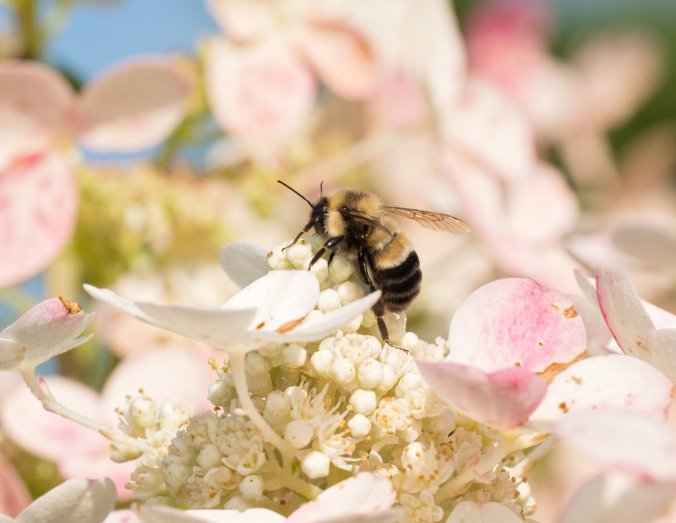
The rusty-patched bumblebee, once common across the continental United States, has been designated an endangered species. Credit Clay Bolt

One more gift of protection:

A Bumblebee Gets New Protection on Obama’s Way Out

By and

The Obama administration, rushing to secure its environmental legacy, has increased protection for a humble bumblebee. Continue reading

Camera Trap, Australia Edition

Thanks to the Nature Conservancy’s blog for this addition to our growing file of stories about non-intrusive filming of wild animals in remote places:

Camera Trapping in the Australian Desert

BY JUSTINE E. HAUSHEER

When trying to drink out of a tiny waterhole, camels hit approximately a 9.5 on a scale from 1 to Exceptionally Awkward. Continue reading

For the Birds: a Message to North American Policymakers


The State of North America’s Birds 2016

The State of North America’s Birds 2016

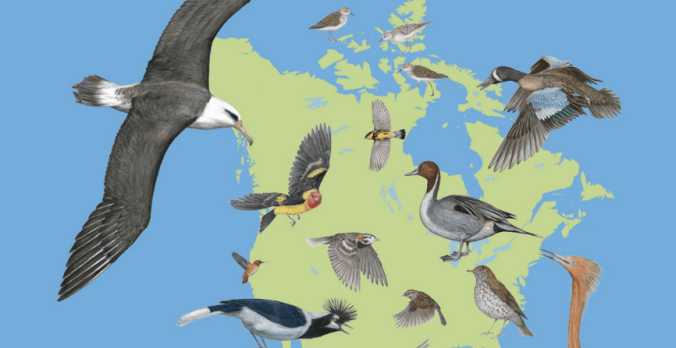
We continue to laud the importance of eBird on this site, gaining special importance as it becomes more and more clear that wildlife doesn’t acknowledge political borders. The data gleaned from tens of thousands of Canadian, Mexican and U.S. citizen scientists who contribute to eBird indicate that more than 350 species in North America migrate up and down Canada, the U.S.A, and Mexico over the course of a calendar year.

And according to the recently released State of North America’s Birds 2016 report, those three countries—their governments, and their societies—need to step up and do more to preserve our continent’s spectacular and shared natural heritage of birdlife. This report is the first-ever scientific conservation assessment of all 1,154 bird species in North America, and it was only possible because of the tremendous scale and big-data capabilities of citizen-science….

Among the many takeaways from eBird maps and models includes one of relevance to our property, Chan Chich Lodge, located on 30,000 acres of Belizean forest in the Yucatan peninsula.

The Yucatan Peninsula is one of North America’s most vital bird habitat regions

The Yucatan Peninsula is one of North America’s most vital bird habitat regions

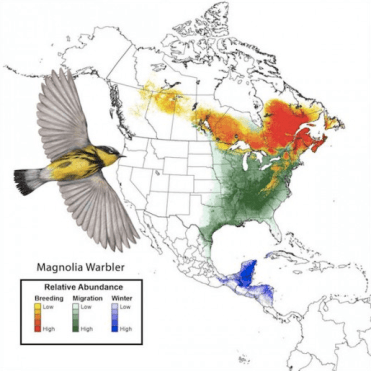
Not only is the Yucatan rich with endemic birdlife, it’s a critical wintering area for more than 120 birds species that migrate from Canada and the U.S.A. In winter, the entire population of Magnolia Warblers relies on an area of tropical forest in Mexico only 1/10 the size of its boreal forest breeding range, with the Yucatan as the bull’s-eye of their wintering range.

Continue reading

Redeeming Schemes Punctuated With Question Marks

5687

An impression of the town square at the Babcock Ranch development in Florida. Photograph: Babcock Ranch

For every redemption story there seems to be at least one more redemption puzzle. Conundrums. This is one of those. We want to love the scheme for some of its nobler aspects, but then realize it is impossible to do so unconditionally. And finally, simply, impossible:

The solar-powered town: a dream for the environment – or a wildlife nightmare?

Babcock Ranch, the brainchild of ex-NFL player Syd Kitson, aims to be a model of sustainability but campaigners fear it will be tragic for endangered panther

Edward Helmore in New York

Florida real estate has a bad habit of reflecting the boom-and-bust cycles of the US economy but Babcock Ranch, a new development opening early next year and designed to be the world’s first solar-powered town, is hoping it can provide the Sunshine state with a model for sustainable living. Continue reading

The Gift Of The Camera Trap

3-week-old-male-kitten-at-den-site-Laguna-Atscosa-NWR.jpg

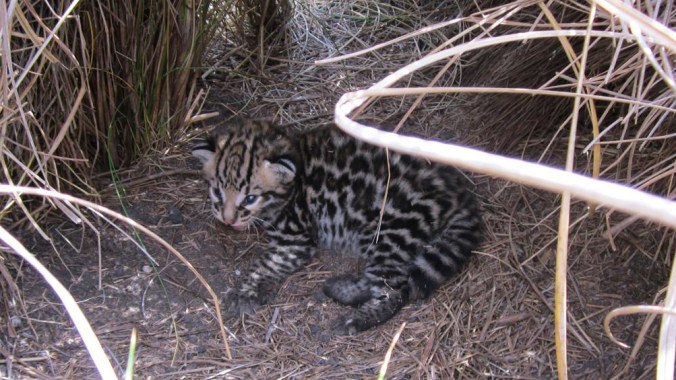
Three week old male ocelot kitten. Photo courtesy of US Fish and Wildlife Service

Thanks to Matt Miller and TNC’s Cool Green Science:

Camera Trap Captures Images of Texas Ocelot Kittens

Great news for ocelots: This year, several females with kittens were documented in South Texas using remote cameras.

The U.S. Fish and Wildlife Service (USFWS) issued a public service announcement brimming with good news, including the first ocelot den documented in 20 years on Laguna Atascosa National Wildlife Refuge, and ocelots with kittens on the Yturria Ranch, a private ranch protected by conservation easements held by The Nature Conservancy and USFWS. Continue reading

Bees In Need Get Boost

3000b

Honeybees alone are responsible for boosting the production of fruits, nuts and vegetables. But bee and other pollinator populations in the US have been in decline in recent years. Photograph: Klas Stolpe/AP

Thanks to the Guardian:

Bee’s knees: a new $4m effort aims to stop the death spiral of honeybees

General Mills is co-funding a project with the federal government to restore the habitat of pollinators such as bees and butterflies on North American farms Continue reading

Mexico’s Experimentation With Community-Based Forestry

DSC-NT1216_05.jpg

Thanks to Discover magazine for this (subscription required):

Can Community-Based Logging Fight Climate Change?

In Mexico, conservationists hope sustainable logging can provide jobs, protect the habitat and keep carbon from the atmosphere. Continue reading

Salmon Cam, Daylight Hours Only

tnc_69193956_preview_cropped-e1470747691984

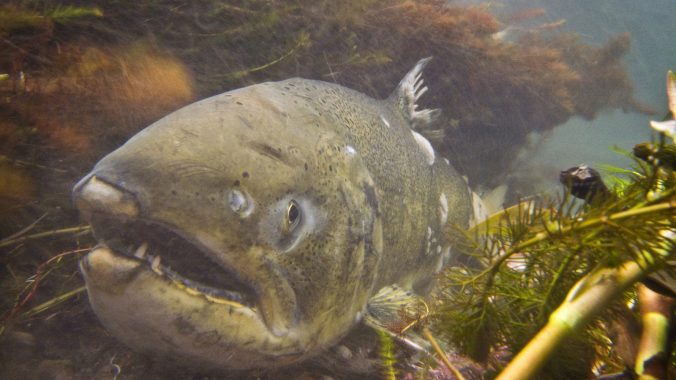
Salmon returning to spawn in the Shasta River. Photo © Bridget Besaw.

We missed this when it was first published a couple months back, so a belated thanks to The Nature Conservancy for pointing us to the site where we can see underwater, in real time, and hopefully observe fish in their natural habitat. Salmon Cam is only visible during daylight hours so click on the website during California daylight hours:

Salmon Cam: Watch Migratory Fish Live

BY MATT MILLER, CHRIS BABCOCK

If you’re a fan of Salmon Cam, you may have noticed a change of scenery when you’re viewing. Continue reading

The Green of Baja

img_20160928_093454984_zpsv8oa6ozv

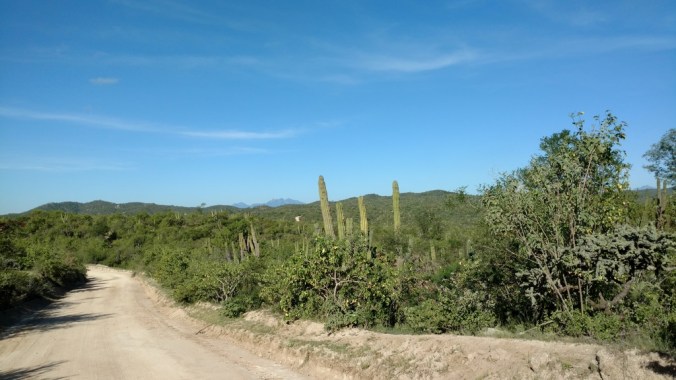
Green is not the first color I associate with Baja California Sur and as the coastal outline slowly became clearer through my plane window I was stunned by the vibrancy of color I was witnessing. The “rainy” season of Baja, which only means a few inches of rain in a span of three months, had transformed the dry, craggy landscape into a verdant, blossoming oasis. In my previous trip to Baja, I had been informed of this phenomenon but I was unprepared, nonetheless, for the volume of greenery and pop of pink and blue flowers.

Continue reading

Sumatran Rhino Siting In Borneo

2rhino_750-copy.jpg

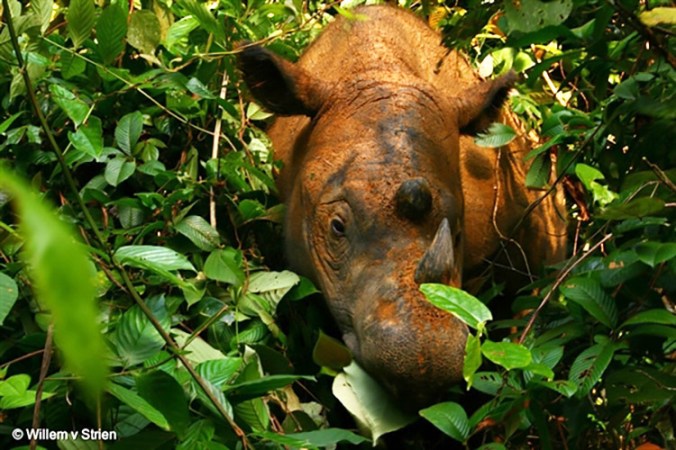
A rhino in the Sumatran Rhino Sanctuary in Way Kambas National Park, Indonesia (2008). Photo credit: Willem v Strien / Greenpeace

Thanks to EcoWatch for this remarkable news:

An excited World Wildlife Fund (WWF) team released details of how the female rhino was safely captured in East Kalimantan (part of Indonesian Borneo) last month and has now been transported to a more protected region. Over the last few years, evidence from camera traps and footprints has indicated that these rhinos still survived in Borneo’s forests, but this is the first known encounter with a live animal since the early 1970s. Continue reading

Not A Cute Cat Video

Screen Shot 2016-04-02 at 5.57.51 PM

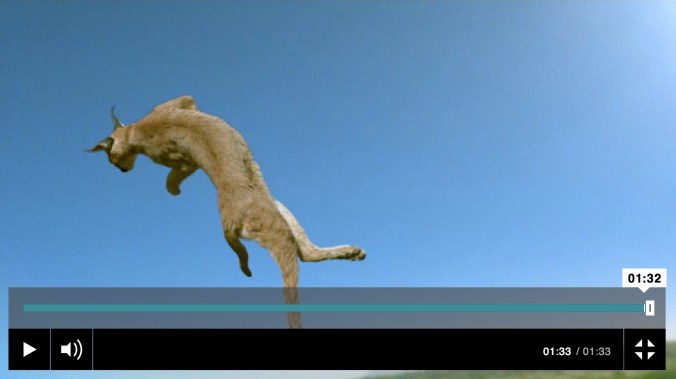
It is science, folks. Thanks to BBC Earth, here we ask for a minute and a half of your time in the interest of understanding exactly how cats do what they do. As we see it, this may translate into your future action in the interest of conservation of their natural habitat (the wild cats, of course, not the backyard bird-eating domestic variety):

How do cats always land on their feet?

This cat not only defies gravity but lands again safely and it all happens in less than a second

Caracals are expert bird hunters, capable of catching them in mid-flight with incredible leaps. Continue reading

Waste Not, Want Not Tiger Habitat

4047

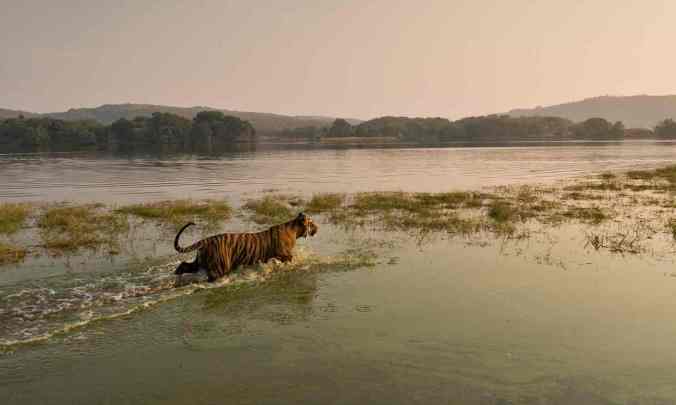
A tiger wades into the waters of Raj Bagh lake in Ranthambhore tiger in Rajasthan, India. Conservationists warn ‘tiger corridors’ connecting habitats across Asia are crucial for the survival of the species. Photograph: Aditya Singh/Alamy

From today’s Guardian in the Environment section, some welcome news on one of our most posted-on topics:

Forests still large enough to double the world’s tiger population, study finds

Satellite maps show tiger habitat is being lost but still adequate for meeting international goal of doubling tiger numbers by 2022

Forests that harbour tigers are being lost but are still large enough to take double the world’s tiger population in the next six years, according to a study using new satellite mapping technology. Continue reading

Sorry, Bolivia!

bolivia

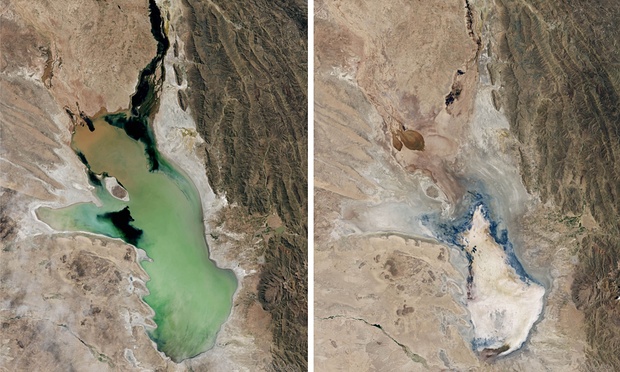
NASA satellite images show Bolivia’s Lake Poopo filled with water in April 2013 (left), and almost dry in January 2016. PHOTO: NASA/AP

Drying rivers, lakes, and reservoirs. Fancy a list? Here and here, you go. The world’s waters are rapidly running dry, threatening wild habitats and human civilization, exacerbating climate change. In turn, livelihoods, ecosystems, energy generation are all affected. Like in Bolivia, which just lost its second largest lake.

Continue reading

Meet the Godwit in North Korea

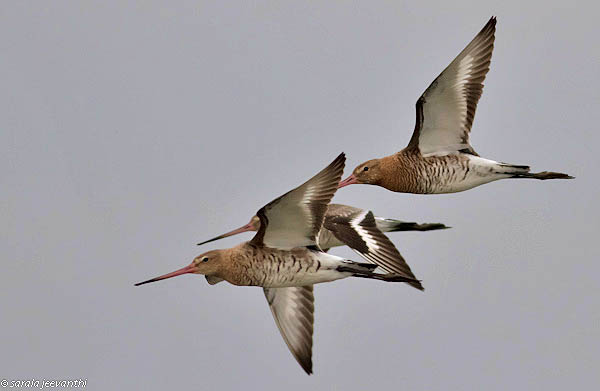
A godwit made international headlines in 2007 when she was confirmed to have flown for seven days and nights without stopping to a feeding ground in China. That was the longest nonstop flight by a land bird ever recorded. PHOTO: Wikimedia Commons

A godwit made international headlines in 2007 when she was confirmed to have flown for seven days and nights without stopping to a feeding ground in China. That was the longest nonstop flight by a land bird ever recorded. 

To the untrained eye, it’s just a lot of birds on an otherwise deserted stretch of muddy, flat coastline. But for ornithologists, North Korea’s west coast is a little piece of paradise each spring — and both the birds and a dedicated group of birdwatchers travel a long way to get there. The birds being watched aren’t exactly household names — bar-tailed godwits (Limosa Iapponica), great knots (Calidris Tenuirostris) and dunlins (Calidris Alpina).

Continue reading

Bees, Plans, Action

honeybee_custom-80bb7e068307e617ad8b91b388850f0445d6b9e0-s1300-c85

The federal government hopes to reverse America’s declining honeybee and monarch butterfly populations. Andy Duback/AP

The bee crisis is not new, but it remains a red hot issue of great importance to all of us (thanks National Public Radio, USA):

Plan Bee: White House Unveils Strategy To Protect Pollinators

BRIAN NAYLOR

There is a buzz in the air in Washington, and it’s about honeybees. Concerned about an alarming decline in honeybee colonies, the Obama administration has released a National Strategy to Promote the Health of Honey Bees and Other Pollinators.

NPR’s Dan Charles says the strategy, despite its rather bureaucratic title, is pretty straightforward: “The government will provide money for more bee habitat and more research into ways to protect bees from disease and pesticides.The Environmental Protection Agency also will re-evaluate a class of insecticides called neonicotinoids … which are commonly used on some of the most widely planted crops in the country.”

As NPR’s Allison Aubrey has reported:

Continue reading

Leopards And Humans Peacefully Cohabitating In India

An elderly priest descending to Perwa village from a temple devoted to Lord Shiva on Perwa Hill where he lives, one of the many holy slopes in the region that is also home to leopards. Credit Richard Mosse

An elderly priest descending to Perwa village from a temple devoted to Lord Shiva on Perwa Hill where he lives, one of the many holy slopes in the region that is also home to leopards. Credit Richard Mosse

If you are coming to visit one of Raxa Collective’s properties in south India, and want a recommendation for a visit to another part of India, this may be on our to do list (we need to go check it out first, and will let you know):

Life Among the Leopards

Continue reading

There Is No Effective Resistance To This Charm

We cannot resist sharing the snake stories of our own team members, and we also seem to favor this related topic of domesticated wild creatures gone amok; a story whose variations, it is now clear to us, we will never tire of as long as Amie keeps finding gems like this, as long as Phil continues to post about entrepreneurial solutions, and as long as the New York Times does not tire of sending its best reporters on the occasional odd wild something chase:

retro-python-wildpets-thumbWideRETRO REPORT

The Snake That’s Eating Florida

Burmese pythons appear to be in the Florida Everglades to stay, just one of a number of unwanted animals that have invaded America.

Progress, Destruction & Roads

Nijhuis-Habitat-Fragmentation-320

A new study looks at the worldwide effects of habitat fragmentation. CREDIT PHOTOGRAPH BY GEORG GERSTER / PANOS

From the Elements section of the New Yorker’s website, this note on roads, a clear symbol (and tangible form) of what most of us would count as progress, related to development, is worth a two minute read. Another reminder that roads, like other signs of progress, can also have unintended and irreversible destructive consequences for nature, for habitat that also sustains human life:

The first paved highway across the Brazilian Amazon began, in the nineteen-seventies, as a narrow, hard-won cut through dense rainforest. The road, which connects the northern port city of Belém with the country’s capital, Brasília, twelve hundred miles away, was hailed as a huge step in the region’s development, and so it was: it quickly spawned a network of smaller roads and new towns, drawing industry to the Brazilian interior. But the ecological price was high. Today, much of the Belém-Brasília highway is flanked by cattle pastures—a swath of deforestation some two hundred and fifty miles wide, stretching from horizon to horizon. Across the planet, road construction has similarly destroyed or splintered natural habitats. In equatorial Africa’s Congo Basin, logging roads have attracted a new wave of elephant poachers; in Siberia, road expansion has caused an outbreak of wildfires; in Suriname, roads invite illegal gold mining; and in Finland, so many reindeer are killed by cars that herders have considered marking the animals with reflective paint. Continue reading

Welcome Back, Fabulous Foxes

foxes2-sfSpan

We all knew these foxes could make it, if we made the effort together. They have made it off one of the worst lists possible, for a species, and are on the road to recovery. According to IUCN Red List Guidelines:

…a species may be moved  from a category of higher threat to one of lower threat if none of the criteria of the higher threat category has been met for five years or more…

This news, (thanks to the New York Times for reporting good news in their Science section, from time to time when good news is available) in no way makes the future indefinitely rosy for these creatures, so vigilance and diligence are still required, but we will chalk this up as a victory for conservation:

Imperiled Foxes on California Islands May Come Off Endangered List