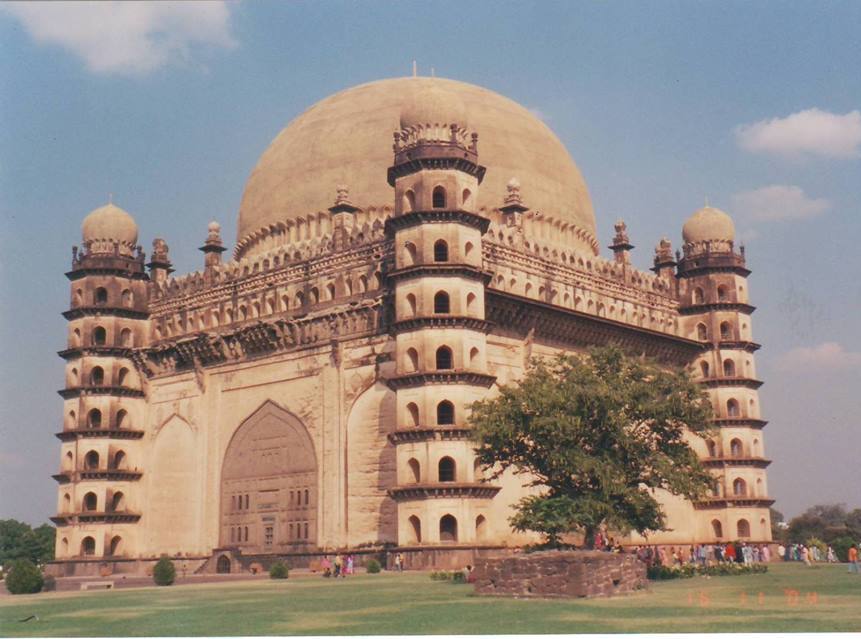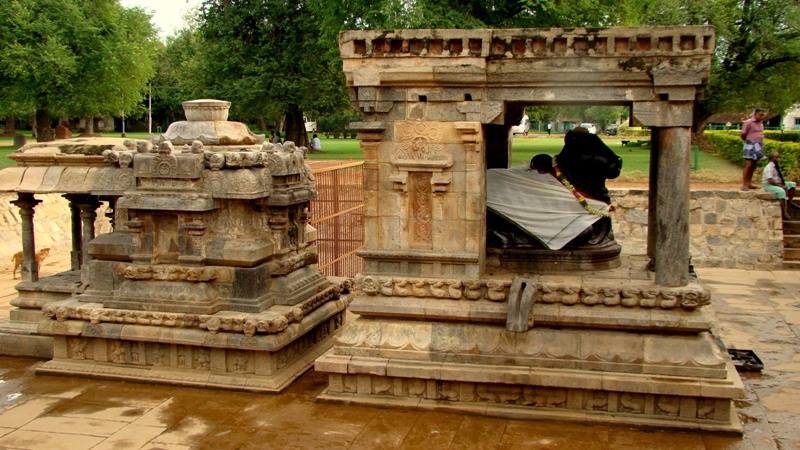
Gol Gumbaz is one of the largest and most famous monuments in India. Gol Gumbaz was constructed as a mausoleum for Sultan Mohammed Adil Shah, the seventh ruler of Adil Shah dynasty (1627- 57). Construction was completed in 1656. The monument’s central tomb remains a popular tourist attraction, but in fact the entire building, despite its simple design, stands as a masterpiece of Deccan-era architecture. Continue reading
Heritage
Nilgiri Railway – Ooty
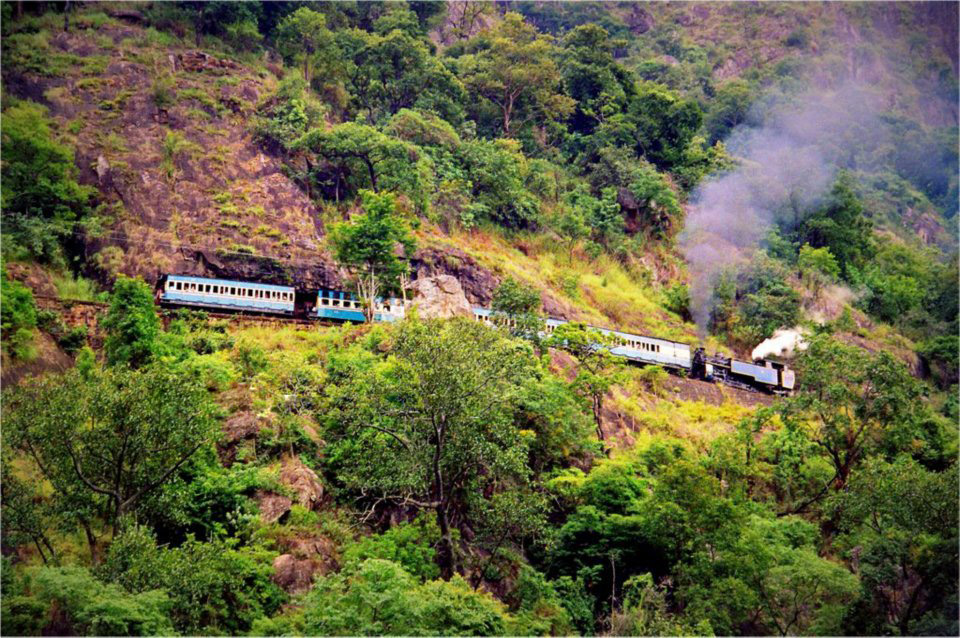
The Nilgiri Mountain Railway was built by the British in 1908. The railway line lies between the hill ranges of Mettupalayam and Ooty, with a 46km-long track that passes over 26 viaducts and through 16 tunnels, as well as tall girder bridges. This mountain rail is particularly picturesque because of the rocky surroundings and forested hills. Continue reading
Humanity’s Diet Makes A Difference, Historically As Well As Futuristically

On the timescale of evolutionary history, paleo enthusiasts note, agriculture is a fad. Credit Illustration by Mike Ellis.
Since the early days of this blog we have been hungry consumers of environmental long form journalism, of which Elizabeth Kolbert’s New Yorker chronicles are best-in-category. They are also, frankly, almost always depressing.
Nonetheless, they put humanity into its natural context. This not-at-all-depressing chronicle demonstrates the value of that contextualization well:
The first day I put my family on a Paleolithic diet, I made my kids fried eggs and sausage for breakfast. If they were still hungry, I told them, they could help themselves to more sausage, but they were not allowed to grab a slice of bread, or toast an English muffin, or pour themselves a bowl of cereal.
If You Happen To Be In Florence, Alabama (USA)

Robert Rausch for The New York Times. Tom Hendrix at the Florence, Ala., memorial he built for his great-great grandmother, Te-lah-nay, a Yuchi Indian.
Thanks to the New York Times for this coverage of a moving tribute to one man’s lineage and his peoples’ heritage:
Off Alabama’s Beaten Path, Tribute to a Native American’s Journey Home
Tom Hendrix has built a mile-long stone wall to memorialize his Native American great-great grandmother, who was displaced during the Trail of Tears.
Meenakshi Temple Gopuram – Madurai
Madurai has a historical legacy over 2500 years, making it the oldest city in Tamil Nadu. On the banks of the river Vaigai, Meenakshi Temple dominates the city of Madurai, which evolved around it. The architecture in this temple is purely Dravidian, but the styles of many dynasties have influenced the decorations and construction of Meenakshi since it has changed hands over the centuries. Continue reading
Airavatesvera Temple – Tamil Nadu
Airavatesvara Temple is locateded at Darasuram near Kumbakonam in Tamil Nadu. It was built by Raja Raja II during 1150 AD. The temple stands out for its intricate, beautiful sculptures. Continue reading
Travancore Royal Palace – Kerala
The Travancore Royal Palace is one of the most beautiful and largest palaces of the Travancore Royal family. It is the official residence of the royal family, and was built in 1915 by Sree Moolam Thirunal. This palace has great historical importance in India and is one of the finest examples of Kerala architecture. Continue reading
A Different Brand Of Men’s Linen Suit
Raxa Collective is fortunate to have classicist contributor, James, currently in the field with Seth in Costa Rica. Slacklining, occasional ichnologizing, and restoring a coffee plantation are (we think) the perfect prelude to a Ph.D. program in Classics. James will be in Cambridge, Massachusetts for the next few years, utilizing the Latin, Classical Greek and other languages he has already mastered, preparing to teach the next generation in the liberal arts. We never know, nor really need to know, where the liberal arts may take us. They are important for the sake of thinking and communicating effectively, in any walk of life, and we hope they remain alive and well in perpetuity for undergraduate university students.
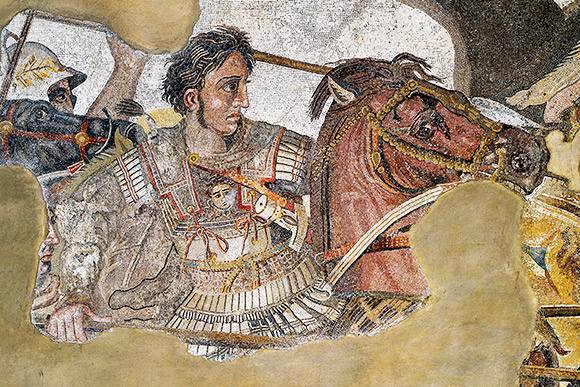
We also hope that while he is in Costa Rica James has the chance to visit the home Seth grew up in, across the Central Valley from Xandari, where some of Raxa Collective’s contributors have had the opportunity to see the uniform of Seth’s great-great grandfather on display. More than a century old, and lovingly restored by a friend of Seth’s family who does museum restoration work, the uniform looks something like what Alexander the Great may have worn. After seeing it James may have more to say on this post by Joshua Rothman on the New Yorker website’s “New ideas from the arts and sciences” section:
Intellectual life thrives on mystery. When it comes to ancient Greece, one of those mysteries is the linothorax—the flimsy-looking, hip-length armor that you see warriors wearing on Greek vases. (Linothorax means, literally, “linen chest.”) Why go to war, archaeologists have wondered, in what looks to be a linen minidress? While a linothoraxlets you show off your muscular legs to great effect, it hardly seems like practical protection against the enemy’s swords and arrows. And yet, judging by how frequently linothoraxes are represented in Greek art, they were extraordinarily popular among soldiers in ancient Greece and around the Mediterranean between 600 and 200 B.C. Because no linothoraxes have survived—linen doesn’t last—no one knows why. Continue reading
Time Drives Change
The roads and the things that inhabit them in India are evolving before our eyes. In good ways, we assure you. So, thanks to the New York Times for their commitment to India Ink and its excellent coverage of India and its changing circumstances:
“When the Ambassador car was born in 1957 to a newly independent India, it was the height of style and status,” Nida Najar wrote in The New York Times. ”It was standard issue to senior civil servants and government officials; its possession implied status, and its ubiquity was a sign of an earlier, seemingly simpler India.” Continue reading
Books, Authors And Sparks Of Inspiration

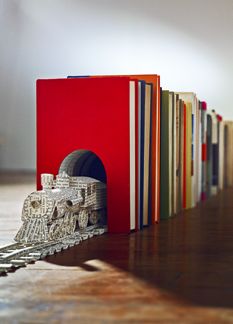
In a climate of embattled bibliophilia, authors have been undertaking reading stunts to prove that reading—anything—matters. Construction by Stephen Doyle.
Our occasional posts on books and book-ish things, on libraries and library-ish things, on authors and author-ish things, all grow out of the obvious: books are essential to humanity. We do what we can in the general interest of books. So, this item on the New Yorker‘s website about stunts in the stacks is welcome here and now:
In the nineteen-nineties, when you bought a book at Barnes & Noble the cashier slipped it into a plastic bag bearing a black-and-white illustration of an author’s face—Mark Twain, Oscar Wilde, Edith Wharton. Recently, I was poking around a bookstore in Manhattan and noticed a canvas tote for sale. In a simple red heart, the word “books” was spelled out in white letters. This tale of two bags is the story of decades of change in the publishing industry. “Books,” O.K.—but which ones? Continue reading
Ornithologist’s Masterpiece At Auction
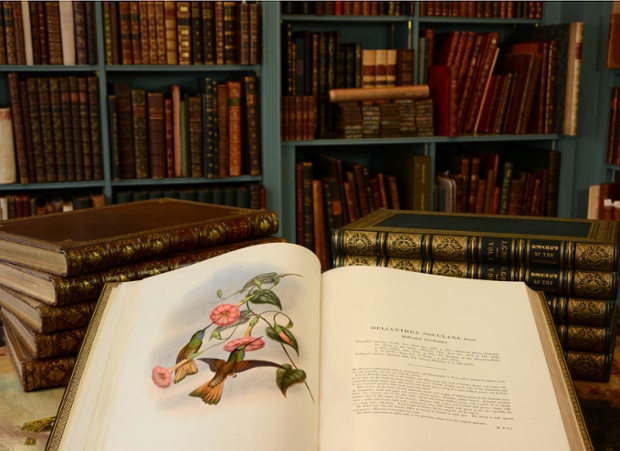
The Guardian notes the auction many of our ornithologically-oriented readers and contributors might find worth attending, even if not as bidders (given the expected final sale price) in order to see some of these prints up close (see samples after the jump):
Rare set of John Gould’s bird books for sale – in pictures
John Gould was one of the most brilliant ornithologists of the 19th century, and a talented artist to boot. He worked with Charles Darwin, travelled the world to research the beautiful folio works he produced, and set up a publishing company to sell them.
Saving Species–One Paper, One Video, One Course, And One Initiative At A Time

We thank Stuart Pimm for his ongoing excellent contributions to conservation through science and education, as well as creative activism, and congratulate him and his colleagues for their most recent publication:
A new scientific paper was published today in the prestigious journal Science and it has important findings for biodiversity. Though it reaffirms what we already know—that there is a global extinction crisis and it is worse than we believed—it also details how technology and smart decision-making are offering hope for endangered species and their habitats. Continue reading
If You Happen To Be In Dublin
Thanks to Genevieve Fussell for pointing this exhibition out to all of us:
In 2009, the Irish photographer Paul Gaffney walked nearly five hundred miles through northern Spain along the Camino de Santiago. Inspired, in part, by his interest in Buddhist meditation, he set off, three years later, on a series of walking trips through rural Spain, Portugal, and France. Continue reading
“It’s Like A Travel Book”
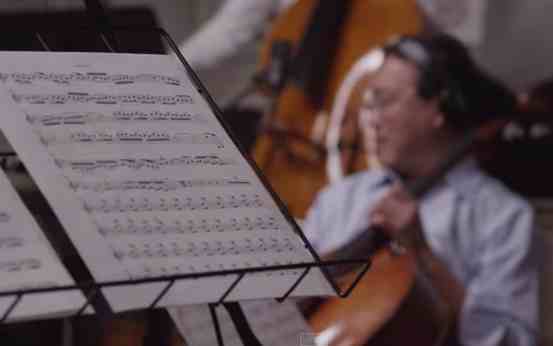
Music forms a type of universal memory the crosses cultures and continents, and Yo-Yo Ma’s Silk Road Ensemble that brings together musicians and composers from more than 20 countries is a lyrical example of what we hold dear at RAXA Collective. The 2,000 year old history of the Silk Road also coincides with the Spice Road, which is also a subject we take very personally.
The extent of exchange of art, ideas and innovations between cultural groups trading on the routes is illustrated by the eighth-century Shôsôin collection of artifacts. Culled by a Japanese emperor, it contains luxury goods from the Mediterranean, Persia, India, Central Asia, China, Korea and Japan…
Varadharaja Perumal Temple – Tamil Nadu
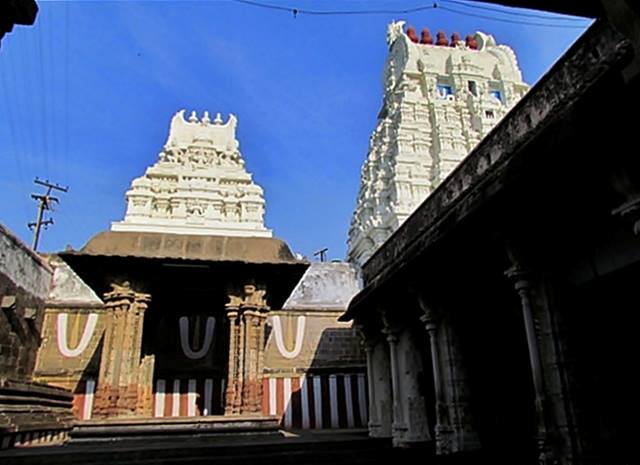
Varadharaja Perumal temple is situated in Kanchipuram, Tamil Nadu. This temple was originally built by the Cholas, one of India’s great dynasties, in 1053. The main deity of the temple is Lord Vishnu. One of the most famous architectural pieces in the temple is the huge stone chain sculpted from a single stone. Continue reading
Humayun’s Tomb – Delhi
Humayun’s Tomb was built over a 7 year period starting in 1565 AD by Haji Begum, the widow of Humayun, the 2nd Mugal Emperor. Located in the Indian state of Delhi, the Tomb was declared a UNESCO World Heritage Site in 1993 and was beautifully restored by Aga Kahn Trust for Culture in collaboration with the Archeological Survey of India. Continue reading
Old Spice Market in Mattanchery, Fort Kochi, Kerala
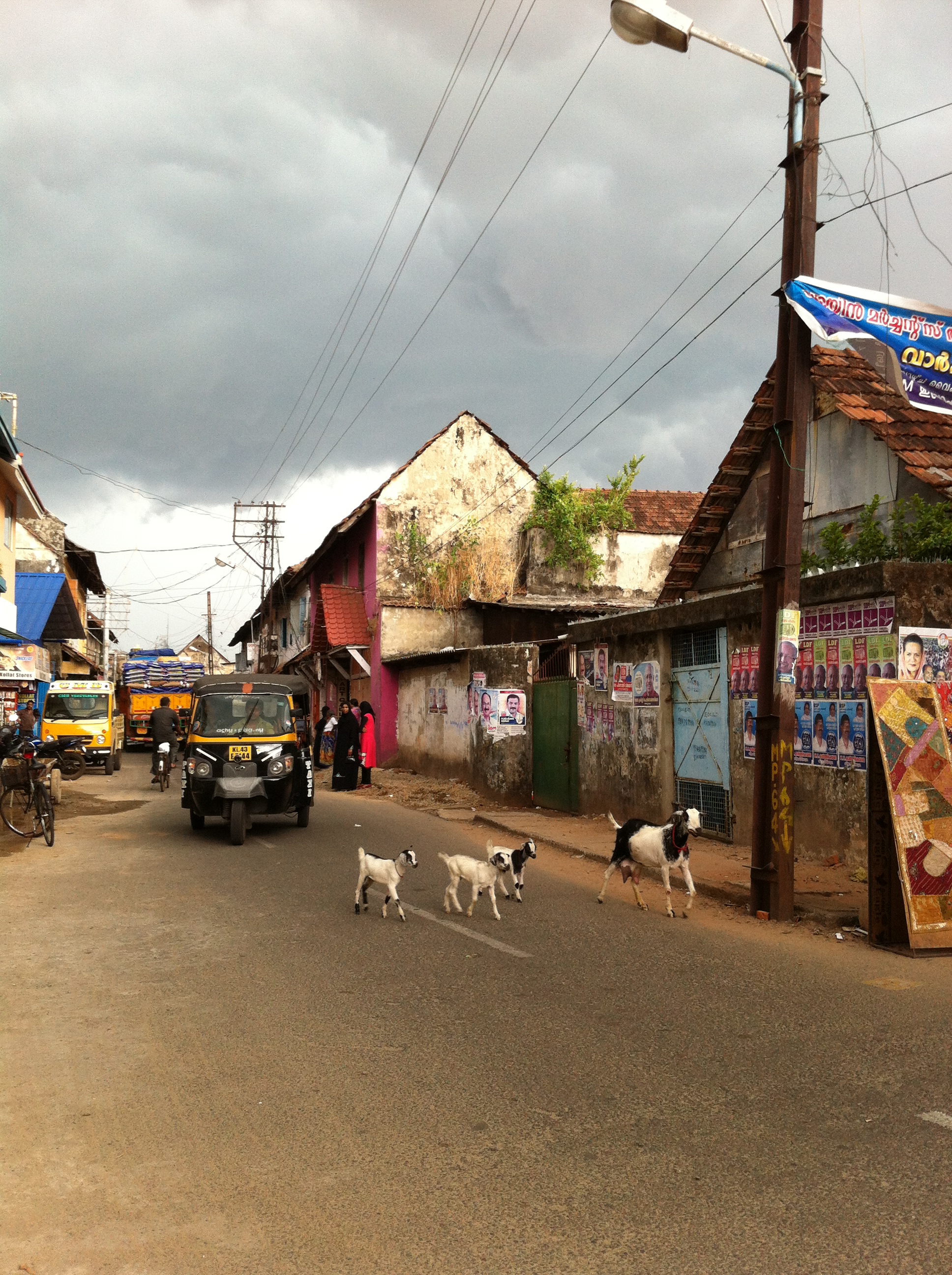
The Spice market in Mattanchery has retained its status as an important center of spice trade in India. The exotic fragrance of the finest ginger, cloves, cardamom, turmeric and pepper, also known as black gold, emanate from the spice warehouses lining both sides of the street that our new property, Spice Harbour, calls home. Continue reading
Halebidu – Hassan, Karnataka
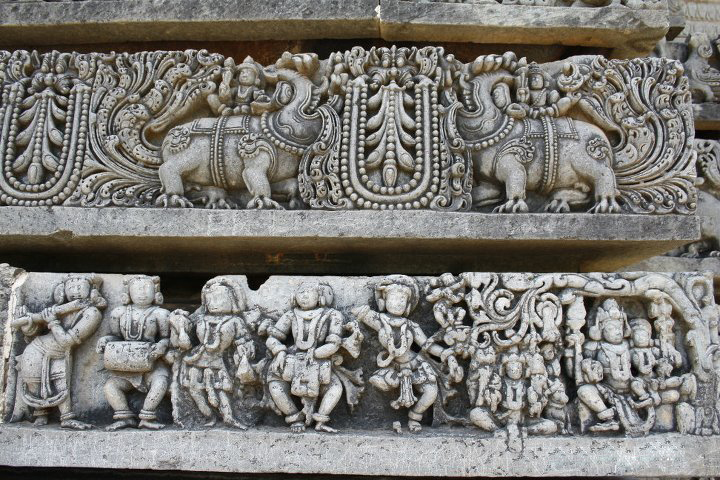
Located in the Hassan district of Karnataka, Halebidu (which literally means “old city”) is an important Hoysala architectural site being proposed for UNESCO World Heritage status. Once the capital of the Hoysala Empire, the Halebidu temples are excellent examples of South Indian architecture. Continue reading
World Heritage Day At Raxa Collective Properties
18 April 2013
Prepare the International Day on Monuments and Sites!
India does not appear on the Events list, but no matter. We take matters into our own hands. Cardamom County‘s relationship with its neighbor, Periyar Tiger Reserve, is stronger than ever; River Escapes has been a pioneer of ecological good practices in Kerala’s backwaters; and now Spice Harbour is contributing to the renaissance of Mattanchery. We encourage our readers, if close to any of the events, to join in:
At the heart of the work of ICOMOS lies the understanding, the protection and the conservation of those structures, sites and ensembles whose interest is linked to history and memory. The value of these elements of our cultural heritage is associated with the history of societies and peoples, as well as the arts and sciences they developed.
Bekal Fort – Kasaragod, Kerala
Bekal Fort is situated in the Kasaragod district in the north of Kerala. One of the largest and most well-preserved forts in the state, Bekel is spread over 40 acres. The fort was built by Sivappa Naik of the Ikkari dynasty in 1650. The west side of the fort offers a magnificent view of the sea and the beach. Continue reading