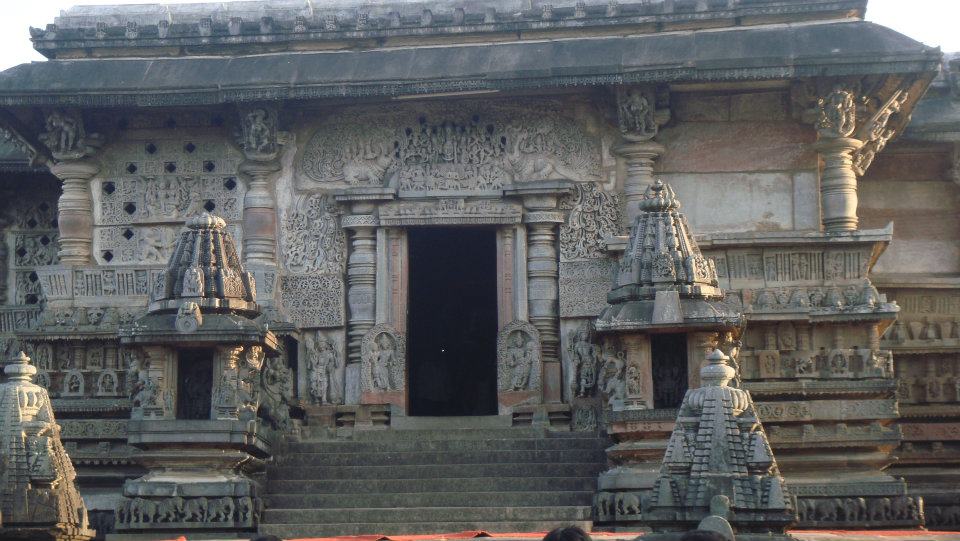
Hoysaleswara temple was built during 12th and 13th century Hoysala Empire by King Vishnuvardhana. Dedicated to Lord Shiva, the ground-plan of the temple is the characteristic star shape common to all the Hoysala temples. Hoysaleswara is actually formed by two temples joined by a common veranda. The temple of the north is known as the Shantaleshwara temple and is named after the beloved Queen Shantala Devi. Continue reading
Heritage
Aihole Durga Temple – Karnataka
Located in the Bagalkot district of Karnataka Aihole (pronounced: eye-HO-lee) served as the capital of the Chalukyan Dynasty from the 4th to the 6th century A.D. The Durga temple was built between the 7th and 8th century during a rich architectural era. Continue reading
Thirumalai Nayak Palace – Madurai, Tamil Nadu
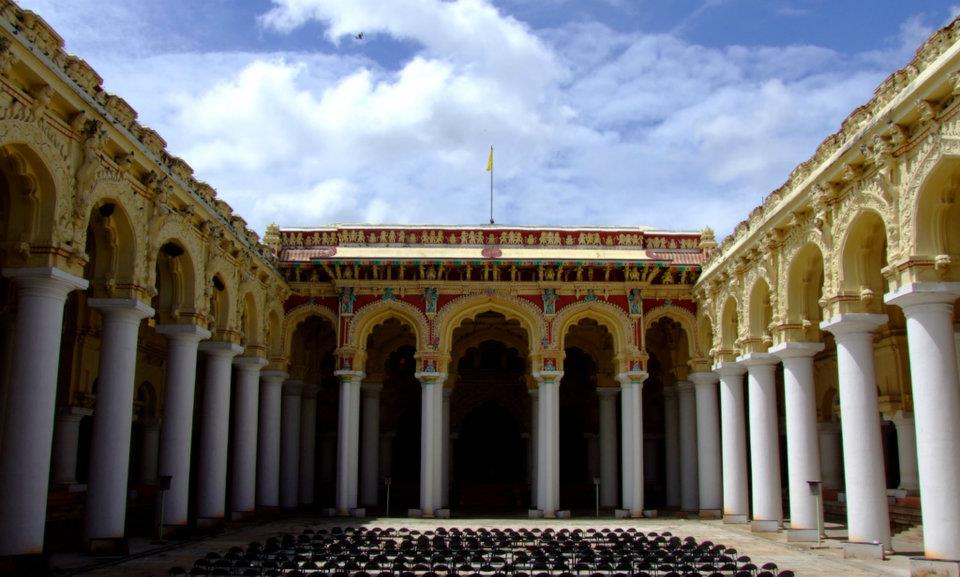
Thirumalai Nayak Palace was built by Thirumalai Nayak, one of the greatest of the Nayakkar Kings of Madurai, with the help of an Italian architect in 1636. The palace is a classic example of the Indo-Saracenic style of architecture. The main palace has a rectangular courtyard flanked by tall arcades each with their own distinct carvings.
If You Happen To Be In San Francisco
We have plenty of thoughts on Detroit’s current state of affairs, and an occasional post on one oddity or another connected to the city; but only one recent post, and a brief followup, with a direct reference to its cultural heritage. Thanks to Wired for bringing this exhibit to our attention:
…Many famous architects, such as Albert Kahn, helped the city become an architectural hub, and Jarmain’s title, American Beauty, is named after Kahn’s American Beauty Iron Building. Even though Detroit is shrinking and structures are being destroyed almost daily, it still has one of the country’s best collections of late 19th- and early 20th century buildings…
And thanks to the Meridian Gallery for this description of the upcoming exhibit in San Francisco: Continue reading
19th Century Modern
Students in need of tuition money sometimes prove the saying that necessity is the mother of invention, as this New Yorker historical note indicates:
In 1843, a Dartmouth College freshman named Augustus Washington needed to earn some money for tuition. As a man of mixed-race—a black father, a South Asian mother—many professions were closed to him. But anyone could learn the new art of daguerreotype photography, which had been perfected and publicized a few years earlier by the French artist Louis-Jacques-Mandé Daguerre. After mastering the bulky camera, Washington opened a studio in Hartford, Connecticut, where he made a good living photographing middle-class families. Continue reading
Convocation Power Well Used
We are grateful when people whose name and heritage give them convocation power use their power on behalf of others less fortunate (until they shake our confidence), so we give thanks to the New York Times and to Peter Buffett, both privileged, for sharing this startling opinion piece. We, a small group of moderately privileged people with a small platform for sharing ideas, are particularly interested in the intersection of good and market forces, so Mr. Buffett’s challenge here is germane to our mission and to our practice:
I HAD spent much of my life writing music for commercials, film and television and knew little about the world of philanthropy as practiced by the very wealthy until what I call the big bang happened in 2006. That year, my father, Warren Buffett, made good on his commitment to give nearly all of his accumulated wealth back to society.
Reconsidering Deaccession
We understand and sympathize with Mr. Schjeldahl’s reconsideration of the implication of his earlier post, considering the volume of vitriol among the comments that followed it. But the core point of that post was lost in the reconsideration:
I take back my endorsement, in an earlier post, of the idea that the city of Detroit should ease its financial crisis by selling art works from the collection of the Detroit Institute of the Arts. I also apologize to the many whom my words pained. Continue reading
Gangaikondacholapuram Temple – Thanjavur, Tamil Nadu
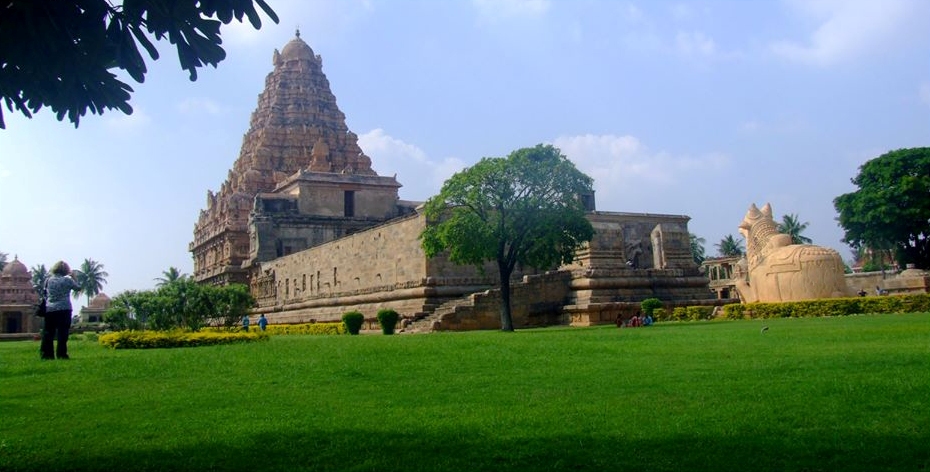
Dedicated to Lord Shive, Gangaikondacholapuram Temple was built by Chola Emperor Rajendra Ist between 1012 to 1044. The structure is a replica of the Brihadeeswara Temple at Thanjavur and was built in commemoration of Rajendra’s victory through the kingdoms of northern India to reach the Ganges. Continue reading
Urban Muse
It does not matter whether you are a farmer, a geneticist, or whatever you do with your time: you will almost certainly be affected in important, unexpected ways after time spent in Paris. Continue reading
A Wonder of the World
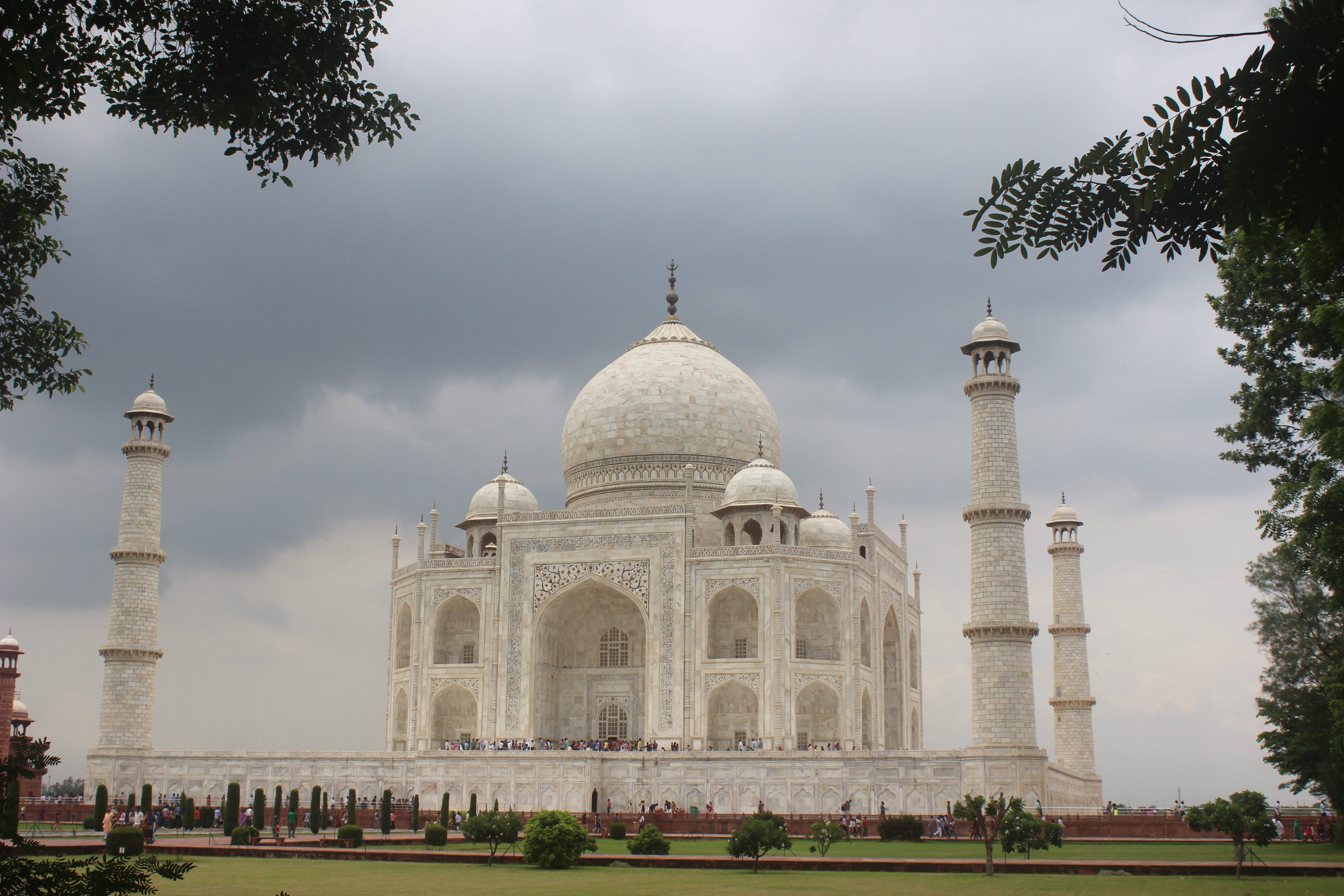
Throughout my life I have had the privilege of frequently traveling and visiting new countries. However, I had not yet had the pleasure of seeing any of the deemed “Seven Wonders of the World.” A week ago, I was finally able to change that when I took a trip to Agra and visited the Taj Mahal with my father. Continue reading
Kitchen Collaboration
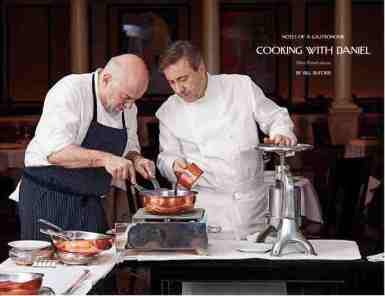
Kitchen Confidential juggled with foodies’ fascinations in new and unusual ways, and since then reality television seems to be the appropriate new home for that side show. Oddly, it began in 1999 with an article in the New Yorker. So it is only fitting that the magazine has been balancing those dynamics with the work of less celebrity-oriented writers ever since. None better than Bill Buford, who gets out there, and in there, like a citizen scientist for the story (though he is not shy of carny, either). Here what catches my attention is the collaboration, but plenty on the ethos of an artisan, the farm as the garden of eden, and last but not least the role of food in heritage and heritage in food (click the image above to go to the article):
Two years ago, during the summer of 2011, Daniel Boulud, the New York-based French chef, told me he had been thinking about a project that we might do together. We were both in France at the time. I was living in Lyons—I had moved there in order to learn French cooking—and Boulud was visiting his family in Saint-Pierre-de-Chandieu, a nearby village on a wooded ridge in the open countryside. Continue reading
Crossing the Border: From Kerala to Tamil Nadu
The first thing that I noticed about Tamil Nadu was the juxtaposition to the Kerala landscape to which I am now accustomed. Unlike the mountainous western Kerala, where during monsoon rain is plentiful and direct sunlight a rarity, just across the border in Tamil Nadu the land is flat, and during monsoon the air is dry and the sun shining. It is a shockingly fast transition that you can see as soon as you are at the base of the mountains. I knew this part of Tamil Nadu was flat, but I thought it would all be made up of lush green farm land, but instead what I encountered resembled central Texas, dry and rocky. In fact, it made me feel quite at home.
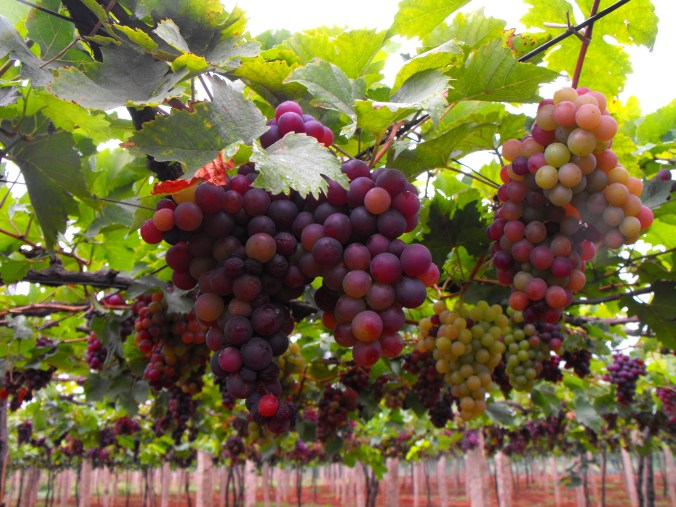
After seeing the landscape it was not surprising to hear from a local organic farmer, that most of the water in Tamil Nadu comes from the Periyar River in Kerala via the Mullaperiyar Dam. The farm boasted many types of fruits, including grapes and pomegranates. It was well worth the trip to see a farm in action and to see how and where some of the local fruits are grown. Continue reading
Europeans And Indians, The Early Days
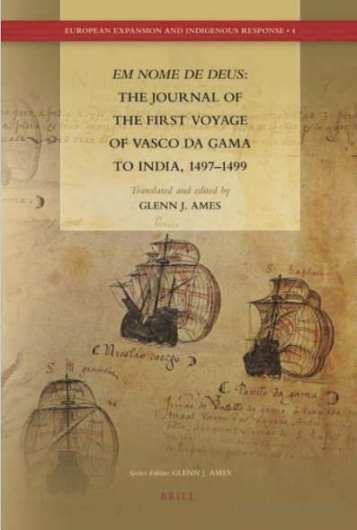
In several past posts about historically interesting interactions between Europeans and Indians, the New World variation on that story was invoked to make a point, mainly with an eye toward environmental history. Today’s Hindu has an article that draws on the history contained in the journal to the left about (Old World) Vasco de Gama’s first experience in (Older World) India, specifically the Malabar Coast and what is now the state of Kerala. Click the image to go to the source of the book, and here to go to the Hindu article:
The hero of the first Portugese contact on Indian shores is a degradado, or Portugese convict and exile, not Vasco da Gama.
One of the greatest navigators from the Age of Discoveries, da Gama, appointed by Dom Manuel, King of Portugal, for his “energy and high spirits” refused to take the initiative to go ashore on the morning of May 21, 1498. Instead, da Gama chose to wait in the depths of his ship, Sao Gabriel, while the convict Joao Nunes stepped out into the monsoon showers off the western coast of Kozhikode to meet, much to his amazement, a pair of multi-lingual Tunisian merchants. Continue reading
Hampi Bazaar – Karnataka
Hampi is one of the most frequently visited tourist sites in Karnataka state and India’s most prominent Heritage sites. This village in Northern Karnataka is the former capital of the Vijayanagar Empire. Continue reading
Chettinadu Mansions – Tamil Nadu
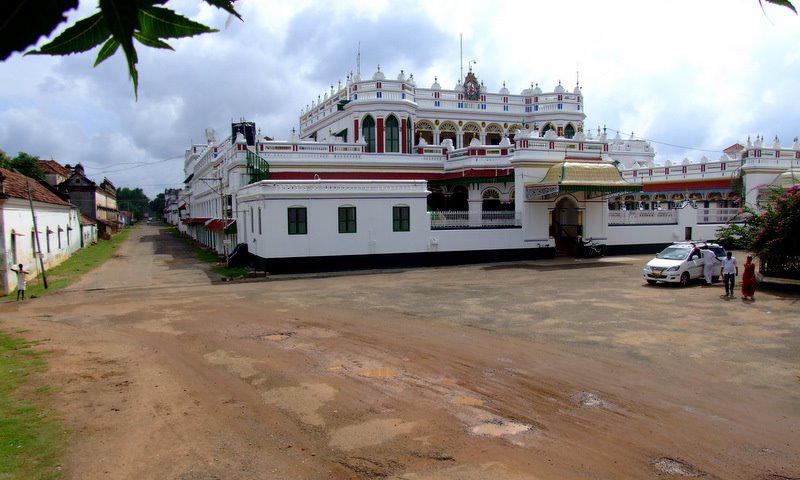
Chettinadu, loacated in the Sivagana district of southern Tamil Nadu, is the homeland of Nattukottai Chettiars (also known as “Nagarathars”), who are the highest class of the Chettiar Tamil community. Nattukottai Chettiars, are often prosperous individuals in either the banking or business community. Due to their rich cultural heritage such as their art, architecture, and antiques, their mansions are often a popular attraction for visitors. Continue reading
Malayalam Milestone
Sreekanteswaram is our kind of hero, protecting his cultural heritage without much fanfare but with a sense of humor:
That the first and the most authentic Malayalam dictionary to date, Sabdatharavali by Sreekanteswaram G. Padmanabha Pillai, turns 90 this year is a fact lost on Malayalis basking in the language’s hard-won classical status.
While such forgetfulness on the part of language Tsars is understandable, given the backward status of linguists and lexicographers in cultural hierarchy, a handful of ordinary language-lovers like poet Kureeppuzha Sreekumar Continue reading
Hyperlocal Journalism With A Heritage Twist
Thanks to India Ink for this story about hyperlocal journalism:
JAIPUR, Rajasthan – On the June 25, I walked into Kesargarh Fort in Jaipur, the capital of the northern Indian state of Rajasthan. Where cannon were once mounted, now lies a silver printing press. The monotype-casting machine is the only giveaway that the stone and terracotta façade is home to a newspaper group, Patrika. Continue reading
Celebrating Conservation’s Important Moments In History

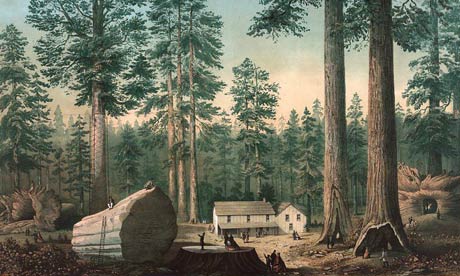
Tourists inspecting the stump of the ‘Mammoth Tree’ in Calaveras County, California, c1860. The ‘Mother of the Forest’, without its bark, can be seen in the background. Image: LoC
We have written about and sometimes celebrated important moments in conservation history in the past, and these celebrations are among those most responded to by readers of this blog. A few days ago, a landmark anniversary was observed in an editorial at the newspaper that most consistently keeps us in perspective:
Today marks the 160th anniversary of a seminal, but largely forgotten moment in the history of the conservation movement.
On Monday, 27 June, 1853, a giant sequoia – one of the natural world’s most awe-inspiring sights – was brought to the ground by a band of gold-rush speculators in Calaveras county, California. It had taken the men three weeks to cut through the base of the 300ft-tall, 1,244-year-old tree, but finally it fell to the forest floor. Continue reading
Entrepreneurial Conservation In Rajasthan

Photography by Robert Polidori. BLUE HEAVEN | Built in the 15th century by Rao Jodha, the walls of the fortress of Mehrangarh are 70 feet thick. Many of the houses of Jodhpur are painted blue to deflect the sunlight, and, according to folklore to repel insects.
The Wall Street Journal carries a feature that is quite our cup of tea:
EACH SPRING, Maharaja Gaj Singh II hosts a Sufi music festival inside his family’s vast desert fort in the Indian city of Jodhpur. From a distance, this monumental sandstone fortress, called Mehrangarh, looms over the city’s chalky blue buildings, evoking the country’s ancient and otherworldly history. And yet people fly in from across the globe because the festival—and the maharaja who hosts it—blends old India so deftly with new. Continue reading
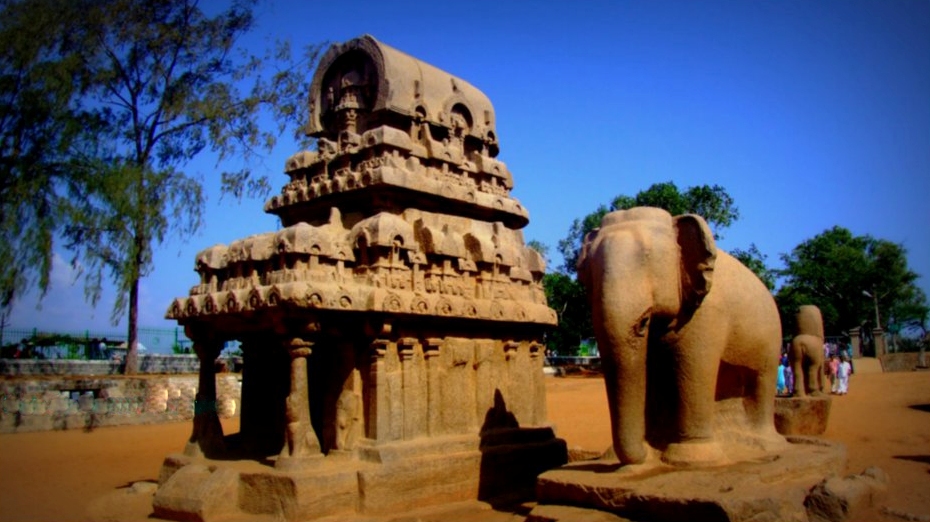
Mamallapuram – Pancha Pandava Rathas (Five Rathas)
These Rathas (chariots) are the most extraordinary of all the monuments in Mamallapuram. These monolithic shrines near the beach are carved out of granite boulders. There has been much fanciful speculation about them, mostly by people uninformed that similar such monuments exist elsewhere in India. These particular rathas are among the oldest and well-preserved vimana models in Tamil Nadu. Continue reading