Thirvunamalai, Arunacaleshwara Temple – Tamil Nadu

Photo credits : Ramesh Kidangoor

Photo credits : Ramesh Kidangoor

Thirvunamalai Arunacaleshwara Temple is dedicated to Jyothi Lingam, the fire incarnation of Lord Shiva. Situated amidst picturesque surroundings at the base of the 2600-ft Annamalai hills, it is one of the largest and most revered shrines in South India.  The nine imposing gopurams of the temple constructed in the Vijayanagar style are a magnificent sight. There is a “thousand pillared hall” with intricate carving of minor deities  and demi-Gods. Continue reading

Entrepreneurial Conservation And Language Apps

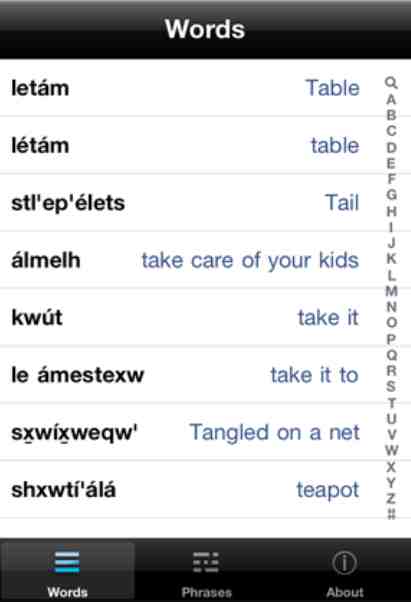
This recent post about a language app was thought to be a one off on a funny subject. Then the topic was no longer one off, and not particularly funny. Even less funny, but technologically amazing, and certainly an example of one of our favorite topics, is this one (click the image to the left to go to the source):

…Last June, FirstVoices launched an iPhone app that allows indigenous-language speakers to text, e-mail, and chat on Facebook and Google Talk in their own languages. Users can select from a hundred and forty keyboards not recognized by iOS; the app supports every indigenous language in North America and Australia. (By default, iOS supports just two: Cherokee and Hawaiian.) The app accomplishes this through mimicry. When a text box is selected, a keyboard identical in form and function to iOS’s appears. The keyboard includes the characters necessary to write in, say, Cree, and follows a layout unique to the chosen language.  Continue reading

Hill Palace Museum – Tripunithura

Now the largest archaelogical museum in Kerala, the Hill Palace was the official residence of the Kochi Royal family. The 20,000 sq ft palace was built in 1865 in the traditional architectural style of of the state, and includes beautifully landscaped gardens, a deer park and facilities for horse riding. Continue reading

Nature, Culture And The Challenges Of History

Tupilaq figures, Tuktoyaktuk, Northwest Territories, Canada. Photo by Lowell Georgia/Corbis

Tupilaq figures, Tuktoyaktuk, Northwest Territories, Canada. Photo by Lowell Georgia/Corbis

We have found another keeper in this magazine which we have linked to several times in the past, this time with a conservation theme at the intersection of natural and cultural heritage (click the image above to go to the source):

I’ve been nursing a gentle obsession with a quartet of bone-white, thumb-sized figurines. I first saw them, lined up in a row, on the cover of Miguel Tamen’s book Friends of Interpretable Objects (2001). They rested in a pair of open hands, looking toothy, and vital, exuding a cool glimmer, while evoking the long Arctic night and the estranging cold. And yet they’re also tiny and personable, these figurines. Their smooth features beckon you to enfold them in the palm of your hand. Their heads are cocked at mad angles, and their leering eyes and rabid smiles bespeak a secret, conspiratorial sociability. Continue reading

Chitradurga Fort – Karnataka

Photo credits : Dileep

Photo credits: Dileep

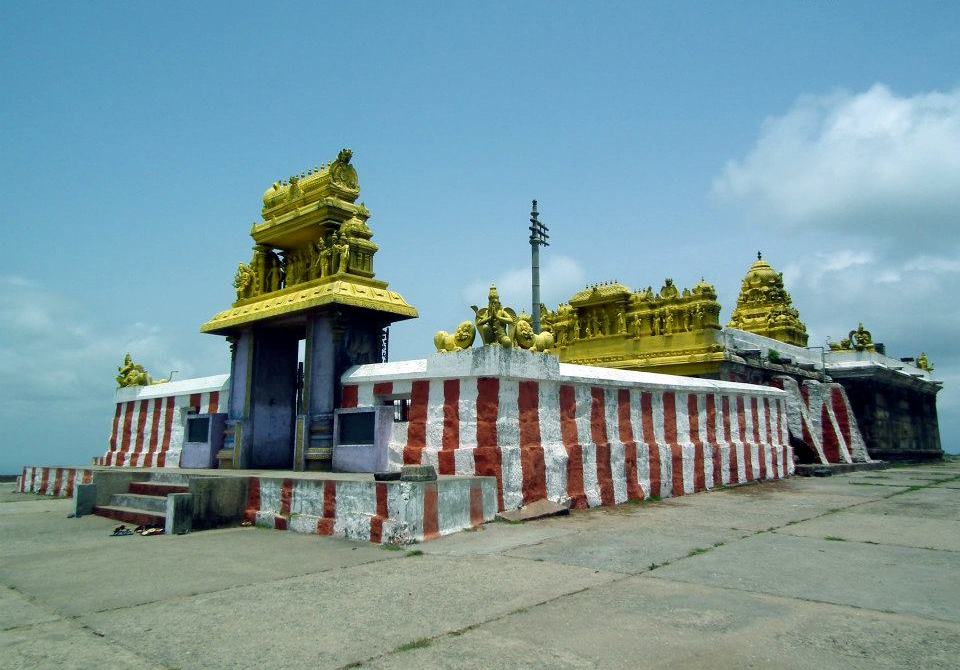
Chitradurga Fort is located near Bangalore in the Chitradurga district of the south indian state of Karnataka. Begun in the 10th century, the fort was built and expanded by different rulers such as Chalukyas, Hoysalas and Rashratrakutas, but its golden era was between the 14th and 18th centuries. During this period the fort was controlled by the Nayaks. Continue reading

Gopalaswamy Betta Temple

Photo Credits: Ramesh Kidangoor

Photo Credits: Ramesh Kidangoor

Gopalaswamy Betta Temple is located in the Chamarajanagar district of Karnataka. This temple is adjacent to Bandipur and Nagarhole National parks. Gopalaswamy is the other name of Lord Krishna. The temple was built by the King Cola Bellala during AD 1315. Continue reading

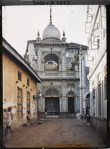
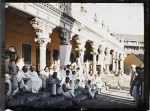
“Shipwrecked pictures” from the Albert Khan museum : can our community help identify these photographs ?

Back in 1912, french millionaire Albert Kahn hired Stéphane Passet to be a photographer for the monumental project Archives of the planet, an iconographic memory of societies, environments and lifestyles around the world. From 1909 to 1931, Albert Kahn  commissioned photographers and film cameramen to record life in over 50 countries. The Archives of the planet were a collection of 180,000 metres of b/w film and more than 72,000 autochrome plates, most of which are held at Museum Albert Kahn in Boulogne, close to Paris.

Autochrome was the first industrial process for true colour photography. When the Lumière brothers launched it commercially in June 1907, it was a photograhic revolution – black and white came to life in colour. Autochromes consist of fine layers of microscopic grains of potato starch – dyed either red-orange, green or violet blue – combined with black carbon particles, spread over a glass plate where it is combined with a black and white photographic emulsion. All colours can be reproduced from three primary colours. Some of the autochrome pictures available today are however unidentified, some happen to be of Bombay. Who among you in the Raxa Collective community can help locate these sites?

Continue reading

At the tea factory

This slideshow requires JavaScript.

Tea in India tastes stronger, so I always ask for mine to be mild, just like I do for curry. As I learnt today during a visit at a tea plantation and factory this is due to the processing of tea mostly used here for the Indian market: CTC.  Continue reading

Keshava Temple- Belur, Karnataka

Photo credits :Dileep Kumar

Photo credits: Dileep Kumar

Keshava Temple of Belur is aptly referred to as the “Jewelry Box” of Hoysala architecture, such is the ornamentation and detail of the sculpted pieces. The Mohini Pillar in the Navaranga Mandapa is one of the finest specimens of the Hoysala pillar order. The pillar is placed vertically on a sixteen pointed star plan decorated with a narrow band of filigree work. Continue reading

Tipu Sulthan’s Summer Palace, Mysore

Photo Credits: Dileep Kumar

Photo Credits: Dileep Kumar

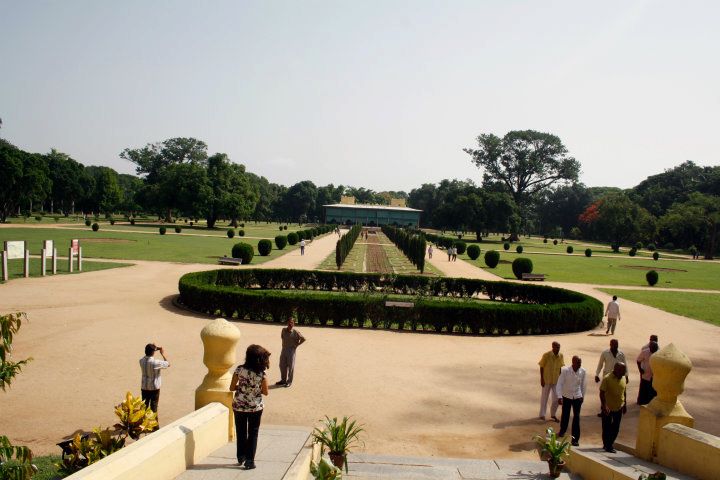
Known as the “Tiger of Mysore”, Tipu Sulthan was the ruler of the Mysore Kingdom from 1782 to 1799. The construction of the summer residence was started by his father Hyder Ali. Built with French rosewood and adorned with pillars, this beautiful palace is surrounded by ornamental trees and a beautiful garden.
Continue reading

Kuthira Malika, Trivandrum

Photo credits: Ramesh Kidangoor

Photo credits: Ramesh Kidangoor

The Kuthira Malika is a beautiful Kerala style, two story, 80 room palace with open verandas. Built by the Maharaja Swathi Thirunal in 1844, the name Kuthira Malika, which means Horse Palace, was chosen based on the many wooden horse figures carved along the entire length of the exterior lintel of the upper floors. The Palace has now been converted into a museum that houses very interesting and rare artifacts and paintings belonging to the previous Travancore Kings. Continue reading

Bolgatty Palace – Kochi

Photo Credits: Ramesh Kidangoor

Photo Credits: Ramesh Kidangoor

The Bolgatty Palace was built in 1744 by the Dutch and later taken over by the British. Today it is a hotel run by the Kerala Tourism Board. The palace is located on Bolgatty Island, one of the islands that form part of the city of Kochi. It is a two-storied building with well-laid verandas on both sides facing the seas. Set amidst lush, tropical greenery, this Dutch heritage building has the added advantage of a spectacular view of the backwaters.
Continue reading

Kathakali: non-speaking communication as an art form

My colleagues pressed me to arrive at Kathakali half an hour early : “You cannot miss the make-up session”, they insisted. Kathakali is non-speaking theatre you see. So the performance starts early on, before the show even starts. Continue reading

Dragon Ball live

This slideshow requires JavaScript.

Dragon Ball, you remember Dragon Ball right, from the 80’s ? I hope you do as I saw the exact live version of “The World Tournament”  last night, only here it’s called Kalari. Continue reading

Lost City Of The Monkey God

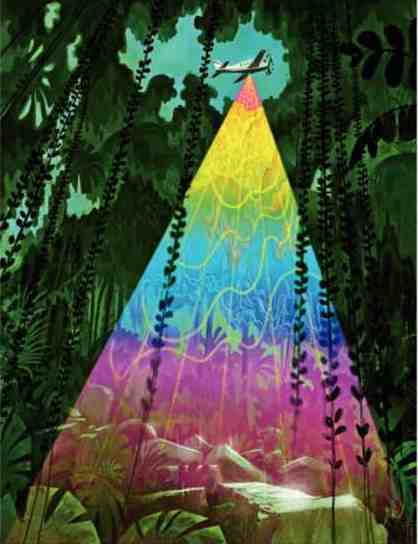
Another great article (click the image to the left to go to the source), complementing this recent one from the New Yorker, about one special location within the region several members of Raxa Collective have called home for most of the last two decades:

The rain forests of Mosquitia, which span more than thirty-two thousand square miles of Honduras and Nicaragua, are among the densest and most inhospitable in the world. “It’s mountainous,” Chris Begley, an archeologist and expert on Honduras, told me recently. “There’s white water. There are jumping vipers, coral snakes, fer-de-lance, stinging plants, and biting insects. And then there are the illnesses—malaria, dengue fever, leishmaniasis, Chagas’.” Nevertheless, for nearly a century, archeologists and adventurers have plunged into the region, in search of the ruins of an ancient city, built of white stone, called la Ciudad Blanca, the White City. Continue reading

Nadumuttom – Central Courtyard

Photo Credits: Manoj

Photo Credits: Manoj

Kerala has an abundance of architectural styles. There are two main features in Kerala houses that make them unique: The first is that domestic architecture follows the style of detached sections. Secondly the evolution of domestic architecture closely followed the trends in temple architecture. A typical house in Kerala is the courtyard type or the Nadumuttom.  Continue reading

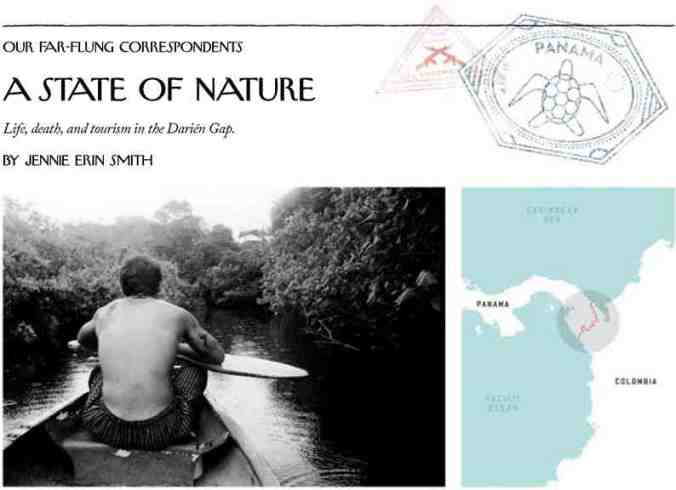
The Darien Gap, Panama

Darien


Remarkably, a second article in the same issue of the New Yorker devoted to one of our favorite topics–the wonders of nature. Click the image above to go to the source. The first one we linked to is by one of the magazine’s most distinguished writers, and we are pleased to encounter the author of the following for the first time:

The Pan-American Highway runs sixteen thousand miles, from Anchorage to Tierra del Fuego, with one significant interruption: an expanse of rain forest along the border of Colombia and Panama. The road ends abruptly on the Panama side, just north of a national park, and picks up again as a dirt path, sixty miles southeast, in Colombia, in the floodplain of the enormous Atrato River. The region in between, which spans two coasts with jungles and mountains and a confounding web of rivers, is known locally as the Tapón del Darién—the Darién Plug—for its seeming impassability. Continue reading

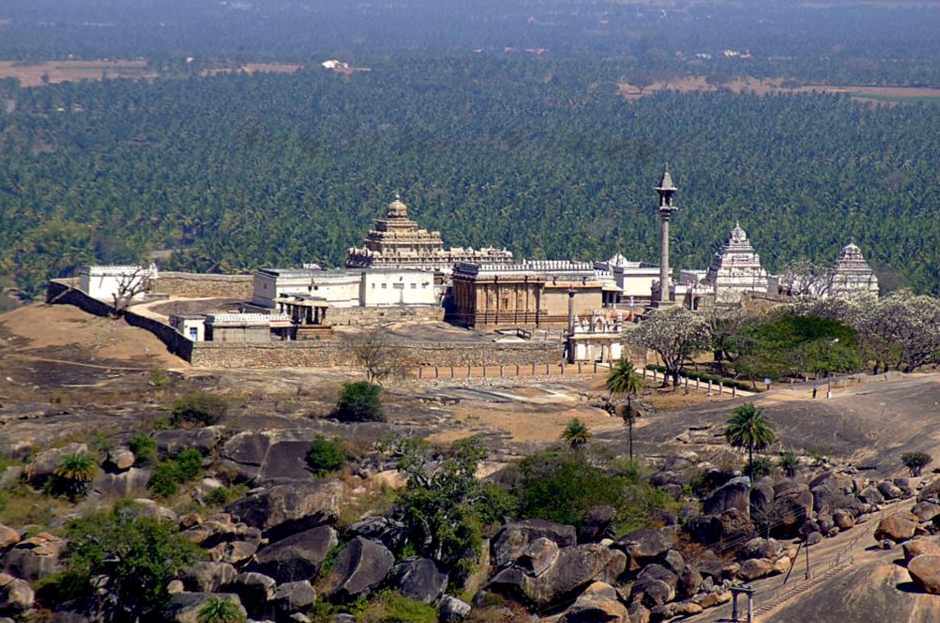
Shravanbelagola – Jain Temple, Karanataka

Photo Credits: Ramesh Kidangoor

Photo Credits: Ramesh Kidangoor

Located strategically between the two hills of Chandagire and Indragiri near Hassan, the picturesque hill town Shravanbelagola is a renowned site for Jain pilgrimages. This Jain temple was built in 983 AD by Chandragupta Maurya, the grandfather of the Great Ashoka. Continue reading

A Great Magazine Becomes A Great Insititution

The consistently superb essayist Adam Gopnik, who often writes about topics unrelated to the themes of our blog, in this week’s New Yorker writes on a topic close to our heart (click the image above to go to the article, subscription required):

Magazines in their great age, before they were unmoored from their spines and digitally picked apart, before perpetual blogging made them permeable packages, changing mood at every hour and up all night like colicky infants—magazines were expected to be magisterial registers of the passing scene. Yet, though they were in principle temporal, a few became dateless, timeless. The proof of this condition was that they piled up, remorselessly, in garages and basements, to be read . . . later. Continue reading

Malik Ibn Dinar Mosque – Kasaragod, Kerala

Photo Credit: Ramesh Kidangoor

Photo Credit: Ramesh Kidangoor

Malik Ibn Dinar Mosque is one of the oldest Mosques in Kerala. It was built by Malik Ibn Dinar, a missionary from Arabia who is credited with bringing Islam to the Malabar shores. The original mosque Dinar built in 648 AD was a small structure but with marble paving stones brought from Mecca. Continue reading