A Place And A Time For Learning To Read, And To Appreciate Books As Things

from-the-mixed-up-files-of-mrs-basil-e-frankweiler-9781416949756_hr.jpg

Just this moment, as I started today’s post, I learned I had missed a 50th birthday party. We tend to like round numbers, even if they do not mean much–why should the 50th be any more important than the 49th or 23rd? For whatever reason, a centenary or half-centenary, or bicentennial all seem to have a bigger ring. So, happy birthday to this book (last year) that I searched for after reading Susan Orlean’s essay on her personal history with libraries and books:

…My family was big on the library. We were very much a reading family, but we were more a borrow-a-book-from-the-library family than a bookshelves-full-of-books family. My parents valued books, but they had grown up in the Depression, aware of the quicksilver nature of money, and they had learned the hard way that you shouldn’t buy what you could borrow. Because of that frugality, or perhaps despite it, they also believed that you should read a book for the experience of reading it. You shouldn’t read it in order to have an object that had to be housed and looked after forever, a memento of the purpose for which it was obtained. The reading of the book was a journey. There was no need for souvenirs…

I have just recently finished unpacking from storage a lifetime’s worth of books–actually multiple lifetimes because in addition to my own family of four’s lifetimes there are also books from our parents’ and grandparents’ personal collections. And the essay got me thinking about whether I had a personal favorite book, and if so whether I have a “souvenir” of it.

I had taken a moment after emptying a box to leaf through this book that qualifies as a contender. I remember where I was when I purchased it, and where I first read it. But the essay I just read got me thinking about the importance of libraries to my own history with reading, so I focused my thought on the question what was my first favorite book. And the book above was that book, without question, in part because it was what got me to return to the library for more books. Not much more to say on that, but if you are a bibliophile or a libraryphile, if you consider librarians heroes, or any such thing, the essay may be for you.

For The Love Of Baobab!

merlin_142358673_6ed9ddd5-d873-47cb-8191-7a0ab1b3f9b7-jumbo

Selbe Dione and her sister harvesting baobab leaves to cook with couscous in the countryside of western Senegal.CreditCreditTomas Munita for The New York Times

Thanks to Dionne Searcey for reminding me of the first time I encountered one of these trees, which happened to be in Senegal (so why have we not featured Senegal more in these pages?) and was the location for the first field course I taught for Cornell focused on sustainable development. For the love of baobab, so to speak, I am more sensitive than ever to the ravages of palm oil plantations:

Across Senegal, the Beloved Baobab Tree Is the ‘Pride of the Neighborhood’

Baobabs have endured for centuries as essential cultural symbols. But increasingly, they are threatened by climate change, urbanization and a growing population.

merlin_142358517_50b1c5e5-ca69-478d-92ae-9cc754930e3d-jumbo

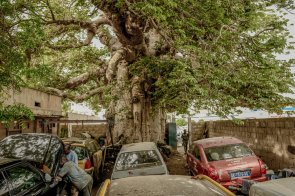
In Dakar, baobabs blend into the cityscape, like this one in the center of a taxi garage near a freeway on ramp. Credit Tomas Munita for The New York Times

DAKAR, Senegal — Wide, awkward baobab trees blend into the cityscape of Dakar, the busy capital of Senegal, almost without notice.

Drivers wash a fleet of taxis parked beneath one giant tree near a freeway on ramp. Rusting cars with open hoods are parked in a mechanic’s shop under the shade of another. A leathery trunk is a community billboard, with ads nailed to it for a plumber and an apartment for rent.

Aliou Ndour stood on a crowded corner, pulled out his phone and scrolled past the pictures of friends and family to another precious photo: the baobab in his home village.

merlin_142358277_052946e4-1f8f-4fe7-a85c-de8ec38cdb23-jumbo.jpg

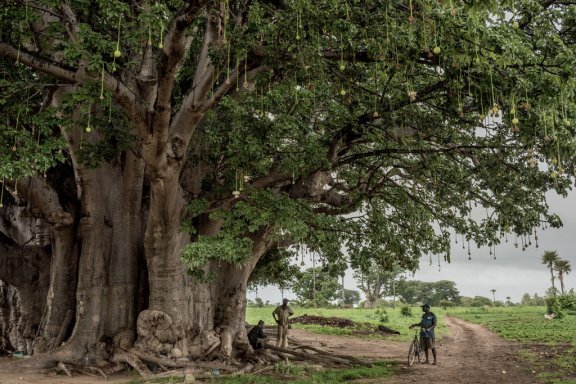
One of the largest baobab trees in Senegal is in the Fatick region, southwest of the capital. Credit Tomas Munita for The New York Times

Fat baobabs, some more than half a millennium old, have endured across Senegal, passed over for lumber largely because their wood is too brittle and spongy for use in furniture. Baobab leaves are mixed with couscous and eaten, the trees’ bark stripped to make rope, their fruit and seeds used for drinks and oils.

Something else has helped preserve these giants: They are beloved.

“This,” said Adama Dieme, craning his neck to look up at the spread of branches of the baobab on his block, “is the pride of the neighborhood.”

merlin_142358064_adba030f-b0fd-4d1f-bf7e-501cb141f23c-jumbo.jpg

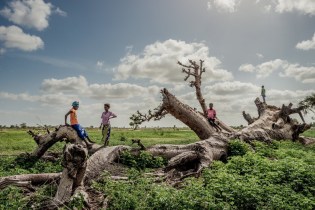
Children playing over a fallen baobab in southwestern Senegal. Credit Tomas Munita for The New York Times

But baobabs, like many of the region’s trees, are in jeopardy, threatened by the same forces upending numerous facets of society — climate change, urbanization and population growth.

West Africa has lost much of the natural resources once tied so closely to its cultural identity. Poaching has stolen most of its wildlife; lions, giraffes and desert elephants are sorely endangered.

Huge swaths of forest are being razed to clear space for palm oil and cocoa plantations. Mangroves are being killed off by pollution. Even wispy acacias are hacked away for use in cooking fires to feed growing families. Continue reading

Grandparents’ Approach To Avoiding Food Waste

5184b.jpg

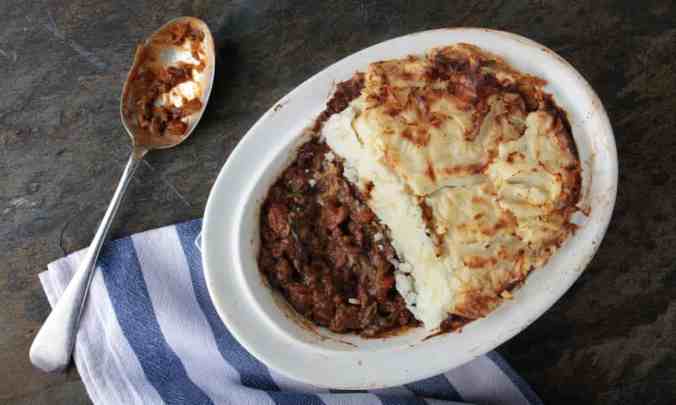
‘Whatever’s in the fridge’: a traditional cottage pie. Photograph: neiljlangan/Getty Images/iStockphoto

This time of year, harvests finishing in many places, abundance is about to give way to the longer lean season. Maybe that is the perfect time to start thinking about stretching the ingredients at hand:

How to avoid food waste: top chefs on their grandparents’ favourite dishes – and what they taught them

Angela Hartnett, Fergus Henderson, Raymond Blanc and many others describe the frugal simplicity – and delicious flavours – that inspire their cooking today

4152.jpg

Summer pudding with ‘beautiful glossy purple juice’. Photograph: Katherine Anne Rose for the Observer

It is all too easy to romanticise the past, particularly with food. In Britain, rationing created a postwar generation that was very well-nourished, but also utterly bored by the meals it ate … or endured. Similarly, for all the criticism levelled at processed foods (“Don’t eat anything your great-grandmother wouldn’t recognise as food,” as the writer Michael Pollan famously advised), food has never been cheaper, nor easier to access and prepare. In 1957, as a proportion of their weekly income, UK households spent roughly double what they now spend on food – 33% of their money. There is a kind of liberation in the Pot Noodle.

Yet among many chefs and campaigning food writers, the sense persists that on a number of issues – particularly food waste, but also obesity, nutrition, cost, pleasure even – there is much to admire in how our grandparents ate. In an era of limited choice and tight budgets, they made a virtue of the necessity to cook with whatever fresh ingredients were available. “My grandparents didn’t cook ‘sustainably’, but they did cook every day, one of life’s best skills, and they didn’t throw leftovers away. To that extent, they were thrifty,” says Tom Hunt, the self-styled eco-chef and Guardian columnist.

To examine that idea, we asked a number of top chefs to choose a meal that encapsulates how their grandparents cooked and to explain how, in its frugal simplicity, it still influences them. Call it going back to the future. Continue reading

A Visual Requiem, And A Call For Quiet Grace At The Grand Canyon

Paumgarten-Grandy-Canyon_01.jpg

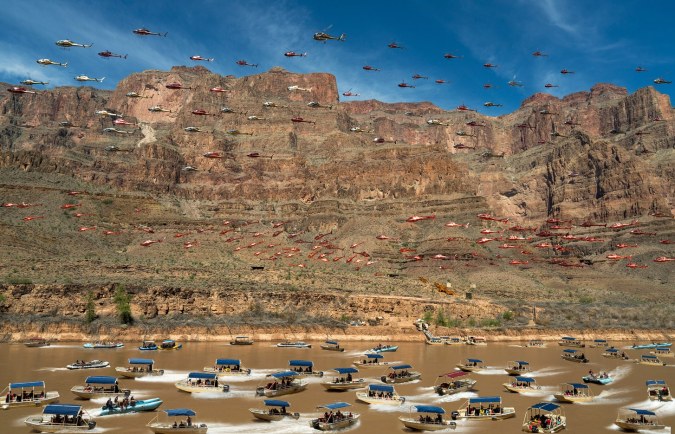
In a merged image, the photographer Peter McBride captured a vision of the Grand Canyon choked by noise and exhaust. Photograph by Pete McBride

Noise pollution was the topic of several of the first posts on this platform when we started it in 2011, and has been a persistent theme ever since then. We especially appreciate those related to noise in wilderness areas, so thanks to Nick Paumgarten for this story:

The Grand Canyon Needs to Be Saved By Every Generation

Paumgarten-Grandy-Canyon_03.jpg

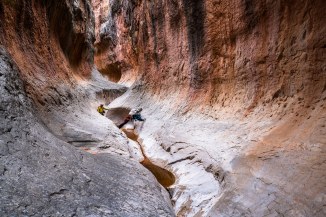
Hiking in the Grand Canyon can be a perilous pursuit. Photograph by Pete McBride

Three years ago, in the course of thirteen months, the photographer Peter McBride and the writer Kevin Fedarko hiked from one end of the Grand Canyon to the other. They did it in eight sections, mainly so that McBride could shoot in different seasons. In all, it took them seventy-one days to cover two hundred and seventy-seven river miles and some eight hundred shoe-leather miles, through some of the continent’s roughest hiking terrain—“a whole lot of scratching around the rock puzzles in that giant abyss,” as McBride put it recently.

Before they set off, the Grand Canyon had been hiked nose to tail only nine times in recorded history. There is also a handful of obsessives who have chipped away at it, piece by piece, in the course of decades. “Maybe some crazy ancestral Puebloan did the whole thing, but that wouldn’t make logical sense—they wouldn’t have had any reason to,” McBride said.

Paumgarten-Grandy-Canyon_02.jpg

 panoramic view of the confluence of the Colorado and the Little Colorado. Photograph by Pete McBride

McBride, a native Coloradan who shoots for National Geographic, has been documenting the Colorado River for a decade, sometimes from a perch in an ultralight aircraft. Fedarko, who lives in Flagstaff, Arizona, has guided on the river and is the author of “The Emerald Mile,” an account (with many historical tributaries) of a harrowing speed run of the Grand in a dory during the biggest flood in generations. (As it happens, Kenton Grua, the boatman in the book, was also the first person to walk the canyon, in 1976.) McBride and Fedarko have both become persistent, ardent advocates for preserving the place, in all its spellbinding, inhospitable glory, in abidance with Teddy Roosevelt’s famous dictum, issued during his one visit, in 1903: “Leave it as it is. Man cannot improve on it; not a bit.” Still, this was the first time, and surely the last, that either of them had tried to walk it. Continue reading

Climate Change’s Other Casualties

Scotland.jpg

Some of the world’s oldest structures have survived for 5,000 years in the Orkney Islands. Kitchens. Forges. Round houses. Now they face dire threats from climate change.

Color Conservation

The hues in the Forbes Collection include the esoteric, the expensive, and the toxic. Photograph by Jason Fulford for The New Yorker

Color is such a constant in our lives that it seems odd to consider any need for it’s conservation. How it exists in nature, how we humans perceive it, and how we’ve use the technology of the time to preserve it, has been relevant for tens of thousands of years. The Forbes Collection archives in the Harvard University’s Fogg Art Museum highlights the work of it’s founder, Edward Waldo Forbes, for whom “pigment hunting and gathering was not just a matter of creating an archive of lost or languishing color. It was about the union of art and science.”

Treasures from the Color Archive

The historic pigments in the Forbes Collection include the esoteric, the expensive, and the toxic

How blue can it get? How deep can it be? Some years ago, at the Guggenheim Bilbao, I thought I’d hit on the ultimate blue, displayed on the gallery floor. Yves Klein, who died at thirty-four, was obsessed with purging color of any external associations. Gestural abstraction, he felt, was clotted with sentimental extraneousness. But, in search of chromatic purity, Klein realized that even the purest pigments’ intensity dulled when combined with a binder such as oil, egg, or acrylic. In 1960, he commissioned a synthetic binder that would resist the absorption of light waves, delivering maximum reflectiveness. Until that day in Bilbao, I’d thought Klein a bit of a monomaniacal bore, but Klein International Blue, as he named the pigment—rolled out flat or pimpled, with saturated sponges embedded in the paint surface—turned my eyeballs inside out, rods and cones jiving with joy. This is it, I thought. It can’t get any bluer.

Until YInMn came along: the fortuitous product of an experiment in the materials chemistry lab at Oregon State University in 2009. Intending to discover something useful for the electronics industry, Mas Subramanian and his team heated together oxides of manganese, yttrium, and indium at two thousand degrees Fahrenheit. What emerged was a new inorganic pigment, one that absorbed red and green light waves, leaving as reflected light the bluest blue to date. Subramanian sent a sample to the Forbes Collection in the Straus Center for Conservation and Technical Studies, at Harvard University, where it sits with twenty-five hundred other specimens that document the history of our craving for color.

Among the other blues on the Forbes’s shelves is Egyptian Blue, a modern approximation of the first synthetic pigment, engineered five millennia ago, probably from the rare mineral cuprorivaite, a soft mid-blue used for the decoration of royal tomb sculpture and the wall paintings of temples. Later, blues strong enough to render sea and sky were made from weathered copper-carbonate azurite—crystalline bright but sometimes darkening in an oil binder. In 1271, Marco Polo saw lapis lazuli quarried from a mountain at Badakhshan, in what is now Afghanistan. Laboriously prepared by removing impure specks of glinting iron pyrite, it became ultramarine—as expensive, ounce for ounce, as gold, and so precious that it was initially reserved for depictions of the costume of the Virgin. In addition to these, the Forbes Collection has a poor man’s blue—smalt made from crushed cobalt containing potassium glass, which weakens, eventually, to a thin greeny-brown gray.

The Forbes Collection owes its existence to a belief in the interdependence of art and science, but it is also an exhaustive archive of cultural passion. A display features Vantablack, which absorbs 99.96 per cent of light, and has to be grown on surfaces as a crop of microscopic nanorods. In 2016, the sculptor Anish Kapoor saw the pigment’s potential for collapsing light, turning any surface into what appears to be a fathomless black hole, and he acquired the exclusive rights to it. An outcry from artists, who objected to the copyright, prompted the Massachusetts manufacturer NanoLab to release Singularity Black, created as part of the company’s ongoing research with nasa, to the public, and the artist Stuart Semple to make the World’s Pinkest Pink available to any online buyer willing to declare himself “not Anish Kapoor.” But Kapoor obtained a sample of the pink pigment, and used it to coat his middle digit, which he photographed and posted online for Semple.

Narayan Khandekar, the head of the Straus Center for Conservation and Technical Studies, takes pleasure in such skirmishes, secure in the knowledge that he presides over something weightier: a priceless resource for understanding how works of art are made, and how they should be preserved. The Department of Conservation and Technical Research was founded, in 1928, by Edward Waldo Forbes, the director of Harvard’s Fogg Museum from 1909 to 1944. Today, the Forbes’s vast library of color and its technical laboratories are housed in the museum’s steel-and-filtered-glass rebuild, designed by Renzo Piano. Rows of pigments in tubes, jars, and bowls are visible through the doors of floor-to-ceiling cabinets. Khandekar had the winning idea of displaying them as if unspooled from a color wheel: reds at one end, blues at the other. There are the products of nineteenth-century chemical innovation—viridian green, cadmium orange, and the chrome yellow with which van Gogh was infatuated but which, over time, has begun to darken his sunflowers. But at the heart of the Forbes Collection are the natural pigments that were the staples of painters’ inventories before chemically synthesized paints replaced the impossibly esoteric, the dangerously toxic, the prohibitively expensive, and the perilously fugitive. Continue reading

Plastics Conservation Science

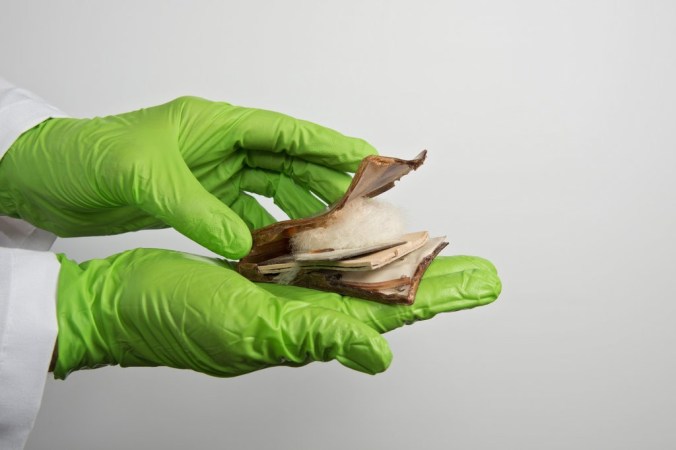
Dr. Odile Madden, of the Getty Conservation Institute in Los Angeles, holding a piece of degrading plastic for use in trying out new methods of preservation. Credit Melissa Lyttle for The New York Times

The irony of the need to conserve aging national treasures or works of art configured from plastics and other petroleum-based materials in the time of the “Pacific Vortex” and other plastic-created environmental disasters is difficult to miss. It never would have occurred to any of us that a field called “Plastics Conservation Science” has any need to exist.

And yet, it does…

These Cultural Treasures Are Made of Plastic. Now They’re Falling Apart.

Museum conservators are racing to figure out how to preserve modern artworks and historical objects that are disintegrating.

The custodians of Neil Armstrong’s spacesuit at the National Air and Space Museum saw it coming. A marvel of human engineering, the suit is made of 21 layers of various plastics: nylon, neoprene, Mylar, Dacron, Kapton and Teflon.

The rubbery neoprene layer would pose the biggest problem. Although invisible, buried deep between the other layers, the suit’s caretakers knew the neoprene would harden and become brittle with age, eventually making the suit stiff as a board. In January 2006, the Armstrong suit, a national treasure, was taken off display and stored to slow the degradation.

Of an estimated 8,300 million metric tons of plastic produced to date, roughly 60 percent is floating in the oceans or stuffed in landfills. Most of us want that plastic to disappear. But in museums, where objects are meant to last forever, plastics are failing the test of time.

“It breaks your heart,” said Malcolm Collum, chief conservator at the museum. The Armstrong suit’s deterioration was arrested in time. But in other spacesuits that are pieces of astronautical history, the neoprene became so brittle that it shattered into little pieces inside the layers, their rattling a brutal reminder of material failure.

Art is not spared either, as Georgina Rayner, a conservation scientist at Harvard Art Museums, showed at the American Chemical Society’s national meeting in Boston this month.

Claes Oldenburg’s “False Food Selection,” a wooden box containing plastic models of foods like eggs and bacon, a banana and an oatmeal cookie, now appears to be rotting. The egg whites are yellowing, while the banana has completely deflated.

In museums, the problem is becoming more apparent, Dr. Rayner said in an interview: “Plastics are reaching the end of their lifetimes kind of now.”

Of all materials, plastics are proving to be one of the most challenging for conservators. “I find plastics very frustrating,” said Mr. Collum. Because of the material’s unpredictability and the huge variation in forms of deterioration, he said, “it’s just a completely different world.”

Continue reading

Immigrants Get The Job Done, And Then Some

merlin_138352845_f571bf2c-060d-424c-93b6-afdaa2d56fe8-superJumbo.jpg

Hamdi Ulukaya, the founder and chief executive of Chobani, arrived in the United States 24 years ago with $3,000 to his name. He now runs a company with annual sales of $1.5 billion.CreditCole Wilson for The New York Times

A few contributors on this platform are children of immigrants. Some are immigrants. And we love Greek yogurt. And we love a good shepherd to riches story. So, why not celebrate one of our own, so to speak?

Hamdi Ulukaya of Chobani Talks Greek Yogurt and the American Dream

A Turkish immigrant of Kurdish descent, Mr. Ulukaya brought Greek yogurt to the mainstream. Along the way, he began hiring refugees, a move that drew threats from fringe websites and far-right commentators.

Hamdi Ulukaya arrived in the United States in 1994 with $3,000 in his pocket. He was an immigrant from Turkey, hoping to learn English and find his way in a new country.

Today, Mr. Ulukaya is a billionaire. Chobani, the Greek yogurt maker he founded in 2007, has annual sales of about $1.5 billion, and Mr. Ulukaya owns most of the privately held company. Continue reading

Rewild The Uplands?

Poster_battle

Int2.jpgIntelligence Squared has an app that allows you to listen to their debates and lectures at your own convenience, on your phone or wherever, whenever you choose. If, like us, you have found the rewilding debate interesting, this is one you will want to listen to:
THE BATTLE FOR THE COUNTRYSIDE: BRITAIN SHOULD REWILD ITS UPLANDS

Imagine if swathes of the British countryside were allowed to be wild once again, if trees and rare plants could flourish and beavers, boars and white-tailed eagles could retake their place in the ecosystem. That’s the goal of the growing numbers of nature-lovers who support the idea of rewilding Britain’s uplands. We tend to think of these uplands as ‘wild’ and ‘natural’. But in fact, as the rewilders point out, they are entirely man-made, the result of clearances by man to make way for millions of sheep whose grazing over the last 200 years has rendered the land bare. Continue reading

Valorizing Places And Things We Love

One decade ago I made the journey to Rapa Nui while on an extended project in southern Chile. It was another bit of fortune that came with the occupation I accidentally found myself in. The video above, excerpted by the Atlantic from Max Lowe’s film, hints at the value tourism can infuse, as well as the perils it can represent, with regard to cultural heritage. We have long used the archaic word “valorization” to explain what we do as a company and the Celine Cousteau Film Fellowship seems to believe the same, in supporting Max’s film:

Tourism to a Dying Ancient Culture

“The modern world has come for our little island,” says Heu Rapu Haoa in Max Lowe’s short documentary, Amo. Heu is one of the 800 remaining speakers of his native tongue. His home, Rapa Nui, known widely as Easter Island, is one of the most remote inhabited islands in the world. Continue reading

A Mom’s Pride & Joy, Heirloom Berries

merlin_140240622_a8a6b30d-1d4d-4890-b8c9-00264de87c4e-jumbo.jpg

Heirloom berries growing outside the White home. Credit John Taggart for The New York Times

Pondering the future of a heritage dairy in Costa Rica is our 2018 summer pastime. The future of a heritage berry is a welcome distraction. With more moms like Jeanne Lindsay and more sons like Richard Stevens Jr. we can trust that the uniquely North American flavor produced on this farm is in good hands. Thanks to Rachel Wharton:

Extreme Measures, No Good Outcomes

5616 (3).jpg

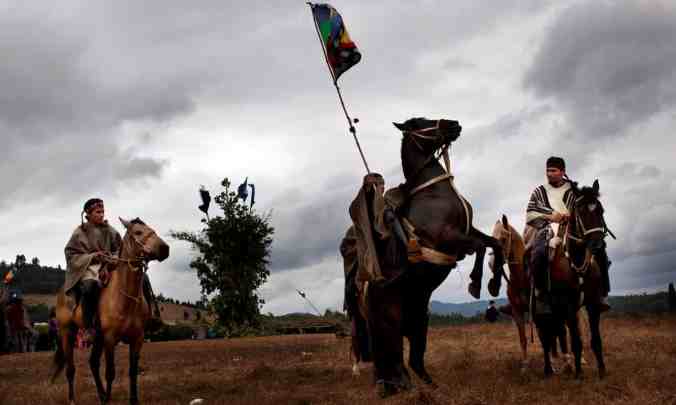
A Mapuche gathering in Ercilla, Chile. The Mapuche are protesting the presence of agricultural firms on their land. Photograph: Rodrigo Abd/AP

During the two years I worked in southern Chile, 2008-2010, I had the opportunity to listen to the concerns of members of the Mapuche community, and heard a deep frustration bordering on despair. Their forests were being extracted, wholesale and rapaciously and there was little to nothing they could do about it. The news here, even with the exposure I had to the situation, still shocks me. It is not good news:

‘We burned the forest’: the indigenous Chileans fighting loggers with arson

Chile’s Mapuche people are resorting to increasingly radical tactics to reclaim their ancestral land from exploitive industries

Screen Shot 2018-06-14 at 6.00.13 PM.jpgIt is late autumn in southern Chile, and in the region of Araucanía, the leaves have turned copper and gold. But on the road to the mist-shrouded town of Lumaco, the hills are covered with rows of charred pines.

“We burned these forests as an act of legitimate resistance against the extractive industries that have oppressed the Mapuche people,” says Hector Llaitul. “If we make their business unprofitable they move on, allowing us to recover our devastated lands and rebuild our world.” Continue reading

Food Items Not On Our Radar Until Now

180618_r32262.jpg

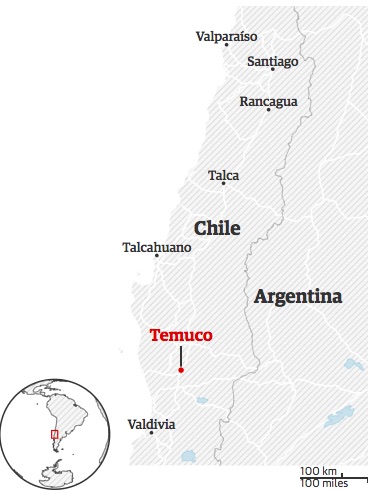
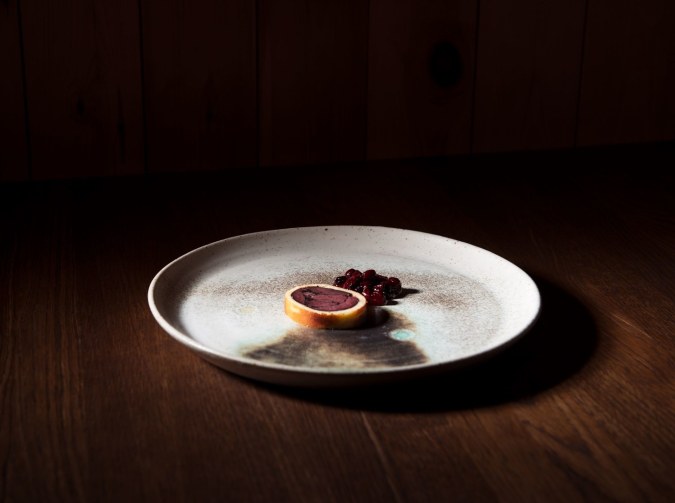
The razorbill Wellington at Koks, a Michelin-starred restaurant in the Faroe Islands. Chefs wrap the seabird in a pancake and serve it with a sauce made from beet, elderberry, and rose hip.
Photograph by Anne Golaz for The New Yorker

The dish above is not one we would likely think to offer in our hospitality operations, which may explain why we have not (yet) developed any entrepreneurial conservation initiatives in the Faroe Islands. Nonetheless, this is the type of reading that makes a Monday morning full of thoughts of where to travel next:

Koks, the World’s Most Remote Foodie Destination

People are flocking to a Nordic archipelago to sample cuisine—like fermented lamb tallow—that challenges even the most adventurous palate.

By 

180618_r32263.jpg

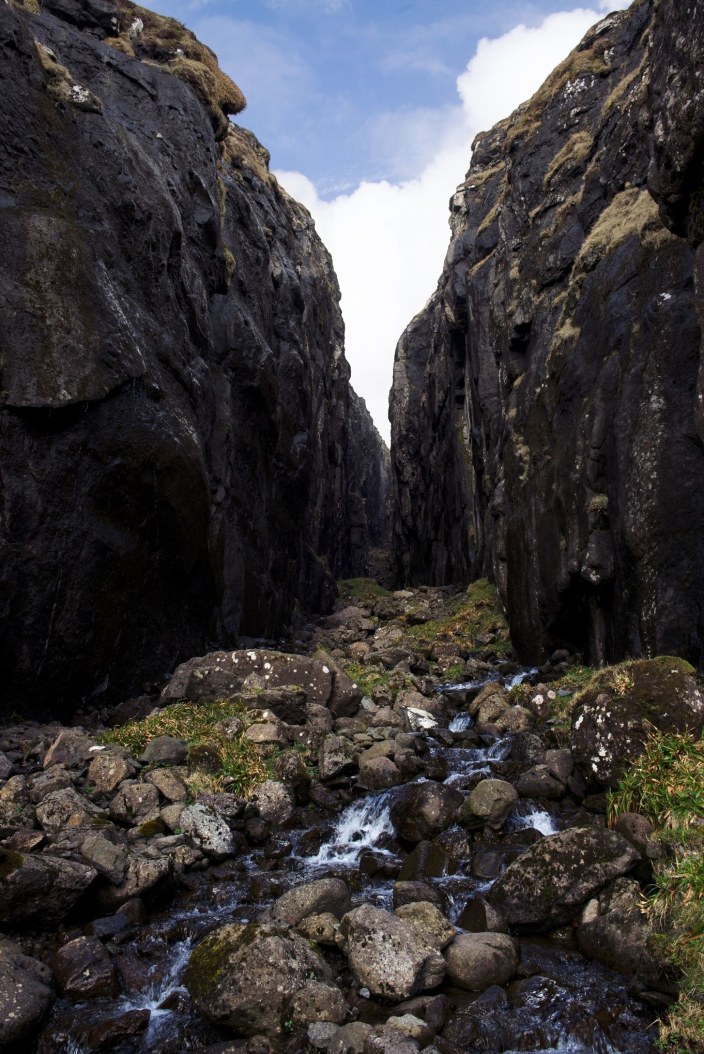
The Faroe Islands, a mountainous archipelago two hundred miles north of Scotland, has a landmass of only five hundred and forty square miles, and is sparsely populated with fifty thousand people and seventy thousand sheep.Photograph by Anne Golaz for The New Yorker

The Faroe Islands, an austere, mountainous archipelago marooned in the North Atlantic two hundred miles north of Scotland, has a landmass of only five hundred and forty square miles, and is sparsely populated with fifty thousand people and seventy thousand sheep. But, looked at another way, the country, an autonomous outpost of the Kingdom of Denmark, is much larger: its territorial waters extend for more than a hundred thousand square miles around nearly seven hundred miles of coastline. Only one village, Vatnsoyrar, isn’t on the coast, and wherever you are on any of the Faroes’ eighteen islands you’re never more than three miles from the crashing, frigid ocean. Like the human body, the Faroes are mostly water.

180618_r32264.jpg

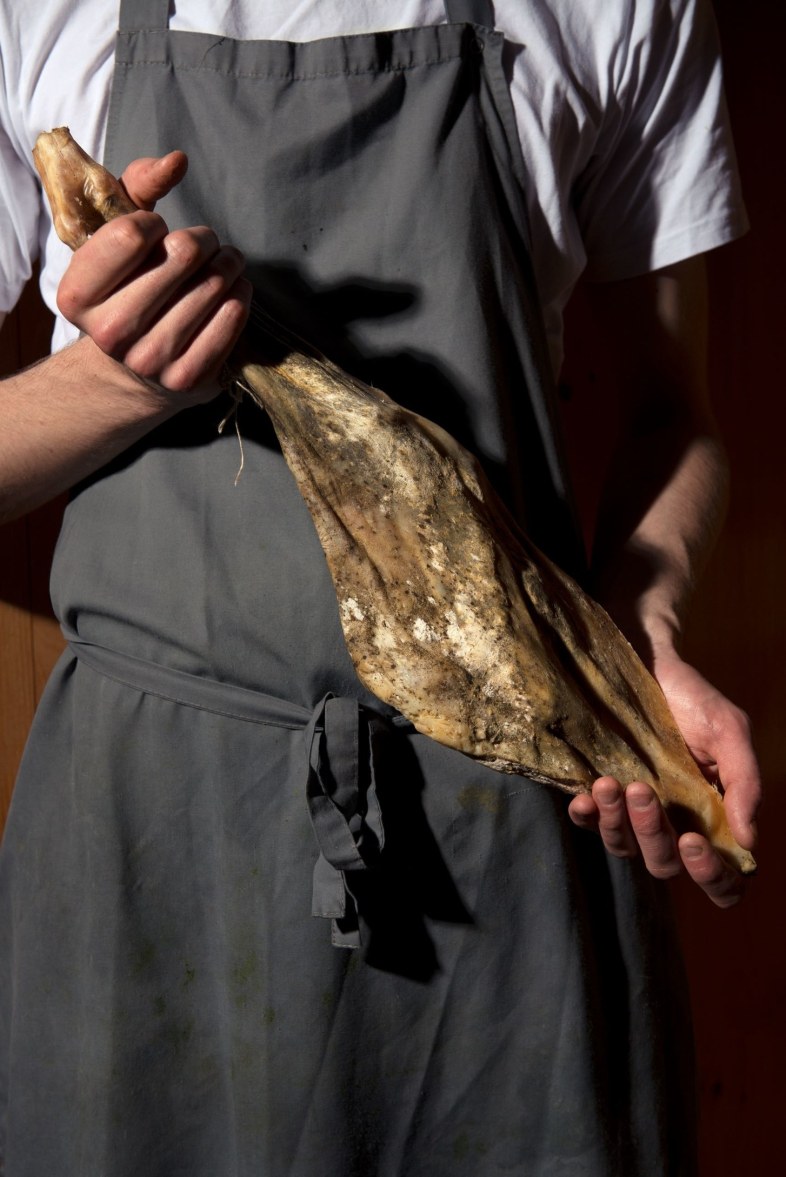
Fermented lamb, a Faroese specialty. “Fermented food is maybe the most important cultural heritage we’ve got,” Johannes Jensen, the entrepreneur behind Koks, said. Photograph by Anne Golaz for The New Yorker

The inhabitants of the islands, which were settled by Vikings in the ninth and tenth centuries, have always depended on sustenance from the ocean. But the local diet is surprisingly selective. The waters of the Faroes teem with edible creatures that the Faroese do not eat. They don’t gorge on the mahogany clams, buried in underwater sand, that can live for centuries. They ignore the abundant mussels that cling to coastal rocks, and consider langoustines and sea urchins to be revolting. It’s a favorite game among Faroese children to pick up sea urchins and hurl them at one another, because they make a satisfying splat on impact.

The Faroese do eat cod and haddock—masses of it, typically prepared in one of two ways. When eaten fresh, the fish is subjected to prolonged boiling (or “killed twice,” as some locals put it). Continue reading

Some Regrets Are Better Than Others

OaklandInstitute.pngThere is a saying, often attributed to Mark Twain (though it appears nowhere in his published writings), that history never repeats itself but it often rhymes. That quote comes to mind reading this report below by the Oakland Institute, in light of yesterday’s news from Greece. There is a rhyme with no reason that echoes between the two stories. It also brings to mind, for me, an ever-present question about the work I have done for the last two decades. Tourism, even if it is sustainable tourism development, has its downsides. So, I am always on the lookout for ways to avoid regret in projects I take on, and how they are executed. More often than not, if I sense regret it is about not having had enough impact. I prefer that to the regret of too much of this type of impact:

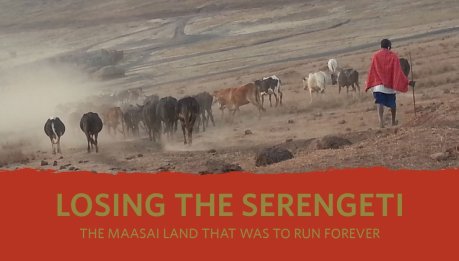
maasai-med-hero

Losing the Serengeti: The Maasai Land that was to Run Forever is based on field research, never publicly-seen-before documents, and an in-depth investigation into Tanzania’s land laws. This report is the first to reveal the complicity between Tanzanian government officials and foreign companies as they use conservation laws to dispossess the Maasai, driving them into smaller and smaller areas and creating a stifling map of confinement. Continue reading

Resilience, Greece & Reasonable Questions

3543.jpg

Tourism is Greece’s biggest foreign currency earner. Photograph: Costas Baltas/Reuters

Nearly forty years ago I was in Greece for the second time. I accompanied my mother on a visit to the village where she was born and had lived until her teens. We had spent an extended period in that village ten years earlier, and into my child’s mind it had imprinted vivid memories that, by 1979, were as fresh as the smell of bread baking in the stone oven of that village home. And now, that re-visit with my mother is as vivid as can be, and even has a sound track. That album had just been released and someone in the village had a cassette tape of it, and it played from the sound system of a Volkswagen Beetle, doors open, as we had a meal overlooking the mountains.

I have had one opportunity to bring to Greece the sustainable tourism development tools I have been working with since the mid-1990s. This recent story in the Guardian, too short to truly appreciate the scale of the questions raised, is a welcome reminder to me of the work to be done in a place I care deeply about.

Greece tourism at record high amid alarm over environmental cost

With 32 million visitors expected this year, fears grow that the country cannot cope

Greece is braced for another bumper year. The tourists will not stop coming. For every one of its citizens, three foreign visitors – 32 million in total – will arrive this year, more than at any other time since records began.

It’s an extraordinary feat for a country that has battled with bankruptcy, at times has been better known for its protests and riots and, only three years ago, narrowly escaped euro ejection. Tourism is the heavy industry that has helped keep catastrophe at bay.

But is Greece almost too successful for its own good? Tourist numbers have increased by an additional two million every year for the past three years. Arrivals from China alone have doubled since 2017. But with forecasts predicting record numbers over the next decade, a growing number are asking: can Greece really cope? Continue reading

The Foods Immigrants Offer

merlin_58349788_832d294e-bad8-4e32-94d6-96f61e9f8418-jumbo

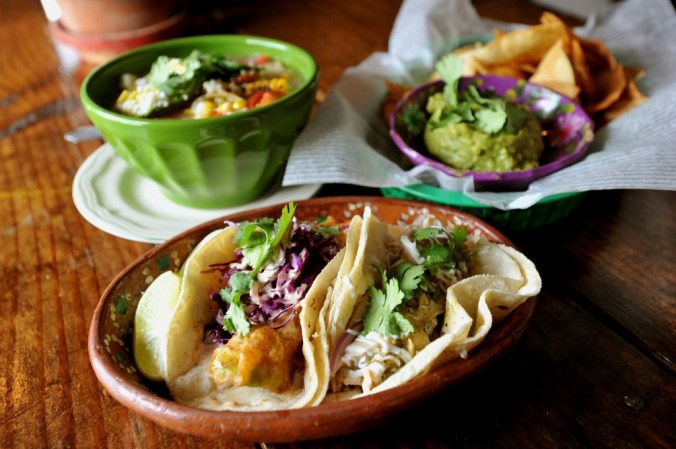
Tacos at a restaurant in Nashville. Credit Christopher Berkey for The New York Times

Margaret Renkl, Contributing Opinion Writer for the New York Times, shares an opinion that I am, as a son of an immigrant, inclined to agree with. Even if I was not so closely related to the theme, it would still make sense to me:

Eating Without Borders in Nashville

NASHVILLE — Not quite two weeks ago, I was driving down Nolensville Road, Nashville’s “international corridor,” looking for a restaurant called Tennessee Halal Fried Chicken. In the passenger seat was John T. Edge, the director of the Southern Foodways Alliance and author of “The Potlikker Papers: A Food History of the Modern South.” He was telling me that this particular approach to dining out, in one way of looking at it, could be considered a form of exploitation: “To patronize a restaurant of people who are different from you can be a kind of booty call,” he said.

This is an idea Mr. Edge has been considering for some time. The historically complicated nature of cross-cultural dining goes back to black-owned barbecue joints in the age of Jim Crow: “White Southerners patronized those restaurants,” he said. “They got in, they got what they wanted, and they got out.” Continue reading

Six Centuries Of Herding

Knight-Herdwick-Shepheard-1.jpg

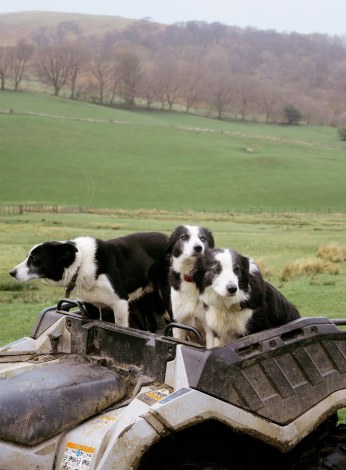
James Rebanks’s family has worked on the land in Cumbria for six hundred years. Photographs by Gregor Schmatz for The New Yorker

When I first heard him tell his own story, James Rebanks had just recently published a book that received wide critical acclaim and plenty of commercial success. Sam Knight now gives a view in on this form of life, as lived for six centuries, as is today in The Tweeting of the Lambs: A Day in the Life of a Modern Shepherd:

Knight-Herdwick-Shepheard-2

Photographs by Gregor Schmatz for The New Yorker

The hills of Cumbria, in northern England, are known as fells. They are among the wettest, coldest, and windiest places where sheep are farmed outdoors year-round. The weather is rotten, more or less, from October to May. So by lambing season—a three-week period, usually after Easter, when the ewes give birth, and there are triumphs and miscarriages, adoptions and accidents, gambolling and suckling—the flock, the shepherd, and the land itself are already worn out. “You’re just about fucked,” James Rebanks told me. “The whole thing is designed so you are just about to break.”

On Twitter, Rebanks is the Herdwick Shepherd. A little more than a hundred and nine thousand people, most of them trapped in office environments or riding public transportation, follow his account for gorgeous, wide-skied pictures of his flock, and for his evocations of the English countryside. In 2015, Rebanks’s memoir, “The Shepherd’s Life,” became an international best-seller, and he was compared to the nineteenth-century rural poet John Clare. Clare, the son of illiterate laborers from Northamptonshire, wrote about the land from within it; Rebanks’s writing has a similarly involved quality. Continue reading

Entrepreneurial Conservation & Armenian Foodways

04_preview_wide-17fa88f30bcf886db25337ed12b9accfbc084db0-s1400-c85

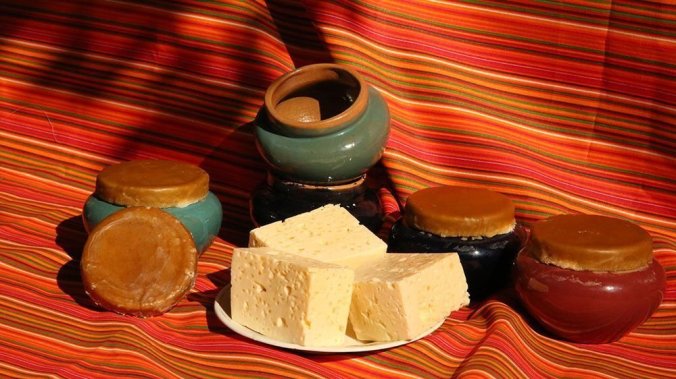
Motal cheese is a fresh goat’s milk cheese made primarily in remote mountain areas in Armenia. Cross of Armenian Unity/Ruslan Torosyan

We are on the lookout for stories that combine our interest in topics such as conservation, and entrepreneurship, and traditional foodways, and innovation (among other things) and this story touches on several of our favorite themes. Thanks to the salt team at National Public Radio (USA):

Armenia’s Ancient Motal Cheese Makes Its Way Into The Modern Age

In the mountains of eastern Armenia, about 75 miles north of the capital Yerevan, motal means change.

Motal cheese is like a business card for our region,” says Arpine Gyuluman, who owns Getik Bed and Breakfast in Gegharkunik. “[Because of it], we’re seeing more and more visitors annually.”

Motal is a white goat cheese flavored with wild herbs that is similar to homestyle country cheeses in Iran and Azerbaijan. Motal is prepared in locally made terra cotta pots sealed with beeswax ― a method that dates back at least 5,000 years. A little more than a decade ago, it was in danger of disappearing. That is, until a local university student named Ruslan Torosyan embarked on a personal crusade to save motal. Continue reading

Legume’s Lost Legacy, Found

180423_r31919.jpg

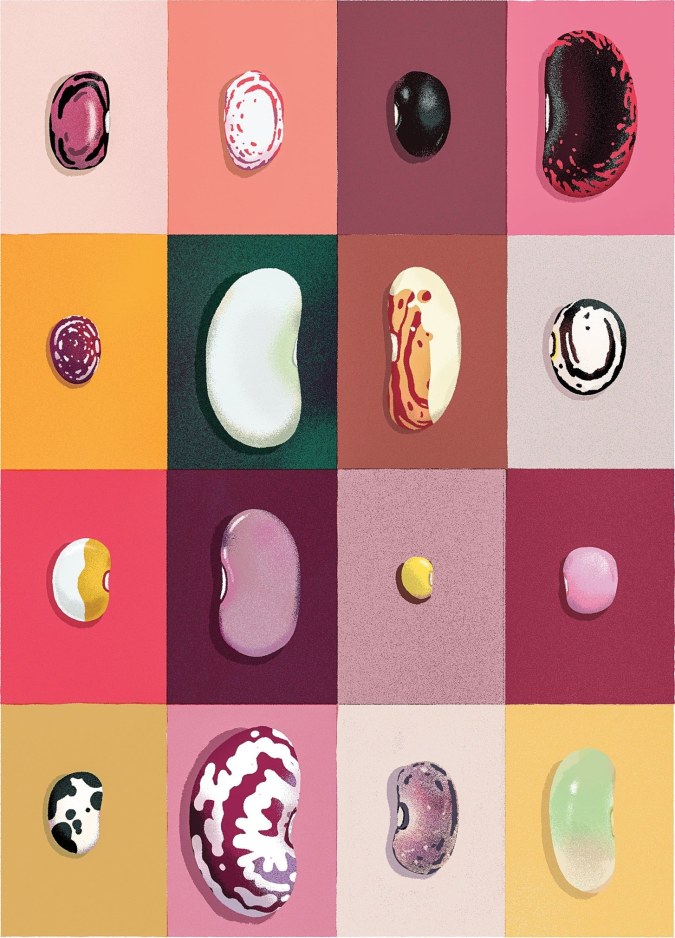
Rancho Gordo’s heirloom beans look like gems in a jewelry case. The company sells half a million pounds of them a year.Illustration by Cari Vander Yacht

180423_r31939

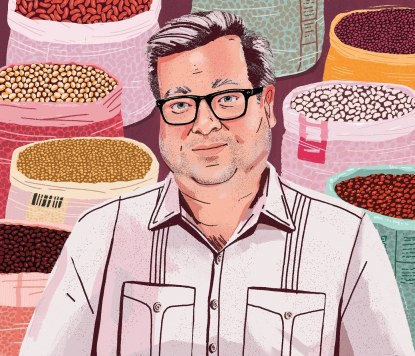
“My favorite bean is always the last one I ate,” Steve Sando says.Illustration by Cari Vander Yacht

If you only had read the first sentence in this story, you might move right on to something more promising.

Look at the author and look at the title, both familiar to those visiting this platform over the years, and it is certain not to disappoint. It is about this man to the right, and his culinary/cultural mission:

The Hunt for Mexico’s Heirloom Beans

Rare varieties discovered by Rancho Gordo’s Steve Sando have turned the humble legume into a gourmet food.

By Burkhard Bilger

The best meal of my life, or at least the most memorable, came from a can. I was thirteen at the time and living in France, so that may have had something to do with it. But I credit the beans. My older sisters and I were at a hippie camp in the Alps that summer, not far from the Italian border. My parents had stashed us there while they went home to Oklahoma to check on our house, which they’d rented to some graduate students while my father was on sabbatical. The camp was the cheapest one they could find, and they seemed to have done next to no research before signing us up. My mother just loved the name: Jeunesse du Soleil Levant, Youth of the Rising Sun. Continue reading

Junto Clubs For 2018 & Beyond

Junto-Club

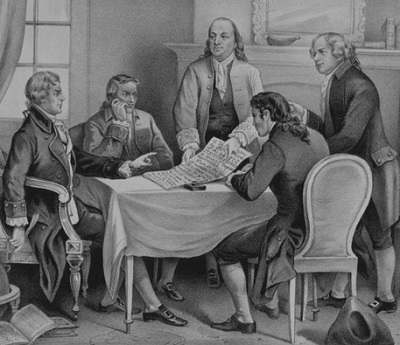
The Junto Club outgrew into the American Philosophical Society.

This historical reference is not typical of posts on this platform, except for when one of our contributors was in the midst of historical coursework that led to riffs like this; and then during his archival research that led to riffs like this.

We are riffing now from a current need (to put it mildly) for better conversation, with hindsight to a widely respected man’s approach at a time full of contentions. Thanks to Andrew Marantz for this brief note, whose accompanying illustration below belies the seriousness of the situation. Click the image to the left above to go to a historical archive with more background on this Talk of the Town item below:

Benjamin Franklin Invented the Chat Room

Conversation clubs, inspired by the Founding Father, have never felt more necessary.

180409_r31846webIn 1727, when Benjamin Franklin was twenty-one, he and a few friends—among them a scrivener, a joiner, and two cobblers—formed a conversation club called the Junto. They met on Friday evenings at a Philadelphia alehouse. “The rules that I drew up required that every member, in his turn, should produce one or more queries on any point of Morals, Politics, or Natural Philosophy, to be discuss’d by the company,” Franklin wrote in his autobiography. The United States was not yet the United States, but already he sensed a civility problem. His solution: structured, secular chitchat, “conducted in the sincere spirit of inquiry after truth, without fondness for dispute, or desire of victory.” Continue reading