From the World of Photography

One of the first things you’ll notice about Danh's images is that they’re kind of blue. But they’re not hand-colored or toned post-process. Daguerreotypes are naturally sensitive to blue and ultraviolet light, meaning the brightest spots, like the sky or a waterfall, take on a blue tint when overexposed. PHOTO: Danh

One of the first things you’ll notice about Danh’s images is that they’re kind of blue. But they’re not hand-colored or toned post-process. Daguerreotypes are naturally sensitive to blue and ultraviolet light, meaning the brightest spots, like the sky or a waterfall, take on a blue tint when overexposed. PHOTO: Danh

The daguerrotype makes for an interesting chapter in the history of photography. One reason why you should catch the last two days of the exhibition of Binh Danh‘s daguerrotypes of Yosemite National Park. Address: The National Gallery of Art in Washington, D.C; head to the exhibition titled “The Memory of Time”.

Standing in front of photographer Binh Danh’s daguerreotype of Yosemite Falls, on display at the National Gallery of Art in Washington, D.C., I saw myself staring back through the image.

If you look at a daguerreotype in person (unfortunately you can’t tell on a screen), you can see your reflection in the silver plate. At first I tried to move off to the side to get an unobstructed view, until I realized that being confronted with my reflection might be part of the experience. It turns out that this is exactly what Danh had in mind. “Conceptually, I hope one contemplates the land in relationship to one’s body and even identity.”

Continue reading

The Grave History of Ocean Beach

In order to build a new, swimmer-friendly waterfront on the bay, San Francisco looked to an unusual building supply they just happened to have lying around: Gold Rush era tombstones. PHOTO: Photo by Annetta Black/Atlas Obscura

In order to build a new, swimmer-friendly waterfront on the bay, San Francisco looked to an unusual building supply they just happened to have lying around: Gold Rush era tombstones. PHOTO: Photo by Annetta Black/Atlas Obscura

The town of Colma in San Mateo County, California, has a rather peculiar distinction: over 73% of it is covered with cemeteries. Simply put, the dead outnumber the living here. And the city of San Francisco has much to do with this. Before San Francisco voted to stop burials within city limits in 1900, there were at least 30 cemeteries in use or abandoned with bodies. Post the restriction, most of the deceased non-native residents previously buried in SF were moved to cemeteries in Colma in 1900-40s. But some of the tombstones returned to the city. You’ll see why at Ocean Beach.

Continue reading

Meet the Tree Elders

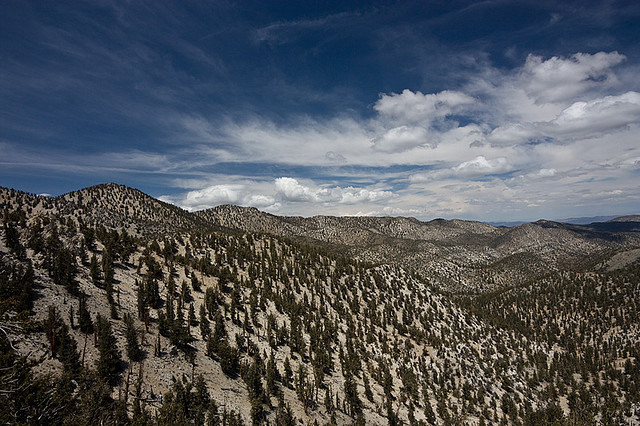
An ancient 4,800-year-old Great Basin Bristlecone Pine, the Methuselah Tree grows high in the White Mountains of eastern California. PHOTO: AGrinberg Creative Commons

An ancient 4,800-year-old Great Basin Bristlecone Pine, the Methuselah Tree grows high in the White Mountains of eastern California. PHOTO: AGrinberg Creative Commons

Did you know that the exact location of the world’s second oldest tree is a Forest Service secret? Or that a woman was charged with setting a fire that burnt down one of the oldest tree organisms? Well, “The Senator” must have sprung up roughly 3,500 years ago — a tiny cypress tree, no bigger than a fist, in the swamplands of Central Florida. In 2012, that very same cypress burned to the ground. The majestic 118-foot tall tree was one of the oldest organisms in the world. Over the course of its long life, it survived hurricanes, disease and logging sprees, serving as a tourist attraction and a spiritual epicenter for pilgrims hoping to bask, literally, in the shade of history.

Continue reading

History Underground

The tunnel system must be one of the most mysterious engineering projects in Liverpool’s history. One entrance into the tunnels was found in the basement of their patron’s former house (Credit: Chris Iles/Friends of Williamson’s Tunnel)

The Williamson’s tunnel system must be one of the most mysterious engineering projects in Liverpool’s history. One entrance into the tunnels was found in the basement of their patron’s former house PHOTO: Chris Iles

The Williamson Tunnels are a labyrinth of tunnels and underground caverns under the Edge Hill district of Liverpool in north-west England. They were built in the first few decades of the 1800s under the control of a retired tobacco merchant called Joseph Williamson.The purpose of their construction is not known with any certainty. Theories range from pure philanthropy, offering work to the unemployed of the district, to religious extremism. Although some of the tunnels have been lost over the years, a lot of them still exist today, under what is now a residential area. One section of the tunnels has been cleared and renovated and is open to the public. The remaining parts of the labyrinth are closed, with many suspected tunnels yet to be rediscovered.

Continue reading

Where Eagles Fly

The Kazakhs of the Altai mountain range in western Mongolia are the only people that hunt with golden eagles, and today their number is on the decline. The eagles are not bred in captivity, but taken from nests at a young age. Female eaglets are chosen since they grow to a larger size – a large adult might be as heavy as seven kilos, with a wingspan of over 230cm. After years of service, on a spring morning, a hunter releases his mature eagle a final time, leaving a butchered sheep on the mountain as a farewell present.

“That’s how the Kazakh eagle hunters make sure that the eagles go back to nature and have their own strong newborns, for the sake of future generations”.

Continue reading

The Japanese Fine Art of Bragging

Gyotaku, the art of making inked prints from real fish, originated in 19th century Japan. Above, three examples from modern Gyotaku artist Heather Fortner (from left): Under the Rainbow Rainbow Trout; Little big skate and Primary colors butterfly ray. Courtesy of Heather Fortner

Gyotaku, the art of making inked prints from real fish, originated in 19th century Japan. Above, three examples from modern Gyotaku artist Heather Fortner (from left): Under the Rainbow Rainbow Trout; Little big skate and Primary colors butterfly ray. Courtesy of Heather Fortner

How did fishermen record their trophy catches before the invention of photography? In 19th century Japan, fishing boats were equipped with rice paper, sumi-e ink, and brushes in order to create gyotaku: elaborate rubbings of freshly caught fish.

Fish printing often attracts those who have a connection with the ocean or marine life. Wada, who is Japanese-American, grew up in Hawaii and was taught how to fish by his family at a young age. And before she became a gyotaku artist, Fortner was a commercial fisherman, research vessel deckhand, and a ship’s officer and Master in the U.S. Merchant Marine. “I have always loved the ocean and anything from the ocean,” she says.

She adds: “Gyotaku allows you to express an appreciation for the natural world by partnering with the finest artist in the world: Mother Nature.”

Continue reading

The World’s Lone Weaver of Sea Silk

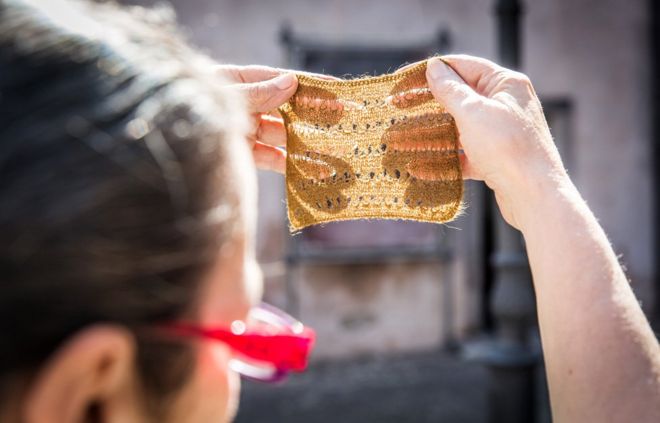
Chiara Vigo is the only woman in the world who still works the byssus, better known as the silk of the sea, the same way women in ancient Mesopotamia used to weave it in order to make clothes for their kings. PHOTO: BBC

Chiara Vigo is the only woman in the world who still works the byssus, better known as the silk of the sea, the same way women in ancient Mesopotamia used to weave it in order to make clothes for their kings. PHOTO: BBC

The Italian island of Sardinia. A place where coastal drives thrill, prehistory puzzles, endearing eccentricities exist. As DH Lawrence so succinctly put it: ‘Sardinia is different.’ The island has been polished like a pebble by the waves of its history and heritage. And an indispensable part of it is Chiara Vigo, who is thought to be the only women left who can harvest sea silk, spin it and make it shine like gold. By her own admission, Vigo is neither an artist nor an artisan. She is a master. While an artist creates over inspiration and an artisan produces and sells, masters pass their art on. Like she hopes to.

Continue reading

If You Are in DC…

The Capitol stones at Rock Creek Park in DC. PHOTO: Bill Lebovich

The Capitol stones at Rock Creek Park in DC. PHOTO: Bill Lebovich

When the dust settled after 9/11, shipbuilders recycled the Twin Towers’ steel into the USS New York. And when the United States Capitol got a face-lift, the old stones were destined for an almost forgotten existence in a Washington, D.C. forest. Save for the occasional runner who veers off his usual trail and the rare visitor with ample time to explore more of the Rock Creek Park, not many have chanced upon and delved into the history of the pile of moss-covered stone columns. Obscura Society is headed there this week, and you may want to join them.

Continue reading

The European Who Gave India its Railway Book Stalls

A vendor attends a customer at a railway platform at Mumbai, India. PHOTO: Reuters

A vendor attends a customer at a railway platform at Mumbai, India. PHOTO: Reuters

You remember railway book stalls as being there since eternity. Being in the business of making arduous train journeys a pleasant affair in the company of books and newspapers. It’d be easy to assume a well-meaning civic body put them up. But as far as India goes, the country and its people owe their reading on trains to Emile Edouard Moreau, a European businessman.

Continue reading

Going Back to the Melon

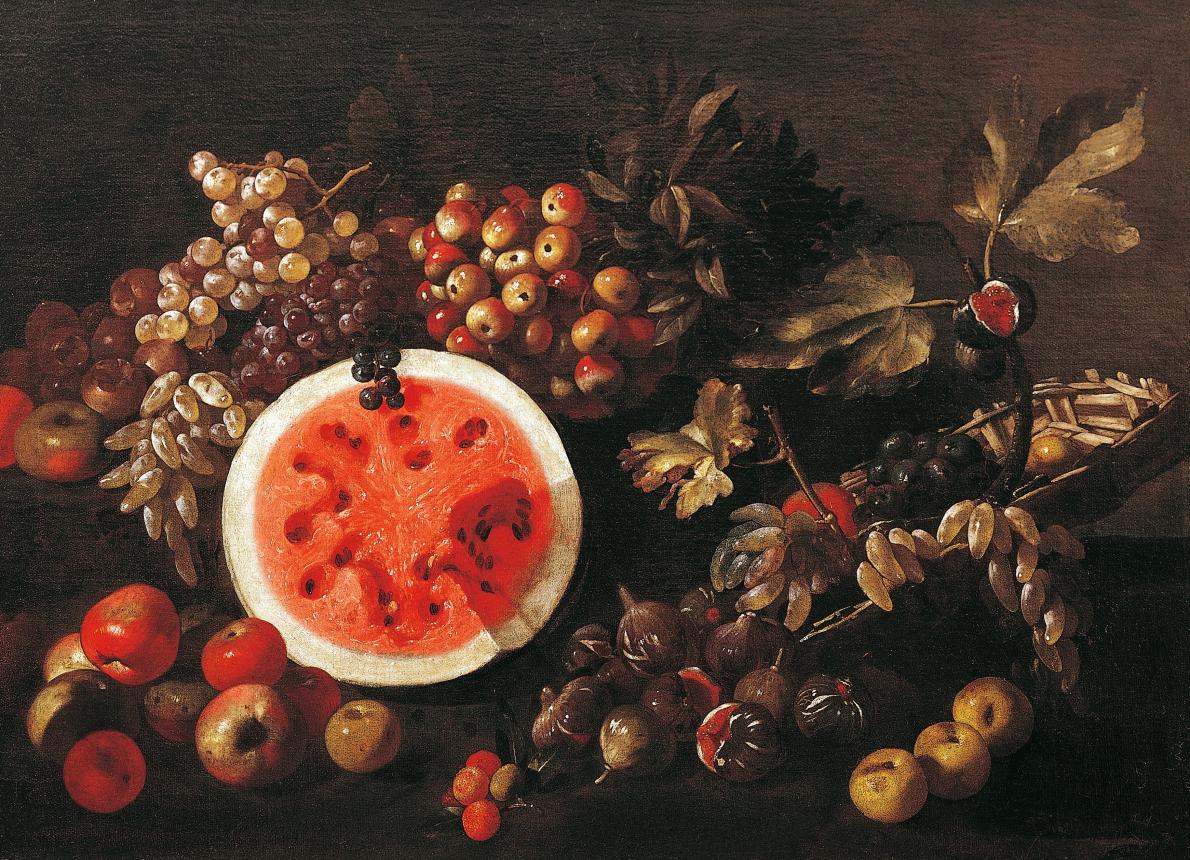
The watermelon has long inspired artists, such as Giuseppe Recco's Still Life With Fruit (1634-1695). The first color sketches of the red-fleshed, sweet watermelon in Europe can be found in a medieval medical manuscript, the Tacuinum Sanitatis.  PHOTO: Dea, A. Dagli Orti/Deagnostini/ GETTY

The watermelon has long inspired artists, such as Giuseppe Recco’s Still Life With Fruit (1634-1695). The first color sketches of the red-fleshed, sweet watermelon in Europe can be found in a medieval medical manuscript, the Tacuinum Sanitatis. PHOTO: Dea, A. Dagli Orti/Deagnostini/ GETTY

Watermelon may be the best picnic dessert nature ever created with its sweet juice cleverly bound inside that spongy red (sometimes yellow) matrix, and fully protected by psychedelic green rind. And no matter how you slice it, this green cannonball of nutrition is attracting scientific attention as an elixir that reduces muscle pain after workouts and a whole lot more. And the myriad ways it lends itself beautifully in the kitchen. But what about its history? Continue reading

Designing the World

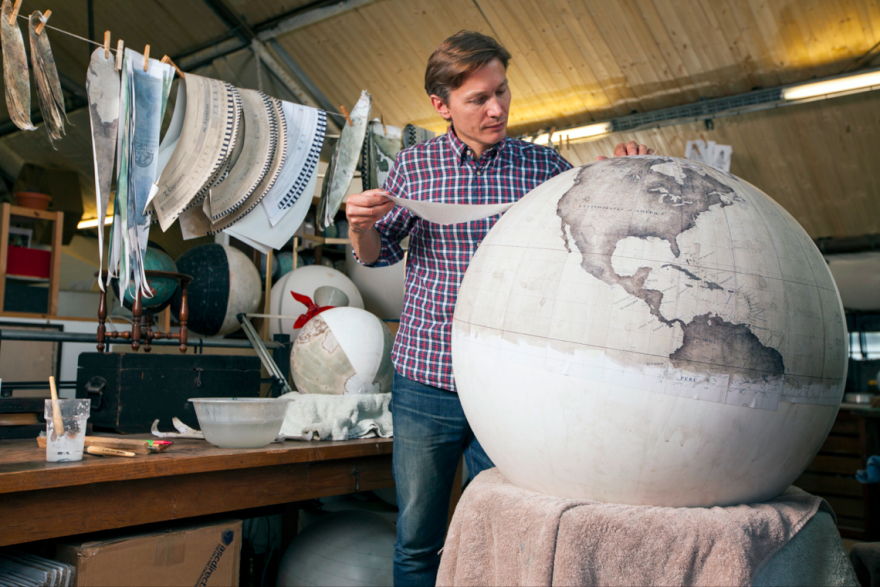
It took a long time to make one that was perfectly balanced and approx. 2 years before Bellerby produced a globe that I could sell. (Photo by Stuart Freedman)

It took a long time to make one that was perfectly balanced and approx. 2 years before Bellerby produced a globe that I could sell. (Photo by Stuart Freedman)

When is the last time you looked at a map? No, we’re not talking GPS-powered imagery and guidelines but a physical entity. Like a globe. Like the collectibles Peter Bellerby and his company painstakingly churn out. In fact, they are one of the only two workshops in the world still in the business of handcrafting globes.  And in the business of preserving a dying craft.

Continue reading

The Japanese Women Who Married the ‘Enemy’

Atsuko, Emiko and Hiroko were among tens of thousands of Japanese women who married their former enemies after World War II. They landed in 1950s America knowing no one, speaking little English and often moving in with stunned in-laws.  PHOTO: BBC

Atsuko, Emiko and Hiroko were among tens of thousands of Japanese women who married their former enemies after World War II. They landed in 1950s America knowing no one, speaking little English and often moving in with stunned in-laws. PHOTO: BBC

What does it mean to leave your country, where you were somebody, and move miles to a continent you’d only heard of? A country where you’d be a ‘nobody’. Not knowing whether the decision to say ‘yes’ to a former enemy was right. Struggling for words that help start a conversation. Being told not to wear the one piece of cloth your identity hinges upon? And years of trying to fit in, juggling two distinct identities? Listen to the Japanese War brides as they tell their story on BBC this week. 

For 21-year-old Hiroko Tolbert, meeting her husband’s parents for the first time after she had travelled to America in 1951 was a chance to make a good impression. She picked her favourite kimono for the train journey to upstate New York, where she had heard everyone had beautiful clothes and beautiful homes.

But rather than being impressed, the family was horrified. “My in-laws wanted me to change. They wanted me in Western clothes. So did my husband. So I went upstairs and put on something else, and the kimono was put away for many years,” she says.

Continue reading

America’s Own ‘Tea’ Plant

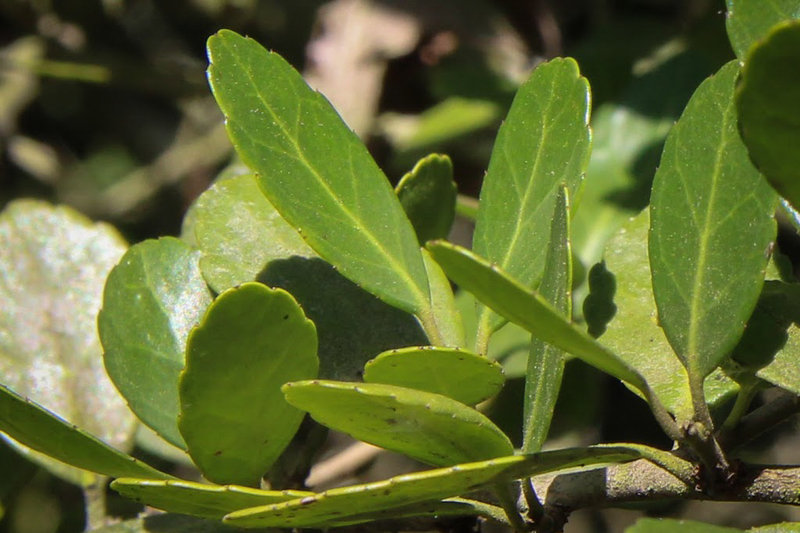
Yaupon growing in the wild in east Texas. This evergreen holly was once valuable to Native American tribes in the Southeastern U.S., which made a brew from its caffeinated leaves. PHOTO: Murray Carpenter for NPR

Yaupon growing in the wild in east Texas. This evergreen holly was once valuable to Native American tribes in the Southeastern U.S., which made a brew from its caffeinated leaves. PHOTO: Murray Carpenter for NPR

Thanks to RAXA Collective’s India operations, specifically in Kerala, there has been no dearth of stories on tea here. Tea’s takeover of the table finds space here. While our travels allow us to bring you tea experiences from across the world. Follow a seed to cup journey in Thailand here. Also be sure of how the iced variety is slowly taking over the world. Now NPR creates some buzz with a piece on North America’s forgotten ‘tea’ plant, probably the only plant from the continent known to contain caffeine.

Continue reading

Let My Country Awake

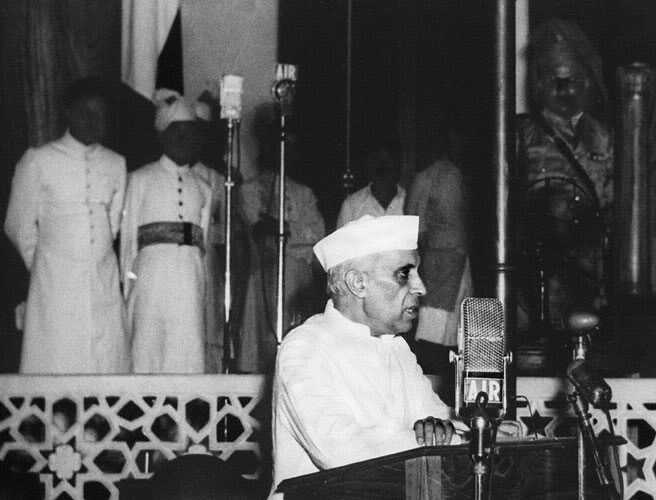
A photo dated 15 August 1947 shows Jawaharlal Nehru, India's first Prime Minister, delivering his Famous

A photo dated 15 August 1947 shows Jawaharlal Nehru, India’s first Prime Minister, delivering his Famous “Tryst With Destiny” speech at the Parliament House in New Delhi

Long years ago we made a tryst with destiny, and now the time comes when we shall redeem our pledge, not wholly or in full measure, but very substantially. At the stroke of the midnight hour, when the world sleeps, India will awake to life and freedom. A moment comes, which comes but rarely in history, when we step out from the old to the new, when an age ends, and when the soul of a nation, long suppressed, finds utterance… And so we have to labour and to work, and work hard, to give reality to our dreams. Those dreams are for India, but they are also for the world, for all the nations and peoples are too closely knit together today for anyone of them to imagine that it can live apart…

I write this at the eleventh hour, before the hands of the clock officially rest on India’s 68th Independence Day. Oh wait, isn’t it a national holiday? I must admit the latter has me more thrilled. Also admit to not having read the country’s first Independence Day speech (excerpt above) in its entirety until now. I shall wallow in shame for a bit, until I cross over to gratitude. Grateful for this chance to dwell on what freedom meant then, means now, and will come to be.

Continue reading

Shaken, Not Stirred – The Golden Age of Cocktails

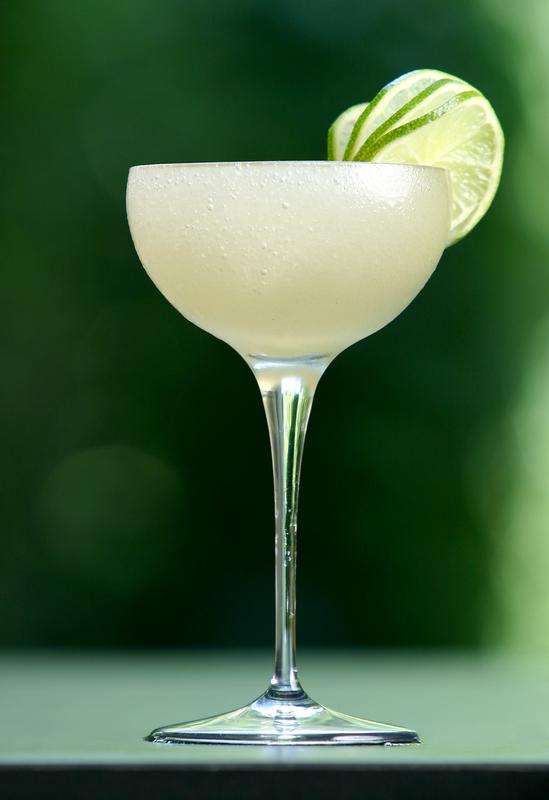
Forget the blender and all of the bottled mixes, the best Daiquiri is made from scratch and it is an unbelievably easy mix of three main ingredients.

Forget the blender and all of the bottled mixes, the best Daiquiri is made from scratch and it is an unbelievably easy mix of three main ingredients.

“Shaken, not stirred” is a catchphrase of Ian Fleming‘s fictional British Secret Service agent James Bond and describes his preference for the preparation of his martini cocktails. The phrase first appears in the novel Diamonds Are Forever (1956), though Bond himself does not actually say it until Dr. No (1958), where his exact words are “shaken and not stirred”. Going by it, there clearly seems to be a preference and an art to topping up a glass. And The Salt‘s trackback to when Americans learned to love mixed drinks shows just that.

Continue reading

Food for the Soul

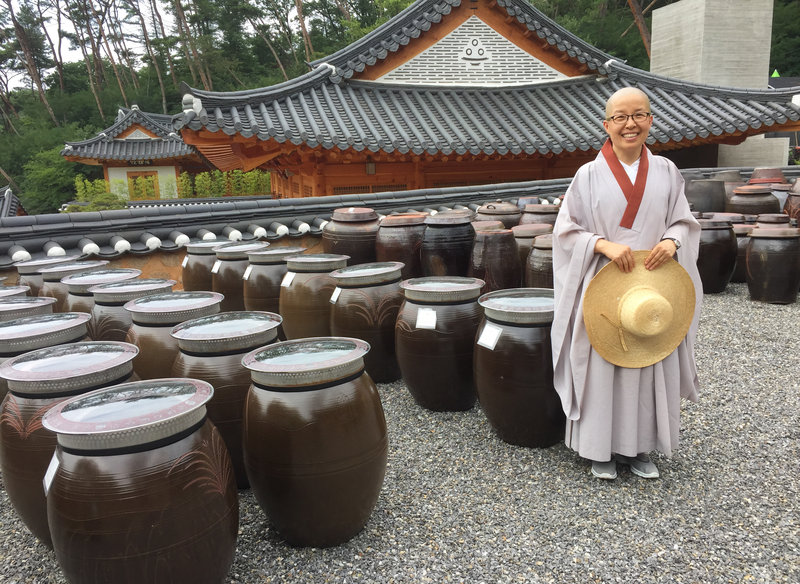
Sun Woo directs the visitor program at Jinkwansa, a Buddhist temple outside Seoul famous for preserving the art of Korean temple food. Behind her are giant jars filled with fermented soybeans. PHOTO:  Ari Shapiro/NPR

Sun Woo directs the visitor program at Jinkwansa, a Buddhist temple outside Seoul famous for preserving the art of Korean temple food. Behind her are giant jars filled with fermented soybeans. PHOTO: Ari Shapiro/NPR

When it comes to faith matters, it’s interesting to see how matters of divinity are linked to food. One interpretation of it could be the need to connect the intangible with the tangible. And no better universal language than food as a medium to impart lessons for the soul. While most Hindu temples distribute prasadchurches have the Eucharist, Jewish rituals revolve around the seder meal and so on. The Buddhist temple at Jinkwansa too has a food tradition, one that goes back 1,600 years and is renowned for its detoxification power.

Continue reading

Put a Label On It

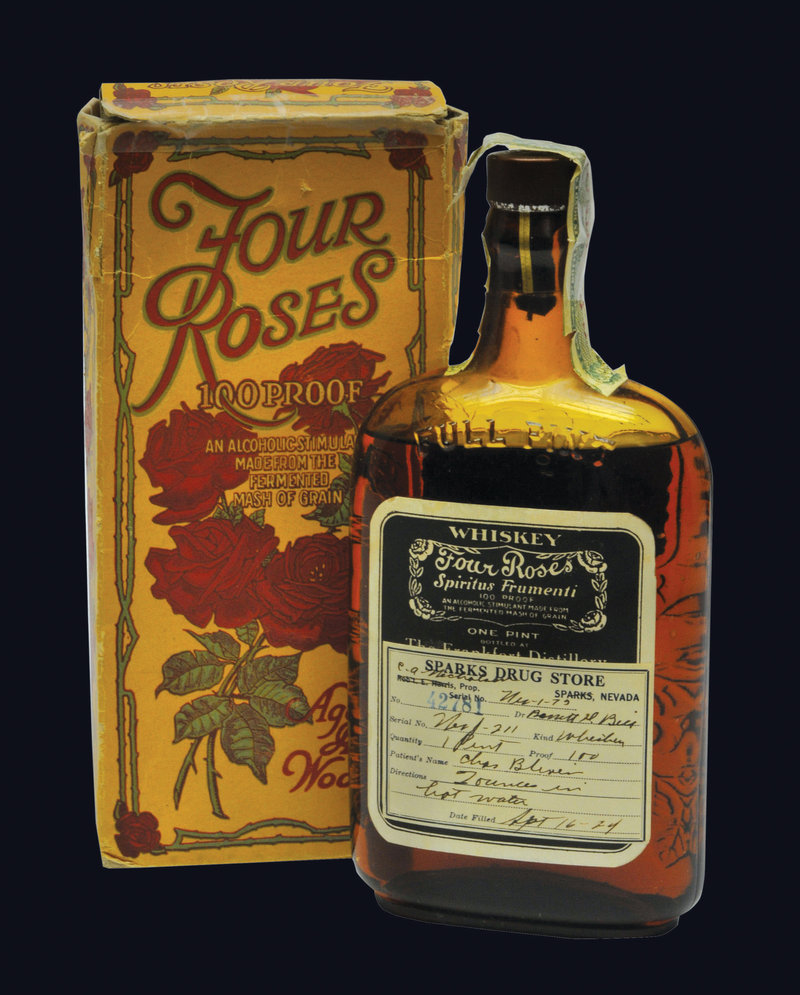
During Prohibition, whiskey could legally be sold as medicine. This particular bottle of Four Roses bourbon was prescribed to a patient in Sparks, Nev., in 1924. The label tells patients to mix 2 ounces of whiskey with hot water. PHOTO: Ten Speed Press/Four Roses

During Prohibition, whiskey could legally be sold as medicine. This particular bottle of Four Roses bourbon was prescribed to a patient in Sparks, Nev., in 1924. The label tells patients to mix 2 ounces of whiskey with hot water. PHOTO: Ten Speed Press/Four Roses

Many a book, blog and news article has been devoted to the topic of whiskey: the way it’s aged, where to drink it, how to store it and serve it or pair it with food. But comparatively little attention has been paid to how whiskey is packaged. Spirits and wine writer Noah Rothbaum felt that it was time that American whiskey labels had their day in the spotlight. His new book, The Art of American Whiskeytraces the history of surprisingly elaborate labels from the 1800s to today.

Continue reading

The Tradition of a Most Dangerous Game

The Calcio Storico is an ancient form of football from 16th century Italy, which originated from the ancient Roman ‘harpastum’, and is played in teams of 27, using both feet and hands. Sucker-punches and kicks to the head are prohibited but headbutting, punching, elbowing, and choking are all allowed

Welcome to Calcio Storico, a centuries-old competition in Florence with very few rules and the sort of human wreckage generally associated with the gladiators. Dating back to 16th century Italy, today’s calcio storico (see photos from The Guardian here), or historic soccer, may be both the most violent form of soccer in the world. It is played only in Florence, Italy, where four 27-man teams representing four historic Florentine neighborhoods—Santa Croce, Santa Maria Novella, Santo Spirito, and San Giovanni—face off to beat each other to a pulp, every June. Kicks to the head are forbidden. So are fights of two or more against one. Everything else goes, making the goal of moving a leather ball from one end of the field to another seem like a side note to the bloody proceedings.

Continue reading

The Incas and their Hand-built Roads

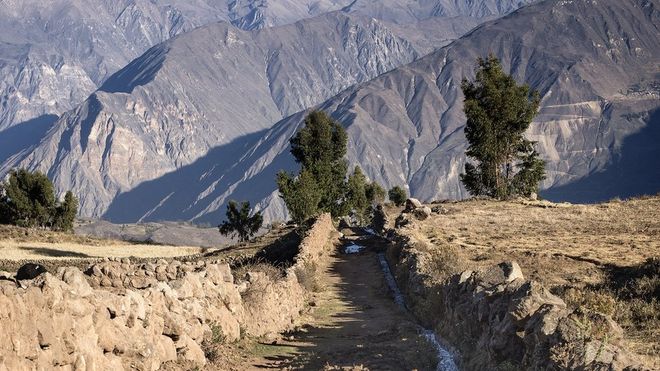
An exhibition at the National Museum of the American Indian concludes that the ancient Incas were great environmentalists. PHOTO: BBC

An exhibition at the National Museum of the American Indian concludes that the ancient Incas were great environmentalists. PHOTO: BBC

The Inca Road is one of the most extraordinary feats of engineering in the world. By the 16th Century it had helped transform a tiny kingdom into the largest empire in the Western hemisphere. And to the envy of modern engineers, substantial parts of the 24,000-mile (39,000-km) network survive today, linking hundreds of communities throughout Argentina, Bolivia, Chile, Colombia, Ecuador and Peru. Incredibly, it was constructed entirely by hand, without iron or wheeled transportation. A new exhibit at the Smithsonian Institution in Washington DC shows why the Incan kingdom built a lasting infrastructure.

Continue reading

Putting the Horse Before the Cart

For better or worse – the Indian city of Mumbai is preparing to bid goodbye to one of its icons. The city’s ornate horse-drawn carriages are nearing the end of the road after a court in the Indian city ruled them illegal. The silver-colored Victorias – styled on open carriages used during Queen Victoria’s reign – have been plying Mumbai’s streets since British colonial times, and for years have been a tourist attraction. But recently, the Bombay High Court agreed with animal welfare groups, who had petitioned for a ban citing poor treatment of the horses, that the practice was cruel.

Continue reading