Are You Looking at My Shoes?

An ongoing exhibition at the Victoria and Albert Museum explores extremes of footwear from around the globe, in 200 pairs of shoes

An ongoing exhibition at the Victoria and Albert Museum explores extremes of footwear from around the globe, in 200 pairs of shoes

If you happen to be on Cromwell Road in London, United Kingdom, then let your feet take you to the Victoria and Albert Museum. To be more precise, to this exhibition titled Shoes: Pleasure and Pain. Among the 200 plus pairs of footwear exhibited until January, 2016 are a sandal decorated in pure gold leaf originating from ancient Egypt and contemporary creations from Jimmy Choo, Manolo Blahnik and Christian Louboutin. The exhibit explores three different themes: transformation, status and seduction. Transformation looks at the mythical aspect of shoes in folklore. Status examines how impractical shoes are worn to represent a privileged lifestyle. Finally, seduction explores the concept of footwear as a representation of sexual empowerment and pleasure. Talk about history meeting its contemporary.
Continue reading

Speaking from the Roof of the World

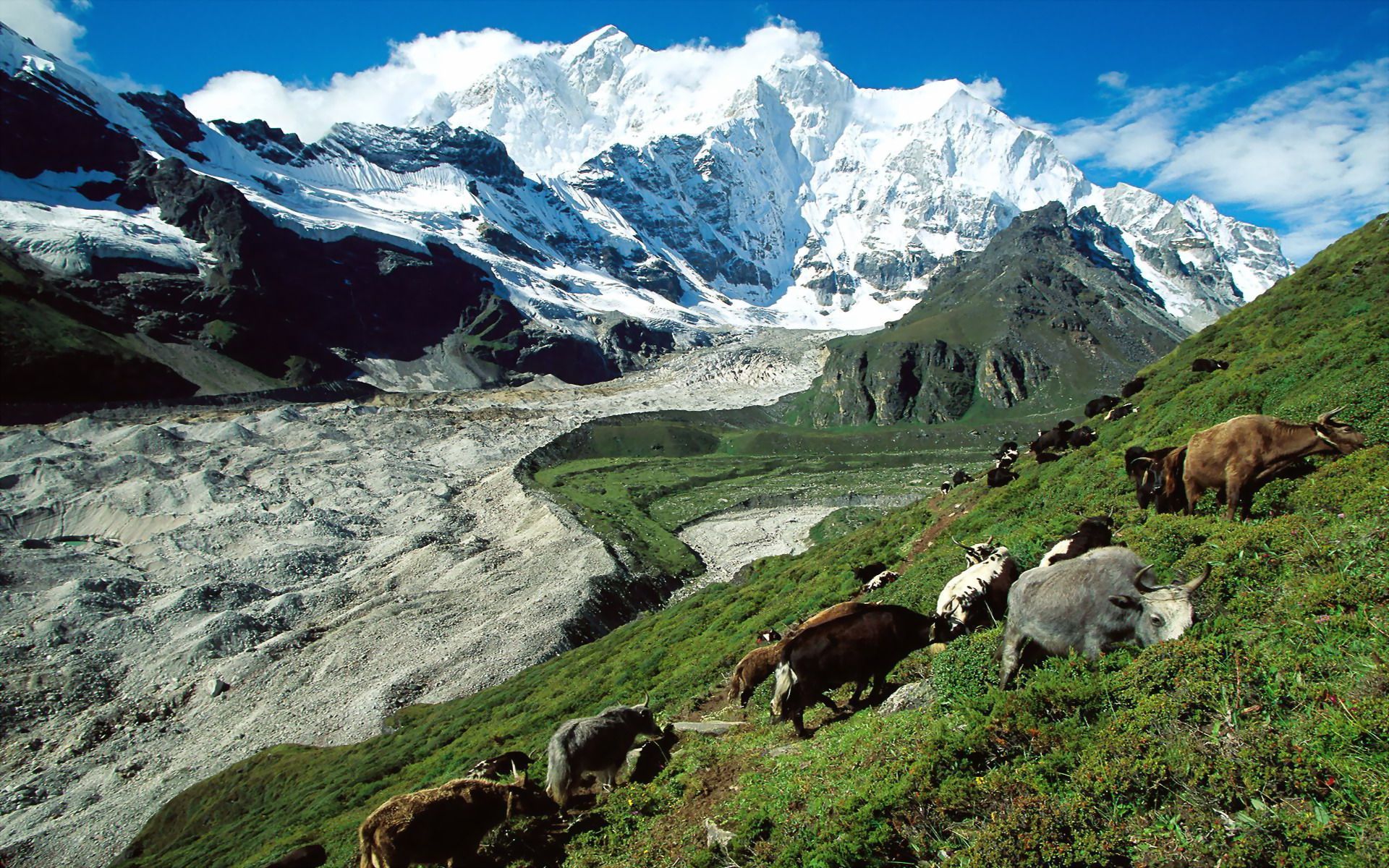
New research challenges stereotypical views of Tibet as an isolated and inward-looking society before the British and Chinese arrived. PHOTO: Maxi Science

New research challenges stereotypical views of Tibet as an isolated and inward-looking society before the British and Chinese arrived. PHOTO: Maxi Science

Tibet. It’s called the ‘Roof of the World’ with good reason — the Tibetan Plateau stands over 3 miles above sea level and is surrounded by imposing mountain ranges that harbor the world’s two highest summits, Mount Everest and K2. While the world’s mountaineers regularly attempt to summit the forbidding peaks, the remote area is home to a rich variety of cultures. Less well-known is the story of how the Tibetan Plateau and the craggy peaks that surround it formed. The geologic tale is familiar to many schoolchildren: About 50 million years ago, the Indian subcontinent began to collide with Eurasia, and as it slammed into the bigger landmass, the plateau and the Karakoram and Himalaya ranges were born.

Only recently did Tibetan scholar Lobsang Yongdan revisit a long-ignored section of a historic text to reveal how Tibetans were engaging with western scientific knowledge two centuries ago.  His research into a geography of the world, first published by a lama (Buddhist spiritual leader) in 1830, challenges stereotypical views of Tibet as an isolated and inward-looking society.

Continue reading

Yoga And Its Contents

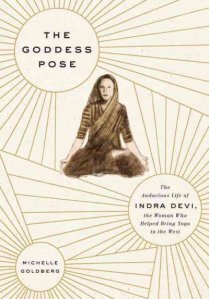
9780307593511_custom-96a370c39830fd94be59575d59bbffb4c13ce088-s500-c85We have been intrigued by news reports that the leader of the country where many of Raxa Collective’s contributors are based, and where yoga comes from, is leading an effort to get his country more devoted to its practice, and thereby export more of one of India’s most important innovations.

This intrigue is piqued especially after listening to an interview with the author of a book on this very subject–how yoga came to be disseminated from India to elsewhere–which puts the book on the top of our monsoon season reading list.

If you happen to be in Delhi two weeks from today, join in:

…On 21 June – the new International Yoga day – Narendra Modi, India’s prime minister, hopes the world will join in. The grass near India Gate will be transformed into the venue for what it is hoped will be the biggest single yoga session ever held, with up to 45,000 people running through a 35-minute routine.

The participants will include 64-year-old Modi, most of his government and, they hope, a range of celebrities. Officials have been sent to round up volunteers from scores of countries to reinforce the international credentials of the ancient Indian practice…

Meanwhile, listen to this interview to learn more about yoga’s journey to the West:

Continue reading

Meet the Supergrain

Pronounced “free-kah”, it is unripe wheat that’s parched and roasted to burn off the husks. The grain has a wonderfully smoky, nutty (and slightly addictive) nature, PHOTO: Daniella Cheslow

When it comes to food, the world is constantly looking for healthier replacements of core ingredients. So what can you replace a staple like rice or white pasta with? Or how can you keep a watch on your wheat intake? Quinoa had the world raving for a while, yes, but now kitchens are looking at ‘old’ grains. Their versatility, flavor, economic cost, ease to work with, and the accompanying history has chefs across the world looking back to older grains. Like freekeh.

Continue reading

Leopards And Humans Peacefully Cohabitating In India

An elderly priest descending to Perwa village from a temple devoted to Lord Shiva on Perwa Hill where he lives, one of the many holy slopes in the region that is also home to leopards. Credit Richard Mosse

An elderly priest descending to Perwa village from a temple devoted to Lord Shiva on Perwa Hill where he lives, one of the many holy slopes in the region that is also home to leopards. Credit Richard Mosse

If you are coming to visit one of Raxa Collective’s properties in south India, and want a recommendation for a visit to another part of India, this may be on our to do list (we need to go check it out first, and will let you know):

Life Among the Leopards

Continue reading

A Traveler in My Own Land – Introduction

Dear coffee-stained diary,

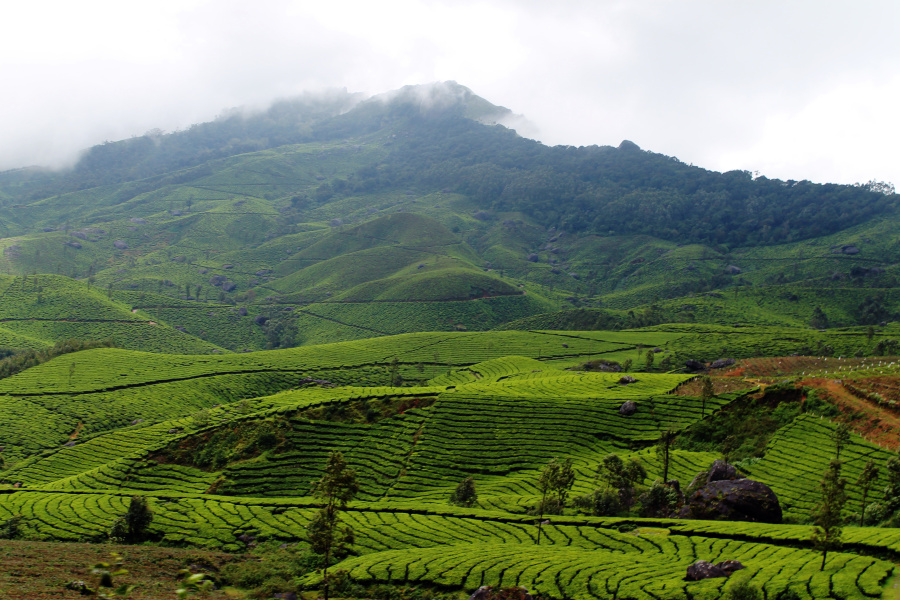
1016402_10151817477384853_833963116_nIt’s been a while since you and I turned pages together, but then there were no new stories to tell. Now we say ‘hello’ at the start of a new line for am on the road again; taking paths that wind through tea gardens and forests, hug beaches and overlook a harbor in this homeland I call Kerala (India). The sights are plenty, so are the stories.

Yours to know are tales of ships docking here to trade in spices and those of communities striving to keep their identities alive. Yes, you’ve had your generous share of the history of the Chinese fishing nets but perspectives are things of beauty. Oh, I almost forgot the people. Continue reading

Brew-born Time Travel

Chef Andrew Gerson of Brooklyn Brewery organized a dinner party featuring ingredients used by Dutch settlers and Native Americans living in 1650s New York City. Courtesy of Brooklyn Brewery

Chef Andrew Gerson of Brooklyn Brewery organized a dinner party featuring ingredients used by Dutch settlers and Native Americans living in 1650s New York City. Courtesy of Brooklyn Brewery

Thanks to the folks at the salt, and National Public Radio (USA) for this one:

Brooklyn Brewery Dares Diners To Eat Like Dutch Settlers

HANSI LO WANG

You can find food from just about any part of the world in New York City.

The Brooklyn Brewery is trying to push New Yorkers’ palates even further by going back in time.

This week, it hosted a dinner party inspired by the local cuisine of Dutch settlers and Native Americans in the 1650s.

Back when New York wasn’t even New York yet, and before the English took over in 1664, the Dutch called the city New Amsterdam.

Continue reading

So Much Expertise, So Little Time

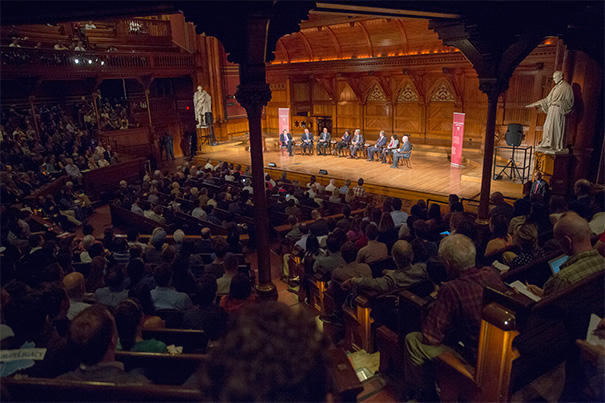
Kris Snibbe/Harvard Staff Photographer With Charlie Rose as moderator, a panel of experts in science, politics, business, economics, and history shared their views during Monday's Presidential Panel on Climate Change at Sanders Theatre. “The challenge of climate change is profound. The risks it poses are dire. Confronting those dangers is among the paramount tasks of our time,” said President Drew Faust in introducing the discussion.

Kris Snibbe/Harvard Staff Photographer. With Charlie Rose as moderator, a panel of experts in science, politics, business, economics, and history shared their views during Monday’s Presidential Panel on Climate Change at Sanders Theatre. “The challenge of climate change is profound. The risks it poses are dire. Confronting those dangers is among the paramount tasks of our time,” said President Drew Faust in introducing the discussion.

Thanks to the Harvard Gazette, and the panelists who took the stage last week for another in ongoing series of assessments of the urgency of need for action on climate change:

There is hope in global action to fight climate change, in the slow adoption of wind and solar power, in moves by the U.S. government to cut emissions from vehicles and power plants, in the lead taken by some businesses to clean up operations and draw attention to the problem.

But it’s too late to avoid several more degrees of warming by the turn of the next century, too late to completely stave off dramatic melting, and too late to avoid the slow swamping of Pacific island nations, whose thousands of years of history and culture seem certain to be swallowed by rising seas. Continue reading

Tea’s Takeover

Photo: Milo Inman

Photo: Milo Inman

This is the longest article of its kind on our favored food blog, the salt, on National Public Radio (USA)’s website, but it is worth the read for those inclined to food history; and for those in Raxa Collective’s India operations it goes a long way to explaining those beautifully manicured tea estates in a new light:

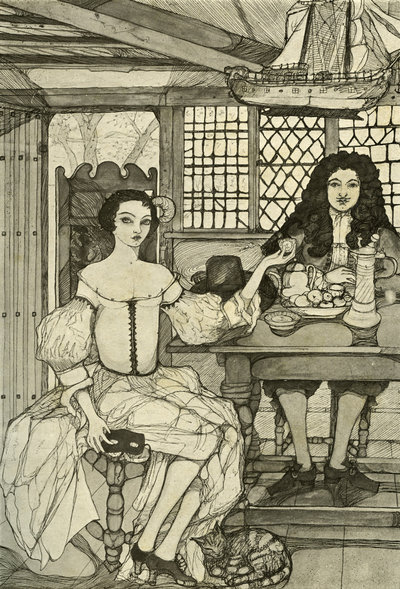
Catherine of Braganza was an early celebrity endorser of tea. After she wed Charles II, the fad for tea took off among the British nobility. Kitty Shannon/Corbis/Lebrecht Music & Arts

Catherine of Braganza was an early celebrity endorser of tea. After she wed Charles II, the fad for tea took off among the British nobility. Kitty Shannon/Corbis/Lebrecht Music & Arts

…Tea was practically unknown in Europe until the mid-1600s. But in England, it got an early PR boost from Catherine of Braganza, a celebrity who became its ambassador: The Portuguese royal favored the infusion, and when she married England’s Charles II in 1662, tea became the “it” drink among the British upper classes. But it might have faded as a passing fad if not for another favorite nibble of the nobility: sugar.

In the 1500s and 1600s, sugar was the “object of a sustained vogue in northern Europe,” historian Woodruff Smith wrote in a 1992 paper.

Sugar was expensive

Continue reading

Working To Survive, Alternate Edition

7_wide-3e7cde0913bd4deea8f50800b59f674482c45b98-s1300-c85

The St. James vineyard at the Abbey of New Clairvaux. The 20 brothers of the abbey belong to an order with a tradition of winemaking that dates back nearly 900 years. Lisa Morehouse for NPR

Thanks to the folks over at the salt, at NPR (USA):

Continue reading

From The Department Of Save It For Later

Screen Shot 2015-04-09 at 4.58.56 AM

Anyone, anywhere, who believes that something is worth saving (preserving, conserving, protecting, etc.) enough to dedicate time and effort, among other resources, we are likely to support it however we can. Our Bird of the Day feature is an example that goes back to one man’s collection of photographs he took personally containing all the birds, endemic and otherwise, that inhabit and/or migrate through south India. This collection is part of his passionate commitment to wilderness conservation in Kerala and other neighboring states.

We asked, in 2011, if Vijaykumar would allow us to publish his photographs in the interest of promoting conservation. He said yes. By now we have probably published all of the collection as it was in 2011, but he is still photographing and contributing. And four years later we have talented birders, many of whom are also exceptional wildlife photographers, contributing their photographs from all over the world. Seth became an employee of the Cornell Lab of Ornithology that same year, and that has led to a whole bunch of other interesting bird-related posts that we host.

Meanwhile New York City has rarely been a subject we cover from a conservation perspective, though its Public Library is of special interest to us. We have not linked to Jeremiah’s blog previously, but it is the type we favor, as you might have noticed, so here goes. Maybe there is more NYC in store for us.

Continue reading

Dismal Dominance

Screen Shot 2015-02-11 at 5.45.41 AM

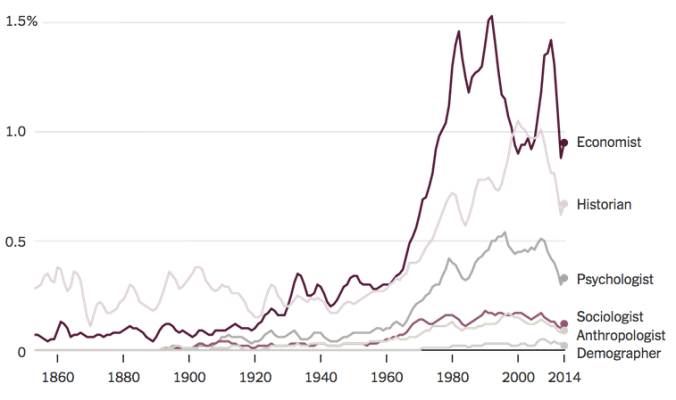
The Rise of the Economists: Interest in what economists have to say rises and falls with the economy. Measured by mentions in The New York Times, other professions aren’t as notable.

As a blog that features lots of history and literature, but little from the dismal science, this catches our attention.  Why so little economic reference at Raxa Collective? Wrong question. The economics of sustainable development are the foundation for all that we do, day in and day out, and those economics are embedded in many, if not most, of the stories we share on this blog. For that reason and more, this essay is worth a read and a ponder:

THE DISMAL SCIENCE

How Economists Came to Dominate the Conversation

Have we reached peak economist?

Two hundred years ago, the field of economics barely existed. Today, it is arguably the queen of the social sciences.

These are the conclusions I draw from a deep dive into The New York Times archives first suggested to me by a Twitter follower. While the idea of measuring influence through newspaper mentions will elicit howls of protest from tweed-clad boffins sprawled across faculty lounges around the country, the results are fascinating. And not only because they fit my preconceived biases. Continue reading

Ghana, One Of Our “It” Places For 2015 Discovery

01GHANA-copy-sfSpan-v7

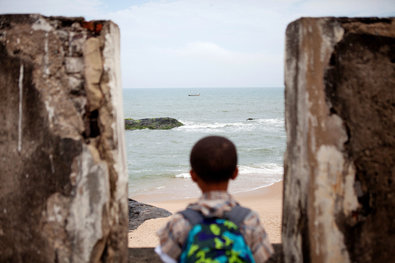
Jane Hahn for The New York Times. Jasir Robert Ryan-Lee, a descendant of Venture Smith, on the roof of the fort in Anomabo, Ghana, where his ancestor was held as a slave.

As Amie promised we will have much more to say as the countdown to the opening of Zaina Lodge continues apace since our first mention on this blog a couple years back. In fact, we are behind on stories from Ghana. Doug, where are you?

As we post this article from the current Travel section of the New York Times, a Raxa Collective team is preparing for an extended camping expedition in the Mole National Park, in the interest of discovering guest experiences that will be on offer when the Lodge opens. So, if Mr. Ryan-Lee and his mom choos to return to Ghana mid-2015 or later, and makes a visit to the wild interiors of the country, he will have another kind of life experience in store; meanwhile we appreciate his story and hope it will encourage others to follow in his footsteps to discover this hidden gem of a country:

On Slavery’s Doorstep in Ghana

Descendants of Venture Smith, a famous slave who won freedom and success in America, return to the roots of his captivity.

Classics On The Upswing

Seneca was venerated as a moral thinker; he was also one of Nero’s closest advisers. CREDIT PHOTOGRAPH FROM AISA / EVERETT So

Seneca was venerated as a moral thinker; he was also one of Nero’s closest advisers. CREDIT PHOTOGRAPH FROM AISA / EVERETT

This book review reminds us (for example where, in the middle of the review, the reviewer irresistibly, simply, says: “These days, Seneca is again on the upswing.”) of James, now firmly planted in the green fields of Harvard University taking his classics education to the ultimate level.

James, for his part, reminds us of our many reasons for paying attention to the classics, having little directly to do with the day to day activities of Raxa Collective except that the classics help us keep it all in perspective:

…If poets and philosophers dream of influencing those in power, Seneca was uniquely positioned to do so. He was a celebrated rhetorician, a satirist, the author of several books of natural history, and a playwright. He was also what today might be called an ethicist. Among his many works of moral philosophy are “De Ira” (“On Anger”), “De Providentia” (“On Providence”), and “De Brevitate Vitae” (“On the Shortness of Life”). Seneca had been Nero’s tutor since the younger man was twelve or thirteen, and he remained one of his closest advisers. Continue reading

Cod, Revisited

Atlantic Cod. Photo credit Pat Morris.

We’re always happy to find another reason to link to an old environmental history post on cod, or fish stocks in general. In an op-ed for the New York Times a few days ago, environmental and maritime historian W. Jeffrey Bolster starts to answer the question, “Where have all the cod gone?”

PORTSMOUTH, N.H. — IN November, regulators from the National Oceanic and Atmospheric Administration shut down recreational and commercial cod fishing in the Gulf of Maine, that enchanting arm of the coastal sea stretching east-northeast from Cape Cod. They did not have much choice: Federal law requires action to rebuild fish stocks when they are depleted, and recent surveys revealed cod populations to be at record lows, despite decades of regulations intended to restore them.

Continue reading

Librarians Fortify The Front Line

9780544535022_custom-376b39afbbf45a91478a9f43c2df0b1cc11e6e4f-s500-c85

Books we love, war not so much. The story told in this book is about books, about librarians, publishers and common folk who believe in books. And who believe that books are important for fortifying people who need heroic capacities.

In an interview with the author, we see publishers and their town square counterparts, librarians, in a light we had not been aware of, showing their contribution to community at a critical moment in history:

…Over the next few years, millions of Americans would leave home to fight in Europe and the Pacific. They had few comforts and little in the way of escape or entertainment — at least not until American publishers got involved.

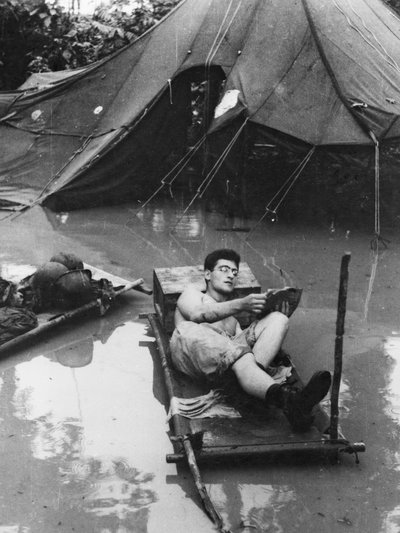
A soldier reads an Armed Services Edition in monsoon conditions during World War II. Australian War Memorial/Courtesy of Houghton Mifflin Harcourt

A soldier reads an Armed Services Edition in monsoon conditions during World War II. Australian War Memorial/Courtesy of Houghton Mifflin Harcourt

“During World War II, American publishers wanted to support the troops,” author Molly Guptill Manning tells NPR’s Renee Montagne. “And so they decided that the best they could do was print miniature paperback books that were small enough that they could fit in a pocket so the men could carry these books with them anywhere.”

Guptill Manning’s new book, When Books Went to War, is a history of these paperbacks, known as Armed Services Editions. They included all sorts of literature — from Charles Dickens and William Shakespeare to mysteries and Westerns — and were the culmination of earlier efforts on the part of American librarians to get usedbooks to servicemen with help from book drives. Well-intentioned though they were, the results of these book drives were mixed, turning up titles like How to Knit and Theology in 1870. So the focus switched to designing and printing books that soldiers actually wanted to read — no easy task since these Armed Services Editions had to be battlefield ready.

Continue reading

Museum As Pollinator

07SUBGUGGENHEIM-thumbStandard-v2A New Art Capital, Finding Its Own Voice

As plans for the Guggenheim Abu Dhabi go forth, those involved are hoping to speak to the art history of many nations.

Cosmopolitanism expands its reach. A good thing, we believe. Thanks to the New York Times Arts section for that story.

The Sweeping View, For Historians And Non-Historians Alike

Photograph by Charlie Mahoney: Sven Beckert

Photograph by Charlie Mahoney: Sven Beckert

The historians among our contributors, as well as the many readers who seem most oriented to those posts, will find this article from Harvard magazine in synch with many of our non-history stories and posts on this blog. These “sweeping” views are a daily recurring theme for many of us who have worked in more than one region of the world:

The New Histories

Scholars pursue sweeping new interpretations of the human past.

IN MAY 1968, the university’s students wanted to change the world. Left-thinking ideologies like Maoism and socialism were in their minds, and “Vietnam” was on their lips. They went on strike, skipping classes and exams. They rioted and clashed with police. One student was killed, 900 arrested.

If this sounds like a scene from Kent State, where student demonstrators were killed two years later, that is because the May 1968 unrest at the University of Dakar in Senegal was part of the same general mood around the world that moved students to protest, says Omar Gueye, professor of history at Cheikh Anta Diop University in Dakar. Gueye spent six months at Harvard during the 2013-14 academic year as a postdoctoral fellow at the Weatherhead Initiative on Global History (WIGH), a program premised on the belief that events like these—not unlike the seemingly contagious uprisings of the Arab Spring—can be fully understood only in a global context. Continue reading

Sidestepping To Success

16innovations_ss-slide-GB8J-sfSpan

The Estate of André Steiner via Archive of Modern Conflict

This week’s Sunday Magazine in the New York Times has a focus on the role of failure on the path to successful innovation. It is not lost on us, having recently designed, built and opened two properties– one at the beach and the other in a historic cultural urban zone–in the state of Kerala, India that sometimes it seems you take two steps sideways Continue reading

Traditional Soaking, London Edition

gin_wide-e8531d735abd157859bb21c062514336fc542f51-s5-c85

A quick review suggests we rarely post on topics related to liquid spirits, though wine and beer get the occasional honorable mention when craft or conservation is the main point of interest. Currently Kerala is debating new policies related to the sale of alcohol, so the subject is on our collective minds in that neck of the woods, and this piece from one of our go-to National Public Radio (USA) shows, the salt, seems germaine:

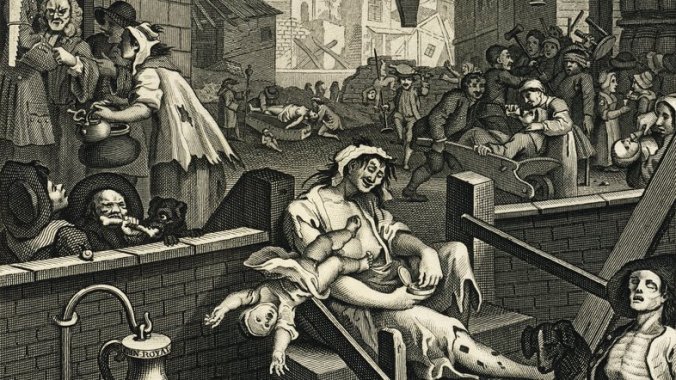
Tracing A Gin-Soaked Trail In London

Around the world, new gin distilleries are popping up like mushrooms after a rain. The boom has historic roots in London, which once had 250 distilleries within the city limits alone.